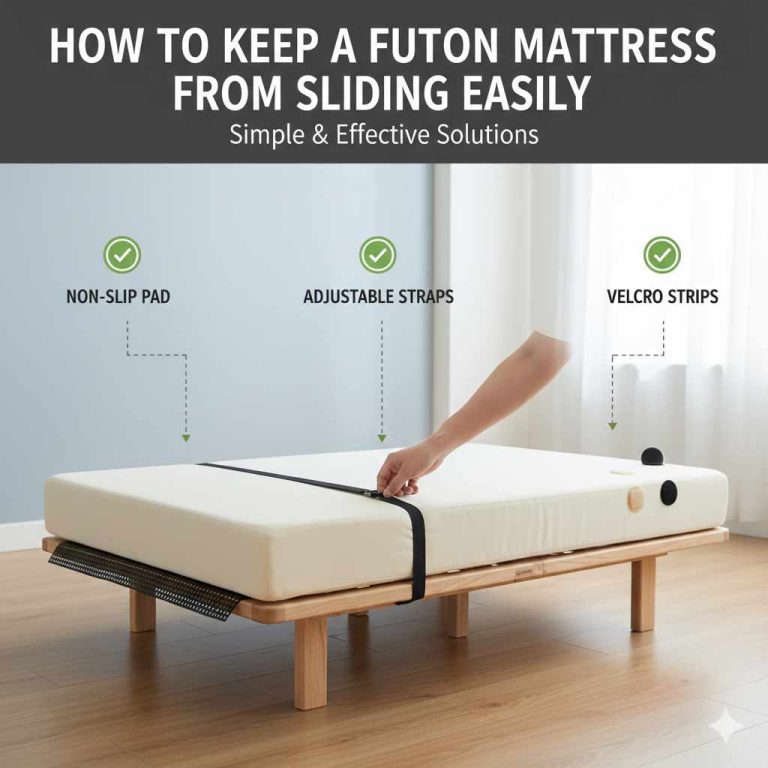
Platform Bed vs Futon Frame: Which Fits Your Room Best?
Choose a platform bed if sleep quality matters most; choose a futon frame if you need daytime seating and frequent room switching. Pick the wrong one and you end up with a lumpy sofa-bed setup, poor posture, or a room that feels awkward every day. I’ve seen that happen in tight apartments and spare rooms. This guide compares sleep comfort, sitting comfort, and space use in bedrooms, guest rooms, studios, and multipurpose rooms.
Platform bed vs futon frame: the real trade-off


The core trade-off is simple: a platform bed is a fixed bed base built for sleeping, while a futon frame can switch between sofa and bed modes. One gives steadier support and easier mattress matching; the other gives room flexibility and daytime seating. The better choice depends on how often the space must switch jobs.
| Decision factor | Platform Bed | Futon Frame | Winner |
|---|---|---|---|
| Everyday sleep support | Fixed support with slats or a solid deck; steadier feel | Hinge points and fold line can add flex | Platform Bed |
| Daytime seating | Bed-only; needs a separate sofa or chair | Converts to a couch-like seat | Futon Frame |
| Small-room flexibility | Good footprint for a bed; limited room switching | Useful when one room must be both living area and sleep space | Futon Frame |
| Mattress fit | Works with a wider range of foam and hybrid mattresses | Needs a mattress that folds and stays within usable thickness limits | Platform Bed |
| Setup effort each day | No daily conversion | Requires conversion between modes | Platform Bed |
Everyday sleep support
Platform beds usually win here because the support stays fixed. A solid deck or properly spaced bed slats keeps the mattress flatter, which helps with spinal support and edge stability. Futon frames can work, but the fold line, hinge wear, and mattress slide often show up once the bed is used every night.
Daytime seating
Futon frames win when the room needs a real seat during the day. A platform bed can hold a mattress, but it does not create a proper sofa position. In a studio, office, or guest room that doubles as a lounge, that difference matters more than mattress brand or styling.
Small-room flexibility
A futon frame takes the lead when floor space must do double duty. The room can function as seating space by day and sleeping space at night, which is hard to match with a fixed bed. A platform bed uses space more predictably, but it does not solve the need for a daytime sitting area.
Mattress fit
Platform beds are often easier on mattress choice because they can work with a broader range of foam, latex, and hybrid mattresses. Futon frames need a futon mattress that bends, stacks, and returns to shape after repeated folding. That constraint narrows the field fast.
What is a platform bed, and when does it win?
A platform bed is a fixed bed base with slats or a solid surface that supports a mattress and may not need a box spring. It wins when the room is mainly for sleeping, when mattress comfort matters, and when the user wants less motion, less noise, and fewer moving parts.
Slatted or solid support and why it matters
Bed slats should support the mattress evenly and keep it from sagging between support points. Foam and latex mattresses usually do well on closely spaced slats, while wider gaps can cause soft spots and shorten mattress life. A solid deck feels more uniform, but it offers less airflow.
Low-profile height, storage clearance, and getting in and out of bed
Platform beds often sit lower than framed beds that use a box spring. That low profile can make a room feel calmer, but it can also reduce under-bed storage or make standing up harder for taller users and anyone who dislikes a low seat height. Higher platform beds trade that clean look for better clearance and easier access.
Best-fit rooms
Platform beds are strongest in a main bedroom, a steady guest room, or any space where the bed stays in place. They also suit users who value a cleaner sleep setup over daily conversion. If the room does not need to become a sofa every afternoon, platform beds usually hold up better in daily use.

What is a futon frame, and when does it win?
A futon frame is a folding sofa-to-bed mechanism that switches between seat mode and sleep mode. It wins when one room must act like a living area during the day and a bed at night, especially in small apartments, offices, and guest spaces that need quick reconfiguration.
How the fold from seat mode to sleep mode works
Most futon frames tilt or flatten the mattress across a moving back and base section. That simple mechanism is why they save space, but it also creates wear points. Hinges can creak, the mattress can shift, and the sleep surface can feel less even than a fixed bed base.
Metal vs wood construction
Metal frames often feel lighter, more utilitarian, and easier to move. Wood frames usually look warmer and can feel more furniture-like in a living room. Construction material changes appearance and weight, but the bigger issue is how stiff the frame feels at the joints after repeated use.
Best-fit rooms
Futon frames fit studios, home offices, dorm-style rooms, and guest rooms where seating matters as much as sleeping. They are also useful when a separate sofa would crowd the room. If the room needs one piece to do two jobs, the futon frame has the edge.
Is a platform bed more comfortable than a futon frame for sleeping?
Yes, for everyday sleeping a platform bed is usually more comfortable because the support is steadier, quieter, and easier on the mattress. Futon frames can sleep fine for occasional use, but daily use exposes hinge noise, mattress compression at the fold, and less stable edges, especially under heavier sleepers.
Everyday sleeping: spinal support, edge stability, motion transfer, noise
Platform beds usually support the mattress evenly, so the sleeper gets a flatter surface and better edge stability when getting in and out. Motion transfer is often lower because the frame does not move. Futon frames add a fold line and moving hardware, which can create noise and uneven support over time.
How bed slats and mattress type change support
Slat spacing matters. Close spacing reduces sag and helps foam mattresses keep their shape; wider spacing can let a soft mattress dip between supports. A platform bed paired with the wrong slat layout can feel disappointing, but the same mattress often performs better there than on a futon frame.
Where futon frames usually fall short for daily sleep
Daily sleepers often notice the seat-to-bed conversion point, the lack of a true mattress foundation, and the extra movement in the frame. If the sleeper changes position often or sits on the bed edge before rising, those weak points show up fast. Futon frames are better when sleep is secondary to seating.
Can a futon frame take any mattress?
No. A futon frame needs a mattress that can fold without fighting the frame, and thickness matters a lot. Too thick and it resists folding or sits awkwardly in seat mode; too thin and it feels hard, sags faster, and makes both sitting and sleeping less comfortable.
Futon mattress thickness ranges that actually work
For many futon frames, a usable futon mattress thickness is in the midrange, often around 6 to 8 inches. Thinner mattresses can work for occasional use, but they feel lean in sleep mode and sparse in seat mode. Thicker builds can work only if the frame is built for them and the fold still closes cleanly.
Firmness, foldability, and material layers
Futon mattresses usually need a firmer core than a standard plush mattress because they must hold shape when folded and flattened repeatedly. Layered builds often mix foam, cotton, and sometimes latex. Latex futons are often chosen for durability, breathability, and better movement absorption; cotton futons are breathable and may suit some people who prefer simpler materials.
What happens when the mattress is too thick, too soft, or too heavy
A mattress that is too thick may fight the hinge and leave the futon feeling clumsy in sofa mode. A mattress that is too soft can bottom out at the fold line. A heavy mattress makes conversion harder and can stress the frame, especially if the hardware already flexes.
| Use case | Room size | Sleep frequency | Seating need | Mattress thickness | Recommended frame | Failure-mode notes |
|---|---|---|---|---|---|---|
| Main bedroom | Any size, especially 10 by 12 feet or larger | Nightly | Low | 8 to 14 inches | Platform bed | Watch slat spacing and frame flex |
| Guest room | About 9 by 10 feet or larger | Occasional | Low to moderate | 6 to 12 inches | Platform bed if sleep comfort matters; futon frame if the room must sit as well | Futon can slide; platform may lack lounge seating |
| Studio apartment | Under about 500 square feet | Nightly or mixed use | High | 6 to 8 inches for futon; 8 to 12 inches for platform | Futon frame if seating is essential; platform bed if a separate sofa already exists | Check hinge noise, mattress sliding, and conversion space |
| Home office | Small to medium | Occasional | High | 6 to 8 inches | Futon frame | Choose a firmer mattress to reduce seat sag |
| Seating-first multipurpose room | Medium | Occasional | High | 6 to 8 inches | Futon frame | Expect more wear on moving parts |
Use-case decision matrix
This matrix separates the buyers that competitors often blur together. A guest room, a nightly sleep setup, and a seating-first studio do not need the same frame. The right answer changes once sleep frequency, daytime seating, and mattress thickness are all on the table.
- Measure the room and mark the footprint needed for both sleep mode and seating mode.
- Decide how often the bed must convert each week.
- Check whether seating matters more than a cleaner sleep surface.
- Match the mattress thickness to the frame type before buying.
- Inspect slat spacing, hinge feel, and whether the mattress can stay put in seat mode.
For a studio with one main living zone, the futon frame often wins if the sleeper can live with a 6 to 8 inch futon mattress and daily conversion. For a guest room that stays a bedroom most of the time, a platform bed usually wins because it sleeps better and needs less fuss. For a main bedroom, the platform bed is the safer pick almost every time.
Choose Platform Bed if… / Choose Futon Frame if…
Choose a platform bed if you sleep on it most nights, want better edge support, or plan to use a standard foam or hybrid mattress. Choose a futon frame if the room must be a seat by day and a bed by night, or if you are furnishing a studio, office, or guest space with one piece of furniture.
Choose Platform Bed if…
Choose it if sleep quality is the priority, if you want less noise and less motion at the frame, or if mattress choice matters more than conversion. It is also the better pick when you need easier standing height or more predictable support for heavier daily use.
Choose Futon Frame if…
Choose it if daytime seating matters as much as sleep, if the room is small, or if you need one piece that can change the room’s function fast. It is also the smarter budget choice for occasional guests, provided the mattress is the right thickness and the frame feels sturdy enough.
Frequently asked questions
What is the difference between a platform bed and a futon frame?
A platform bed is a fixed bed base made to hold a mattress in one sleeping position. A futon frame folds between sofa and bed modes, so it can act as seating during the day. That difference drives comfort, mattress choice, and how well each one fits a multipurpose room.
Is a platform bed more comfortable than a futon frame for everyday sleeping?
Usually yes. A platform bed gives more even support, less frame movement, and fewer noise issues over time. A futon frame can be fine for guests, but nightly use tends to expose the fold line, mattress shifting, and hinge wear faster than most shoppers expect.
Can a futon frame be used with any mattress?
No. Futon frames need a mattress that folds well and stays within the frame’s usable thickness range. A mattress that is too thick, too soft, or too heavy can refuse to sit properly in sofa mode and may feel uneven when used for sleep.
Which is better for a small apartment: platform bed or futon frame?
If the apartment needs daytime seating, a futon frame is usually better because one piece handles both jobs. If a separate sofa already exists, a platform bed can be the better sleep choice. The deciding factor is not room size alone; it is how many jobs the sleeping area must do.
Do futon frames need a special mattress thickness?
Yes. Most futon frames work best with mattresses around 6 to 8 inches thick, though the exact fit depends on the frame. Thicker mattresses can fight the hinge and make seating mode awkward, while thinner ones often feel too firm and wear out faster.
Which option is easier to convert from sofa to bed?
Futon frames are the only option that converts at all, so they are the answer when conversion is needed. That said, easy conversion depends on weight, hinge quality, and mattress thickness. A heavy or oversized futon mattress can turn a simple fold into a daily chore.
Products related to this article
Sponsored / affiliate links. As an Amazon Associate I earn from qualifying purchases. I may earn additional commission from eligible campaigns.