KD Frames Futon Review: Is It Worth It?
KD Frames futons make sense if you want a hardwood frame for daily seating or guest use, but they may not feel as comfortable as a sofa if you expect sofa-level comfort from the mattress alone. Cheap frames wobble, sag, or loosen faster, and that can turn a low upfront price into a replacement cost. This review covers comfort, stability, assembly friction, and when a cheaper futon frame makes more sense.
Verdict
For the right buyer, KD Frames is a middle-ground pick: more support than many bargain metal frames, more furniture-like than a basic dorm futon, and usually a better long-term fit for an actual room. The tradeoff is simple. You still need the right mattress, enough assembly patience, and realistic expectations about how a futon sleeps.
Specs at a glance
| Feature | KD Frames futon frame | What it means in use |
|---|---|---|
| Frame material | Wood | Usually better for a furniture-like look and a warmer feel in a room |
| Conversion style | Three-position or multi-position use | Works as sofa, lounger, and bed, with hinges and locking points doing the work |
| Sleeping support | Slatted frame support | Support depends heavily on mattress thickness and how well the mattress fits the deck |
| Weight capacity | Varies by model | Check the exact frame listing before buying, especially for nightly use or heavier sleepers |
| Size options | Varies by model | Measure the room and the open-bed footprint, not just the closed sofa footprint |
| Assembly complexity | Moderate | Expect hardware checks, alignment, and some first-build friction |
Is the KD Frames futon worth it for daily sleeping?
KD Frames is worth considering for daily sleeping if you pair it with a mattress that fits the frame well and if you accept that a futon bed rarely feels like a standard mattress on a fixed bed frame. It is a stronger choice for occasional nightly use, guest overflow, or a studio than for someone who wants plush, motion-free comfort every night.
Daily sleep asks more of the frame than daytime use does. The hinges, locking points, and slats need to stay quiet and aligned, and the mattress needs enough thickness to cover the support gaps without sliding off the deck. A heavier sleeper, side sleeper, or person sensitive to pressure points should be stricter here than a back sleeper with lighter body weight.
Who should avoid daily use?
Skip it if you want a bed that disappears under you or if you move around a lot during sleep. A futon frame can feel firm, segmented, or slightly springy compared with a fixed platform bed. If nightly sleep comfort is the top goal, a standard bed frame plus mattress is usually the safer buy.
Who it
KD Frames fits buyers who want a wood futon frame for a guest room, studio apartment, dorm, or multipurpose den. It also suits shoppers who care more about stable seating and room appearance than about the lowest possible price. If the futon will act as a couch by day and a bed only some nights, the value case gets stronger.
Guest room use
For guest rooms, the main benefit is flexibility. You keep seating in the room when no one is sleeping there, and you avoid dedicating the space to a full bed that gets little daytime use. That makes more sense when guests visit a few times a month, not every week.
Studio and dorm use
In a studio or dorm, the sofa-to-bed conversion matters more than decorative style. A futon works best when one piece has to handle both jobs. Just remember that the room needs clearance for the open position, plus walking space and room for a side table or desk chair.
What works
The strongest part of KD Frames is the balance between frame feel and everyday use. A wood futon frame usually feels more furniture-like than a thin metal budget frame, and that can matter a lot when the futon stays open in a living area. With the right mattress, it can support regular sitting without feeling flimsy.
Sofa-to-bed conversion and mode changes
The conversion mechanism is a major buying point. Three-position or multi-position designs let you move from upright sofa to reclined lounger to flat bed with hinges and locking points doing the main work. The easier that motion is, the more likely you are to use the futon as intended instead of leaving it stuck in one position.
Small-space fit and daytime seating value
Futons earn their keep when floor space is limited. A studio apartment, dorm, or compact guest room benefits from one piece that can serve as seating during the day and sleeping surface at night. That said, the open-bed footprint matters more than the closed sofa footprint, so measure both before buying.
Say your guest room is 10 by 11 feet and also holds a dresser. A futon that opens into the room may still work, but only if you leave clear walking space on the open side and avoid blocking closet access.
Support feel with the right mattress
KD Frames is more forgiving with a mattress that has enough thickness to bridge the slats and enough structure to stay put when the frame changes positions. A firmer mattress often holds shape better on a futon deck, while a very soft one can bunch, fold unevenly, or feel unstable at the hinge line.
What does not?
The drawbacks show up after assembly and after repeated conversion. Hardware can loosen, wood can squeak if joints shift, and a mattress that is too light or too narrow can slide when the frame moves. These are not cosmetic complaints; they affect whether the futon stays pleasant to use.
Assembly friction and hardware checks
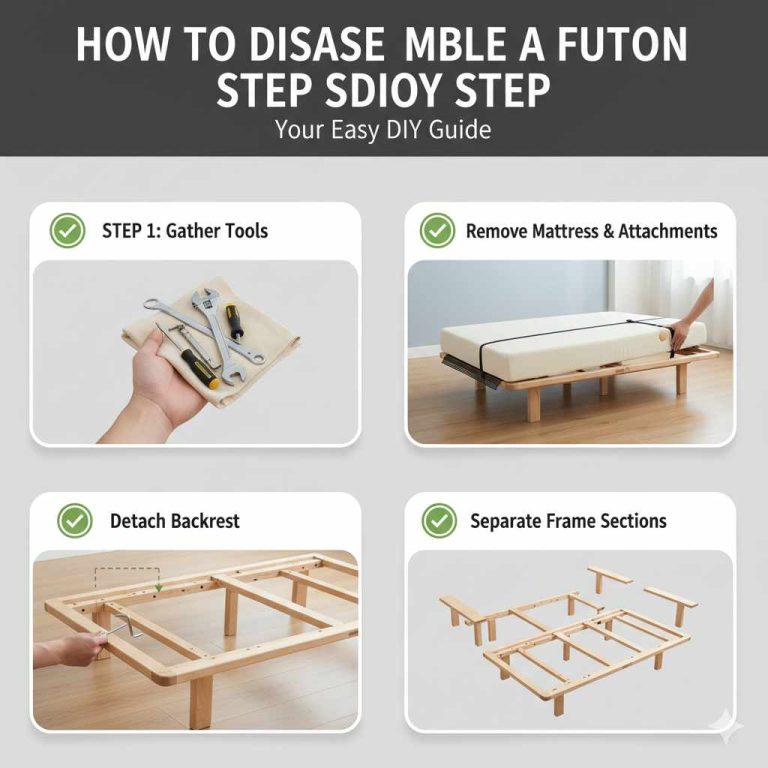
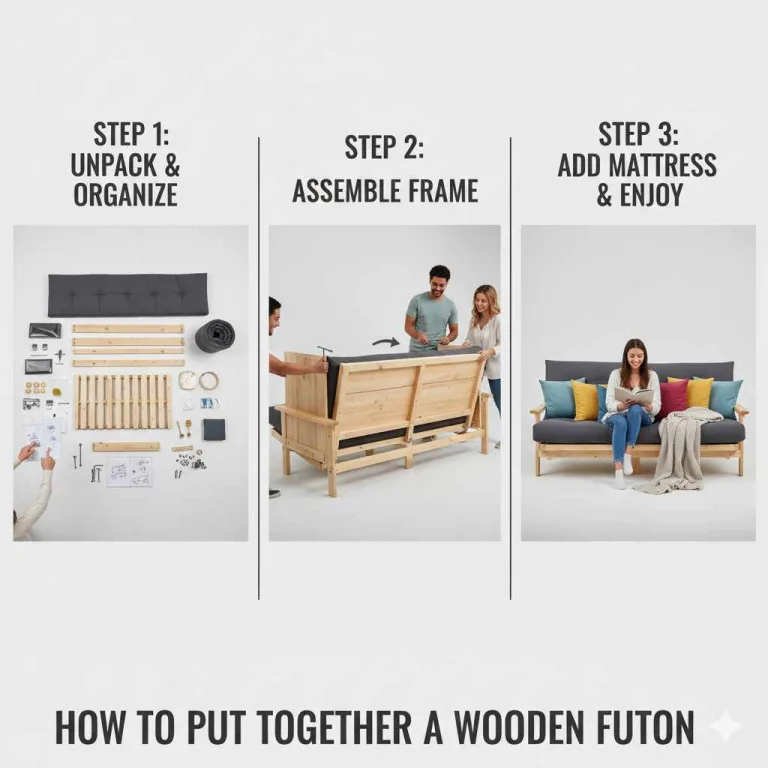
Assembly is not difficult in the sense of requiring special tools, but it is easy to do sloppily. If bolts are not tightened evenly or if the hinge parts are out of line, the frame can creak sooner than expected. A first-time buyer should plan on a careful hardware check after the initial build and again after the first few uses.
Squeaks, flex, and mattress slippage risks
Over time, the most common problems are squeaks, sagging in the sleeping surface, and mattress slippage. Wood frames can loosen at joints if the bolts settle. A mattress that is too thin may expose the slat feel, while one that is too smooth on the bottom may shift when the frame changes position.
A common first-timer mistake is choosing the cheapest futon mattress and then being surprised when it feels too firm for nightly sleeping. On a futon frame, that often creates two problems at once: you feel the support structure through the mattress, and the mattress does not stay centered when the frame is folded back into sofa mode.
Why some shoppers should skip it
Skip KD Frames if you want the cheapest possible setup, if you hate assembly, or if you need a bed for nightly use without compromise. A bargain metal frame may cost less upfront, and a real bed frame will often feel better for sleep. KD Frames makes sense when the tradeoff is acceptable, not when comfort is the only goal.
KD Frames futon decision matrix
This table gives a practical buy-or-skip screen. Use it to match sleep frequency, body weight, room size, assembly tolerance, and mattress thickness to the frame’s strengths.
| Sleep frequency | Body weight range | Room size | Assembly tolerance | Mattress thickness | Recommendation |
|---|---|---|---|---|---|
| Occasional guests | Any standard adult use within the frame rating | Small room with open-bed clearance | Low to moderate | Medium to thick futon mattress | Buy |
| 3 to 5 nights per week | Lighter to average sleeper | Studio or multipurpose room | Moderate | Thicker mattress with firm support | Buy with caution |
| Nightly | Average to heavier sleeper | Room large enough for full open position | High | Well-fitting, supportive mattress | Buy only if comfort tradeoffs are acceptable |
| Nightly | Heavier sleeper or side sleeper sensitive to pressure points | Tight room with limited clearance | Low | Unknown or thin mattress | Skip |
Kd frames futon review checklist
- Check for squeaks after the first few conversions.
- Look for loose hardware at hinges, legs, and major joints.
- Watch for sagging in the center section after repeated use.
- Confirm the mattress does not slide when the frame changes position.
- Make sure the mattress thickness leaves the sleeping surface level enough for your sleep style.
Is KD Frames better than DHP or Zinus?
KD Frames is usually the better choice when you want a wood futon frame with a more furniture-like feel and you care about long-term seating stability. DHP and similar budget metal futon frames usually win on price and sometimes on easier movement or lighter weight, but they can bring more noise and less reassuring support.
For shoppers comparing value, the real decision is not only frame material. It is also how much room you have, how often the futon will convert, and whether you are paying once for a sturdier build or twice for a cheaper frame that loosens sooner. Zinus-style budget options can make sense for short-term or low-use setups, but they rarely match wood for look or long-term feel.
| Criterion | KD Frames wood futon | DHP Vermont Metal Futon Frame | Cheaper metal futon frame |
|---|---|---|---|
| Material | Wood | Metal | Metal |
| Size footprint reference | Varies by model | 39 x 76 x 32.5 inches | Varies by model |
| Listed product weight reference | Varies by model | 46.8 pounds | Varies by model |
| Noise potential | Lower when hardware stays tight, though wood can still squeak | Can be noisy if joints and hinges move | Often higher because of lighter construction |
| Space efficiency | Good for small rooms | Good for small rooms | Often very good for tight budgets and compact rooms |
| Durability tradeoff | Better long-term feel, but needs hardware care | Lower cost, less furniture-like feel | Lowest cost, shortest lifespan risk |
Wood futon frame versus metal futon frame
Wood futon frames usually look better in living spaces, weigh more, and feel more like regular furniture. They also need periodic hardware checks and can develop squeaks if joints loosen. Metal futon frames are often cheaper, lighter, and easier to move, but they can feel noisier and less solid under repeated use.
When a cheaper frame makes more sense
Choose a cheaper metal frame if the futon is for rare guests, a short-term rental setup, or a room where appearance matters less than price. If the futon will be used every day, especially as a sofa first and bed second, the lower-cost option can become expensive once the hardware loosens or the sleeping surface feels tired.
Choose KD Frames if… / Choose a cheaper metal futon if…
Choose KD Frames if you want a wood look, expect regular sofa use, plan to sleep on it occasionally or several nights a week, and are willing to assemble and maintain it carefully. Choose a cheaper metal futon if your budget is tight, the futon will see light use, or you need the lowest entry cost for a guest room or dorm.
Choose KD Frames if the room has enough clearance for the open bed and you want fewer compromises in seating feel. Choose a cheaper metal frame if portability, price, and short-term function matter more than long-term comfort and appearance. For a nightly sleeper, KD Frames is the safer of the two only when paired with the right mattress.
Alternatives

- Solid 171-pound heft ensures structural stability
- Generous 81-inch span fits full mattresses easily
- Rustic walnut finish adds cabin-inspired warmth
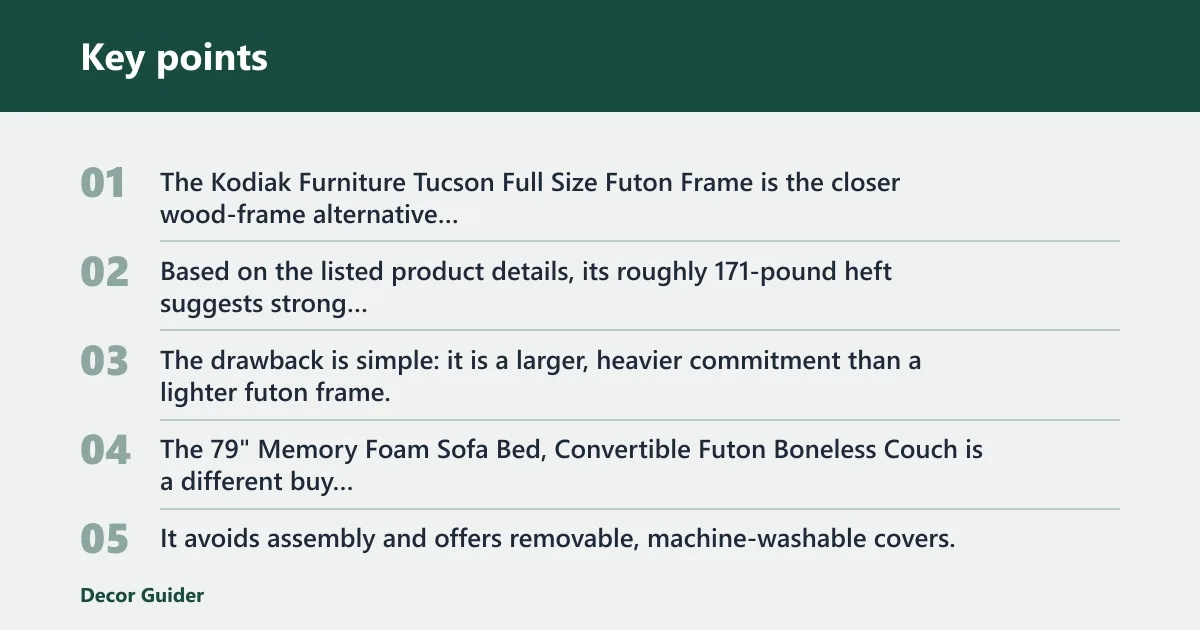
The Kodiak Furniture Tucson Full Size Futon Frame is the closer wood-frame alternative if you want a heavier build and a more traditional look. Based on the listed product details, its roughly 171-pound heft suggests strong structural stability, and its about 81-inch span should suit a full-size mattress easily. The drawback is simple: it is a larger, heavier commitment than a lighter futon frame.

- No assembly needed, ships vacuum-compressed
- Removable, machine-washable covers for easy cleaning
- 4-in-1 convertible design for flexible living
The 79″ Memory Foam Sofa Bed, Convertible Futon Boneless Couch is a different buy entirely. It avoids assembly and offers removable, machine-washable covers, so it suits shoppers who want easy setup and cleaning more than classic futon mechanics. The tradeoff is that a boneless design may not deliver the same frame support or traditional seating feel as a wood futon frame.
Should you buy it?
Buy KD Frames if you want a futon that can handle real seating duty, occasional sleeping, and a better-looking presence in a guest room or studio. Skip it if your top priority is the lowest possible price, zero assembly, or bed-like comfort for nightly sleep without compromise. The frame is the value, not the mattress by itself.
For most shoppers, the smartest version of this purchase includes a supportive mattress, a careful build, and enough room for the open bed. That is where KD Frames makes the most sense. Without those pieces, even a better wood futon frame will feel like a compromise.
Frequently asked questions
How comfortable is a KD Frames futon as a sofa and bed?
As a sofa, it can feel more substantial than a cheap metal frame, especially in a wood finish. As a bed, comfort depends far more on mattress thickness and firmness than on the frame itself. Thin or overly soft mattresses usually expose the frame’s support pattern.
What mattress thickness works best on a KD Frames futon frame?
A medium-to-thick futon mattress usually works best because it covers the slats better and reduces the chance of feeling the frame underneath. Very thin mattresses can slide, fold poorly, or feel hard at the hinge line. Match thickness to the frame dimensions, not just the listed mattress type.
How easy is it to convert a KD Frames futon from sofa to bed?
It is generally straightforward once the hardware is aligned and tightened. The main task is moving through the hinge and locking points cleanly without forcing anything. If the frame resists, stop and check alignment first; rough handling is a common way to create squeaks or loosen parts.
How much space does a futon frame need in a small room?
You need enough space for the closed sofa position and the full open-bed footprint. In a small room, that usually means measuring wall-to-wall clearance, nearby furniture depth, and walking space before buying. A futon that looks compact closed can still dominate the room when flat.
Is a wood futon frame better than a metal futon frame?
Wood is often better if you want a warmer look, more furniture-like presence, and a frame that feels less budget-oriented. Metal is usually better for lower price and lighter weight. Neither is automatically better; the better choice depends on use frequency, noise tolerance, and room style.
Products related to this article
Sponsored / affiliate links. As an Amazon Associate I earn from qualifying purchases. I may earn additional commission from eligible campaigns.