Futon Cost: What to Expect for Frames and Mattresses
A complete futon set may cost about $350 to $900, depending on the frame, mattress, and intended use. Pay less than that, and you may give up support or finish quality; pay more, and you may buy features you will not use. This guide breaks down futon cost by use case so you can budget for the frame, mattress, or full set with fewer surprises.
How much should a futon cost?


For most U.S. shoppers, a futon falls into three buying bands: budget, mid-range, and premium. Typical U.S. futon totals can range from under $100 to $600+, but a complete setup can average about $840 in one 2026 guide. That spread makes the frame-only price easy to misread if you are actually buying a full sleeper.
What a frame-only price means
A frame-only price covers the conversion base, not the sleep surface. Basic metal futon frames commonly cost $60 to $180, while wood futon frames commonly cost $120 to $700. Metal usually keeps the price down and is easier to move. Wood can cost more because of material weight, joinery, and finish quality.
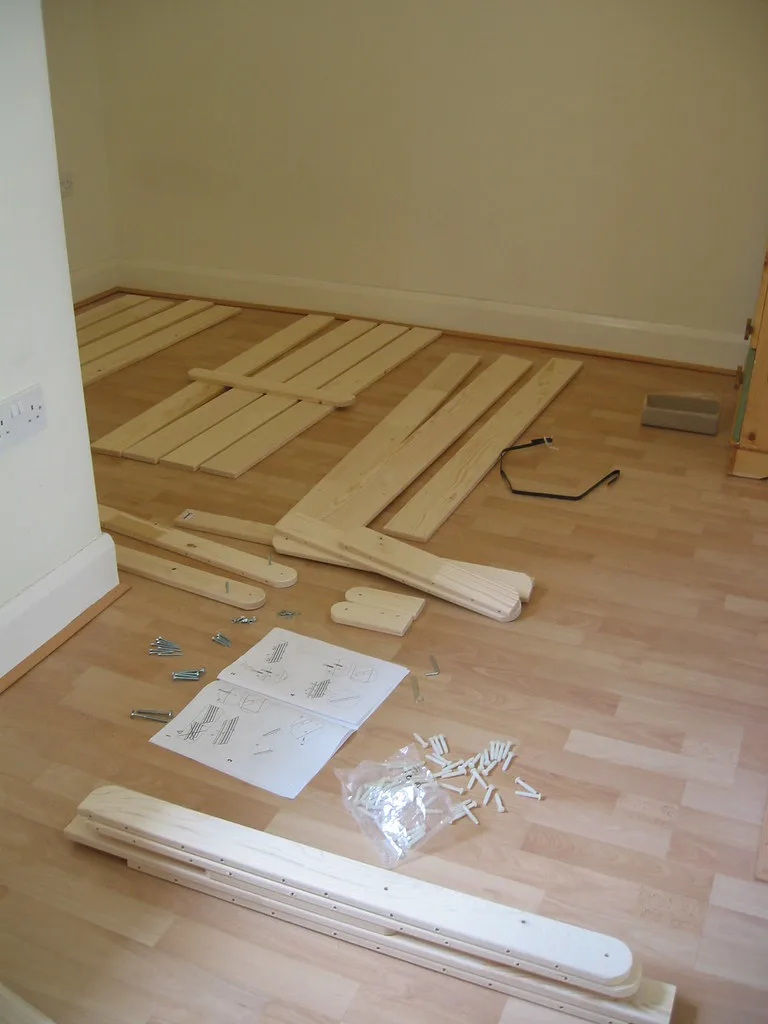
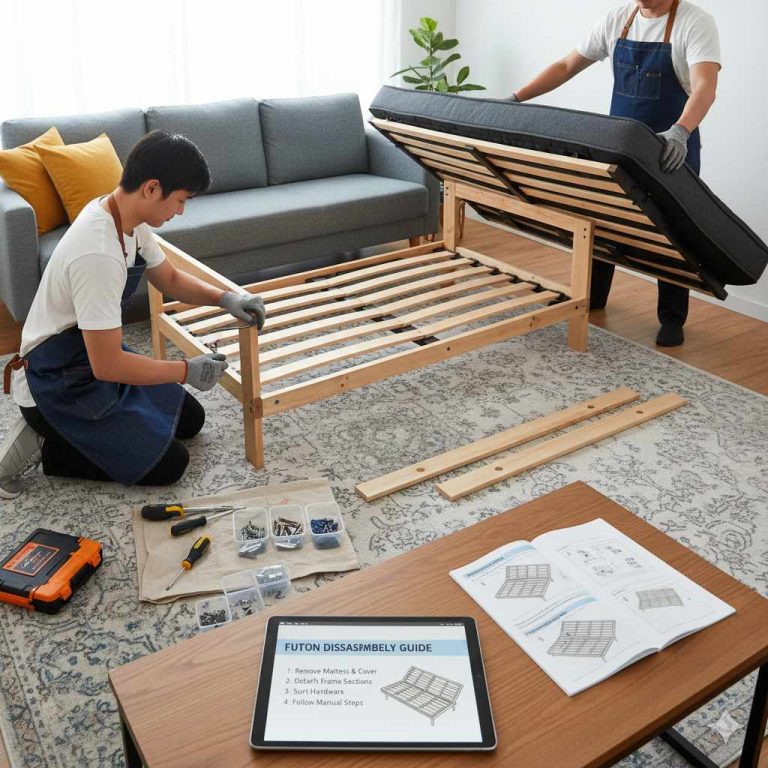
Conversion mechanism matters too. Simple fold-down metal frames usually cost less than heavier wood frames with more moving parts or a more polished sofa look. Assembly time also tends to rise with size and material. A basic frame may go together in under an hour, while a heavier wood model can take longer and need two people.
What a complete set usually includes
A complete futon set usually means the frame plus mattress, and sometimes delivery, setup, or a warranty add-on. One cost guide places futon mattresses at $150 to $500 and standard delivery at $0 to $150, with assembly/setup at $0 to $120. That is why a mattress-only search can hide the real total.
Budget futons are described as $120 to $400, mid-range futons as $400 to $900, premium Western futons as $800 to $1,500, and Japanese-style premium futons as $1,000 to $3,000+. Those bands help if you are comparing complete sets, not just frames or mattresses.
What drives futon prices?
Four factors move futon cost the most: frame material, mattress fill, size, and upholstery or finish. Frame material sets the base price. Mattress fill changes comfort, weight, and support. Size adds material across both parts. Upholstery and finish can push a model into a higher price tier even when the sleeping function stays the same.
Frame material: metal versus wood
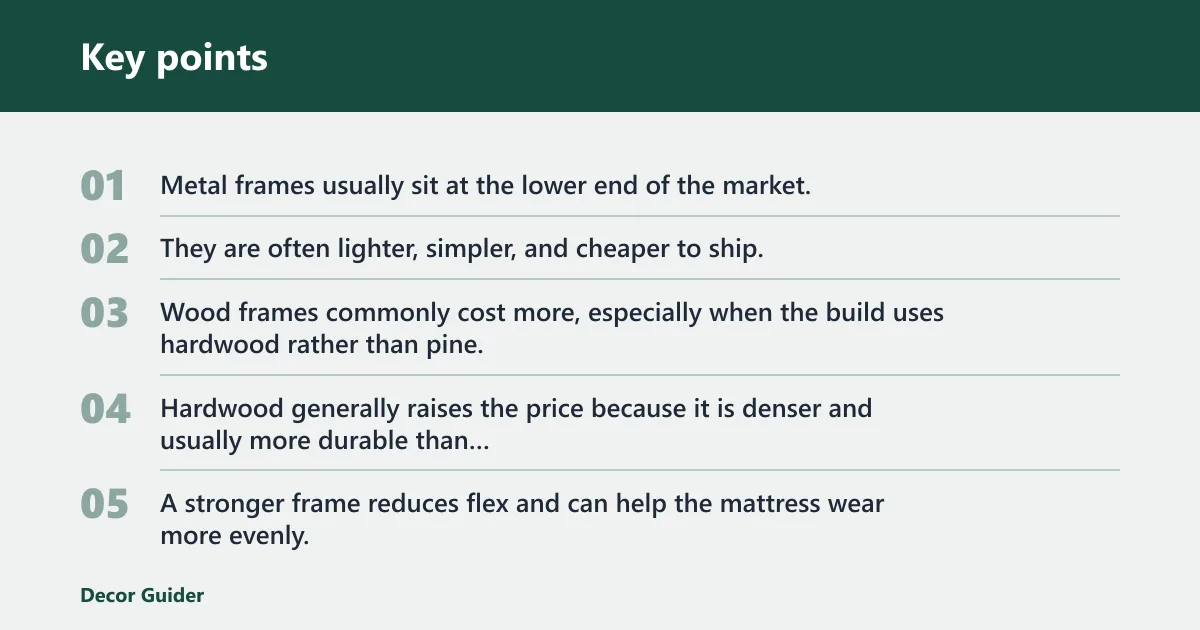
Metal frames usually sit at the lower end of the market. They are often lighter, simpler, and cheaper to ship. Wood frames commonly cost more, especially when the build uses hardwood rather than pine. Hardwood generally raises the price because it is denser and usually more durable than soft pine.
Support and durability matter here. A stronger frame reduces flex and can help the mattress wear more evenly. That matters for daily sleeping. A decorative frame with weak slats may look fine in a living room but still sag sooner under nightly use.
Mattress fill: foam, memory foam, innerspring, and cotton
A futon mattress in the U.S. may cost $120 to $3,000+ depending on type. The lower end usually covers basic foam or cotton-filled models. Memory foam raises comfort and price. Innerspring designs often cost more because they use more hardware. Cotton can feel firmer and lighter, but it may compress faster with frequent use.
Thickness also changes the budget. Purple says most futon mattresses are about six inches thick, and that is a useful reference point for everyday seating or occasional sleep. Thicker models usually cost more because they use more fill and are built to resist bottoming out.
Size and thickness changes
Size raises cost in a predictable way. A twin futon mattress is smaller and usually cheaper than a full or queen. The same source describes twin futon mattresses as about 39 inches wide. That width works for tight rooms, but it is not the same as a full or queen layout. Queen sizing often costs more because material use rises across both the mattress and frame.
If you are comparing sizes, check the full set dimensions, not just the mattress label. A larger mattress can push the frame price up, shipping price up, and setup time up. That can change a “deal” into a higher total than a smaller, better-built option.
Upholstery and finish costs
Fabric upholstery usually costs less than faux leather, and faux leather usually costs less than real leather. Real leather adds material cost and often adds care cost over time. On wood frames, stain quality and finish detail can also move the price. On metal frames, powder-coated finishes often keep cost lower than decorative treatments.
Foam density matters as well. Higher-density foam usually lasts longer and resists collapse better than lighter foam, so it can cost more up front. For daily sleep, that added cost often makes more sense than paying for a soft top layer that flattens quickly.

Futon true cost table
Use this table to compare the real budget, not just the sticker price. Delivery, assembly, and disposal can change a cheap-looking futon into a mid-range purchase. The figures below are practical buying ranges, not a single retailer quote.
| Use case | Frame | Mattress | Delivery | Assembly | Disposal | Realistic total budget | Buy this / skip this |
|---|---|---|---|---|---|---|---|
| Dorm | $60 to $120 | $120 to $200 | $0 to $50 | $0 to $40 | $0 | $180 to $410 | Buy this: metal frame, twin size, basic foam. Skip this: wood frame, leather upholstery, premium add-ons. |
| Guest room | $100 to $250 | $180 to $300 | $0 to $75 | $0 to $60 | $0 to $25 | $280 to $710 | Buy this: mid-range frame and a thicker foam or cotton blend. Skip this: ultra-thin mattress that feels fine only for one night. |
| Everyday sofa-bed | $150 to $400 | $250 to $500 | $25 to $100 | $30 to $100 | $0 to $25 | $455 to $1,125 | Buy this: sturdier frame, higher-density foam, better upholstery. Skip this: low-cost mattress that sags after a few months. |
| Nightly sleeper | $200 to $700 | $300 to $900 | $50 to $150 | $50 to $120 | $25 to $50 | $625 to $1,920 | Buy this: strong frame, thicker mattress, and a better warranty. Skip this: the cheapest mattress in the store. |
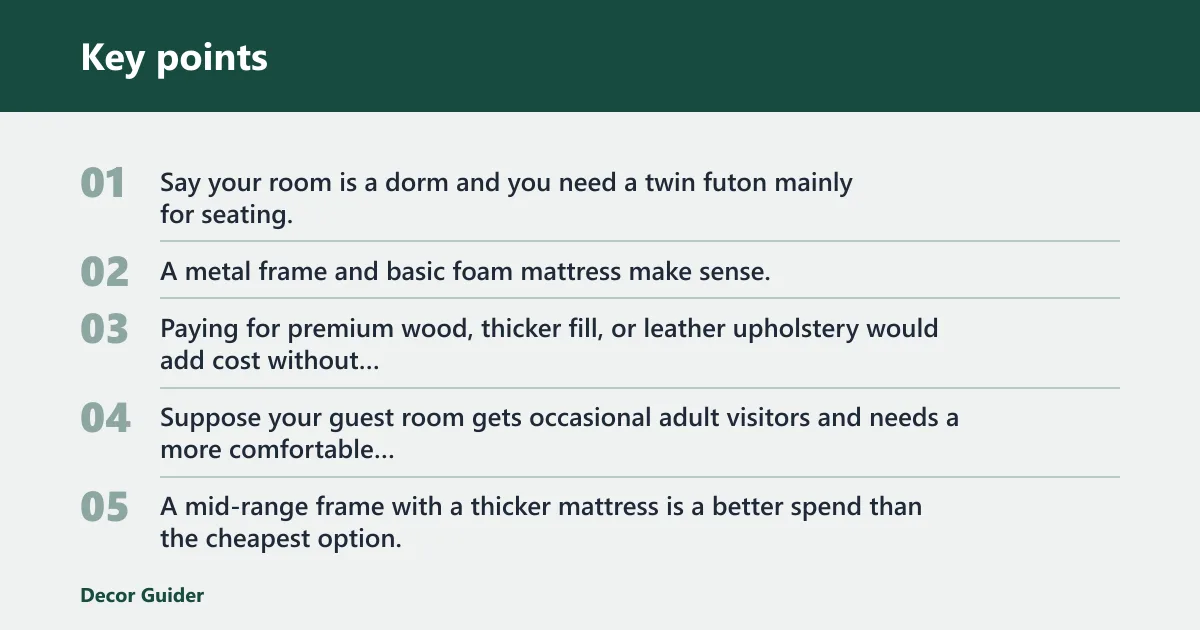
Say your room is a dorm and you need a twin futon mainly for seating, with sleep only a few nights a month. A metal frame and basic foam mattress make sense. Paying for premium wood, thicker fill, or leather upholstery would add cost without adding much value.
Suppose your guest room gets occasional adult visitors and needs a more comfortable sleep surface. A mid-range frame with a thicker mattress is a better spend than the cheapest option, because the difference shows up in support and guest comfort, not just appearance.
How much should you spend for nightly sleep?
If you plan to sleep on a futon every night, budget for the frame and mattress as a system, not as separate bargain pieces. A daily-use setup should usually land in the mid-range or higher, because the mattress must resist sagging and the frame must support repeated folding and weight.
Daily-use comfort targets
For nightly sleep, a mattress around the six-inch mark is a practical floor, and thicker can be better if the fill stays supportive. Look for higher-density foam or a construction that spreads weight evenly. A thin mattress may feel acceptable at first, then lose comfort quickly.
Support matters more than softness. A too-soft mattress can bottom out over the slats, while a firmer mattress with better structure usually lasts longer and sleeps flatter. If the futon will be opened and closed daily, the conversion mechanism should also feel sturdy and not loose.
When a cheap setup becomes a bad deal
A cheap futon becomes false economy when the mattress sags, the frame flexes, or the finish wears quickly enough that you replace it early. The low entry price does not help if you need a second mattress within a year or two. That is especially true for nightly sleep.
A common first-timer mistake is buying the cheapest convertible for a studio apartment and expecting sofa-bed comfort from a thin mattress. The room looks finished, but the sleep surface is the weak point. Spending more on the mattress usually fixes more problems than buying a fancier frame alone.
What hidden costs raise the total?
Hidden costs often matter as much as the base price. Delivery, stairs, setup, disposal, taxes, and optional warranty coverage can add a noticeable amount. One cost guide puts standard delivery at $0 to $150 and assembly/setup at $0 to $120, so the final bill can move fast.
Delivery: curbside, inside, stairs, and white-glove service
Curbside delivery is usually the cheapest option. Inside delivery costs more because the carrier brings the futon into the home. Stairs or difficult access can add fees because the job takes longer and needs more labor. White-glove service, which can include placement and full assembly, sits at the top of the range.
Assembly or setup fees
Assembly cost depends on frame complexity and the retailer. Simple metal frames may cost little or nothing to assemble if the buyer handles it. Heavier wood frames can cost more because they take longer to build and align. If the frame includes drawers, thicker arms, or extra hardware, setup can rise again.
Disposal, taxes, and add-on warranty costs
Old mattress or frame disposal can add a small fee, especially if the retailer hauls away the previous item. Sales tax also changes the final total by location. Some retailers add protection plans or extended warranties, and those should be weighed carefully against the futon’s base build quality.
- Check delivery type: curbside, inside, or white-glove.
- Ask about stairs: upper floors often cost more.
- Confirm setup: some frames arrive boxed and need assembly.
- Ask about haul-away: disposal can be separate.
- Watch taxes and add-ons: they can change the total quickly.
Japanese shikibuton vs futon pricing
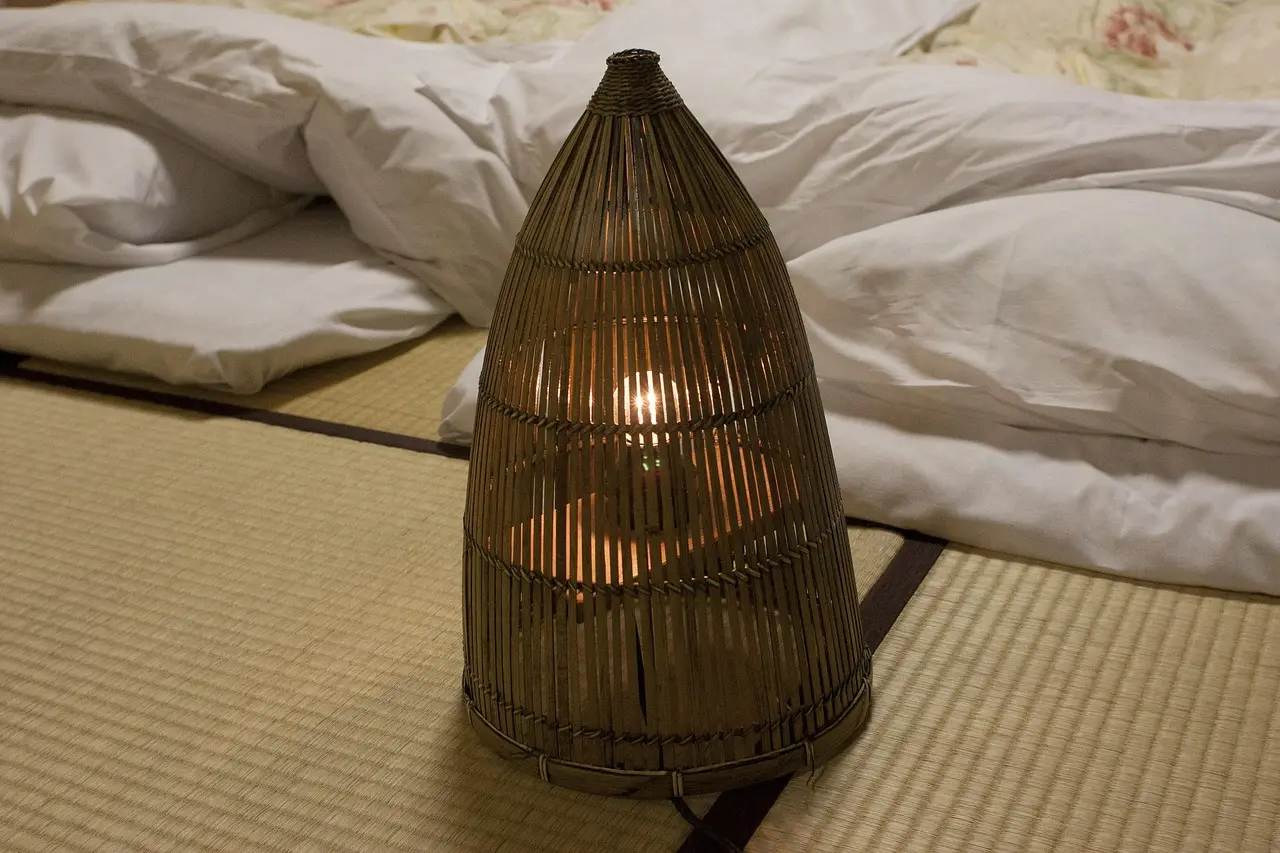
Japanese shikibuton pricing is separate from Western futon pricing. A shikibuton is a floor mattress without a frame, so the buyer is paying for the mattress itself, often with higher material standards and a different use pattern. That is why Japan pricing searches need a different answer.
Why a shikibuton costs differently
The higher premium for Japanese-style bedding can reflect organic materials, careful construction, and a lighter, more portable design. It also reflects a different sleep system, not just a different label.
Shikibuton also requires storage and airing. That adds a use cost even when no extra furniture is needed. If you want a Western sofa-bed with a frame, compare it against Western futon pricing. If you want a floor mattress, compare shikibuton prices on their own.
Frequently asked questions
How much futon cost
Most U.S. futons fall between under $100 and $600+ depending on whether you buy a frame only, a mattress only, or a complete set. Delivery and setup can add more.
How much should a futon cost: a practical target is $150?
A practical target is $150 to $300 for a basic frame, $200 to $500 for a mattress, and $350 to $900 for a complete set. If you need daily sleep, aim higher for support and mattress quality. If it is only for seating or guests, stay closer to the lower end.
What is the average cost of a complete futon set?
A complete futon set can average about $840 in one 2026 guide. That number fits a mid-range setup with a frame, mattress, and some delivery or setup cost. Your total may land lower or higher depending on frame material, mattress thickness, and whether you need inside delivery.
How much a futon cost at walmart
Retail pricing at Walmart can vary by seller, size, and whether the listing is a frame, mattress, or full set. Compare the total after shipping, taxes, and assembly fees, not just the headline price. A low listed price can rise once the mattress and delivery are added.
How much does a futon frame cost versus a futon mattress?
Futon mattresses may cost $120 to $3,000+ depending on type, thickness, and size. In many purchases, the mattress costs as much as or more than the frame.
What makes a futon more expensive?
Size, material, mattress fill, finish quality, and delivery all raise the price. Wood costs more than metal, real leather costs more than fabric, and thicker or denser mattresses usually cost more than thinner ones. White-glove service and stairs can also push the total up.
Products related to this article
Sponsored / affiliate links. As an Amazon Associate I earn from qualifying purchases. I may earn additional commission from eligible campaigns.