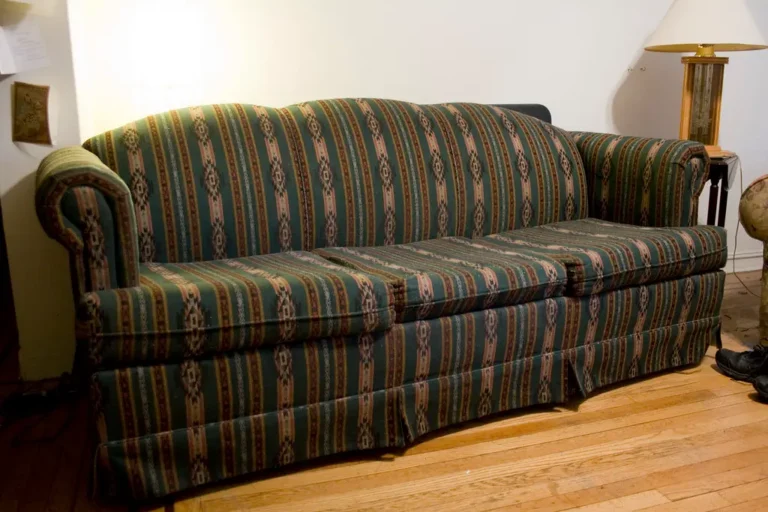
Futon Bed Stuck Problems
Most futon bed stuck problems come from one of three causes: a bent hinge, a locked release bar, or a mattress slipping into the frame. Start with the hinges, then the latch, then the mattress. If you pick the wrong fix, you can bend the frame, strip hardware, or make the bed unsafe to fold.
Why a futon gets stuck


A stuck futon usually falls into one of three fault families: mechanism binding, mattress movement, or structural damage. That split matters because a frame that will not close needs different work than a frame that closes fine until the mattress shifts or a slat bows under load. Hardware should be inspected and replaced when it is bent, cracked, elongated, or no longer holds torque, which matches standard furniture safety guidance from the U.S. Consumer Product Safety Commission.
Mechanism binding in the frame
Click-clack futon mechanisms usually move through couch, recline, and flat positions. The jam often happens at the lock point, at a hinge that is out of line, or where one side of the linkage wears faster than the other. Alignment sensitivity matters: if one arm sits even slightly out of square, the backrest can bind before the latch reaches its full seat.
Mattress slip versus frame failure
A mattress that slides can look like a frame fault. If the mattress drifts into the hinge zone or bunches against the backrest, it can block the fold, add side load, and keep the mechanism from seating fully. Grip strips, straps, or other retention hardware can fix that without touching the frame itself. Mattress thickness also affects fit, because too much bulk can interfere with the fold path while too little can shift during recline.
Clearance and obstruction checks
Storage drawers, low floor objects, or a wall set too close behind the backrest can stop a futon before the mechanism reaches its final position. Underframe clearance is part of the system. If a drawer front, rug edge, or floor contact point hits first, the frame may feel jammed even though the hinges are fine.
Futon fault checklist

| Symptom | Likely cause | Quick test | Fix | Safety |
|---|---|---|---|---|
| Won’t close | Latch not releasing, bent hinge, obstruction under the frame | Remove the mattress, clear the floor area, and fold both sides by hand | Tighten hardware, realign the backrest, remove obstructions, replace bent hinge parts | Replace hardware or retire the frame if the hinge plate is cracked or the linkage will not seat |
| Won’t stay open | Release bar slips, locking point is worn, bolt tension is uneven | Move the backrest through each recline position and listen for a clean lock | Retighten bolts, inspect the lock point, replace worn release hardware | Retire the frame if the lock will not hold load |
| One side jams | Uneven arm geometry, misaligned linkage, warped wood or twisted metal | Fold each side separately and compare the travel | Square the frame, tighten the loose side, replace bent linkage or warped support parts | Replace the frame if one side twists under normal force |
| Mattress slides | No grip strips, wrong thickness, straps loose or missing | Lift the mattress corner and check whether it shifts with light hand pressure | Add grip strips or straps, correct mattress fit, use retention hardware | Not usually a frame-replacement issue unless the base itself is broken |
| Squeaks under load | Dry hinge, loose bolts, wood-on-metal contact, worn washers | Press on each seat area and listen for the source of the noise | Tighten bolts, add threadlocker where appropriate, replace worn washers or hinge parts | Replace hardware if noise comes with visible flex or a cracking sound |
| Sagging slats | Broken slat, wide slat spacing, warped support rail | Check the center support and compare slat height from end to end | Replace broken slats, correct spacing, fix warped supports | Replace the whole base if the support rail is failing |
How do you check the frame first?
Start with the frame, because loose hardware, worn hinges, and poor alignment cause many stuck-futon complaints. Check bolts, brackets, and hinge wear before you force the backrest. Then confirm both sides move evenly and that the frame still sits square under load. If the structure is bent, the repair path changes fast.
Check bolts, brackets, and hinge wear
- Remove the mattress so you can see the linkage.
- Use a hex key, socket wrench, and screwdriver to check all fasteners.
- Look for missing bolts, stripped heads, oval holes, and shiny metal where parts have been rubbing.
- Add threadlocker only to clean, properly threaded fasteners.
Wood frames and metal frames fail in different ways. Wood can split around bolt holes or warp at the arm joints. Metal can bend at the hinge plate or wear at the pivot points. Arm type and backrest geometry also matter because a long arm span gives a misaligned hinge more chance to bind.
Confirm both sides move evenly
Fold the frame slowly and compare the left and right travel. A smooth side paired with a dragging side usually points to asymmetry, not a mattress issue. If one side reaches the lock before the other, the backrest is fighting the frame shape, not just the load on top.
Look for warping, broken slats, or floor contact
Slatted bases need even support under the mattress. Check slat spacing, cracked slats, and any rail that has warped under repeated load. Also look for floor contact. A frame that touches the floor too early can stop short of the full closed position and make the mechanism feel locked.
A full-size futon may close normally when empty, but with the mattress on it a corner can catch near the arm. That points to fit or clearance, not a dead hinge. Pull the mattress away from the hinge path, then check whether the corner still catches before replacing parts.
What to check if a futon is stuck in couch mode
If a futon is stuck in couch mode, the problem is usually a blocked fold path, a release bar that is not resetting, or an off-center mattress loading one side of the frame. Start by clearing the area, then test the release points and hinges without the mattress. The goal is to identify whether the blockage is external, mechanical, or structural.
Check the fold path for blocked motion
Remove pillows, throws, and any items stored beneath the seat, then look for drawer fronts, cords, or nearby furniture legs in the motion path. A futon can feel locked in couch mode when the frame simply has no clearance to complete the move.
Test the release bar and lock points
Move the backrest through its positions and listen for a clean release and re-lock. If one side releases and the other stays seated, the mechanism can jam before the fold completes. A latch that only half disengages often creates the same symptom as a bent hinge.
Check for mattress drag and side load
If the mattress is riding too far forward, it can press against the arms or hinge path and hold the frame in place. Re-center the mattress and test again. This is also where retention straps matter: they should hold the mattress without pinching or forcing the fold.
How do you fix a futon that will not close?
Clear the area first, then check the backrest alignment and the click-clack mechanism. A futon that will not close is often blocked by drawers, bedding, or floor objects, but a bent release bar or worn hinge can create the same symptom. If the frame will not move cleanly by hand, stop forcing it.
Clear drawers, bedding, and other obstructions
Storage drawers and underframe items are a frequent cause of a stuck close. Pull out any drawer that touches the base, remove blankets or pillows trapped under the seat, and check for rugs, cords, or furniture legs in the swing path. Clearance needs to be full, not “almost enough.”
Realign the backrest and locking points
Move the backrest through its recline positions and watch where the locking points catch. If the lock engages on one side before the other, the frame can bind halfway through the fold. Even a small offset can stop a click-clack mechanism from finishing the motion.
Inspect the click-clack mechanism for bent or worn parts
Click-clack mechanisms depend on clean release and clean re-locking. Bent linkage, worn hinge pins, or deformed stop tabs can keep the release bar from moving fully. If the metal linkage has visible twist or the hinge hole is elongated, replacement is safer than repeated force.
How do you stop mattress sliding?
Use retention hardware before you blame the frame. Mattress sliding is usually a fit problem, a missing grip surface, or a strap that no longer holds tension. If the mattress moves during folding, it can also block the mechanism, so the fix should match the folding motion and the mattress thickness.
Use grip strips, straps, or retention hardware
Grip strips work when the mattress only creeps a little. Straps help when the mattress shifts during the transition from couch to flat and back again. If the mattress has no anchors at all, add hardware that keeps it centered without pinching the fold path.
Check mattress thickness fit
A mattress that is too thick can fight the hinge line. One that is too thin may slide because it does not fill the seat well enough. Standard mattress fit is not the same as futon fit: a futon mattress has to work with a folding frame, not just lie on top of a static platform. Support and thickness both matter, especially on frames where the slats and hinge line share the load.
Match the fix to folding motion
If the mattress shifts only when you close the frame, focus on edge grip near the fold line. If it slides in couch mode, focus on seat retention and strap tension. Do not add hard stops that interfere with the mechanism; the mattress should stay put without blocking movement.
Suppose a full futon with a six-inch innerspring mattress slides forward every time it is folded flat. In that case, the thickness and weight distribution may be part of the problem, but the frame still needs a clean fold path before a mattress swap makes sense.
What if one side jams or squeaks?
One-sided binding usually means uneven loading, a misaligned arm, or a worn joint on one side of the frame. Squeaks often point to loose hardware or dry contact points, but squeak plus drag is a warning sign. Tighten the frame, retest the motion, and replace worn hinges, bolts, or slats when the sound returns.
Identify uneven loading or misalignment
Remove the mattress and test the frame with equal pressure on both sides. If one side drops, rises, or drags first, the problem is usually geometry. Uneven arm type, twisted support rails, or a backrest that sits out of square can all create the same symptom.
Tighten loose hardware and retest motion
Use a socket wrench or hex key to tighten the fasteners in small steps. Recheck the fold after each pass. If the squeak disappears but the side still binds, the hardware may be holding position while a hidden bend remains in the linkage.
Replace worn hinges, bolts, or slats when needed
Replacement parts are the correct fix when wear is visible. Hinge pins that wobble, bolts that will not hold torque, and slats that crack under normal load should not stay in service. A new hinge or slat is a safer answer than forcing an old part through another season. Where sagging slats are part of the problem, support repairs should come before mattress replacement so the base stops flexing in the first place.
Futon vs sofa bed
A futon and a sofa bed both convert between seating and sleeping, but they do it differently. A futon usually uses a folding mattress on a hinged frame, while a sofa bed uses a pull-out or fold-out bed mechanism with a separate sleep surface. The better choice depends on space, support, mattress feel, and how often the bed will be used.
How the mechanisms differ
Futons rely on a backrest that changes position and often serves as part of the sleep surface. Sofa beds usually hide a mattress inside the frame and bring it out with a pull-out mechanism. That makes sofa beds feel closer to a regular bed, while futons usually feel closer to a flexible lounge frame.
Support, comfort, and use case
Futons are often simpler and easier to repair because fewer moving parts carry the whole system. Sofa beds can offer more familiar mattress support, but they also introduce additional hardware that can fail. For occasional guests, either can work. For daily sleep, the mattress and base support matter more than the name on the frame.
Are futon beds comfortable?
Yes, futon beds can be comfortable, but comfort depends on firmness, support, mattress thickness, and the sleeper’s body weight. A firmer base with even slat support usually feels better than one with gaps or sagging. Heavier sleepers generally need stronger base support and a mattress that resists bottoming out, while lighter sleepers may prefer a softer feel.
Firmness and support
Comfort starts with even support under the mattress. The Better Sleep Council and mattress guidance from sleep-health organizations consistently emphasize that a stable, supportive base helps the sleep surface perform as intended. On a futon, that means the frame and slats matter as much as the cushioning layer.
Body-weight effects
Body weight changes how a futon feels because pressure distributes differently across the sleep surface. A mattress that feels supportive to one person may feel too firm or too soft to another. That is why a futon that works well for sitting may still need a different mattress or stronger base support for overnight use.
What usually makes a futon feel better or worse
A futon feels better when the mattress matches the frame depth, the slats are evenly spaced, and the support surface stays flat. It feels worse when the base sags, the mattress slides, or the fold line pushes into the sleeper’s back or hips. In short, comfort depends on both the cushioning and the structure beneath it.
When should you replace parts or retire the frame?
Replace hardware when the fault is local and the frame is still square. Retire the whole frame when the damage is structural, repeated, or unsafe to load. The decision comes down to whether the bed still locks, folds, and supports weight without twist, crack, or rebound.
Signs the hardware is beyond repair
If the release bar will not hold, the hinge plate is cracked, the pivot hole is elongated, or a bolt hole has stripped out of the rail, repair will usually not last. At that point, replacement hardware is the minimum safe option, and the whole frame may still need to go if the damage has spread.
When a slat or hinge swap is enough
A single broken slat, a loose bolt set, or one worn hinge can often be replaced without changing the full frame. That is the right path when the rest of the structure is square, the lock points still line up, and the frame carries load evenly after the swap.
When the whole frame should be replaced
If the frame is warped, the arms no longer align, the backrest will not lock safely, or repeated repairs fail in the same spot, replacement is the practical call. A futon that cannot close cleanly or hold position under load should not stay in service just because one part was replaced.
Frequently asked questions
How do you close a futon bed?
Remove anything blocking the fold path, including bedding and drawers, then lower the backrest through its recline positions until both sides move evenly. If it stops hard before the latch releases, check the hinges and lock points before forcing it. A smooth close should not need heavy pressure.
How do you keep futon mattress from slipping?
Use grip strips, straps, or another retention method that fits the frame, then check that the mattress thickness matches the seat depth. If the mattress still shifts during folding, the problem may be the fold path, not the surface grip. Stop the slide before it reaches the hinge zone.
How to fold a futon back up
Lift and guide the frame through the flat-to-couch motion while keeping both sides aligned. Check that no drawer, rug, or floor object catches underneath. If one side rises before the other, pause and inspect the linkage instead of pushing harder, because uneven travel can bend the mechanism.
How do you disassemble a futon frame?
Disassembly usually starts with the mattress, then the hardware, then the side rails or arms. Keep bolts grouped by location, because the frame geometry often depends on exact fastener placement. If parts are bent or locked in place, stop before prying. That can crack wood or deform metal.
Why won’t my futon bed close?
The usual causes are a bent hinge, a jammed release bar, or an obstruction under the frame. Start with the empty frame and test both sides by hand. If the motion is uneven, or if the latch will not seat fully, the issue is likely in the mechanism rather than the mattress.
Products related to this article
Sponsored / affiliate links. As an Amazon Associate I earn from qualifying purchases. I may earn additional commission from eligible campaigns.