How to Choose Bedding for a Futon Bed
Choose futon bedding that stays thin, bends easily, and matches the mattress size: start with the 3-step sizing workflow, then choose a fitted sheet, a low-loft protector, and a blanket layer that still lets the frame fold cleanly. Bedding that is too loose can bunch, shift, or block the hinge. This guide covers fit, laundering, floor-use airflow, and the layers that sleep well without fighting the frame.
Use this 3-step sizing workflow first
The quickest way to buy futon bedding is to size from the sleeping surface, then the mattress depth, then the fold behavior. That keeps you from overbuying loft or pocket depth. Standard twin, full, and queen dimensions still apply, but the usable sleep surface and thickness decide whether the setup stays tidy or slips during conversion.
Step 1: measure the open sleep surface
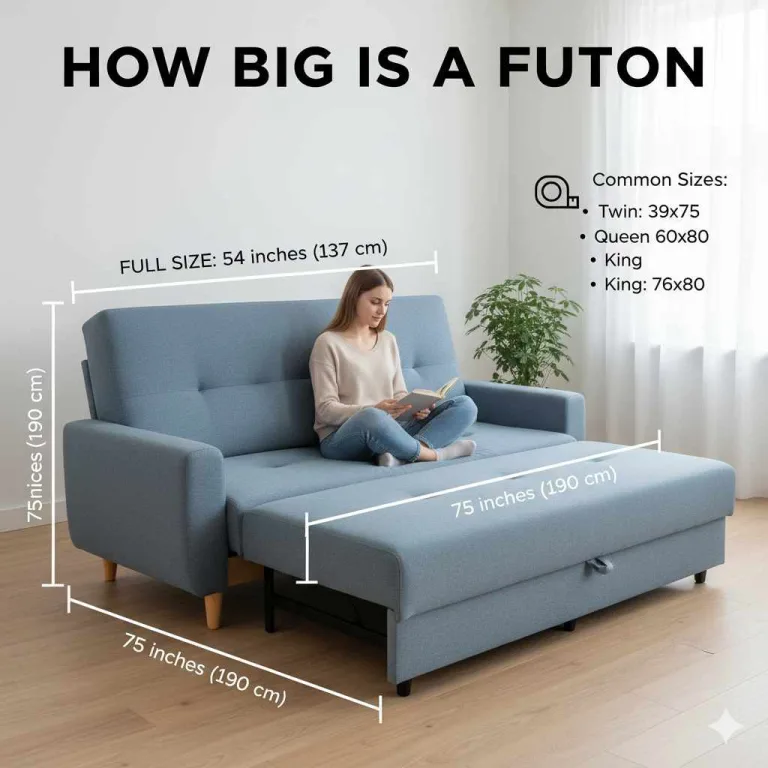
Measure the mattress itself, not the outer frame. Futon mattresses are usually sold in standard twin, full, and queen sizes, and the open surface should guide sheet size. Manufacturer sizing pages and bedding references commonly list twin at 39 x 75 inches, full at 54 x 75 inches, and queen at 60 x 80 inches.
- Twin: 39 x 75 inches
- Full: 54 x 75 inches
- Queen: 60 x 80 inches
Step 2: measure mattress thickness before choosing sheets
Thickness determines whether a fitted sheet stays seated when the futon folds. A thinner mattress usually needs a closer pocket and stronger elastic hold, while a thicker mattress needs a deeper pocket and more corner room. For futons that convert often, low-bulk bedding is easier to smooth and less likely to pop free.
Step 3: decide how often the futon folds
Daily-use futons need low-profile layers that reset fast, while guest-use futons can tolerate a little more loft because they fold less often. The more frequently the bed closes, the more important it is to keep seams, fill, and protector bulk away from the hinge. That same logic also applies to futon mattress size selection.
| Step | What to measure or choose | Best fit target | Daily-use futon | Guest-use futon |
|---|---|---|---|---|
| 1 | Sleeping width and length | Match twin, full, or queen to the usable surface | Exact surface match with little overhang | Exact surface match with room for a softer drape |
| 2 | Mattress depth | Choose sheet pocket depth that sits below the edge | Low-profile, snug elastic hold | Deeper pocket if the mattress is thick |
| 3 | Sheet depth, blanket type, protector profile | Low-loft, machine-washable layers | Fitted sheet, thin protector, quilt or light blanket | Fitted sheet, breathable protector, duvet or medium quilt |
Step 1: confirm the sleeping width and length. Step 2: confirm mattress depth. Step 3: assign sheet depth, blanket type, and protector profile for daily-use versus guest-use futons.
Choose bedding by how the futon is used
Daily-use futons need low bulk and a fast reset. Guest-use futons can take a little more loft because they fold less often. The real choice is how often the bed closes, how quickly you need to remake it, and how much washing you want to do. The futon’s role in the room matters more than the frame style alone.
Daily-use futon: low bulk and quick setup
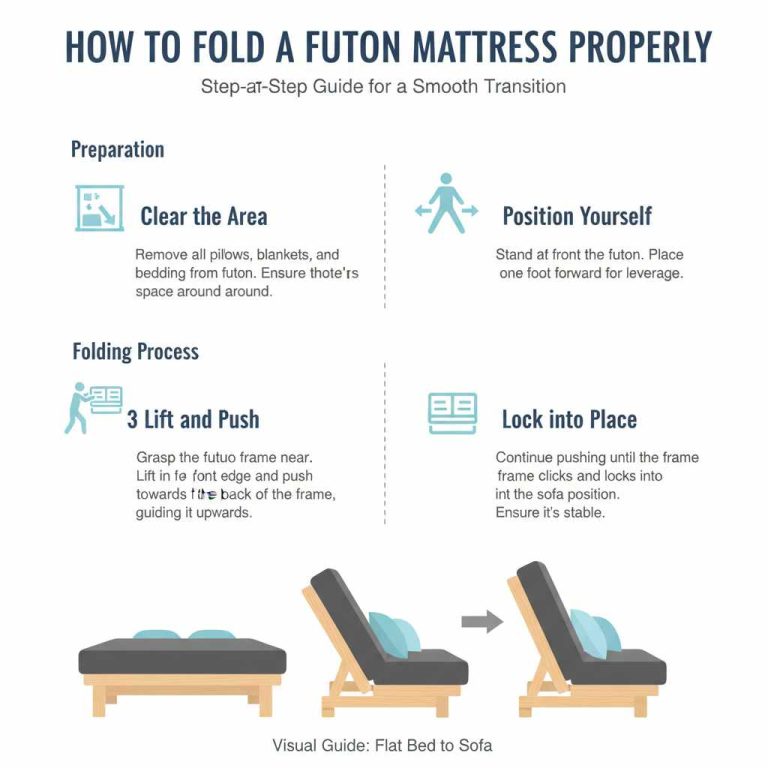
If the futon opens every night, keep the stack simple. A fitted sheet with strong corner hold, a low-profile protector, and a lightweight blanket or quilt usually fold better than a thick comforter. Less bulk means fewer corner pop-offs and less sheet creep at the hinge, especially when the futon frame is converted daily.
For everyday sleeping, choose machine-washable layers that dry quickly. Cotton is a dependable option for frequent laundering, and breathable jersey or percale weaves generally feel less stuffy than smoother, more sealed fabrics. Bedding that can be washed often is easier to keep fresh on a futon that doubles as seating.
Guest-use futon: easier comfort layering
If the futon stays open most of the time, you can use a little more loft. A duvet with a medium insert, or a quilt with a separate topper, is easier to justify when folding is occasional. The frame still needs clearance, but you have more room to focus on softness and visual layering.
Guest-use setups also tolerate more decorative bedding because they are not compressed every day. That said, bulky inserts can still make the bed look rumpled when folded into sofa mode, so keep overhang controlled and choose a top layer that settles flat.
Why fold frequency changes bedding choices
Every fold creates stress points at the hinge and corners. Thick seams, deep quilting, and oversized covers tend to move toward the fold line. The more often you convert the futon, the more you should choose low-loft, close-fitting layers that stay aligned during movement. This is why day-to-day futon bedding usually performs best when it is simple and snug.
Measure the sleeping surface and mattress depth
Measure the open sleeping surface first, then match bedding to that usable area rather than to the outer frame. Futon sizes still follow twin, full, and queen conventions, but arms, rails, and the fold point can change how much real sleeping space you have. Thickness matters just as much as width and length, especially if you want the bedding to stay smooth after repeated conversions.
Measure width and length on the open sleep surface
Use the mattress itself, not the frame, as your reference. A futon labeled full should still receive bedding sized for the full sleeping surface, with a little allowance for tuck-under and folding clearance. If the mattress is shortened by the frame or by rounded corners, buy for the surface that actually touches the sheet. This is the same logic behind checking what size sheets fit a futon before you shop.
Measure mattress thickness before buying sheets
Thinner futon mattresses usually need tighter, lower-profile bedding. Thicker mattresses need deeper-pocket fitted sheets and more secure elastic because the extra height increases corner lift during folding. Thickness also changes how much slack the sheet has when the frame closes, which affects whether the sheet stays smooth or bunches at the center seam.
Leave room for tuck-under and fold clearance
Leave enough fabric to tuck, but not so much that the sheet bunches under the hinge. As a practical rule, focus on a close fit at the corners and a clean line at the fold. If the bed closes daily, the best sheet is the one that keeps tension without fighting the frame. Breathing room matters, but extra slack usually creates more problems than it solves.
What size sheets fit a futon bed?

Futon beds usually take twin, full, or queen sheets, but the right size depends on the sleeping surface and mattress depth, not just the frame label. A standard fitted sheet can work when the mattress is within its stated depth range and the elastic stays anchored at the corners. Breathable cotton or cotton-blend bedding is usually easier to wash and refresh than heavy, slow-drying layers.
Twin, full, and queen futon sizing
Twin futons usually suit smaller apartments and narrower sofa-to-bed conversions. Full futons are common for guest rooms and multipurpose spaces. Queen futons give you more sleeping room, but they also increase sheet drag and make folding harder if the insert is thick. Standard bedding dimensions from mattress manufacturers and bedding guides support those twin, full, and queen size conventions.
For a full futon, one practical example is a cover sized for 54 x 75 inches, which is the size listed for the National Allergy futon cover. That exact match matters more than the frame shape when you want a sheet or cover to stay aligned.
Match the sheet to the mattress, not the frame
Use the mattress dimensions and depth as the buying target. A frame can be wider at the arms, shorter at the back, or shaped in a way that changes the apparent size. The sleeping surface is what needs the fit, because that is where the sheet stretches and where the fold line shifts. Bedding guides consistently stress measuring the mattress surface first, then choosing the sheet size from that measurement.
When a standard deep-pocket sheet is enough
A standard deep-pocket fitted sheet works when the futon mattress is within the sheet’s stated depth range and the corners remain seated after a few fold cycles. For example, PURE ERA lists a queen jersey fitted sheet with all-around elastic and a fit up to about 20 inches deep. That depth can suit thicker mattresses, but it may be more than some futons need, which can leave extra fabric to manage.
Do futons need special sheets or protectors?
Most futons do not require a special sheet type, but they often benefit from a more secure fit and lower profile than a standard guest bed. A standard fitted sheet can work if the pocket depth matches the mattress. A futon-specific cover or low-loft protector helps when the frame folds often or when the mattress is prone to slipping.
- Use standard sheets if the mattress size and depth are straightforward.
- Use a futon cover if you want the mattress fully enclosed.
- Use a low-profile protector if spills, sweat, or frequent washing are concerns.
How do you stop bedding from slipping off a futon?
Stop slippage by combining a well-sized fitted sheet with a low-slip base and, if needed, simple retention tools. Corner straps, sheet clips, and textured fabric surfaces all help, but they work best when the sheet depth matches the mattress height and the protector does not add extra glide. A good fit matters more than adding more layers.
Use fitted sheets with strong corner retention
Look for all-around elastic and enough pocket depth to sit below the mattress edge without pulling upward at the corners. Futons that fold often need a firmer hold than a guest bed because movement repeatedly lifts the corners. A sheet that is too shallow pops off fast; one that is too deep can creep and wrinkle. All-around elastic is a practical feature to look for, not a luxury.
Add corner straps, sheet clips, or a low-slip pad
When the sheet still shifts, add one retention layer at a time. Corner straps and sheet clips can hold the elastic in place, while a thin non-slip pad under the sheet reduces sliding. Start with one corner fix and recheck after a few fold cycles; too many add-ons can make the bed harder to remake. The goal is stability without turning the mattress stack into a bulky sandwich.
Say your full futon shifts every time it converts from sofa to bed. A fitted sheet with deeper corners may solve the problem if the mattress is 6 to 8 inches thick; if it still creeps, add sheet clips before moving to a thicker pad. That keeps the setup low-profile and easier to fold.
Choose fabrics that do not slide easily
Textured cotton jersey tends to grip better than very slick fabrics. Breathable cotton and cotton jersey are also easier to wash often, while smoother synthetic fabrics can feel warmer and shift more on some protectors. Fabric breathability matters because bedding that traps heat and moisture is less comfortable, especially on a low-profile sleep surface close to the frame or floor.
Pick the top layer: blanket, quilt, duvet, or comforter

Choose the lightest layer that still gives the warmth you need. On a futon, bulk matters as much as insulation because every extra inch has to compress when the frame closes. A quilt usually stacks more cleanly than a thick comforter, while a duvet gives you the most control over warmth if the insert is not overly lofty.
Best blanket weight by season and use
For summer or warm apartments, a lightweight blanket or thin quilt is usually enough. In shoulder seasons, a medium-weight quilt or a light duvet insert provides more flexibility. In winter, use the warmest layer that still closes cleanly; if the futon folds daily, a lighter top layer is usually easier to manage than a heavy comforter.
- Summer: lightweight blanket or thin quilt
- Spring/fall: medium quilt or light duvet
- Winter: medium-to-warm layer with low bulk if the futon folds daily
Quilt versus comforter versus duvet on a futon
A quilt is often the best middle ground for a futon because it is flatter and easier to manage. A comforter is simple, but thicker fills can make folding awkward. A duvet offers the most flexibility because you can change covers and insert weight, though the insert can bunch if the cover is too large or too loose. For futon bedding, low loft usually wins.
| Top layer | Foldability | Warmth flexibility | Best use case |
|---|---|---|---|
| Quilt | Best | Moderate | Daily-use futons, smaller spaces, frequent folding |
| Duvet | Good if insert is not too lofty | Highest | Guest futons, seasonal layering, easy cover changes |
| Comforter | Fair to poor if thick | Moderate | Simple setups where folding is occasional |
Quince lists bamboo quilts starting from $100.00 and bamboo duvet covers starting from $94.00, with duvet cover sets starting from $124.00. Quince also lists bamboo sheet sets starting from $100.00 and bamboo fitted sheet sets starting from $72.00. Those price points matter because futon bedding often needs both fit and easy laundering, not a heavy top layer you will avoid using.
How loft and fill weight affect storage and closure
Higher loft means more trapped air and more resistance at the fold. If a futon closes daily, a low-fill quilt or a lighter duvet insert will usually keep the frame moving more easily. For a guest futon, more loft is acceptable because the bed spends less time closed. In a small apartment, the best top layer is often the one that looks neat both open and folded.
Futon bedding fit checklist
Use this three-step workflow to size bedding before you buy. It turns the decision into a fit check instead of a guess, and it helps separate daily-use futons from guest-use setups. It also keeps the sheet, protector, and top layer working together instead of competing for space.
| Step | What to measure or choose | Best fit target | Daily-use futon | Guest-use futon |
|---|---|---|---|---|
| 1 | Sleeping width and length | Match twin, full, or queen to the usable surface | Exact surface match with little overhang | Exact surface match with room for a softer drape |
| 2 | Mattress depth | Choose sheet pocket depth that sits below the edge | Low-profile, snug elastic hold | Deeper pocket if the mattress is thick |
| 3 | Sheet depth, blanket type, protector profile | Low-loft, machine-washable layers | Fitted sheet, thin protector, quilt or light blanket | Fitted sheet, breathable protector, duvet or medium quilt |
Step 1: confirm the sleeping width and length. Step 2: confirm mattress depth. Step 3: assign sheet depth, blanket type, and protector profile for daily-use versus guest-use futons.
Best futon bedding for small apartments
Small apartments benefit from bedding that does two jobs at once: it has to sleep comfortably and fold neatly into sofa mode. Lightweight cotton or jersey layers are easier to make, easier to store, and less likely to crowd the room visually. The best setup is usually simple, breathable, and fast to reset.
- Use one fitted sheet, one low-profile protector, and one top layer.
- Choose breathable fabrics that wash easily and dry quickly.
- Avoid oversized throws and heavy layered stacks that spill past the frame.
Our picks by need
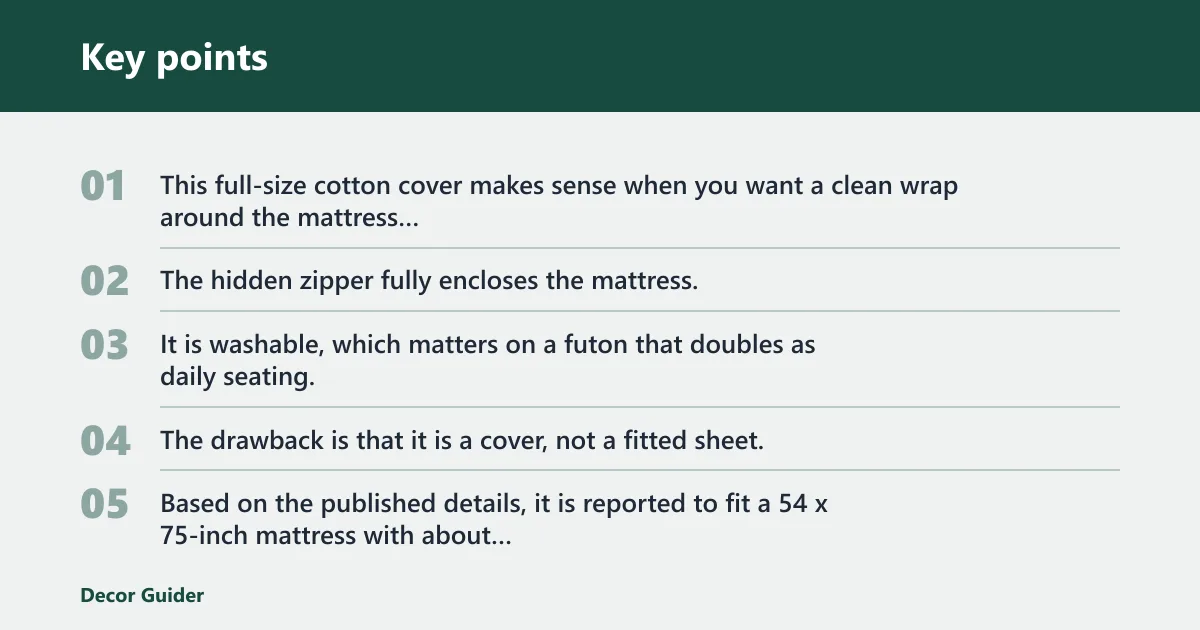
Low-bulk futon cover: National Allergy full futon cover

This full-size cotton cover makes sense when you want a clean wrap around the mattress and fewer loose edges. The hidden zipper fully encloses the mattress, which can help keep the surface aligned during folding. It is washable, which matters on a futon that doubles as daily seating.
The drawback is that it is a cover, not a fitted sheet, so it adds another layer to manage. Based on the published details, it is reported to fit a 54 x 75-inch mattress with about a 6- to 8-inch depth, so it is best for futons that stay within that profile.
Deeper-pocket sheet: PURE ERA jersey fitted sheet

This queen fitted sheet is a practical choice when you need stronger corner hold and more pocket depth. PURE ERA lists it as 100% cotton jersey with all-around elastic and a fit up to about 20 inches deep, which can help on thicker futon mattresses that tend to pop corners loose.
The tradeoff is that queen depth and extra fabric can be more than a slim futon needs, especially if the bed folds every day. It is a better fit for a thicker mattress or a futon that stays open more often.
Waterproof low-profile protector: PlushDeluxe full mattress protector

This protector fits the futon use case where spills, sweat, and frequent washing matter. PlushDeluxe lists it as waterproof, breathable, noiseless, hypoallergenic, and washable, with fit up to 18 inches deep. The bamboo-derived fabric should help keep the feel softer than many plastic-backed covers, and breathable construction is useful on a bed that may sit close to the floor or fold often.
The main drawback is that waterproof protection can still add a bit of structure under the sheet. That is usually fine on a futon, but if the mattress is very thin, any extra layer can change how smoothly it folds. For floor use, moisture control and airflow matter even more because trapped humidity can build underneath the mattress.
How futon mattress thickness changes pocket depth
Mattress thickness is one of the biggest drivers of sheet fit. Shallow futons usually need closer pockets so the elastic can hold without excess slack, while thicker futons need more depth to stay secure. The goal is not just coverage; it is keeping the corners anchored when the frame moves.
| Futon thickness band | Typical pocket depth to look for | Fit note |
|---|---|---|
| 4 to 6 inches | Standard or closer-fit pocket | Too much depth can leave slack and bunching |
| 6 to 8 inches | Standard deep-pocket or firm elastic | Common range for many futon mattresses |
| 8 to 10+ inches | Deep-pocket sheet with strong all-around elastic | Helps prevent corner lift and sheet pop-off |
Mistakes to avoid
Do not buy only by frame size. A futon labeled full can still need different bedding if the sleeping surface is compressed, rounded, or thicker than expected. Do not choose a thick comforter first and hope the folding will sort itself out. That is where bunching starts, and it makes the frame harder to close cleanly.
A common first-timer mistake is using a sheet with too much pocket depth on a slim futon. The corners hold for a while, then creep during folding and leave wrinkles across the center. Another mistake is skipping the protector profile check; a bulky waterproof layer can make the bed harder to close. Breathability matters too, especially if the futon sits low or directly on the floor.
For daily-use futons, keep laundering simple. Heavy inserts that need special care often stay on the bed too long, which makes the sleeping surface hotter and the fold less tidy. If the futon closes every day, use the lightest layer that still gives the warmth you need. Bedding that dries quickly is easier to maintain and easier to keep fresh.
Frequently asked questions
Can you put a mattress on a futon?
Yes, if the mattress matches the futon frame and the folding motion still works. A futon mattress should sit flat enough to close without binding at the hinge, and the bedding should be sized to the mattress surface rather than the outer frame. Thick, rigid mattresses are harder to manage and often need more careful sheet selection.
Can you put a futon mattress on the floor?
Yes, but floor use changes airflow and moisture control. If you place a futon mattress on the floor, use a breathable protector and lift it regularly so moisture does not collect underneath. A floor setup also removes the folding concern, so bedding can be slightly less compression-sensitive, but ventilation becomes more important because the underside gets less air circulation.
What bedding works best for sleeping on a futon every night?
A fitted sheet with strong corner retention, a low-profile protector, and a lightweight quilt is the most reliable everyday setup. That combination gives enough comfort without making the bed hard to close. Cotton and bamboo are the easiest fabrics to wash often and keep comfortable. A daily-use futon usually does best with the simplest possible layer stack.
How do I layer bedding on a futon that folds daily?
Start with the mattress protector, then add a fitted sheet, then a thin top layer such as a quilt or light blanket. Keep seams and bulk away from the fold line. If the corners slip, add sheet clips or corner straps before choosing thicker bedding. That keeps the stack low and reduces the chance of the bedding catching at the hinge.
Should I use a duvet, quilt, or comforter on a futon?
A quilt is usually the easiest choice for a daily-folding futon because it lies flatter and stores more cleanly. A duvet works when you want flexible warmth, but it can be too bulky if the insert is heavy. Comforters are simplest, though they often take up the most space. If the futon stays open most of the time, a duvet becomes easier to justify.
What is the difference between sleeping on a futon and sleeping on a bed?
The bedding implications are mostly about thickness, foldability, and airflow. A bed usually gives you more freedom to use thicker layers, while a futon needs bedding that compresses cleanly and stays anchored. On a futon, low-loft layers and secure sheets matter more because the same surface often serves as both seating and sleep space.
What size sheets fit a futon in a small apartment?
In a small apartment, the right sheet size is still the mattress size, but the room layout raises the stakes. Bedding should be easy to strip, wash, and remake without taking over the space. A close-fitting sheet, a thin protector, and one manageable top layer usually work better than a layered stack that is hard to fold and store.
Products related to this article
Sponsored / affiliate links. As an Amazon Associate I earn from qualifying purchases. I may earn additional commission from eligible campaigns.