What Is A Futon Sofa? Everything You Should Know
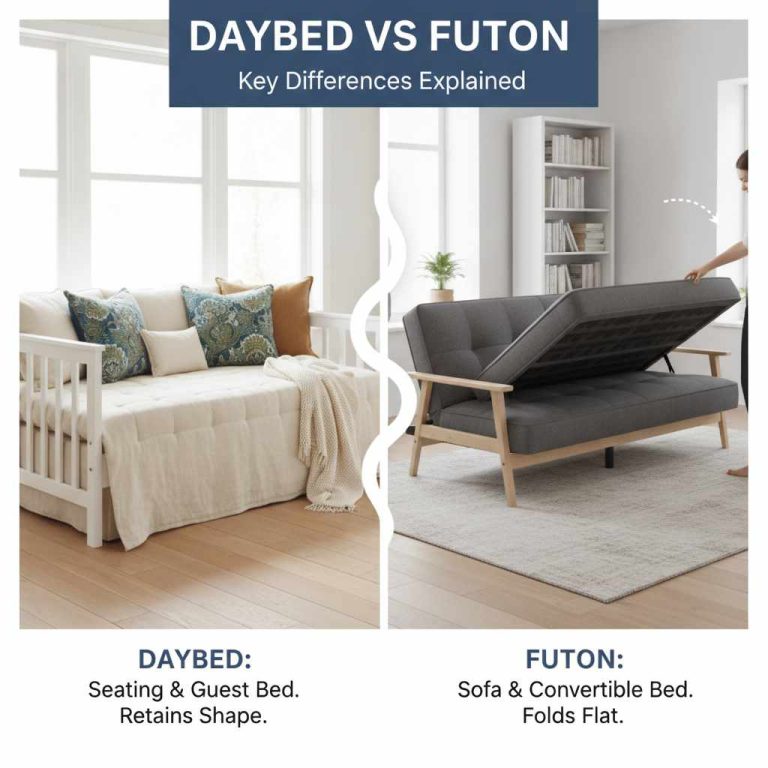
A futon sofa is a type of sofa that can also convert into a bed. It typically features a mattress that folds over a frame. This dual function makes it a popular choice for small spaces, guest rooms, or multi-purpose living areas.

Furmax
Furmax Leather Futon Sofa Bed, Adjustable Futon…
- Futon: The futon in modern shape suits well with most living rooms, business offices, apartments, and dorms, stylish and versertil…
- Sofa Bed: This futon couch can funtion as a sleeper bed to accommodate your guests, grandchild, or lovely pets.
- Easy Adjustable: The back of futon sofa has 3 positions adjustble, as a sofa for normal use, or a recliner with cups of drink, or…
As an Amazon Associate I earn from qualifying purchases.
For a closely related home or decor topic, How To Fix A Sofa Frame: Repair gives readers a useful next step.
For another cleaning or care problem, How To Deep Clean A Sofa Like A Pro gives readers a useful next step.
For a closely related home or decor topic, How To Decorate Above A Sofa: Stylish Ideas gives readers a useful next step.

What Exactly Is a Futon Sofa?
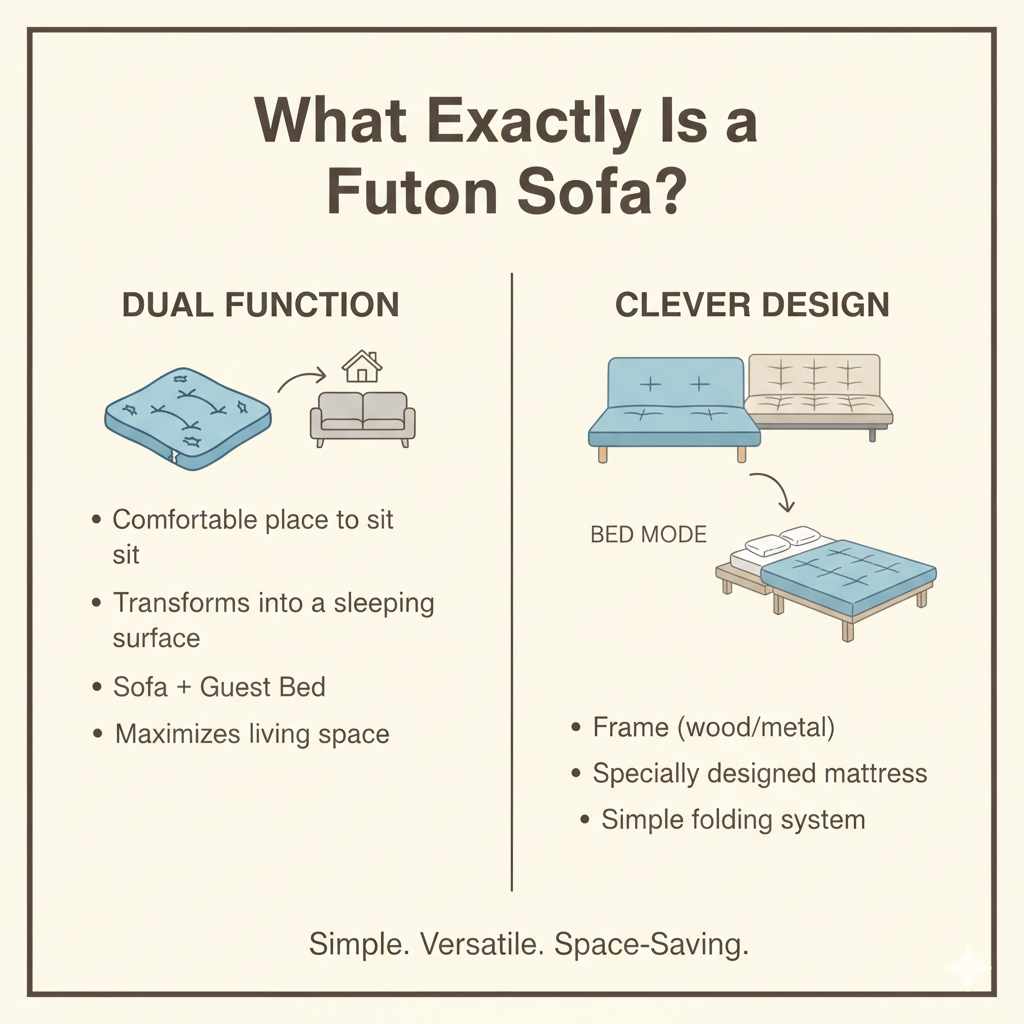
At its heart, a futon sofa is a furniture item with two main jobs. It serves as a comfortable place to sit, much like a regular sofa or couch. But here’s the clever part: it can also transform into a sleeping surface.
Think of it as a sofa that’s also a guest bed, ready when you need it. This makes it super useful for people who want to make the most of their living space.
The design usually involves a frame, often made of wood or metal. On top of this frame rests a mattress. This mattress is specially designed to be comfortable for both sitting and sleeping.
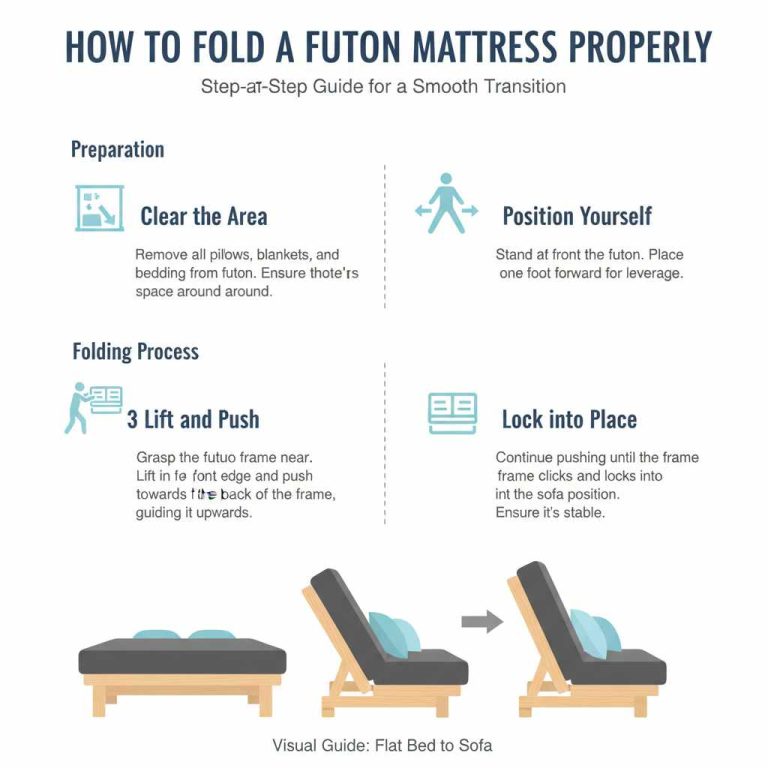
When you want a sofa, the mattress is folded into a seating position. When you need a bed, you simply unfold the mattress and lay it flat on the frame. It’s a pretty simple system that’s been around for a long time.
A Little Bit of History: Where Did Futons Come From?
The idea behind the futon isn’t actually new. It comes from Japan. For centuries, people in Japan have used futons for sleeping.
These traditional Japanese futons are mattresses that can be easily stored away during the day. This helps save space in homes, which are often quite small. The Japanese futon is usually placed directly on the floor or on a tatami mat.
In the Western world, the concept of the futon sofa really took off more recently. Designers and furniture makers saw the potential of the Japanese futon’s space-saving qualities. They adapted the idea to create furniture that could serve double duty.
They combined the idea of a sofa with the foldable mattress concept. This led to the futon sofas we see today, often with more robust frames and thicker mattresses than their traditional Japanese ancestors.
This blend of Eastern design and Western needs created a unique piece of furniture. It’s known for its practicality. It’s a smart solution for apartment dwellers.
It’s also great for anyone who likes to entertain guests. The history shows us that it’s a design born out of a need for efficiency and comfort. It’s a piece of furniture that has evolved but kept its core purpose intact.
Understanding the Parts: Frame and Mattress
When you look at a futon sofa, there are two main parts to consider: the frame and the mattress. These two pieces work together to give you both seating and sleeping options.
The frame is the backbone of the futon. It provides the structure and support. Futon frames come in many styles and materials.
You’ll often see frames made from solid wood. Oak, pine, and maple are common choices. These wooden frames can give a warm, traditional look to your room.
Metal frames are also very popular. They can offer a more modern or industrial feel. Metal frames are often lighter and can be quite durable.
The design of the frame dictates how the futon folds and unfolds. Some frames are simple and basic. Others have more features, like built-in storage or decorative elements.
The mattress is just as important as the frame. It’s what you sit on and sleep on. Futon mattresses are different from regular mattress.
They need to be firm enough to support you when sitting. They also need to be soft enough for a good night’s sleep. Futon mattresses are usually thinner than standard mattresses.
They are made with layers of different materials. Common materials include foam, cotton, and polyester. Some mattresses have innersprings for extra support.
The thickness and firmness of the mattress can greatly affect comfort. A good futon mattress strikes a balance between support and plushness.
Types of Futon Sofas: More Than You Might Think
Not all futon sofas are the same. They come in different styles and with different mechanisms. Understanding these types can help you pick the perfect one for your home.
One common type is the sofa bed futon. This is what most people picture. It looks like a regular sofa.
You can pull out a hidden mattress from underneath or unfold the back cushions. These often have more padding and look more like traditional furniture. They are designed to blend in with other living room decor.
Then there are the more traditional Japanese-style futons. These are simpler. They usually involve a thin mattress and a basic frame.
They are meant to be very easy to fold and store. They don’t typically have the plush feel of a Western sofa, but they are excellent for saving space.
Some futons are designed with a split-back. This means you can adjust the back of the sofa independently. One side can be up as a seat, while the other side is down in a recline position.
This allows one person to sit up while another lounges back. It adds a lot of versatility.
There are also futon frames that are bi-fold or tri-fold. This refers to how the mattress is folded over the frame. A bi-fold futon typically folds in half.
A tri-fold futon folds into three sections. Tri-fold futons often have a more compact folded size. They can sometimes be easier to convert from sofa to bed.
Finally, you have futon chairs. These are essentially single-seater futons. They are perfect for small apartments or dorm rooms.
They offer a comfortable seat that can also fold out into a twin-sized bed.
Futon Sofa Styles at a Glance
Traditional Sofa Bed: Looks most like a regular sofa, comfortable for sitting and sleeping. Often has a thicker mattress.
Japanese Style: Thin mattress, simple frame, very space-saving, can be stored away.
Split-Back Futon: Backrest can be adjusted on each side independently for different comfort levels.
Bi-Fold/Tri-Fold: Refers to how the mattress is folded on the frame. Tri-fold is more compact when stored.
Futon Chair: A single-seat version that converts into a small bed.
Why Choose a Futon Sofa? The Many Benefits
So, why would someone choose a futon sofa over a traditional sofa? The reasons are many, and they often come down to practicality and smart living.
The biggest benefit is space-saving. This is key for many people. In small apartments, studios, or guest rooms, a futon sofa is a game-changer.
It allows you to have a comfortable seating area during the day. Then, when guests arrive or you need an extra bed, it’s there. You don’t need a separate guest room or a bulky extra bed that takes up space all the time.
It’s furniture that does more with less footprint.
Versatility is another huge plus. A futon sofa can easily adapt to your needs. It can be a sofa for watching TV.
It can be a bed for sleeping. Some can even recline to a lounger position. This adaptability makes it a smart investment.
It fits different lifestyles and changing needs within a home.
Cost-effectiveness is often a factor too. Generally, futon sofas can be more affordable than buying a separate sofa and a guest bed. You get two pieces of furniture in one.
This can save you money, especially if you’re on a budget. The range of prices means you can find options for almost any budget, from very inexpensive to more high-end models.
Ease of use is another advantage. Modern futon mechanisms are often very simple to operate. Converting them from sofa to bed usually takes just a few seconds.
There’s no heavy lifting or complicated assembly required. This makes them ideal for people of all ages and physical abilities.
Finally, there’s the style. Futon sofas have come a long way. They are no longer just basic, clunky pieces of furniture.
You can find them in a wide array of styles, colors, and materials. They can complement almost any home decor, from modern and minimalist to cozy and traditional.
Are There Downsides? Potential Drawbacks to Consider
While futon sofas offer many great advantages, it’s also important to be aware of potential drawbacks. Knowing these can help you make a well-informed decision and avoid disappointment.
One common concern is comfort. While futon mattresses have improved greatly, they might not be as comfortable as a high-quality traditional mattress. For everyday sleeping, especially for people with back issues, a futon might not offer enough support or cushioning.
The mattress is often thinner and less specialized than a dedicated bed mattress.
Durability can sometimes be an issue, depending on the quality. Cheaper frames might bend or break over time. Flimsy mechanisms can become stiff or difficult to operate.
The mattress itself can wear out or develop sags if it’s not made with good materials or if it’s used heavily for sleeping every night.
Aesthetics can be a drawback for some. While styles have improved, some futon sofas still look distinctly like futons. They might not have the plush cushions, deep seating, or luxurious feel of a high-end traditional sofa.
If you’re aiming for a very formal or sophisticated living room, a futon might not fit the bill.
Size and weight can also be a consideration. While they save space when converted to a bed, when in sofa form, they can still be quite bulky. Moving a futon sofa can be challenging due to its size and often heavy frame.
The mattress can also be cumbersome to handle when converting.
Finally, some futon designs might not offer the same level of lumbar support or ergonomic comfort as a well-designed traditional sofa. This means longer sitting sessions might not be as comfortable for everyone.
Futon Sofa Reality Check: Pros vs. Cons
Pros: Space-saving, versatile (sofa & bed), cost-effective, easy to use, stylish options available.
Cons: Comfort may be less than a regular bed, durability varies by quality, aesthetics might not suit all formal decors, can be bulky to move.
What to Look for When Buying a Futon Sofa
Choosing the right futon sofa involves looking beyond just the price tag. You need to consider several factors to ensure you get a piece that fits your needs and lasts.
First, consider the frame material and construction. For wood frames, look for solid wood rather than particleboard or veneer. Check that joints are well-made and sturdy.
For metal frames, ensure the metal is strong and the welds are solid. A good frame should feel stable and not wobble when you sit on it.
Next, focus on the mattress quality. This is crucial for comfort. Look for mattresses that are at least 5 to 6 inches thick.
Check the materials used. A good blend of foam, cotton, and polyester can offer a good balance. Innerspring options can provide more support.
Read reviews about the mattress comfort. Remember, you can often
Think about the conversion mechanism. How easy is it to change from sofa to bed? Does it require a lot of force?
Does it operate smoothly? Test it out if you can. Some mechanisms are more user-friendly than others.
A smooth glide is a sign of good engineering.
Consider the size and dimensions. Measure your space carefully. Check the dimensions of the futon in both sofa and bed modes.
Make sure it fits comfortably in your room. Also, consider the size of the doorframes and hallways for delivery. A large futon might be a challenge to get into your home.
Look at the upholstery and style. The fabric should be durable and easy to clean. Consider the color and pattern to match your decor.
Many futons come with removable covers, which is a big plus for cleaning and style updates.
Finally, read customer reviews and ratings. See what other people are saying about the specific model you’re interested in. Pay attention to comments about comfort, durability, and ease of use.
This real-world feedback is invaluable.
Common Misconceptions About Futons
There are a few ideas about futons that aren’t quite true anymore. Let’s clear some of them up.
Myth: Futons are only for dorm rooms or spare rooms.
Reality: While they are great for those spaces, modern futons can be stylish enough for any living room. Many designs look just like regular sofas.
Myth: Futon mattresses are always hard and uncomfortable.
Reality: Mattress technology has advanced. You can find futon mattresses with memory foam, gel foam, and innerspring systems that are very comfortable. Quality varies, so choosing wisely is key.
Myth: Futons are difficult to convert from sofa to bed.
Reality: Most modern futons have very simple and smooth conversion mechanisms. They are designed for ease of use.
Myth: Futons are cheap and low-quality.
Reality: You can find very affordable futons, but there are also high-end, well-made futons that are durable and comfortable. The price often reflects the quality of materials and construction.
Myth: Futons don’t last long.
Reality: A well-made futon from a reputable brand can last for many years, just like a traditional sofa. It depends on the materials and how it’s used.
Futon Facts: Separating Myth from Reality
Myth: Only for dorms. Fact: Stylish enough for any room.
Myth: Always hard. Fact: Modern options are very comfortable.
Myth: Hard to convert. Fact: Most are simple and smooth.
Myth: Always low quality. Fact: High-quality options exist.
Myth: Don’t last. Fact: Can be durable with good construction.
Futon Sofas in Real Homes: My Experience
I remember when I first moved into my tiny city apartment. I had a living room that was also my dining room and my office. A traditional sofa felt like too much.
It would take up too much space and make the room feel cramped. I started looking for something that could do double duty. That’s when I stumbled upon the idea of a futon sofa.
My first futon was a basic model. It had a metal frame and a simple cotton mattress. It looked okay, but honestly, sleeping on it wasn’t the most luxurious experience.
It was firm, a bit too firm for my liking, and I could feel the bars of the frame sometimes if I moved just right. It did its job, though. When friends came over, I could quickly fold it out.
They had a place to sleep, and I didn’t have to feel guilty about not having a spare room.
One night, I had a friend stay over unexpectedly. It was raining hard, and they couldn’t make it home. I quickly converted the futon into a bed.
As I was pulling it out, I noticed one of the frame’s support legs was a bit wobbly. A wave of slight panic hit me. What if it broke in the middle of the night?
I spent a few minutes checking the connections and tightening what I could. It held up, thankfully. But that experience taught me a lot about the importance of checking the frame’s sturdiness and not just assuming it will be fine.
Later, I upgraded to a futon with a solid wood frame and a thicker, better-quality mattress. The difference was night and day. The wood frame felt solid and warm.
The new mattress had layers of foam and felt much more forgiving. My guests started actually complimenting the sleeping comfort! It made me realize that not all futons are created equal.
Investing a little more in a good frame and mattress made a huge difference in both comfort and peace of mind. It went from being a purely functional piece to something I genuinely enjoyed having in my living space. It truly transformed how I used my small apartment.
Maintaining Your Futon Sofa for Longevity
To get the most out of your futon sofa, a little care goes a long way. Proper maintenance can keep it comfortable and functional for years.
Regularly clean the upholstery. Spot clean spills immediately with a mild soap and water solution. For deeper cleaning, check the manufacturer’s instructions.
Some covers are removable and machine washable, which is a huge convenience.
Rotate and flip the mattress. Just like a regular mattress, futon mattresses can benefit from being rotated and flipped every few months. This helps to even out wear and tear.
It prevents sagging in one spot and ensures more consistent comfort.
Check the frame periodically. Make sure all screws and bolts are tightened. If you have a wooden frame, inspect it for any signs of cracking or damage.
For metal frames, check for rust or bent parts. Address any issues promptly to prevent them from becoming bigger problems.
Operate the mechanism gently. Don’t force the frame. If it feels stiff, check for any obstructions.
Lubricating the moving parts occasionally can help them work more smoothly. Consult your manual for any specific lubrication recommendations.
Avoid excessive weight. While futons are designed to hold people, avoid placing extremely heavy objects on them for extended periods, especially when in sofa mode. This can put undue stress on the frame and mattress.
Protect from direct sunlight. Prolonged exposure to direct sunlight can fade upholstery fabrics and degrade mattress materials over time. Position your futon away from windows that get intense sun if possible.
Quick Futon Care Checklist
- Clean Upholstery: Spot clean spills, follow care labels.
- Rotate Mattress: Flip and rotate every 3-6 months.
- Tighten Frame: Check and tighten screws/bolts regularly.
- Gentle Conversion: Operate mechanism smoothly, no forcing.
- Avoid Overloading: Don’t place excessively heavy items.
- Sun Protection: Keep away from direct, intense sunlight.
What This Means for Your Home
Understanding what a futon sofa is can really help you make smart choices for your living space. If you live in a smaller home or apartment, a futon can be a lifesaver. It lets you use your space more efficiently.
You can have a comfortable living area without sacrificing a place for guests to sleep. It means less clutter and more flexibility.
Even if you have a larger home, a futon can be a great addition. Consider it for a home office that sometimes needs to become a guest room. Or perhaps for a den or playroom where kids can gather and then crash for a sleepover.
It offers a practical solution for multi-use rooms. It’s a way to maximize the functionality of every room in your house.
It also means you don’t have to settle for uncomfortable sleeping arrangements for guests. With a good quality futon, your visitors can actually get a decent night’s sleep. This makes hosting much more enjoyable for everyone.
It shows you’ve put thought into their comfort.
So, when you’re thinking about furniture, consider the futon sofa. It’s not just a sofa, and it’s not just a bed. It’s a smart piece of furniture designed for modern living.
It’s about making your home work better for you and your lifestyle.
When Is a Futon Sofa the Right Choice?
You might be wondering if a futon sofa is the right fit for your specific situation. Here are some scenarios where it shines:
Small Apartments or Studios: This is the classic use case. If every square foot counts, a futon sofa provides seating and sleeping without needing a separate bed.
Guest Rooms or Multi-Purpose Rooms: If you have a room that serves as an office, gym, or hobby space but also needs to accommodate overnight guests, a futon is perfect. It can be tucked away during the day and easily deployed at night.
Dorm Rooms: College students often have limited space. A futon provides a place to sit and study, and a bed for late-night study sessions or when friends visit.
First-Time Homeowners or Renters: When budgets are tight and space is limited, a futon offers a cost-effective way to get essential furniture that serves multiple purposes.
Vacation Homes or Rentals: In places where space is at a premium or you want flexible sleeping arrangements for different numbers of guests, futons are practical.
As a Secondary Sofa: Even in a larger home, a futon can be great in a family room, basement den, or bonus room. It offers extra seating and a convenient place for sleepovers.
Essentially, if you value flexibility, space efficiency, and a good balance of comfort and cost, a futon sofa is likely a great choice for you.
Quick Fixes and Tips for Futon Sofas
While futons are generally low-maintenance, here are a few tips to keep yours in great shape and enhance your experience.
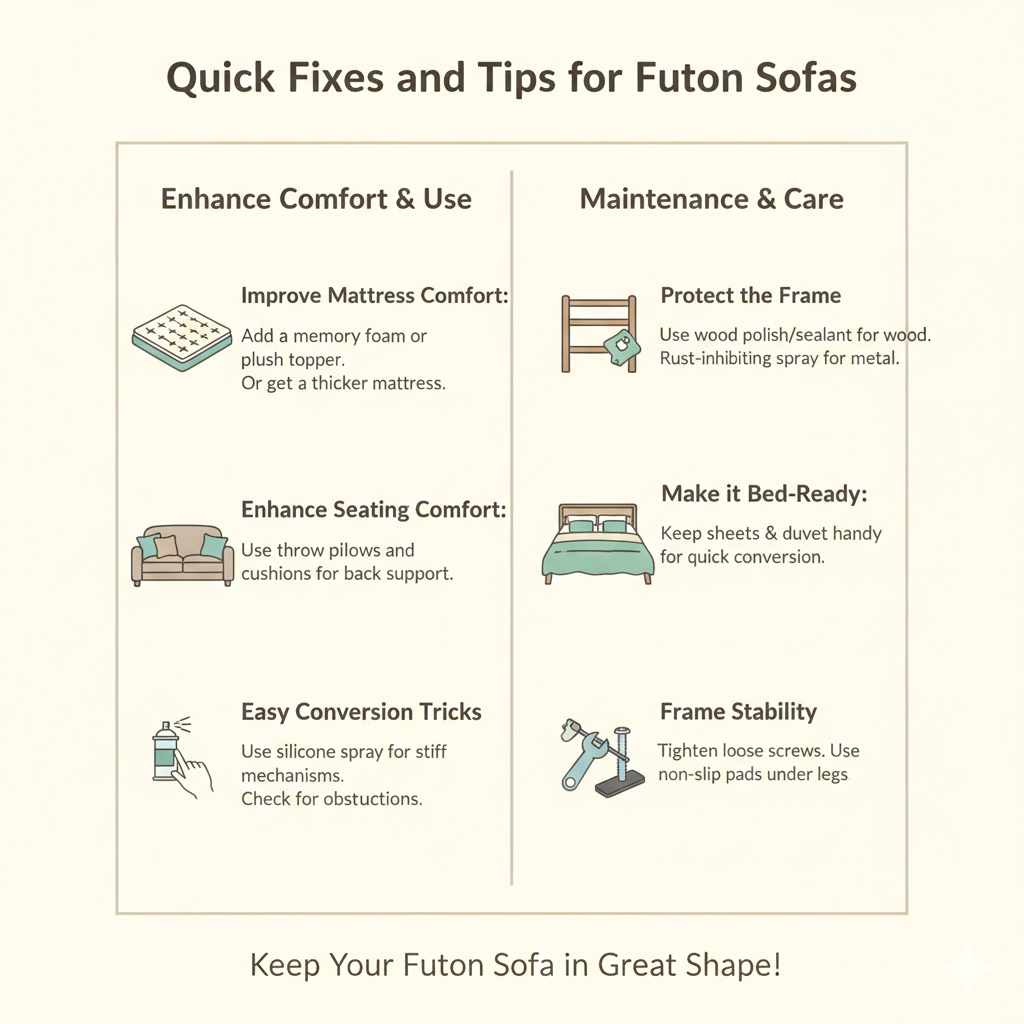
Improve Mattress Comfort: If your futon mattress feels a bit firm, consider adding a mattress topper. Memory foam or a thick, plush topper can make a big difference. You can also get a thicker futon mattress specifically designed for comfort.
Enhance Seating Comfort: Throw pillows and cushions can make sitting on a futon much more comfortable, especially if the mattress is on the firmer side.
Easy Conversion Tricks: If the conversion mechanism feels a bit stiff, a little silicone spray lubricant can often help. Always ensure there are no obstructions under the frame before converting.
Protect the Frame: If you have a wooden frame, consider applying a wood polish or sealant to protect it from scratches and spills. For metal frames, a rust-inhibiting spray can be useful in humid environments.
Make it Bed-Ready: Keep a set of futon sheets and a duvet or comforter handy. Having them easily accessible makes converting to a bed much quicker and more convenient when needed.
Frame Stability: If your frame feels a bit loose, check all the screws and bolts and tighten them. For some frames, non-slip pads under the legs can also add stability and prevent scratching floors.
Frequently Asked Questions About Futon Sofas
Are futon sofas good for sleeping on every night?
For most people, a futon sofa is best used as a guest bed or for occasional sleeping. While quality has improved, they may not offer the same long-term support and comfort as a dedicated mattress for nightly use. However, with a high-quality mattress and frame, some people find them suitable for regular sleeping.
How do I choose the right size futon sofa?
Measure your space carefully where the futon will be placed. Note the dimensions in both sofa and bed form. Consider how much room you need to walk around it.
Also, think about the size of the bed you need – futons typically convert to twin or full-size beds.
Can I replace the futon mattress?
Yes, most futon mattresses are designed to be replaceable. You can buy new futon mattresses in various materials, thicknesses, and firmness levels to suit your comfort preferences. Ensure the new mattress is the correct size for your futon frame.
What is the difference between a futon sofa and a sofa bed?
The terms are often used interchangeably, but traditionally, a futon sofa refers to a piece with a mattress that folds over a frame. A sofa bed (or pull-out sofa) typically has a mattress hidden inside the sofa, which is pulled out on a metal frame. Futons often have a more distinct mattress and frame construction.
How much weight can a futon sofa typically hold?
This varies greatly by the quality and construction of the frame. Cheaper, lighter frames might hold around 200-300 pounds. Higher-quality, robust frames made from solid wood or thick metal can often support 500 pounds or more.
Always check the manufacturer’s specifications for weight limits.
Are futon sofas easy to assemble?
Most futon sofas require some assembly, but they are generally designed to be relatively straightforward. They usually come with instructions and all the necessary hardware. Some may require two people for easier assembly due to the size of the parts.
Conclusion
So, what is a futon sofa? It’s a clever piece of furniture that blends seating and sleeping. It’s a practical solution for modern homes, especially where space is limited.
With so many styles and options available, you can find one that perfectly suits your needs and your home’s decor. Think about your space, your comfort needs, and your budget. Then, you can embrace the versatility and efficiency that a futon sofa offers.
Related pick: Check today's price on Amazon
Products related to this article
Sponsored / affiliate links. As an Amazon Associate I earn from qualifying purchases. I may earn additional commission from eligible campaigns.