
What Does A&E Stand For On Tv? Full Meaning
This channel has been around for a while, and its name has a specific history behind it. Understanding what A&E stands for can give you a better idea of the kinds of shows they aim to bring to your screen. It’s more than just a logo; it’s a hint at their original mission and their evolving focus.
For another TV setup decision, Are Electric Fireplace TV Stands Safe? gives readers a related next step before choosing or installing furniture.
We’re going to break down the full meaning of A&E. We’ll look at its origins, how its programming has changed over the years, and what you can typically expect to find when you tune in. Think of this as your friendly guide to unlocking that mystery behind the A&E acronym.
A&E stands for Arts & Entertainment. Originally, this name reflected the network’s focus on cultural, performing, and visual arts, alongside historical documentaries and theatrical productions. While the programming has diversified, the name hints at its roots in presenting a broad spectrum of engaging, often thought-provoking, content.
The Roots of A&E: Arts & Entertainment
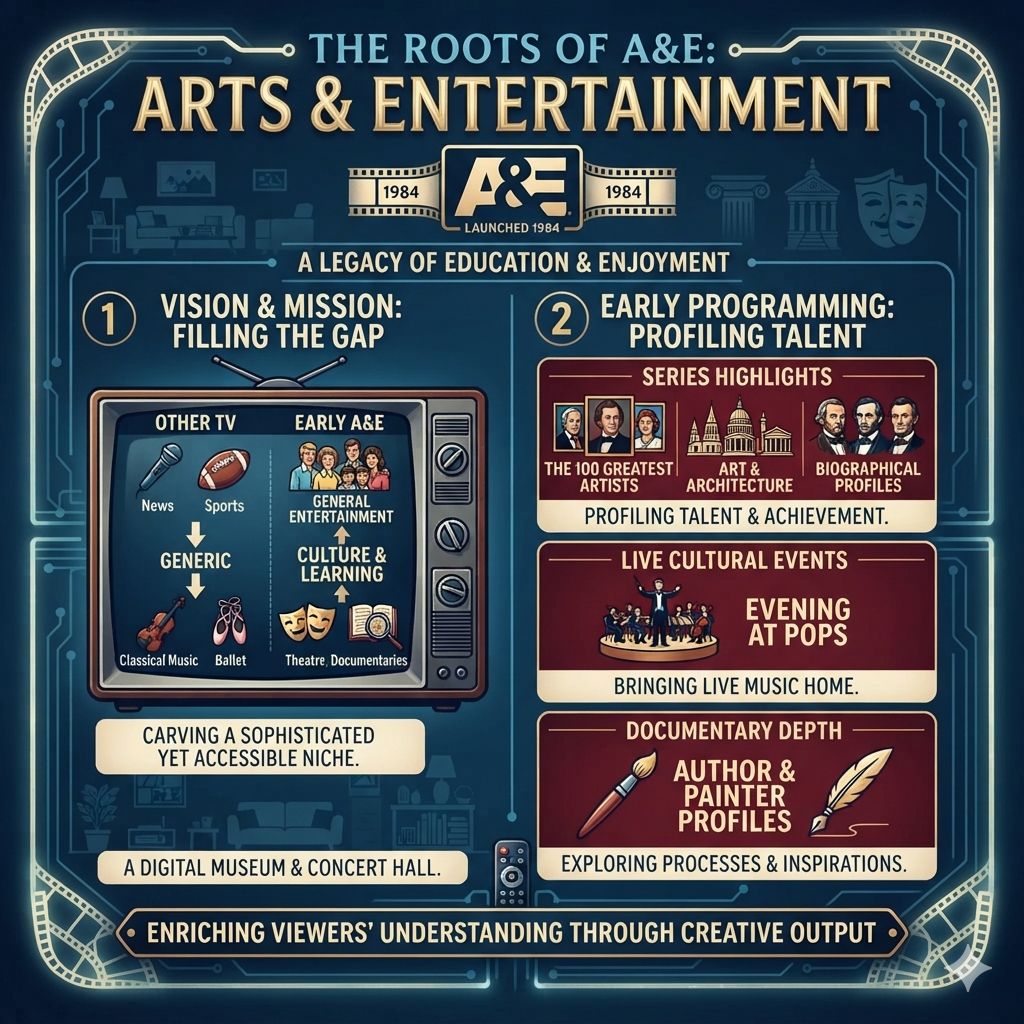
When A&E first launched way back in 1984, its name was a direct reflection of its content. The network was founded with the goal of bringing a different kind of television to American homes. The founders wanted to offer programming that was both educational and enjoyable.
They envisioned a channel that would explore the world of Arts & Entertainment.
This meant you’d find shows about classical music, ballet, and theatre. Documentaries focused on famous artists, historical events, and scientific discoveries were also a big part of their lineup. It was a place for learning and for appreciating culture.
Think of it as a digital museum and concert hall rolled into one. The network aimed to be sophisticated yet accessible.
The idea was to fill a gap in the television landscape. Many other channels focused on news, sports, or general entertainment. A&E carved out a niche by focusing on the finer things, or at least, what were considered the finer things at the time.
It was about expanding horizons and offering viewers something deeper.
A Look at Early A&E Programming
Back in the early days, A&E really leaned into its name. You might have seen series like “The 100 Greatest Artists.” Or perhaps “Art & Architecture” explored stunning buildings from around the globe. There were also biographical series about notable figures in history and the arts.
It was very much about profiling talent and achievements.
Shows like “Evening at Pops” brought live orchestral music right into living rooms. Documentaries delved into the lives of authors, painters, and musicians. It wasn’t just about the stars, but also the processes and inspirations behind their work.
This deep dive approach was what made A&E stand out.
The network often featured films and plays that might not have had mainstream appeal. It was a proving ground for diverse storytelling. Even their travel shows felt more like cultural explorations than typical vacation destinations.
The goal was always to educate and enrich the viewer’s understanding of the world through its creative output.
Evolution of the A&E Network
Over time, television networks, including A&E, need to adapt to changing audiences and market trends. While the core mission of providing engaging content remained, the interpretation of “Arts & Entertainment” began to broaden. Networks constantly seek ways to attract more viewers and advertisers.
This often means exploring different types of programming.
A&E started to incorporate more unscripted and reality-based shows. These were often still focused on interesting subjects or professions, but in a more documentary-style, real-life format. The “Arts & Entertainment” umbrella became quite large.
It could now encompass a wider variety of human stories and endeavors.
This shift wasn’t always smooth. Some viewers who loved the original arts programming might have felt left behind. Others found the new direction more relatable and captivating.
The network had to balance its heritage with the need to stay relevant in a competitive media environment. This is a common challenge for many established channels.
The Rise of Unscripted Content
One of the biggest changes for A&E was the move towards reality television and unscripted series. This began to pick up steam in the late 1990s and early 2000s. Shows that offered a look into specific professions, subcultures, or the lives of unique individuals started to become prominent.
The network found success with these formats.
Shows like “Dog the Bounty Hunter” became huge hits. This series followed a real-life bounty hunter and his family. It offered drama, action, and personal stories.
Another popular show, “Hoarders,” explored the lives of people struggling with extreme clutter. These programs, while not classical art, were still deeply human and often dramatic stories.
The network also ventured into crime and justice programming. Series like “The First 48” provided a real-time look at homicide investigations. This type of content still falls under the broad banner of “entertainment,” but it’s a far cry from the ballet and opera of its early days.
It taps into a different kind of viewer curiosity.
This shift helped A&E reach a wider demographic. Reality television, when done well, can be incredibly engaging. It offers a glimpse into worlds most people don’t experience.
It can be educational in its own way, showing different lifestyles, challenges, and triumphs. The network found a new way to interpret its original mandate.
Key Programming Shifts at A&E
Early Focus (1980s-1990s):
- Classical music concerts
- Ballet and opera performances
- Art documentaries and profiles
- Historical documentaries
- Theatrical productions
- Biographies of artists and thinkers
Later Focus (2000s-Present):
- Reality series (e.g., bounty hunters, unique professions)
- True crime and investigative shows
- Documentary-style series on various lifestyles
- Biographies and explorations of culture (modern interpretation)
What Does A&E Mean for Viewers Today?
So, if you tune into A&E now, what can you expect? While the name “Arts & Entertainment” still hangs there, the programming has definitely evolved. The network still aims to entertain, but the definition of what’s entertaining has broadened considerably.
Today, A&E is largely known for its focus on reality television and true crime.
You’ll find shows that explore criminal investigations, the lives of law enforcement officers, and sometimes the stories of people who have overcome extraordinary circumstances. This often involves compelling narratives, intense situations, and a look into the darker or more complex aspects of human experience. It’s about storytelling, but often of a more gritty nature.
However, it’s important to remember that networks can and do experiment with their content. While reality and crime are dominant, you might still stumble upon a documentary or a special series that harks back to the network’s earlier roots. A&E tries to maintain a balance, though the emphasis has clearly shifted.
The core idea is still to present content that is engaging and often tells a compelling story.
Popular A&E Shows and Genres
Some of the most recognizable shows on A&E fall into specific categories. True crime is a major one. Series that dissect past cases, follow current investigations, or explore the psychology of criminals are very popular.
These shows often have a serious tone and aim to be informative.
Reality television is another cornerstone. This can include shows about families, businesses, or people with unusual jobs or lifestyles. These programs often focus on interpersonal dynamics, challenges, and triumphs.
They provide a window into different ways of living.
You might also see series that explore historical events or figures, but often with a more modern, documentary-style approach. These aren’t usually the hour-long, in-depth documentaries you might have seen in the past. Instead, they are often shorter, more accessible segments within a broader series.
The aim is to capture interest and tell a story quickly and effectively.
A&E Today: A Snapshot
Genre Focus:
Primarily reality television and true crime.
Viewer Appeal:
Attracts audiences interested in human drama, investigations, and behind-the-scenes looks at various professions and lifestyles.
Programming Style:
Often features documentary-style filming, interviews, and dramatic narration.
Content Mix:
While its roots are in arts and culture, current offerings lean heavily towards compelling real-life stories and mysteries.
The “Arts” in Arts & Entertainment Today
It’s fair to ask if the “Arts” part of “Arts & Entertainment” still holds weight on A&E. The answer is nuanced. While you won’t find as many dedicated programs on classical music or fine art galleries as you used to, the spirit of exploration and human creativity is still present, just expressed differently.
Think about it: the people featured in A&E’s reality shows are often artists in their own right, whether they’re skilled tradespeople, entrepreneurs, or even law enforcement officers who have to think creatively. The network highlights individuals who are passionate, dedicated, and often push boundaries in their fields. That’s a form of art and entertainment.
The network’s true crime programming, while somber, often showcases incredible investigative work. The meticulous detail, the deduction, and the piecing together of complex puzzles can be seen as a form of intellectual art. It’s about understanding human behavior and solving intricate problems.
This requires a unique skill set and a certain kind of creative thinking.
Even shows about businesses or unique lifestyles often feature people who are deeply creative in their approach to their work or their lives. The passion and dedication they bring can be inspiring. So, while the definition has changed, the network still finds ways to showcase human ingenuity and compelling narratives, which are core elements of both arts and entertainment.
What This Means for Your Viewing Habits
Understanding what A&E stands for and how its programming has changed is key to managing your expectations. If you’re looking for a dedicated channel to watch ballet performances or deep dives into Renaissance art, A&E might not be your primary destination anymore. Its focus has decidedly shifted.
However, if you enjoy compelling real-life stories, dramatic narratives, and a look into fascinating professions or mysteries, A&E could be a great channel for you. The network excels at presenting these types of shows in an engaging and often intense way. It’s about showcasing the human experience in its many forms.
It’s always a good idea to check the network’s schedule or look up specific shows if you’re unsure about the content. Many streaming services and TV guides provide descriptions that can help you decide if a program is right for you. This way, you can find exactly what you’re looking for, whether it’s a thrilling true crime story or something that touches upon the broader definition of arts and culture.
When It’s Normal to See Certain Shows
It’s completely normal to see crime and justice shows on A&E. This has been a staple for years now. Shows that delve into investigations, the legal system, or the lives of people involved in these areas are very much in line with the network’s current identity.
Don’t be surprised if you see multiple crime-related series airing.
Reality shows featuring unique businesses, trades, or family dynamics are also standard. These programs often highlight everyday people doing extraordinary things, or at least, things that are outside the ordinary for most viewers. They aim to be relatable and dramatic at the same time.
This is a hallmark of modern A&E content.
You might also find programming that focuses on historical events or figures, but usually with a contemporary storytelling approach. These are often presented in a way that’s easy to digest and visually engaging. They offer information and entertainment in a format that appeals to a broad audience.
When to Be Aware of Content
While A&E’s content is generally designed for adult audiences, it’s good to be aware of the nature of some shows. True crime programming, by its very definition, deals with violence, crime, and often disturbing events. If you or someone in your household is particularly sensitive to such topics, it’s wise to preview content or check show descriptions.
Some reality shows can also feature intense personal conflicts or dramatic situations. While these are part of human life, they can be unsettling for some viewers. It’s always about finding what works for your comfort level.
No single channel is perfect for everyone, and that’s okay.
Remember that A&E aims to entertain, and sometimes that means exploring challenging or dramatic aspects of life. Understanding the network’s current focus helps you navigate its offerings and choose programs that you’ll find most enjoyable and appropriate for your viewing needs. It’s about making informed choices.
Quick Tips for Navigating A&E
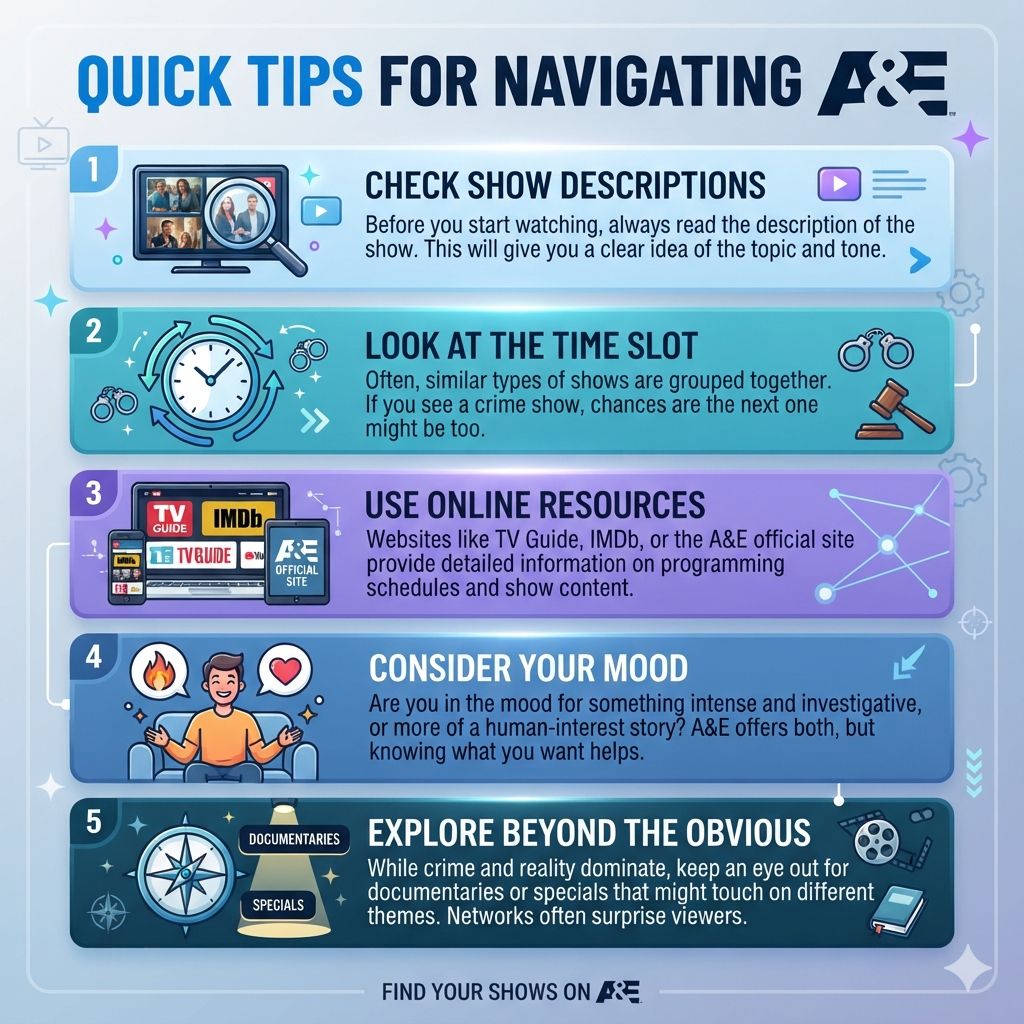
If you’re trying to find specific types of shows on A&E, here are a few quick tips to help you out:
- Check Show Descriptions: Before you start watching, always read the description of the show. This will give you a clear idea of the topic and tone.
- Look at the Time Slot: Often, similar types of shows are grouped together. If you see a crime show, chances are the next one might be too.
- Use Online Resources: Websites like TV Guide, IMDb, or the A&E official site provide detailed information on programming schedules and show content.
- Consider Your Mood: Are you in the mood for something intense and investigative, or more of a human-interest story? A&E offers both, but knowing what you want helps.
- Explore Beyond the Obvious: While crime and reality dominate, keep an eye out for documentaries or specials that might touch on different themes. Networks often surprise viewers.
Frequent Questions About A&E
What does A&E stand for today?
While A&E originally stood for Arts & Entertainment, the network’s programming has evolved. Today, the name still represents the channel, but its focus is primarily on reality television and true crime programming, rather than traditional arts and cultural content.
Did A&E always show crime shows?
No, A&E did not always show crime shows. When the network launched in 1984, its content was focused on traditional arts, culture, and historical documentaries. Crime programming became a significant part of their lineup much later, gaining prominence in the 2000s.
What are some popular A&E shows from its early days?
In its early days, A&E featured programs like “Evening at Pops,” “The 100 Greatest Artists,” “Art & Architecture,” and various biographical documentaries focusing on cultural figures and historical events.
What kind of reality shows does A&E have now?
A&E’s reality shows often focus on professions like law enforcement, bounty hunting, and specialized trades. They also feature series that explore unique lifestyles, family dynamics, and compelling real-life situations. True crime documentaries are also a major part of their unscripted content.
Is A&E still a good channel for learning about arts and culture?
While A&E’s primary focus has shifted away from traditional arts and culture programming, some shows may still offer educational insights into human behavior, history, or specific professions. However, for dedicated arts and culture content, other channels or platforms might be more suitable.
How can I find out what’s airing on A&E?
You can find out what’s airing on A&E by checking your local TV listings, visiting the official A&E website, or using TV guide apps and websites. These resources will provide the most up-to-date schedule information.
Conclusion: A Name with a Story
So, there you have it. A&E stands for Arts & Entertainment. It’s a name that carries the history of a network that started with a clear vision for cultural programming.
Over the decades, that vision has evolved, adapting to the changing media landscape and audience preferences.
While the channel is now widely recognized for its compelling reality shows and true crime series, the original name remains a reminder of its journey. It’s a testament to how entertainment can take many forms, from a symphony orchestra to a thrilling investigation. Understanding this evolution helps us appreciate the channel for what it is today.
Products related to this article
Sponsored / affiliate links. As an Amazon Associate I earn from qualifying purchases. I may earn additional commission from eligible campaigns.