Daybed Vs Futon: Key Differences Explained
Choosing the right furniture can feel like a puzzle. You want something that looks good. You also need it to be useful.

GDFStudio
GDFStudio Twin Size Upholstered Daybed, Futon Sofa…
- Classic Modern Lavish modern design with ribbed tufted backrest, crafted with luxurious velvet upholstery.
- Squeak-Free & Sturdy: Designed to remain squeak-free over the years. Constructed with powder-coated metal frame side and metal cen…
- Bentwood Slat System Reliable, sturdy construction to provide mattress support and breathability. Accommodates a standard twin siz…
As an Amazon Associate I earn from qualifying purchases.
Often, people look at daybeds and futons. They seem similar. Both can offer extra seating.
Both can turn into a bed. But they are quite different. Understanding these differences helps you pick the best one.
This guide will show you what makes them unique.
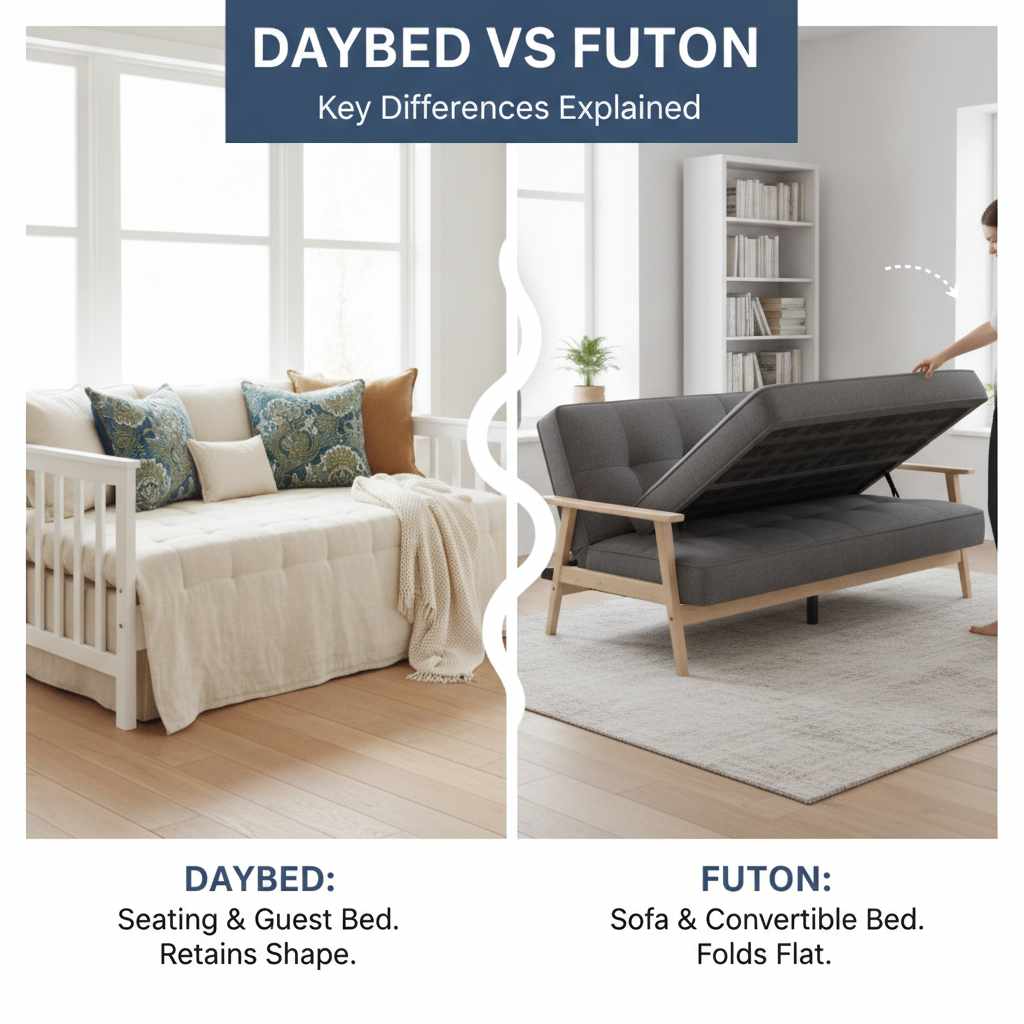
Daybeds are primarily sofas that can transform into a bed. Futons are simpler designs, often a mattress on a frame, that fold out flat. They differ greatly in comfort, style, and how they function in a room.
What Is a Daybed?
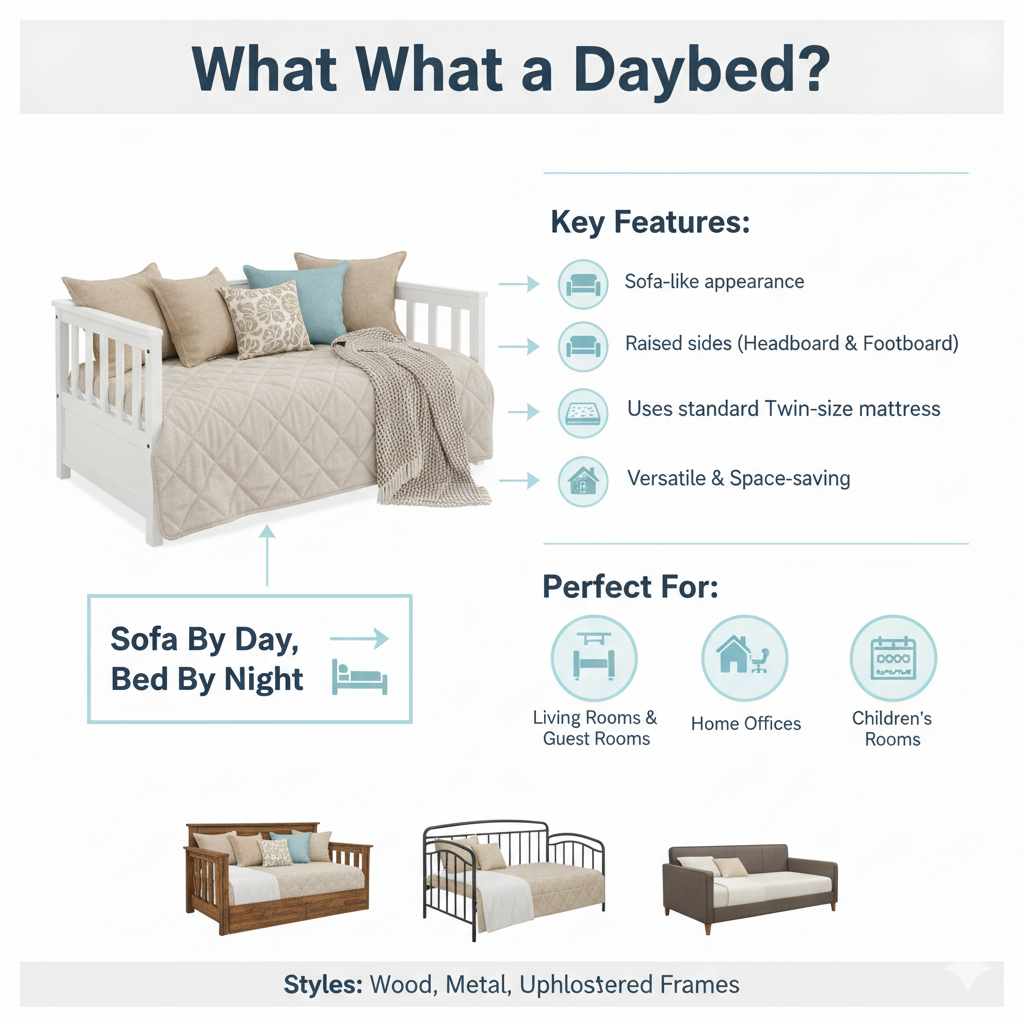
A daybed is like a sofa. It often has a back and arms. It looks like a regular couch when you first see it.
But it’s designed to also be a bed. The sides of a daybed are usually raised. These raised sides act like a headboard and footboard.
You can put a regular mattress on it. Or sometimes it comes with a special mattress. They are great for small rooms.
Daybeds are very versatile. You can use them in a living room. They work well in guest rooms too.
You can even put one in a home office. During the day, it’s a comfy sofa. At night, it’s a bed for sleeping.
Many people use them in children’s rooms as well. They offer a cozy spot to read or relax.
The style of a daybed can vary a lot. You can find them made of wood. Others are made of metal.
Some have upholstered frames. This means they look like a fancy couch. They often use standard twin-size mattresses.
This makes buying bedding easy. You just use regular twin sheets.
What Is a Futon?
A futon is different. It usually starts as a simple frame. This frame holds a mattress.
Often, the mattress is thinner than a regular bed mattress. The frame is built to fold. You can fold the frame in half.
This makes it stand up like a couch. When you want a bed, you unfold it. The mattress lays flat on the frame.
Futons are very space-saving. They are popular in small apartments. They are also good for dorm rooms.
They serve two main purposes. They are a place to sit. They are also a place to sleep.
But they are not usually as soft as a daybed. The mattress can be firm. This is by design.
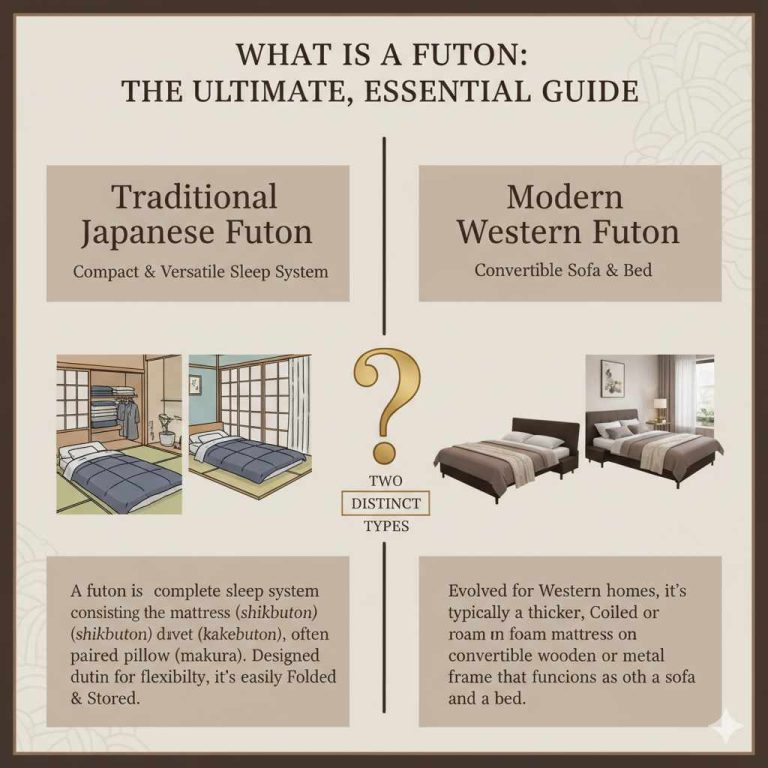
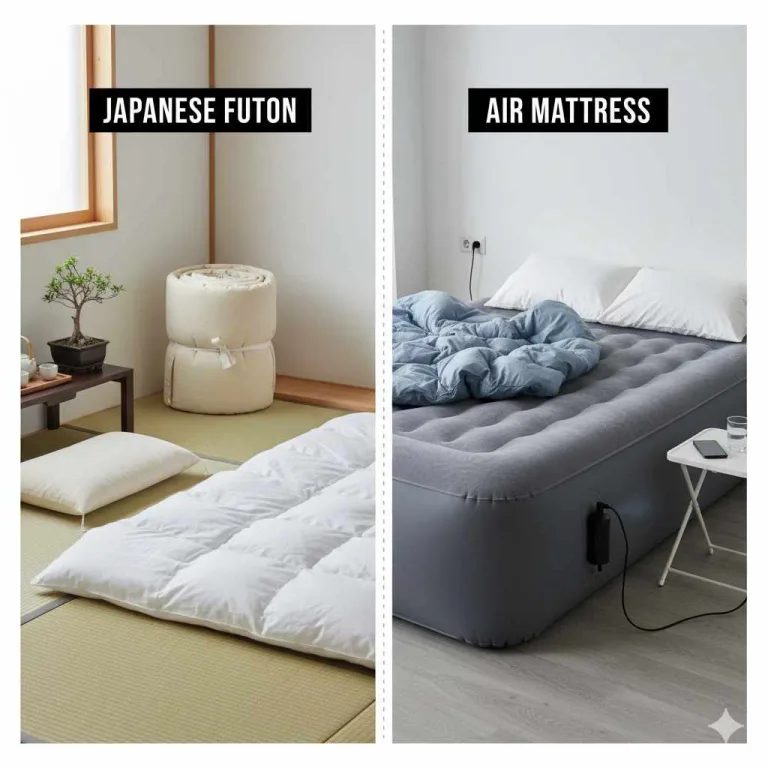
The word “futon” comes from Japan. A Japanese futon is a thin mattress. You can roll it up and store it.
Modern futons in the U.S. are often different. They use a sturdier frame.
The mattress can be thicker. But it’s still a folding design. This is the main thing that separates them from daybeds.
Key Differences: Daybed vs. Futon
Let’s look at how they are not the same. The biggest difference is how they are built. And how they feel when you use them.
Think about the mattress. And the frame itself. Daybeds often look more like furniture.
Futons look simpler.
The mattress is a big deal. Daybeds use regular mattresses. Or mattresses that feel like them.
They are usually thicker. This means they are more comfortable for sleeping. They feel more like a real bed.
Futon mattresses are often thinner. They are made to fold. This can make them less comfy for long sleeps.
The frame is another point. Daybed frames are often more decorative. They can have elaborate designs.
They might have built-in drawers or storage. Futon frames are usually more basic. Their main job is to fold.
They are often made of metal or plain wood.
Daybed vs. Futon: At a Glance
Daybed:
- Looks like a sofa with raised sides.
- Uses a regular or thick mattress.
- More comfortable for sleeping.
- More furniture-like style.
- Good for guest rooms, living rooms.
Futon:
- Simple frame that folds.
- Uses a thinner mattress designed to fold.
- Can be less comfortable for sleeping.
- More basic, utilitarian style.
- Good for small spaces, dorms.
Comfort and Mattress Quality
Comfort is key. Nobody wants to sleep on something hard. Or something that sinks too much.
Daybeds usually win here. Why? Because they often use standard mattresses.
Think of a regular twin mattress. They are designed for sleeping. They have springs or foam.
They offer good support. They feel soft and cozy.
When you buy a daybed, you might get a mattress. Or you might buy one separately. If you buy one, make sure it fits.
Most daybeds use twin size. Some might use full size. Check the dimensions.
A good mattress makes a world of difference. It turns a sofa into a real bed.
Futons are a bit different. Their mattresses have to fold. This means they can’t be too thick.
Or too soft. They are often made of cotton. Or foam.
Or a mix. Some are quite good. Others can feel stiff.
Or they might sag over time. This is because they are bent back and forth so much.
If you plan to sleep on a futon often, consider the mattress. You can buy better futon mattresses. Some have springs.
Others have thicker foam. These can be more comfortable. But they might not fold as easily.
Or they might be heavier.
In my own home, I found this out the hard way. I bought a cheap futon for my son’s room. It looked fine.
But when guests stayed over, they complained. The mattress was too thin. They said they could feel the frame.
I ended up buying a thicker memory foam topper. That helped a lot. But it made the futon harder to fold.
It shows that the mattress choice is really important for both.
Mattress Matters: A Quick Look
Daybed Mattress:
- Type: Standard twin or full.
- Comfort: Generally high, like a regular bed.
- Support: Excellent, designed for sleeping.
- Durability: Lasts long if good quality.
Futon Mattress:
- Type: Thinner, designed to fold.
- Comfort: Varies, can be firm or less supportive.
- Support: Can be less than a daybed mattress.
- Durability: May sag or wear faster due to folding.
Style and Aesthetics
How furniture looks is important. We want our homes to look nice. Daybeds often win on style.
They can look very elegant. Many have decorative frames. Think of wrought iron.
Or carved wood. They can also have upholstered backs and arms. This makes them blend in with other furniture.
You can put decorative pillows on a daybed. You can add a nice throw blanket. It can look just like a sofa.
People might not even know it turns into a bed. This is great for living rooms. Or offices.
You want them to look good all the time.
Futons tend to be more simple. Their frames are often basic. Metal frames are common.
Wood frames are usually plain. They don’t usually have arms. Or a back that looks like a sofa back.
They are more functional. They serve a purpose. They don’t always look like a statement piece of furniture.
But there are exceptions. You can find futons with nicer frames. Some have wood frames that look good.
You can also buy futon covers. These covers can change the look. They can make a simple futon look more stylish.
They can hide a less attractive frame.
I remember visiting a friend’s small apartment. She had a futon in her living room. At first, I didn’t notice.
It was covered in a nice, dark grey fabric. It looked like a small sofa. Only when I asked about it did she show me how it folded out.
It was a clever way to make it look better. It proves style isn’t just about the frame. It’s also about how you dress it up.
Style Breakdown: Daybeds vs. Futons
Daybeds:
- Appearance: Sofa-like, often decorative.
- Frame: Can be metal, wood, upholstered.
- Style Potential: High, blends with decor.
- Room Use: Living rooms, guest rooms, studies.
Futons:
- Appearance: Simple, functional, bed-like frame.
- Frame: Usually metal or plain wood.
- Style Potential: Moderate, relies on mattress and cover.
- Room Use: Small apartments, dorms, spare rooms.
Functionality and Space Saving
Both daybeds and futons are good for saving space. But they do it in different ways. And they are best for different types of spaces.
A daybed’s main function is duality. It’s a sofa and a bed. But it always takes up space.
It’s always a piece of furniture.
A daybed is great if you want a sofa. But you also need a guest bed. You don’t want a separate bed in a small room.
A daybed does both jobs. It sits in your living room. Or your study.
And when a guest comes, you make it into a bed. It’s very practical for this.
Futons are masters of space saving. They are designed to be folded. When folded, they take up less floor space.
They can stand up against a wall. This frees up room. This is why they are so popular in small apartments.
Or studios. You can have a living area. And then fold out a bed at night.
The folding action is key for futons. It’s their superpower. You can go from a couch to a bed very quickly.
This makes them ideal for multi-purpose rooms. Or for people who host guests often but have very little space.
Think about a college dorm room. Space is very limited. A futon is perfect.
It’s a couch for friends to hang out on. At night, it’s a bed. It uses the same footprint.
A daybed might be too big for a dorm. It would look more like a bed all the time.
I once helped a friend move into a tiny studio. She had a very small budget. We found a metal futon frame and a decent mattress.
It was amazing. During the day, she had a couch. She could eat on it.
Watch TV. At night, it was her bed. It made her small place feel much bigger.
It was a smart choice for her situation.
Functionality Focus: Daybed vs. Futon
Daybed:
- Primary Use: Sofa by day, bed by night.
- Space Saving: Offers two functions in one furniture piece.
- Operation: Mattress stays on frame.
- Best For: Rooms needing both seating and a guest bed.
Futon:
- Primary Use: Sofa that folds into a bed.
- Space Saving: Folds to take less floor space when not in use.
- Operation: Frame folds, mattress folds with it.
- Best For: Very small spaces, studios, dorms.
Durability and Longevity
How long will it last? This is a common question. It depends on how it’s made.
And how you use it. Daybeds are generally built to last. Especially if they have solid frames.
Metal daybeds are very strong. Wooden daybeds can be strong too. If the wood is good quality.
The mattress is a separate factor for daybeds. A good quality mattress can last many years. You can replace it if needed.
The frame itself might last even longer. Think of an antique daybed. Some of them are still around and in use today.
Futons can be durable too. But their design presents challenges. The folding mechanism can wear out.
Hinges can get loose. Springs can break. The mattress also takes a beating.
Folding and unfolding it every day can cause wear. It might start to sag or get lumpy faster than a daybed mattress.
The quality of the futon matters a lot. A cheap futon might not last long. A well-made futon from good materials can last for years.
But you have to be realistic. A futon that is used as a bed every single night might not last as long as a regular bed. It’s a compromise for the space saving.
I saw this with my own futon. The frame was pretty sturdy. It was metal.
But after about three years of daily use, the mattress started to feel worn. It wasn’t flat anymore. It had dips.
So, while the frame was fine, the mattress was the weak point. It shows that both parts need to be good quality to last.
Longevity Factors: Daybed vs. Futon
Daybed Durability:
- Frame: Often robust (metal, solid wood).
- Mattress: Standard mattress, replaceable, can last long.
- Wear Points: Less frequent than futons.
- Expected Life: Potentially very long, frame can last decades.
Futon Durability:
- Frame: Can be strong, but hinges/mechanisms can wear.
- Mattress: Designed to fold, may wear faster.
- Wear Points: Folding mechanism, mattress fatigue.
- Expected Life: Good quality can last 5-10 years with care.
Ease of Use: Transforming from Sofa to Bed
How easy is it to change from a couch to a bed? This is important. You don’t want a big struggle every time.
Daybeds are the easiest. They are already a bed. The mattress just sits there.
You might need to pull off some pillows. Then you can put on sheets. It’s very simple.
No folding required.
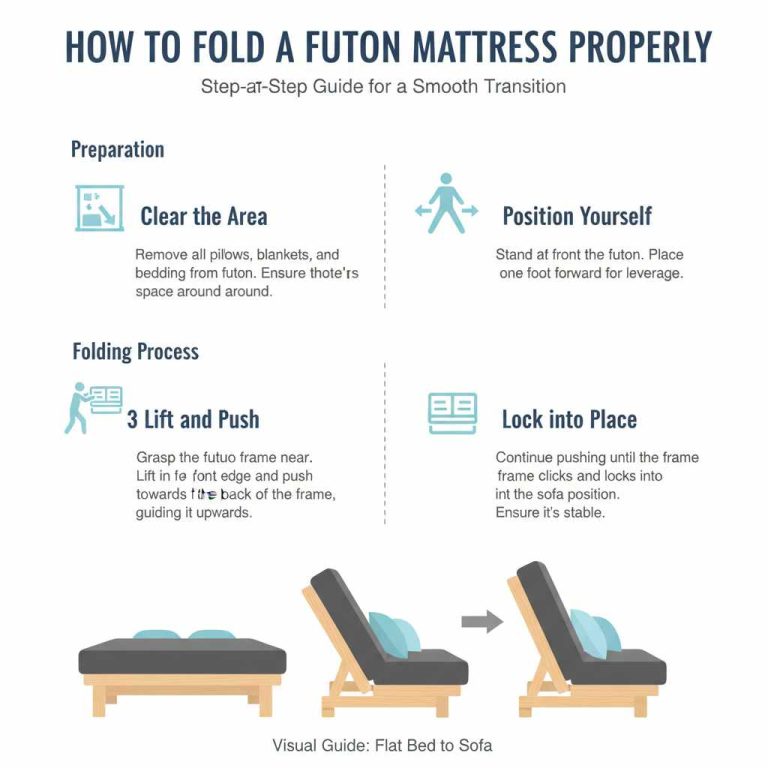
Futons are a bit more work. You have to fold the frame. Most futon frames are designed to be easy.
You lift one end. And then the other. Or you push down on the back.
It depends on the type. It usually only takes a minute. But it is an extra step.
If you plan to use it as a bed every night, this might matter. For a daybed, you just make the bed. For a futon, you have to fold it up in the morning.
And fold it out at night. It’s a physical action. Some people don’t mind.
Others find it a bit of a chore.
I have a friend who uses a futon in her guest room. She told me she sometimes forgets to fold it up. She just leaves it as a bed.
Because it’s out of sight most of the time. But if it’s in a main living area, you probably want to fold it up.
My own experience with futons was mixed. Some were super easy to fold. Others were a bit stiff.
Especially the older ones. It’s worth trying it out in the store if you can. See how smoothly the frame moves.
And how heavy it is.
Transformation Time: Daybeds vs. Futons
Daybed Ease:
- Conversion: Minimal. Mattress is always in place.
- Steps: Remove pillows, add sheets.
- Speed: Very quick, seconds.
- Effort: Low.
Futon Ease:
- Conversion: Requires folding the frame.
- Steps: Lift/push frame sections.
- Speed: Quick, usually 1-2 minutes.
- Effort: Moderate.
When to Choose a Daybed
You should pick a daybed if you want a piece of furniture that does double duty. But it must look good as a sofa. You have enough space for it to be out all the time.
It’s ideal for:
- Guest Rooms: It looks like a nice sofa. But it’s ready for guests to sleep on.
- Living Rooms: You can add it as extra seating. And have a bed for sleepovers.
- Home Offices: Make your office a bit more comfortable. And ready for overnight visitors.
- Kids’ Rooms: A cozy spot to read. Plus a bed for friends.
Daybeds offer more comfort for sleeping. They use regular mattresses. This means they feel more like a real bed.
The style options are vast. You can find one to match any decor. It’s a more permanent furniture piece.
Think about it. If you have a spare room that you want to feel like a bedroom but also a nice sitting area, a daybed is perfect. You don’t want to be folding and unfolding a bed in a room that people use for relaxing.
The daybed stays a sofa, but is always ready.
When to Choose a Futon
A futon is a smart choice if you need to save space. You have a small apartment. Or a dorm room.
You need something that can be a couch. But also a bed. And you are okay with folding it.
Futons are great for:
- Small Apartments/Studios: Maximizes living space.
- Dorm Rooms: Combines seating and sleeping efficiently.
- Spare Rooms with Limited Space: When you need a guest bed but not a permanent one.
- Budget-Conscious Shoppers: Often less expensive than daybeds.
Futons are functional. They are simple. They get the job done.
They are the champion of tight spaces. You can fold them up to get more room to move around. Or to do other activities in the space.
If your main goal is to have a couch that can turn into a bed, and you don’t have much room, a futon is probably your best bet. The ability to fold it away is its biggest strength. It lets you have more open floor space when you need it.
Choosing Your Piece: Daybed vs. Futon Scenarios
Choose a Daybed if:
- Style and comfort are top priorities.
- You want a permanent seating solution that can sleep guests.
- Space is not extremely limited.
- You prefer a real mattress feel.
Choose a Futon if:
- Space-saving and flexibility are key.
- You need a dual-purpose piece for a small room.
- You are okay with folding/unfolding it daily.
- Budget is a major factor.
Common Misconceptions
People often mix up daybeds and futons. Or they think they are the same. One common idea is that futons are always uncomfortable.
This isn’t always true. You can get good quality futon mattresses. They can be quite comfy.
Another idea is that daybeds are only for kids. Or only for guest rooms. But they can be stylish enough for any room.
They are a solid furniture choice. They add elegance and function.
Some people think futons are just cheap beds. While there are cheap ones, there are also high-quality futons. They are built with better materials.
And they can last a long time. It all depends on the brand and the price.
The main thing to remember is intent. Why do you need it? What is its main job?
If it’s mostly a sofa that occasionally becomes a bed, a daybed might be better. If it’s mostly a bed that can act as a sofa, a futon might be best. It really comes down to your specific needs and your space.
Caring for Your Daybed or Futon
Taking care of your furniture helps it last longer. For a daybed, care is pretty simple. Keep the frame clean.
Wipe it down if it’s wood or metal. If it’s upholstered, vacuum it. Clean spills right away.
The mattress is like any other mattress. Use a mattress protector. This keeps it safe from spills and stains.
Wash the sheets regularly. Rotate the mattress if it’s a type that can be rotated. This helps it wear evenly.
Futons need a bit more attention. The frame needs to be kept clean. Make sure the folding mechanism works well.
Lubricate any squeaky parts if needed. Check for loose screws or bolts.
The futon mattress is key. Use a mattress protector. This is very important for futons.
It keeps the mattress clean. And it can help prevent wear. If you fold it up, try to fold it neatly.
Avoid just stuffing it. If you can, air it out sometimes.
I learned this with my own futon. I got a washable cover for the mattress. That made a huge difference.
I could just zip it off and wash it. It kept the mattress itself looking new. It was a small thing but made cleaning much easier.
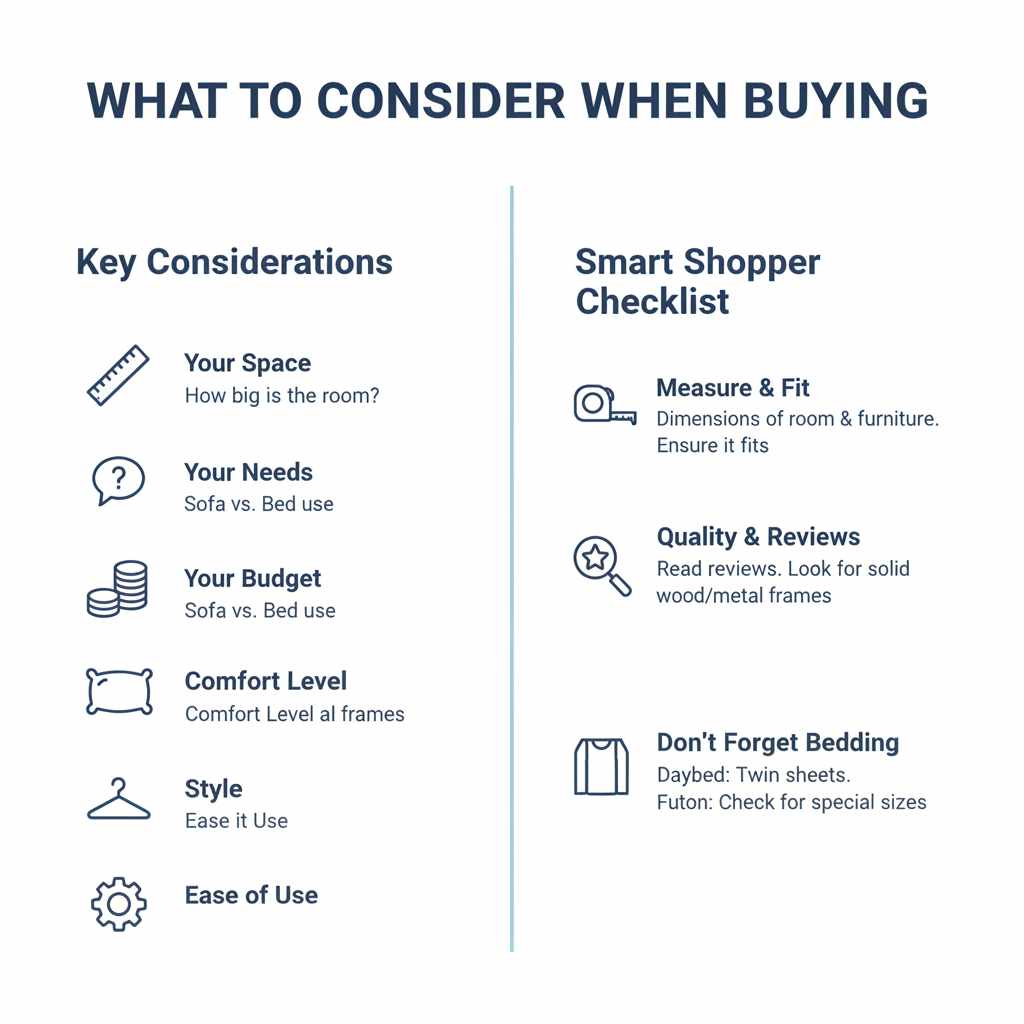
What to Consider When Buying
When you go shopping, think about these things:
- Your Space: How big is the room? How much floor space do you have?
- Your Needs: Will it be used more as a sofa or a bed? How often?
- Your Budget: How much do you want to spend?
- Comfort Level: How important is a soft mattress?
- Style: What look are you going for?
- Ease of Use: Do you mind folding it?
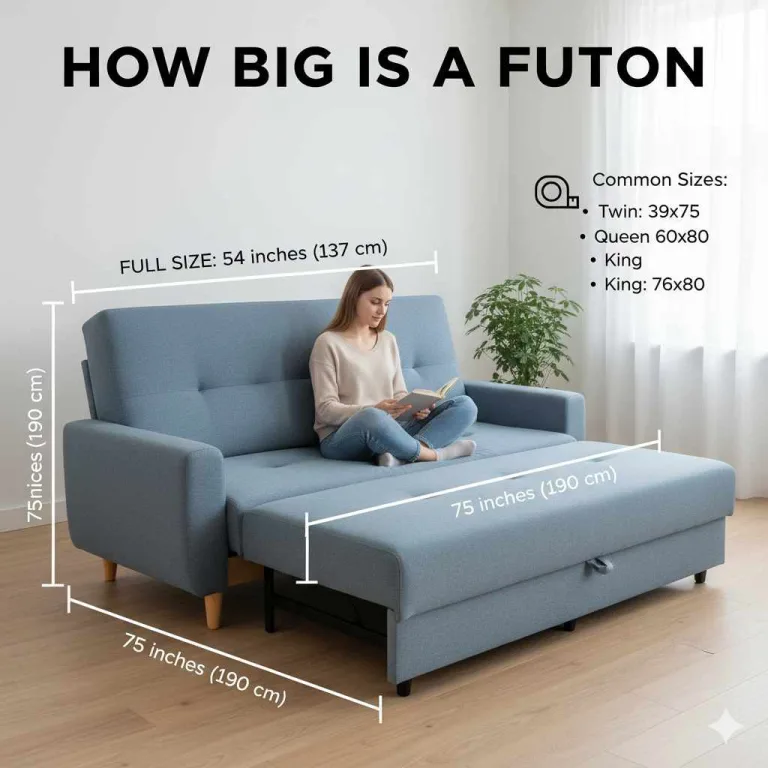
Measure your space first. Look at the dimensions of the daybed or futon. Make sure it will fit.
Think about how you’ll get it into your room. Some frames are big.
Read reviews. See what other people say about comfort and durability. Look at the materials.
Solid wood is usually better than particle board. Strong metal frames are good for futons.
Don’t forget bedding. Daybeds often use twin sheets. Futons might need special size sheets.
Or they might fit standard sizes. Check this before you buy.
Frequently Asked Questions
Is a daybed more comfortable than a futon?
Generally, yes. Daybeds use standard, thicker mattresses that feel more like a regular bed. Futon mattresses are thinner to allow folding, which can make them less comfortable for sleeping long periods.
Can you sleep on a daybed every night?
Yes, if you have a good quality mattress. A daybed is designed for sleeping and looks like a sofa. With the right mattress, it can be as comfortable as a regular bed.
Can you sleep on a futon every night?
It depends on the futon. A high-quality futon with a good mattress can be used for nightly sleeping. However, frequent folding and unfolding might cause wear faster than a regular bed.
What size mattress does a daybed use?
Most daybeds use a standard twin-size mattress. Some larger daybeds might use a full-size mattress. Always check the product specifications for the correct size.
Do futon mattresses need to be replaced often?
Futon mattresses may need to be replaced more often than regular mattresses, especially if used for sleeping every night. The folding and bending can cause wear over time.
Which is better for a small apartment, a daybed or a futon?
For very small apartments, a futon is often better. It folds up to save floor space. A daybed takes up the same space as a sofa, but it also functions as a bed.
Can I put regular bedding on a futon?
Yes, you can use regular bedding like sheets and blankets on a futon. However, finding fitted sheets that stay on the folding mattress can sometimes be tricky.
Conclusion
So, daybed vs. futon? The choice really comes down to what you need.
Both offer seating and sleeping. But they do it in very different ways. Daybeds offer comfort and style.
They are like sofas that are ready for guests. Futons are space-saving champions. They fold up to give you more room.
Think about your space. Think about how you’ll use it. And pick the one that fits your life best.
Related pick: Check today's price on Amazon
Products related to this article
Sponsored / affiliate links. As an Amazon Associate I earn from qualifying purchases. I may earn additional commission from eligible campaigns.