Futon Mattress Slipping Problems
To reduce futon mattress slipping, start by checking fit: if the mattress is more than about 1 to 2 inches short in length or width, correct the sizing or add grippers; if the fit is already right, increase surface grip at the frame. The U.S. Consumer Product Safety Commission recommends keeping furniture stable and checking for shifting or tipping risks, and cleaning guidance from textile-care sources also matters because dust and residue reduce friction over time. Ignoring slip can leave the mattress sliding off the seat, bunching in the hinge, and wearing out the cover faster. This guide explains how to identify the cause and match the cheapest fix to your frame angle, mattress weight, and setup.
Quick diagnosis checklist:
- If the mattress drops straight down in upright mode, check frame angle and add grip at the lowest contact zone first.
- If it drifts after folding and unfolding, focus on hinge-area shear and repositionable grip material.
- If it slides side to side, check for uneven slats, a warped deck, or a loose fit.
- If the fit is more than 1 to 2 inches short, treat grip fixes as temporary, not permanent.
- If the frame is dusty or the cover is slick, clean first before adding new material.
Why futon mattresses slip


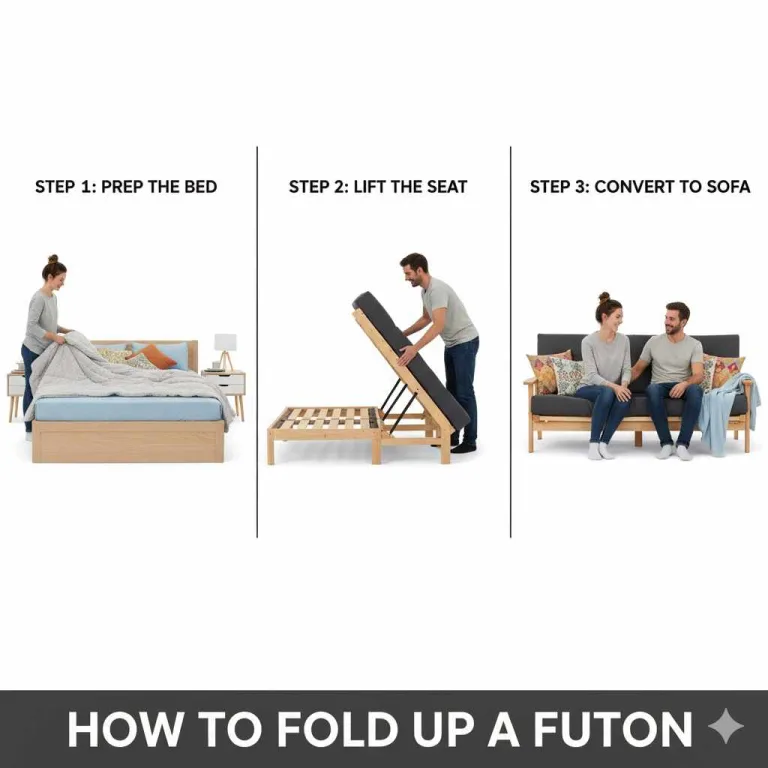
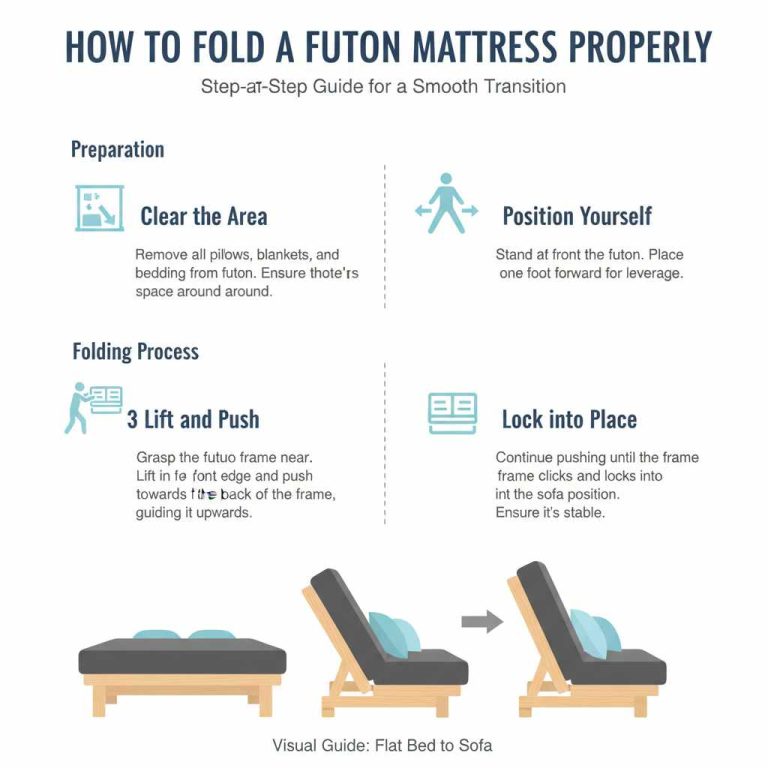
Slip usually comes from one of three places: the frame angle, lost friction between surfaces, or a mattress that is too light, too thick, or too loose for the frame. An older tri-fold frame can create more than one slip point, especially in upright seating and in the flat bed position, where the mattress may migrate downward. Futon frames are designed to convert between a sofa and a bed, so the mattress has to stay put in both positions; that makes friction and fit more important than they are for a fixed mattress.
Frame angle and fold position
When a futon sits in a steep upright position, gravity pulls the mattress toward the lowest edge. That matters most on older tri-fold models and other folding frames with a pronounced seat angle. In flat mode, the main problem is usually creep along the deck or toward the hinge line, where the mattress can shift after repeated use.
The sharper the angle, the more often the mattress may need to be reset. A mattress that stays put on a shallower recline may slide fast in a near-vertical seating position. That is why a fix that works on the bed may fail the moment the frame is folded back up.
Friction loss between mattress and frame
Friction drops when the cover fabric gets slick, when the deck surface gets dusty, or when a pad compresses and loses bite. Smooth cotton covers and worn deck slats give less resistance than a grippy fabric over a clean frame. If the mattress moves a little every time the frame is opened or closed, that small shift can add up. Textile-care guidance from sources such as the American Cleaning Institute and manufacturer care instructions generally supports cleaning surfaces before adding new anti-slip material, because residue and dust interfere with grip.
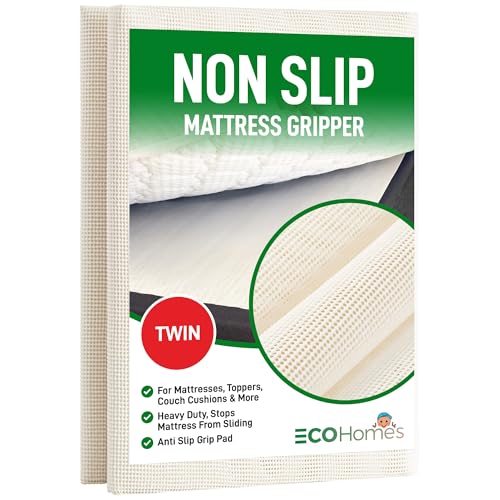
Low-cost friction aids work by adding more contact resistance between the mattress and the frame. Common options include a non-slip shelf liner made from rubbery honeycomb material, peel-and-stick products such as InstaGrip, and rubberized rug pad material used as a household workaround. Put them between the mattress and the frame, not on top of the mattress.
Weight, thickness, and cover wear
A heavy futon mattress is harder to pick up, reset, and square up after each slip. That matters even more for someone with sciatica or a bad lower back, because repeated lifting can turn a small alignment problem into a daily chore. Thick mattresses can also bind against the frame and slide unevenly instead of moving as one piece.
Wear matters too. If the cover is stretched, thin, or slick from use, the mattress may keep moving even when the frame is clean. If the mattress has lost shape or the cover no longer grips the pad inside, a friction fix may help for a while but will not cure the cause.
What is a futon mattress and why does it slip?
A futon mattress is a flexible cushion made to work on a folding frame in both sofa and bed positions. Unlike a standard mattress, it has to handle repeated folding, so it depends on the right fit and enough surface friction to stay aligned. When the cover gets slick, the frame is dusty, or the size is off, slipping becomes much more likely.
That conversion design is also why futon mattresses are more sensitive to angle changes than typical bed mattresses. A small loss of grip can matter in sofa mode, while a loose fit can show up as drifting in flat mode. If the mattress is undersized, the frame geometry itself can create the slip.
How do you tell the real cause?
Start with the direction of movement. A mattress that slides straight down usually points to angle and low friction. A mattress that drifts to one side often points to uneven frame contact or a cover that has stretched out. If it slips after every fold and unfold, the problem may be repeated shear from the hinges or a mattress that is too loose for the frame.
Slip down the frame
Downward slip in upright mode is the classic sign of gravity winning over friction. If the bottom edge ends up on the floor, the frame is too steep for the current grip level or the mattress is undersized for the seating position. On a tri-fold frame, the lower panel often acts like a ramp.
Slip to one side
Side drift usually means one part of the frame is slicker than the rest, or the mattress is no longer sitting squarely after repeated resets. Check for uneven slat spacing, a warped deck, or a cover that has loosened on one edge. Side slip is also common when a mattress is used mostly in one of three upright positions, because repeated folding can bias the same corner.
Slip after folding and unfolding
If the mattress looks fine until the frame changes position, the issue is often motion transfer. Each fold can nudge the mattress a little, then gravity finishes the job. A repositionable product such as InstaGrip can help here because it can be removed and shifted when the same frame gets used in different positions.
When the mattress is too small or too light
If the mattress is more than about 1 to 2 inches short in length or width, grip products may help only at the margins. A loose fit futon mattress vs sofa bed mattress can migrate no matter what is placed under it. A very light mattress can also move too easily on a steep frame, while a very heavy one may resist lifting but still slide once it starts.
Futon slip troubleshooting matrix
This table matches the symptom to the likely cause and the lowest-cost fix first. Use it to decide if you need better friction, a different placement, or a replacement cover or pad. Try this first: if the mattress is already the right size, clean the frame and place the grip material where the mattress actually bears down most.
| Futon type | Mattress weight/thickness | Slip direction | Likely cause | Best low-cost remedy | When to replace the cover or pad |
|---|---|---|---|---|---|
| Older tri-fold frame in upright seating | Heavy, medium-thick mattress | Straight down to the floor | Steep angle plus low friction at the lower panel | Use non-slip shelf liner in strips across the lower contact zones | Replace if the cover is slick, stretched, or the liner no longer catches |
| Tri-fold frame used mostly in one upright position | Heavy mattress used daily | Downward shift after folding | Repeated shear from the same fold pattern | Use InstaGrip strips or sheets where the mattress contacts the frame most often | Replace if the same edge keeps slipping after cleaning and re-setting |
| Bi-fold or other folding frame in flat bed mode | Medium-thick mattress | Drifts toward hinge or foot end | Friction loss across the deck | Place rubberized rug pad material under the center section | Replace if the underside fabric is polished smooth or torn |
| Any futon with a loose fit | Mattress more than 1 to 2 inches short | Slides to one side and down | Undersized mattress for the frame geometry | Add grip material only as a stopgap; confirm the mattress size first | Replace the cover or pad if the fit cannot be squared without constant resetting |
| Older frame with worn deck or slats | Any thickness | Moves in several directions | Worn or dusty frame surface | Clean the frame, then add shelf liner or rug pad material | Replace if the cover has worn thin or the frame surface is too smooth or damaged |
How do you make a futon mattress stay in place on an older tri-fold frame?

Older tri-fold frames usually respond best to friction added where the mattress bears down hardest. Start with shelf liner strips in the high-contact zones, then move to InstaGrip sheets or strips if the mattress gets folded and unfolded often. A rubberized rug pad can also work as a simple household fix when you need something easy to cut to size.
Shelf liner strips in high-contact zones
Non-slip shelf liner is the cheapest place to start when the mattress slides downward in upright mode. Use the rubbery honeycomb type sold in rolls, then cut strips for the lower seat area and the points where the mattress presses against the frame. Strips are often better than a full sheet because they can be placed where the slip starts.
InstaGrip sheets or strips for repeated setup
InstaGrip is a peel-and-stick anti-slip product that comes in rolls and sheets. The described package includes a 2-inch by 15-foot roll, a 1/2-inch by 15-foot roll, and two sheets, each 10 inches by 10 inches. Because it is repositionable, it makes sense when the frame gets changed often and the grip points need adjustment. Product descriptions and package listings should always be checked against the current label because sizes and pack counts can change by seller or revision.
Rubberized rug pad as a household workaround
Rubberized rug pad material can fill the gap when you need a quick, cheap layer with more bite than a smooth fabric. Cut it to fit between the mattress and the frame, especially in the center section where sliding starts. This is a practical option, but it may need trimming if the frame folds tightly.
Say your older tri-fold futon slips only when it is set upright for daytime seating. If the mattress is otherwise the right size, putting a strip of honeycomb shelf liner across the lower panel often solves the downward creep without changing the bed surface everywhere else.
How do you stop a futon from sliding in upright mode?
Steep seating positions fail more often because gravity pulls the mattress straight down the frame. The fix is to place grip where the load lands, not only where the mattress looks loose. In many cases, center placement helps the bed mode, while edge placement matters more for upright mode and for the lowest panel that acts like a ramp.
Why steep seating positions fail more often
Upright mode puts the mattress at an angle that reduces friction and increases downward force. A thicker mattress may create more contact area, but that does not help if the frame surface is slick. If the bottom edge keeps ending up on the floor, the angle is too steep for the current grip setup.
Center placement versus edge placement
Place sheets in the center when the mattress shifts along the middle of the frame in flat mode. Use strips around the edges and lower contact points when the mattress slides in upright mode. That placement pattern gives better control than covering every surface with the same material.
What to do when the mattress keeps ending up on the floor
If the mattress repeatedly drops until the bottom reaches the floor, do not rely on friction alone. First confirm that the mattress size fits the frame. Then add grip material to the lower contact points and inspect the cover for smooth, worn fabric that may need replacement.
Suppose the mattress is the correct size but the frame is set in its steepest upright position every day. In that case, a small strip of repositionable anti-slip material at the lower edge may help more than a full sheet placed in the middle of the deck.
How do you make a futon mattress less likely to slip in flat bed mode?
Flat-bed slip usually comes from a slick deck, a compressed underside, or motion transferred through the hinges. The best first move is to clean the frame and add grip under the center and hinge-adjacent sections. If the mattress still walks toward the foot end, the fit may be too loose for the frame geometry.
Use the hinge zone, not just the center
Flat mode often needs friction where the frame flexes, because movement starts near the hinge line and then spreads. A narrow band of grip material in that zone can do more than a full sheet placed only in the middle. That targeted placement also makes it easier to fold the frame later.
Check the underside for smooth wear
A smooth underside can slide even when the top surface looks fine. If the bottom fabric has gone shiny, flattened, or dusty, clean it and reassess the grip. If the material has worn smooth, adding more liner may only delay a replacement.
What should you do if the mattress is heavy?
With a heavy futon mattress, the goal is to reduce how often you need to lift it. Use low-effort fixes first: clean the frame, add a friction layer, and reset the mattress only as often as needed to keep it square. For anyone with sciatica or lower-back limits, fewer resets are better than repeated full lifts.
Lower-effort fixes for people with back pain
Choose material that can stay in place between resets, such as shelf liner rolls or InstaGrip sheets. These are easier than trying to muscle the mattress back into position every day. If the mattress is too heavy to lift safely, add grip to the frame rather than trying to compensate by moving the mattress more often.
How often to reset and check alignment
Check alignment any time the frame changes mode, and again after the first few uses if the mattress is still settling. If the mattress keeps drifting within a short stretch of time, the fix is not holding. That is a sign to move the grip material, add more contact area, or rethink the fit.
When repeated repositioning points to a sizing problem
If you keep resetting the same edges, the mattress may be too small or the frame geometry may be wrong for the pad. DIY grip materials can slow movement, but they cannot make an undersized mattress behave like a full fit. At that point, the choice is often a new cover, a better-fitting pad, or a different mattress size.
Maintenance steps that keep the fix working
Grip fixes fail when dust, wear, or compression lowers surface resistance. Keep the frame clean, check the cover for thinning, and replace pads that have flattened or gone slick. Small maintenance steps matter because a fix that works for a month can stop working once the contact surface changes.
- Vacuum or wipe the frame surface so dust does not reduce friction.
- Check the underside of the mattress for shiny, worn, or stretched fabric.
- Inspect shelf liner, rug pad, or InstaGrip for compression, tearing, or peeling.
- Reposition the grip material if the mattress has started drifting in a new direction.
- Replace the cover or pad if the same slip returns after cleaning and reset.
Cleaning the frame surface
A clean frame grips better than a dusty one. Wipe slats, deck panels, and hinge-adjacent areas so the grip material can do its job. If the frame has rough spots, check whether those spots are helping hold the mattress or wearing the cover thin. A mild cleaner that leaves little residue is usually preferable to a product that leaves the surface slick.
Checking for worn cover fabric
Cover wear shows up as shiny areas, thinning fabric, or spots that slip faster than the rest. A slick cover can make a good mattress behave like a bad fit. If the fabric has lost texture, replacing the cover or pad may do more than adding another layer underneath.
Replacing compressed pads or slick liners
Non-slip shelf liner and rubberized rug pad material both wear down over time. Once they flatten, they lose bite and may need replacement. Peel-and-stick products should be checked for lifting edges, since partially detached pieces can shift instead of grip.
Frequently asked questions
What is a futon mattress?
A futon mattress is the padded cushion used on a folding futon frame in both seating and flat-bed positions. It has to move with the frame, so fit and friction matter more than they do for a fixed mattress. If those two factors are off, sliding is a common result.
Products related to this article
Sponsored / affiliate links. As an Amazon Associate I earn from qualifying purchases. I may earn additional commission from eligible campaigns.