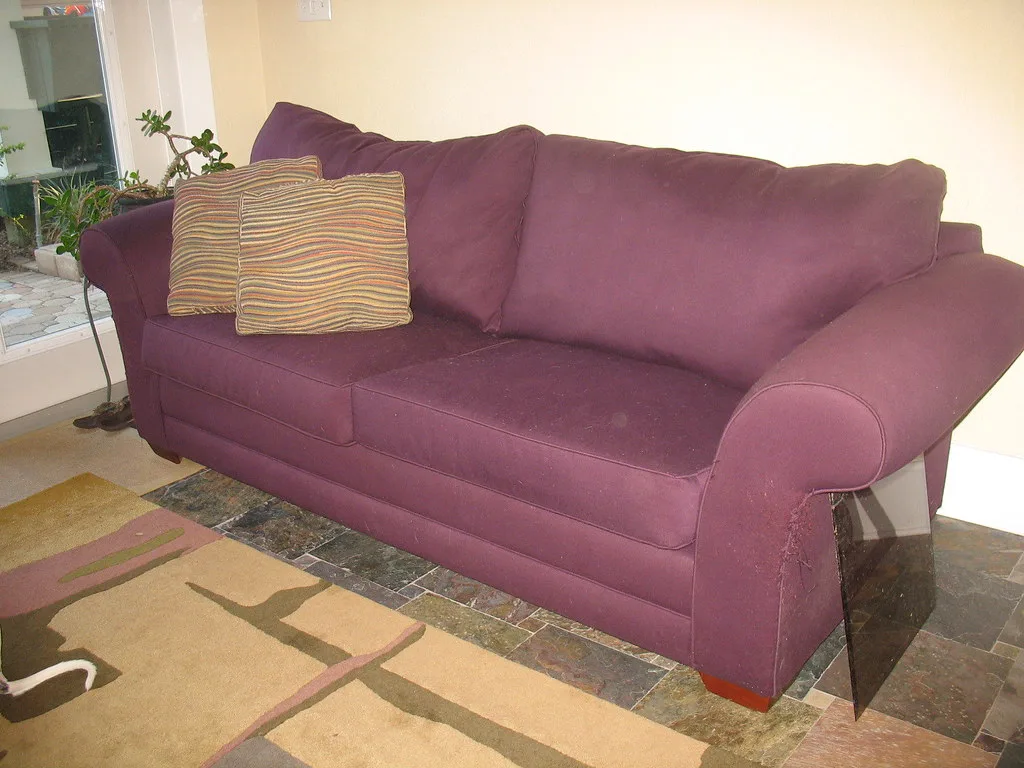
Flexsteel Sleeper Sofa Review: Is It Worth It?
A Flexsteel sleeper sofa is a strong buy for occasional guests and light weekly use. It is usually a better fit for occasional overnight guests than for regular nightly use, unless the mattress, frame, and room size all suit the job. Skip those checks, and you may end up with an expensive sofa that sleeps badly and wears quickly. This guide breaks down value by use case, mattress type, support, size, and the comparison point against cheaper and mid-market sleepers.
Verdict

The brand’s value pitch rests on Flexsteel’s Blue Steel Spring system, its patented ribbon of steel construction, and a guaranteed for life spring-system claim. Those details matter for seat support and long-term structure. They do not guarantee comfort on the bed side, which is where many sleeper-sofa buyers run into trouble.
Pros and cons
- Pros: strong seat support, broad fabric choice, dealer availability, and a durability case that is clearer than many budget sleepers.
- Pros: better fit for guest rooms and multi-use living rooms than for replacing a true bed.
- Cons: sleep comfort depends heavily on mattress type, and standard pull-out mechanisms add weight, bulk, and setup effort.
- Cons: the price only makes sense when the sleeper is used often enough to justify the upgrade.
Who it’s for
This suits you if the sleeper will host guests a few times a month, or if you need a living-room bed that is not the main nightly sleeping surface. It does not suit shoppers who want a near-bed replacement for every night, or anyone with a small room that cannot absorb the pull-out footprint.
Say your guest room is a 10-by-12-foot space and the sofa stays closed most of the month. A Flexsteel sleeper can be a sensible premium buy. Picture a studio apartment where the bed opens every night and the path around it is already tight, and the same purchase can become frustrating fast.
📊 Flexsteel says its furniture has been trusted for over 130 years. Source: Flexsteel.
Specs at a glance
| Feature | Flexsteel sleeper sofa take |
|---|---|
| Support system | Blue Steel Spring with ribbon-of-steel construction |
| Durability positioning | Guaranteed for life spring-system claim |
| Mattress options | Innerspring, memory foam, or air-over-coil |
| Upholstery choices | Over 700 fabric choices, including performance fabrics and leather options |
| Retail availability | Available at over 2,500 retail locations |
| Brand context | Living room assortment includes sleeper models, reclining furniture, and stationary seating |
| Price band | Premium-positioned versus mass-market sleepers; exact price varies by model and dealer |
Who it is for
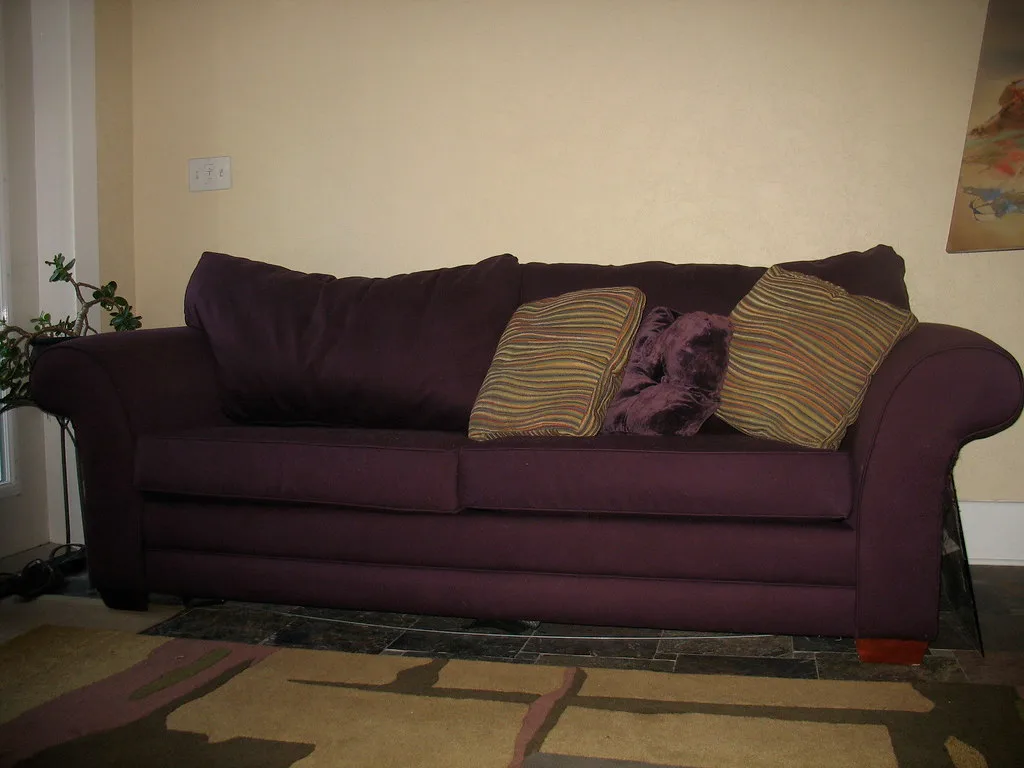
A Flexsteel sleeper sofa makes the most sense for a guest room, a den that doubles as overflow sleeping space, or a living room where durability matters more than bargain pricing. It is less compelling for a nightly sleeper, a college apartment with no spare room, or any buyer expecting mattress-like comfort from a standard pull-out frame.
Best-fit buyer profiles
- Occasional-host households: you need a sofa that hides a bed without making the room feel temporary.
- Weekly sleeper households: you need something better than a cheap pull-out, but you should choose the mattress carefully.
- Daily bed replacement buyers: you should usually compare against a real bed or a premium convertible system instead.
What works
Flexsteel’s strongest case is structure. The Blue Steel Spring system is meant to support long-term seating comfort and resist sagging better than very cheap frames. That matters in a sleeper sofa, because the seat still has to feel acceptable when the bed is folded away.
Customization is another real advantage. Flexsteel says it offers over 700 fabric choices, plus performance fabrics and leather options, so you can match a sleeper to a room rather than settle for one beige option. That matters in living rooms, where the sofa has to look intentional as well as function as a guest bed.
The brand also has a broad retail footprint. Flexsteel says it is available at over 2,500 retail locations, which makes dealer ordering, swatch viewing, and in-person size checks more practical than with a pure direct-to-consumer sleeper brand.
What the durability claim really means
Flexsteel’s “guaranteed for life” spring-system language is useful, but only for the frame support piece it refers to. It does not guarantee that the mattress will feel plush, that the pull-out will feel light, or that a mattress upgrade will be included. Those are separate buying decisions.
What does not
The main drawback is that sleeper comfort and sofa durability are not the same thing. A strong frame can still sleep hot, feel too firm, or feel uneven once the mattress is opened. That is why a Flexsteel sleeper can be a smart guest-room buy and still be a poor nightly bed.
Setup and pull-out effort also matter more than many shoppers expect. Pull-out mechanisms add weight, and mattress bulk affects how easy it is to open, close, and store bedding. If the room is narrow or the front of the sofa faces a coffee table, the bed may be awkward to use even if the sofa itself is good.
Common mistakes to avoid
- Buying for nightly use without checking mattress type first.
- Forgetting to measure the open-bed footprint, not just the sofa width.
- Choosing a mattress for seating comfort alone, then finding the sleep surface too firm or too warm.
- Assuming a premium frame solves room planning problems.
Suppose the room is 9 feet wide and the pull-out opens toward a doorway. A sleeper that technically fits on paper can still block circulation, force furniture moves, and make bed setup irritating. That is a planning problem, not a brand problem.
How the mattress changes the experience
The mattress type often decides whether a Flexsteel sleeper feels acceptable or disappointing. The frame can support the structure, but the mattress determines pressure relief, warmth, thickness, and how much you feel the sofa mechanism underneath.
Innerspring: firmer and more basic
Innerspring mattresses usually suit occasional guests who want a familiar, firmer feel and do not mind a simpler surface. They are often the least expensive option, but they can transmit pressure points more easily and may feel thin for heavier nightly use.
Memory foam: pressure relief and heat tradeoffs
Memory foam is often the best match for guests who prefer a softer, more contouring surface. It can reduce pressure on shoulders and hips, but it can also sleep warmer and may feel less lively for people who change positions often.
Air-over-coil: adjustment range and complexity
Air-over-coil systems can offer a broader comfort range, which helps when different guests have different sleep preferences. The tradeoff is complexity. More parts usually mean more to learn, and the mattress choice may matter more than the sofa frame alone.
Does Flexsteel still make sleeper sofas?
Yes. Flexsteel still lists sleeper sofas within its living room assortment, alongside reclining and stationary seating. The brand’s current retail presence and dealer-based ordering model also indicate that sleeper sofas remain part of the product ecosystem, not a discontinued side note.
Where Flexsteel fits in the lineup
Flexsteel is not only a sleeper-sofa brand. It also sells reclining furniture and stationary pieces, and its category pages show motion features such as Power Reclining and Zero-Gravity Reclining. That matters because the brand’s sleeper sofas sit inside a broader living-room platform, not a one-off product line.
What makes Flexsteel different from cheaper sleeper sofa brands?
Flexsteel’s main difference is that it sells durability and customization as the core value proposition, while many cheaper sleeper brands compete mostly on price. The Blue Steel Spring system, the ribbon-of-steel framing story, and the broad fabric selection all aim at longer service life and better seat support.
What you gain is usually better structural confidence, more upholstery choice, and a wider dealer network. What you give up is low entry pricing. Cheaper sleepers can make sense for rare guests, but they often cut corners on frame support, mattress quality, or both.
Are Flexsteel sleeper sofas durable enough for guests or everyday sleeping?
For guests, yes, generally. For everyday sleeping, only sometimes. Flexsteel’s frame and spring story support durability, but durability alone does not solve mattress comfort, pull-out wear, or room layout. Daily use should be judged by the mattress you choose and the amount of opening and closing it will endure.
Decision matrix by use case
| Use case | Comfort risk | Setup effort | Mattress suitability | Space needed | Value verdict |
|---|---|---|---|---|---|
| Occasional guest room | Low to moderate | Low | Good with memory foam or air-over-coil | Moderate | Strong value if the room gets real guest use |
| Weekly sleeping | Moderate | Moderate | Good only with the right upgrade; avoid basic innerspring if possible | Moderate to high | Worth it only if the mattress and room fit are right |
| Daily sleeping | High | High | Mixed; usually inferior to a real bed | High | Poor value unless you have no better option |
Cost-per-use and value verdict
The value case improves sharply when the sleeper handles many guest nights over several years. A premium sleeper can make sense if it replaces a separate bed and sofa in one room. If use is rare, the extra spending often buys upholstery choice and sturdier construction more than better sleep.
How much does a Flexsteel sleeper sofa cost?
Flexsteel sits in the premium part of the sleeper-sofa market, so expect a higher upfront price than mass-market alternatives. Exact pricing varies by model, mattress, and retailer, but the brand’s positioning is not bargain-first. That matters because the value needs to come from use frequency, not from a low sticker price.
What the higher price buys
- More upholstery and finish choices.
- A stronger durability case than many budget sleepers.
- Dealer support for ordering and swatches.
- Better odds of finding a model that suits a real living room, not just a temporary guest setup.
Alternatives
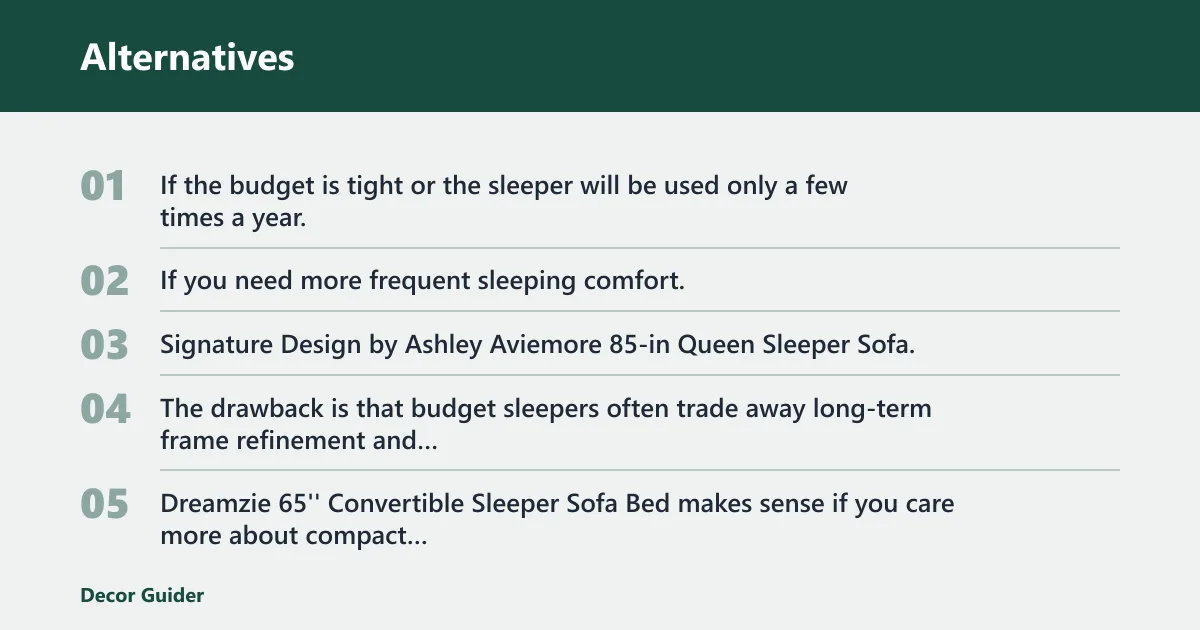
If the budget is tight or the sleeper will be used only a few times a year, a cheaper sleeper sofa can be the better call. If you need more frequent sleeping comfort, mid-market upgrades may offer a better mattress for less money than a premium frame-first brand.

Signature Design by Ashley Aviemore 85-in Queen Sleeper Sofa, Stone is the lower-cost comparison point if you want a built-in sleeper at a much lighter price, and the included 4-inch memory foam mattress is a practical selling point for guest use. The drawback is that budget sleepers often trade away long-term frame refinement and customization breadth, so it is a stronger value for occasional overnight stays than for repeated weekly use.

Dreamzie 65” Convertible Sleeper Sofa Bed makes sense if you care more about compact footprint, storage, and casual versatility than about a traditional pull-out sleeper. The drawback is clear: a loveseat-style convertible is not a substitute for a larger guest-bed sofa, so it suits small rooms and light-use scenarios better than full household sleeping duty.
Flexsteel Power Reclining Sofa with Power Headrest & Lumbar is not a sleeper alternative in the strict sense, but it shows where Flexsteel’s upholstery and motion-seating value often lands. If you want the brand’s support story without needing a bed, this can be a better fit. The drawback is simple: it solves lounging, not overnight guest sleep.
Should you buy it
Buy a Flexsteel sleeper sofa if you need a guest-ready sofa that should hold up for years, and if you are willing to choose the mattress and measure the room carefully. Skip it if you need an everyday bed replacement, because the cost only makes sense when the sleeper is not working as a mattress every night.
Quick decision checklist
- Count the nights: occasional guest use points toward Flexsteel; nightly use points away from it.
- Choose the mattress first: innerspring, memory foam, and air-over-coil feel very different.
- Measure open clearance: the closed sofa size is not enough.
- Compare to alternatives: cheaper sleepers may be enough for rare guests; a real bed may be better for nightly sleep.
- Check dealer support: Flexsteel’s retail network can help with swatches and ordering.
Frequently asked questions
Is a Flexsteel sleeper sofa worth it?
Yes, for occasional guests and light weekly use. The value comes from stronger structure, broad upholstery choice, and dealer availability. It is usually not worth it as a nightly bed replacement, because the mattress and pull-out format still limit sleep comfort compared with a real bed.
How comfortable is a Flexsteel sleeper sofa for nightly use?
Nightly use is possible, but comfort depends heavily on the mattress and room fit. A memory foam or air-over-coil option will usually feel better than a basic innerspring, yet even then a sleeper sofa rarely matches a conventional mattress for long-term sleep comfort.
What mattress options do Flexsteel sleeper sofas offer?
Flexsteel sleeper sofas may offer innerspring, memory foam, or air-over-coil mattresses. Innerspring is the firmer, simpler choice; memory foam adds pressure relief; and air-over-coil offers more adjustability. The best option depends on how often the bed will be used and who will sleep on it.
Where can I buy a Flexsteel sleeper sofa?
Flexsteel says it is available at over 2,500 retail locations. The usual buying path is through a dealer or store locator, where you can compare models, request swatches, and confirm mattress options. That dealer-first approach helps when you need to verify fit before ordering.
Products related to this article
Sponsored / affiliate links. As an Amazon Associate I earn from qualifying purchases. I may earn additional commission from eligible campaigns.