Comhoma Futon Review: Is It Worth It?
Comhoma Futon is worth it only if you need an inexpensive, space-saving spare bed and can accept a thinner seat and limited long-term mattress support. Buy it for daily sleep without checking depth, padding, and support, and you may replace it quickly or need a topper right away. This guide breaks down comfort, size, conversion ease, and who should treat it as a real sofa bed versus a temporary guest fix.
Verdict: is Comhoma worth it?
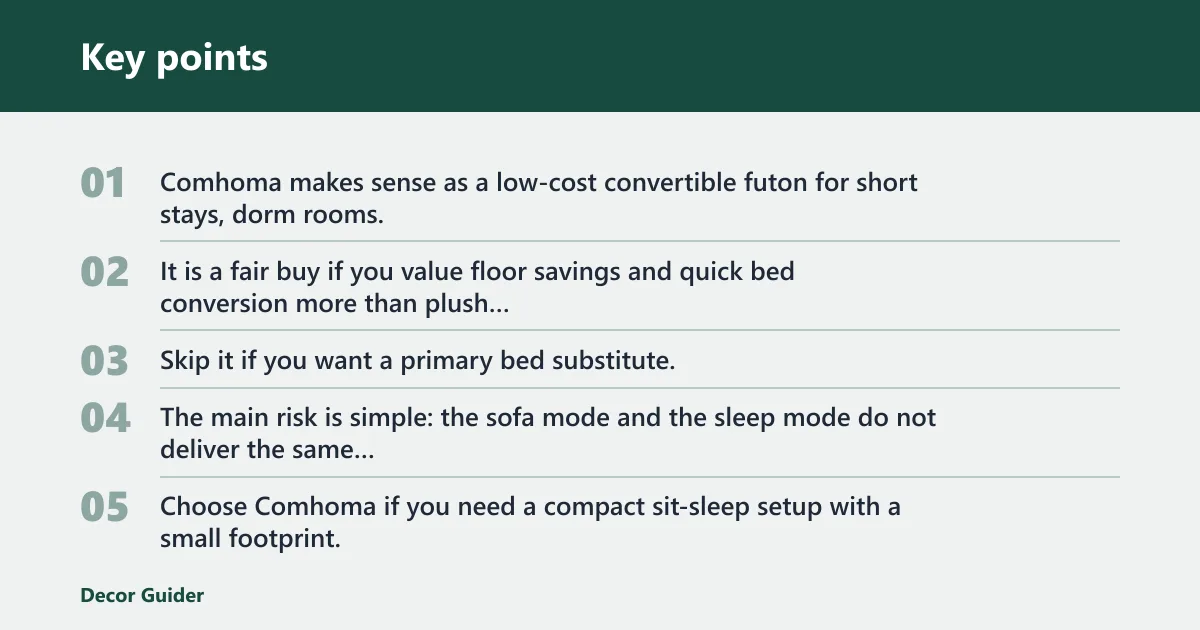


Yes, but only for the right use case. Comhoma makes sense as a low-cost convertible futon for short stays, dorm rooms, compact apartments, and guest use. It is a fair buy if you value floor savings and quick bed conversion more than plush seating or reliable nightly sleep support.
Skip it if you want a primary bed substitute. The main risk is simple: the sofa mode and the sleep mode do not deliver the same comfort level, and the sleeping side usually needs a firmer tolerance than shoppers expect from a couch.
When to buy
Choose Comhoma if you need a compact sit-sleep setup with a small footprint, a simple fold-down mechanism, and a low entry price. It works best when the bed is used a few nights at a time, or when the room must switch from living space to sleep space fast.
When to skip
Skip it if you need broad sleeping width, strong edge support, or steady back support across multiple nights. If nightly sleep matters more than saving a few square feet, a sleeper sofa or a higher-grade futon with denser cushioning is the safer move.
Comhoma futon at a glance
Comhoma is generally described as a low-cost convertible futon with a metal frame, upholstered seating, and a fold-down back that turns the sofa into a flat bed. Most Comhoma listings place it at about 66.1 inches wide, about 32.3 inches deep, and about 29.5 inches high in sofa mode.
Frame and construction
The frame is typically metal rather than wood. That keeps cost and weight down, but it also means the feel is more functional than furniture-grade. A metal futon frame usually folds through a hinge-and-lock system, and that style can feel less forgiving than a heavier wood frame when it comes to long-term flex.
Seating and sleeping modes
Comhoma usually offers three recline positions: upright sofa, a relaxed recline, and a flat bed. That is useful for a studio or guest room because you can shift from lounging to sleeping without moving a separate mattress.
Capacity and upholstery
Comhoma futon listings commonly quote a weight capacity of about 600 pounds. Upholstery is commonly faux leather or linen-look polyester, depending on the model. Cushion thickness is often listed at about 5.9 inches, which is usually enough for occasional use but may feel thin for anyone expecting deeper cushion recovery.
How comfortable is a Comhoma futon for sleeping every night?
It is usually acceptable for occasional sleeping, but it is a weak choice for nightly rest unless you add a topper and can live with firmer support. The core issue is that futon comfort for sitting does not translate cleanly to sleep comfort, especially across multiple nights.
Nightly sleep versus guest-only use
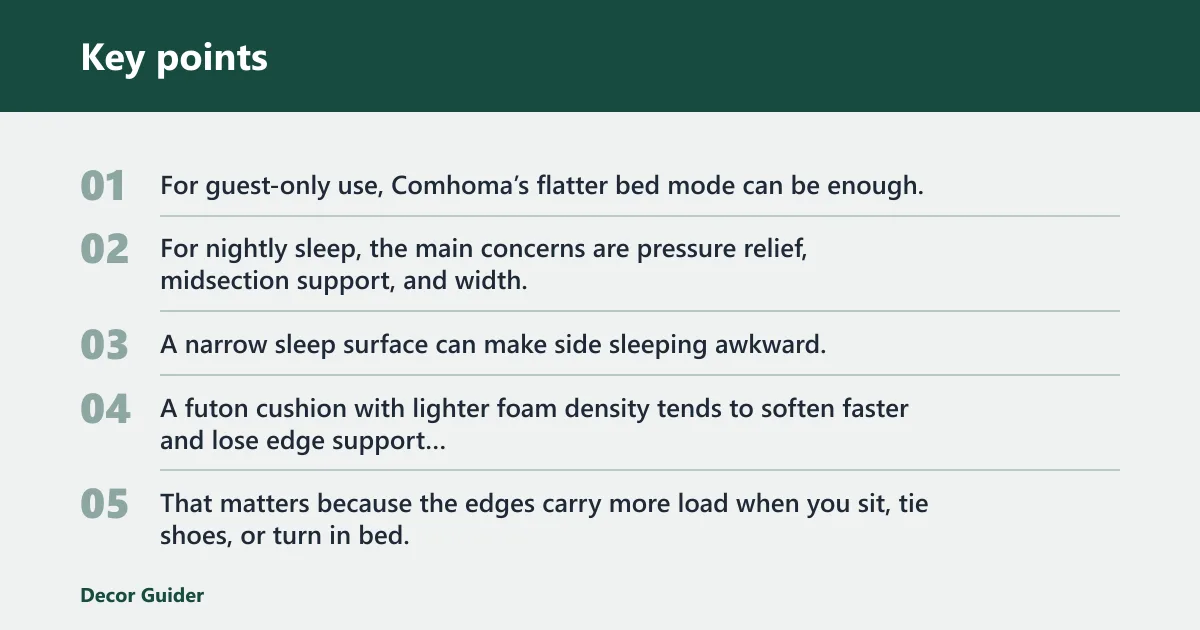
For guest-only use, Comhoma’s flatter bed mode can be enough. For nightly sleep, the main concerns are pressure relief, midsection support, and width. A narrow sleep surface can make side sleeping awkward, and a thinner cushion can let the frame feel too present through the padding.
Support, pressure relief, and edge feel
A futon cushion with lighter foam density tends to soften faster and lose edge support sooner. That matters because the edges carry more load when you sit, tie shoes, or turn in bed. If the foam compresses quickly, you may feel the metal support structure sooner than you want.
If a guest uses the futon for three nights in a row on a thin blanket only, the first night may feel fine, but by the third night the same cushion can feel flatter, and a pillow-top topper becomes the difference between usable and aggravating.
Sagging, noise, and break-in concerns
Sagging risk rises with repeated loading, especially if the mattress insert is low density. Metal frames can also creak more than wood if bolts loosen or hinges shift. A short break-in period is normal, but if the cushion starts soft and stays soft, that is a sign the fill is not built for long service.
Will it fit your space?
Usually yes, if you are shopping for a futon sized for compact apartment, dorm, or guest-room use rather than a full sleeper replacement. The appeal is the footprint. The tradeoff is that the bed mode needs enough open floor in front of the frame, and that can matter more than the sofa width itself.
Small-apartment footprint
In sofa mode, Comhoma is compact enough for a living room corner, a studio wall, or a spare office. In bed mode, the footprint expands significantly because the back folds flat. Measure both positions before buying, not just the sofa position shown in product photos.
Dorm room and guest-room fit
For dorm rooms, the size can work if the room needs one piece to do two jobs. For guest rooms, it can function as a backup bed that doubles as seating between visits. It is less suitable where two people need to sleep on it regularly, because the width is limited.
Seat-to-bed conversion space needs
You need clear floor space behind and in front of the frame so the backrest can fold without hitting a wall, desk, or shelf. The simpler the conversion, the better it works in tight rooms. A cluttered room can turn a quick fold-down into a nuisance.
Picture a 10-by-12-foot apartment bedroom with a dresser on one wall and a desk on the other. The futon can fit, but only if you leave a clear path for the fold-down motion and accept that the bed mode will dominate the room at night.
Futon decision matrix
This matrix uses practical pass/fail checks rather than generic praise. Treat each row as a use-case filter. If the Comhoma fails one of the core comfort or support checks, it is better treated as a temporary solution than a main bed.
| Use case | Comfort criterion | Support criterion | Assembly criterion | Space efficiency criterion | Result |
|---|---|---|---|---|---|
| Nightly sleep | Pass only if you can sleep on a 5.9-inch cushion with a topper | Pass only if back and hips feel supported for multiple nights | Pass if bolts stay tight and frame stays quiet | Pass only if the bed mode still leaves usable circulation space | Fail for most buyers |
| Occasional guests | Pass if guests need a few nights, not a long stay | Pass if the sleeper tolerates a firmer surface | Pass if setup is fast and repeatable | Pass if sofa mode matters more than bed mode | Pass |
| Small apartments | Pass if seating comfort can be modest | Pass if sleep use is light or occasional | Pass if one person can fold it without strain | Pass if a compact footprint is the top priority | Pass |
| Dorm rooms | Pass if the room needs one seat-bed hybrid | Pass if it supports study breaks and short sleep | Pass if assembly is manageable with basic tools | Pass if the bed clears other furniture at night | Pass |
| Pet-friendly homes | Pass if hair and scratches are acceptable risks | Pass if you can keep claws off the upholstery | Pass if covers and tighteners are easy to maintain | Pass if the room needs easy cleaning around the frame | Mixed |
Build quality and assembly
Build quality is what separates a budget futon that feels usable from one that starts annoying you after a month. Comhoma’s metal frame keeps the price accessible, but metal and wood age differently. Metal is lighter and usually cheaper, while wood can feel more stable and furniture-like.
Metal versus wood frame tradeoffs
A metal frame often wins on price, weight, and foldability. A wood frame often wins on visual warmth and sometimes on perceived sturdiness. For Comhoma, the metal choice is sensible for a budget convertible, but it also means you should watch for flex at the center point and at the folding joints.
Center support and folding mechanism
Center support matters because the bed mode puts more load in the middle of the frame. If the support bar is underbuilt, the cushion can dip there first. The folding mechanism should lock cleanly in each position and stay aligned after repeated use. Any wobble is a warning sign.
Assembly time, tools, and fit checks
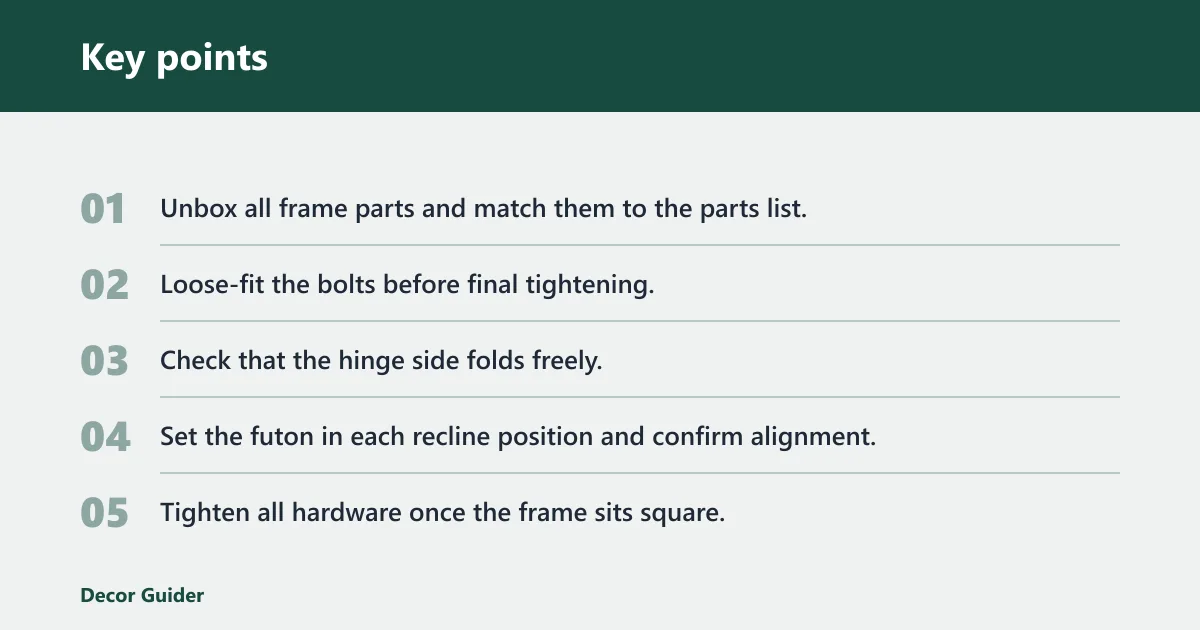
Assembly is usually moderate rather than difficult. Expect basic bolt-together setup with the kind of tools that often come in the box, though a separate wrench or socket tool can make it easier. Before tightening everything, check that the frame sits level and that the recline positions click into place.
- Unbox all frame parts and match them to the parts list.
- Loose-fit the bolts before final tightening.
- Check that the hinge side folds freely.
- Set the futon in each recline position and confirm alignment.
- Tighten all hardware once the frame sits square.
- Recheck bolts after the first week of use.
Pros and cons
Comhoma is not a premium sofa bed, but it does solve a real space problem at a budget level. The upside is compact flexibility. The downside is that low price usually means compromises in cushion depth, edge support, and long-run sleeping comfort.
Pros
- Low-cost convertible futon option.
- Works well for compact rooms, guest rooms, and apartment living.
- Folds from sofa to bed without needing a separate mattress.
- Metal frame keeps the footprint compact.
- Three-position recline adds day-to-night flexibility.
Cons
- Thin cushion depth limits nightly sleep comfort.
- Narrow sleep surface can feel tight for larger sleepers.
- Edge support may soften faster than buyers expect.
- Frame noise and bolt loosening can show up over time.
- May need a topper, extra bedding, or earlier replacement.
Comhoma versus other budget futons
At a high level, Comhoma sits in the same budget lane as Zinus, DHP, and Novogratz, but each brand tends to lean a little differently. Comhoma is usually the compact, lower-cost pick. The others often trade some price advantage for slightly stronger styling or broader model variety.
| Brand | Typical strength | Typical weakness | Best use case |
|---|---|---|---|
| Comhoma | Compact, low-cost, simple day-to-night use | Thinner cushion and limited nightly comfort | Guest use, dorms, tight apartments |
| Zinus | Often stronger mattress foam reputation in budget furniture | May cost more and still need a topper | Buyers who care more about sleep feel |
| DHP | Wide budget futon selection and easy styling match | Comfort varies a lot by model | Style-first buyers who still need a futon |
| Novogratz | Decor-friendly look with broad color and form choices | Design can matter more than mattress support | Rooms where appearance matters as much as function |
What are the main problems with a Comhoma futon?
The main problems are narrow sleeping width, thin padding, and the chance that comfort drops faster under regular sleep use than under guest use. Buyers also need to account for frame flex, possible creaks, and the fact that a futon often needs a topper sooner than a true sofa bed.
Ownership costs are easy to miss. Bedding may fit awkwardly if the sleep surface is close to standard full size but not quite there, and a mattress topper adds extra cost. Replacement timing also matters: if the cushion starts to feel flat within a short period, the low purchase price loses some of its appeal.
Who it’s for
Comhoma fits buyers who need a compact, low-cost seat that can turn into a bed for short stays. It also suits dorm rooms, studio apartments, and guest rooms where floor space matters more than plush comfort. It is not the right call for anyone expecting nightly mattress-level support.
Choose something else if the bed will carry most of the sleeping load in the home, if the sleeper is broad-shouldered, or if you need dependable edge support and quiet hardware. For those buyers, a better sleeper sofa or a more substantial futon frame is the safer purchase.
Frequently asked questions
Is Comhoma futon worth it?
It is worth it for buyers who need a low-cost, space-saving spare bed and can live with a thinner cushion. It is not the best buy for nightly sleep. The value is strongest when the futon is used as a guest seat-bed, not a primary mattress replacement.
What is the weight capacity of a Comhoma futon?
Most Comhoma futon listings quote a weight capacity around 600 pounds. That figure helps for shared seating or a guest bed, but it does not mean the cushion will feel equally supportive at that load. Capacity and comfort are separate checks.
Does the Comhoma futon convert easily from sofa to bed?
Yes, the conversion is one of its main strengths. The three-position folding design is meant to move from upright to reclined to flat with little effort. The room still needs clearance for the fold-down motion, so easy conversion depends on the space around it.
Is the Comhoma futon good for small apartments?
Yes, that is one of its best use cases. It saves floor space in sofa mode and turns into a guest bed without a separate mattress. The main limit is sleeping width, so it works better for one person than for two adults sharing the bed mode.
How much assembly does a Comhoma futon require?
Assembly is moderate and usually involves bolting the frame together, attaching the arms or support pieces, and checking the recline function. It is not complex, but it does reward careful tightening and a level setup. A second pass on the bolts after a week is smart.
What size mattress and frame does the Comhoma futon use?
Most listings place the frame at about 66.1 inches wide, 32.3 inches deep, and 29.5 inches high, with a sleep surface around 66.1 by 37.4 inches. That is compact, so it works better as a short-stay bed than as a roomy full-time mattress substitute.
Products related to this article
Sponsored / affiliate links. As an Amazon Associate I earn from qualifying purchases. I may earn additional commission from eligible campaigns.