Best Futon Cover for Pets: Materials and Fit Guide
For pets, the best futon cover is usually microfiber for shedding, canvas or denim for scratching, waterproof polyester for accidents, and charcoal-treated fabric for odor; pick the fabric that matches the damage you see most. Pick wrong and you get stains, split seams, hair that will not lift out, and a cover that wears out fast. This guide ranks materials by damage type, then covers fit, closures, and cleaning for cats, dogs, and multi-pet homes.
This guide is part of our Futon mattress guide: sizes, setup, and care series.
Best futon cover for pets: choose by the problem you have


The right futon cover depends on what is failing. Shedding needs easy hair release. Clawing needs a tight weave and abrasion resistance. Urine calls for a liquid barrier. Odor needs low-absorption materials and fast washing. A cover that handles one problem well can still fail badly at another.
There is also a difference between a cover and a protector. A cover takes the visible wear and is the surface you sit on. A waterproof protector sits under it and blocks liquids before they reach the mattress. For pets that have accidents, both together usually work better than one layer alone.
What to buy first for the most common pet problems
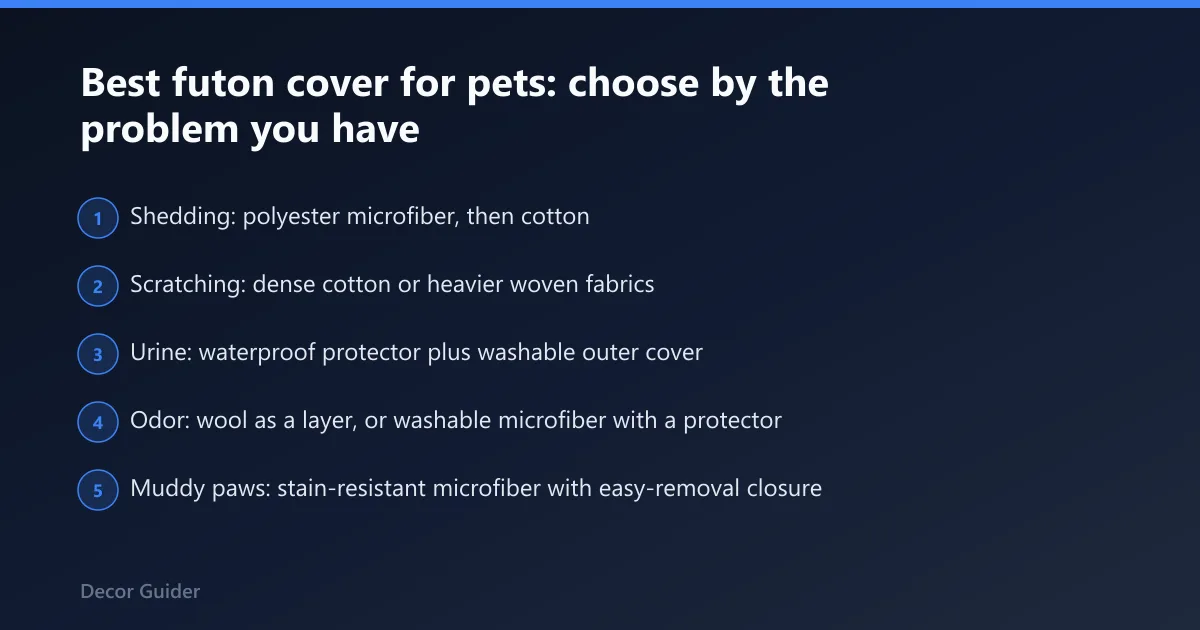
Start with the damage you see most often. If your sofa fills with hair, choose polyester microfiber or cotton. If your cat kneads hard, move toward canvas-like weaves and avoid loose knits. If the problem is urine or muddy paws, add a waterproof liner under the cover.
- Shedding: polyester microfiber, then cotton
- Scratching: dense cotton or heavier woven fabrics
- Urine: waterproof protector plus washable outer cover
- Odor: wool as a layer, or washable microfiber with a protector
- Muddy paws: stain-resistant microfiber with easy-removal closure
Which futon cover materials handle pet hair and claws best?
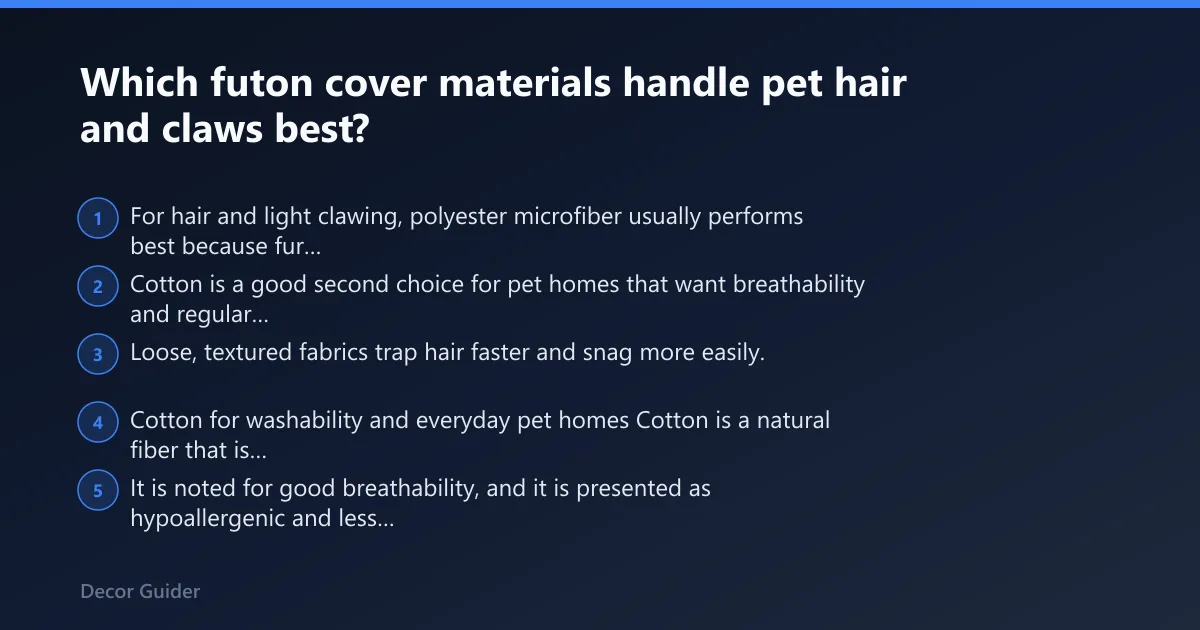
For hair and light clawing, polyester microfiber usually performs best because fur releases more easily and the fabric tends to wash clean without much fuss. Cotton is a good second choice for pet homes that want breathability and regular laundering. Loose, textured fabrics trap hair faster and snag more easily.
Cotton for washability and everyday pet homes
Cotton is a natural fiber that is environmentally friendly and biodegradable. It is noted for good breathability, and it is presented as hypoallergenic and less likely to cause irritation. In pet homes, that combination matters when covers are washed often and people want a surface that feels cooler.
Cotton works well when the main issue is moderate shedding, normal dirt, or general use by pets that do not claw hard. It is not the toughest option against repeated digging. Tight cotton weaves perform better than loose, soft knits because loose surfaces catch hair and show pulled threads sooner.
Polyester microfiber for hair release, stain resistance, and budget buys
Polyester microfiber is usually the most practical pick for shedding pets. The surface tends to let hair slide off more easily than fuzzy natural fabrics, and it is typically machine washable, stain resistant, and tear resistant. That makes it a good value option for households that wash often.
The tradeoff is feel. Microfiber can hold static, and some low-cost versions pill or look flattened after repeated cleaning. For multi-pet homes, it is still often the least frustrating surface because hair, paw prints, and light spills are easier to manage than on textured fabrics.
What happens when cats knead or dogs dig at the fabric
Cats that knead and dogs that dig attack seams, not just the face fabric. A smooth weave helps, but zipper placement and corner reinforcement matter just as much. If a cover is loose over the mattress, pets can grip slack fabric and pull it until the seam opens.
For this behavior, a tighter fit and a tough outer weave matter more than a soft hand feel. If the pet is a serious digger, use the cover over a protector and avoid delicate decorative trims. Decorative piping often becomes the first failure point.
What material works best for accidents, odor, and moisture?

For accidents, the real answer is a waterproof protector under a washable cover. Wool helps with odor and moisture handling, but it is not a liquid barrier. Kokos and latex are better thought of as breathable support layers inside the futon, not outer covers that take daily pet abuse.
Waterproof liner or protector: liquid barrier, sound, and fit tradeoffs
A waterproof liner blocks liquid before it reaches the futon core. That matters after urine, vomit, or repeated wet paws. The tradeoff is comfort and noise. Some liners feel crinkly or trap heat, so breathability is usually lower than a plain fabric cover.
Zip styles fully enclose the mattress and protect more of the sidewall. Fitted styles install faster but can shift if the futon is thick or pets push into the corners. Wash the protector after any accident, and inspect seams because liquid often finds weak spots near the zipper path.
Wool for odor control and moisture handling
Wool is one of the material options in the futon lineup, and it is useful as a protective layer rather than a primary outer cover for claw-heavy homes. It handles moisture better than many fabrics and tends to resist odor better, which helps between washes.
That said, wool needs allergy consideration. Some households tolerate it well; others do not. It also is not a substitute for a liquid barrier when a pet has accidents. Use it when odor control and temperature balance matter more than stain-proofing.
Kokos and latex as breathable support layers, not outer covers
Kokos fiber is said to improve hardness and provide orthopedic support. It also has natural airflow that helps reduce moisture buildup, and it is described as resistant to mold and dust mites. Those traits make it useful inside the futon, where support and airflow matter.
Latex is described as highly elastic and comfortable. It is said to resist dust mites and mold naturally, can absorb movement, and has good ventilation through microscopic openings. Latex is excellent as a core or pad layer, but it should not be confused with a washable outer cover.
How do futon size and fit affect pet durability?
Fit drives durability more than many buyers expect. If the cover is too shallow, seams strain and hair works into gaps. If it is too loose, pets can claw fabric folds and pull at the corners. Measure mattress dimensions, thickness, and closure style before buying anything.
Measure mattress dimensions and thickness before you buy
Measure length, width, and loft allowance, not just the nominal futon size. A thick mattress needs extra depth in the cover so the zipper is not forced around the corners. If the fit is too tight, seam stress rises and the fabric wears faster.
A futon frame also changes the fit story. Some covers are made for a mattress only, while others expect the frame shape to stay constant. If the futon is used as a sofa by day and a bed by night, the cover needs enough give to handle both positions.
Why zipper placement, stretch percentage, and corner closure matter
Zipper placement matters because pets often scratch where they can reach the edge. A zipper on the underside or rear is less exposed than one on a side seam. Stretch percentage matters too; too little stretch means hard installation, and too much stretch can sag after use.
Corner closure fit is a common weak point. If corner seams float or bunch, hair collects there and urine can wick into folds. Tight corner closures help the cover stay smooth. Smooth surfaces are easier to clean and harder for claws to catch.
| Pet issue | Best cover material | Protector layer | Wash frequency | Fit pitfall |
|---|---|---|---|---|
| Shedding cat | Polyester microfiber | Optional thin protector | Every 1 to 2 weeks | Loose corners trap hair |
| Kneading cat | Tight cotton weave | Helpful underlayer | Weekly to every 2 weeks | Soft slack fabric snags |
| Large dog with muddy paws | Microfiber or washable cotton | Waterproof liner | Weekly, or after messes | Shallow depth at corners |
| Urine accident | Washable outer cover | Waterproof protector required | Immediately after accident | Side zipper lets liquid through |
| Odor buildup | Wool layer or microfiber | Breathable liner if needed | Every 1 to 2 weeks | Too-tight fit traps odor |
How do I clean and maintain a futon cover with pets?
Remove hair first, then wash for the specific mess. For shedding, lint removal before laundering helps prevent hair from clogging the washer. For accidents, use cold water first and clean the protector separately. For odor, frequent washing and full drying matter more than heavy scent products.
How to remove hair, wash after accidents, and deal with odor
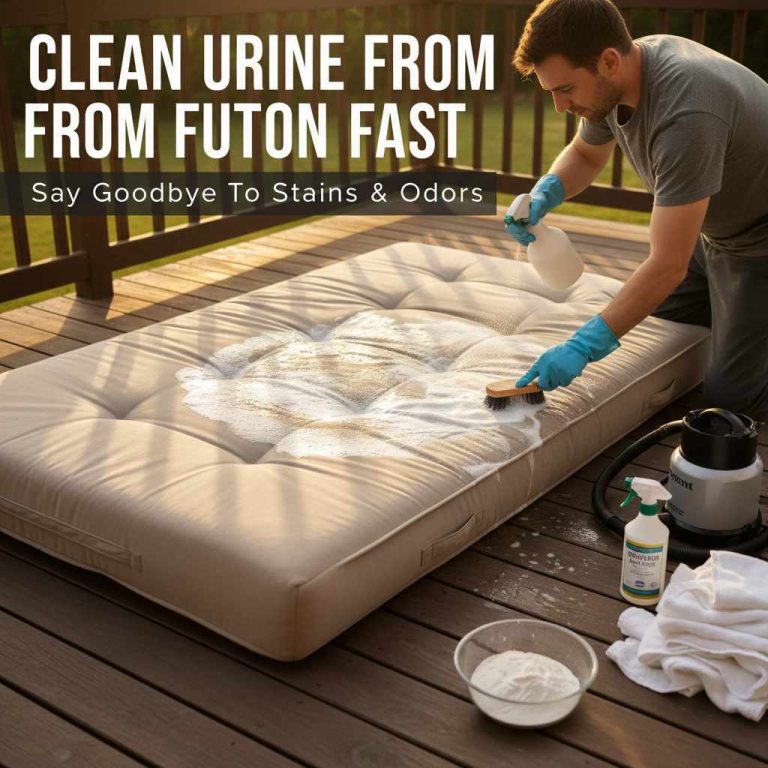
Start by vacuuming or using a rubber brush to lift hair from the surface. For muddy paws, let the mud dry, then brush it off before washing. For urine, blot immediately, rinse the area, and move the protector out for a separate wash cycle.
Odor usually sits in the fill or the underside of the cover. Wash both the cover and the protector, then dry completely before reassembly. If the cover still smells musty, the problem may be in the mattress or inner layer, not just the fabric shell.
How often to wash in a pet home
For homes with pets, wash frequency depends on how much the cover is used and exposed. A light-shed household may manage every one to two weeks. Homes with muddy paws, multiple pets, or frequent couch naps may need fairly frequent washing, sometimes about weekly. After a urine accident, it is usually best to wash it promptly rather than waiting.
Waterproof liners often need their own care routine. They should be washed after each accident and checked for seam damage. Cotton and microfiber can usually handle routine laundering well. Wool needs more careful handling, and latex or kokos should stay inside protective layers, not be treated like covers.
Care notes for common materials
- Cotton: breathable, easy to wash, but can wrinkle and shrink if care is rough
- Microfiber: fast cleaning, good hair release, but can hold static and pills
- Wool: good odor and moisture handling, but watch for allergy issues and delicate care
- Latex: use as an inner layer; keep dry and protected from direct pet messes
- Kokos: use as a support layer; keep it shielded from liquid and direct soiling
How do I put on a futon cover, and can a fitted sheet work?
Put the cover on by aligning the mattress edges, then zipping or closing from the least exposed side first. A fitted sheet can work as a short-term cover for light use, but it usually fails with pets because it slips, gathers, and leaves seams exposed.
Step-by-step cover installation
- Measure the futon mattress and confirm the cover size.
- Lay the mattress flat and smooth out the corners.
- Turn the cover partly inside out if the zipper style allows it.
- Match the top edge first, then pull the cover over the body.
- Work the corners fully into place before closing the zipper.
- Check that no seam is twisted and no fabric is bunched.
A snug fit matters more than speed. If the cover bunches during installation, pet hair collects in the folds and claws can catch the loose areas. A second person helps with thicker futons, especially when the mattress must be compressed slightly to close the cover.
When a fitted sheet is a temporary fix and when it fails
A fitted sheet can be a stopgap for very light use, such as covering a guest futon for a short stay. It is not really a pet cover. The corners slip, the fabric moves, and accidents pass through unless another protector sits underneath.
For cats that knead or dogs that scratch, a fitted sheet fails fast. The elastic edge can roll, and hair works into the mattress instead of staying on the surface. Use it only until the correct cover arrives.
Frequently asked questions
What is the best pet friendly couch material for a futon cover?
Polyester microfiber is usually the most pet friendly choice for shedding and routine messes because hair releases more easily and the fabric is simple to wash. For scratching, a tighter cotton weave or heavier woven fabric tends to hold up better than soft, fuzzy textiles.
How do I clean a futon cover after pet hair and accidents?
Remove loose hair first with vacuuming or a rubber brush, then wash according to the fabric. After accidents, blot and rinse quickly, wash the cover and protector separately, and dry everything fully before use. If odor remains, check the mattress and inner layers too.
How do I put on a futon cover?
Measure first, then start with the mattress edges and corners. Pull the cover on evenly, close the zipper from the least exposed side, and smooth out bunching before regular use. A helper makes the job easier on thicker futons or tighter covers.
Can you use a fitted sheet as a futon cover?
A fitted sheet can work as a temporary wrap, but it is not a good pet cover. It slips, shifts, and leaves the mattress more exposed to hair, scratches, and spills. Use it only as a short-term measure while waiting for a proper cover.
What size futon cover do I need for my frame or mattress?
Match the cover to the mattress length, width, and thickness, not just the frame label. Leave room for loft and corner closure fit. If the futon is thick or used in multiple positions, choose a cover with enough depth and a zipper path that is not stressed.
How often should I wash a futon cover with pets in the home?
Light pet use often calls for washing every one to two weeks. Homes with shedding, muddy paws, or multiple pets may need weekly cleaning. Wash immediately after urine accidents, and clean waterproof liners after each incident so odors do not settle into seams.
Products related to this article
Sponsored / affiliate links. As an Amazon Associate I earn from qualifying purchases. I may earn additional commission from eligible campaigns.