How to Cook Brats in a Skillet: Easy Step-by-Step
Cooking brats in a skillet is the best way to achieve a juicy interior and a perfectly crispy, golden-brown crust at home. Whether you are preparing a quick weeknight dinner or feeding a crowd on game day, this stovetop method delivers consistent results. This guide walks you through every step, from selecting the right pan to serving the perfect bratwurst.

Cooks Standard
Cooks Standard Professional 12-Inch Nonstick Frying Pan,…
- Well Made: Nonstick frying pan is constructed from heavy duty aluminum, offering exceptional durability; It features a premium non…
- Enjoy Cooking: The 12 inch nonstick frying pan is ideal for frying eggs, making omelets, cooking fish, sautéing vegetables, or sea…
- Versatile Compatibility: Nonstick frying pans works on gas, electric, glass, and ceramic stovetops; Not compatible with induction;…
As an Amazon Associate I earn from qualifying purchases.
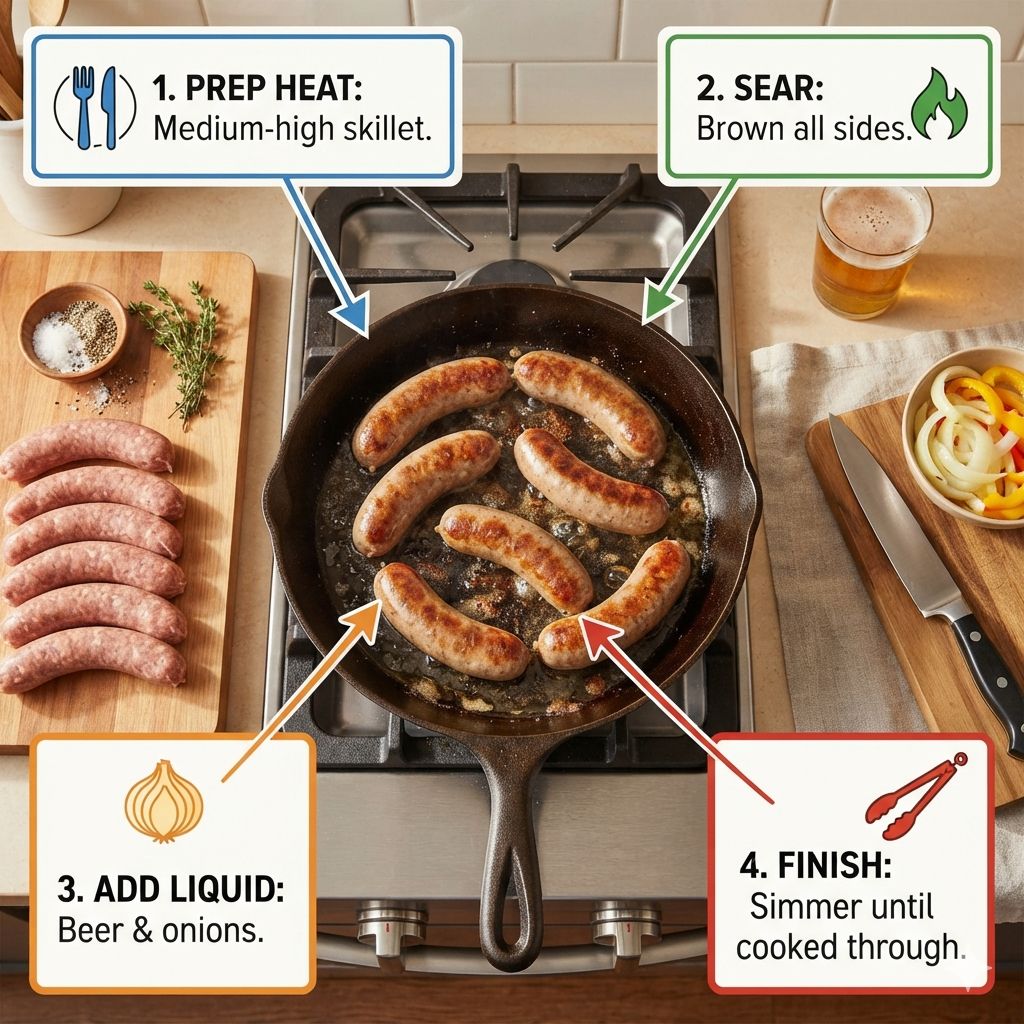
Simply put, the best method for cooking brats in a skillet is to simmer them gently in beer or broth first, then sear them over medium-high heat. This two-step process takes about 20-25 minutes and guarantees that your brats are fully cooked, incredibly juicy, and have a rich, caramelized exterior.
Key Takeaways
- Cooking brats in a skillet requires a two-stage method: simmering to cook through, then searing for the crust.
- Simmering the bratwurst in liquid prevents them from burning on the outside while staying raw in the center.
- Searing over medium-high heat creates the signature crispy, brown skin through the Maillard reaction.
- Always use a meat thermometer to check for an internal temperature of 160°F for safe consumption.
What You Need to Cook Brats in a Skillet
Setting yourself up for success starts with the right tools and ingredients. You don’t need much, but quality matters. The star of the show is the fresh bratwurst link.
Look for uncooked, fresh bratwurst in the meat section. Pre-cooked varieties will not require the simmering step, but the searing process remains the same.
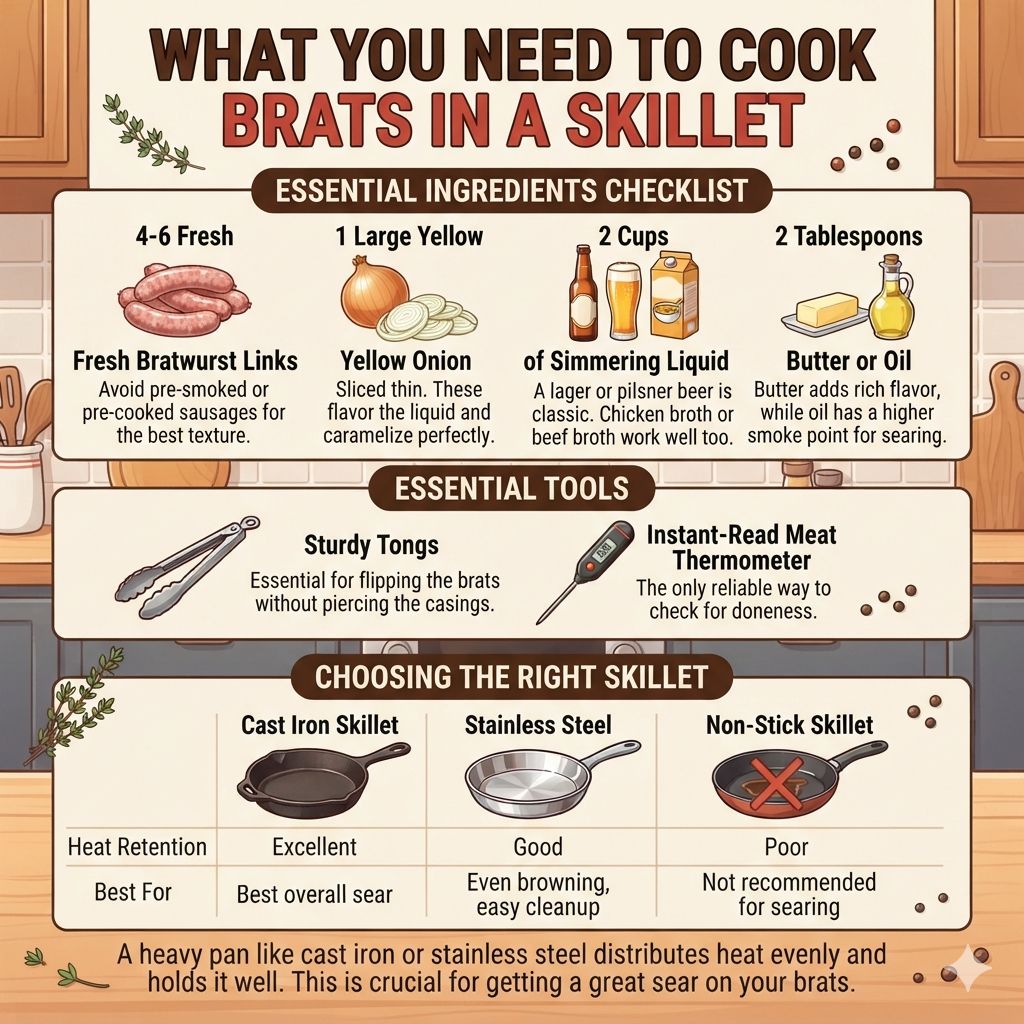
Essential Ingredients Checklist
- 4-6 Fresh Bratwurst Links: Avoid pre-smoked or pre-cooked sausages for the best texture.
- 1 Large Yellow Onion: Sliced thin. These flavor the liquid and caramelize perfectly.
- 2 Cups of Simmering Liquid: A lager or pilsner beer is classic. Chicken broth or beef broth work well too.
- 2 Tablespoons Butter or Oil: Butter adds rich flavor, while oil has a higher smoke point for searing.
- Sturdy Tongs: Essential for flipping the brats without piercing the casings.
- Instant-Read Meat Thermometer: The only reliable way to check for doneness.
Choosing the Right Skillet
| Pan Type | Heat Retention | Best For |
|---|---|---|
| Cast Iron Skillet | Excellent | Best overall sear |
| Stainless Steel | Good | Even browning, easy cleanup |
| Non-Stick Skillet | Poor | Not recommended for searing |
A heavy pan like cast iron or stainless steel distributes heat evenly and holds it well. This is crucial for getting that perfect crust without burning the sugar in the meat.
How to Prepare Brats for Pan Frying
Preparation is simple, but a major debate exists: to prick or not to prick the casings. Many old-school recipes call for poking holes in the brats to prevent them from bursting.
Pricking the casings is actually a mistake. Those little holes allow the flavorful juices and fat to escape into the cooking liquid. This leaves you with a drier, less flavorful bratwurst.
| Method | Juiciness | Burst Risk |
|---|---|---|
| Pricking with a fork | Reduced | Low |
| Not Pricking | Maximum | Low (with gentle heat) |
Modern casings are strong enough to hold up to gentle simmering. Simply remove the brats from the package and pat them dry with a paper towel. This helps them brown better later.
Important: Do not cut or score the brats before cooking. Keeping the casing intact locks in the fat and flavor, ensuring a plump, juicy result.
Step 1: Simmer the Brats in Liquid
Simmering is the secret step that separates great brats from average ones. This gently cooks the meat all the way through without burning the outside. It also infuses the bratwurst with deep flavor.
Place your brats in the skillet in a single layer. Scatter the sliced onions over the top, then pour in your chosen liquid until the brats are about halfway submerged. Do not drown them completely.
How to Simmer Brats Step-by-Step
- Choose Your Liquid: Beer adds rich, malty notes. Broth adds savory depth. Water works but adds no flavor.
- Add Aromatics (Optional): Throw in a few cloves of garlic or a bay leaf for extra aroma.
- Bring to a Gentle Simmer: Set the heat to medium. Look for small bubbles gently breaking the surface. Do not boil.
- Cover and Cook: Let the brats simmer for 10-12 minutes. Flip them once halfway through with tongs.
- Check Temperature: They are ready for searing when the internal temperature reaches about 150-155°F.
Tip: A gentle simmer is non-negotiable. Boiling can cause the casings to split and the meat to become tough. Look for lazy bubbles.
The simmering process also renders out some of the fat, which is then replaced by the flavor of the liquid. This is why beer-brats have that distinctive, rich taste.
Step 2: Sear the Brats in a Hot Skillet
Searing creates the signature crispy, brown crust that makes skillet-cooked brats so appealing. This is where the Maillard reaction happens, creating hundreds of new flavor compounds in just minutes.
Carefully remove the brats from the simmering liquid and set them aside on a plate. Pour out the liquid and reserve the onions for serving if you like. Return the skillet to the stove over medium-high heat.
Searing Process Checklist
- Heat the Fat: Add 1-2 tablespoons of butter or oil to the hot skillet. Let it shimmer.
- Dry the Brats: Pat the brats completely dry with paper towels. Moisture is the enemy of a good sear.
- Sear in Batches: Do not overcrowd the pan. Leave space between each bratwurst.
- Cook Uninterrupted: Let them sizzle for 2-4 minutes per side without moving them.
- Turn for Even Crust: Use tongs to turn them to get an even crust all around.
Warning: Do not walk away during searing. The butter can burn quickly. If you see heavy smoke, reduce the heat immediately.
The total searing time should be about 6-8 minutes. The brats are ready when they are deep golden brown and have reached an internal temperature of 160°F. The contrast between the snappy casing and the juicy interior is what you are aiming for.
How to Check if Brats Are Fully Cooked
Relying on color or feel alone is not enough to determine if your brats are safe to eat. The only reliable method is to use an instant-read meat thermometer.
According to USDA guidelines, ground meats (which includes sausages like bratwurst) must be cooked to an internal temperature of 160°F (71°C). This ensures any harmful bacteria are eliminated.
Steps to Check Doneness
- Insert the thermometer probe into the end of the bratwurst.
- Push it into the center of the sausage, avoiding the casing if possible.
- Wait 3-5 seconds for the reading to stabilize.
- If the temperature is 160°F, it is done. If not, continue searing and check again in 1-2 minutes.
- Rest the brats for 5 minutes before serving.
Important: Do not skip the rest time. Let the brats rest on a cutting board for 5 minutes after cooking. This allows the juices to redistribute throughout the meat.
Visual cues like a golden-brown skin and a firm feel are helpful, but the thermometer is your best friend for food safety and perfect doneness. Juices should run clear when you cut into a rested brat.
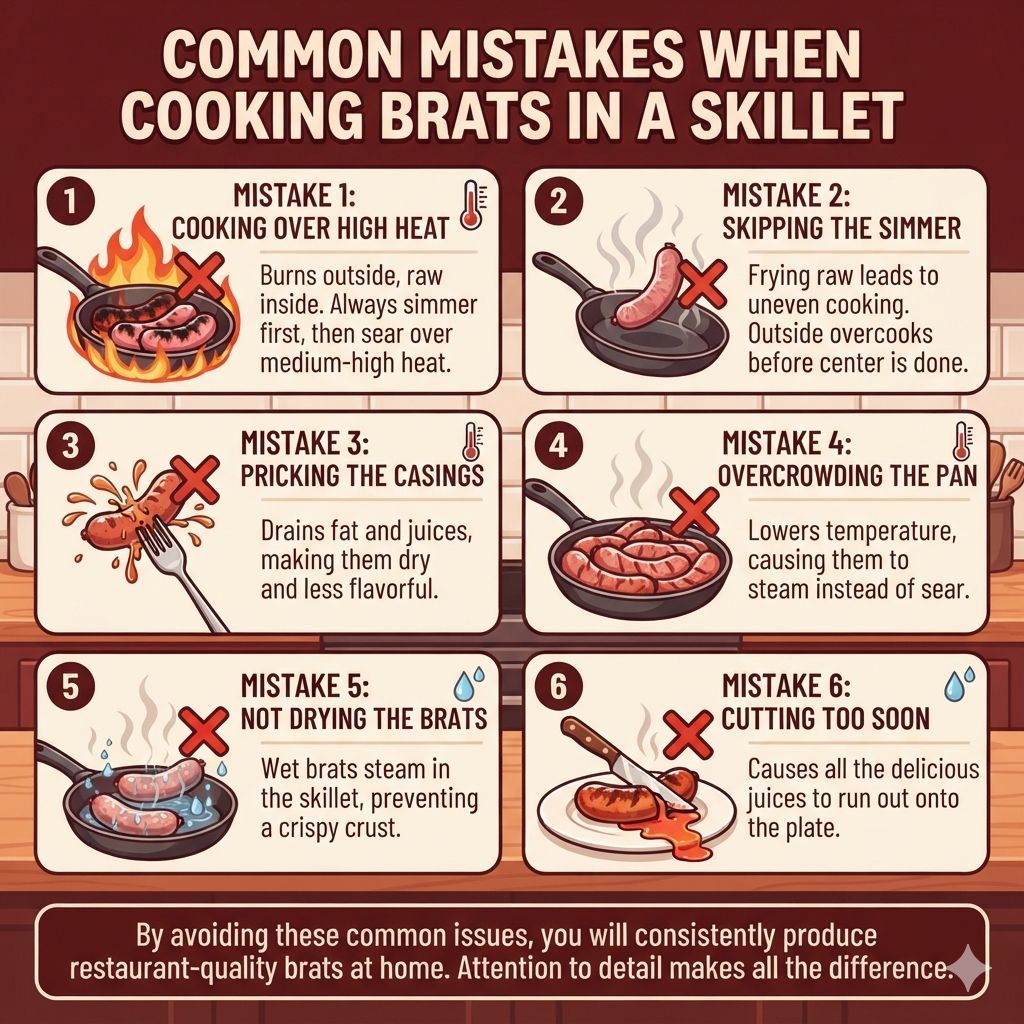
Common Mistakes When Cooking Brats in a Skillet
Even experienced cooks can fall into common traps. Avoiding these errors will ensure your brats turn out perfect every single time. Here are the most frequent pitfalls.
- Mistake 1: Cooking Over High Heat: This burns the outside while leaving the inside raw. Always simmer first, then sear over medium-high heat.
- Mistake 2: Skipping the Simmer: Frying raw brats from start to finish leads to uneven cooking. The outside overcooks before the center is done.
- Mistake 3: Pricking the Casings: As mentioned, this drains the fat and juices that keep brats moist and flavorful.
- Mistake 4: Overcrowding the Pan: Adding too many brats at once lowers the pan temperature, causing them to steam instead of sear.
- Mistake 5: Not Drying the Brats: Wet brats will steam in the skillet, preventing a crispy crust from forming.
- Mistake 6: Cutting Too Soon: Cutting into a brat immediately after cooking causes all the delicious juices to run out onto the plate.
By avoiding these common issues, you will consistently produce restaurant-quality brats at home. Attention to detail here makes all the difference.
What to Serve with Skillet-Cooked Brats
Perfectly cooked brats are only part of the equation. The right toppings and sides can elevate your meal to something truly special. There are several classic serving styles to choose from.
In Wisconsin, the classic way is on a hearty hoagie roll with spicy brown mustard and sauerkraut. In Germany, you find them paired with potato salad and sweet mustard. Both are delicious.
Essential Toppings
- Sauerkraut: Adds tangy, fermented flavor that cuts through the richness of the meat.
- Caramelized Onions: Sweet and savory, cooked right in the pan drippings from the searing step.
- Mustard: Spicy brown, Dijon, or whole grain mustard are all excellent choices.
- Relish: Sweet pickle relish adds a bright, vinegary contrast.
Classic Side Dishes
| Side Dish | Flavor Profile | Prep Time |
|---|---|---|
| German Potato Salad | Tangy, warm, bacon-infused | 30 minutes |
| Baked Beans | Sweet, smoky, hearty | 10 minutes |
| Corn on the Cob | Sweet, buttery, fresh | 15 minutes |
Toast your buns in the rendered fat left in the skillet for an extra layer of flavor. It adds a crunch that perfectly complements the juicy bratwurst.
Frequently Asked Questions
Do I need to boil brats before frying?
Yes, simmering (a gentle boil) is a recommended first step. It gently cooks the bratwurst through to the center, ensuring it is safe and juicy before you crisp the outside in the skillet. Skipping this step often leads to burnt outsides and raw centers.
How long does it take to cook brats in a skillet?
The total process takes about 20-25 minutes. Simmering takes 10-12 minutes, and searing takes 6-8 minutes. The exact time depends on the thickness of the brats and the heat level of your stove.
What is the best liquid for simmering brats?
Beer is the most popular choice for its rich, malty flavor. A mild lager or pilsner works best. Chicken broth or beef broth are excellent non-alcoholic alternatives that also add deep savory flavor to the meat.
Can I cook frozen brats in a skillet?
It is not recommended to cook frozen brats directly in a skillet. You must thaw them completely in the refrigerator first. Cooking from frozen leads to uneven cooking, where the outside burns before the inside is fully cooked.
What is the best skillet for cooking bratwurst?
A cast iron skillet is the absolute best choice. It retains and distributes heat perfectly, creating an even, crispy sear. A heavy-bottomed stainless steel pan is a great alternative.
Avoid thin non-stick pans for this task.
Final Thoughts
Mastering cooking brats in a skillet is all about the simple two-step process of simmering and searing. Simmering guarantees a cooked, juicy interior, while a quick hot sear creates the perfect crispy crust. Use a meat thermometer to hit 160°F, and let the brats rest before serving.
Follow these steps, and you will have the best brats right from your own kitchen.
Related pick: Check today's price on Amazon
Products related to this article
Sponsored / affiliate links. As an Amazon Associate I earn from qualifying purchases. I may earn additional commission from eligible campaigns.