Cast Iron Cleaner Cost
Cast iron cleaner cost ranges from about $3 for a scrub sponge to $20-$40 for restoration supplies, and the lower-cost option is often enough for routine care. Buying a restoration product for a simple wipe-down usually wastes money, while undercleaning can leave rust and stuck-on residue. This guide compares costs by cleaning job, from daily maintenance to rust removal, so you can match the product to the mess.
Cost breakdown by cleaning task


Cost depends more on the cleaning job than the pan itself. A simple after-dinner wash can cost pennies per use, while rust removal or stripping old seasoning can justify a bigger spend. The table below compares the cheapest workable approach for each mess level, plus how often the purchase can be reused.
| Cleaning task | Product type | Typical upfront cost | Reuse factor | Best-use case |
|---|---|---|---|---|
| Daily cleaning | Soap, warm water, scrubber | About $3 to $10 | Very high; soap and a scrubber last through many washes | Light residue after normal cooking |
| Stuck-on food | Chainmail scrubber or scraper | About $16 for chainmail; scrapers are often cheaper | High; chainmail is reusable and long-lasting | Baked-on bits that soap alone will not lift |
| Sticky seasoning | Aerosol oven cleaner or lye bath | About $8 to $20 for a can; lye bath setup varies | Moderate to high; lye bath is better across multiple pans | Old, gummy buildup that needs stripping |
| Rust removal | Vinegar bath or electrolysis tank | About $3 to $15 for vinegar; electrolysis costs more to set up | Low for vinegar; high for electrolysis if you restore many pans | Surface rust, or deeper restoration on several pans |
What do you pay for daily cleaning?
For daily cleanup, you usually do not need a specialty product. Soap, warm water, and a nonmetal scrubber handle most cooked-on residue on well-seasoned bare cast iron, and the cost is low. If food is stubborn, a reusable chainmail scrubber can cost more upfront, but it pays off over repeated use.
Soap and water cost
Soap is the cheapest routine option, especially when the pan has good seasoning. Warm water and a small amount of dish soap remove most meal residue, then you dry the pan right away. That is the best place to save money, because daily cleanup should not require a restore kit.
Chainmail scrubber cost
The Ringer is a stainless steel chainmail cleaner for cast iron. Chainmail works like steel wool without scratching seasoned cast iron, so one reusable tool can replace many disposable pads.
Scraper and scrub pad cost
A scraper or scrub pad usually costs less than a chainmail scrubber, and it is often enough for routine food residue. Use a scraper first for loose bits, then finish with soap and water. This route is the cheapest workable choice when the pan is only lightly dirty.
Is chainmail worth buying?
Chainmail is worth buying if you want a reusable tool for stuck-on food on bare cast iron. It is less useful for pans that only need a quick wash. The main value is simple: one stainless steel chainmail cleaner can handle many cleanups, while disposable pads and rough scrubbers wear out faster.
How chainmail works
Chainmail scrubbers use linked stainless steel rings to lift residue without the harsh bite of steel wool. That makes them a good fit for seasoned cast iron when you need more than soap but less than a full restore. They are especially handy for bits that cling after searing or frying.
Upfront price vs reuse
At $16 for The Ringer, chainmail is not the cheapest item at checkout. Its case for buying is reuse. If you cook with cast iron often, a one-time purchase can outlast many rolls of steel wool or stacks of disposable pads, which lowers the cost per cleaning over time.
When a scrubber beats a kit
Suppose your skillet has a few stuck-on onion bits after breakfast. A chainmail scrubber or scraper is the right buy. A cleaning kit with restoration supplies makes no sense there. Save the bigger spend for pans with sticky seasoning, rust, or caked-on buildup.
What does heavy-duty restoration cost?
Heavy buildup costs more to fix because the job is different. If the pan has old seasoning, rust, or thick residue, you are paying for chemicals, setup, and safety gear rather than soap alone. For multiple pans, a lye bath can be more cost effective than repeated aerosol cans.
Aerosol oven cleaner costs
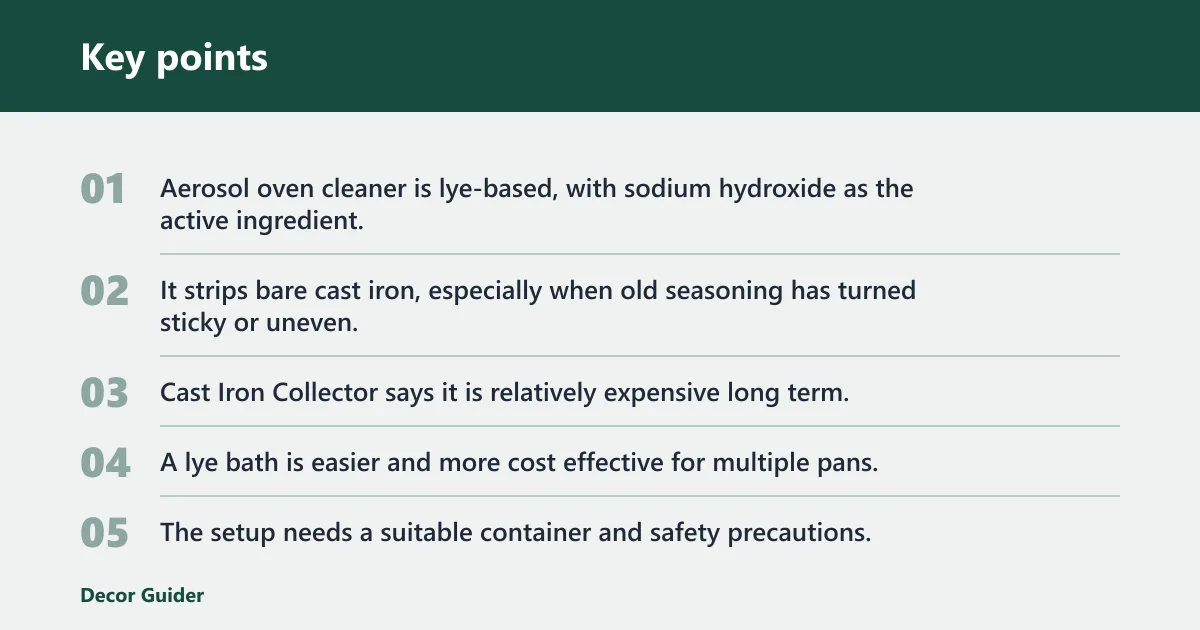
Aerosol oven cleaner is lye-based, with sodium hydroxide as the active ingredient. It strips bare cast iron, especially when old seasoning has turned sticky or uneven. Cast Iron Collector says it is relatively expensive long term, so it is better for occasional stripping than regular use.
Lye bath setup costs
A lye bath is easier and more cost effective for multiple pans. The setup needs a suitable container and safety precautions, so the first outlay is higher than a single can, but the cost spreads across many restorations. That makes it a better fit for anyone cleaning several badly caked pans.
Electrolysis setup costs
Electrolysis is useful for rust and buildup, but it takes more work and expense. The setup is more technical than a spray can or soak, so it makes sense mainly when you plan to restore many pans over time. For one lightly rusty skillet, the setup cost is hard to justify.
Can you use oven cleaner on cast iron?
Yes, but only for bare cast iron that needs stripping, not for routine cleanup. Lye-based oven cleaner is a restoration method, not a daily cleaner. It belongs in the heavy-buildup bucket, and it should be used with ventilation and protective gear because the chemical is strong.
When lye-based cleaner fits
Use aerosol oven cleaner when the pan has sticky seasoning or heavy buildup that soap cannot remove. It strips old layers so you can rebuild seasoning from scratch. That makes it useful for neglected pans, but it is the wrong tool for a pan that only needs a quick wash.
Ventilation and protective gear
Because aerosol oven cleaner is lye-based, use it outdoors or in a well-ventilated area. Wear protective gear before you spray, and keep it away from food-contact surfaces you do not intend to strip. The safety burden is part of the real cost, even if the can itself looks cheap.
Bare cast iron versus enamel
Do not treat bare cast iron and enameled cast iron the same way. Lye-based stripping methods are for bare cast iron restoration, while enameled cast iron calls for gentler cleaners.
How do you remove rust for less?
For surface rust, vinegar is the budget option. Mix one part white vinegar to one part water, soak briefly, then rinse, dry, and season the pan. This works for light rust only. For heavy rust or multiple old pans, electrolysis may cost more up front but handle larger jobs better.
Vinegar bath ratio
Surface rust can be treated with one part vinegar to one part water. That ratio is strong enough to loosen rust without moving straight to harsher restoration methods. It is a low-cost fix, especially when the rust is only on the surface and has not eaten deep into the iron.
30-minute soak limit
The vinegar soak should not exceed 30 minutes. Longer soaking raises the chance of damaging the metal surface. If rust remains after the short soak, repeat carefully rather than leaving the pan in the bath. The short limit is part of what keeps this cheap method from becoming a problem.
Rinse, dry, season
After the soak, rinse the pan, dry it immediately, and season it again. That final step matters because bare cast iron starts to rust again as soon as moisture lingers. A quick wipe is not enough after vinegar; the pan needs a fresh layer of protection.
Cast iron care routine
Daily care keeps cast iron cheap to own. Wash with soap and water, dry immediately with heat, reseason lightly with fat, and store the pan so moisture cannot sit inside it. That routine costs far less than repeated stripping or rust repair, and it fits most home cooking.
Wash with soap and water
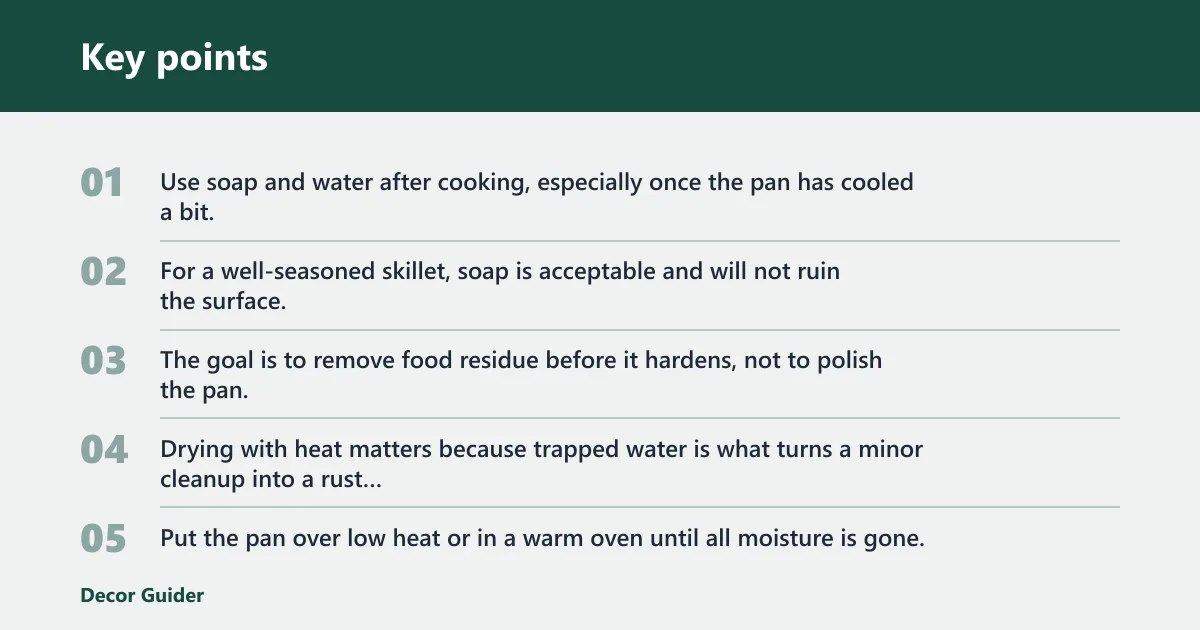
Use soap and water after cooking, especially once the pan has cooled a bit. For a well-seasoned skillet, soap is acceptable and will not ruin the surface. The goal is to remove food residue before it hardens, not to polish the pan.
Dry immediately with heat
Drying with heat matters because trapped water is what turns a minor cleanup into a rust problem. Put the pan over low heat or in a warm oven until all moisture is gone. A towel alone can miss water in the pores and corners.
Re-season lightly with fat
After drying, wipe on a thin layer of fat. The layer should be light, not greasy. This keeps the cooking surface protected without making it sticky. If the pan feels tacky, too much oil was used.
Store to prevent trapped moisture
Store the pan in a dry place with airflow if possible. Avoid stacking it wet or trapping it under a tight lid. Moisture left inside a pan is what drives rust, and rust raises the cost of ownership fast.
Frequently asked questions
How much does a cast iron cleaner cost?
Cast iron cleaner cost ranges from a few dollars for a scrubber or soap setup to about $16 for a reusable chainmail cleaner, while restoration products can run into the $20-$40 range. The right answer depends on whether you are cleaning daily residue, stripping buildup, or removing rust.
Is cast iron easy to clean?
Cast iron is easy to clean when the seasoning is in good shape and you handle residue right away. Warm water, soap, and immediate drying solve most jobs. It gets harder only when food is left on the pan, seasoning turns sticky, or rust starts to form.
Is cast iron expensive to maintain?
Cast iron is not expensive to maintain if you stick to routine care. Soap, water, and drying cost very little. The expense rises when you skip cleanup and need restoration supplies such as lye, aerosol cleaner, vinegar baths, or electrolysis equipment.
How do you clean cast iron after use?
After use, wash the pan with soap and water, scrub off food residue, dry it with heat, then wipe on a very thin layer of fat if needed. Finish by storing it dry. That sequence keeps the cleanup cheap and prevents rust from forming.
What is the best cast iron cleaner for stuck-on food?
For stuck-on food, a chainmail scrubber is often the best buy because it is reusable and strong enough to lift residue without scratching seasoned cast iron. The Ringer, for example, is stainless steel chainmail and was listed at $16 on Amazon.
What is the cheapest way to clean cast iron?
The cheapest way is soap, warm water, and immediate drying for everyday cleanup. If food is stuck, a scraper or chainmail scrubber is usually cheaper over time than buying a restoration product. Reserve vinegar, lye, and electrolysis for rust or severe buildup.
Do I need a cast iron cleaning kit?
Most people do not need a full cast iron cleaning kit. If you only cook on one well-seasoned skillet, soap and a basic scrubber are enough. A kit makes more sense when you are restoring several rusty or heavily built-up pans at once.
Should I buy a cleaner or just use soap and a scrubber?
Start with soap and a scrubber unless the pan has rust, sticky seasoning, or heavy buildup. A specialty cleaner is for a specific problem, not routine washing. If the pan is enameled cast iron, choose a non-abrasive cleaner made for that surface instead.
Products related to this article
Sponsored / affiliate links. As an Amazon Associate I earn from qualifying purchases. I may earn additional commission from eligible campaigns.