Lodge Cast Iron vs Victoria Cast Iron
Choose Lodge Cast Iron if you want the heaviest, most stable skillet; choose Victoria Cast Iron if you want easier lifting, quicker comfort, and a lighter pan. Pick the wrong one and you may end up with a pan that feels awkward on the stove, heats less predictably for you, and gets used less often. This guide compares handling, cooking behavior, seasoning, and value so you can choose with confidence.
| Decision factor | Lodge Cast Iron | Victoria Cast Iron | Winner |
|---|---|---|---|
| Handling comfort | Short classic handle; more two-handed lifting on larger sizes | Long curved handle; helper handle on many models | Victoria Cast Iron |
| Heat retention and searing | Heavier, with more thermal mass | Still cast iron, but usually a bit less mass | Lodge Cast Iron |
| Surface feel out of the box | Rougher sand-cast texture | Smoother pebbled as-cast feel | Victoria Cast Iron |
| Factory seasoning and break-in | Pre-seasoned with vegetable oil | Pre-seasoned with flaxseed oil | Tie |
| Pouring and grease control | Usually simpler lip shape, depending on model | Pour spouts on many models | Victoria Cast Iron |
| Budget value | Starts at $24.90; broad size range | Slightly higher on comparable models | Lodge Cast Iron |
At-a-glance comparison of both brands
Lodge Cast Iron is the pick for maximum stability, thicker feel, and a more traditional short-handle grip. Victoria Cast Iron is the pick for easier carrying, better control, and faster early comfort at the stove. Both are budget cast iron skillets, both arrive pre-seasoned, and both improve with use.
Core trade-off in one sentence
If you care most about how the skillet feels in your hand, Victoria has the edge; if you care most about mass on the burner, Lodge has it. That ergonomic difference matters more than the brand label for many home cooks.
Side-by-side comparison
| Factor | Lodge Cast Iron | Victoria Cast Iron | Winner |
|---|---|---|---|
| Origin | Made in the USA, specifically Tennessee | Made in Colombia | Tie |
| Handle design | Classic short handle | Long, angled or curved handle with a helper handle on many models | Victoria Cast Iron |
| Seasoning oil | Vegetable oil | Flaxseed oil | Tie |
| Texture | Rougher sand-cast texture | Smoother pebbled as-cast surface | Victoria Cast Iron |
| Price | Starts at $24.90 | A touch more than Lodge | Lodge Cast Iron |
| Size range | Starts at 3.5 inches; includes a 12-inch skillet and a 10.25-inch dual-handle pan | Commonly sold in standard skillet sizes | Lodge Cast Iron |
Who each skillet fits best
Lodge fits buyers who want a wide selection and do not mind a shorter, more traditional handle. Victoria fits buyers who want the pan to feel easier from the first week, especially if wrist comfort and oven transfers matter.
Cast iron skillet decision matrix
This matrix keeps the choice practical. It weighs six real kitchen tasks, not brand hype. For each use case, the winner is the pan that is easier to live with for that job.
| Use case | Lodge Cast Iron | Victoria Cast Iron | Winner |
|---|---|---|---|
| Eggs | Works well after break-in, but the rougher surface can ask for more patience early on | Smoother out of the box and often easier for early release | Victoria Cast Iron |
| Searing | More thermal mass helps hold heat through the first cut of meat | Still good, but lighter mass gives a small edge to Lodge for recovery | Lodge Cast Iron |
| Oven bakes | Stable, especially for cornbread and skillet dinners | Easier to move in and out of the oven | Tie |
| Lifting comfort | Short handle can feel cramped with gloves or wet hands | Longer handle gives better control; helper handle helps on many models | Victoria Cast Iron |
| Break-in ease | Improves steadily, but the rougher surface can feel slower to smooth out | Often feels ready for a comfortable early start sooner | Victoria Cast Iron |
| Value | Lower starting price and wider lineup | Slightly higher price for the same general category | Lodge Cast Iron |
Eggs
Victoria Cast Iron is the easier egg pan for most buyers because the smoother surface and longer handle reduce friction in the first few cooks. Lodge Cast Iron can do the same job well, but it usually asks for a more patient break-in before it feels similarly forgiving.
Searing
Lodge Cast Iron wins on raw searing behavior because the heavier body holds heat better when cold food hits the pan. That extra thermal mass helps temperature recovery, which matters when you are cooking multiple steaks or browning chicken in batches.
Oven bakes
This is a tie for most home cooks. Lodge has the mass, while Victoria has the easier handle; both can move from stovetop to oven for cornbread, skillet pasta, or baked fruit.
Lifting comfort
Victoria Cast Iron is the clear choice if wrist comfort matters. The long curved handle gives better control, and the helper handle on many models makes two-handed lifting easier when the pan is full or hot.
Break-in ease
Victoria usually feels friendlier sooner because its smoother surface and flaxseed-oil seasoning can build a usable layer quickly. Lodge also breaks in well, but the rougher surface often needs a few more rounds of oil, heat, and cooking before delicate foods glide easily.
Value
Lodge Cast Iron is often presented as a value option, with a classic skillet starting at about $24.90 and a lineup that runs from about 3.5 inches up to a 12-inch skillet and larger. Victoria sits close to the same budget zone, but the comparison data places it a touch higher in price.
Which skillet is easier to handle?
Victoria Cast Iron may be easier to handle for many home cooks because its longer handle can improve control and its helper handle can make two-handed transfers easier. Lodge Cast Iron feels more compact and planted, but that short stubby handle can feel less friendly when the pan is full, hot, or moved often.
Handle length and curve
The handle shape changes how the skillet moves more than many buyers expect. A long angled or curved handle shifts more load into the hand and forearm, while a short handle asks for a firmer grip and more wrist control.
One-handed versus two-handed lifting
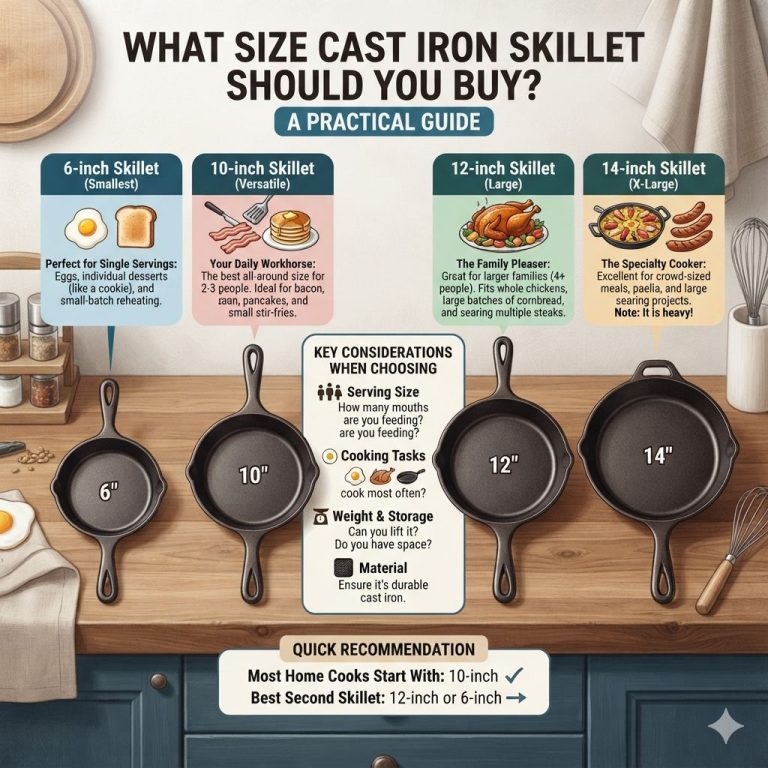
A common first-timer mistake is choosing a large cast iron skillet for one-handed comfort. In practice, a 10-inch or 12-inch skillet often benefits from two-handed lifting, especially after a full bake or a heavy sear. Victoria makes that easier on many models.
Helper handle and oven transfer
The helper handle matters most when the skillet is hot and heavy. It gives you a second grip point for moving the pan from burner to oven or from oven to counter, which can reduce awkward tipping and spilled oil.
How hand strength changes the choice
If your grip is strong and you value a planted feel, Lodge makes sense. If you have smaller hands, limited wrist strength, or you often cook with the skillet partly full, Victoria is usually the more comfortable buy.
Which skillet cooks better day to day?
Lodge Cast Iron has the edge for heat retention and recovery, while Victoria Cast Iron has the edge for early surface comfort and easier release. For everyday cooking, that means Lodge is slightly better for high-heat searing and Victoria is slightly better for quick eggs and lighter pan handling.
Heat retention and recovery
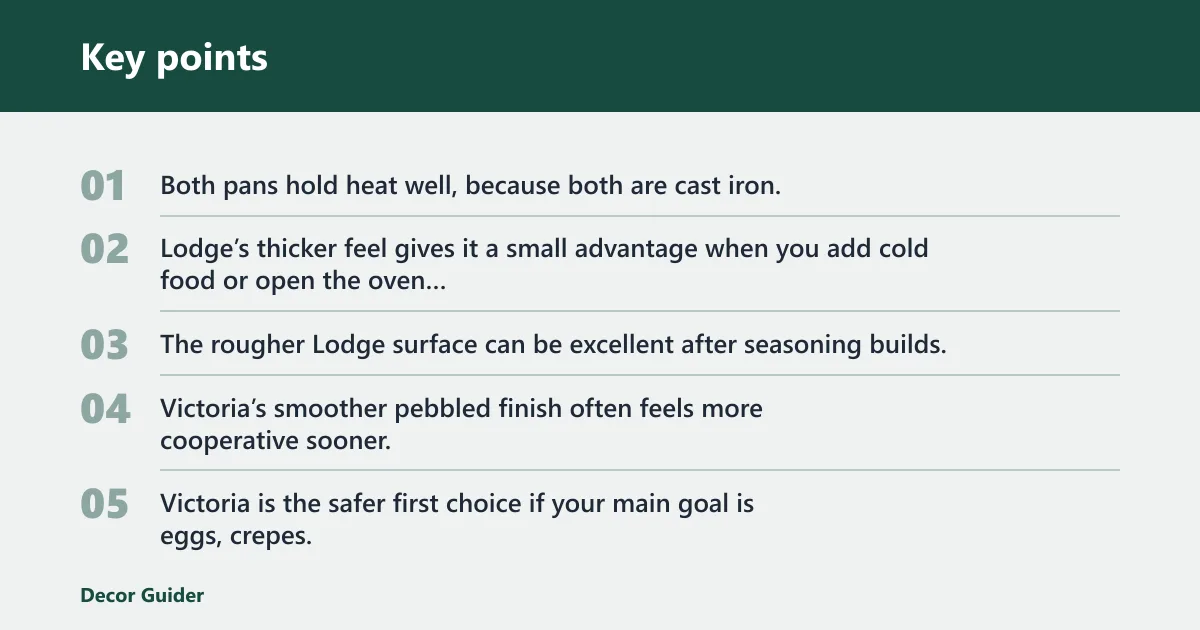
Both pans hold heat well, because both are cast iron. Lodge’s thicker feel gives it a small advantage when you add cold food or open the oven door often, since the extra mass helps the surface bounce back faster.
Surface texture and food release
The rougher Lodge surface can be excellent after seasoning builds, but it usually starts a little less slick. Victoria’s smoother pebbled finish often feels more cooperative sooner, especially for fried eggs, pancakes, and fish.
Eggs and delicate foods
Victoria is the safer first choice if your main goal is eggs, crepes, or other delicate foods. Lodge can absolutely get there, but its rougher finish and stronger early drag usually make the first few cooks less forgiving.
Searing and oven finishing
Lodge is the stronger match for thick chops, burgers, and cast-iron oven finishing. If you want the pan to stay hot when the food hits, the heavier skillet is the better fit.
Say your burner is small and you mostly cook two eggs and toast points in an 8-inch skillet. Victoria’s easier handle and quicker early release make that routine feel lighter. Suppose your dinner is a 12-inch steak-and-vegetable batch on a gas burner. Lodge’s mass is the better match for keeping the pan steady and hot.
How do seasoning and break-in compare?
Victoria Cast Iron often feels a little quicker to trust because flaxseed-oil seasoning and a smoother surface can start building release sooner. Lodge Cast Iron uses vegetable oil seasoning and a rougher sand-cast texture, so it may need a longer break-in before it feels equally slick on delicate foods.
Factory seasoning: vegetable oil vs flaxseed oil
The difference is less about a magic coating and more about early behavior. Factory seasoning is a head start, not a finished nonstick layer, and both brands still depend on cooking oil, heat, and repeated use to build performance.
What improves in the first 10 uses
- Wash the skillet with warm water and a small amount of mild soap if needed.
- Dry it fully with a towel.
- Heat it briefly to drive off hidden moisture.
- Rub on a very thin film of oil.
- Wipe off any visible excess.
- Cook a fatty food such as sausage or bacon.
- Repeat with another high-oil meal.
- Try eggs only after the surface starts to darken evenly.
- Keep heat moderate for delicate foods.
- Store it dry, with a light oil wipe if needed.
When each pan starts acting more nonstick
Victoria often reaches a comfortable everyday feel sooner, especially if you cook fatty foods in the first few uses. Lodge usually catches up with repeated use, but its rougher texture tends to ask for a longer runway before it feels equally smooth with eggs.
Choose Lodge Cast Iron if… / Choose Victoria Cast Iron if…
Choose Lodge Cast Iron if you want the firmer, heavier skillet, value a short classic handle, or cook enough searing and oven work to care about thermal mass. Choose Victoria Cast Iron if you want easier lifting, a longer handle, quicker early comfort, and a pan that feels friendlier when you cook eggs or lighter foods.
Choose Lodge Cast Iron if you cook on a larger burner, often move the pan with oven mitts, or want a broad size range with a starting price of $24.90. Choose Victoria Cast Iron if hand comfort comes first, you prefer a smoother out-of-box feel, or you want pour spouts and a helper handle on many models.
Cast iron care reminders
Both pans need the same basic care: hand-wash, dry immediately, and wipe with a thin layer of oil if the surface looks dry. That routine keeps rust away and supports the seasoning layer no matter which brand you buy.
After acidic foods
Tomato sauces, vinegar-heavy braises, and lemony pan sauces are fine in cast iron, but do not leave them sitting in the skillet. Wash, dry, and re-oil after the meal so the seasoning stays stable.
Where this fits in your cookware routine
Cast iron care is simple, but it is still different from stainless steel or nonstick pans. Use the same wash-dry-oil habit every time, and pair it with proper storage so moisture does not sit on the surface.
For broader upkeep, Lodge’s chainmail scrubbing pad and cookware storage tower show the kind of maintenance accessories that fit this category. They are not required, but they can make cleanup and storage easier if cast iron is part of your daily rotation.
Frequently asked questions
Victoria vs Lodge cast iron which is better?
Victoria Cast Iron is better if comfort and easier handling matter most. Lodge Cast Iron is better if you want more mass, a shorter traditional handle, and a stronger searing feel. For most buyers, the right answer comes down to whether lifting comfort or thermal stability matters more in daily use.
Is Lodge cast iron healthy?
Cast iron cookware is generally considered safe for normal cooking when you keep it clean, dry, and well maintained. It can add small amounts of dietary iron to food, but that is not a special health claim. The practical health question is more about safe use than brand choice.
Is Lodge the best cast iron?
Lodge is not automatically the best cast iron for every cook. It is a strong value choice with broad availability, a wide size range, and solid heat retention. Victoria can be the better pick if you want easier lifting and a smoother early cooking feel.
Field vs Lodge cast iron which should I buy?
If you are choosing between Field and Lodge, the answer depends on whether you want lighter handling or lower cost. Lodge is the budget-friendly, heavier option with a more traditional feel. Field generally sits in a different price tier, so the comparison is less about cast iron quality and more about weight, finish, and budget.
Which is easier to handle, Victoria or Lodge?
Victoria Cast Iron is easier to handle for most people because of the longer handle and helper handle on many models. Lodge’s short handle feels more compact and stable, but it asks for more grip strength and more careful two-handed lifting when the skillet is large or full.
Does Victoria season better than Lodge?
Victoria often feels quicker to season into comfortable everyday use because the smoother surface and flaxseed-oil factory finish can start with a friendlier release. Lodge can season very well too, but its rougher surface usually needs more use before eggs and other delicate foods slide easily.
Products related to this article
Sponsored / affiliate links. As an Amazon Associate I earn from qualifying purchases. I may earn additional commission from eligible campaigns.