Lodge Rust Eraser Review
The Lodge Rust Eraser is a small abrasive block for light-to-moderate surface rust on cast iron; use it when rust is shallow, and switch methods if pitting, flaking seasoning, or severe corrosion is present. Using the wrong method can leave active rust behind, strip seasoning too far, or waste time on a pan that needs a stronger treatment. This Lodge Rust Eraser review explains what it removes, when to use it, and when vinegar, electrolysis, or full re-seasoning is the safer choice.
Verdict

Based on the manufacturer’s specs and published product details, it fits a narrow job very well: controlled rust removal on cool cast iron, plus grill grates, knives, and tools. At $10.90 on Lodge’s site, it makes the most sense if you want a single-block, on-hand fix for spot rust rather than a dip bath or a sheet of sandpaper.
Specs at a glance
| Detail | What Lodge lists |
|---|---|
| Product type | Cast-iron rust remover block |
| Branding | Branded with the Lodge logo |
| Use case | Rust removal for cast iron, grill grates, knives, and tools |
| Heat limit | Not for hot cast iron cookware |
| Restoration result | Removes rust down to bare iron and requires reseasoning |
| Country of origin | Made in China |
| Length | 3.56 in |
| Height | 0.5 in |
| Weight | 0.15 lb |
| Price | $10.90 |
Who it
The Lodge Rust Eraser fits cast-iron owners who need a controlled way to remove shallow rust without stripping a whole pan in a chemical bath. It also fits people who keep grill grates, knives, or hand tools in rotation and want one compact block for spot cleanup.
It is a better match for maintenance than rescue work. If the pan only has orange film, light roughness, or a few rust freckles after storage, this is the kind of tool that can get you back to bare metal quickly enough to reseason the same day.
What works
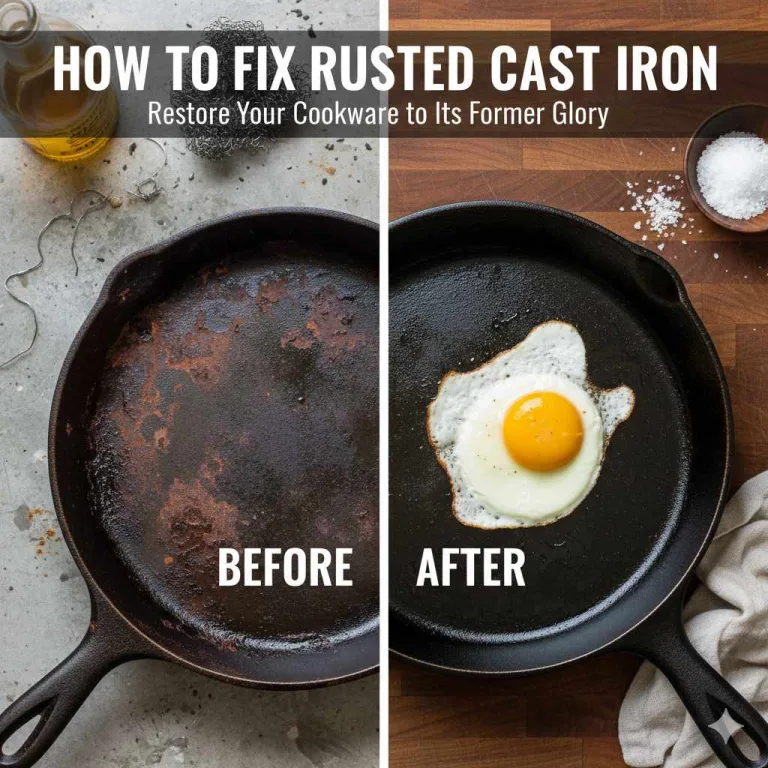
It works well on surface rust because it is meant to abrade the rust away from the metal, not dissolve the whole part. On cast iron, that means you remove the orange layer and then reseason the bare iron. The block format gives you local control, so you can stay on the rusted spots instead of grinding down the whole cooking surface.
Say your 10-inch skillet sat in a damp sink overnight and shows a few dull orange patches near the rim. This block can remove that shallow rust, then you can dry the pan fully and reseason it before storage. The same approach applies to grill grates with surface rust and to tools that need spot cleanup, not a full soak.
Lodge also says the eraser can be used on knives and tools, which widens its value beyond cookware. That cross-use helps if you need one small abrasive piece for multiple metal items, especially when the rust is local and you do not want to handle a gallon of remover for a five-minute job.
What is the lodge rust eraser made of?
Lodge does not spell out a full material breakdown in the product details provided here, so the safest description is simple: it is an abrasive cleaning block. In practical terms, that means the block is meant to wear while it scrubs away rust, rather than act like a coating or a chemical dip.
That format matters because an abrasive block gives you tactile control. You can press harder on flaky spots and back off on cleaner metal. The tradeoff is wear: like sandpaper or a sanding block, the eraser is a consumable, so the block slowly shortens as you use it.
Its listed size, about 3.56 x 0.94 x 0.5 in, suggests a small hand tool made for spot work rather than broad resurfacing. At 0.15 lb, it is light enough to keep with pans or bench tools, which makes it more convenient than a rust-removal tub for quick jobs.
How do you use it on cast iron?
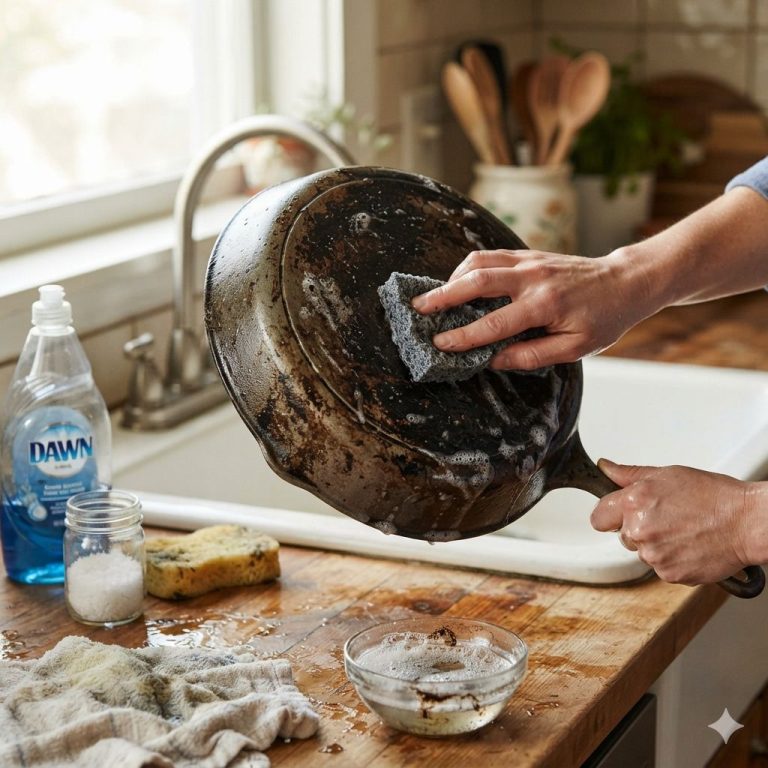
Use it on cool, dry cast iron only. Lodge says not to use the rust eraser on hot cast iron cookware. Start with a pan that is at room temperature, wipe off any moisture, then rub the rusted area until the orange layer is gone and the metal looks clean.
- Let the cookware cool completely.
- Dry the surface fully, inside and out.
- Rub the rusted area with the eraser using steady pressure.
- Stop when the rust is gone and bare iron shows through.
- Wipe away residue, then dry again.
- Apply seasoning oil and reseason the pan.
Do not keep scrubbing once the rust is gone. Bare iron is exposed at that point, and overworking the spot can remove more seasoning than you need. A common first-timer mistake is treating rust as if it were only a stain; on cast iron, the cleanup ends with a fresh protective layer, not just a wiped-off patch.
Rust removal decision table
| Rust severity | Surface type | Risk level | Best tool | Reseasoning required | When to stop and use a full restoration method |
|---|---|---|---|---|---|
| Light surface rust | Cast iron skillet, griddle, or grill grate | Low | Lodge Rust Eraser | Yes | Stop if rust stays after several passes or the surface has rough, dark pits |
| Moderate rust | Cast iron cookware or grill grate | Medium | Lodge Rust Eraser for spot work; Sandflex if you want a broader abrasive surface | Yes | Stop if the rust covers most of the part or flakes keep returning after wiping |
| Pitted rust | Cast iron cookware | High | Full restoration method such as vinegar soak, electrolysis, or a full strip and reseason | Yes, after restoration | Stop spot treatment if you can feel craters, see deep corrosion, or notice metal loss |
| Light surface rust | Knives and tools | Low to medium | Lodge Rust Eraser or Sabitoru Rust Eraser for smaller contact areas | Often yes, depending on the metal and coating | Stop if the item has a decorative finish, plating, or non-cast-iron metal that can scratch |
| Moderate rust | Knives and tools | Medium | Sandflex Sanding Block or a stronger rust-removal method | Usually yes | Stop if the edge, coating, or fitment could be changed by abrasion |
| Surface rust only | Grill grates | Low | Lodge Rust Eraser | Yes, if the grate is bare metal | Stop if rust is deep into the grate or the coating is damaged over a wide area |
What does not?
The Lodge Rust Eraser is not the right fix for hot cookware, and it is not the right fix for severe corrosion. If pitting is present, the rust has gone beyond a surface problem, and spot rubbing may clean the top layer without solving the deeper damage.
It also has limits on coated, decorative, or non-cast-iron metals. Abrasion can scratch finishes, alter sheen, or remove protective layers that were not meant to be stripped. That is why a rust eraser is better treated as a controlled metal-cleaning block, not a general-purpose scrubber.
Another drawback is that it is a single small block. If you are cleaning a wide griddle top, a row of grill bars, or a heavily rusted tool chest hinge, a larger sanding format or a liquid remover may cover the work faster and with less hand fatigue.
Do not expect it to save cookware with deep orange crust across the whole surface. Suppose a 12-inch skillet has black seasoning missing in patches and rust visible in the center and near the handle. That is a sign to move beyond spot treatment and plan a full strip, dry, oil, and reseason cycle.
Is it worth it?
For cast-iron owners with routine rust problems, yes, it can be worth it. The appeal is simple: one compact block, no soaking setup, and quick access to a tool that handles shallow rust without needing a full-size abrasive sheet. At $10.90, that convenience can be fair value for a household that maintains several pans or grates.
The value case is weaker if you already keep sandpaper, steel wool, or a sanding block on hand. Those can be cheaper per surface area, and they may be a better fit for large or badly rusted parts. The Lodge block makes more sense when precision matters more than coverage.
Homes & Gardens called it a $9 tool for restoring rusted cast iron, and The Pioneer Woman described it as a roughly $10 solution. Those price points place it in impulse-buy territory, but the real question is use pattern: a single-block eraser is useful if you treat small rust spots often, less so if you need broad resurfacing.
Alternatives: Sandflex and Sabitoru
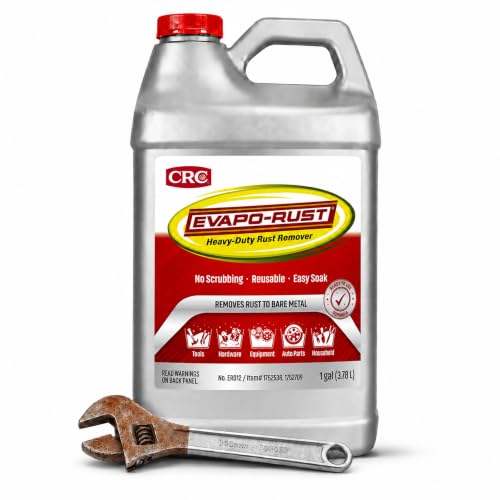
Evapo-Rust CRC Heavy Duty Rust Remover is the better choice when the job is bigger than spot rubbing. Its water-based, reusable formula suits submersion work on auto parts, hardware, and other metal items, including cast iron, but the 1-gallon format is more setup-heavy and less convenient for a quick skillet touch-up.
The Lodge Rust Eraser still makes sense if you want a compact abrasive block for cookware, grills, knives, and tools. Its drawback is scale: it is a single small format, so it is less efficient than a dip for broad corrosion and less flexible than multi-size packs when you need different abrasives for different jobs.
Sandflex Sanding Block is the better comparison if you want a sanding-style tool with more format variety. In general, Sandflex-type blocks are useful when you want a broader abrasive face and multiple grit choices, while the Lodge block is simpler and more specific. Sabitoru Rust Eraser is a closer match in feel and size, and it often appeals when you want a smaller rust eraser for tighter spots or a different block texture.
How to choose: pick Lodge for cast-iron spot rust and quick cleanup, Sabitoru for a similar eraser style in a different size or block shape, and Sandflex when you want sanding-block behavior with more options across rust severity. For deeply pitted cast iron, none of those should be your final step; use a full restoration method first.
Should you buy it?
Buy the Lodge Rust Eraser if you keep cast iron, grill grates, knives, or tools and want a precise rust remover for shallow corrosion. Skip it if most of your rust problems are deep, widespread, or tied to items that need soaking, stripping, or full restoration instead of spot work.
Before buying, check the product title and listing details for the Lodge logo, made-in-China origin, and the stated size and weight. Also check the return setup if you are comparing it with a wider sanding block or a liquid remover, because the right choice depends on rust depth, surface size, and how much reseasoning you are ready to do afterward.
Frequently asked questions
How do you use lodge rust eraser?
Use it on cool, dry cast iron, then rub the rusted area with steady pressure until the orange layer is gone. Wipe away residue, dry the metal again, and reseason immediately. Lodge says not to use it on hot cast iron cookware, so let the piece cool fully first.
How do you use Sabitoru rust eraser?
Sabitoru rust erasers are generally used in the same basic way as other rust blocks: apply them to a dry surface and rub the rust away with controlled pressure. Exact firmness and size vary by version, so match the block to the surface and stop before you alter the metal finish.
Is the Lodge Rust Eraser worth it for cast iron?
It is worth it when the rust is shallow and you want a quick, hands-on fix for a skillet, griddle, or grate. It is less useful for deep corrosion or large rusty areas, where a dip remover or full restoration method is more efficient and more complete.
Do you need to re-season cast iron after using a rust eraser?
Yes. Lodge says the eraser removes rust down to bare iron, which means the protective layer is gone in the cleaned spot. Dry the pan thoroughly, then apply seasoning. Skipping that step leaves bare iron exposed, and rust can return fast if the surface stays unprotected.
Can the Lodge Rust Eraser be used on knives and grill grates?
Yes. Lodge says it can be used on knives, tools, and grill grates, not just cookware. The main caution is surface type: use it only where abrasion is safe, and avoid decorative finishes, plated metal, or anything that should not be scrubbed down to bare material.
What should you do before using a rust eraser on cast iron?
Make sure the cookware is cool and dry first. That matters because Lodge says not to use the eraser on hot cast iron cookware, and moisture can keep rust active. If the pan has pitting, flaking seasoning, or severe corrosion, stop and plan a full restoration instead of spot rubbing.
Where can you buy the Lodge rust eraser?
The product is sold on Lodge’s site, where it is listed at $10.90. Shoppers also tend to find it through major online retailers and kitchenware stores, but check the exact product title, the Lodge logo, and the size before ordering so you know you are getting the rust block, not a different abrasive.
Products related to this article
Sponsored / affiliate links. As an Amazon Associate I earn from qualifying purchases. I may earn additional commission from eligible campaigns.