Cookware Cleaning Brush Cost: What to Pay and When
A cookware cleaning brush usually costs roughly $5–$15; lower-cost options may suit occasional nonstick use, while somewhat higher-priced ones may be better for frequent stainless steel or cast iron cleaning, and more expensive models may be worth it if you want heat-safe or replaceable-head features. Cheap picks can scratch nonstick, shed bristles, or wear out fast, which costs more in replacement cookware and repeat purchases. This guide prices brushes by cookware type and cleaning frequency, and shows when budget is enough versus when a safer brush saves money.
How much does a cookware cleaning brush cost?
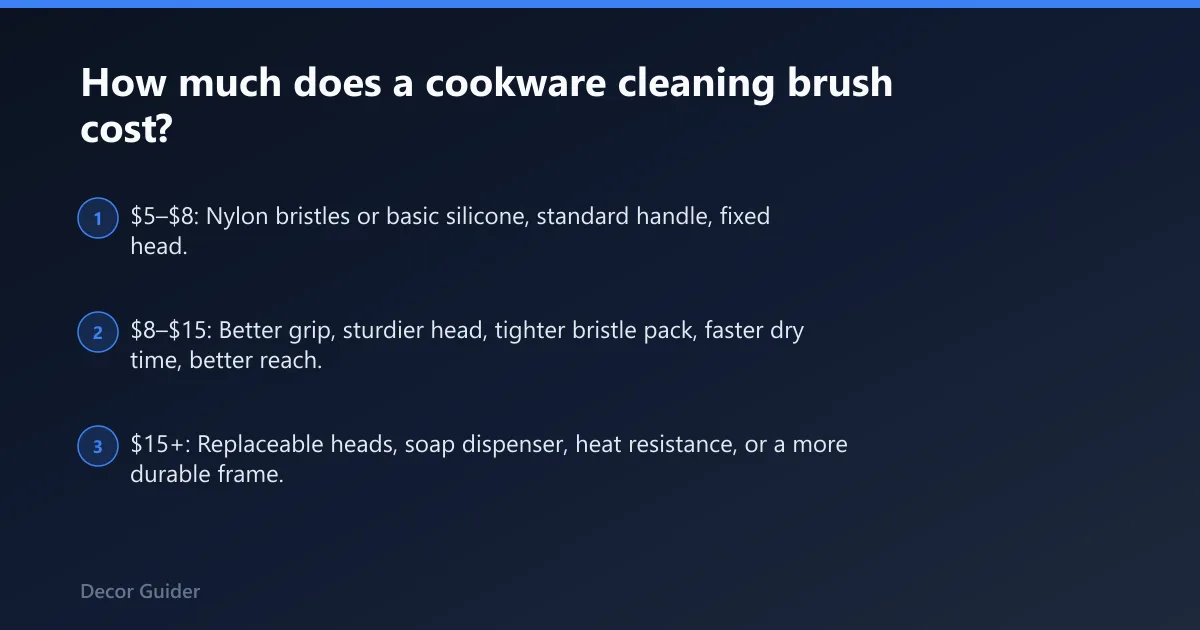


A fair cookware cleaning brush price is usually $5–$15, with basic nylon or silicone models at the low end and sturdier, better-shaped brushes higher up. For light use on delicate coatings, the fair price is often under $10. For frequent pot and pan cleanup, $8–$15 is a better target because the brush tends to last longer and clean faster.
Basic, midrange, and premium price bands
Basic brushes often cost in the lower single digits to upper single digits. They often use nylon bristles, simple plastic handles, and fixed heads. They work if the brush sees light daily use and dries fully between washes.
Midrange brushes often land in the upper single digits to mid-teens. That range often buys a better grip, denser bristles, more durable silicone, or a shape that reaches pan corners without forcing the wrist into a bad angle.
Premium brushes may start around the mid-teens and can cost more when they include replaceable heads, a soap dispenser, or heat-safe materials. The premium price only makes sense when the brush cuts down on replacement frequency or cleaning time.
What you usually get at each price point
- $5–$8: Nylon bristles or basic silicone, standard handle, fixed head.
- $8–$15: Better grip, sturdier head, tighter bristle pack, faster dry time, better reach.
- $15+: Replaceable heads, soap dispenser, heat resistance, or a more durable frame.
What counts as fair value for everyday use
Fair value is not the lowest sticker price. It is the brush that fits the pan you clean and keeps working through your normal sink routine. I have seen cheap brushes turn mushy, smell, or shed within weeks, and that gets expensive fast. A slightly pricier brush can be the cheaper buy if it stays useful for months.
According to 9 Best Cookware Sets of 2026, Expert Tested and Reviewed — Cookware sets usually consist of five to 15 pieces. (source)
Which brush type fits your cookware?
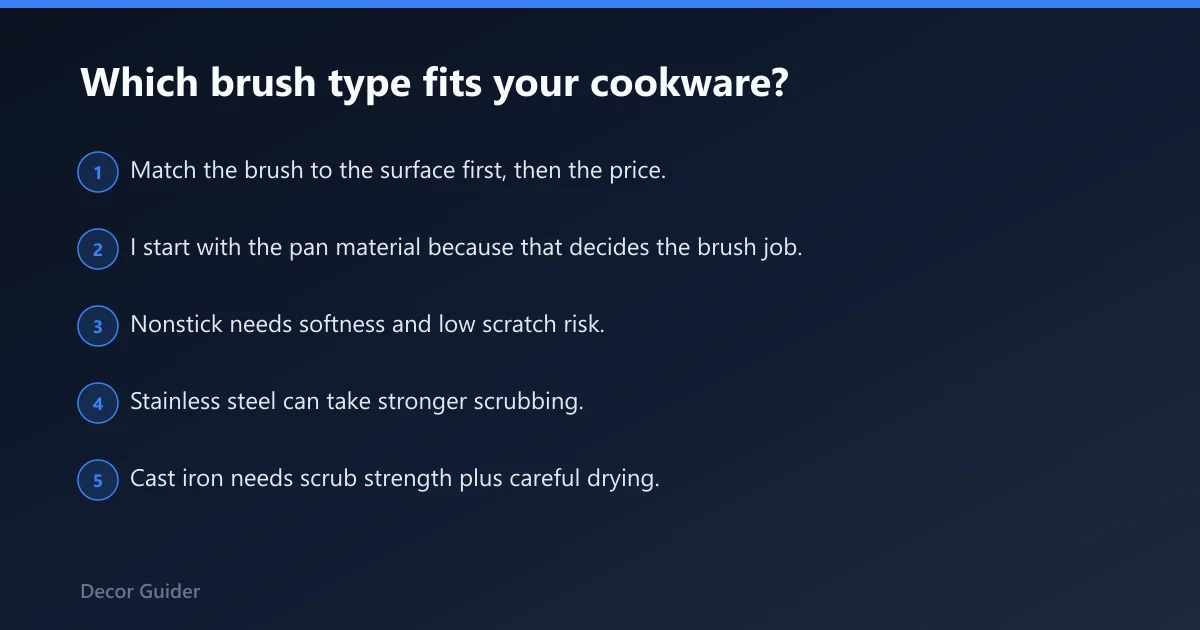
Match the brush to the surface first, then the price. I start with the pan material because that decides the brush job. Nonstick needs softness and low scratch risk. Stainless steel can take stronger scrubbing. Cast iron needs scrub strength plus careful drying. When food is stuck hard at the rim, a pan scraper can beat any brush.
Nonstick cookware: softness first
Nonstick cookware is scratch sensitive, and consumer testing groups note that nonstick can contain PFAS and PTFE. That does not mean every brush is dangerous, but it does mean abrasive bristles and hard scouring pads are poor choices. Soft nylon or silicone is the safer route.
For nonstick, the brush should do light cleanup, not force a battle with burnt residue. If the pan needs heavy scraping, soak it first or use a scraper designed for edge cleanup. Softer brushes limit risk, but they also limit how much stuck-on food they can remove in one pass.
Stainless steel cookware: more scrub tolerance
Stainless steel cookware can be tougher to clean, but it also tolerates tougher tools. That means a denser nylon brush, a firmer natural fiber brush, or a well-made dish brush can make sense. The goal is speed and stain removal without leaving deep marks.
Stainless steel is where a better handle and stiffer head matter more. If the brush flexes too much, the user presses harder, and the wrist does more work than the bristles. A firmer brush often earns its price here.
Cast iron: scrub strength and drying care
Cast iron often needs a brush that can remove stuck bits without soaking up water. Natural fiber brushes scrub well, but they need careful drying to avoid mildew. Silicone brushes rinse easily and dry fast, though they may feel less aggressive on crusted food.
With cast iron, the purchase price is only part of the story. A brush that dries badly can smell or hold residue. That leads to earlier replacement, which raises the true cost.
When a pan scraper beats a brush
A pan scraper is usually cheaper than a premium brush and works better on dried edges, browned fond, and corner buildup. It is the right first tool when a brush would need too much pressure. For many cooks, the best setup is a scraper for the stubborn spots and a brush for the rest.

What makes one brush worth more than another?
Price climbs when a brush saves time, lasts longer, or reduces surface damage. The biggest price drivers are bristle material, stiffness, handle shape, head design, and how fast the brush dries. Soap dispensers and replaceable heads can help, but only if they do not fail early or create extra waste.
Bristle material and stiffness
Nylon bristle brushes are usually the budget choice. They are soft enough for many nonstick jobs, but abrasion risk rises if the bristles are too stiff or worn. Natural fiber brushes scrub more aggressively and often feel better on stainless steel, but they dry slowly and can mildew if stored damp.
Silicone brushes cost more than plain nylon in many cases, yet they resist heat well and rinse clean quickly. Food residue tends to release more easily from silicone than from dense bristle packs. That can matter when cleanup happens fast and storage space is tight.
Handle shape, grip, and reach
A comfortable handle is not a luxury. If the grip slips when wet, the user presses harder and the brush works worse. A curved or longer handle helps reach pan corners, and that can reduce the need to scrub the same area twice.
Head design, replaceable parts, and soap dispensers
Replaceable-head brushes can lower total cost of ownership if the handle is durable and replacement heads are easy to buy. If heads are hard to find, the system becomes a dead end. Dish brushes with soap dispensers charge a price premium for convenience, but leaking caps and valve failure are common failure points in low-quality versions.
Drying time, odor control, and residue release
Brushes that dry slowly usually smell sooner. That is where cheap models cost more over time. A head that releases residue easily and dries fast often lasts longer in real use than a softer-looking but damp-holding alternative.
Cost per year: six brush types compared
The table below uses purchase price, replacement interval, and simple annualized cost to show where a cheap brush is truly cheap and where it turns into repeat spending. Surface-safety notes are broad guidance for nonstick, stainless steel, and cast iron.
| Brush type | Typical price | Replacement interval | Annualized cost | Surface safety |
|---|---|---|---|---|
| Basic nylon bristle brush | $5 | Every 3 months | $20/year | Nonstick: good if soft; stainless steel: good; cast iron: fair |
| Midrange silicone brush | $9 | Every 9 months | $12/year | Nonstick: very good; stainless steel: good; cast iron: fair |
| Natural fiber brush | $7 | Every 4 months | $21/year | Nonstick: fair; stainless steel: good; cast iron: very good if dried well |
| Dish brush with soap dispenser | $14 | Every 12 months | $14/year | Nonstick: good if soft; stainless steel: very good; cast iron: fair |
| Replaceable-head brush | $12 handle + $4 heads | Heads every 4 months | $24/year | Nonstick: good if soft; stainless steel: good; cast iron: fair |
| Cleaning tool set | $18 | Every 12 months | $18/year | Varies; often redundant if it repeats the same brush function |
Where the cheap option is actually the expensive one
The basic nylon brush looks inexpensive, but frequent replacement pushes its annual cost above some midrange options. The replaceable-head system can also be pricier than expected if the heads are not durable or if the handle is not worth keeping. The cheapest sticker price is not always the lowest yearly spend.
When is a premium brush worth paying for?
A premium brush is worth paying for when it lasts longer, cleans faster, or lowers the risk of scratching a costly pan. Frequent cooking, heavy stuck-on food, and repeated cleanup of stainless steel or cast iron are the strongest reasons to move up in price. For light nonstick use, premium is often unnecessary.
Frequent cooking and heavy stuck-on food
If pans are cleaned several times a day, brush fatigue shows up quickly. Handles loosen, bristles spread, and cheap heads start to smell. A better brush can hold shape longer and reduce the number of passes needed on a stubborn pan.
Safer cleaning for nonstick pans
For nonstick, paying a bit more can make sense if the brush is softer, better balanced, and less likely to shed. The value comes from lower scratch risk, not from fancy packaging. Softness matters more than price on this surface.
Lower replacement cost over time
A brush that lasts twice as long can be the cheaper choice even at double the price. That is especially true for silicone or better-built replaceable-head systems. The question is not whether the brush costs more today. It is whether it forces fewer replacements this year.
Cases where a basic brush is enough
If the kitchen mostly uses stainless steel and a few nonstick pans, and cleanup is light, a basic nylon brush plus a pan scraper may be enough. A premium model adds little when the brush is used gently and replaced on schedule.
Brushes, scrapers, and sponges: what should you buy first?
The best first purchase is usually a scraper or a simple brush, not a full bundle. A pan scraper handles hard edges. A sponge handles light film. A brush earns its place when pots and pans need more grip than a sponge provides, but less force than a metal tool.
Best use for a pan scraper
A scraper is ideal for dried sauce, browned spots, and the lip where food sticks hardest. It is cheap and durable, so it often pays for itself before a premium brush does. Pair it with a brush, do not replace the brush with it.
Where a sponge still works
A sponge is still the low-cost answer for loose residue and routine wash-up. It is not the right tool for stubborn crust or roughened cast iron residue. Sponges also wear out and hold odor, so they need regular replacement too.
When a dish brush with soap dispenser helps and when it leaks or fails
A soap dispenser brush can speed up dish duty when a lot of cookware needs the same detergent dose. The tradeoff is mechanical risk: leaks, clogged pumps, and weak seals can turn a convenience tool into a mess. The best versions save time; the worst ones waste soap and need replacement early.
Why a cleaning tool set can be wasteful
Many bundles repeat the same function in three forms. That is attractive on a shelf and inefficient at home. A set is good value only if each piece solves a different problem, such as scraper, soft brush, and bottle brush. If three tools do one job, the set is mostly clutter.
What should I spend on a brush for cleaning pots and pans?
Spend to the cookware, not to the label. For nonstick, a $5–$8 soft brush is usually enough. For stainless steel and cast iron, $8–$15 is the better target. Pay more only if the brush is heat-safe, dries well, and replaces the head at a reasonable cost.
Budget, midrange, and premium recommendations by use case
- Low cleaning load: Budget nylon or silicone brush, plus a scraper.
- Medium cleaning load: Midrange silicone or sturdier nylon with a better grip.
- Heavy cleaning load: Premium brush only if it has real durability, not just a higher price tag.
What to buy for low, medium, and heavy cleaning loads
- Low load: Buy one soft brush and one scraper.
- Medium load: Buy a brush with better ergonomics and faster drying.
- Heavy load: Buy a durable brush system only if replacement parts are easy to get.
Frequently asked questions
What is a fair price for a cookware cleaning brush?
A fair price is usually the one that matches the pan surface and replacement cycle. For occasional nonstick use, $5–$8 is fair. For regular stainless steel or cast iron cleanup, $8–$15 is fair if the brush dries well, keeps its shape, and does not shed or smell early.
Are expensive cookware cleaning brushes worth it?
They are worth it only when the higher price buys lower replacement cost, better comfort, or less surface risk. A premium brush can save money if it lasts much longer or protects nonstick cookware. If the extra price is only for branding or a gimmick, the value is weak.
What features make a cookware cleaning brush better?
Better brushes usually have the right bristle stiffness, a comfortable handle, fast drying, and a head shape that reaches corners. Replaceable heads and soap dispensers help only if they are built well. For nonstick, softness matters most. For stainless steel, better scrub control usually matters more.
Do I need a special brush for nonstick cookware?
Yes, if the current brush is stiff or abrasive. Nonstick needs a soft nylon or silicone brush that will not scrape the coating. That limits cleaning power, so hard crusts should be loosened by soaking or scraped with a gentle pan scraper before brushing.
How do cookware cleaning brushes compare with pan scrapers?
Brushes are better for loose food, soap work, and surface cleaning. Pan scrapers are better for stuck edges and dried residue. Scrapers usually cost less and last longer, so they are often the first tool to buy. A brush still matters for the final cleanup and for delicate surfaces.
Products related to this article
Sponsored / affiliate links. As an Amazon Associate I earn from qualifying purchases. I may earn additional commission from eligible campaigns.