What Is a Seasoned Cast Iron Skillet? Complete Guide
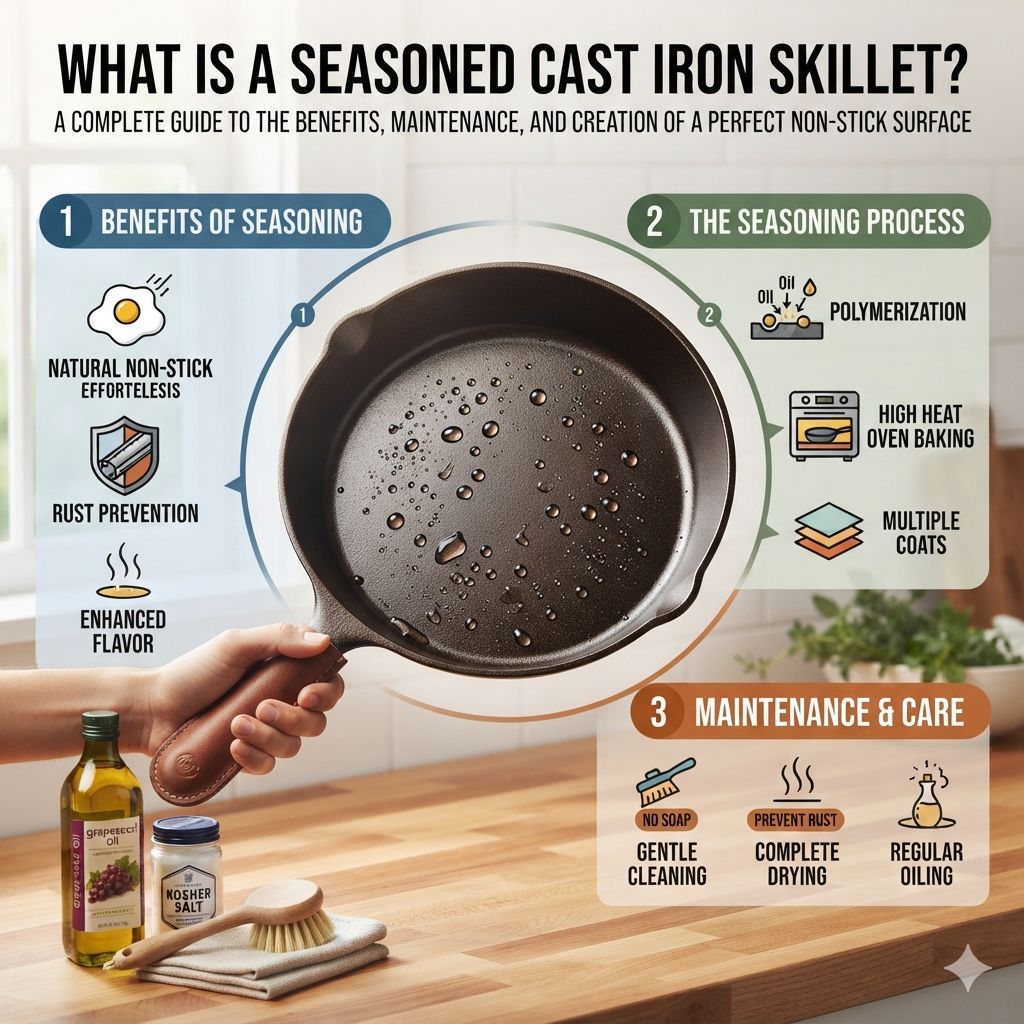
A seasoned cast iron skillet is a piece of cookware that has been treated with a layer of polymerized oil, creating a natural, non-stick cooking surface. This seasoning layer protects the iron from rust and improves with each use, making the skillet more non-stick over time. This guide explains exactly what seasoning is, how it works, how to build and maintain it, and why a well-seasoned skillet is a kitchen essential.

Lodge
Lodge Pre-Seasoned Cast Iron Skillet, PFAS-Free, 10.25…
- Quality Cast Iron Frying Pan: The Lodge Seasoned Cast Iron Skillet is loved for its great heat retention, incredible durability, a…
- Naturally Seasoned for Non-Stick Finish: Each pre-seasoned skillet arrives ready to use with a smooth non-stick finish that cooks…
- Heavy-Duty & Long-Lasting: This cast iron frying pan is crafted for durability and multipurpose use, with an easy-grip teardrop ha…
As an Amazon Associate I earn from qualifying purchases.
Simply put, a seasoned cast iron skillet is one coated with baked-on oil that forms a hard, dark, non-stick surface. This layer prevents rust, releases food easily, and improves the skillet’s performance over time. Seasoning is not a finish you buy — it’s one you build through proper care and cooking.
Key Takeaways
- A seasoned cast iron skillet has a polymerized oil layer that creates a natural non-stick surface and prevents rust.
- Seasoning is built through heating thin layers of oil to their smoke point, which bonds the oil to the iron.
- Different oils produce different seasoning quality — flaxseed, grapeseed, and vegetable oil are common choices.
- Proper maintenance includes gentle cleaning, thorough drying, and occasional re-oiling after use.
- A well-seasoned skillet can last for generations and often outperforms modern non-stick pans for high-heat cooking.
What Is a Seasoned Cast Iron Skillet?
A seasoned cast iron skillet is a cast iron pan that has been treated with a baked-on oil coating that polymerizes into a hard, smooth, non-stick surface. Unlike raw iron, which is porous and prone to rust, a seasoned skillet has a protective barrier that makes it ideal for everyday cooking.
The seasoning layer is not a paint or a factory coating — it is created by heating oil to a high temperature, causing it to bond chemically with the iron. This process is called polymerization, and it turns liquid oil into a solid, plastic-like film. The result is a dark, glossy surface that improves each time you cook with it.
Seasoned skillets are prized for their durability and performance. They can handle high heat, go from stovetop to oven, and with proper care, last for decades. According to America’s Test Kitchen, a well-seasoned cast iron skillet can become as non-stick as a modern ceramic or Teflon pan when maintained correctly.
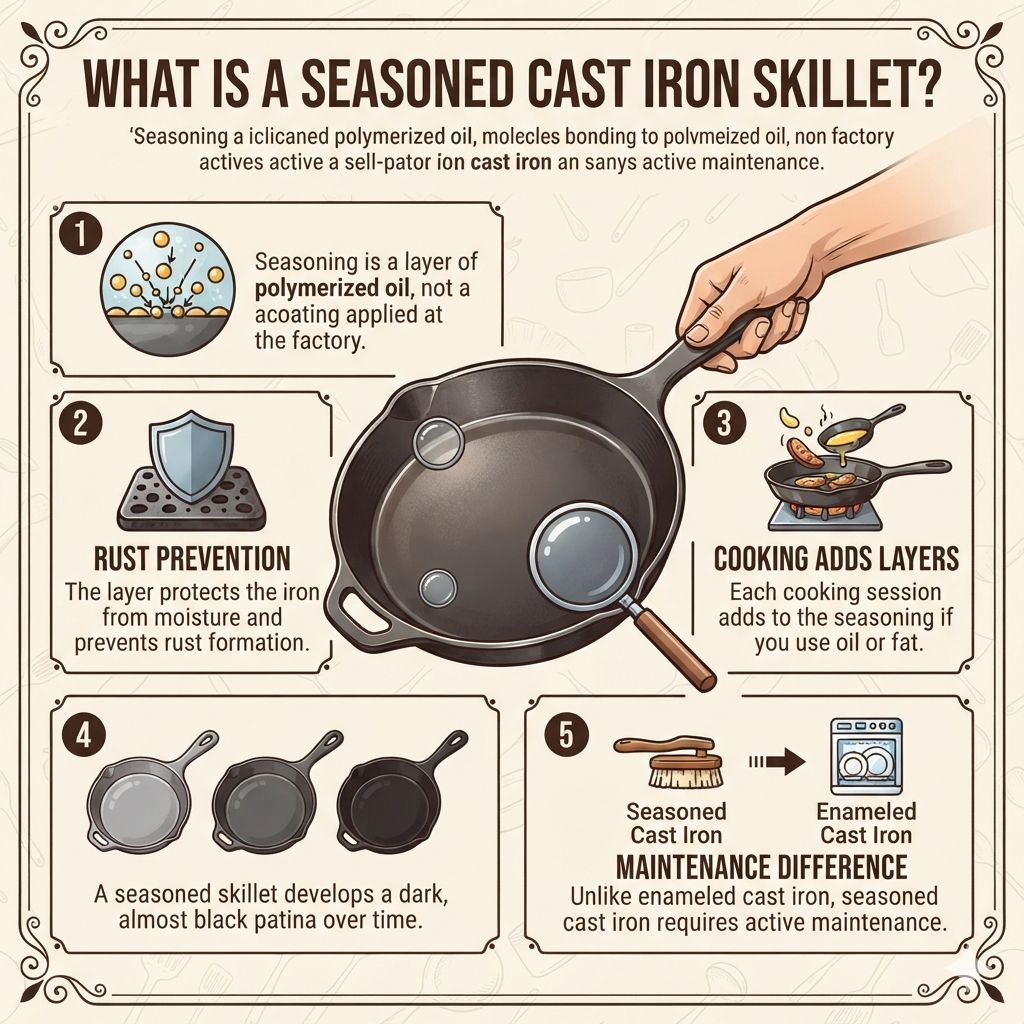
- Seasoning is a layer of polymerized oil, not a coating applied at the factory
- The layer protects the iron from moisture and prevents rust formation
- Each cooking session adds to the seasoning if you use oil or fat
- A seasoned skillet develops a dark, almost black patina over time
- Unlike enameled cast iron, seasoned cast iron requires active maintenance
How Does Seasoning on Cast Iron Work?
Seasoning works through a chemical process called polymerization. When you heat oil to its smoke point, the oil breaks down and bonds with the iron surface, forming a hard, continuous film. This film fills the microscopic pores in the raw iron and creates a smooth barrier that food cannot stick to.
The key to successful seasoning is heat control. If the oil is not hot enough, it will not polymerize and will remain sticky or greasy. If it is too hot, the oil will burn and create a brittle, flaky layer.
The ideal temperature is just above the oil’s smoke point — typically between 350°F and 500°F depending on the oil used.
Each layer of seasoning is very thin — just a few microns thick. Over time, with repeated use and care, these layers build up to create a durable, non-stick surface. The USDA notes that a properly seasoned skillet can even leach small amounts of dietary iron into acidic foods, which can be a health benefit for some individuals.
- Apply a very thin layer of oil to the clean skillet surface
- Heat the skillet in an oven or on the stovetop until the oil reaches its smoke point
- Allow the skillet to cool completely before repeating or using
- Each cycle adds one thin layer of polymerized oil to the seasoning
- Over 5-10 cycles, the seasoning becomes thick enough to be noticeably non-stick
Tip: Always wipe off as much oil as possible before heating. If the oil pools or looks wet, it is too thick. The layer should be so thin it barely looks oily at all. Thick oil layers will turn sticky or gummy instead of forming a hard seasoning.
What Are the Different Types of Seasoning?
Not all seasoning is created equal. The type of oil you use, the temperature you apply, and the number of layers all affect the final quality of the seasoned surface. Some methods produce a hard, glass-like finish, while others result in a softer, more matte surface that still works well for cooking.
The most common types of seasoning are based on the oil used. Each oil has a different smoke point and fatty acid profile, which affects how it polymerizes. Oils high in polyunsaturated fats, like flaxseed oil, tend to create a very hard but somewhat brittle seasoning.
Oils high in monounsaturated fats, like grapeseed or canola, create a more flexible, durable layer.
There are also different application methods. Oven seasoning is the most reliable because it provides even, controlled heat. Stovetop seasoning works for quick touch-ups but can result in uneven coverage.
The “cooking method” — simply using the skillet with oil or fat — also builds seasoning over time, though more slowly.
| Oil Type | Smoke Point | Seasoning Quality | Best For |
|---|---|---|---|
| Flaxseed Oil | 225°F | Very hard, glossy, brittle | Initial seasoning layers |
| Grapeseed Oil | 420°F | Hard, flexible, durable | All-purpose seasoning |
| Vegetable Oil | 400°F | Good, reliable, forgiving | Everyday cooking and maintenance |
| Canola Oil | 400°F | Good balance of hardness and flexibility | Oven seasoning cycles |
| Lard or Bacon Fat | 375°F | Soft but very non-stick | Cooking-based seasoning |
Choosing the right oil depends on your goals. For an initial oven seasoning, flaxseed or grapeseed oil produces the hardest, most attractive finish. For everyday maintenance, vegetable oil or canola oil is more practical and forgiving.
Animal fats like lard build a softer seasoning that is excellent for cooking but less durable for heavy scrubbing.
Why Does Seasoning Matter for Cooking?
Seasoning directly affects how your skillet performs in the kitchen. A well-seasoned surface releases food easily, browns evenly, and requires less oil for cooking. Without seasoning, raw cast iron is rough, sticky, and prone to rusting after just one wash.
The non-stick properties of a seasoned skillet come from the smooth, hard surface of polymerized oil. Food slides across it rather than gripping the iron. This is especially important for delicate foods like eggs, fish, or pancakes, which will stick to unseasoned iron almost instantly.
Seasoning also improves heat distribution. The oil layer fills microscopic imperfections in the iron surface, allowing heat to transfer more evenly across the pan. This reduces hot spots and gives you better control over cooking temperatures.
Chefs at Lodge Cast Iron report that a heavily seasoned skillet can outperform many modern non-stick pans for searing and browning.
- Seasoning creates a natural non-stick surface without synthetic chemicals
- It prevents rust and protects the iron from moisture damage
- The layer improves with age — older skillets often perform better than new ones
- Seasoning adds flavor over time, especially in skillets used for frying and searing
- A seasoned skillet requires less oil for cooking, making meals healthier
- It allows the skillet to be used for high-heat cooking without damaging the surface
Important: Cooking acidic foods like tomatoes or vinegar-based sauces can damage a thin seasoning layer. If your seasoning is still new, avoid acidic ingredients until the layer has built up through multiple cooking sessions. A well-established seasoning can handle acidic foods in moderation.
How Do You Build a Good Seasoning Layer?
Building a high-quality seasoning on a seasoned cast iron skillet requires patience and the right technique. The goal is to apply many thin layers of polymerized oil, not one thick coating. Each layer bonds to the previous one, creating a dense, durable surface that improves with time.
The most reliable method is oven seasoning. Start by cleaning the skillet thoroughly with hot water and a stiff brush. Dry it completely, then apply a very thin layer of your chosen oil.
Use a lint-free cloth to wipe off as much oil as possible — the surface should look almost dry. Place the skillet upside down in a preheated oven at the oil’s smoke point for one hour. Let it cool in the oven.
Repeat this process 3-5 times for a strong initial seasoning.
After the initial seasoning, everyday cooking will continue to build the layer. Each time you cook with oil or fat, you are adding a microscopic layer of seasoning. Pan-frying, sautéing, and deep-frying are especially good for building seasoning quickly.
According to Field Company, cooking fatty foods like bacon, sausage, or fried chicken is one of the fastest ways to develop a deep, dark patina.
- Scrub the skillet with hot water and a nylon brush to remove all residue
- Dry the skillet completely on the stovetop over low heat
- Apply a drop of oil and rub it over the entire surface, inside and out
- Wipe away all excess oil until the surface looks dry to the touch
- Place the skillet upside down in an oven preheated to 450°F for one hour
- Let the skillet cool completely in the oven before removing it
- Repeat steps 3-6 for 3-5 cycles to build a robust initial seasoning
Pro Tip: Place a baking sheet or aluminum foil on the oven rack below the skillet to catch any drips. Even a tiny amount of excess oil will pool and drip during heating, which can create smoke and mess in your oven.
What Are Common Seasoning Mistakes?
Even experienced cooks make mistakes when seasoning their cast iron. The most common error is using too much oil. Thick oil layers do not polymerize properly — they turn sticky, gummy, or tacky instead of hardening.
This sticky layer attracts dust and food debris and can ruin the cooking surface.
Another frequent mistake is overheating the oil. While it is true that oil needs to reach its smoke point to polymerize, exceeding that temperature by too much will burn the oil. Burnt oil creates a black, flaky layer that peels off during cooking.
The result is patchy seasoning and food that sticks to the bare spots. Always monitor your oven temperature with a separate oven thermometer for accuracy.
Using the wrong oil is also common. Olive oil, butter, and coconut oil contain impurities and sugars that burn before they polymerize. They may smell pleasant but they create a weak, uneven seasoning that does not last.
Stick to high-smoke-point oils like grapeseed, canola, or vegetable oil for best results.
| Mistake | Result | Fix |
|---|---|---|
| Using too much oil | Sticky, gummy surface | Wipe oil off until surface looks dry before heating |
| Overheating the oil | Burnt, flaky seasoning | Use an oven thermometer; stay within recommended temp range |
| Using low-smoke-point oils | Weak, uneven seasoning | Choose grapeseed, canola, or vegetable oil |
| Not drying thoroughly | Rust spots under seasoning | Dry on stovetop over low heat before applying oil |
| Skipping the cooling step | Uneven curing and peeling | Let skillet cool completely in the oven after each cycle |
Each of these mistakes can be corrected. If your seasoning is sticky, scrub it off with hot water and a stiff brush, then re-season from scratch. If it is flaky, strip the entire skillet with a self-cleaning oven cycle or a lye bath, then start fresh.
The good news is that cast iron is nearly indestructible — you can always restore it.
Warning: Never use soap with strong degreasers or abrasive steel wool on a seasoned surface. These will strip the seasoning and expose the raw iron to rust. Instead, use a nylon brush, hot water, and a small amount of mild soap if necessary.
How Do You Maintain Seasoning Over Time?
Maintaining a seasoned cast iron skillet is simpler than most people think. The key is to clean it properly after each use, dry it thoroughly, and apply a thin layer of oil before storing. This routine takes less than two minutes and will keep your seasoning in excellent condition for years.
After cooking, let the skillet cool slightly, then rinse it with hot water. Use a nylon brush or scraper to remove stuck food. For stubborn residue, boil a small amount of water in the skillet to loosen it, then scrub gently.
Dry the skillet on the stovetop over low heat until all moisture evaporates. While it is still warm, apply a drop of oil and rub it over the entire surface with a paper towel. Wipe away any excess.
Avoid soaking the skillet in water or putting it in the dishwasher. Water will penetrate the seasoning and cause rust from the inside out. If you do see rust spots, scrub them with steel wool, dry thoroughly, and apply a fresh layer of oil.
The rust will not ruin the skillet — it just needs immediate attention.
- Clean with hot water and a nylon brush immediately after cooking
- Dry on the stovetop over low heat to remove all moisture
- Apply a thin layer of oil while the skillet is still warm
- Store in a dry place — a cabinet or on the stovetop
- Re-season once or twice a year if the surface starts to look dull
- Cook fatty foods regularly to naturally reinforce the seasoning
What Does a Well-Seasoned Skillet Look Like?
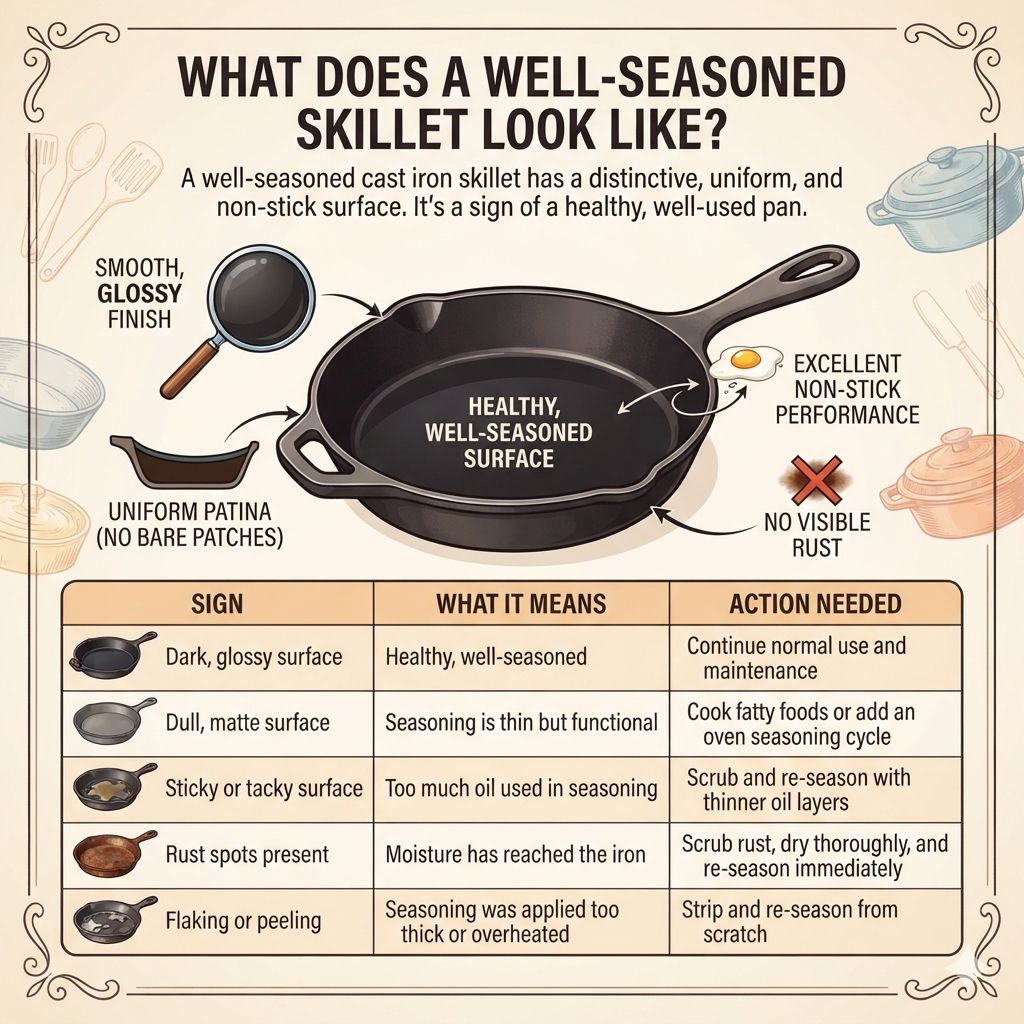
A well-seasoned cast iron skillet has a distinctive appearance. The surface is dark, usually deep black or dark brown, with a subtle gloss or sheen. It should feel smooth to the touch — not rough, sticky, or tacky.
When you run your finger across the cooking surface, it should glide without resistance.
The color comes from the carbonized oil molecules that make up the seasoning. Over time, the surface will darken further as more layers are added. This dark patina is a sign of a healthy, well-used skillet.
Some vintage skillets that have been used for decades have a mirror-like finish that is almost glassy in appearance.
There should be no visible rust spots, no flaking, and no bare patches. If you see silver or gray areas where the iron is exposed, the seasoning has worn away and needs to be rebuilt. A seasoned surface that is maintained properly will look uniform across the entire cooking area, including the sides and edges of the pan.
| Sign | What It Means | Action Needed |
|---|---|---|
| Dark, glossy surface | Healthy, well-seasoned | Continue normal use and maintenance |
| Dull, matte surface | Seasoning is thin but functional | Cook fatty foods or add an oven seasoning cycle |
| Sticky or tacky surface | Too much oil used in seasoning | Scrub and re-season with thinner oil layers |
| Rust spots present | Moisture has reached the iron | Scrub rust, dry thoroughly, and re-season immediately |
| Flaking or peeling | Seasoning was applied too thick or overheated | Strip and re-season from scratch |
A well-seasoned skillet also performs consistently. Eggs slide off without sticking, pancakes release easily, and seared meats develop a deep, even crust. If your skillet starts sticking to food, it is a sign that the seasoning has worn thin and needs reinforcement.
A quick stovetop seasoning session or one oven cycle will restore its performance.
Frequently Asked Questions
How long does it take to season a cast iron skillet properly?
Initial oven seasoning takes about 3-5 hours when you factor in multiple cycles of one hour each plus cooling time. However, the seasoning will continue to improve over weeks and months of regular cooking. A skillet used daily will develop a robust, non-stick surface within 2-3 months.
Can you use soap on a seasoned cast iron skillet?
Yes, modern mild dish soap is safe for seasoned cast iron. Older advice against soap came from the era when soaps contained lye, which strips seasoning. Today’s soaps are mild enough to clean without damaging the polymerized oil layer.
Avoid abrasive scrubbers and harsh detergents.
Why does my cast iron skillet look patchy after seasoning?
Patchy seasoning is usually caused by uneven oil application or temperature fluctuations during curing. Thin spots in the oil layer will cure differently than thicker areas, leading to a blotchy appearance. To fix it, scrub the patchy areas and apply another thin layer of oil over the entire surface.
Can you over-season a cast iron skillet?
It is very difficult to over-season a skillet. You can apply too many thick layers, which can become sticky or flaky, but you cannot add too many thin layers. The seasoning will eventually reach a point where additional layers do not significantly improve performance, but this is not a problem.
Does cooking acidic food damage the seasoning?
Frequent or prolonged cooking of acidic foods like tomato sauce, vinegar, or citrus can slowly wear down the seasoning layer. Occasional use is fine, especially if your seasoning is thick and well-established. For regular acidic cooking, an enameled cast iron skillet is a better choice.
Final Thoughts
A seasoned cast iron skillet is one of the most versatile and durable tools in any kitchen. The seasoning layer, built from polymerized oil, creates a natural non-stick surface that improves with use and protects the iron from rust. With proper care including gentle cleaning, thorough drying, and regular oiling your skillet can last for generations and deliver exceptional cooking performance every time.
Whether you are searing steak, frying eggs, or baking cornbread, a well-seasoned skillet is a reliable partner in the kitchen.
Related pick: Check today's price on Amazon
Products related to this article
Sponsored / affiliate links. As an Amazon Associate I earn from qualifying purchases. I may earn additional commission from eligible campaigns.