Lodge Cast Iron Skillet Review: Is It Worth It Today?
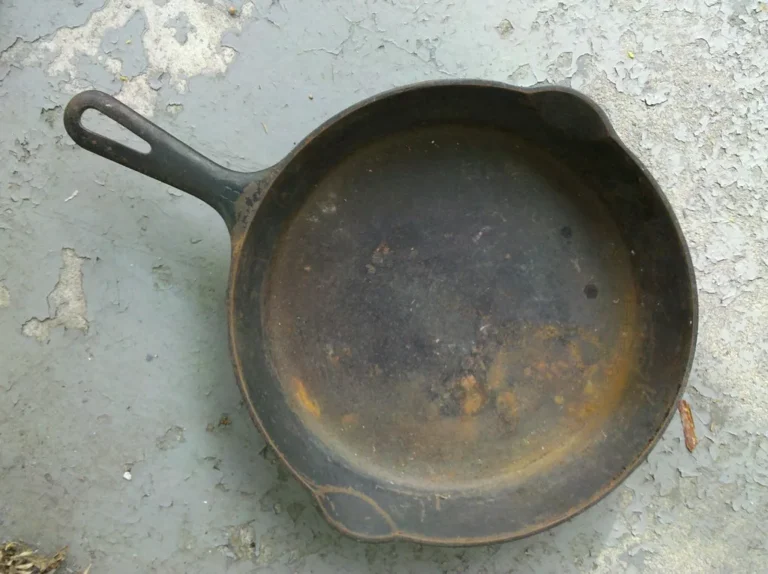
Lodge cast iron skillets are a smart buy if you want a durable, low-cost pan. The 10.25-inch skillet is the best default for most cooks, while the 12-inch makes sense only for larger portions. Choose badly and you get a pan that is awkward to heat, heavy to store, and harder to maintain than you expected. This guide compares Lodge skillet sizes and variants, weighs performance against upkeep and ownership cost, and points you to the right model for eggs, searing, oven use, or camping.
This guide is part of our Cookware materials and safety guide series.
Verdict
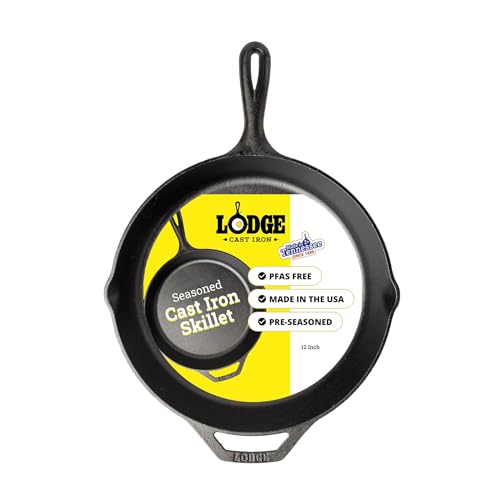
- Great heat retention and incredible durability
- Pre-seasoned for a smooth non-stick finish
- Oven safe, stovetop compatible, and multipurpose
On total ownership value, Lodge is strong because you are paying for thick cast iron, not coatings that wear out. Popular Mechanics put a common Lodge skillet at about $30, and CNN Underscored also cited a $30 example; that price sits well below many premium cast-iron options while still giving you stove-to-oven use, dependable heat hold, and a pan built for long service if you care for it properly.
Pros
- Low entry price for a long-life pan.
- Strong heat retention and solid searing.
- Pre-seasoned surface helps food release more easily at the start.
- Works on gas, electric, induction, and in the oven.
Cons
- Heavy, especially in larger sizes.
- Needs hand-washing and seasoning care.
- Eggs and delicate foods need better technique than nonstick.
- Some models are less friendly for pouring and spatula access.
📊 Popular Mechanics says the skillet costs about $30. Source: Lodge Cast-Iron Skillet, Reviewed by Popular Mechanics.
Specs at a glance
| Model | Build | Seasoning | Size range | Typical price position | Best fit |
|---|---|---|---|---|---|
| Lodge Classic Cast Iron Skillet | Heavy cast iron with straight walls | Pre-seasoned with vegetable oil | 3.5-inch to 15-inch | Budget-friendly; common sizes around $30-$40 | General cooking, searing, oven use, camping |
| Lodge Chef Collection Skillet | Sloped sidewalls, larger pour spouts | Pre-seasoned | Fewer sizes than Classic | Higher price than Classic | Spatula work, saucy foods, easier pouring |
| Lodge Blacklock Skillet | Lighter walls, longer handles | Triple-seasoned | Fewer sizes than Classic | More expensive | Users who want less weight and a more refined feel |
Who it is for
Lodge fits home cooks who want one pan that can move from stovetop to oven and hold up to years of regular use. It is especially sensible for people who cook steaks, cornbread, roasted vegetables, or pan sauces and do not mind a little upkeep. It is less ideal if you want a very light skillet, a fully dishwasher-safe pan, or a slick nonstick experience right away.
For a small kitchen or one to two people, the 8-inch to 10.25-inch range is often the easiest place to start. For families, the 12-inch model is more practical when you need more surface area. For camping, the Classic often makes the most sense because durability and price matter more than fine handling.
Who should skip it
If your main priority is easy eggs every morning with almost no cleanup, cast iron may feel like more work than you want. If you store cookware on open shelves or need one-handed handling, the weight can be annoying fast. A common first-timer mistake is buying a 12-inch pan for a small kitchen and then finding it too bulky to heat, lift, and dry often.
What works about Lodge cast iron?
Lodge works because cast iron is built for heat hold, steady browning, and rough treatment. It heats slowly, then keeps that heat well, which helps when you sear meat or move a pan from stovetop to oven. CNN Underscored notes that Lodge cookware can go from stove to oven, and that is the core of the value proposition.
The company also ships the pan pre-seasoned with vegetable oil, which gives you a usable surface out of the box. That seasoning is not permanent. It improves with use, and it needs periodic re-seasoning to keep food release and rust protection in good shape.
Heat retention and searing
Cast iron’s thermal mass is the point. It is slower to heat than thin aluminum, but once hot it stays hot, so a cold steak or burger does not drop the pan temperature as much. That makes Lodge a strong fit for browning, shallow frying, and recipes that need an even, steady surface.
Oven-to-stovetop use
Cast iron is useful when a recipe starts on the burner and ends under a broiler or in a hot oven. You can brown chicken thighs, finish cornbread, or roast vegetables without switching pans. That flexibility is one reason the skillet can replace several lighter pieces in a small kitchen.
Seasoning and upkeep over time
Seasoning is a thin oil layer bonded to the pan’s surface. It is what helps food release more easily and what protects the iron from moisture. The pan is factory pre-seasoned, but that is the starting point, not the end. Use makes it better; neglect makes it worse.
What does not work as well?
The main tradeoff is upkeep. Lodge is not maintenance-free, and it is not a dishwasher pan. You need to hand-wash it, dry it immediately, and avoid soaking. If you leave water in the pan, rust can form. If you scrub away the seasoning or store it damp, the surface degrades faster.
Weight is the second problem. Straight-sided Classic skillets feel particularly hefty in the larger sizes, and pouring from them can be awkward because the walls are not shaped for easy drainage. For eggs, the learning curve is real. A well-seasoned skillet helps, but it does not behave like coated nonstick.
Common failure cases
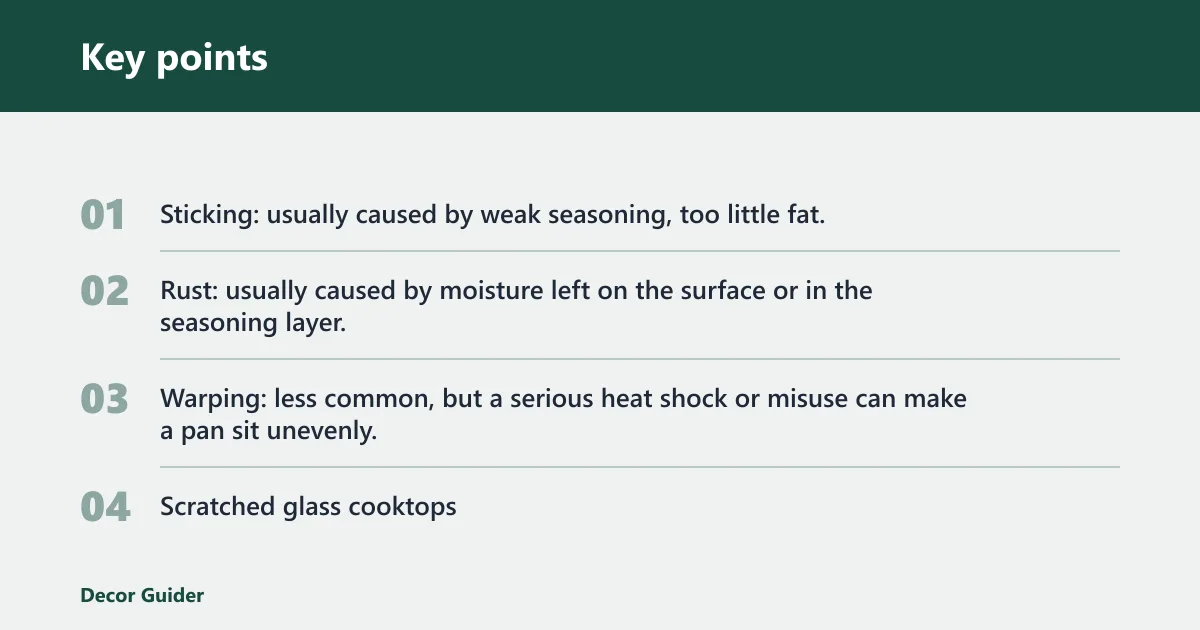
- Sticking: usually caused by weak seasoning, too little fat, or food added before the pan is hot enough.
- Rust: usually caused by moisture left on the surface or in the seasoning layer.
- Warping: less common, but a serious heat shock or misuse can make a pan sit unevenly.
- Scratched glass cooktops: cast iron can scratch if you slide it instead of lifting it.
Say you grab a 12-inch skillet by the long handle, load it with tomato sauce, and try to pour quickly into a bowl. A Classic model can feel clumsy there. That is not a defect so much as a shape issue, which is why the Chef Collection exists.
Is lodge cast iron healthy
Lodge cast iron is generally considered food-safe when seasoning is intact and the pan is used normally. The seasoning is based on vegetable oil, not a chemical coating, and the pan is not a PFAS-lined nonstick piece. The main health question is iron, which can leach in small amounts, especially with acidic foods or damaged seasoning.
The practical caution is overheating. Empty cast iron can get extremely hot, so do not leave it on high heat for long periods. That can damage seasoning and make handling unsafe. If you use the skillet as intended, health concerns are mostly about care, not the material itself.
What is the difference between Lodge Classic and Blacklock
The Classic is the everyday value choice; Blacklock is the lighter, more refined version. Prudent Reviews says Blacklock skillets have thinner walls and are triple-seasoned, while Classic models are the standard heavy, pre-seasoned cast-iron pans most people picture. Blacklock also uses longer handles and costs more.
In practical terms, Blacklock is better if you dislike the heft of traditional cast iron or want a slightly easier carry from stovetop to oven. Classic is better if you want the lowest cost, the broadest size range, and the simplest decision.
Which Lodge cast iron skillet size is best for everyday cooking
The 10.25-inch size is often a good default for many cooks because it balances footprint, weight, and usable surface area. It is large enough for chicken breasts, burgers, hash, and two or three eggs without taking over the burner. The 12-inch size is often more practical for family portions, bigger batches, or meals that need extra room to avoid crowding.
Prudent Reviews lists Lodge skillet sizes from 3.5-inch to 15-inch, but the extremes are niche sizes. Small pans are useful for single eggs or side portions. Very large pans are heavy, slower to heat, and harder to store. For most kitchens, the middle sizes are the sweet spot.
How do you care for a Lodge cast iron skillet
Care is straightforward but strict. Hand-wash only, dry immediately, avoid soaking, and do not put the pan in the dishwasher. After washing, heat-dry it or wipe it completely dry, then add a thin film of oil if the surface looks dull or dry. That keeps seasoning in better shape.
Basic care steps
- Wash soon after cooking with warm water and a brush or non-scratch scrubber.
- Use a small amount of soap if needed; rinse well.
- Dry the skillet fully with a towel.
- Heat it briefly on the stove to remove hidden moisture.
- Wipe on a very thin layer of oil and store it dry.
Dishwasher use may void the warranty, and the warranty is generally intended to cover issues like cracking, warping, or breakage with normal use. That matters because it shows how Lodge expects the pan to be treated: tough, but not careless.
What does not work as well?
For eggs, cast iron can work, but it is less forgiving than coated nonstick. If the pan is under-seasoned, too cold, or overloaded with moisture, whites can grab the surface. Better technique helps a lot. Use enough fat, preheat properly, and wait for food to release instead of forcing it.
Glass cooktops also need caution. The pan itself is heavy, and sliding it across a smooth surface can leave scratches. Lift it instead. If the bottom is warped from abuse or severe heat shock, contact with the cooktop can get worse, not better.
Alternatives

- Exceptional heat retention for even cooking
- Versatile for stove, camping, or grill
- Pre-seasoned with vegetable oil for non-stick
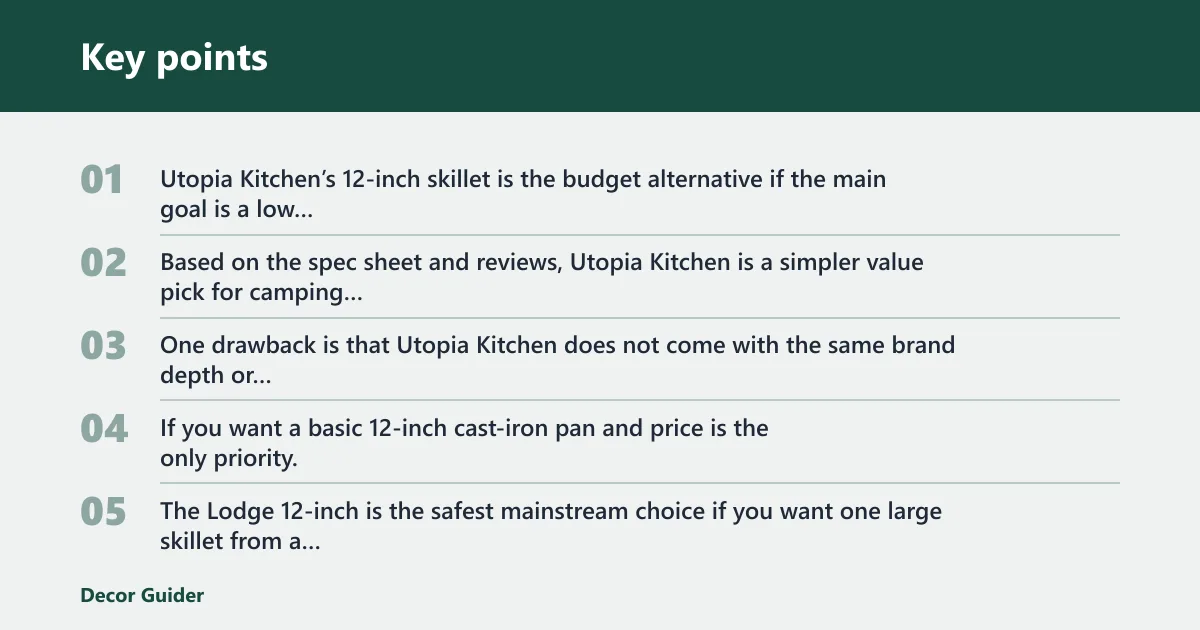
Utopia Kitchen’s 12-inch skillet is the budget alternative if the main goal is a low purchase price, but Lodge still has the stronger ownership story. Based on the spec sheet and reviews, Utopia Kitchen is a simpler value pick for camping or casual stove use, while Lodge tends to have the better long-term support, broader size range, and more established warranty language.
One drawback is that Utopia Kitchen does not come with the same brand depth or collection choices as Lodge, so size and fit decisions are less flexible. If you want a basic 12-inch cast-iron pan and price is the only priority, it belongs on the shortlist.
The Lodge 12-inch is the safest mainstream choice if you want one large skillet from a known cast-iron line. At about $29.90, it lands in the price band that makes Lodge so compelling. The drawback is that the 12-inch format is heavy and better suited to bigger portions than to a small one-person kitchen.
This is the model that makes sense when you want full-size searing, oven finishing, and a pan that can handle family meals without feeling oversized on the cooktop. If you need less heft or better pour control, the Chef Collection or Blacklock may fit better.
Should you buy it
Yes, if you want one pan that can last for years and you are willing to maintain it. Lodge is cheap because cast iron is a simple material, the manufacturing model is mature, and the brand sells a huge volume of standard shapes rather than relying on expensive coatings or complex construction. Prudent Reviews notes Lodge has been making skillets in the USA for over 100 years, which helps explain the scale.
Ownership cost is where Lodge looks especially good. A nonstick pan often gets replaced after its coating fails, scratches, or stops releasing food well. A cast-iron skillet does not have that same failure mode. If you keep the seasoning alive, the cost per use can become very low over time.
Best buyer match by type
- Choose Classic if you want the cheapest entry point, broad size selection, and the easiest value case.
- Choose Chef Collection if you cook saucy food, care about spatula access, or want better pouring.
- Choose Blacklock if you want lighter walls and do not mind paying more for that feel.
Say your kitchen has one active burner and a small storage drawer. A 10.25-inch Classic is usually the best tradeoff. Say you cook for four and finish dishes in the oven every week. The 12-inch Classic becomes more practical. The right Lodge is the one that matches your food volume and your tolerance for upkeep.
Frequently asked questions
is lodge cast iron healthy
For normal cooking, Lodge cast iron is generally safe. The seasoning is vegetable-oil based, not a coating that flakes like PTFE cookware, and some iron can transfer into food in small amounts. The main cautions are overheating an empty pan and using damaged seasoning, which can raise sticking and rust risk.
is lodge cast iron good
Yes, for cooks who want strong heat retention, good searing, and a pan that can move from stovetop to oven. It is less ideal if you want light weight or easy-release performance without upkeep. Its value comes from durability and low ownership cost, not from being effortless.
why is lodge cast iron so cheap
Lodge is cheap because cast iron is a comparatively simple product to make, the shapes are standard, and the company sells at high volume. You are not paying for a coating system or premium materials. That lower upfront price is real, but it comes with the responsibility to season and care for the pan.
is a Lodge cast iron skillet worth it
It is worth it for most home cooks who will actually use cast iron’s strengths: searing, oven finishing, and rough daily durability. It is less worth it if you never want to dry, oil, or hand-wash cookware. The value is strongest when the pan replaces multiple weaker pieces over time.
which Lodge cast iron skillet size is best for everyday cooking
The 10.25-inch size is the best all-around pick for most households. It is large enough for several common meals, yet not as cumbersome as the 12-inch. If you regularly cook for a family or want more surface area for browning, the 12-inch is the better move.
does Lodge cast iron work on induction
Yes. Cast iron is induction-compatible because it is magnetic. That makes Lodge a good fit for induction ranges, gas, electric, grills, and ovens. The only caution is to lift the pan instead of sliding it, especially on glass or ceramic surfaces where scratches are a concern.
Products related to this article
Sponsored / affiliate links. As an Amazon Associate I earn from qualifying purchases. I may earn additional commission from eligible campaigns.