Hard Anodized Cookware How Much
How much does hard anodized cookware cost? Most hard anodized cookware costs about $40 to $150 for a basic skillet or saucepan, and about $100 to $400+ for a full set. Prices rise with thicker bases, better lids, induction-ready construction, and higher oven-safe ratings, while lower-cost pans are more likely to warp or wear out sooner. Price bands and care guidance below are anchored to manufacturer care pages and current retail examples, including Cuisinart, Calphalon, KitchenAid, T-fal, OXO, and major retailers such as Target and Amazon, plus public-health guidance from the FDA on cookware materials and aluminum exposure.
What hard anodized cookware
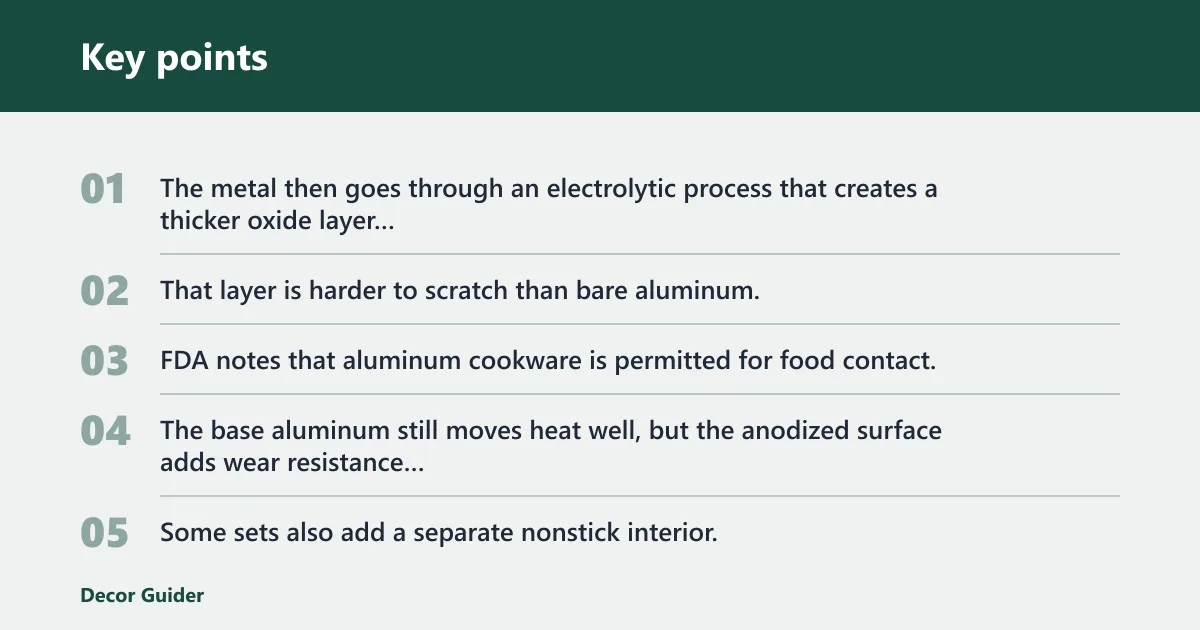


Hard anodized cookware starts with aluminum. The metal then goes through an electrolytic process that creates a thicker oxide layer on the surface. That layer is harder to scratch than bare aluminum, and it is less reactive with acidic foods, which helps with cleanup and cooking stability. The U.S. FDA notes that aluminum cookware is permitted for food contact, while anodizing changes the surface rather than turning the pan into a different metal.
The finish changes how the pan wears. The base aluminum still moves heat well, but the anodized surface adds wear resistance and makes the exterior easier to maintain than plain aluminum. Some sets also add a separate nonstick interior, while others rely on the anodized surface alone.
How anodization changes aluminum
Anodization does not make cookware a different metal. It changes the surface through electrochemical treatment, which thickens the oxide layer and gives the pan a harder outer skin. That is why hard anodized aluminum often resists scuffs better than standard aluminum, while still staying lighter than many steel pans. FDA food-contact guidance and public-health materials on aluminum cookware both support the idea that the key safety question is surface condition and intended use, not a blanket ban on aluminum itself.
Why the finish matters for wear and cleanup
Hard anodized cookware is durable and often easier to clean than many other cookware types. The surface can still wear if you use high heat, harsh cleaners, or metal utensils on a coating that is not meant for them. That is where total cost over time starts to matter, especially when a lower sticker price leads to earlier replacement.
How much does hard anodized cookware cost?
Most buyers pay about $40 to $150 for a single hard anodized skillet or saucepan and about $100 to $400+ for a full set, with exact pricing driven by size, lid quality, handle material, oven-safe limits, and whether the pan is induction-ready. Current retailer and brand examples from Target, Amazon, Cuisinart, Calphalon, KitchenAid, T-fal, and OXO show that thicker builds and higher-spec sets can push well above the basic range.
What drives price by set size
A single skillet or saucepan often sits in the entry range, while multi-piece sets rise as you add lids, stockpots, and specialty pans. Larger sets also tend to include more hardware, and that hardware affects both comfort and cost. Induction-ready construction can add price because it needs a magnetic base, which is a separate build choice rather than a default feature in hard anodized cookware.
How features change the total
Stainless steel handles, tempered glass lids, and multi-layer construction all add cost. So does a PTFE-based or other nonstick interior, because that layer affects manufacturing and care expectations. Oven-safe ratings can also change pricing, since higher heat tolerance usually requires handle and lid choices that can stand up to it; manufacturer care pages from brands such as Calphalon, Cuisinart, and T-fal commonly tie oven-safe limits to lid and handle materials.
Where replacement risk affects value
The cheapest set is not always the least expensive choice. If a pan bows on a hot burner, or a coating dulls after a few harsh washes, the value drops fast. A slightly pricier pan that keeps its shape and finish longer may cost less per year of use, especially for households that cook often.
Hard anodized cookware cost matrix
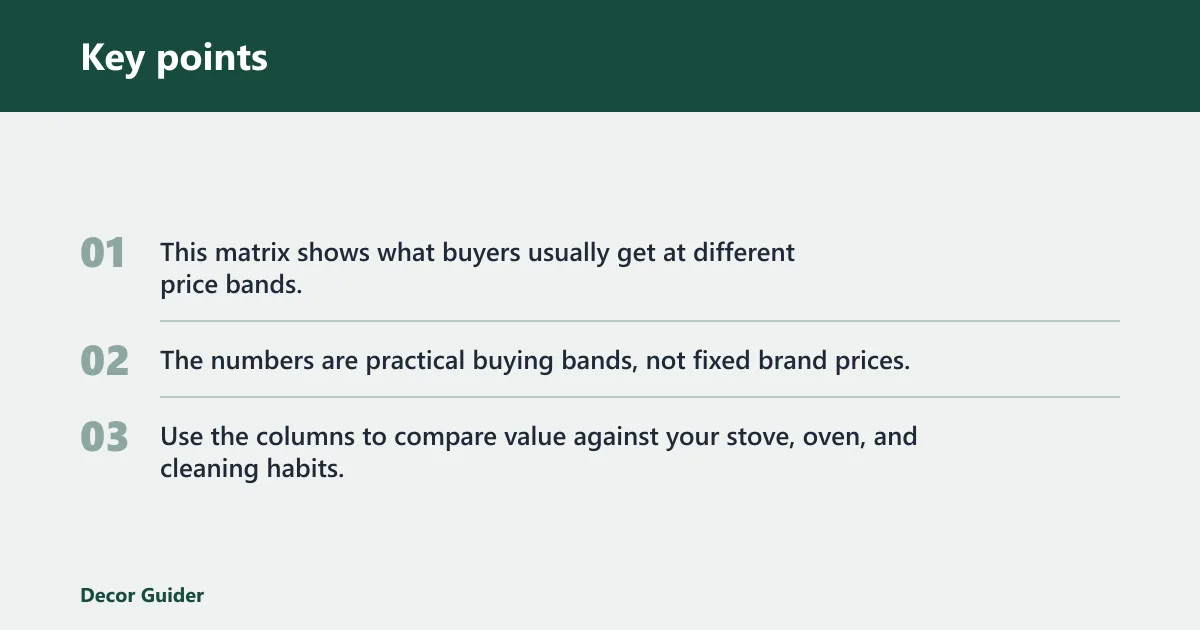
This matrix shows what buyers usually get at different price bands. The numbers are practical buying bands, not fixed brand prices, because set contents and feature packages vary by maker. Use the columns to compare value against your stove, oven, and cleaning habits.
| Price band | Typical set size | Typical single-pan price | Full-set price | Likely failure/replacement risk | Best-fit buyer segment | Oven-safe range | Induction compatibility | Dishwasher-safe claim | Expected maintenance burden |
|---|---|---|---|---|---|---|---|---|---|
| $40 to $80 | 1 to 3 pieces, often a skillet or saucepan | $20 to $45 | $40 to $80 | Higher; thinner bases and simpler lids are more likely to warp or wear early | Budget shoppers, first apartment buyers, light daily cooking | Often lower, commonly around 350°F to 400°F; model-specific | Usually absent | Sometimes listed, but hand washing is often preferred | Low to moderate; soft sponge and gentle drying |
| $80 to $150 | 4 to 7 pieces, often basic starter sets | $35 to $70 | $80 to $150 | Moderate; better construction, but finish care still matters | Home cooks who want a practical starter set without premium pricing | Commonly 400°F to 450°F; lids and handles may limit this | Sometimes present on selected models | More likely to be claimed, but manufacturer instructions still rule | Moderate; avoid metal tools, high heat, and abrasive pads |
| $150 to $250 | 8 to 12 pieces, with more lids and specialty pans | $60 to $120 | $150 to $250 | Lower to moderate; thicker bases help, but coated interiors still need care | Frequent cooks who want better stability and more complete coverage | Often 450°F to 500°F on some models | Mixed; check for a magnetic base before buying | Often not recommended despite a dishwasher claim | Moderate to high; more care if there is a nonstick interior |
| $250 to $400+ | 10 to 15+ pieces, often with thicker construction and extras | $90 to $200+ | $250 to $400+ | Lowest to moderate; premium builds are sturdier, but care still determines lifespan | Busy households, gift buyers, and shoppers prioritizing durability plus compatibility | Up to 500°F on some models, but lid and knob limits still apply | More common, but never universal | Usually hand wash preferred to protect finish | Moderate to high; careful heat control and hand washing matter |
Is hard anodized cookware safe or non-toxic?
The safety answer depends more on the coating, heat level, and care than on the anodized aluminum itself. The FDA and public-health sources generally treat aluminum cookware as acceptable for food contact, but a separate interior coating changes the picture. If a set uses PTFE or another nonstick coating, then that layer’s heat and utensil limits matter as much as the anodized base.
Base metal versus coating
Hard anodized aluminum is aluminum that has been treated so the surface is harder and less reactive. That part is not the same issue as a separate nonstick layer. If a pan has a coated interior, the coating’s material and condition matter as much as the anodized base. Manufacturer care pages for coated cookware often emphasize avoiding overheated empty pans and using nonmetal utensils to protect the surface.
Heat limits and coating wear
High heat is where problems often start. A coating can wear sooner, lose slip, or discolor if it is pushed past the manufacturer’s guidance. Even when a pan feels sturdy, excessive heat can shorten its useful life and may create sticking that looks like a cooking problem but is really a finish problem. For that reason, the safest interpretation is model-specific rather than brand-wide.
What safe use depends
Safe use depends on matching the pan to the job. Low to medium heat is usually the safer default, and cooling before washing helps protect the finish. If the set includes a nonstick interior, follow the coating instructions, not just the anodized-aluminum label. Public-health guidance also supports avoiding unnecessary overheating and using cookware only as directed by the maker.
How long does hard anodized cookware last?
Hard anodized cookware can last for years, but lifespan depends on heat, cleaning, and whether the set has a coating that wears out before the pan body does. A well-cared-for pan may stay useful much longer than a cheap one that warps, stains, or loses its cooking surface early. In practice, the body often outlives the finish on lower-cost models.
What shortens lifespan
High heat, sudden temperature changes, dishwasher cycles, and metal utensils can shorten lifespan. So can bleach, abrasive scrubbers, and storing pans while stacked hard against each other. The anodized surface is tougher than regular aluminum, but it is not invincible, and manufacturer care pages commonly warn against harsh cleaning methods for this reason.
Scratch, stain, and warp risks
Scratches usually show up first on coated interiors, while stains and dullness often appear on the exterior or inside corners. Warping is a separate problem. It can happen when thin cookware meets repeated heat spikes, and once the base no longer sits flat, cooking evenness suffers. This is one reason thicker or reinforced bases cost more.
When replacement makes more sense
Replace a pan when the base is warped, handles loosen, or the interior coating breaks down enough to trap food after normal cleaning. Suppose a 10-inch skillet begins sticking badly even after gentle washing and careful heat control. If the coating has lost its release, restoration may help only briefly, and replacement becomes the better value.
How hard anodized compares with stainless steel and nonstick
Hard anodized cookware usually sits between stainless steel and traditional nonstick in both price and maintenance. It often costs less than high-end stainless steel sets, but more than basic nonstick. It also tends to clean more easily than stainless steel, while needing more care than bare metal. That middle position is what makes it attractive for everyday buyers who want durability without the premium steel price tag.
Cost differences
Stainless steel can cost more up front, especially in multi-ply builds. Traditional nonstick often costs less at entry level, but the coating may wear sooner. Hard anodized cookware fills a middle ground: durable enough for regular use, but usually less expensive than premium steel with similar piece counts.
Cleanup and maintenance differences
Hard anodized cookware is easier to clean than many stainless pans because the surface is less reactive and often smoother. Traditional nonstick is usually even easier to wipe down at first, but it can be more sensitive to heat and utensils. That tradeoff affects replacement timing, which is why the lowest upfront price is not always the lowest long-term cost.
Cooking feel and browning differences
Stainless steel can handle higher heat and better browning when used correctly. Hard anodized cookware is more forgiving for everyday cooking and can reduce hot spots in better-made sets, but it does not match stainless steel for searing the way an uncoated steel pan can. If browning is your priority, stainless steel usually has the edge.
Can it go in the oven, dishwasher, or induction cooktop?
Sometimes, but not by default. Oven-safe ratings are model-specific, dishwasher safety is manufacturer-specific, and induction compatibility depends on whether the base is magnetic. Handles, lids, and knobs can lower the safe temperature, so you need to check the exact set before buying. Brand care guides from Calphalon, Cuisinart, T-fal, KitchenAid, and OXO regularly frame these as model-by-model limits rather than universal rules.
Oven-safe ratings and lid limits
Some hard anodized sets are oven and broiler safe up to 500 degrees F, but that does not apply to every pan. Tempered glass lids can help you watch food while cooking, yet they can also limit oven use or get hot in use. Riveted stainless steel handles may be more oven-ready, but comfort matters too. Manufacturer specs are the deciding source because the safe temperature can change with the lid, knob, or handle design.
Dishwasher-safe claims and finish damage
Dishwasher safety is not a blanket rule. Many manufacturers still recommend hand washing because repeated dishwasher cycles can dull the finish or damage the coating over time. A set may be labeled dishwasher safe and still last longer with dish soap and a sponge. That is why care pages and product listings should be read together, not separately.
Induction compatibility and magnetic bases
Induction is not universal in hard anodized lines. A set needs a magnetic base to work on an induction cooktop, and many hard-anodized pans do not include that feature. Do not assume compatibility from the material alone; verify it on the product page or box. Retail listings for current sets often state induction compatibility explicitly when it exists.
How to care for it and fix common issues
Start with dish soap and a sponge. That is the safest routine for most hard anodized cookware. Avoid bleach, skip abrasive pads, and let pans cool before washing. If stains or dullness remain, you can try baking soda paste, vinegar, or lemon juice with water, but restoration has limits. Manufacturer care pages for hard anodized and coated cookware generally prioritize gentle washing and low-to-moderate heat.
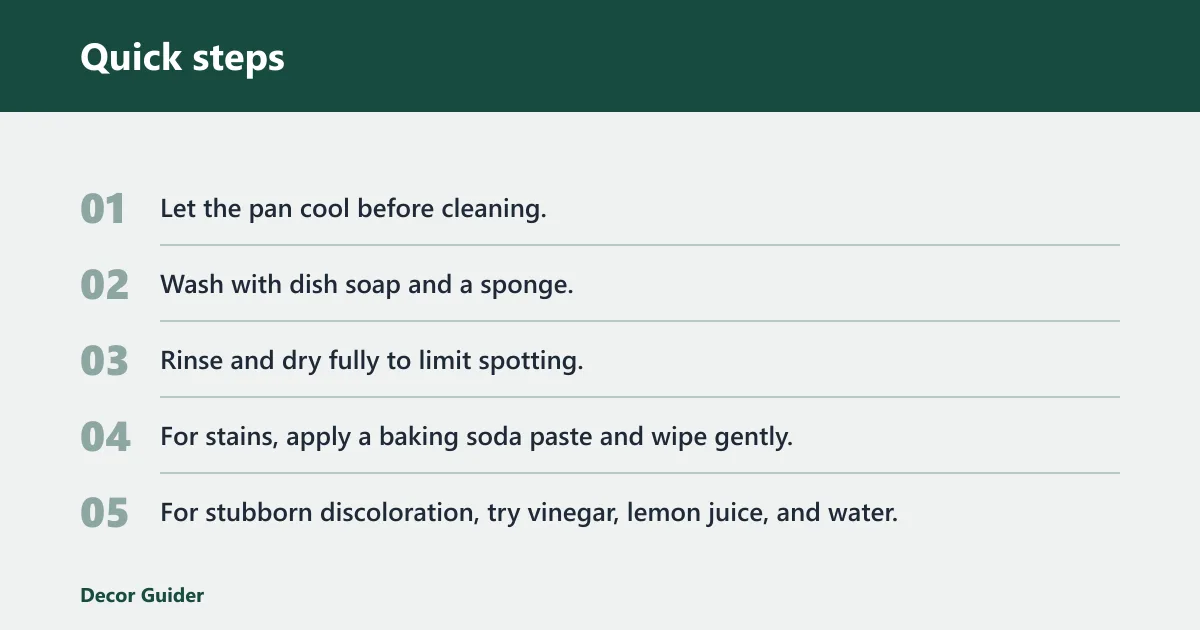
- Let the pan cool before cleaning.
- Wash with dish soap and a sponge.
- Rinse and dry fully to limit spotting.
- For stains, apply a baking soda paste and wipe gently.
- For stubborn discoloration, try vinegar, lemon juice, and water.
- Stop if the surface is scratched, warped, or the coating has worn through.
Removing stains and dullness
Stains often respond to a mild paste made from baking soda and water. Mild acid cleaners, such as vinegar or lemon juice mixed with water, can also help with discoloration. These methods can improve appearance, but they will not reverse deep scratches or restore a failed coating. If the finish has thinned or the pan base is distorted, cleaning will not fix the structural problem.
Reducing sticking without harsh cleaners
Low to medium heat is the safer default for day-to-day cooking. Preheat gently, use a small amount of fat when needed, and avoid turning the burner up just because food is slow to release. A common first-timer mistake is using high heat on a coated pan, then scrubbing hard when food sticks. That combination shortens the life of both the coating and the pan’s usable value.
Say your 12-inch skillet has a tempered glass lid and riveted stainless steel handles, but the maker only lists dishwasher safety for convenience. Hand washing still gives you the best shot at keeping the finish stable and the lid clear, especially if you cook eggs, sauces, or acidic foods often.
Frequently asked questions
Can hard anodized cookware be used on induction cooktops?
Sometimes, but not always. Induction requires a magnetic base, and many hard anodized lines do not include one. Check the product details for induction compatibility before buying, because the anodized surface alone does not make the pan work on an induction burner. Retail product pages are usually the fastest way to confirm this feature.
Can it go in the oven?
Yes, on some models, but the rating is specific to the pan and its parts. A set may be oven and broiler safe up to 500 degrees F, yet a lid, knob, or handle can lower that limit. Always check the exact model rather than assuming a general rule, since manufacturer specifications control the safe temperature.
Is hard anodized cookware dishwasher safe?
Some makers say yes, but many still recommend hand washing. Dishwasher cycles can dull the finish or wear coatings over time, so dish soap and a sponge are the safer long-term choice. If the care card says hand wash only, treat that as the rule. That guidance is consistent with major brand care pages and helps preserve the surface longer.
Products related to this article
Sponsored / affiliate links. As an Amazon Associate I earn from qualifying purchases. I may earn additional commission from eligible campaigns.