4 Best Cookware for Gas Stoves (2026): based on specs and reviews
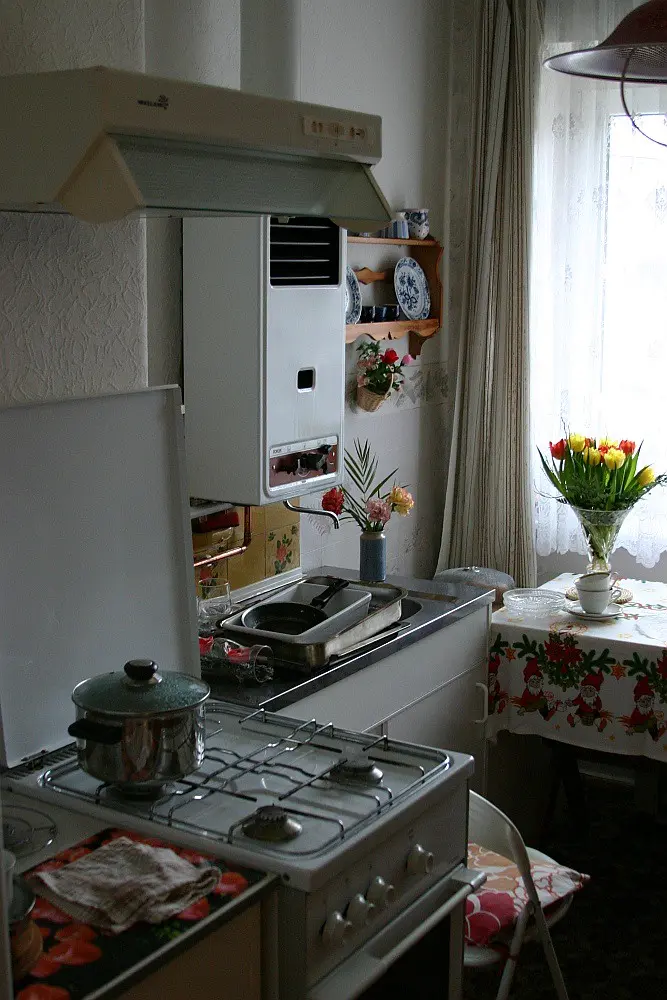
The best cookware for gas stoves and high heat is a thick, flat-bottom pan with a base that sits solidly on the grate and a material matched to the burner: stainless-clad, cast iron, enameled cast iron, or carbon steel; skip very thin pans. Thin cookware bends, heats unevenly, and burns food at the flame’s center while leaving the edges behind. This guide explains how gas-burner behavior, thickness, base diameter, and upkeep should shape your choice.
Quick comparison
| Product | Badge | Best for | Price | ||
|---|---|---|---|---|---|
 |
Utopia Kitchen Cast Iron Skillet 12 Inch Pre-SeasonedUtopia Kitchen | Budget pick | 12 inch · Cast iron · Pre-seasoned | $24.29
Price as of 10 Oct 2026
|
View |
 |
All-Clad D3® Stainless Steel 10" Fry Pan with Lid, Made inAll-Clad | Our pick | 10 inch · Tri-ply stainless · Made in USA | $139.95
Price as of 10 Oct 2026
|
View |
 |
Le Creuset Enameled Cast Iron Round Dutch Oven, 7.25 qt.,Le Creuset | Upgrade pick | 7.25 qt · Enameled cast iron · Oven-safe | $333.87
Price as of 10 Oct 2026
|
View |
 |
HexClad 6pc Hybrid Nonstick Frying Pans Set with Lids, 8,HexClad | Also great | 6pc set · Hybrid nonstick · 8/10/12 inch | $299.00
Price as of 10 Oct 2026
|
View |
For gas burners, the first filter is heat behavior, not brand. A pan that matches the flame size, sits flat on the grate, and handles quick temperature changes will cook more evenly and last longer.
If you want one simple rule, start with stainless-clad for most everyday cooking, cast iron for the strongest heat retention, carbon steel for faster response, and hard-anodized aluminum or ceramic-coated nonstick when cleanup matters most.
How we chose
We compared cookware by burner fit, heat response, flatness, handle comfort, and cleanup tolerance. That matters on gas, where the flame is open, the center runs hotter, and the pan’s underside can discolor fast.
We also favored constructions that resist warping and stay in firm contact with the grate. Thick bases and stable handles matter more on gas than they do on many electric cooktops.
Finally, we separated everyday choices from high-heat specialists. A pan that excels at searing can still be a poor pick if it is too heavy, too reactive, or too annoying to clean.
All-Clad D3 stainless steel: best for everyday gas cooking
- Tri-ply construction for even heating
- Riveted handle for balanced grip
- Third-party tested for safety and performance
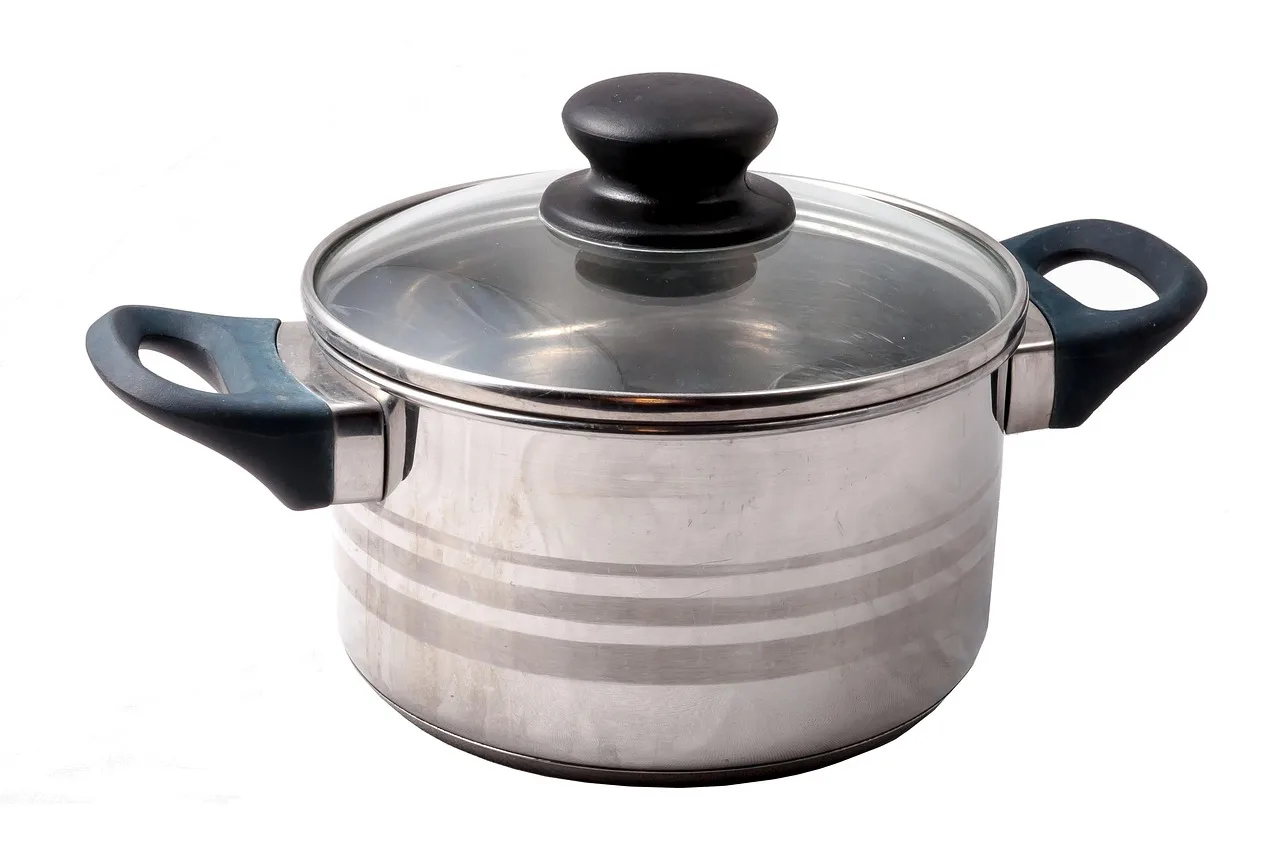
All-Clad D3 is the safest all-around stainless pick for most gas stoves because tri-ply stainless with an aluminum core gives you even heat, solid warp resistance, and predictable response. It suits sautéing, pan sauces, and general stovetop work, especially if you want one skillet to cover a lot of tasks.
Stainless-clad cookware works best when the core runs through the sides as well as the base. That spreads heat away from the flame’s center and shrinks the edge-versus-center gap that causes scorching.
The drawback is simple: stainless does not forgive sloppy heat control. If the burner is oversized or the pan is preheated too hard, food can still brown too fast in the middle, and you will likely need more oil or closer temperature control than with nonstick.
For comparison, Demeyere 5-Plus is presented as a best-overall stainless option, while All-Clad D5 is described as a 5-ply build and a 5-Ply 10-Piece Cookware Set. All-Clad D5 handles up to 600℉, while Demeyere 5-Plus handles up to 500℉. Cuisinart Multiclad Pro starts at $49, which shows how wide the stainless price range is.
3-ply vs. 5-ply construction
Three-ply stainless is usually enough for most home gas stoves because the aluminum core improves spread without making the pan overly heavy. Five-ply construction adds mass and can smooth heat a bit more, but it also tends to cost more and feel denser in the hand.
Choose 5-ply when you want extra stability on a strong burner and you do a lot of simmering or sauce work. Choose 3-ply when you want faster handling and lower weight without giving up the durability of clad stainless.
When aluminum cores beat copper cores
Aluminum cores heat faster and are easier to build into a practical everyday pan. Copper conducts very well, but it usually adds cost and maintenance that many gas-stove cooks do not need.
For most buyers, aluminum-core stainless is the better tradeoff: good spread, easier care, and less concern about visible tarnish.
Oven-safe limits and lid hardware
Oven-safe limits depend on the lid, handle, and any non-metal parts, not only the pan body. Metal lids and riveted handles usually raise confidence, while plastic knobs and silicone grips lower the safe ceiling.
If you finish searing on the stove and then move the pan to the oven, check the full set of hardware, not just the metal construction on the box.
What to check for warping and wobble
Set the pan on a flat surface before buying if possible. A flat base should not rock, and it should make broad contact with the grate so the flame energy transfers into the pan instead of around it.
On gas, a warped base often shows up as uneven browning, noisy wobble, or a pan that seems to lean toward the hottest part of the burner.
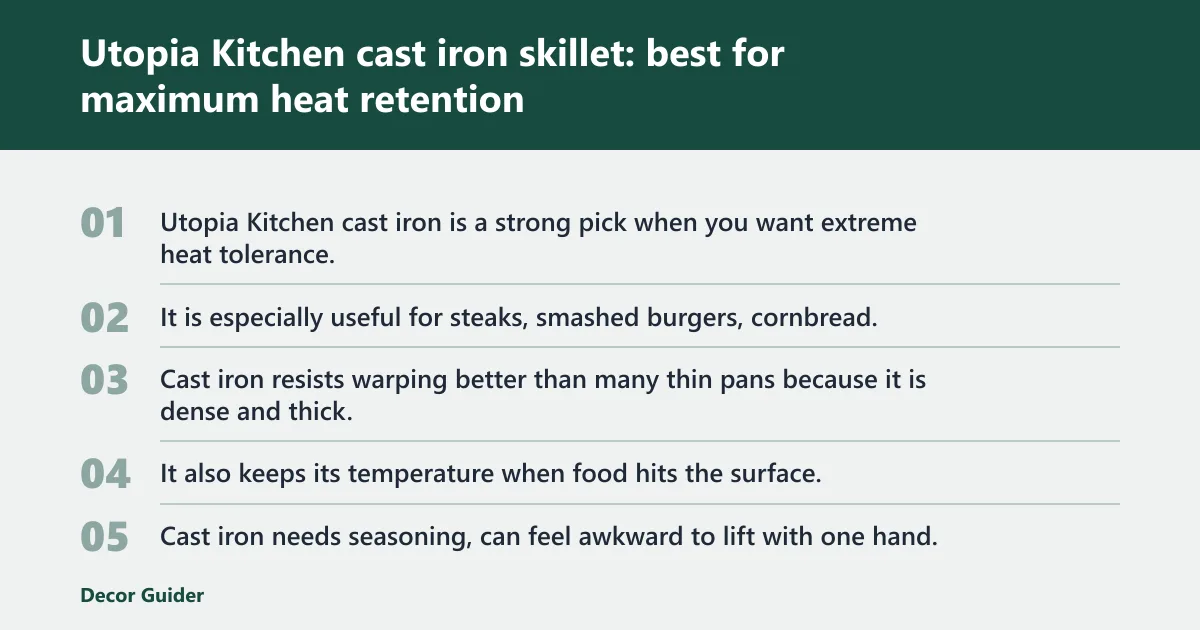
Utopia Kitchen cast iron skillet: best for maximum heat retention
- Pre-seasoned for immediate non-stick performance
- Excellent heat retention for searing
- Versatile for stove, grill, and camping
Utopia Kitchen cast iron is a strong pick when you want extreme heat tolerance, long heat retention, and a surface that handles open flame well. It is especially useful for steaks, smashed burgers, cornbread, and dishes that benefit from steady heat after preheating.
Cast iron resists warping better than many thin pans because it is dense and thick. It also keeps its temperature when food hits the surface, which helps with browning and searing on a gas burner.
The tradeoff is weight and upkeep. Cast iron needs seasoning, can feel awkward to lift with one hand, and heats more slowly than lighter metals, so it is not the easiest choice for quick weeknight meals.
Lodge Cast Iron starts at only $8.90, and Lodge cast iron is sold as a 5-piece bundle in one example. Those figures show why cast iron is often the budget answer for high heat, even if it is not the lightest option.
Why it handles open flame well
Open flame is less of a problem for cast iron than for thin aluminum or bargain stainless because the pan can soak up direct heat without flexing much. That makes it good for large steaks, fajitas, and pan pizzas.
The surface still heats unevenly if the burner is too small for the pan, so match the skillet size to the flame whenever possible.
Seasoning and maintenance
Seasoning is not optional. It protects the surface, limits sticking, and helps the pan resist moisture-related rust.
Cleanup is straightforward, but you should avoid soaking and move the pan through drying and light oiling if needed. That is the price of a durable high-heat tool.
Weight and handle strain
Cast iron can strain wrist and forearm comfort, especially in 12-inch sizes. A helper handle makes lifting safer, but the total mass still matters on a hot burner.
If you cook often at the stove and move the pan to the oven, weight should count as a real buying factor.
When cast iron is the wrong pick
Skip it if you want fast heat changes, lightweight handling, or frequent deglazing and sauce work. Cast iron can be a poor fit for cooks who want easy cleanup with minimal maintenance.
It is also a weaker choice for cooks who routinely need to toss food or maneuver the pan quickly over a strong flame.
Lodge carbon steel: best for fast-moving high heat
- Laser-etched hexagonal hybrid nonstick surface
- Tri-ply aluminum core for even heating
- Includes tempered glass lids with each pan
Lodge Carbon Steel fits cooks who want high-heat performance with less weight than cast iron and faster response to burner changes. It is well suited to stir-frying, thin-cut searing, and cooking styles where you want the pan to heat and cool more quickly.
Carbon steel shares the seasoning requirement of cast iron, but it usually feels easier to move on a gas grate because it is lighter and often has a more workable handle shape. That can matter a lot when you are shaking a pan or sliding food around over flame.
The drawback is that it still needs care. It is not as carefree as stainless, and it can discolor, streak, or stick if seasoning is neglected or if the pan is overheated and then cooled too abruptly.
Lodge Carbon Steel starts at $34.90. That puts it in a practical middle ground for buyers who want high heat without cast iron’s full weight.
Why it responds faster than cast iron
Carbon steel is thinner and lighter, so it changes temperature faster. That makes it easier to manage when a gas burner jumps from low simmer to high sear in a few seconds.
This faster response is useful for vegetables, eggs, and quick skillet meals where timing matters.
Seasoning basics
Like cast iron, carbon steel needs a seasoned surface to reduce sticking and guard against corrosion. The seasoning layer also improves over time if you keep the pan dry and use it regularly.
New buyers should expect a short learning curve, especially if they are used to coated nonstick pans.
Handle shape and balance on gas grates
Handle comfort matters more with carbon steel than many buyers expect. A pan that balances well is easier to tilt, toss, and move without drifting over the hottest part of the flame.
If the handle gets too hot too quickly, that becomes a real limitation on gas, especially during longer sautés.
Best uses for stir-frying and searing
Carbon steel is strongest when you want hard heat, quick recovery, and a surface that can take repeated seasoning. It is a good fit for seared proteins, quick vegetable cooking, and some wok-style tasks.
For gentle simmering, however, stainless usually behaves better and requires less upkeep.
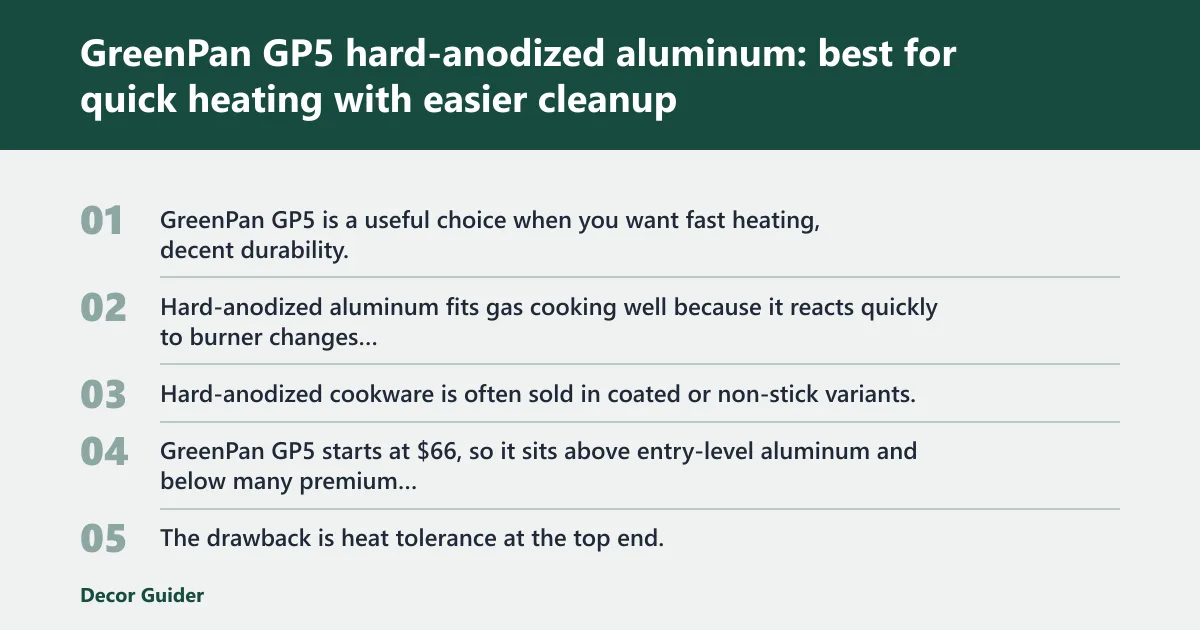
GreenPan GP5 hard-anodized aluminum: best for quick heating with easier cleanup
- Superior heat distribution and retention
- Easy-to-clean enamel resists staining and chipping
- Tight-fitting lid circulates steam for cooking
GreenPan GP5 is a useful choice when you want fast heating, decent durability, and easier cleanup than bare metal options. Hard-anodized aluminum fits gas cooking well because it reacts quickly to burner changes and does not feel as slow or heavy as cast iron.
Hard-anodized cookware is often sold in coated or non-stick variants, which helps with eggs, fish, and low-oil cooking. GreenPan GP5 starts at $66, so it sits above entry-level aluminum and below many premium stainless sets.
The drawback is heat tolerance at the top end. Coated aluminum is not the best fit for repeated empty preheating over large flames, and exterior finishes can show wear or discoloration if the pan is exposed to too much direct flame.
GreenPan Valencia Pro starts at $59, which puts this category squarely in the midrange for buyers who want easier cleanup without giving up fast response.
Where anodized aluminum fits better than stainless
Choose anodized aluminum when you value speed and light handling more than oven abuse or maximum durability. It heats faster than many stainless pans and is often friendlier for low-to-medium gas settings.
It is less ideal when you need a pan for repeated high-heat searing or long oven finishes.
Coated versus uncoated versions
Coated versions offer easier release, while uncoated anodized pans rely more on oil and technique. Both can be good everyday options, but the coating changes how much direct flame abuse the pan can take.
If cleanup is your top concern, the coated version is more convenient, provided you keep heat moderate.
Heat limits and finish wear
At very high temperatures, coatings can wear faster and the exterior finish can darken or stain. Gas flames can lick up the sides, so oversized burners are harder on this type of cookware than on plain stainless.
Use controlled preheating and avoid leaving an empty coated pan on a high flame for long periods.
What to look for in a flat base
A flat base matters because it keeps more of the pan in contact with the grate and helps avoid hot spotting. A thin, bowed base can exaggerate the flame’s center heat and create uneven browning.
If the pan does not sit squarely, it will usually disappoint on gas even if the marketing copy looks strong.
HexClad hybrid nonstick pans: best for low-stick cooking at moderate heat
HexClad is the best fit here for buyers who want easier release than stainless and better gas compatibility than fragile bargain nonstick. The hybrid surface and tri-ply aluminum core make it more plausible for everyday stovetop use, especially for eggs, fish, and quick sautéing.
Its appeal is convenience: easier cleanup, glass lids in the set, and a surface meant to split the difference between nonstick and metal durability. The product data also notes a laser-etched hexagonal hybrid nonstick surface and a tri-ply aluminum core for even heating.
The drawback is that hybrid or ceramic-style coatings still have heat limits. High flame use can shorten coating life, and any nonstick surface still benefits from moderate heat rather than long empty preheats.
For buyers prioritizing low-stick cooking, it is a strong answer, but not a substitute for cast iron or stainless when you want maximum abuse tolerance.
What high-heat tolerance actually means here
High-heat tolerance in coated cookware means better resistance than bargain nonstick, not unlimited flame exposure. The safer interpretation is that the pan can handle practical gas cooking, not repeated burner-max searing.
That difference matters when you are deciding between an easy-clean pan and a true high-heat searer.
Why base flatness matters on gas burners
A flat base keeps the pan from wobbling over the grate and helps reduce uneven heat pickup at the center. That is especially important for hybrid nonstick, because any tilt can make coated cookware feel less controlled.
Flatness also helps with safety when you are sliding food or using a lid.
PFOA-free claims and coating limits
PFOA-free claims address one chemical concern, but they do not make a coating immune to wear. Scratches, overheating, and metal utensil abuse can still shorten usable life.
Use this category for convenience, not for the harshest flame work.
When to choose this over traditional nonstick
Choose it when you want lower sticking, easier cleaning, and slightly better durability than very cheap nonstick pans. It is a better gas-stove compromise than flimsy coated cookware with thin bases.
If you mostly sear hard and clean less often, stainless or carbon steel is the better fit.
Gas-stove cookware failure cases: what to avoid
Gas burners reward flat, thick, stable cookware. Thin bases, soft handles, and weak coatings fail quickly because the flame concentrates heat in the center and can wrap around the sides, leaving hotspots, scorch marks, and bent bottoms.
Thin bases and hot-spot scorching
Thin cookware overheats at the center before the rest of the pan catches up. That creates burnt middles, pale edges, and food that cooks unevenly across the surface.
If the pan feels light enough to bend easily, it is usually a weak match for serious gas heat.
Warping from rapid heat changes
Thermal shock is a real risk when a hot pan meets cold water or a cold sink. Thin pans are the most likely to warp, which then hurts grate contact and cooking consistency.
A warp-resistant base gives you better contact and fewer wobble problems over time.
Handle overheating and poor balance
Gas flame can heat handle tangs and rivets faster than many shoppers expect. Poor balance also makes the pan harder to lift safely, especially when it is loaded with food.
Look for riveted handles, a helper handle on larger pots, and a shape that stays comfortable during long cooks.
Exterior discoloration and flame staining
Open flame often leaves discoloration on exposed metal and dark soot marks on lighter finishes. That is cosmetic on some pans, but it can look bad fast and may make maintenance more annoying.
Dark or flame-resistant exterior finishes hide wear better than polished light finishes.
Say your burner is a large center burner and you are using a 12-inch pan. If the base is too small, the flame wraps around the sides, the handle warms quickly, and the center starts browning before the edges catch up. The fix is a thicker, flatter pan with a better size match to the burner.
Suppose you switch a hot skillet from high flame to a cold sink rinse. A thin pan can twist or rock afterward, while a thick base is more likely to stay flat. That is why gas cooks should think about thermal shock before they think about looks.
Which one should you buy
Start with stainless-clad if you want one pan for most gas-stove tasks. Choose cast iron for the strongest searing and longest heat retention, carbon steel for lighter high-heat cooking, and coated aluminum when easy cleanup matters more than maximum flame tolerance.
Best budget pick: Lodge Cast Iron starts at only $8.90, so it is the lowest-cost path to serious gas heat. It is heavy and slower to heat, but it is hard to beat for value.
Best pick for searing: Cast iron or carbon steel. Cast iron gives the most heat retention; carbon steel gives faster response and easier handling.
Best pick for low-maintenance cleanup: A hard-anodized or coated pan such as GreenPan GP5 or GreenPan Valencia Pro, as long as you keep the flame moderate and accept coating limits.
Best pick if you want one set for most jobs: A stainless-clad set such as All-Clad D3 or a clad option with a thick, flat base. If you want a premium high-heat stainless route, All-Clad D5 is a 5-ply build and the 5-Ply 10-Piece Cookware Set handles up to 600℉.
For a simple buying rule, match the material to the job. Use stainless for sauces and daily cooking, cast iron for steady searing, carbon steel for quick-moving high heat, and coated pans for easier cleanup when you are willing to keep the burner lower.
Frequently asked questions
what are the best pots for gas stoves
The best pots for gas stoves are thick, flat-bottomed stainless-clad or enameled cast iron pieces that sit securely on the grate. Look for a stable base, even wall thickness, and a lid that fits well. For sauces and soups, stainless usually gives the best balance of durability and response.
what kind of pans are best for gas stoves
The best pans for gas stoves are stainless-clad, cast iron, carbon steel, and quality hard-anodized aluminum. Each handles open flame differently, but all should have a flat base and enough thickness to resist warping. Thin, flimsy pans tend to scorch in the center and disappoint at the edges.
what’s the best cookware for a gas stove
The best cookware for a gas stove is cookware that matches your heat style. For most people, stainless-clad is the most versatile choice. If you cook at very high heat often, cast iron or carbon steel is better. If cleanup matters most, a coated pan may fit better.
what cookware material is best for high heat on gas stoves
Cast iron is the most heat-tolerant option, followed closely by carbon steel for faster response. Stainless-clad cookware is excellent for high heat too, especially when it has a thick aluminum or copper core. Coated pans are better kept in the moderate-heat zone to protect the finish.
are stainless steel pans good for gas stoves
Yes, stainless steel pans are very good for gas stoves, especially when they are fully clad and have an aluminum or copper core. They resist warping, spread heat more evenly than thin metal pans, and handle oven use well. The main requirement is using the right flame size and preheating sensibly.
can you use cast iron on a gas stove
Yes, cast iron works very well on a gas stove because it handles open flame, holds heat, and resists warping. It is a strong choice for searing and steady cooking. The downsides are weight, slower heating, and the need for seasoning and dry storage.
what pans should not be used on a gas stove
Thin pans, single-layer stainless, cheap nonstick, and warped cookware are the main pans to avoid on gas. They heat unevenly, scorch at the flame center, and often wobble on grates. If a pan flexes easily or rocks on a counter, it is usually a poor match.
what is the best nonstick cookware for gas burners
The best nonstick cookware for gas burners is a coated pan with a flat base, sturdy handle, and a heat limit you can respect. Ceramic-coated and higher-quality hybrid styles are better bets than cheap bargain pans. Keep the flame moderate, because repeated high heat shortens coating life.
Products related to this article
Sponsored / affiliate links. As an Amazon Associate I earn from qualifying purchases. I may earn additional commission from eligible campaigns.