Meal Prep Container Size Chart
For most meal prep, a common rule of thumb is to use 2-cup containers for small sides, 3-cup containers for single-person main meals, and 4-cup containers for larger portions. Choose one size up when food includes rice, stew, or fruits with syrup. Wrong sizing wastes fridge space, creates spills in bags, and leaves meals that look underfilled or dry out fast. This guide gives a meal prep container size chart matched to portions, bag fit, and storage needs.
Container size recommendations by meal type


The best starting point is to match the container to the meal, then check the bag or shelf space. Meal prep containers come in sizes from small snack cups to large batch boxes, and they are made in plastic, glass, and BPA-free plastic. Rectangular shapes usually stack and pack better than round ones, and airtight or leak-proof lids are worth prioritizing.
| Meal type | Target portion | Recommended capacity | Preferred shape | Recommended material | Best use case for Ramadan prep |
|---|---|---|---|---|---|
| Breakfast or suhoor side | Small side dish, fruit, yogurt, or a light grain portion | 8–17 oz | Round or rectangular, depending on bag shape | Plastic or BPA-free plastic; microwave-safe if reheating | Dates, chopped fruit, oats, or a small portion that does not need much headroom |
| Snack | Single snack portion | 16 oz about 2 cups, or a similar snack-size range | Rectangular | BPA-free plastic or glass | Nuts, cut fruit, hummus, or a small dip with vegetables |
| Lunch | Single-person main meal | 24–32 oz; 24 oz is about 3 cups | Rectangular | Microwave-safe plastic or glass | Rice, chicken, vegetables, or a curry that needs stable stacking |
| Dinner | Larger single meal | 32 oz to 48 oz; 48 oz is about 6 cups | Rectangular | Glass for reheating, or freezer-safe plastic for batch prep | Heavier iftar mains, stews, baked dishes, or meals with sauce |
| Family batch | Multiple servings | 32–56+ oz | Rectangular or divided tray | Glass or freezer-safe plastic | Bulk rice, soup, stew, or mixed components for several people |
Snack portions and small containers
Use a small container when the goal is portion control, not a full meal. For snacks, about 8–16 oz usually keeps portions compact without wasting space. A 16 oz container is about 2 cups, which suits nuts, chopped vegetables, fruit, or a small cold side that should stay separate from a main dish.
That often leaves a half-empty box that tips in a lunch bag. Smaller containers also help with meal prep because lighter portions are easier to separate than larger mains.
Lunch portions and standard containers
For single-meal portions, 24–32 oz is the most useful range. A 24 oz container is about 3 cups, and a 32 oz container may fit many standard lunch bags, depending on the brand and dimensions. This is the size range that works well for rice dishes, protein portions, and mixed vegetables.
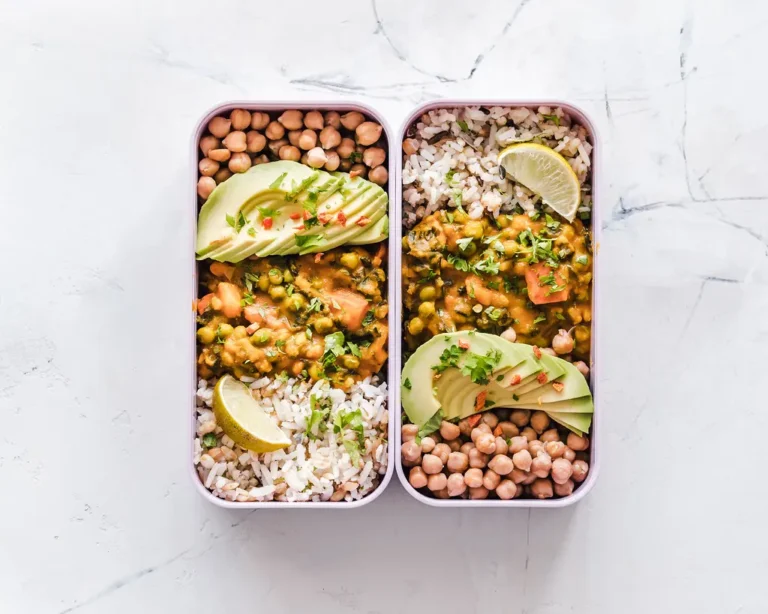
If you pack rice, grilled chicken, and a small vegetable side in a 32 oz rectangle, you usually still have room for the lid to close without pressing the food flat. If the meal includes sauce or syrup, choose one size up so the food does not sit against the lid.
Dinner portions and larger containers
Larger portions often need more room than smaller ones, especially when the meal includes stew, soup, or a layered dish. A 48 oz container is about 6 cups and gives enough space for a larger portion or two smaller servings. For family cooking, 32–56+ oz is the more practical range.
Use larger containers when you want fewer boxes in the fridge. That matters when batch cooking often means storing several meals at once. A single-compartment container is usually better than a divided tray for saucy dishes and rice-based mains.
Family batch prep and bulk sizes
Bulk cooking needs space for volume and for easy stacking. Family portions usually work better at 48 oz or larger, especially for soups, pasta, rice, and stews. If you are portioning for more than one person, a larger, rectangular container usually stores better than several small round ones.
Choose larger sizes when the goal is to serve from one box later, not to carry an individual lunch. That reduces clutter in the freezer and helps you portion the meal after reheating rather than before.
What container size fits each meal?
Match the container to the food format, then confirm that the lid closes without compressing the top layer. For small meals, smaller containers keep yogurt, fruit, oats, and eggs separate. For larger mains, a 24–32 oz container usually fits a single main meal, while family portions need 48 oz or more depending on the dish.
Suhoor portions
Suhoor often works best in small to mid-size containers because the meal is usually lighter and more mixed. Think fruit, dates, oats, boiled eggs, or a small grain dish. A 16 oz container fits many of these items well, and 8–16 oz covers the most common breakfast-and-snack range.
Iftar portions
Iftar mains often need the 24–32 oz range because the meal may include rice, protein, and a side vegetable. Use a larger box if the dish has sauce or broth. A 32 oz container is the safer middle choice when you want one box that can handle many single-person main meals.
Side dishes and snacks
For sides, dips, and snack boxes, smaller containers reduce waste and keep texture better. A 16 oz size suits hummus, chopped vegetables, salad add-ons, or fruit. If you pack several small items together, use separate containers instead of one oversized box with empty space.
Compartmented trays versus single compartments
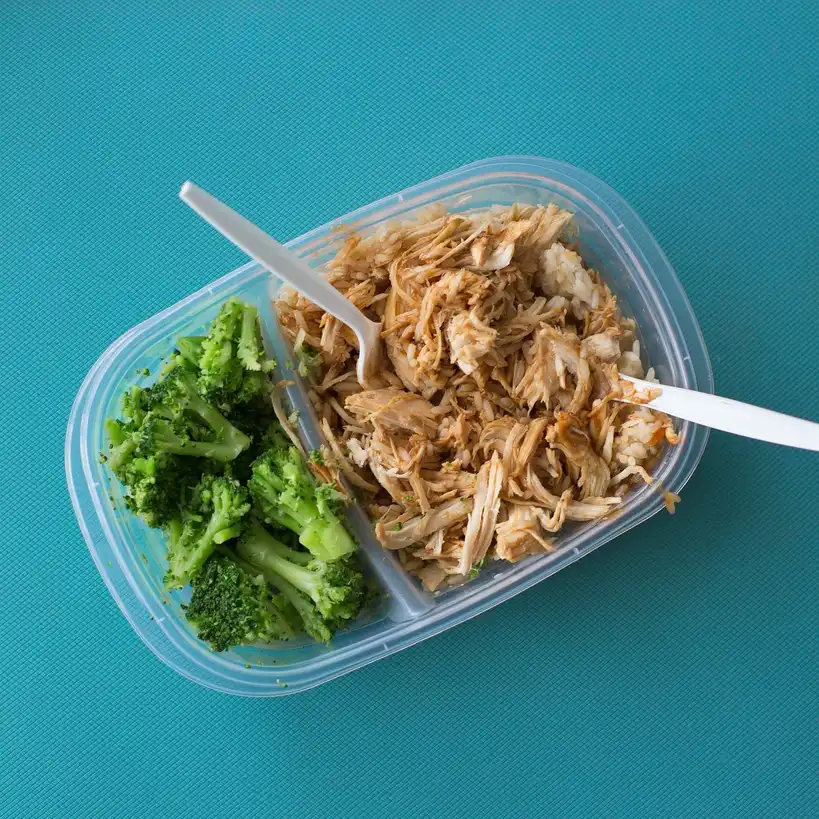
Compartmented trays help when you want separate food groups, but the sections can be too small for full meal prep. Three-compartment trays often work for snacks, fruit, and light sides, yet they can feel cramped for rice or stew. Single-compartment containers usually give better portion control for mains and family cooking.
How do you measure container dimensions?
Measure length, width, and height before buying, because volume alone does not tell you whether the box will fit in a bag or stack cleanly. The useful rule is to check the bag’s interior, not the outside. Leave about 0.5 in of slack per side so the container slides in without forcing the zipper or lid.
Length, width, and height
Outer dimensions matter because a tall, wide container may hold the right volume and still fail in a lunch bag. A 16 oz fit chart example is 5 × 4 × 1.5 in, a 32 oz example is 7 × 5 × 2 in, and a 48 oz example is 8.5 × 6 × 2.5 in.
Volume in cups, ounces, and milliliters
Volume helps you estimate food capacity. A 16 oz container is about 2 cups, a 24 oz container is about 3 cups, and a 48 oz container is about 6 cups. Use those figures as a food guide, then check dimensions so the container also fits your fridge shelf or lunch bag.
Why outer dimensions matter for bags and shelves
Two containers with the same volume can have very different footprints. One may be short and wide; another may be taller and narrow. For lunch bags, the footprint often matters more because ice packs, water bottles, and utensils take up the leftover space.
How to check stackability before buying
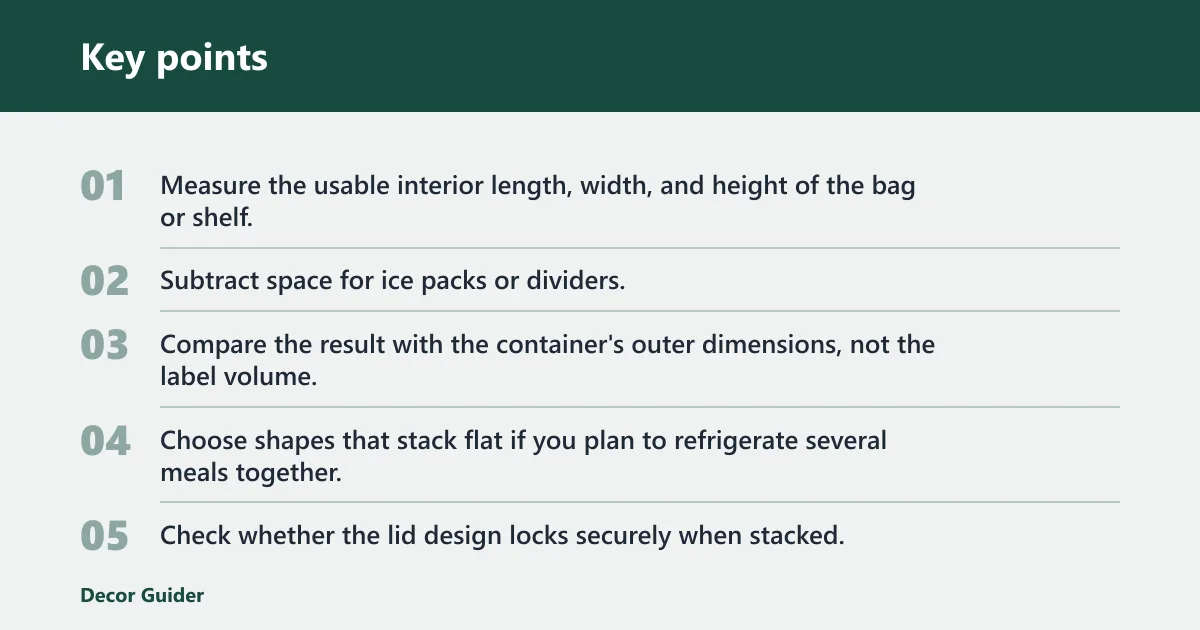
- Measure the usable interior length, width, and height of the bag or shelf.
- Subtract space for ice packs or dividers.
- Compare the result with the container’s outer dimensions, not the label volume.
- Choose shapes that stack flat if you plan to refrigerate several meals together.
- Check whether the lid design locks securely when stacked.
What size should you buy first?
If you want one starting size, a common first choice is a 32 oz rectangular container. It may fit many standard lunch bags, handles many single lunches, and gives you enough room for rice, stew, or protein without overpacking. After that, add smaller 16 oz boxes and larger 48 oz boxes as your meal plan needs change.
Best starter size for one person
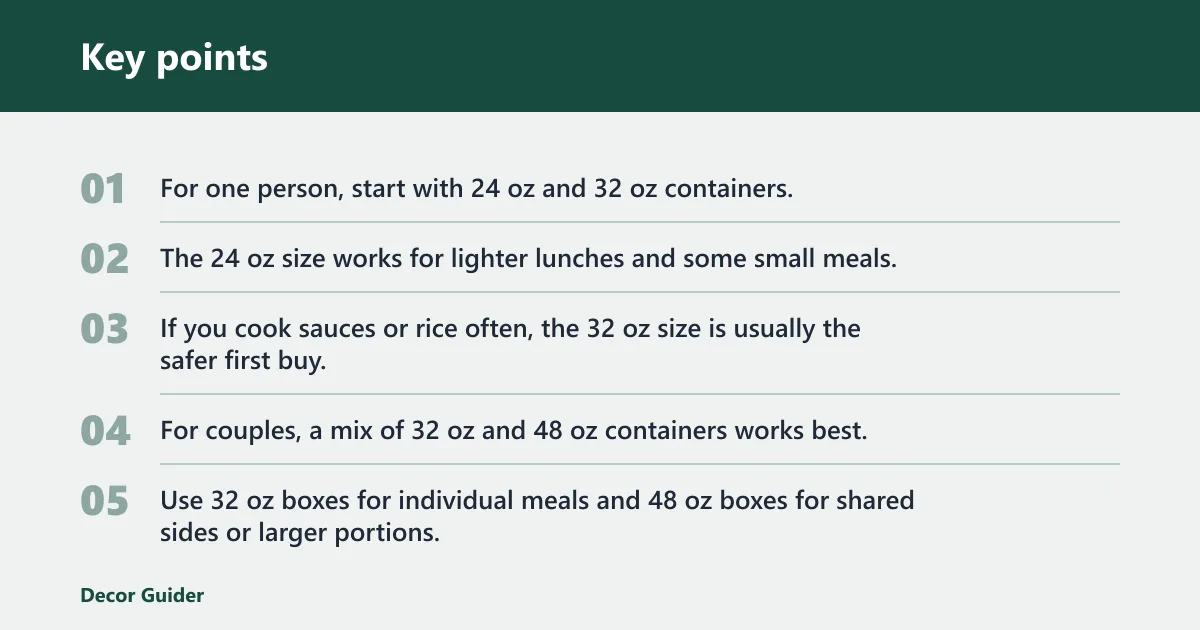
For one person, start with 24 oz and 32 oz containers. The 24 oz size works for lighter lunches and some small meals, while 32 oz covers many single-person main meals. If you cook sauces or rice often, the 32 oz size is usually the safer first buy.
Best starter size for couples
For couples, a mix of 32 oz and 48 oz containers works best. Use 32 oz boxes for individual meals and 48 oz boxes for shared sides or larger portions. That setup lets you portion one night’s meal and still store leftovers without overbuying many different sizes.
Best starter size for families
Families usually need at least one large container size for batch meals, plus several smaller boxes for sides and leftovers. Start with 48 oz for family dishes and 16 oz or 24 oz for snack items, sauces, and add-ons. That range handles both storage and daily packing.
When to add small and large containers
Add small containers when you start packing snacks, sauces, yogurt, or fruit. Add larger containers when your meals include rice, stew, or multi-serving dishes. If you have only one size, choose the 32 oz box first, then build around it based on what you actually pack most often.
Lunch bag fit and storage
Lunch bag fit is often the deciding factor, and lunch bags have less interior room than exterior measurements suggest. A compact bag can hold one 24 oz container plus a small snack box. A standard bag can hold one 32 oz lunch plus one 16 oz snack container. Larger bags give more slack for ice packs and upright bottles.
Small, standard, and large lunch bags
Small bags usually work best for one meal and one slim accessory. Standard bags suit a single main container and a small side. Large bags help when you pack multiple containers for a full day, snacks, and drinks. Always measure the inside space, not the outside fabric panel.
Clearance for ice packs
Ice packs reduce usable space fast. If a lunch bag looks roomy on the outside, the inside can still be tight once an ice pack is added. Leave about 0.5 in of slack per side so the zipper closes cleanly and the containers do not press against the cooling pack.
Flat stacking in the fridge or freezer
Flat-sided containers stack better in both the fridge and freezer. That matters when batch cooking often means lining up several meals at once. Rectangular containers make it easier to use shelf height efficiently and keep lids from wobbling.
Corner-space efficiency in rectangular containers
Rectangular containers use corner space better than round ones, which helps in lunch bags, fridge drawers, and freezer shelves. Round containers waste more edge space when you try to fit several boxes side by side. If storage space is tight, rectangular usually wins.
Round or rectangular containers
Rectangular containers usually fit bags and shelves better, while round containers can be useful for soups, dips, or foods that are easier to stir. For most meal prep, rectangular shapes stack better and waste less space. Round containers make sense when the meal is liquid-heavy or you want a simple bowl shape for serving.
Which shape stacks better?
Rectangular containers stack better because they sit flush against each other. That helps when you store several meals in one fridge shelf or pack a lunch bag with only a little extra room. Round containers can roll or leave small gaps that are hard to use efficiently.
Which shape uses fridge space better?
Rectangular shapes usually use fridge space better because they line up with shelf edges. They also make it easier to organize meal prep by day or meal type. If you prep several dishes, the square corners help you fit more boxes in one area.
When round containers make sense
Round containers make sense for soup, oatmeal, yogurt, and sauces. They are also practical when you want a bowl-like shape for eating from the same container. The tradeoff is that they usually waste more corner space in a bag or shelf.
When rectangular containers fit better
Rectangular containers fit better for rice, cut vegetables, protein, and layered meals. They also work better for lunches that need to sit beside an ice pack. If you are buying for meal prep and want the most flexible option, rectangular is the safer first choice.
Materials, lids, and seals
Material choice should match reheating, freezing, and carrying. Glass is useful for reheating and repeated use. Plastic and BPA-free plastic are lighter and easier to carry. Look for microwave-safe or freezer-safe labels when you plan to move meals between cold storage and reheating.
Glass versus plastic
Glass is a strong choice for home storage and reheating, especially when you want food to stay in the same box from fridge to table. Plastic is lighter and more practical for lunch bags. For meal prep, many households use both: glass for storage and plastic for transport.
BPA-free labels
BPA-free labeling is worth checking if you prefer plastic containers for regular meal prep. It does not replace the need to check whether the container is microwave-safe or freezer-safe. The label should tell you what the container can do, not just what material it is made from.
Microwave-safe and freezer-safe labels
Microwave-safe containers handle reheating without warping under normal use, and freezer-safe containers are meant for colder storage. If you batch cook for several days, choose containers that can move from freezer to fridge without stress on the lid or body. That reduces the need to transfer food later.
Locking lids, airtight seals, and silicone gaskets
Locking lids help prevent spills in a bag. Airtight or leak-proof seals are especially useful for stews, curries, and anything with sauce. Silicone gaskets add another layer of seal support, which matters when the meal will travel upright in a lunch bag or sit stacked in the fridge.
Frequently asked questions
What size plastic container for meal prep?
For most meal prep, a 32 oz plastic container is the best starting point because it may fit many standard lunch bags and works for many single meals. Add 16 oz boxes for snacks and 48 oz boxes for larger dishes. Choose BPA-free, microwave-safe, or freezer-safe plastic based on how you store the food.
What size containers for meal prep?
Most households need a mix of sizes, not one universal box. A practical set is 16 oz for snacks, 24 oz for lighter meals, 32 oz for single meals, and 48 oz for larger dishes or batch prep. That range covers a wide variety of meals and leftovers without forcing every meal into the same container.
What size meal prep container is best for lunch?
For lunch, 24–32 oz is the most useful range. A 24 oz container works for a lighter meal, while a 32 oz container handles rice, protein, and vegetables more comfortably. If your lunch bag is standard size, 32 oz is usually the best single pick.
How many ounces should a meal prep container be?
That depends on the meal. Use 8–16 oz for breakfasts and snacks, 24–32 oz for single meals, and 32–56+ oz for bulk or family portions. If you want one all-purpose size, 32 oz is the middle choice that covers many meals.
What meal prep container size fits in a lunch bag?
A standard 32 oz container may fit many standard lunch bags, depending on the shape and dimensions. A compact bag can hold one 24 oz container plus a small snack box, while a standard bag can hold one 32 oz lunch plus one 16 oz snack container. Measure the bag’s interior, not the outside, before buying.
How do I measure container dimensions before buying?
Measure the inside length, width, and height of the lunch bag or shelf, then leave about 0.5 in of slack per side. Compare that space with the container’s outer dimensions, because volume alone does not show how much room the box takes up. This step prevents poor bag fit.
What size meal prep containers work for family portions?
Family portions usually need 48 oz or larger containers, depending on the dish. Use 48 oz for many larger meals, and go bigger if you batch cook soup, stew, or rice for several servings. Rectangular containers are usually better because they stack and store more efficiently.
What container sizes should I buy first?
Start with one 32 oz container, then add 16 oz and 48 oz sizes as needed. The 32 oz box covers many meals, the 16 oz box handles snacks, and the 48 oz box supports larger portions or batch cooking. That set gives you the most flexibility without buying too much at once.
Products related to this article
Sponsored / affiliate links. As an Amazon Associate I earn from qualifying purchases. I may earn additional commission from eligible campaigns.