Ramadan Meal Prep Containers Cost Guide: Prices & Sizes
Ramadan meal prep containers can often be found in a lower-cost starter range, a mid-range family set, and a higher-cost heavy freezer-safe glass option; buy by household size rather than by lid count. The wrong size or material wastes food, leaks suhoor, and leads to buying twice. This guide breaks prices into budget bands, compares features, and gives a buying plan for singles, couples, and families.
How much do Ramadan meal prep containers cost?
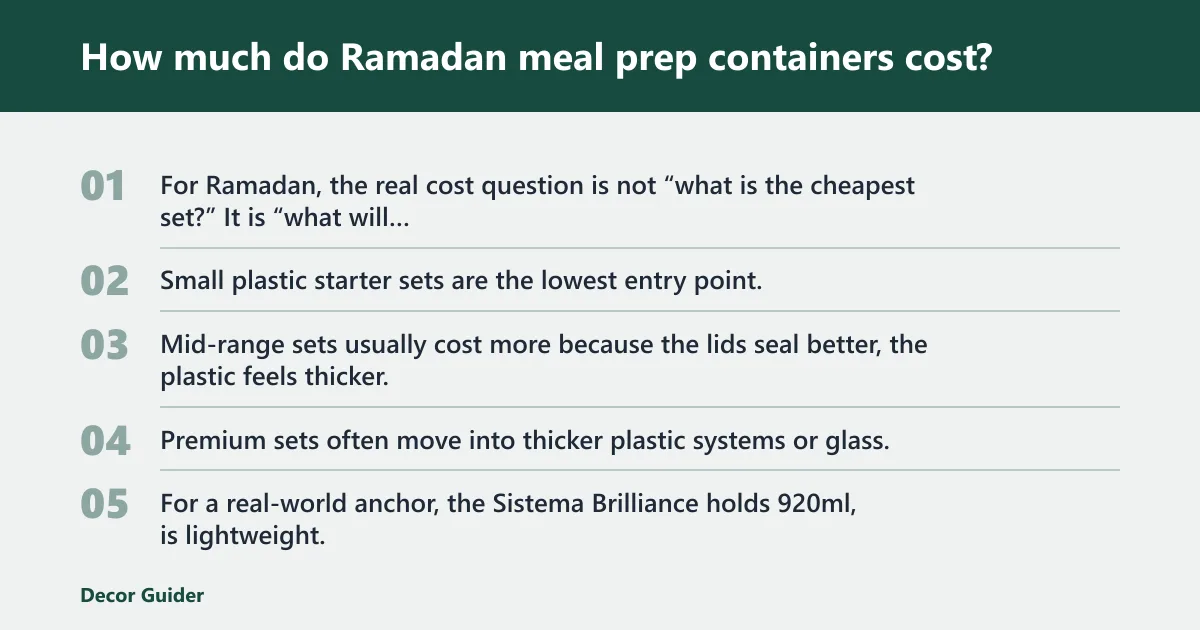


For Ramadan, the real cost question is not “what is the cheapest set?” It is “what will hold soups, rice, and leftovers without leaking, warping, or forcing a second purchase?” Budget plastic sets can start low per container, while premium leakproof or freezer-safe sets cost more upfront but can lower cost per meal when used daily.
Typical price ranges by set size and material
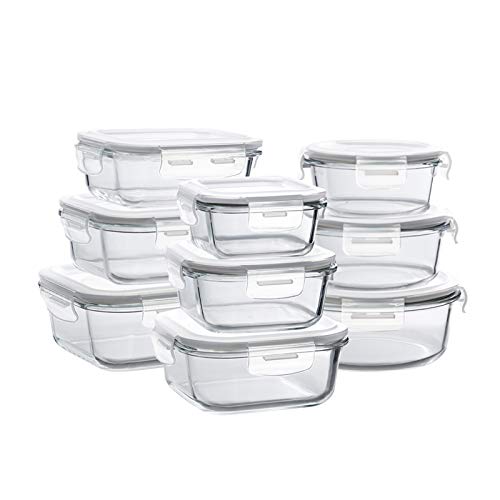
Small plastic starter sets are the lowest entry point, especially for singles or light suhoor prep. Mid-range sets usually cost more because the lids seal better, the plastic feels thicker, and the pieces hold up to repeated washing. Premium sets often move into thicker plastic systems or glass, where the price rises with durability and cold storage performance.
For a real-world anchor, the Sistema Brilliance holds 920ml, is lightweight, microwave safe, freezer safe, leakproof, and phthalate- and BPA-free. John Lewis listed it at £4.66, while Nisbets listed the same container at £7.59. That spread shows how retailer pricing can move even when the container spec stays the same.
What drives price: lids, seals, thickness, and brand
The lid often matters more than the box. Clip-lock lids, silicone seals, and tighter rim shapes cost more because they resist curry seepage and soup spills better than loose snap-on lids. Thicker plastic also costs more, but it usually resists staining and cracking better after repeated microwave use and top-rack washing.
Brand pricing also reflects storage design. The Joseph Joseph Nest Lock Set has five items, is designed to nest together and lock into place, and is leakproof, airtight, microwave safe, and freezer safe. Systems like that cost more because they save cupboard space and reduce lid hunting during busy Ramadan evenings.
Cost per container versus cost per meal
Per-container price is useful, but cost per meal is better. A $24 set that stores six Ramadan meals works out cheaper than a $14 set that fails after two weeks and needs replacing. If a container is used daily for suhoor or iftar leftovers, even a modest price difference can disappear over the month.
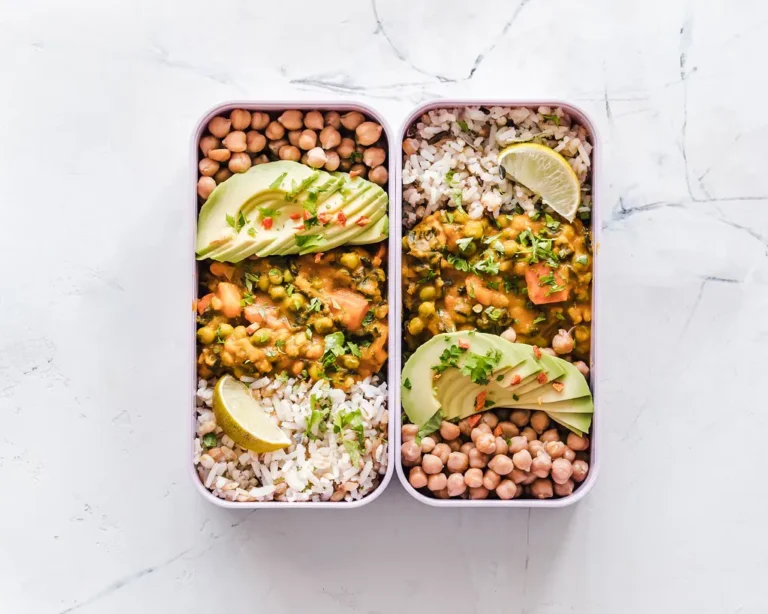
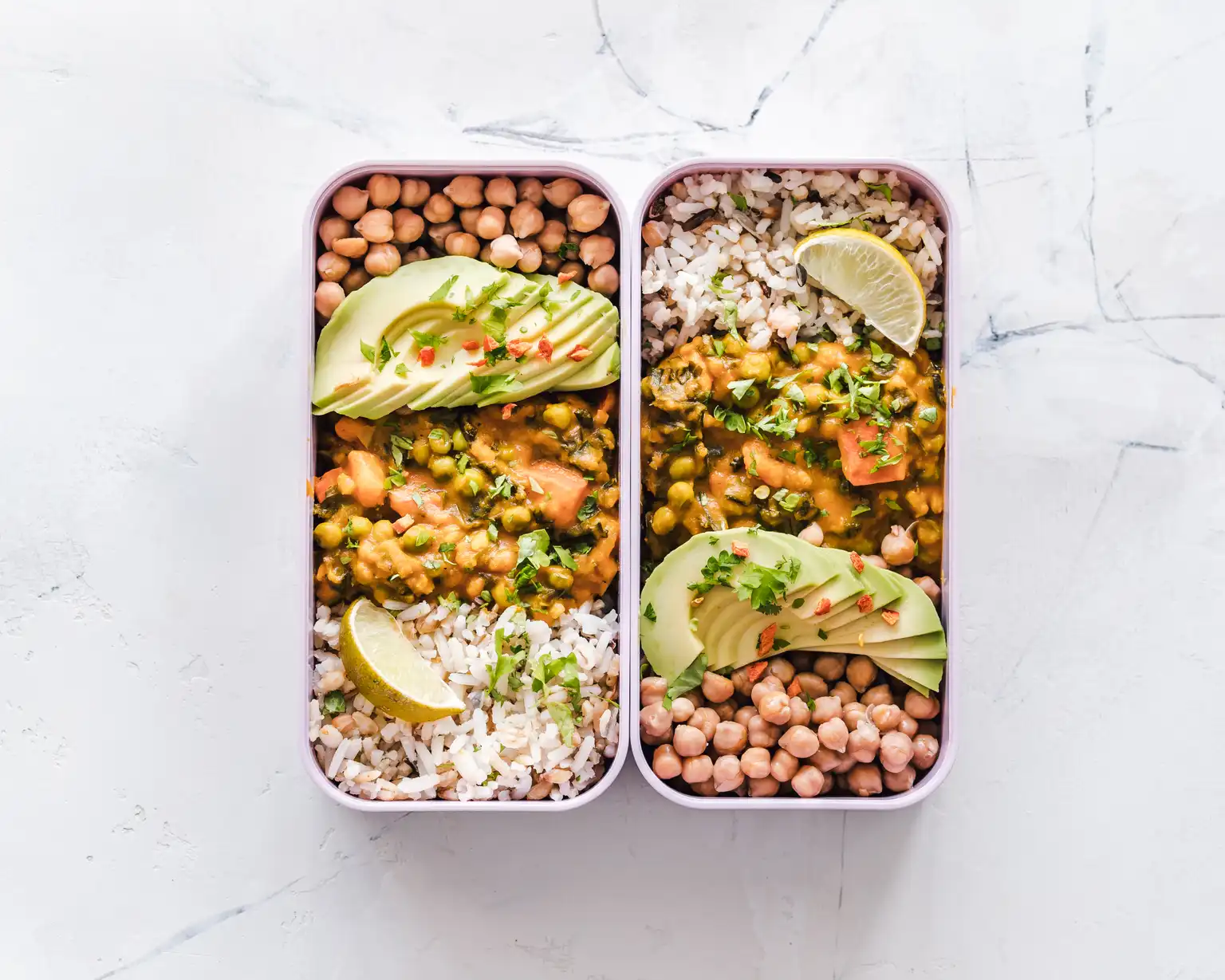
📊 The featured Sistema Brilliance meal prep container holds 920ml. Source: Bbcgoodfood.
Budget vs mid-range vs premium: what you actually get
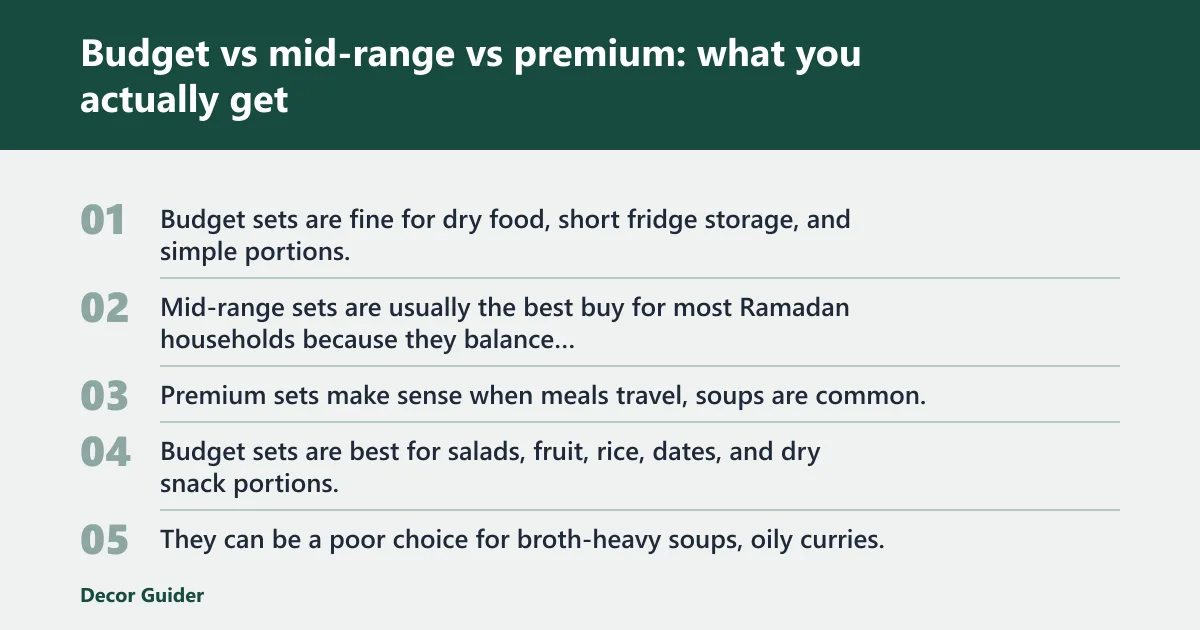
Budget sets are fine for dry food, short fridge storage, and simple portions. Mid-range sets are usually the best buy for most Ramadan households because they balance seal quality, washability, and durability. Premium sets make sense when meals travel, soups are common, or the containers will be frozen and reheated many times in the same month.
Budget sets: where they work and where they fail
Budget sets are best for salads, fruit, rice, dates, and dry snack portions. They can be a poor choice for broth-heavy soups, oily curries, or bag transport because weak clips and thin lids are the first failure point. Cheap plastic may also stain faster, especially with tomato sauce, turmeric, and lentils.
Mid-range sets: the sweet spot for most households
Mid-range containers usually give the best Ramadan value because they improve the two things that cause the most waste: leakage and broken lids. They are often strong enough for weekly meal prep, freezer backups, and lunchbox use without jumping into the cost of glass. For many households, this is the most practical spending tier.
Premium sets: which features justify the higher price
Premium is worth paying for when meals move between freezer, microwave, and bag transport. Leakproof or airtight lids matter most here. So does better sealing for curry, dal, soup, and marinade-heavy dishes. If a household cooks once and portions across several days, higher upfront cost can be easier to justify.
What size containers work best for suhoor and iftar?
Most Ramadan households need a mix of sizes, not one giant box. A single-meal container should suit one person’s suhoor or a standard iftar plate, while double-portion containers work better for family leftovers, batch cooking, and freezer meals. Small side containers are useful for dates, chutney, pickles, and sauces.
Single-meal and double-portion sizes in ml
For suhoor, a single-meal container in roughly the 700ml to 1,000ml range is often an easy fit for eggs, oats, yogurt bowls, rice, or a full plate meal. A double-portion box in roughly the 1,000ml to 1,500ml range is often a better fit for two servings of rice, curry, or cooked vegetables. The featured Sistema Brilliance at 920ml sits in the single-meal zone.
Side dish and sauce containers for dips, dates, and leftovers
Small containers are useful for dates, chaat, sauces, nuts, and soup add-ons. They also help keep wet and dry foods separate, which matters if a suhoor bag sits for hours. For hosts, side containers reduce waste because leftovers can be split into smaller, more reusable portions instead of one oversized tub.
When bigger containers waste space and food
Oversized containers can be counterproductive in Ramadan. They encourage overfilling, which makes sealing harder, and they waste fridge space when only half full. In a small kitchen, large square tubs also crowd shelves and leave lids scattered. It is usually better to buy a few correctly sized pieces than a set of oversized boxes.
Which features matter most for Ramadan meal prep?
The most useful Ramadan features are the ones that stop mess, protect texture, and save storage space. Airtight lids keep soup odors in check and help food stay fresher, while leakproof lids stop transport spills from curry and broth. Microwave and freezer safety matter for batch cooking. BPA-free plastic, stain resistance, and durability matter when containers are washed and reused often in a short period.
Airtight and leakproof lids for soups and curries
Leakproof and airtight are not the same, but both matter. Leakproof is about transport and spill control. Airtight is about keeping food fresher and reducing fridge odors. For iftar leftovers, soups, and oily curries, paying more for a better seal is often cheaper than losing a meal in a bag or fridge shelf.
Microwave, freezer, and dishwasher safety
Microwave safe and freezer safe are essential for Ramadan batch cooking. A container that moves from freezer to microwave without cracking saves time and reduces dish count. Dishwasher safe helps, though top-rack washing is often the safer choice for cheaper plastic lids because heat can deform them over time.
BPA-free plastic, stain resistance, and durability
BPA-free plastic is a common buying criterion for food storage, but it should be paired with real durability. Thin plastic may still warp or stain. Stronger plastic handles turmeric, tomato, and repeated reheating better. If a household expects daily use through the month, stain resistance becomes more valuable than a slightly lower sticker price.
Ramadan meal prep container cost calculator
This calculator uses practical Ramadan storage needs: suhoor, iftar, snacks, and a small freezer backup reserve. The aim is not to buy a warehouse of containers. It is to buy enough pieces to cover a normal rotation without paying for extras that sit empty all month.
| Household | Minimum container count | Budget spend | Mid-range spend | Premium spend | Budget cost per meal | Mid-range cost per meal | Premium cost per meal |
|---|---|---|---|---|---|---|---|
| Single | 6 | $12–$24 | $24–$42 | $45–$84 | $0.40–$0.80 | $0.80–$1.40 | $1.50–$2.80 |
| Couple | 10 | $20–$40 | $40–$70 | $75–$140 | $0.33–$0.67 | $0.67–$1.17 | $1.25–$2.33 |
| Family | 16 | $32–$64 | $64–$112 | $120–$224 | $0.27–$0.53 | $0.53–$0.93 | $1.00–$1.87 |
Singles: minimum container count, total spend, and cost per meal
A single person may need around six containers: some for suhoor rotation, some for iftar leftovers, one for snacks or dates, and one as a freezer backup. Budget sets make sense here if meals are mostly dry or short-stored. If soup, curry, or transport is common, moving to mid-range is usually worth it.
Couples: minimum container count, total spend, and cost per meal
Couples need more duplicates because one container is often in the fridge while another is being washed or reheated. Around ten pieces can be a practical floor for Ramadan. A mid-range set often gives the best mix of value and durability because it covers both weekday prep and weekend batch cooking.
Families: minimum container count, total spend, and cost per meal
Families need the most flexibility: multiple suhoor portions, larger iftar leftovers, snack boxes, and freezer backup meals. A larger piece count can be a useful baseline, and the exact number rises if the household cooks in batches for several days at a time. For families, buying slightly better lids is often cheaper than replacing leaked food.
How budget, mid-range, and premium options compare
Budget lowers the entry cost, but the price advantage fades if lids fail or the plastic stains quickly. Mid-range usually gives the strongest value per meal because it balances seal quality and storage efficiency. Premium earns its keep when the set will be reused often, washed hard, frozen frequently, or carried in bags.
How many containers do you need for Ramadan meal prep?
The right number depends on how many meals are prepped ahead, how often the household cooks, and whether leftovers are stored for the next day. A safe rule is to count one container for each meal in rotation plus a few backups. That usually covers suhoor, iftar, snacks, and freezer overflow without overbuying.
Counting suhoor, iftar, snacks, and backup freezer meals
A simple Ramadan count starts with one container per person for suhoor, one or two for iftar leftovers, a few small boxes for snacks and dips, and at least two freezer backups. Households that host guests should add extra side containers for dates, salad, and dessert portions.
Batch cooking for 3, 5, or 7 days at a time
Three-day batch cooking needs fewer boxes but more frequent washing. Seven-day prep needs more containers and better stacking. If the household cooks only twice a week, medium-capacity leakproof containers are usually better than many tiny ones. Bigger batch plans also benefit from nesting sets because lids and tubs stay organized.
Buying enough without overpaying for extras
Too many containers can be as wasteful as too few. Extra sets often sit unused, take over cupboard space, and hide missing lids. A better approach is to buy the exact mix needed for current Ramadan habits, then add two or four matching pieces if the system proves itself after the first week.
Choose budget containers if… / Choose premium containers if…
Budget containers are the better buy for light meal prep, dry foods, short fridge storage, and households that do not transport soups or curries often. Premium containers are worth the extra cost when leaks, freezer use, repeated reheating, and bag transport are part of the weekly Ramadan routine.
Choose budget containers if…
- Most meals are dry or low-liquid.
- Food stays in the fridge for a day or two.
- The containers are used mainly at home.
- The household is starting meal prep on a tight budget.
Choose premium containers if…
- Soups, stews, and curries are common.
- Meals are frozen and reheated often.
- Containers travel in a bag for work or mosque visits.
- The household wants fewer leaks and better lid life over the month.
When a mid-range set is the better buy
Mid-range is usually the safest middle path for Ramadan. It avoids the weak clips and flimsy lids that frustrate budget buyers, while skipping the higher cost of premium glass or heavy-duty systems. For most singles, couples, and small families, that is the most sensible spending tier.
Frequently asked questions
How much do Ramadan meal prep containers cost?
Starter sets usually begin around the low teens, family sets move into the mid-range, and premium freezer-safe glass pushes higher. The real question is whether the set matches the household’s meal count, storage space, and need for leakproof lids. A cheap set that leaks is expensive by Ramadan’s end.
What is a good budget for meal prep containers for Ramadan?
A practical budget is enough to cover the full Ramadan routine, not just one or two boxes. Singles can often stay at the lower end, couples usually need a mid-range budget, and families should plan more for larger counts and stronger seals. The goal is fewer replacements, not the lowest sticker price.
Are meal prep containers microwave and freezer safe?
Many are, but not all. Microwave safe and freezer safe are separate claims, and both matter for Ramadan batch cooking. A container that handles freezing but warps in the microwave is less useful than one that does both reliably. Top-rack washing also helps cheaper plastic last longer.
What size containers work best for suhoor and iftar portions?
Single-meal containers in the 700ml to 1,000ml range usually suit suhoor best, while double-portion containers around 1,000ml to 1,500ml work for shared iftar leftovers. Small side containers are useful for sauces, dates, and snacks. Bigger than needed often creates wasted fridge space.
Are leakproof containers worth paying more for?
Yes, when meals contain liquid, oil, or sauce, or when the container will travel in a bag. Leakproof lids reduce mess and food loss, especially during busy Ramadan evenings. If the contents are dry and stay home, budget lids are often fine. For curries and soups, the extra cost is easier to justify.
How many containers do I need for Ramadan meal prep?
Singles often need about six, couples around ten, and families closer to sixteen for a workable Ramadan rotation. That count should cover suhoor, iftar, snacks, and a few freezer backups. If the household batches meals for five to seven days, a few more pieces may be needed.
Products related to this article
Sponsored / affiliate links. As an Amazon Associate I earn from qualifying purchases. I may earn additional commission from eligible campaigns.