Date Serving Size Chart: How Many Dates Per Serving
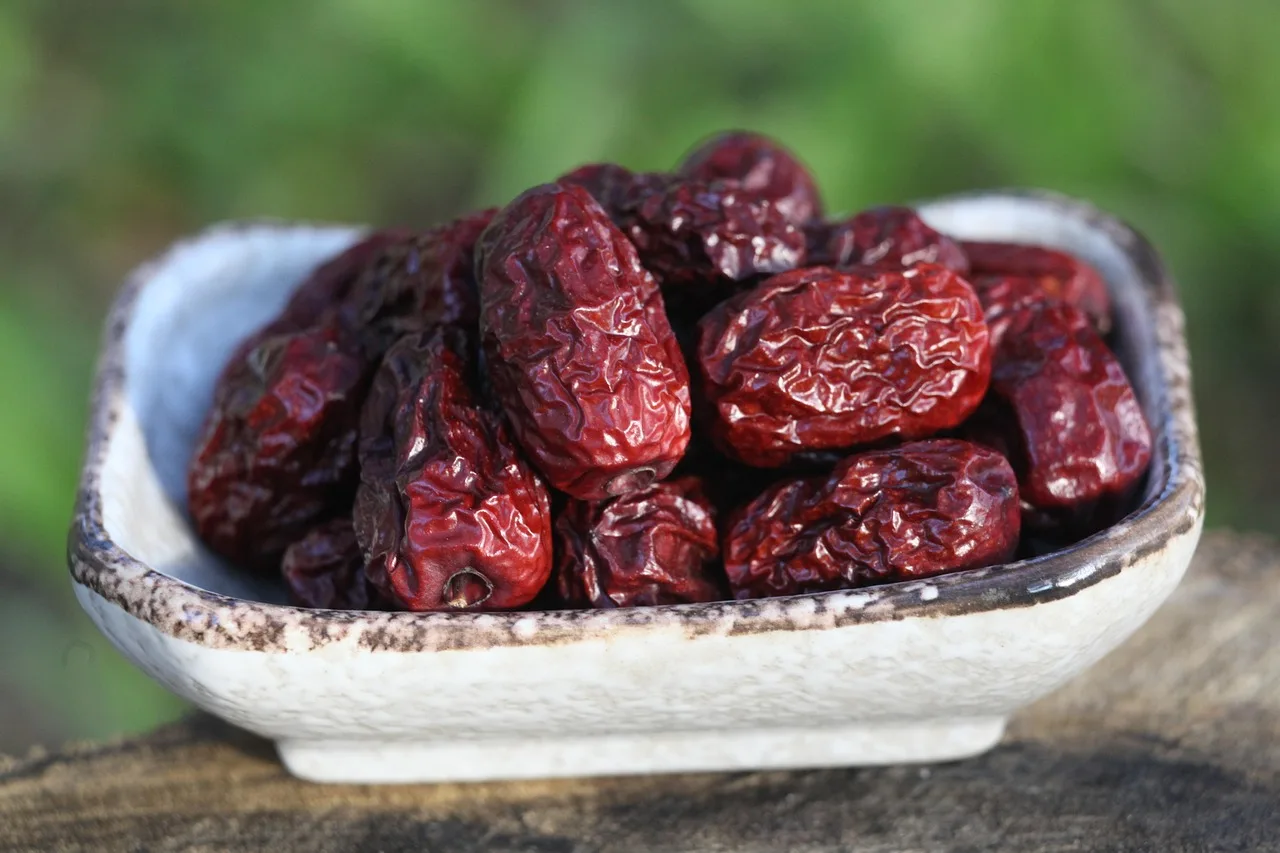
Plan on 2 to 3 dates per adult for iftar, 1 to 2 for a dessert tray, and 4 to 6 only if dates are the main sweet; use smaller dates to serve a few more per person. Serving too many can push sugar and calories far beyond what a nutrition label’s date serving implies. This guide turns date-label serving sizes into a practical chart by guest count, date size, and serving occasion.
What a date serving size means


A date serving size is a label-based amount, usually shown in grams and a fruit count, that helps you read calories and nutrients. It changes with date size and variety because one Medjool date weighs far more than several smaller dates, so the same gram target can mean very different counts on the plate.
Grams per serving
For dates, the serving size on a nutrition label is a reference amount, not a promise that every plate should look the same. A common label serving may land around 40 to 50 grams, but the exact amount depends on the package and the fruit size. Larger fruit means fewer dates per serving.
Count per serving
Count matters because guests do not eat grams; they take whole dates. A serving might be 1 large date, 2 medium dates, or several smaller dates. That difference is why a chart built for cake slices needs to be translated carefully for fruit portions.
Why the number changes by size
Date varieties vary in weight and calorie density. A large Medjool date has more flesh and more calories than a smaller, drier date, so the same label serving can look like one fruit in one bowl and three or four fruits in another. That is normal, not a labeling mistake.
How Nutrition Facts serving size works
Nutrition Facts serving size is a standardized reference amount used to list calories and nutrients. It is there to help you compare packages and estimate intake, but it does not always match the portion you would actually place on a guest’s plate. Read it as a planning tool, not a serving rule.
Why package servings may differ from your plate
Package labels often group fruit by weight, while home serving is usually based on occasion. A label serving may reflect a measured gram amount, but your iftar bowl may hold a handful, a coffee service may hold two dates per person, and a dessert tray may call for smaller counts. Those are different jobs.
How to read calories and nutrients
Use the serving line first, then the calories. If the label says one serving equals a certain gram weight, count how many dates make up that weight for the variety you bought. Then multiply if you plan to give two servings. That keeps the nutrition math tied to the fruit in front of you.
Date serving size matrix
This planning chart turns label logic into a kitchen guide for Ramadan portions. It uses average fruit weight to estimate how many dates make one serving, then translates that into practical counts for solo snacking, family iftar, and dessert platters. Treat it as a guide, not a fixed rule.
| Date variety | Average fruit weight | Estimated dates per 1 serving | Calories per serving | Solo snacking | Family iftar | Dessert platters |
|---|---|---|---|---|---|---|
| Medjool | 24 g | 2 dates | 132 calories | 1 to 2 dates | 2 to 3 dates | 1 to 2 dates |
| Large soft date | 18 g | 2 to 3 dates | 100 calories | 2 dates | 2 to 4 dates | 1 to 2 dates |
| Medium date | 10 g | 4 dates | 112 calories | 2 to 3 dates | 3 to 5 dates | 2 to 3 dates |
| Small date | 7 g | 5 to 6 dates | 100 calories | 3 to 4 dates | 4 to 6 dates | 2 to 4 dates |
Suppose you place Medjool dates beside coffee after iftar. Two dates per guest usually feels like a normal sweet bite because each fruit is large. Swap in smaller dates, and the same serving count can look too light unless you raise the count to match the smaller fruit size.
How many dates per serving?
There is no single count that fits every date. For large Medjool dates, a serving often looks like 1 to 2 fruits. For medium dates, 2 to 4 fruits is more realistic. For small dates, 4 to 6 fruits can still fit a label-style serving without overdoing the calories.
Large dates such as Medjool
Medjool dates are the easiest place to see why counts shift. They are large and moist, so one fruit can equal a substantial portion. For adults, 1 to 2 Medjool dates is a practical serving when dates are a side sweet or part of iftar.
Medium dates
Medium dates fit better into a simple snack portion. Two to four dates usually lands in the range of a normal serving, depending on the label weight and the rest of the menu. If soup and bread are already on the table, use the lower end.
Small dates
Small dates are the one case where count can rise without the portion becoming excessive. Four to six small dates can still reflect a standard serving size. That makes them useful for trays, coffee service, and mixed dessert spreads where guests take one or two at a time.
How many dates should you serve per person?
For most adults, a common rule of thumb is 2 to 3 dates at iftar, 1 to 2 dates for a dessert tray, and 4 to 6 only when dates are the main sweet on the table. If dates are paired with soup, bread, or dessert, move toward the lower end of the range.
One person at home
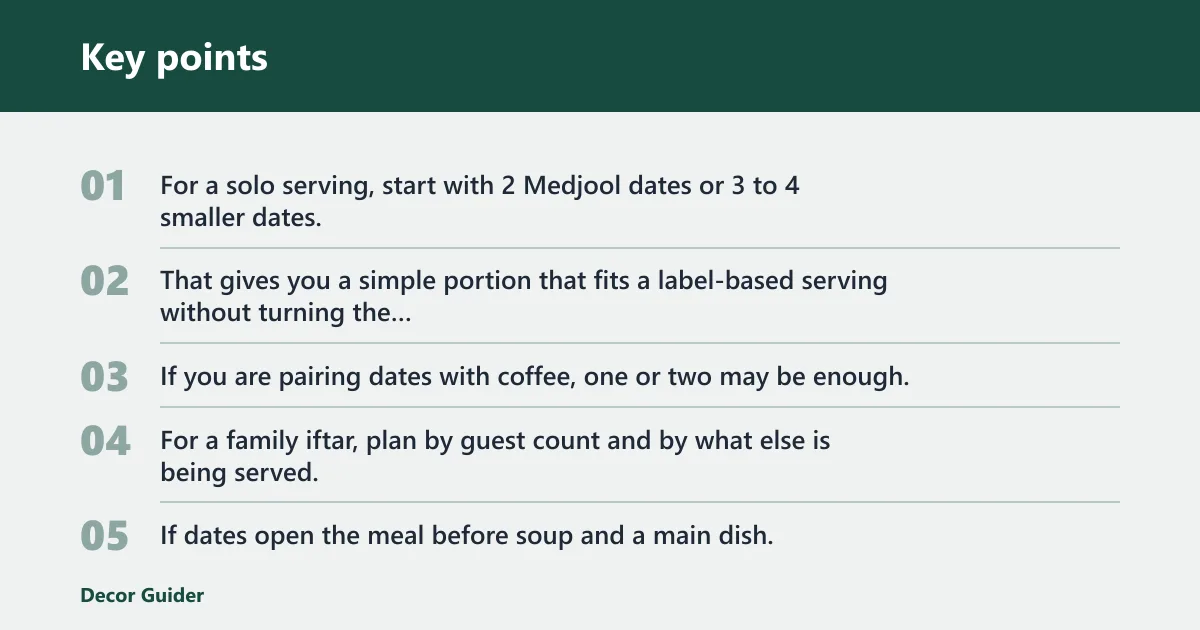
For a solo serving, start with 2 Medjool dates or 3 to 4 smaller dates. That gives you a simple portion that fits a label-based serving without turning the snack into a meal. If you are pairing dates with coffee, one or two may be enough.
Family iftar planning
For a family iftar, plan by guest count and by what else is being served. If dates open the meal before soup and a main dish, 2 dates per adult is a practical floor. If dates are the only sweet item, 3 dates per adult is a safer planning number.
Dessert tray planning
For a dessert platter, dates usually play a supporting role. Aim for 1 to 2 dates per person if there are pastries, fruit, or other sweets nearby. If the platter is date-heavy, especially with nuts or chocolate, keep the count lower so the tray does not run too sweet.
How to adjust portions for a Ramadan menu
Adjust servings based on what else is on the table. Dates plus water and soup call for a smaller count than dates served as the main sweet. The more foods you place around them, the less each date needs to do on its own.
- With water and soup: 2 dates per adult is usually enough to start iftar.
- With coffee or tea: 1 to 2 dates per person works for a light sweet bite.
- As part of dessert: 1 date per person may be enough if other sweets are present.
- As the main sweet: 3 to 4 dates per person is a more complete serving.
A common first-timer mistake is treating a date tray like a fruit bowl. A tray of large Medjool dates can disappear fast if every guest takes three, which may double the calories a label serving implies. Smaller varieties help with count, but they still need a portion limit.
- Check the date variety and its size.
- Look at the label serving size in grams.
- Estimate how many whole dates equal that weight.
- Decide whether dates are the main sweet or a side bite.
- Set the count per guest from the chart above.
- Increase or decrease the count if other desserts are served.
Quick portion calculator for dates
This quick planner converts guest count into fruit count. It is useful when you are shopping, filling a tray, or deciding how many dates to set out before iftar. The range matters because serving needs vary by variety, occasion, and what else is on the table.
Guest count to fruit count
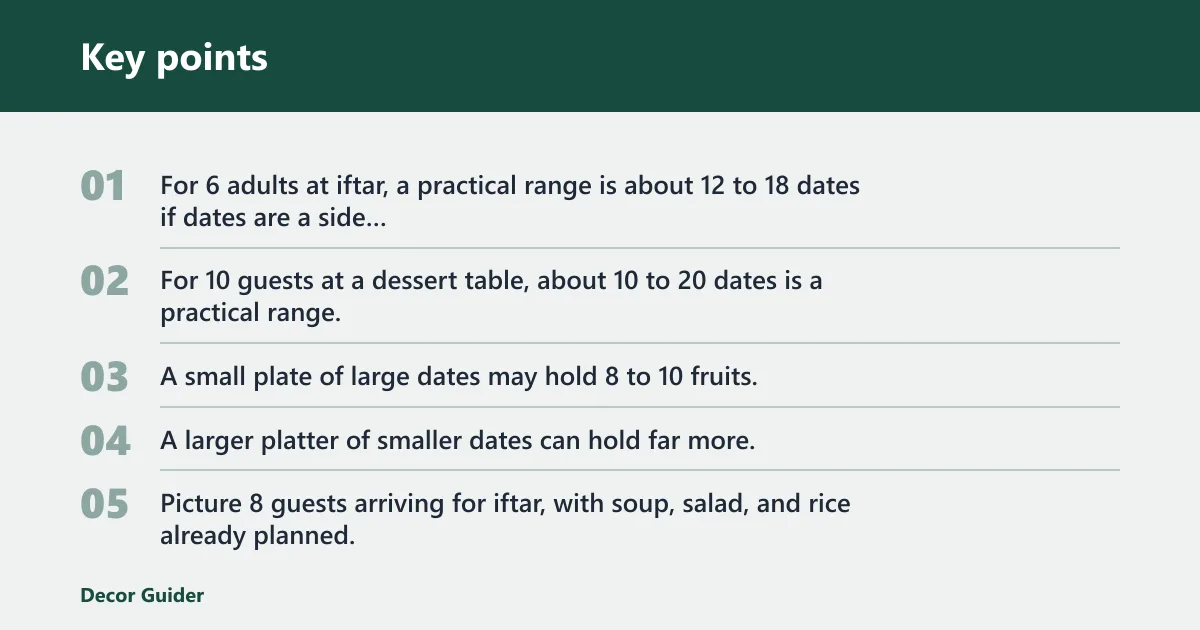
For 6 adults at iftar, a practical range is about 12 to 18 dates if dates are a side sweet, or about 24 to 36 dates if they are the main sweet. For 10 guests at a dessert table, about 10 to 20 dates is a practical range, depending on whether you expect one or two per person.
Tray size to servings
Use the tray as your visual limit. A small plate of large dates may hold 8 to 10 fruits, which is enough for 4 to 8 people at one each. A larger platter of smaller dates can hold far more, so the count on the tray matters more than the plate size.
Simple planning examples
Picture 8 guests arriving for iftar, with soup, salad, and rice already planned. Two Medjool dates per adult means 16 dates total, which fits a modest bowl. If the same group gets dates with coffee after dessert, cut that to 1 or 2 each and keep the rest for later.
Another common first-timer mistake is using cake-chart logic without changing the unit. A cake serving chart can be organized by 1 lb yielding 4 to 6 persons, 2 lb for 8 to 12 persons, 3 lb for 12 to 18 persons, 4 lb for 16 to 24 persons, 6 lb for 25 to 35 persons, and 8 lb for 35 to 45 persons. That format is useful as a planning shape, but dates need fruit counts and gram weights, not pounds of cake.
Frequently asked questions
How many dates is a serving size?
A serving size depends on the date variety and the label weight. For large Medjool dates, 1 to 2 fruits can be a serving. For smaller dates, the same serving can be 4 to 6 fruits. Always check grams first, then convert to count.
How many dates in a serving?
Most adults can think in ranges rather than one fixed number. A practical serving is often 2 to 3 dates for iftar, 1 to 2 for coffee service, and 4 to 6 only when the dates are small. The fruit size changes the count more than the occasion does.
What is a standard serving size for dates?
A standard serving size for dates is a label reference amount measured in grams, not a universal fruit count. That is why one package may show 2 dates per serving while another shows 5 or 6. The standard helps you read calories, not choose a tray layout.
How do you calculate serving size for dates?
Start with the label’s gram amount, then compare it with the average weight of the dates you bought. Divide the serving grams by the fruit weight to estimate count. If your dates are large, the answer may be 1 or 2; if they are small, it may be several more.
Are serving sizes realistic for dates?
They can be, but not always for the way people serve food at home. Nutrition Facts serving sizes are built for comparison, while Ramadan portions are shaped by the meal. A label serving may be smaller than a host would set out, especially on a dessert tray or coffee table.
How can I determine a serving size from nutrition facts?
Read the grams per serving first, then compare that number with the weight of one date in your package. If one date nearly fills the gram amount, that is your serving. If several dates are needed, use the count that matches the label and your occasion.
Products related to this article
Sponsored / affiliate links. As an Amazon Associate I earn from qualifying purchases. I may earn additional commission from eligible campaigns.