Pressure Cooker vs Slow Cooker for Ramadan Meals
Use a Pressure Cooker when dinner or suhoor needs to be ready fast, and use a Slow Cooker when you want hands-off cooking or a short, planned hold before sunset. Pressure cooking works by building steam pressure inside a sealed pot, which raises the boiling point and shortens cook time; slow cooking uses low, steady heat over several hours (USDA/FSIS; appliance manuals and major culinary schools commonly describe pressure-cooker meals in roughly 30–60 minutes and slow-cooker meals in roughly 4–8 hours). For Ramadan, the right choice depends less on “which is better” and more on whether you need speed, a long simmer, or a safe buffer before iftar.
| Decision factor | Pressure Cooker | Slow Cooker | Winner |
|---|---|---|---|
| Cooking speed | High-pressure steam cooks food fast; many dishes finish in about 30–60 minutes including cook time. | Uses low, steady heat over several hours; typical cooking time is about 4–8 hours. | Pressure Cooker |
| Iftar timing control | Better when you need a fixed finish time, as long as you budget for pressure release. | Better only if you can start early and the dish can sit on warm briefly after cooking. | Pressure Cooker |
| Hands-off cooking | More timing control, but it needs liquid, a sealed lid, and closer attention. | Low prep effort and set-it-and-leave-it convenience. | Slow Cooker |
| Batch cooking | Good for fast prep across several days, especially beans, grains, and shredded meat. | Excellent for meal prep when you can plan ahead. | Slow Cooker |
| Texture for Ramadan staples | Best for beans, rice, grains, soups, stews, and tough cuts; less forgiving for delicate vegetables. | Best for stews, soups, casseroles, roasts, and pulled meats; limited browning and more overcooking risk. | Pressure Cooker |
| Holding food until guests arrive | Keep-warm helps after food is fully cooked, but long warm time can dry some dishes or soften texture. | Can hold food after cooking, but extended warm time can soften vegetables and dry sauces. | Tie |
Speed vs hands-off cooking
The short answer: Pressure Cooker wins on speed and deadline control, while Slow Cooker wins on hands-off cooking and long, gentle braises. For Ramadan, that usually means Pressure Cooker for late starts and fixed iftar times, Slow Cooker for earlier starts and dishes that can tolerate a longer hold.


Head-to-head factors that matter most
Cooking time and pressure-release buffer
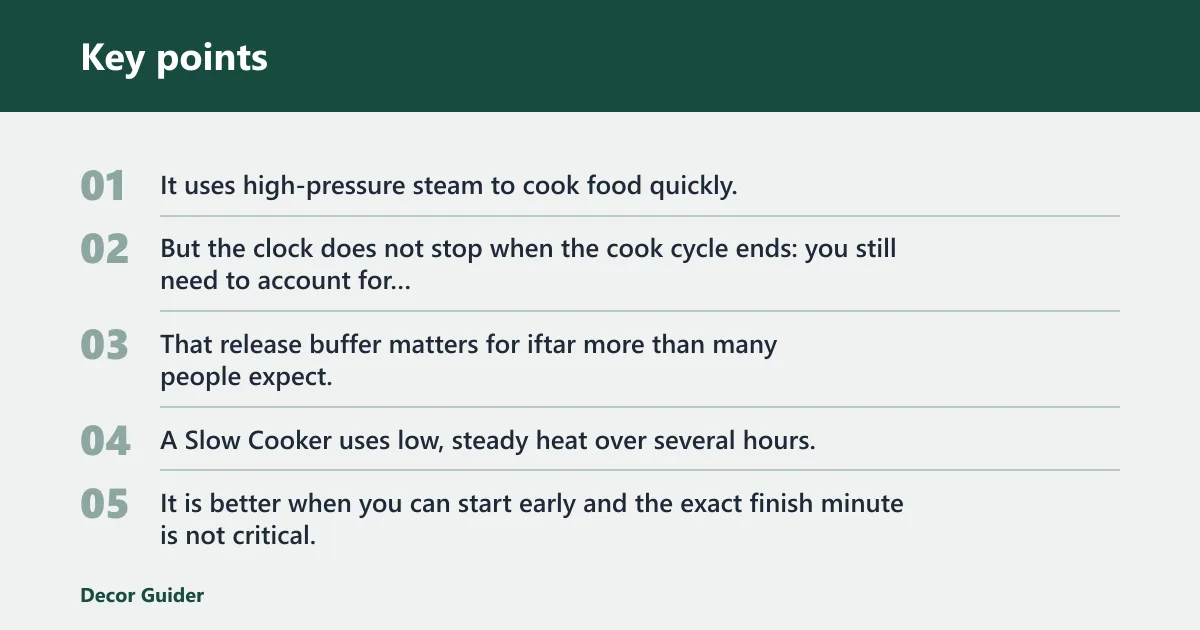
A Pressure Cooker is built for urgency. It uses high-pressure steam to cook food quickly, and a common working window is about 30–60 minutes for many dishes. But the clock does not stop when the cook cycle ends: you still need to account for pressure release before serving. That release buffer matters for iftar more than many people expect.
A Slow Cooker uses low, steady heat over several hours, with typical cooking time around 4–8 hours. It is better when you can start early and the exact finish minute is not critical.
Heat method, moisture, and texture control
A Pressure Cooker traps steam, so liquid matters and timing matters. It is often a strong fit for dried beans, lentils, chickpeas, brown rice, soups, and tougher cuts because pressure can tenderize them faster than stovetop simmering.
A Slow Cooker cooks with gentle heat and steady moisture, but it browns less and can overcook if left too long. That matters for Ramadan dishes that need to sit while people finish prayer, travel, or arrive late.
Holding food hot: safety vs quality
USDA/FSIS guidance is the key distinction here: keep-warm is for short holding after food is fully cooked, not for “rescuing” undercooked food. Food quality can decline before food safety does, so texture loss is a separate issue from safety. For best results, keep hot foods hot, but do not assume a long warm hold is harmless for rice, vegetables, or sauces.
Major appliance manuals and culinary education sources commonly advise using keep-warm only briefly and not treating it like a second cooking cycle. That is especially important for dishes that thicken, dry out, or turn mushy while sitting.
Dish-by-dish winners for 10 common Ramadan foods
Use this table as a practical menu filter. Check how much time you have before iftar, then match the dish to the cooker that protects the finish time and the texture best.
| Dish or component | Best cooker | One-line reason | Prep time available | Iftar deadline risk | Finish-time warning |
|---|---|---|---|---|---|
| Lentil soup | Pressure Cooker | Fast, dependable, and easy to finish on schedule. | Short to moderate | Medium | Build in pressure-release time or it may miss the first serving window. |
| Chickpea stew | Pressure Cooker | Best for dried or pre-soaked chickpeas when iftar is fixed. | Moderate | High | Do not start too late; chickpeas need a buffer if they need a little extra time. |
| Bean curry | Pressure Cooker | Handles dried beans better when the clock is tight. | Moderate | High | Use enough liquid and avoid a rushed finish that leaves beans firm. |
| Rice pilaf | Pressure Cooker | Fast and consistent for a fixed serving time. | Short | High | Rice should not sit on warm for long; texture degrades quickly. |
| Beef or lamb stew | Slow Cooker | Low heat suits long braises and forgiving timing. | Long | Low to medium | Plan to finish early enough that the warm hold stays brief. |
| Shredded chicken filling | Pressure Cooker | Fast, efficient, and easy to portion for wraps or rice. | Short to moderate | Medium | Overpressure can make the meat stringy; use a short cook window. |
| Short ribs | Slow Cooker | Long, gentle heat suits rich connective tissue. | Long | Low | Late starts do not fit fixed iftar times unless the recipe is already underway. |
| Brisket | Multi-cooker | Sauté first for flavor, then pressure cook and hold warm briefly in one appliance. | Moderate | Medium | Release time still matters; do not count the appliance’s “done” signal as serving time. |
| Stuffed peppers | Pressure Cooker | Faster than a slow bake when iftar is close. | Short | Medium | Add tender vegetables late if you want them to keep structure. |
| Dessert-style rice pudding | Slow Cooker | Gentle heat helps prevent scorching during a longer cook. | Long | Medium | Do not leave it on warm too long after the texture sets or it can thicken too much. |
Why the multi-cooker wins for brisket
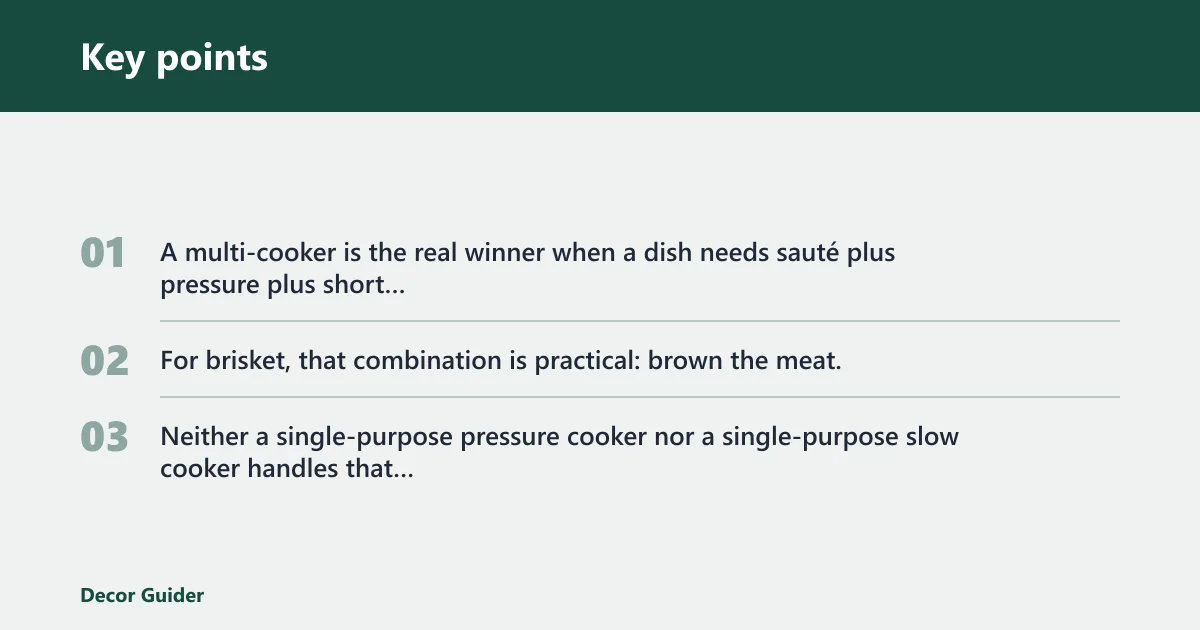
A multi-cooker is the real winner when a dish needs sauté plus pressure plus short keep-warm in one pot. For brisket, that combination is practical: brown the meat, pressure cook it to tenderize it, then hold it briefly without changing pans. Neither a single-purpose pressure cooker nor a single-purpose slow cooker handles that full workflow as well.
Suhoor vs iftar: which cooker fits each scenario?
For suhoor, Pressure Cooker usually fits better because it can turn grains, lentils, beans, or shredded fillings into a ready meal much faster than a Slow Cooker. For iftar, the best cooker is the one that matches the time left before sunset and leaves a pressure-release buffer or a short safe hold.
Suhoor scenarios
When suhoor needs to happen quickly, Pressure Cooker is usually the safer choice. It handles brown rice, lentils, and chickpeas better than an overnight slow schedule would.
If you need a filling for wraps before dawn, a Pressure Cooker can finish it in a short window; a Slow Cooker requires more planning and can leave grains or legumes too soft if held too long.
Iftar scenarios
For iftar, choose a Pressure Cooker when the dish is late, the menu is bean-heavy, or the meal needs to hit the table on time. Choose a Slow Cooker when you can start early and the dish can tolerate a broader finish window.
If the meal will be waiting, remember that keep-warm is a short holding tool after food is fully cooked. It is not a substitute for precise timing, especially with rice and vegetables.
Beginner and safety guidance
The safest beginner move is to match the appliance to the recipe and leave enough time before the meal must be served. Pressure cookers need liquid, sealing, and a release buffer; slow cookers need early starts and a realistic plan for how long the food will sit on warm.
Dried beans and chickpeas: soak or no soak?
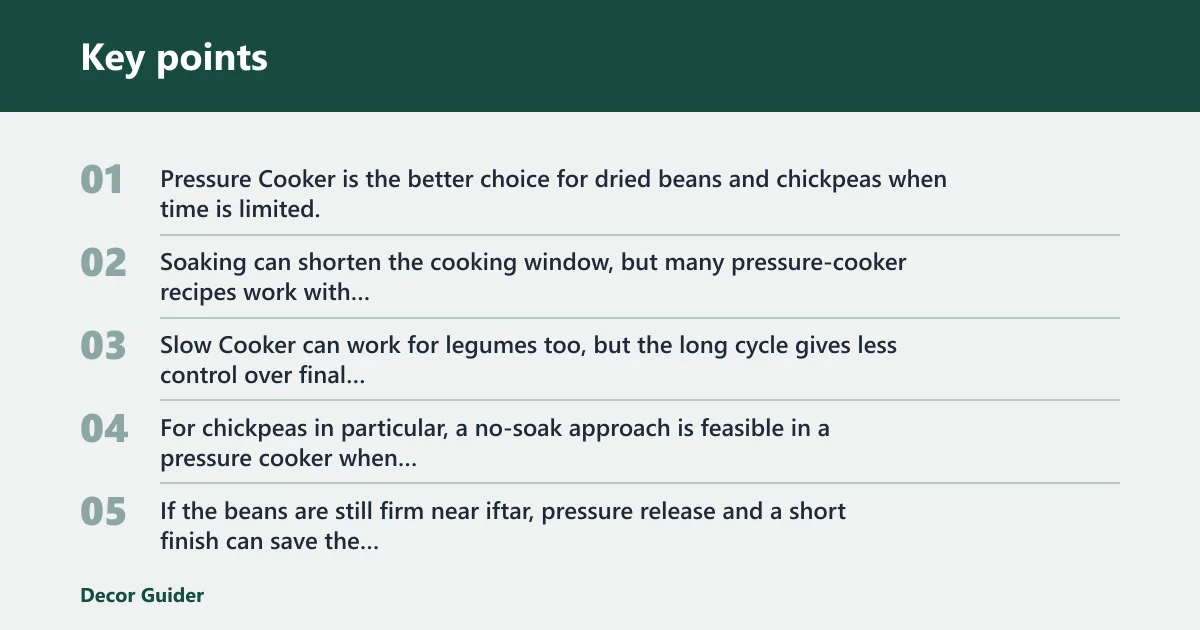
Pressure Cooker is the better choice for dried beans and chickpeas when time is limited. Soaking can shorten the cooking window, but many pressure-cooker recipes work with no-soak beans if the recipe is designed for it and you still leave enough time for release. Slow Cooker can work for legumes too, but the long cycle gives less control over final texture.
For chickpeas in particular, a no-soak approach is feasible in a pressure cooker when the dish is planned around the correct liquid amount and a realistic finish buffer. If the beans are still firm near iftar, pressure release and a short finish can save the meal; a slow cooker offers less timing control in that situation.
Vegetables should be added late when texture matters
In a Pressure Cooker, vegetables that you want to stay crisp-tender usually go in late or after the main cook cycle. In a Slow Cooker, vegetables can soften a lot during a long cycle, so add them later or cut them larger if structure matters.
Rice should not sit on warm for long
Rice is one of the clearest “finish now, serve now” foods. If it sits on warm too long, texture declines quickly and the grains can turn dry, sticky, or clumped. That is why a pressure cooker with a close finish time usually beats a slow cooker for rice dishes during Ramadan.
Simple Ramadan
Use this quick check before starting:
1) How much time is left before iftar? If it is less than an hour, choose the faster path.
2) Does the dish need a pressure-release buffer? If yes, start earlier than you think.
3) Is the dish rice, pasta, or vegetables that lose texture on warm? If yes, avoid a long hold.
4) Is the recipe stew-like and forgiving? If yes, Slow Cooker can work well.
5) Does the recipe need sauté plus pressure plus brief keep-warm? If yes, a multi-cooker is usually the best fit.
Frequently asked questions
Is a pressure cooker or slow cooker better for Ramadan meals?
Pressure Cooker is better when Ramadan timing is tight, especially for iftar and suhoor on a busy day. Slow Cooker is better when you can start early and want the meal to cook with little attention, then hold it only briefly before serving.
Can I use a pressure cooker for iftar dinner prep?
Yes. A Pressure Cooker is often the better choice for iftar prep because it can finish soups, lentils, beans, rice, and tough cuts in a short window. Just allow time for pressure release, since that changes the real serving time.
Can a slow cooker keep food ready for iftar without overcooking it?
It can, but only for a limited time and mainly for forgiving dishes like stew or braised meat. Food that stays on warm too long can dry out or soften too much, so the best plan is to cook early and hold only as long as needed.
Which cooker is better for beans, stews, and tough meat during Ramadan?
Pressure Cooker is stronger for beans and many tough cuts because it cooks fast and tenderizes well. Slow Cooker works very well for stews and long-cooked meat when you have hours to spare, especially for chuck roast, brisket, pork shoulder, short ribs, and lamb shoulder.
Does a pressure cooker save more time than a slow cooker?
Yes. Pressure Cooker is much faster, and many recipes finish in about 30–60 minutes compared with about 4–8 hours for a Slow Cooker. That speed matters most when you have a fixed iftar deadline or a short suhoor window.
Which cooker is safer and easier for beginner home cooks?
Slow Cooker is usually easier because it asks for less active timing, while Pressure Cooker needs more attention to liquid, sealing, and release timing. For beginners, the safer choice is the one that matches the recipe and leaves enough time before the meal has to hit the table.
Products related to this article
Sponsored / affiliate links. As an Amazon Associate I earn from qualifying purchases. I may earn additional commission from eligible campaigns.