Ramadan Meal Prep Storage Size Chart
A practical Ramadan prep setup is usually 2-cup containers for single suhoor or one main component, 4-cup containers for shared sides, and 8-cup containers for soups or stews. For most households, buy a mix of about 5 to 7 suhoor-size containers, several 16 oz leftovers containers, and a few 32 oz or family-size pieces for batch meals. Freeze the meals you want to rely on first so your fridge stays clear for the first 3 to 4 days.
- Buy 2-cup, 4-cup, 8-cup, 16 oz, 32 oz, and a few family-size containers to cover suhoor, iftar, leftovers, and batch cooking.
- Use 2-cup containers for single servings and 8 oz cups for toppings, sauces, and dry add-ins.
- Keep cooked meals in the fridge no more than 3 to 4 days, and refrigerate them within 2 hours of cooking per USDA guidance.
- Freeze soups, stews, curries, rice dishes, and stuffed pastries before Ramadan so you can thaw only what you need.
- Reheat leftovers to 165°F (75°C) before serving, and keep wet and dry foods separate whenever possible.
Matching portion size to container volume and storage method
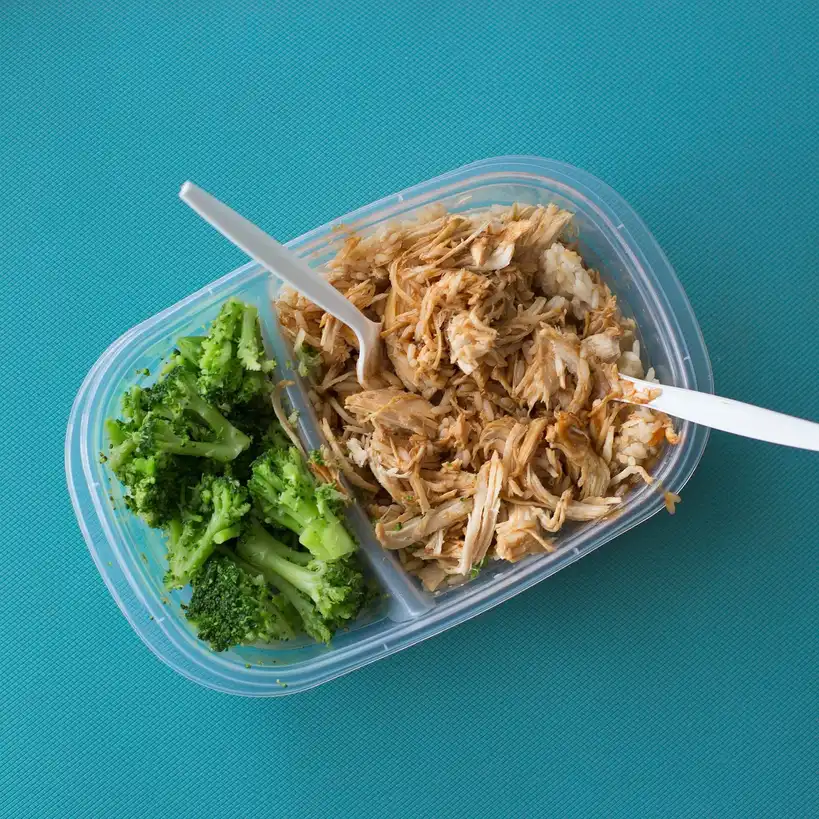


This chart matches meal type, portion size, container volume, shape, lid style, and storage method so you can pack the right amount the first time. It also separates fridge-ready meals from freezer-safe foods and keeps wet items away from dry ones where needed.
| Meal type | Portion size | Recommended container volume | Fridge or freezer use | Best food examples | Exact conversion | Container shape | Lid type | Meal component count | Best for adult or family portions |
|---|---|---|---|---|---|---|---|---|---|
| Suhoor, single serving | 1 to 1.5 cups | 2 cups / 16 oz | Fridge | Overnight oats, yogurt with fruit, eggs, toast with dip, smoothie base | 2 cups = about 473 ml | Round or tall jar | Leakproof airtight lid | 1 to 2 components | Adult |
| Suhoor, dry add-ins | Small topping pack | 8 oz | Dry storage or fridge | Nuts, seeds, chopped fruit, granola, sliced toppings | 8 oz = about 237 ml = about 1 cup | Small round cup | Snap-tight or screw-top lid | 1 component | Adult |
| Iftar starter | 2 dates, water, soup cup | 8 oz to 16 oz | Fridge | Dates, soup, broth, salad portions | 16 oz = about 473 ml = 2 cups | Small cup or bowl | Airtight lid | 1 to 2 components | Adult |
| Iftar main plate | 2 to 3 cups | 2 cups / 16 oz for one component, 4 cups / 32 oz for a full side | Fridge | Rice, chicken, curry, vegetables, lentils | 32 oz = about 946 ml = about 4 cups | Shallow square or rectangular | Tight-seal lid | 2 to 4 components | Adult or family side |
| Soup or stew batch | 4 to 8 cups | 8 cups / family-size | Freezer or fridge | Soup, stew, curry, dal, bean dishes | 8 cups = about 1.9 liters | Deep round or rectangular | Freezer-safe airtight lid | 1 component | Family |
| Rice dish batch | 2 to 4 cups | 4 cups / 32 oz | Freezer | Rice with vegetables, biryani-style dishes, pilaf | 4 cups = about 946 ml | Wide shallow rectangular | Freezer-safe airtight lid | 1 to 2 components | Adult or family side |
| Stuffed pastries | 4 to 6 pieces | 4 cups / 32 oz or flat freezer tray | Freezer | Samosas, spring rolls, pastry snacks | 32 oz = about 946 ml = about 4 cups | Flat tray or shallow box | Stackable snap lid | 1 component | Family snack tray |
| Family iftar side | 4 to 6 cups | Family-size | Fridge | Roasted vegetables, salad, cooked grains, fruit salad | 6 cups = about 1.4 liters | Shallow rectangular | Tight-seal lid | 2 to 3 components | Family |
| Biryani | 2 to 4 cups | 32 oz / 4 cups for 1 to 2 servings; family-size for larger batches | Fridge or freezer | Chicken biryani, beef biryani, vegetable biryani | 32 oz = about 946 ml | Wide shallow rectangular | Freezer-safe airtight lid | 1 component | Adult or family portion |
| Haleem | 1.5 to 3 cups | 16 oz to 32 oz | Fridge or freezer | Beef haleem, chicken haleem, lentil-based haleem | 1 cup = about 237 ml | Deep round bowl | Tight-seal airtight lid | 1 component | Adult |
| Lentil soup | 1 to 2 cups | 16 oz / 2 cups or 32 oz / 4 cups for family batches | Fridge or freezer | Masoor dal soup, lentil vegetable soup, dal | 16 oz = about 473 ml | Round soup cup | Airtight lid | 1 component | Adult or family |
| Samosas | 4 to 6 pieces | 4 cups / 32 oz flat box | Freezer | Vegetable samosas, chicken samosas | Flat box keeps pieces from crushing | Flat stackable tray | Snap lid | 1 component | Family snack tray |
| Fruit chaat | 1 to 1.5 cups | 16 oz / 2 cups | Fridge | Mixed fruit chaat, melon mix, citrus fruit mix | 2 cups = about 473 ml | Shallow round container | Airtight lid | 1 component | Adult |
| Salad | 1.5 to 3 cups | 16 oz to 32 oz, depending on greens and toppings | Fridge | Green salad, chickpea salad, cucumber salad, mixed salad | 32 oz = about 946 ml = about 4 cups | Shallow rectangular | Leakproof airtight lid | 2 to 3 components | Adult or family side |
What size containers are best for suhoor and iftar meal prep?
Use 2-cup containers for one suhoor or one main component of iftar, 4-cup containers for sides or shared dishes, and 8-cup containers for soups, stews, and other batch-cooked items. Single-serve containers cut waste. Family-size containers work best for shared iftar sides and freezer batches.
Single-serve containers for suhoor
Suhoor works best in small, airtight containers that match one meal. A 2-cup container fits oats, yogurt bowls, egg portions, or a toast-and-sides setup without leaving extra air space that dries food out. For toppings, use 8 oz containers so granola or fruit stays separate.
Family-size containers for iftar
Iftar often needs larger pans or containers because the meal is shared and includes several parts. A 4-cup container fits a side dish, while an 8-cup container fits soup or stew for a group. If you need a full family main, choose a deep family-size container with a tight lid.
When should you use 8 oz, 16 oz, or 32 oz sizes?
Use 8 oz for dates, toppings, sauces, fruit, and dry add-ins. Use 16 oz for one suhoor bowl, one soup portion, or a single serving of cooked leftovers. Use 32 oz when the food needs room, such as rice, curry, stew, or a two-person side dish. For more guidance on the best containers for batch meals during Ramadan, choose airtight, stackable pieces that match your most common portions.
How much can you eat during Ramadan?
How much you eat depends on your body size, schedule, and the meal itself, but the structure matters more than a fixed number. At suhoor, aim for enough food to last until sunset. At iftar, start with dates and water, then build a plate with protein, starch, vegetables, and soup so the meal does not get overloaded.
How should you portion suhoor for steady energy?
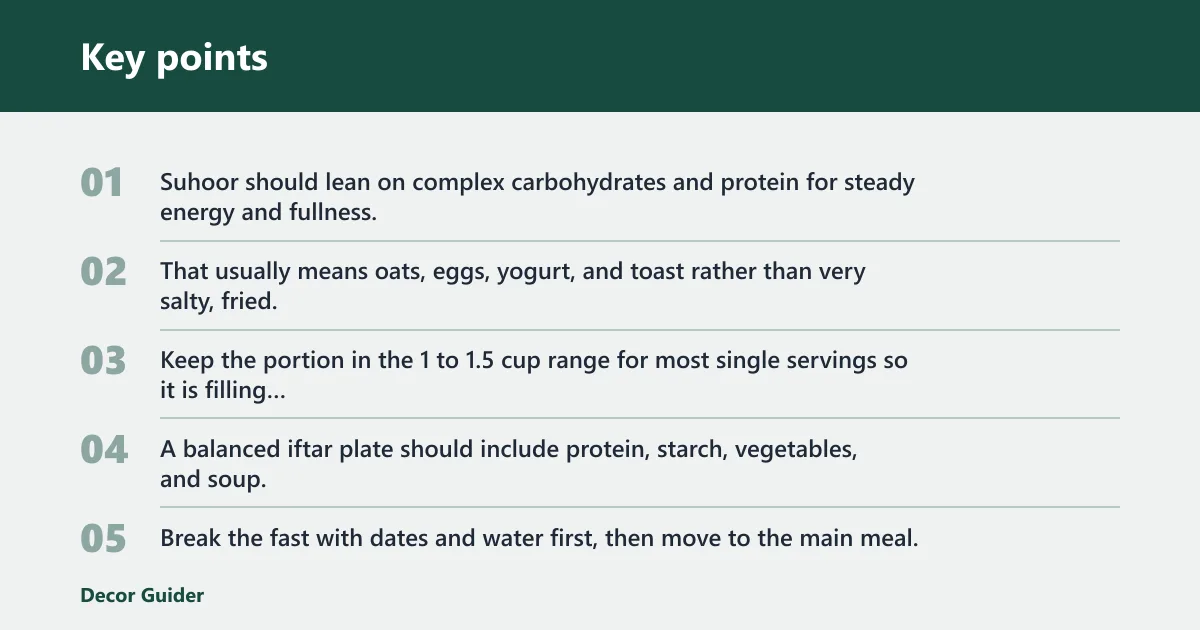
Suhoor should lean on complex carbohydrates and protein for steady energy and fullness. That usually means oats, eggs, yogurt, and toast rather than very salty, fried, or sugary foods. Keep the portion in the 1 to 1.5 cup range for most single servings so it is filling without feeling heavy.
How do you build a balanced iftar plate?
A balanced iftar plate should include protein, starch, vegetables, and soup. Break the fast with dates and water first, then move to the main meal. That order helps you avoid piling food on too quickly. A 2 to 3 cup main portion is a practical starting point for one adult.
When should leftovers become a second meal?
Leftovers should become a planned second meal, not a random extra serving. If the container still looks crowded, divide it before refrigerating. A common first-timer mistake is packing one large tray of rice and curry, then trying to eat from it for several nights. Separate it into 16 oz portions instead.
Suhoor container sizes
Suhoor prep works best when each container matches one breakfast-style meal or one add-on. The right size keeps oats from swelling past the lid, keeps eggs from drying out, and keeps smoothie parts from turning watery. It also makes grab-and-go mornings faster.
How do overnight oats jars work best?
A practical suhoor option is 5-7 overnight oats jars made on the weekend. Use 16 oz jars for one serving per day. Fill them with oats, milk or yogurt, and toppings kept on top or stored separately. If the jar is too small, oats expand and the lid presses into the food.
How should you pack egg, yogurt, and toast portions?
Eggs fit well in 16 oz containers when you are storing a small scramble or hard-boiled eggs with a side. Yogurt bowls also fit well at that size, especially when fruit stays in an 8 oz cup beside it. Toast should stay dry until eating, so keep spreads separate.
What is the best way to prep smoothies and dry add-ins?
For smoothie prep, freeze the fruit and greens in 8 oz or 16 oz packs, then blend with liquid near suhoor time. Keep seeds, nuts, and granola in separate 8 oz containers so they do not soften. This avoids a thin, separated drink that loses texture before dawn.
Iftar container sizes
Iftar storage needs more variety than suhoor because the meal often starts with dates and water, then expands into soup, a main plate, and sides. Use separate containers for wet and dry items. That keeps the meal crisp, keeps flavors cleaner, and makes reheating more even.
How should you store dates and water first?
Keep dates in a small dry container or pantry jar, then set aside a water bottle or pitcher for the table. The opening bite should stay simple. Do not store dates in the same container as soup or sauce, because moisture will soften them and reduce their shelf life.
What container sizes work for soup, starch, and protein?
Soup belongs in 8 oz to 16 oz containers for one person, or in 8-cup containers for batch cooking. Starch and protein are easier to reheat when packed separately in 16 oz or 32 oz containers. That separation keeps rice fluffy and stops sauce from soaking everything at once.
How should you store vegetable sides and salad?
Store vegetables in shallow containers so they cool quickly and stay crisp. Salad should be packed without dressing, and the dressing should live in a small 8 oz cup. This keeps greens from collapsing and helps the salad last longer in the fridge.
What should you freeze ahead?
Freeze foods that reheat cleanly and do not suffer from a little thawing moisture. Soups, stews, curries, samosas, spring rolls, rice dishes, and some desserts are good candidates. Portion them before freezing so you can thaw only what you need instead of defrosting a full batch.
What freezes well: soups, stews, and curries?
These freeze well in 16 oz or 32 oz containers for one or two servings. Leave a little headspace for expansion, especially in thick stews and curries. If the lid touches the food, the top can get icy and dry out faster in the freezer.
What is the best way to freeze rice dishes and stuffed pastries?
Rice dishes freeze best in flat, portioned containers so they thaw evenly. Stuffed pastries such as samosas and spring rolls should be cooled fully before freezing, then packed in a single layer or separated with parchment. That helps keep the coating from turning soggy after reheating.
Which meals belong in freezer-safe containers only?
Anything meant for more than a few days should go into freezer-safe containers with tight seals. Use them for batch-cooked soups, raw filled pastries, and portioned rice meals. Regular fridge containers may crack or warp, and a weak seal can lead to freezer burn and odor transfer.
How do you stop food waste?
Food waste drops when you match the container to the meal instead of forcing everything into one size. Batch cook with portions in mind, keep wet and dry parts separate, and label what goes in the fridge or freezer. Small containers are often better than one large overfilled box.
How can you batch cook without overfilling containers?
Batch cooking works best when each dish is split into meal-sized pieces before storage. Fill containers to a practical level, not to the brim. Overpacked food cools more slowly, leaks more easily, and often creates a mess when you open the lid after refrigeration or freezing.
Why should you separate wet and dry components?
Keep soup, sauce, and dressing in separate cups from rice, salad, bread, and toppings. This is the simplest way to avoid soggy textures. It also helps with odor control when strong foods are stored in airtight containers alongside milder items like yogurt or fruit.
How should you label, stack, and date meals?
Label each container with the meal name and date, then stack similar sizes together. Put the earliest meals in front. Food should be refrigerated within 2 hours after cooking per USDA guidance, refrigerated meals should be eaten within 3 to 4 days, and reheated food should reach 165°F (75°C) before serving again. For freezer guidance, USDA recommends keeping foods at 0°F (-18°C) or lower for best quality, using airtight packaging, and freezing foods in portions that thaw evenly.
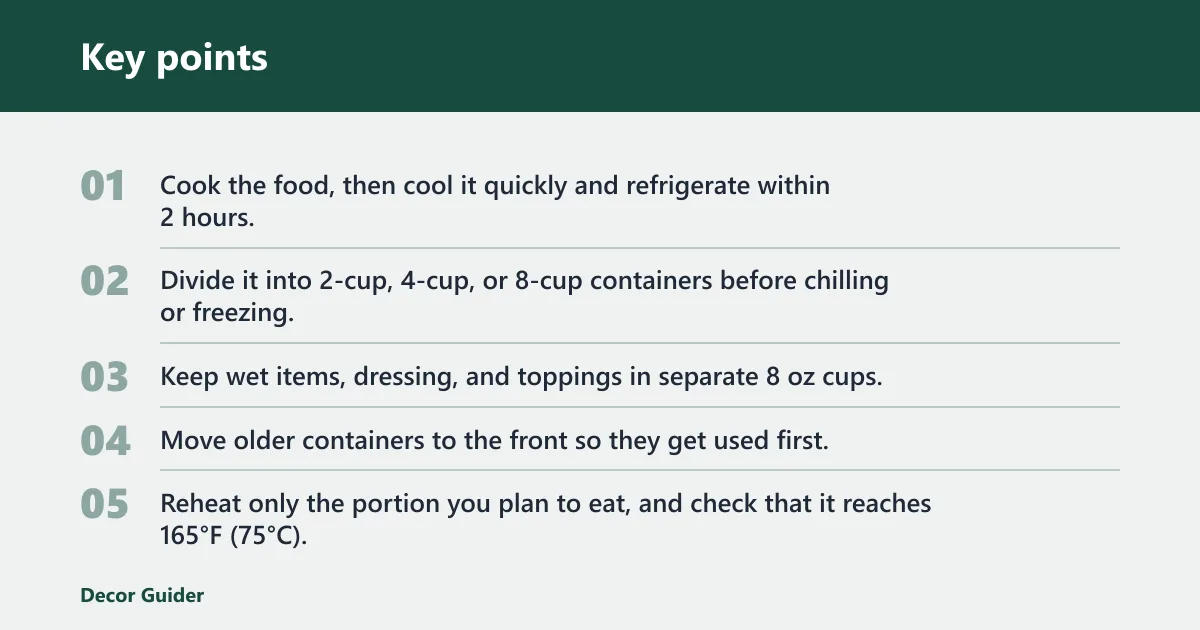
- Cook the food, then cool it quickly and refrigerate within 2 hours.
- Divide it into 2-cup, 4-cup, or 8-cup containers before chilling or freezing.
- Keep wet items, dressing, and toppings in separate 8 oz cups.
- Move older containers to the front so they get used first.
- Reheat only the portion you plan to eat, and check that it reaches 165°F (75°C).
Say your iftar batch is a pot of chickpea curry with rice. If you pack all of it into one deep container, the center stays warm too long and the rice turns dense. Split it into a 16 oz curry cup and a 32 oz rice container instead. Cooling gets faster, and leftovers hold their texture better.
Suppose you prep 6 overnight oats jars for suhoor. If each jar is 16 oz, you have enough room for oats, yogurt, and fruit without spillover. If you use 8 oz jars instead, the mix crowds the lid and the top layer gets messy before the first morning is over.
Frequently asked questions
How many meal prep containers do I need for Ramadan?
For a single adult, start with a mix of 5 to 7 suhoor containers, several 16 oz containers for leftovers, and a few larger containers for batch meals. For a family, add more 32 oz and family-size pieces so each dish can be stored in meal-sized portions.
What should I prep before Ramadan starts?
Prepare 5-7 overnight oats jars, portion dry toppings, batch-cook a few freezer meals, and clear space in the fridge and freezer. Stock airtight containers in 8 oz, 16 oz, 32 oz, and family sizes so you are not scrambling when the first fast day begins.
How long do cooked Ramadan meals last in the fridge?
Cooked meals should go into the fridge within 2 hours after cooking, then be eaten within 3 to 4 days. Store wet and dry parts separately when possible, and reheat food until it reaches 165°F (75°C) before serving again.
What foods work best for suhoor meal prep?
Suhoor works best with oats, eggs, yogurt, toast, and smoothie prep because these foods pack well and support steady energy. Choose complex carbohydrates and protein, then keep salty, fried, or sugary foods to a minimum so the meal feels steady rather than heavy.
What iftar meals freeze well for Ramadan?
Soups, stews, curries, samosas, spring rolls, rice dishes, and some desserts are the strongest freezer candidates. Portion them before freezing so you can thaw one meal at a time. Use freezer-safe airtight containers to limit odor transfer, leaks, and freezer burn.
How do I stop Ramadan meal prep from wasting food?
Match the container to the meal, split wet and dry items, and label each portion with a date. Do not overfill containers. Plan fridge meals for the first 3 to 4 days and freeze the rest so cooked food gets used while it is still at its best.
What container types are best for Ramadan meal prep?
Airtight containers are the best all-around choice because they help preserve food quality, reduce leaks, and control odors. Use single-serve containers for suhoor and leftovers, freezer-safe containers for batch cooking, and larger family containers for shared iftar sides and soup batches.
How can I portion meals so I don’t overeat at iftar?
Break the fast with dates and water, then plate the main meal instead of serving from a large pan. Keep the first plate to about 2 to 3 cups, with protein, starch, vegetables, and soup included. If you are still hungry, use a planned second portion.
Products related to this article
Sponsored / affiliate links. As an Amazon Associate I earn from qualifying purchases. I may earn additional commission from eligible campaigns.