Ramadan Cooking for Kids Problems and Solutions
For Ramadan cooking with kids, a practical rule is: toddlers under 5 keep children away from heat and knives, ages 5 to 7 handle washing, stirring, and simple table jobs only with close supervision, and 8+ can do simple prep with clear station boundaries. Skip that setup, and you invite spills, burns, arguments, and a slower iftar. This guide maps common cooking failures to age-based fixes so you can cut chaos without turning dinner into a lesson.
What you’ll need
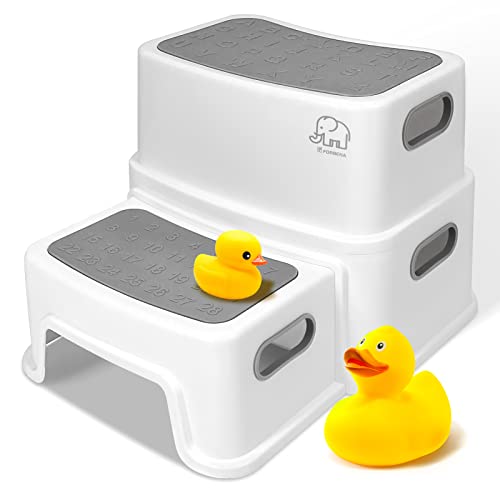

- Sturdy stool with non-slip feet
- Mixing bowl and serving spoon
- Measuring cups and measuring spoons
- Small knife kept for adult use only
- Clean towel or paper towels
- Labelled storage containers
- Marker for dates and leftover labels
- Table napkins and a water jug
- One simple iftar main dish
- One light side such as vegetable soup, salad, roast vegetables, or fruit smoothies
- One backup leftover-friendly dish
- Star chart or other small reward tracker
How do you involve kids in Ramadan cooking without chaos?
Keep the job small, the timing short, and the tools limited. A practical setup is one child, one task, one station, and one brief window, since kids in the kitchen can move fast and make a mess, especially near iftar when energy runs low and hunger runs high. BBC recommends involving children in measuring ingredients, weekly menus, table-setting, and washing up, while keeping sharp tools and hot surfaces strictly out of reach.
Set the rules before the first bowl comes out
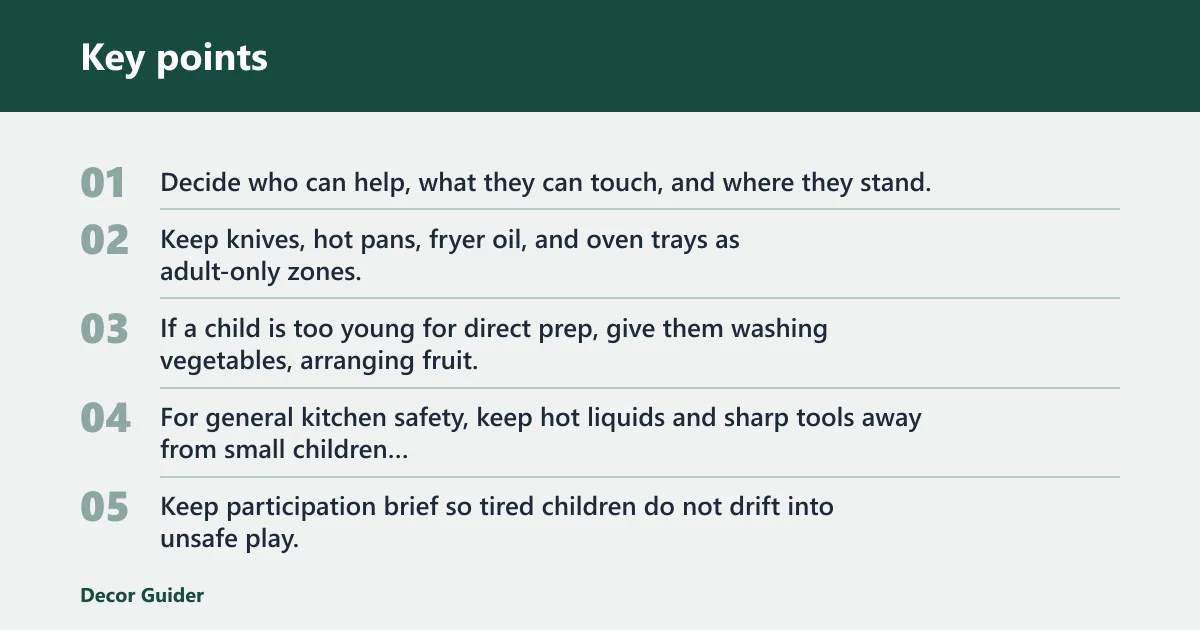
Decide who can help, what they can touch, and where they stand. Keep knives, hot pans, fryer oil, and oven trays as adult-only zones. If a child is too young for direct prep, give them washing vegetables, arranging fruit, or placing napkins instead. For general kitchen safety, keep hot liquids and sharp tools away from small children and use stable footing, dry hands, and a clear workspace.
Use short prep windows
Keep participation brief so tired children do not drift into unsafe play. A 5 to 10 minute task is easier to finish than a long one, and it gives you a clean stopping point. A visible finish line also makes cleanup less likely to turn into a fight. If the kitchen gets crowded, move the child out of the prep zone before focus slips.
What can children safely do in the kitchen during Ramadan?
Children can help with low-risk, age-matched jobs that keep them away from heat and sharp tools. Toddlers do best with washing vegetables, tearing lettuce, arranging fruit, and placing napkins. School-age children can measure, stir cold mixtures, set the table, and pack leftovers. Teens can wash up, portion sides, time simple oven tasks with adult oversight, and help plan the menu.
Age-appropriate task guide
| Age band | Safe kitchen tasks | Keep out of reach | Best finish cue |
|---|---|---|---|
| Toddlers | Wash vegetables, tear lettuce, arrange fruit, place napkins | Knives, stove, oven, fryer oil | “One bowl done” |
| School-age kids | Measure ingredients, stir cold mixtures, set the table, pack leftovers | Hot pans, oven trays, deep frying | “One task finished” |
| Teens | Wash up, portion sides, time simple oven tasks, help with weekly menus | Unsupervised knife use, fryer oil, stove handling without adult control | “Station cleared” |
The same source suggests children may prefer setting the table or washing up, and that fits well when energy is low. Khaleej Times also suggests involving children in storing food and labelling containers, which gives older kids a concrete job after the meal. Keep those jobs simple, repeatable, and away from hot food.
How do I keep kids engaged while cooking iftar?
Give them a visible finish line, a short job, and one clear sign that the task is done. Engagement drops when children wait too long or get handed a vague order. A star chart can help, but the reward should stay small and tied to routine, not to getting out of basic family help. Keep praise specific and immediate.
Use a simple motivation system
A star chart works best when every task has the same structure: start, finish, and check mark. Praise should name the action, such as “You measured that carefully,” rather than promising a big treat. A shared time reward, such as choosing the fruit platter with a parent, works better than a bribe because it keeps the focus on participation.
The same source suggests a star chart as a reward system for helping. That fits Ramadan because it supports task ownership without turning iftar into a reward contest.
Keep motivation tied to the role
Let children choose between two safe tasks, not between helping and not helping. A child who prefers arranging fruit is still contributing. A teen who dislikes washing up can still own the table reset or leftover labels.
Ramadan cooking steps
Choose one simple iftar plan, one backup dish, and one leftover plan before the kitchen gets busy. That cuts decision fatigue and reduces waste. The same source recommends preparing meals in advance to save time and stress, while food-waste guidance from the BBC also warns that iftar can lead to over-serving and unnecessary leftovers. Build the plan before hunger does.
Meal prep and kitchen setup by age band
- Pick one main dish and one light side. Vegetable soup, salad, roast vegetables, or a fruit smoothie keeps the meal lighter than a heavy fried spread.
- Assign each child one safe job they can finish quickly. Use washing, measuring, stirring cold mixtures, setting the table, or packing leftovers.
- Serve food in small portions first. Keep seconds available so no one loads a plate too early.
- Label leftover containers before dinner starts. Write the dish name and date on each lid.
- Store leftovers as soon as the meal ends. Put them in the fridge right away.
Say your 5-year-old is stirring yogurt for a cucumber salad while a 10-year-old sets the table. If the younger child starts wandering, stop the task at once and move to fruit arranging. The fix is not more instructions. It is a shorter job.
Ramadan cooking troubleshooting matrix
This matrix turns common Ramadan cooking problems with kids into age-based fixes. Use it when the kitchen shifts from helpful to messy, noisy, or slow. The uniform fields below make the fixes easy to scan, compare, and reuse during iftar prep.
| Problem | Likely cause | Safest child role by age band | Parent intervention | Time needed | Leftover plan |
|---|---|---|---|---|---|
| 01. Boredom | Long waits between steps | Toddlers: arrange fruit; school-age: stir cold mix; teens: label containers | Reset the station and give one timed job | 5 to 10 minutes | None or one sealed side dish |
| 02. Spills | Overfull bowls or haste | Toddlers: washing vegetables; school-age: dry prep | Use a smaller bowl and one work area | 3 to 5 minutes | Wipe, decant, and store |
| 03. Overfilling plates | Excitement or poor portion sense | School-age: serving helper; teens: portion sides | Plate smaller portions first | 2 minutes | Save extras before serving |
| 04. Sibling arguments | Shared tools or unclear turns | Separate stations for all ages | Assign fixed roles and separate tasks | 5 minutes | None |
| 05. Bedtime fatigue | Late prep and low energy | Early-day jobs for younger children; teens can help earlier too | Move participation earlier in the day | 10 minutes | Reheat and plate later |
| 06. Reluctance to wash up | Cleanup feels endless | Teens: washing up; school-age: sorting utensils | Set one clear cleanup finish and a small reward | 5 to 8 minutes | Stack and chill |
| 07. Touching hot food | Curiosity near stove or oven | Table tasks only for younger children | Move the child back and set a hard boundary | Immediate | Cover and rest food safely |
| 08. Mess from flour or batter | Too many ingredients at once | School-age: measuring and stirring small batches | Limit what stays on the counter | 5 minutes | Scrape and store or discard if contaminated |
| 09. Slow pace | Tiredness or too many instructions | One-step jobs for younger children | Give one instruction at a time | 5 minutes | Finish the task yourself |
| 10. Snack grazing before iftar | Hunger and waiting | Toddlers: fruit washing; school-age: table setting | Offer water and a set snack window | 3 minutes | Keep snack portions small |
| 11. Refusal to eat vegetables | Unfamiliar sides | Arrange salad or fruit | Keep one familiar side on the plate | 5 minutes | Use extras in soup or wraps |
| 12. Chaos at the table | No meal roles | Napkin and water setup for younger children | Assign one helper per zone | 5 minutes | None |
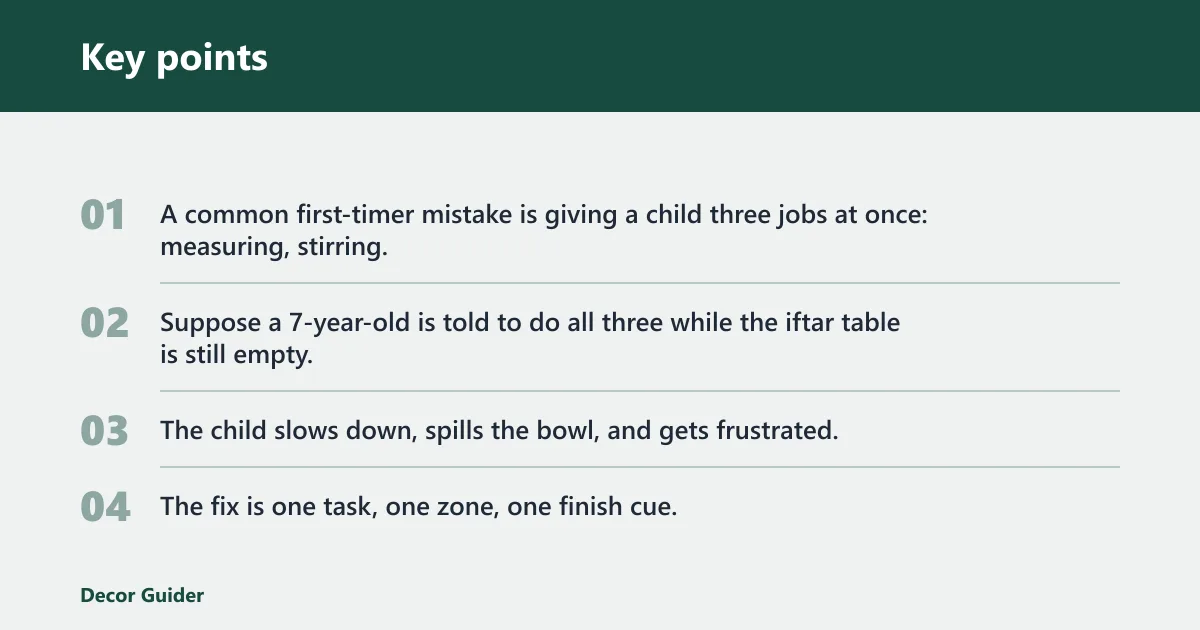
A common first-timer mistake is giving a child three jobs at once: measuring, stirring, and carrying a dish. Suppose a 7-year-old is told to do all three while the iftar table is still empty. The child slows down, spills the bowl, and gets frustrated. The fix is one task, one zone, one finish cue.
How do you stop food waste during iftar prep?
Use smaller portions, save seconds for later, and label leftovers before the meal starts. That is the simplest way to keep plates from being overloaded and food from being thrown away. Khaleej Times advises serving smaller portions and allowing seconds, while also suggesting children help store food and label containers. Those habits keep the meal practical and waste-aware.
Build waste control into the meal plan
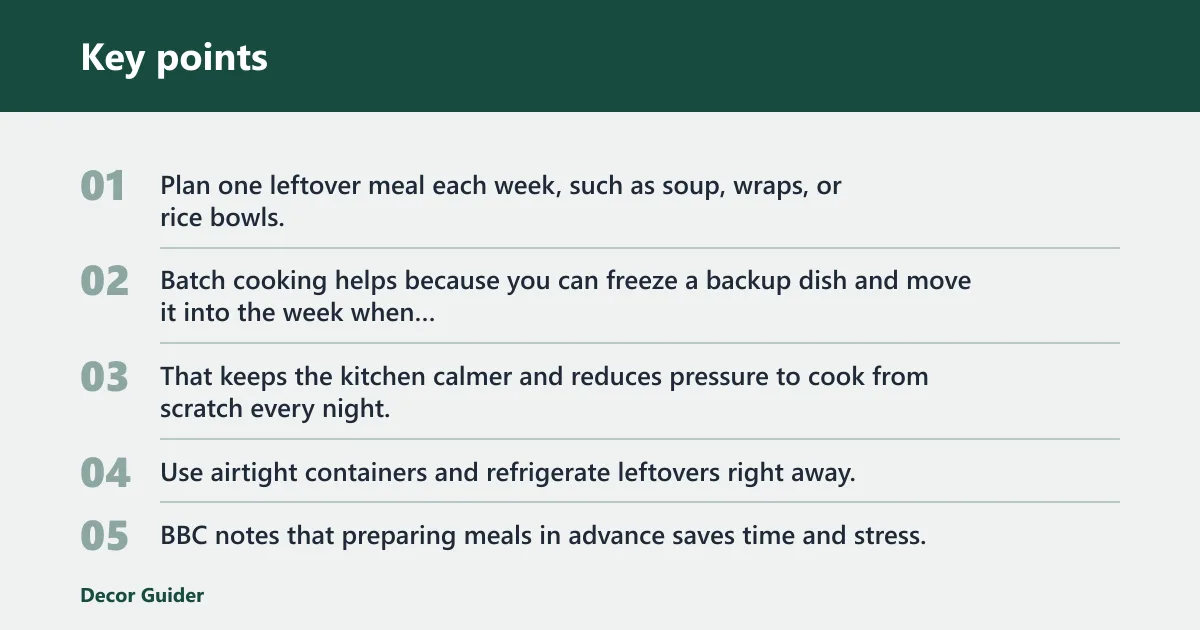
Plan one leftover meal each week, such as soup, wraps, or rice bowls. Batch cooking helps because you can freeze a backup dish and move it into the week when the evening runs late. That keeps the kitchen calmer and reduces pressure to cook from scratch every night. Use airtight containers and refrigerate leftovers right away.
The same source notes that preparing meals in advance saves time and stress. That matters in Ramadan because iftar timing leaves little room to correct a mistake after the food is already on the table.
Use a simple serving script
Try: “Take this amount first. If you are still hungry, you can have seconds.” That sentence teaches portion control without shame. It also keeps the dining table focused on mindful serving rather than guilt. It is a simple food-waste habit that works best when everyone hears the same rule.
How do I make Ramadan cooking less stressful with toddlers?
Toddlers need the smallest jobs, the clearest boundaries, and the shortest time in the kitchen. Give them low-risk tasks such as washing vegetables, tearing lettuce, arranging fruit, or placing napkins. Keep them away from heat, knives, and anything that can spill easily. Supervision should be constant, and the task should end before fatigue turns into wandering.
Lower the demand, not the involvement
If the kitchen is crowded, move toddlers to a separate counter with one bowl and one task. A stool helps, but only if it is stable and placed away from the stove. For tired toddlers, switch to setting napkins or sorting fruit instead of asking for another round of stirring. If a child cannot stay with the task, end it calmly and move on.
Weekend family iftar can be the time for longer participation. On busier nights, keep the routine short and let the child leave after the task is done.
How do you teach gratitude and food manners during iftar?
Keep the lesson short, specific, and tied to the meal. Before eating, ask children to wait for the family start signal, say thank you to the cook, and take a small first portion. During the meal, remind them to pass dishes, wait for turns, and avoid waste. After eating, thank the person who helped clean up and save leftovers properly.
Use simple scripts at the table
Try: “Wait until everyone is seated,” “Please pass the dates,” “Thank you for cooking,” and “Take a little first, then seconds if you need them.” If a child reaches across the table or grabs food early, pause and reset the rule. The goal is consistent manners, not a lecture that delays iftar.
Teach leftovers etiquette
Say: “If it is not finished, it goes into a labelled container now.” Let older children place the lid on, write the date, and move the food to the fridge. That makes gratitude practical because food is respected, not wasted. It also links manners to the family routine instead of treating them as separate rules.
Frequently asked questions
How do I stop food waste when cooking with children in Ramadan?
Serve small portions first, then offer seconds if needed. Label leftovers before dinner starts and plan one reuse meal each week, such as soup, wraps, or rice bowls. Khaleej Times also suggests letting children help store food and label containers, which builds the habit into routine.
What age-appropriate Ramadan cooking tasks can kids do?
Use washing, arranging, and table setting for younger children; measuring, stirring, and packing leftovers for school-age children; and washing up, portioning sides, and helping with weekly menus for teens. A good rule is that the task should finish quickly and not bring the child near heat or cutting tools.
What are easy iftar recipes kids can make?
Products related to this article
Sponsored / affiliate links. As an Amazon Associate I earn from qualifying purchases. I may earn additional commission from eligible campaigns.