How to Make Ramadan Snacks for Guests
Make Ramadan snacks for guests by serving three parts: one fried item, one fresh salad or fruit, and one cooling drink or dip. Prep the fried item last so it stays crisp. Without that mix, the table turns heavy, soggy, or warm before guests sit down. This guide gives you the prep order, holding times, and easy snack ideas for iftar guests.
What you’ll need

- Two sheet pans for freezing shaped snacks
- One deep skillet or fryer for pakoras and samosas
- Slotted spoon or spider for lifting fried food
- Wire rack set over a tray for draining crisp items
- Paper towels for the first drain only
- Mixing bowls for chaat, yogurt, and fruit
- Serving tray with sections, small bowls, or separate platters
- Refrigerator space for chilling dahi baray, fruit, and drinks
- Freezer bags or containers for samosa filling and shaped parcels
- Thermometer if you want steady frying; check the manufacturer’s listing for your model
How do you plan a guest-ready Ramadan snack menu?
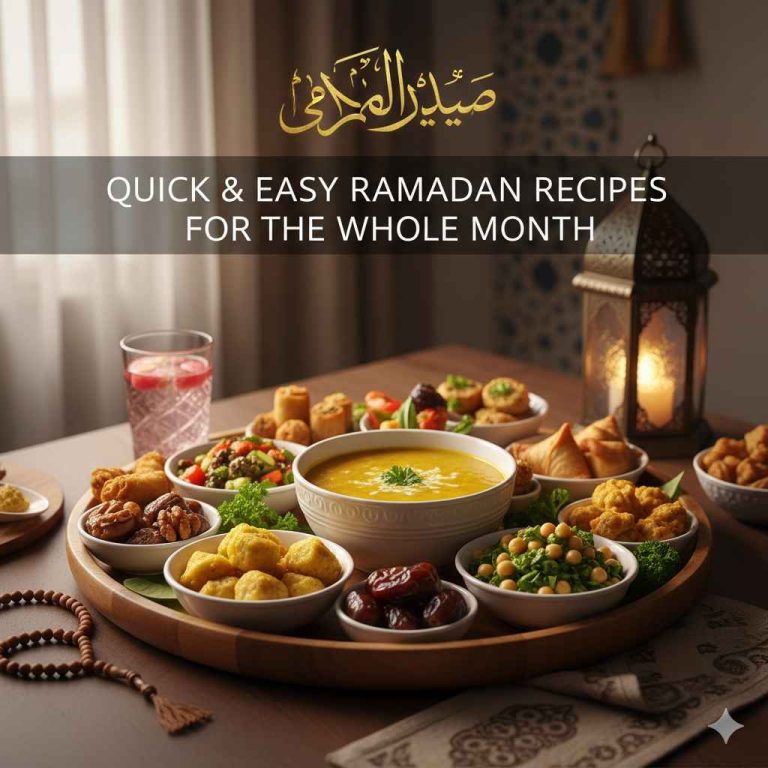
Build the menu around contrast, hot and crisp with cold and soft, sweet and tangy. For iftar, that usually means samosas or pakoras, a fresh bowl like fruit chaat or chana chaat, a chilled item such as dahi baray, and a drink like Rooh Afza or sharbat.
Use this balance for guests
- One fried snack: samosas or pakoras.
- One fresh or filling bowl: fruit chaat or chana chaat.
- One cooling item: dahi baray or a chilled drink.
- One sweet finish: sheer khurma after the first round of iftar.
Ramadan iftar snacks should be easy to eat in small portions, because guests often want a few bites first and a second plate later. Samosas and pakoras fit that pattern well, and fruit chaat adds a lighter option with apples, bananas, guava, pomegranate, and oranges tossed in chaat masala.
Ramadan snack hosting matrix
The table below gives a practical hosting plan for common iftar snacks. It shows how far ahead each item can be made, how to hold it, and what happens to texture if you wait too long.
| Snack type | Make-ahead window | Best holding method | Crispness or reheat notes |
|---|---|---|---|
| Samosas, potato or keema | Fill and shape up to about 1 month ahead; freeze uncooked | Freeze on a tray, then bag; fry from frozen or thaw briefly in the fridge | Crisp-fried is best. Bake on a rack if you need a lighter finish, but brush lightly with oil first. |
| Pakoras, vegetable or chicken | Batter and cut ingredients the same day; fry close to serving | Hold on a wire rack in a low oven for about 10 to 15 minutes only. | Serve immediately for best texture. The crisp shell softens fast. |
| Fruit chaat | Chop fruit 4 to 6 hours ahead | Keep chilled and toss with chaat masala just before serving | No reheating. Add spice at the end so the fruit stays fresh. |
| Dahi baray / dahi bhallay | Make 1 day ahead | Soak, drain, and chill in yogurt until serving | Best served cold. Save tamarind chutney and spices for the final garnish. |
| Chana chaat | Mix chickpeas and potatoes 1 day ahead | Store dressing separately, then combine at serving | Stays filling without becoming heavy if you add the chutney at the end. |
| Rooh Afza or sharbat | Mix the base earlier in the day | Keep chilled in a jug with ice added just before service | Do not leave it warm. It should be cold when the table opens. |
| Sheer khurma | Make 1 to 2 days ahead | Chill in a covered container | Rewarm gently if desired, or serve cold. Stir after chilling because the milk thickens. |
How do you time the prep and cooking?
Start with the dishes that gain from chilling or freezing, then move to the fresh bowls, and fry last. That order keeps the table from sitting around while hot food waits. For a small guest list, the cleanest schedule is: make sweets first, shape frozen snacks next, cut fruit and boil chickpeas later, then fry and plate at the end.
-
Make the chilled items first.
Prepare sheer khurma and dahi baray early so they can rest in the fridge. A 1-day window works well for both, and the flavor settles as they chill. -
Shape freezer snacks next.
Fill samosas with potato or keema, seal them, and freeze them on a tray before bagging. This prevents sticking and gives you a ready batch for another day too. -
Mix the no-cook bowls later.
Cook chickpeas, dice potatoes, and prep fruit in separate containers. Hold the chutney, salt, and chaat masala back until the last 10 minutes so the mix does not go soft. -
Fry at the end.
Cook pakoras and samosas close to serving time. Drain them on a wire rack, not a covered bowl, so steam does not soften the crust. -
Plate in rounds.
Put out the cold items first, then the fried food, then the drink, then dessert. This keeps guests from crowding the fried platter while it cools.
Say your guests arrive 20 minutes after sunset and you still need to fry pakoras. Fry one batch, hold it on a rack in a 95°C oven, and fry the second batch right away. That keeps the first tray warm without trapping steam under a lid.
How do you hold snacks crisp and fresh?
Keep wet and crisp items separate until the last minute. Use a divided serving tray, or set out plates and bowls that let samosas, pakoras, and chutneys stay apart. If fried food sits beside yogurt or tamarind sauce, the crust softens fast.
Hold fried items the right way
- Drain fried snacks on a wire rack for about 2 to 5 minutes.
- Move them to a low oven, around 95°C, if guests are not ready yet.
- Never cover them tightly while warm.
- Keep sauces in separate bowls with spoons, not poured over the snacks.
Pakoras are the one item that should not wait long. Their crispy exterior is part of the appeal, and it fades as they sit. Fruit chaat, by contrast, can wait chilled for a short time, but it should still be tossed at the end so the fruit does not break down.
Top up with small amounts
If a platter looks low, add about 2 to 3 extra samosas or 6 to 8 pakoras at a time, then recheck the tray after about 5 minutes. Smaller refills keep the food fresh and stop the whole batch from sitting out too long.
Picture a tray with 8 samosas, a bowl of chana chaat, and a jug of sharbat. Keep the samosas on one side of the tray and the chana chaat in a separate bowl; if the chaat spreads onto the pastry, the bottom softens before the second serving.
What are easy make-ahead snacks for Ramadan guests?
The easiest make-ahead options are the ones that hold flavor after chilling or freezing. Samosa filling, shaped samosas, sheer khurma, dahi baray, and chana chaat all work well because you can batch them, portion them, and finish them close to serving.
Best prep choices by effort
- Freezer-friendly: samosas, especially potato or keema filling, shaped and frozen before frying.
- Chill-friendly: dahi baray and sheer khurma.
- Fast assembly: chana chaat and fruit chaat.
- Same-day only: pakoras if you want the best crispness.
For freezer-friendly snack prep, batch cooking matters more than fancy shaping. Make a full tray of samosas, freeze them flat, then store them in a single layer bag so you can pull out only what you need for six guests or for a second iftar.
Common mistakes
The most common problem is overloading the table with fried snacks and skipping the cold side. That makes guests feel full too quickly. Another mistake is mixing wet chutneys into fried food too early, which turns crisp edges soft before the first plate is served.
- Serving too many fried items: keep one fried snack and one baked or chilled counterpart.
- Letting pakoras sit covered: use a rack and loose tenting only if needed.
- Overfilling the tray: plate in smaller rounds so food stays fresh.
- Skipping drinks: chilled Rooh Afza or sharbat helps balance salty and fried bites.
- Making everything heavy: keep fruit chaat or a yogurt dish in the lineup.
What can you serve on a budget? Start with chickpeas, potatoes, yogurt, and seasonal fruit, then add one tray of samosas or pakoras instead of two fried dishes. That keeps the spread filling, guest-friendly, and lower cost without looking sparse.
Frequently asked questions
How do I make Ramadan snacks that guests will actually eat?
Keep portions small and the mix varied: one fried item, one fresh bowl, one cooling item, and one sweet finish. Guests usually reach for the first plate when the food is easy to pick up and not overloaded with sauce.
What can I prepare ahead of time for iftar guests?
Make sheer khurma, dahi baray, samosa filling, and chopped fruit ahead of time. You can also boil chickpeas and potatoes for chana chaat a day early, then add chutney and spices at the last minute.
Which Ramadan snacks are filling but not too heavy?
Chana chaat is the best fit because chickpeas, potatoes, and tamarind chutney give body without a heavy feel. Fruit chaat also works well as a lighter plate between fried foods and dessert.
How many snack items should I serve for a small iftar gathering?
About three to four snack items can be enough for six people: one fried snack, one fresh or filling bowl, one cooling item, and one sweet. That keeps the table complete without leaving too much food behind.
What drinks or sweets should I pair with Ramadan snacks?
Serve Rooh Afza or sharbat chilled with the savory snacks, then bring out sheer khurma after the first round. The drink cuts the salt and spice, while the dessert gives a soft finish without needing a separate cake or pastry.
How do I keep fried Ramadan snacks crisp for guests?
Drain them on a wire rack, keep them uncovered or loosely tented, and serve them as soon as possible. If you must wait, hold them in a 95°C oven for a short time and keep sauces separate from the tray.
Products related to this article
Sponsored / affiliate links. As an Amazon Associate I earn from qualifying purchases. I may earn additional commission from eligible campaigns.