Ramadan Cooking for Guests: Problems and Troubleshooting
Keep one main dish, one make-ahead side, and one backup snack. If a dish still needs more than about 15 minutes of active work in the final hour, swap to a simpler finish. Miss the timing, and you get cold food, crowded burners, and guests waiting after sunset. This guide covers timing slips, kitchen bottlenecks, texture problems, holding food, and dietary needs.
Ramadan cooking troubleshooting guide


What you need before you start
Core tools and serving equipment
- Large trays for transporting finished dishes
- Covered bowls for salads, sauces, and chopped garnish
- Stackable platters to save counter space
- Labels or masking tape for dish names and allergen notes
- Timer for staggered cooking and reheating
- Food thermometer for checking holding and reheating temperatures
- Chafing dishes, warming trays, or insulated containers for hot holding
Ingredients worth prepping ahead
- Sauces and dressings
- Stuffing or filling mixtures
- Chopped onions, herbs, and vegetables
- Marinated proteins
- Soup base or stew base
- Par-cooked rice or roasted vegetables for final finishing
Storage, holding, and reheating basics
Keep hot food above 60°C / 140°F, and cool leftovers quickly before chilling them. Separate raw and cooked items on different boards, trays, and utensils. For overnight guests, suhoor should rely on make-ahead or low-effort dishes, because the pre-dawn meal often overlaps with cleanup and the next round of prep.
How do you plan Ramadan cooking around iftar timing?
Plan around a sunset serving window, not a single minute on the clock. Stage the meal: drinks, dates, soup, and one starter first, then the main, starch, salad, and dessert in waves during the final 15-30 minute prep period.
Build the menu in stages
- Choose one heavy dish, one lighter dish, and one fresh element so the menu stays manageable.
- Put the longest-cooking item first, then build the rest around its finish time.
- Keep soup, salad, and dessert in separate prep lanes so they do not compete for oven or burner space.
Set a final 15-30 minute prep window
- Count back 30 minutes from iftar and mark that as the last window for finishing and plating.
- Move only one or two dishes into that window; everything else should already be cooked, chilled, or held.
- If a dish still needs chopping, frying, or heavy sauce work inside that window, move it to a future meal.
Assign the first dishes to finish early
- Start rice, soup, stew, or baked dishes first, since batch cooking reduces stovetop congestion.
- Hold roasted or braised items in covered pans while you finish fast items last.
- Use the oven for one temperature band at a time whenever possible.
How do you keep food hot without ruining texture?
Use the holding method that fits the dish. Wet foods tolerate longer holding than crisp foods, but even then, long hot-holding can dry them out. Keep food above 60°C / 140°F, and switch to insulated containers or warming trays when the dish no longer needs active cooking.
Use holding methods that fit the dish
- Put stews, curries, and soups into chafing dishes or warming trays.
- Keep rice in a covered pot or insulated container with a clean towel under the lid.
- Hold baked casseroles covered, then uncover briefly only for serving.
Protect crisp foods from steam
- Drain fried foods on a rack, not on paper that traps steam.
- Keep samosas, spring rolls, or fritters uncovered until the surface stops steaming.
- Pack them in a single layer only if transport is unavoidable.
Know when to reheat versus hold
- Reheat anything that has dropped into the danger zone for too long rather than holding it at room temperature.
- For sauces or gravies that thicken, add 15 ml to 30 ml at a time, then recheck texture before adding more.
- If a fried or baked item loses its crust, refresh it briefly in a hot oven instead of keeping it under cover.
Ramadan hosting troubleshooting matrix
This matrix helps you diagnose the failure, pick the fastest fix, and stop the same problem from repeating on the next round of guests.
| Problem | Likely cause | Fastest fix | Prevent it next time | Affects |
|---|---|---|---|---|
| Late rice | Pot started too late or burner was tied up | Cover and hold warm; if underdone, add 30 ml hot water, cover, and steam 5 minutes | Start rice before other mains and keep it off the shared burner | Timing, texture |
| Dry chicken | Overbaked or held uncovered | Slice and spoon over warm sauce or pan juices | Cook to the correct doneness, then hold covered | Texture, taste |
| Soggy samosas | Steam trapped in the box or tray | Move to a rack and finish in a hot oven for a few minutes | Drain well and keep the tray uncovered until serving | Texture |
| Oven crowding | Too many pans at once | Remove one pan, then stagger the rest by finish time | Limit oven jobs to one roast and one bake at a time | Timing |
| Not enough serving space | Too many dishes for the counter or table | Move backup items to covered stackable platters | Plan a smaller menu and label trays before guests arrive | Timing, flow |
| Food cooled too fast | No insulated cover or holding station | Transfer to a prewarmed chafing dish or insulated container | Set up holding equipment before the final cook begins | Timing, food safety |
| Sauce split during reheating | Heat too high or boiling after refrigeration | Lower heat and whisk in 15 ml to 30 ml liquid at a time | Reheat gently and avoid a hard boil for dairy or emulsified sauces | Texture, taste |
| Too much waiting between dishes | Plating all at once instead of in waves | Serve dates, drinks, and soup first, then main plates | Stage the menu so each course finishes in order | Timing |
| Cross-contamination risk | Raw and cooked food shared a board, knife, or tray | Discard contaminated garnish or transfer to clean equipment immediately | Keep separate boards, utensils, and labels for raw and cooked items | Food safety |
| Guests with dietary restrictions | No clear label for halal, vegetarian, gluten-free, or allergen-safe dishes | Label every dish and point out safe options before serving | Build at least one vegetarian dish and one gluten-free dish into the menu | Food safety, timing |
| Running out of trays or covers | Serving ware was not set aside early | Use clean foil, covered bowls, or stacked platters as a backup | Set out all serving ware before cooking starts | Timing, food safety |
| Too many mains on the menu | Menu built around ambition instead of capacity | Drop one main and keep soup, protein, starch, salad, and dessert only | Choose one heavy dish, one lighter dish, and one fresh element | Timing, flow |
| Kitchen bottleneck at the burner | Several dishes need the same stove at the same time | Move one item to the oven or hold it ready to finish later | Batch cook soups, stews, and rice ahead of time | Timing |
| Limited cooling or storage space | Hot pans were stacked before they cooled safely | Spread food into shallow containers so it cools faster | Use smaller containers and chill in portions | Food safety, timing |
What should you do when the food is not ready before iftar?
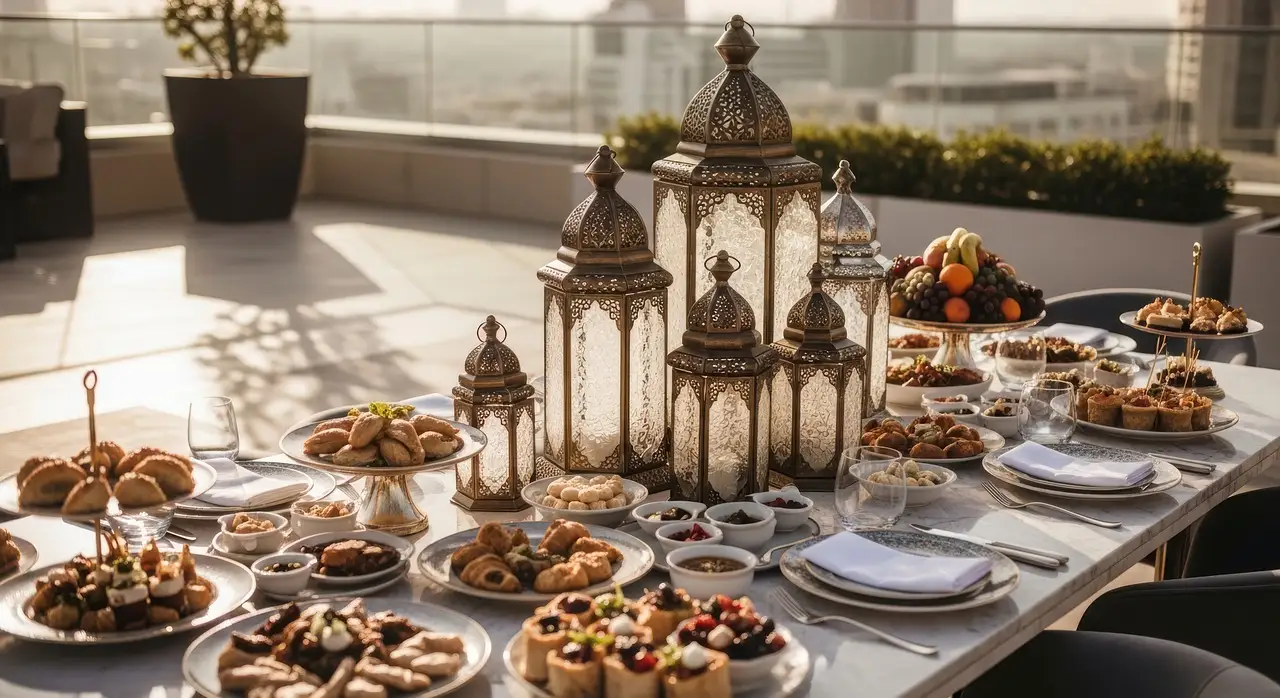
Serve in order of urgency: drinks, dates, and soup first, then any ready starter, then the main dish once it is safe and hot. If the main is late, do not rush undercooked food to the table. Shift the meal into staggered service and keep guests fed while you finish.
Serve in order of urgency
- Put out water, juice, milk drinks, and dates first.
- Serve soup or a small starter next if it is already hot.
- Move the main dish only when it has reached a safe temperature and the plate can be served cleanly.
Shift guests to drinks, dates, and soup first
- Set out a short first tray so guests can begin without waiting on the whole menu.
- Keep the rest of the spread covered while you finish the bottleneck dish.
- Use labels if there are vegetarian, gluten-free, or allergen-safe choices on the table.
Finish the menu with the fastest safe option
- Choose the fastest item that can be finished without a new cleanup pile.
- Use an already-cooked protein, a reheated stew, or a fresh salad instead of starting a new main.
- If the rice is 10 minutes late and the oven is full, serve soup and salad now, then plate the rice with sauce once it is ready.
Common mistakes to avoid
- Overloading the oven or stove with too many dishes at once
- Starting several last-minute items that all need hands at the same time
- Skipping cooling checks and leaving cooked food in the danger zone too long
- Ignoring halal compliance, allergies, vegetarian needs, or gluten-free needs
- Trying to plate every dish at the same minute instead of serving in stages
- Forgetting that suhoor often needs low-effort, make-ahead food if guests stay overnight
A common first-timer mistake is a 9-inch tray of fried snacks sitting under a lid for 20 minutes. The steam softens the crust, and the fix is simple: move them to a rack, keep them uncovered for a few minutes, then serve in smaller batches.
Frequently asked questions
How do I cook for Ramadan guests without falling behind on timing?
Build the meal around one anchor dish that finishes first, then add one make-ahead side and one fresh item. Keep the last 15-30 minutes for warming, plating, and a quick garnish only. That keeps the kitchen from getting buried under too many moving parts.
What should I do if the food is not ready before iftar?
Serve dates, drinks, and soup first, then move to the rest of the meal in order of readiness. If a dish is still undercooked, keep it out of the serving line and finish it safely rather than rushing it to the table.
How can I keep fried food crisp while waiting for guests?
Use a rack instead of a covered bowl, and keep fried items uncovered until the steam clears. If the crust softens, refresh the food in a hot oven for a short burst rather than holding it under a lid.
How do I reheat Ramadan dishes without drying them out?
Reheat covered when possible, then add liquid in 15 ml to 30 ml increments if the sauce or grain looks dry. Keep the heat moderate and stop as soon as the food is hot through. High heat and long reheating are the usual culprits.
What can I prep the night before for Ramadan guests?
Chop vegetables, mix sauces, marinate proteins, and portion out soup or stew bases. You can also label serving platters and set out backup covers. That leaves the last day for cooking, reheating, and final assembly only.
How do I handle dietary restrictions when cooking for Ramadan guests?
Label dishes clearly and separate utensils for halal, vegetarian, gluten-free, and allergen-safe foods. Build at least one safe option for each likely restriction so guests do not have to guess. When in doubt, keep the ingredient list visible on the tray.
Products related to this article
Sponsored / affiliate links. As an Amazon Associate I earn from qualifying purchases. I may earn additional commission from eligible campaigns.