Ramadan Grocery Shopping Problems: Fixes and Backup
Use a three-step fix: identify the grocery failure, make one quick recovery move, then switch to a backup if it still stalls. In Ramadan, the main failure modes are stockouts near iftar, list errors, storage limits, delivery cutoffs, and budget drift. This guide covers in-store, delivery, budgeting, and inventory troubleshooting with fast fixes, prevention rules, and backup options.
Ramadan grocery problems: what’s failing?
Start by separating a stock problem from a planning problem. If the shelf is empty, the issue is supply or timing. If you already own the item but cannot find it, the issue is inventory. If the list is too broad or the cart keeps changing, the issue is planning.
Problem types to spot fast
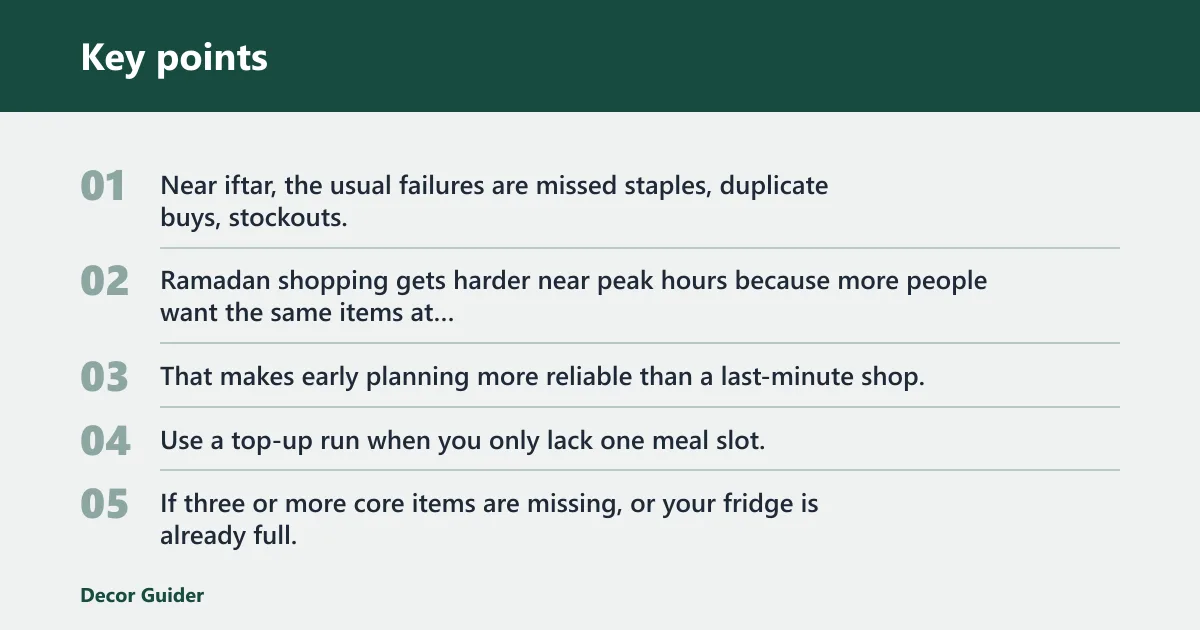
Near iftar, the usual failures are missed staples, duplicate buys, stockouts, and late delivery slots. Ramadan shopping gets harder near peak hours because more people want the same items at the same time, and delivery windows tighten as cutoff times approach. That makes early planning more reliable than a last-minute shop.
When the fix is a top-up run, not a full shop
Use a top-up run when you only lack one meal slot, such as bread for iftar or milk for suhoor. If three or more core items are missing, or your fridge is already full, switch to a smaller substitute plan instead of adding more perishables. For stored food, follow safe freezing and refrigeration guidance from USDA FoodKeeper and FoodSafety.gov so replacements do not create waste.
What you’ll need
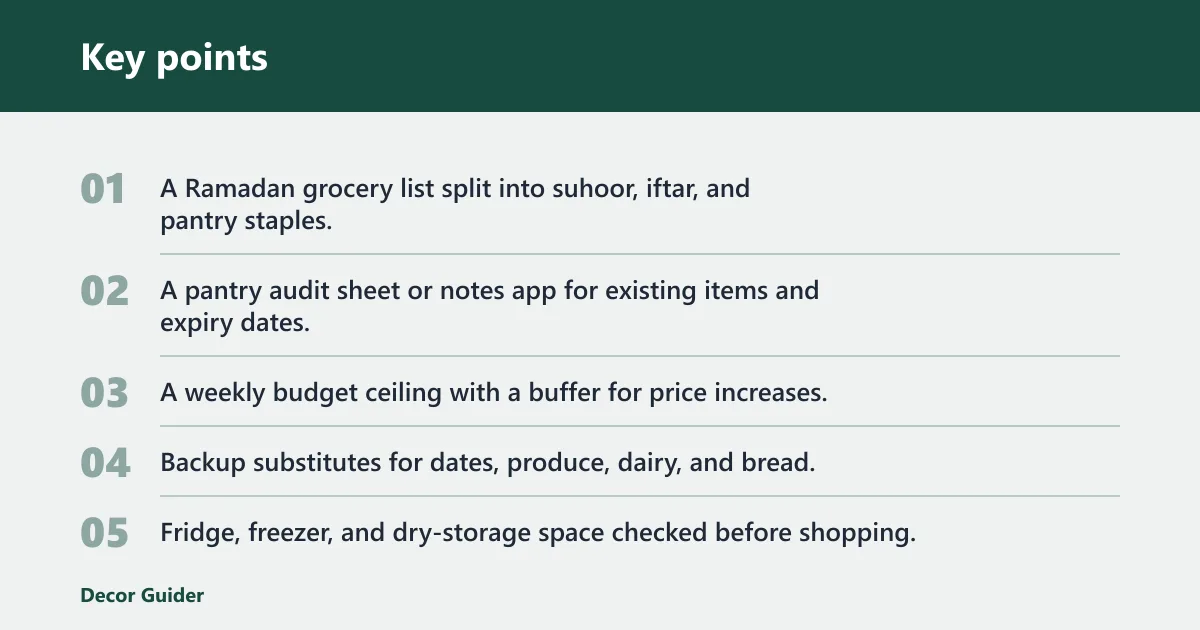
- A Ramadan grocery list split into suhoor, iftar, and pantry staples.
- A pantry audit sheet or notes app for existing items and expiry dates.
- A weekly budget ceiling with a buffer for price increases.
- Backup substitutes for dates, produce, dairy, and bread.
- Fridge, freezer, and dry-storage space checked before shopping.
- For delivery: substitution preferences, minimum order awareness, and slot checks.
Plan quantities for 7 to 14 days
Build the list around two meal patterns. For about 7 to 14 days, keep duplicates for high-use items such as dates, rice, oil, and milk. Split the list into suhoor, iftar, and pantry staples so you can see what runs out quickly and what can wait. That range also helps you stay inside a weekly budget when food prices move by category and week to week, which is why a buffer is useful (USDA Economic Research Service).
- Suhoor: milk, yogurt, eggs, oats, bread, dates, fruit, tea or coffee.
- Iftar: dates, soup items, rice, bread, vegetables, protein, cooking oil.
- Pantry staples: rice, flour, lentils, cooking oil, spices, dates.
Check inventory before you shop
Audit pantry shelves, fridge bins, and freezer space before any store trip or delivery order. Check expiry dates first, then note any duplicates already open. This prevents buying a second bag of rice while the first one is still half full, and it reduces spoilage risk because frozen and chilled foods should be stored within the time limits and temperatures recommended by USDA FoodKeeper and FoodSafety.gov.
Set a budget ceiling and buffer
Pick a weekly spend limit before shopping. Add a price inflation buffer for higher-cost weeks, then decide what gets cut, swapped, or deferred if the cart runs long. If an item is a nice-to-have, defer it; if it is core to suhoor or iftar, swap it. Because grocery prices can vary by store, brand, and season, the buffer keeps the list from collapsing when a few essentials cost more than expected (USDA Economic Research Service).
Ramadan grocery troubleshooting matrix
| Symptom | Likely cause | Immediate fix | Prevention rule | Backup substitute | Best use case / time-to-recover |
|---|---|---|---|---|---|
| Out-of-stock item | Peak-hour demand or late shopping | Buy the closest meal-slot replacement now | Order earlier and keep substitution preferences on | Dates for sweets, frozen vegetables for fresh produce, shelf-stable milk, sandwich bread | Best when the missing item is needed within the next meal or two; fastest recovery is same-day |
| Forgotten staple | List mixed suhoor and iftar items together | Add only the missing staple and stop there | Use separate list sections for each meal and pantry | Any equivalent staple already at home | Best when the item is common and replaceable, such as rice, oil, or bread; recovery is immediate if a swap is in the house |
| Overspending | No cap and no swap rule | Remove lower-priority snacks and premium versions | Set a weekly ceiling before checkout | Store brand, bulk pack, or postponed purchase | Best when the cart is only slightly over budget; recovery is same checkout session |
| Delivery delays | Late slot choice or cutoff missed | Switch to the earliest open slot or a store pickup | Book before the pre-iftar rush | Quick in-person top-up run | Best when the order is time-sensitive and the meal cannot wait; recovery is same day if pickup is open |
| Duplicate buys | No pantry audit | Return the extra item if possible or freeze it safely | Check current stock before every order | Use the extra only if storage allows | Best when the duplicate is unopened or freezable; recovery is immediate if storage space exists |
| Spoiled perishables | Too much fresh food for the storage space | Cook or freeze the most fragile items first | Buy perishable goods in smaller batches | Frozen vegetables, long-life dairy, shelf-stable protein | Best when produce, dairy, or protein is close to its use-by date; recovery is 1 to 3 meals if frozen promptly |
How do you fix a last-minute shortage?
Use the fastest substitute first, then decide whether you need a store run or a delivery top-up. For a same-meal fix, choose an item from the same meal slot: if iftar bread is missing, use flatbread, wraps, or rice already on hand. If the shortage affects the next meal only, stop after one replacement.
Shortage triage steps
- Check whether the missing item is for suhoor, iftar, or pantry use.
- Open the nearest backup option in the same category.
- Add only the replacement quantity you need for one or two meals.
- If the gap is still large, choose in-person shopping over delivery.
Say your iftar plan depends on fresh bread, but the store is out at 4:40 p.m. Switch to wraps or rice already in the kitchen, then move the bread purchase to the next day. That keeps dinner on time.
How do you stop Ramadan shopping mistakes?
Prevent repeats by making the list harder to misread. Separate suhoor, iftar, and pantry staples. Add quantities. Then audit what is already in the home before every order or trip. The list should match storage space, not wishful thinking.
Repeat-proof your list
- Review pantry shelves, fridge space, freezer space, and dry storage.
- Mark expiry dates on items already open or close to expiring.
- Write quantities for 7 to 14 days, with duplicates for dates, rice, oil, and milk.
- Flag one backup for each fragile item: produce, dairy, and bread.
- Put duplicate protection on the list by crossing off what is already in stock.
Picture a freezer with room for only two trays. That means a bulk poultry buy will create waste unless you split it into smaller packs or move some meals to shelf-stable protein. Storage capacity should shape the cart before checkout.
How should you shop when time and budget are tight?
Shop before the pre-iftar rush when possible. Earlier slots are usually easier to secure than late ones, and delivery cutoffs leave less room for changes as the evening gets closer. If the budget is tight, protect the core ingredients first and cut extras before they reach the cart.
Time-and-budget shopping steps
- Choose a weekday slot or an early-morning delivery window.
- Check the delivery cutoff before you build the cart.
- Sort items by priority: core meals first, extras last.
- Apply the weekly spend limit before payment.
- Cut, swap, or defer anything beyond the ceiling.
Suppose the cart is already above budget because rice and dairy jumped in price. Swap branded cereal for oats, defer snacks, and keep dates, bread, and milk protected. That preserves meal coverage without breaking the limit.
Common mistakes
Shopping without checking what you already have leads to duplicate buys and wasted space. Mixing suhoor and iftar needs on one vague list hides quantity gaps. Ignoring delivery slot cutoffs and substitution settings makes stockouts harder to recover from. Buying too much fresh food for the available fridge or freezer space creates spoilage.
A common first-timer mistake is buying one large fresh produce bundle because it looks cheaper, then discovering there is no room to chill it. Split the quantity instead, or move part of the plan to frozen vegetables and shelf-stable staples.
Frequently asked questions
Why is Ramadan grocery shopping so hard this week?
Peak hours, especially near iftar, raise demand for the same staples at the same time. Check your list against store hours, delivery cutoffs, and storage space before you leave. A short list with quantities usually works better than a broad one.
What should I do when my Ramadan grocery list keeps failing?
Break it into suhoor, iftar, and pantry staples, then add quantities for 7 to 14 days. Remove items already in the home, and keep one substitute beside each fragile item. That usually fixes missing-item loops and duplicate buys.
How do I fix last-minute grocery shortages before iftar?
Use the nearest same-meal substitute first, then top up only the missing amount. If bread is gone, use rice, wraps, or another starch already in the house. For deliveries, choose the earliest open slot and check substitution settings before confirming.
What if I keep forgetting items for Suhoor and iftar?
Make two separate sections and review them against what is already in the kitchen. Keep recurring items such as dates, milk, rice, and oil on every weekly list. A quick pantry audit before checkout prevents repeat omissions.
How do I troubleshoot budget overruns during Ramadan grocery shopping?
Set a weekly ceiling, then add a buffer for price increases. If the cart runs over, cut snacks first, swap premium brands for store brands, and defer non-urgent buys. Keep core meal items in place so suhoor and iftar still work.
What’s the fastest way to recover when my grocery order is out of stock?
Open the substitution settings, accept the closest match for the missing item, and check order accuracy at drop-off. If the substitute does not fit the meal, cancel that item and fill it with a store run. Dates, dairy, produce, and bread all need backup options.
How do I plan Ramadan groceries if I only shop once a week?
If shopping once a week, plan for about 7 to 14 days and buy more of the durable items first: rice, flour, lentils, cooking oil, spices, and dates. Keep fresh items smaller, and rely on freezer backup for produce and protein. That reduces midweek emergency shopping.
Products related to this article
Sponsored / affiliate links. As an Amazon Associate I earn from qualifying purchases. I may earn additional commission from eligible campaigns.