Ramadan Meal Planning Problems and Fixes
Fix Ramadan meal-planning breakdowns by finding the weak point first, then change one variable at a time: menu size, prep timing, shopping cadence, or storage. Left alone, the setup slips into repeated takeout, missing ingredients, tired Suhoor choices, and Iftar stress. Start with the weakest link.
What you’ll need
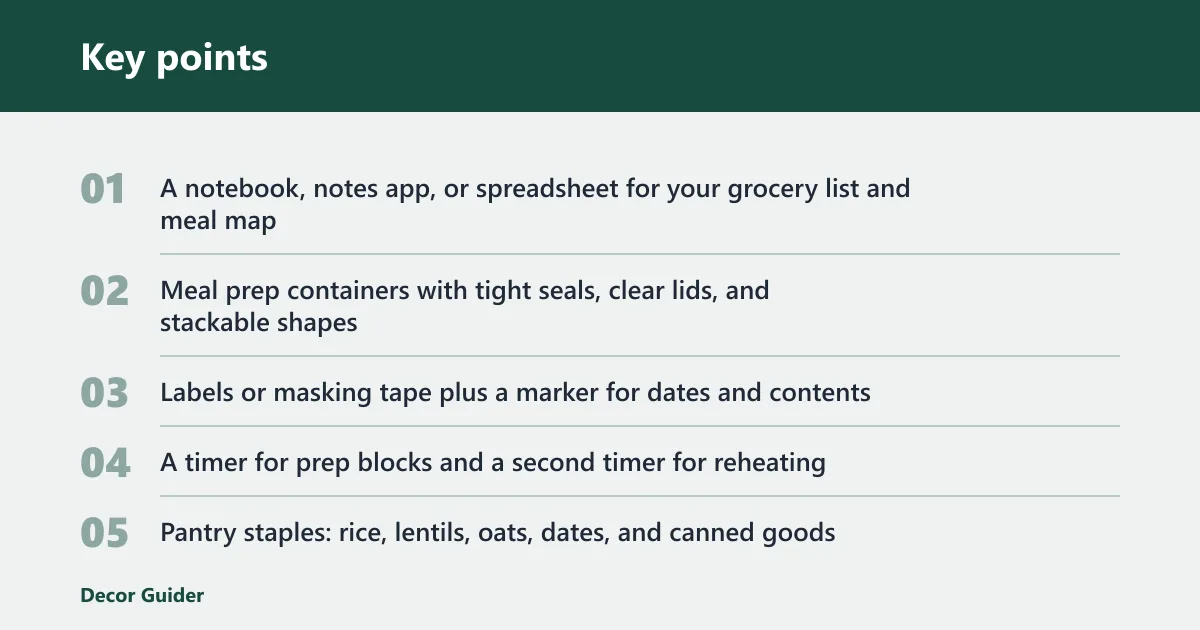


- A notebook, notes app, or spreadsheet for your grocery list and meal map
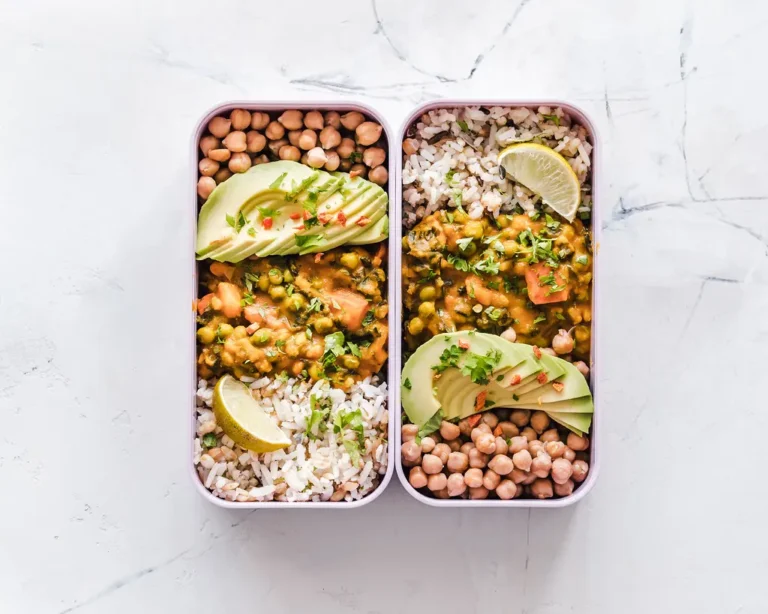
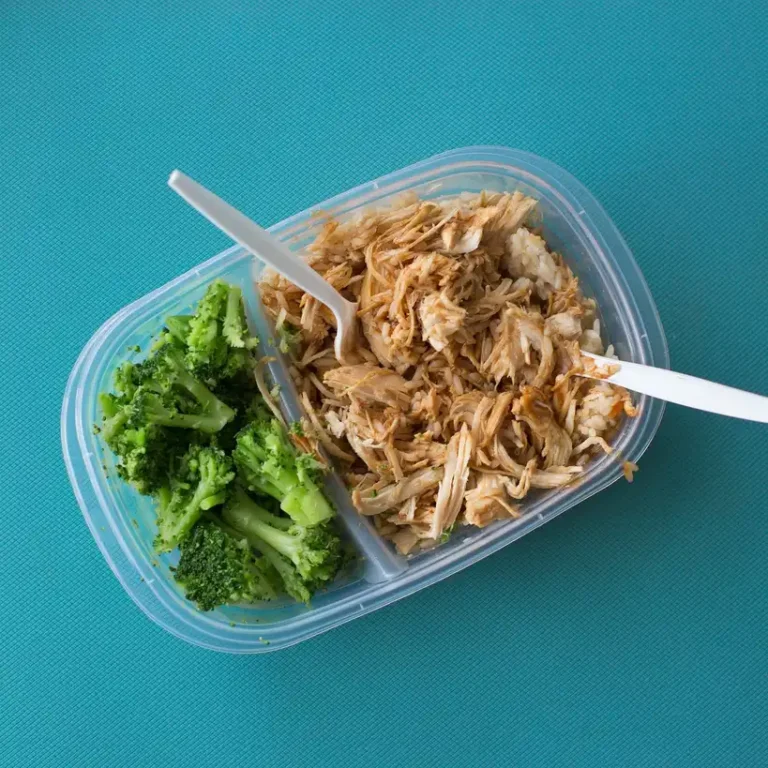
- Meal prep containers with tight seals, clear lids, and stackable shapes
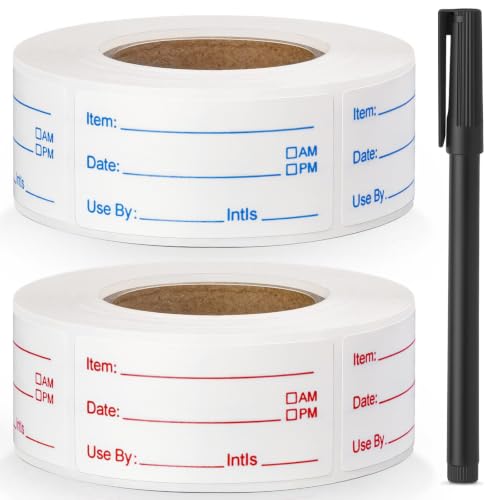
- Labels or masking tape plus a marker for dates and contents
- A timer for prep blocks and a second timer for reheating
- Pantry staples: rice, lentils, oats, dates, and canned goods
- A freezer-safe labeling system
- A fridge shelf or bin for Suhoor items and a separate one for Iftar components
Meal planning matrix
| Symptom | Likely cause | Quick fix | Prevention |
|---|---|---|---|
| Overshopping | Shopping from a full menu instead of a repeatable one | Delete two planned meals from this week’s list | Build from 5 to 7 repeatable meals only |
| Cooking too much | Portions are based on guesswork | Pack the extra into 2-cup containers | Write portions before you cook |
| Prep fatigue | Too many dishes in one session | Cut the prep list in half tonight | Limit each session to 3 core items |
| Forgotten Suhoor items | Suhoor is not on the shopping list | Add oats, dates, yogurt, and fruit now | Keep a fixed Suhoor checklist on the fridge |
| Leftover waste | No reuse rule | Assign one leftover meal within 48 hours | Label every container with date and next use |
| Time overruns | Prep window is too ambitious for workdays | Move one task to the weekend block | Set a 30-minute weekday cap |
| Budget creep | Impulse buys and duplicate pantry items | Remove one nonessential item from the cart | Check pantry first before each shop |
| Pantry duplication | Old stock is not counted | List what is already on hand | Use a running pantry note |
| Rushed Iftar | Main meal starts before hydration | Serve water, dates, and soup first | Stage Iftar in two parts |
| Missed hydration | No water target between meals | Set three water checkpoints | Keep a bottle by the prayer area and fridge |
| Freezer confusion | Containers are unlabeled or stacked randomly | Label contents, date, and serving count | Use one shelf for new items and one for older items |
| Family preference conflicts | One menu ignores kids, spice tolerance, or allergies | Split sauce and toppings before serving | Plan a base meal with optional add-ons |
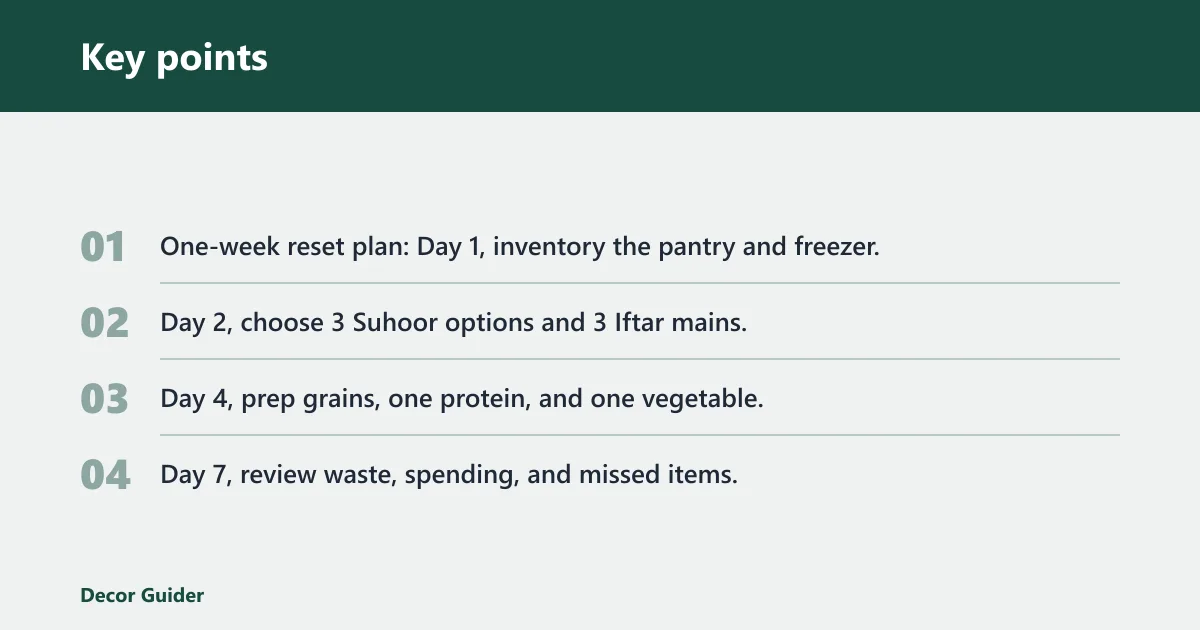
One-week reset plan: Day 1, inventory the pantry and freezer. Day 2, choose 3 Suhoor options and 3 Iftar mains. Day 3, shop once. Day 4, prep grains, one protein, and one vegetable. Day 5, cook one freezer meal. Day 6, use leftovers on purpose. Day 7, review waste, spending, and missed items.
Why your Ramadan meal plan keeps failing?
Your plan usually fails because it is built for a perfect week, not a fasting week. The first problems show up in Suhoor and Iftar: skipped pre-dawn meals, rushed evening cooking, extra waste, or overspending. Find the symptom first, then change the smallest part of the system that caused it.
Trace the failure point
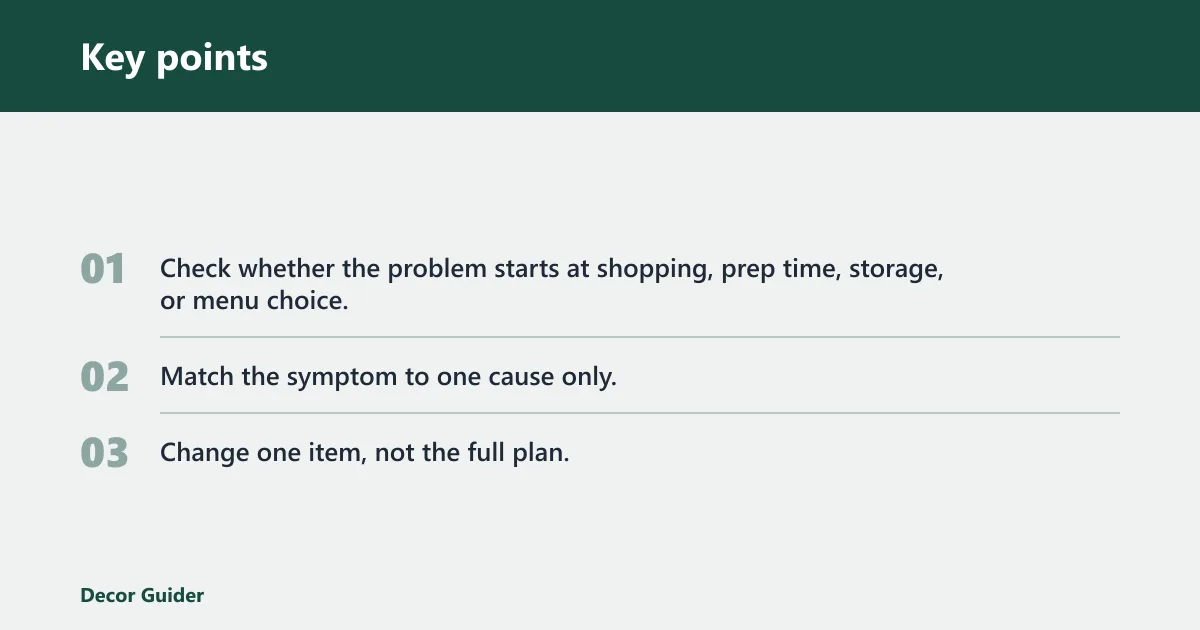
- Check whether the problem starts at shopping, prep time, storage, or menu choice.
- Match the symptom to one cause only.
- Change one item, not the full plan.
Say your list looks fine on paper, but by Wednesday the rice is gone and the vegetables are still untouched. That points to mismatched quantities, not bad cooking. Reduce the menu before you buy more.
How do you fix a broken Suhoor and Iftar schedule?
Fix the schedule by turning both meals into repeatable templates. Suhoor should lean on slow-digesting foods, protein, fiber, and fluids, while Iftar should start with hydration, then move to a light starter before the main plate. Keep batch-cooked pieces ready so you are not starting from scratch twice a day.
Use a Suhoor template
- Set a fixed 15-minute prep window before sleep.
- Build Suhoor from one protein, one fiber source, and one fluid.
- Keep portions moderate so the meal feels manageable at dawn.
Use an Iftar sequence
- Break the fast with water and dates.
- Serve soup or salad before the main dish.
- Plate the main meal after hydration, not before it.
Suppose a household wants chicken, rice, and a salad at Iftar, but the cook keeps arriving at sunset with nothing ready. The first fix is not a new menu. It is a batch-cooked rice base, a prepped protein, and a washed salad kit so the meal can be assembled fast.
How do you fix shopping and prep overload?
Shopping overload usually means the grocery list is bigger than the week can support. Prep overload usually means too many separate dishes. Build the list from meals you will repeat, then split the work into a weekday block and a weekend session. Keep workdays short and predictable.
Trim the grocery list
- Open the pantry list first.
- Add only the items needed for 3 to 5 repeat meals.
- Buy family-size quantities only for staples you will finish.
Split prep time
- Use a 30-minute weekday prep window for washing, chopping, and portioning.
- Use a 90-minute weekend session for batch cooking.
- Cook fewer items in larger portions if your freezer has space.
For busy work schedules, the split is simple: weekdays for assembly, weekends for cooking. That keeps the kitchen schedule tied to energy levels instead of fighting them.
What should I do when my Ramadan grocery list is incomplete?
An incomplete list usually means the plan skipped pantry staples, Suhoor items, or fresh produce rotation. Fix the gap by checking what is already on hand, then filling in only the missing meal components. A complete list should also track budget limits and family-size quantities, not just recipes.
Repair the list
- Check the pantry for rice, lentils, oats, dates, and canned goods.
- Add fresh produce for 3 to 4 days, not the full month.
- Write quantities in family terms, such as 2 liters of yogurt or 1 family pack of chicken.
Keep a budget note beside each line item. If the cart starts to drift, remove one nonessential snack or duplicate ingredient before checkout.
What are the most common Ramadan meal planning mistakes?
The most common mistakes are overplanning, overcooking, and underlabeling. A fourth is ignoring household differences: children need smaller portions, some people need allergy swaps, and many homes have different spice tolerance or different fasting schedules. Plans that ignore those differences break down quickly.
Watch for these errors
- Buying for an ideal menu instead of a repeatable one
- Prepping too many dishes at once
- Storing leftovers without dates or reuse plans
- Skipping hydration planning between Iftar and Suhoor
- Using one spice level for every plate
A common first-timer mistake is packing one container with a full dinner portion for every person. That often leaves kids with waste and adults with too little flexibility. Use smaller containers for children and keep add-ons separate.
How can I troubleshoot Ramadan meal prep when I run out of time every day?
If time runs out daily, the prep system is too large for the weeknight window. Move chopping, batch cooking, and labeling into a weekend block, then keep weekdays to assembly only. That change usually fixes missed Suhoor items, rushed Iftar, and takeout fallback in the same week.
Use a realistic time budget
- Limit weekday prep to 30 minutes.
- Reserve one 90-minute weekend block for batch cooking.
- Use a timer for each task so the session does not drift.
If that didn’t work, try this next
- Cut one cooked side dish from the week.
- Use freezer-friendly recipes for one main only.
- Switch one meal to leftovers instead of fresh cooking.
How do I keep leftovers, containers, and storage from breaking the plan?
Leftovers work only when storage rules are clear. Use airtight containers, label them with the date and contents, and keep a fridge/freezer shelf for older items. Most food safety guidance puts cooked leftovers in the fridge within 2 hours and encourages freezer labeling so nothing gets lost or reused late.
Set storage rules
- Portion leftovers into single-meal or family-sized containers.
- Seal containers tightly and label them immediately.
- Move one meal from freezer to fridge the night before use.
Keep a simple reuse rule: if a cooked dish is not planned for the next 48 hours, freeze it. That reduces waste and keeps the fridge from filling with mystery containers.
Frequently asked questions
Why is my Ramadan meal planning not working?
It usually breaks because one part of the system is too ambitious: menu size, prep time, or shopping cadence. Start by identifying the symptom, then adjust only one variable. That keeps the plan easier to repeat tomorrow and reduces last-minute takeout or missed meals.
How do I fix my Ramadan meal plan when I keep missing suhoor or iftar prep?
Move Suhoor and Iftar into templates. Keep one protein, one fiber source, and one fluid for Suhoor, then serve water and dates before the main Iftar plate. Set a 15-minute night-before prep block so the next morning and evening start with less work.
Why do I keep wasting food during Ramadan meal planning?
Waste often comes from loose portions, unlabeled containers, and no reuse plan. Divide leftovers into dated containers, assign them to a meal within 48 hours, and freeze anything that will sit longer. That reduces spoilage and makes the fridge easier to read.
How do I adjust Ramadan meal planning for a busy work schedule?
Use a smaller menu, repeat meals, and split prep by day. Weekdays should handle only assembly, while the weekend handles batch cooking and freezer portions. Keep one backup meal ready so a long workday does not derail Suhoor or Iftar.
What is the easiest way to make a realistic Ramadan meal plan?
Pick 3 Suhoor options, 3 Iftar mains, and 2 backup meals, then shop for those only. Keep pantry staples on hand, use airtight containers, and leave room for leftovers. A realistic plan is the one you can repeat on a tired day.
Products related to this article
Sponsored / affiliate links. As an Amazon Associate I earn from qualifying purchases. I may earn additional commission from eligible campaigns.