Suhoor Meal Planning Troubleshooting
Suhoor meal planning troubleshooting works best when you build it around one backup meal, one hydration checkpoint, and a small timing buffer before Fajr. Missed prep usually means a skipped meal, too little water, or a rushed kitchen that leaves everyone fasting on empty. This guide covers common failure points, practical backup meal formats, and a repeatable checklist for timing, prep, and hydration.
Why suhoor plans fail
Meal planning shifts to suhoor and iftar during Ramadan, and the plan is built around a shortened eating window. That change is where most breakdowns start: the kitchen has less time, the decision load moves earlier, and one missed prep step can remove the whole meal.
Suhoor should give you steady energy and be simple to execute. It also needs to work when you are tired, when ingredients are not ready, or when the household schedule changes at the last minute.
Timing breaks the plan first
Oversleeping is usually not a food problem. It is a timing problem. If the meal depends on a fresh cook, a soak, or a thaw that was never set the night before, the plan can fail before anyone reaches the table.
Set reminders inside the eating window, not after it. A prep alert in the evening and a final suhoor alert before the meal can still leave enough room to eat, drink, and clean up.
Protein and thawing are common weak points
Many suhoor plans break when the protein is not cooked, the eggs are gone, or the freezer item was never moved to the fridge. A plan that depends on a single cooked item is fragile. A better setup includes one hot option and one no-cook backup.
That also applies to grains and soaked ingredients. If oats, beans, or grains need time, they need a written prompt, not memory.
Hydration often gets left for the end
Too little water after iftar is a major reason suhoor feels harder the next morning. The hydration window between iftar and suhoor should be tracked in the plan, with water spread in small amounts across the evening rather than all at once. Soup, tea, and water-rich fruit can help fill the gap.
Suppose a family plans a hot egg dish at 4:15 a.m., but the eggs were never moved from the freezer-packed meal prep box to the fridge. The fix is not to force the original plan. It is to switch to a shelf-stable backup and keep the timing on track.
Suhoor failure-Mode checklist
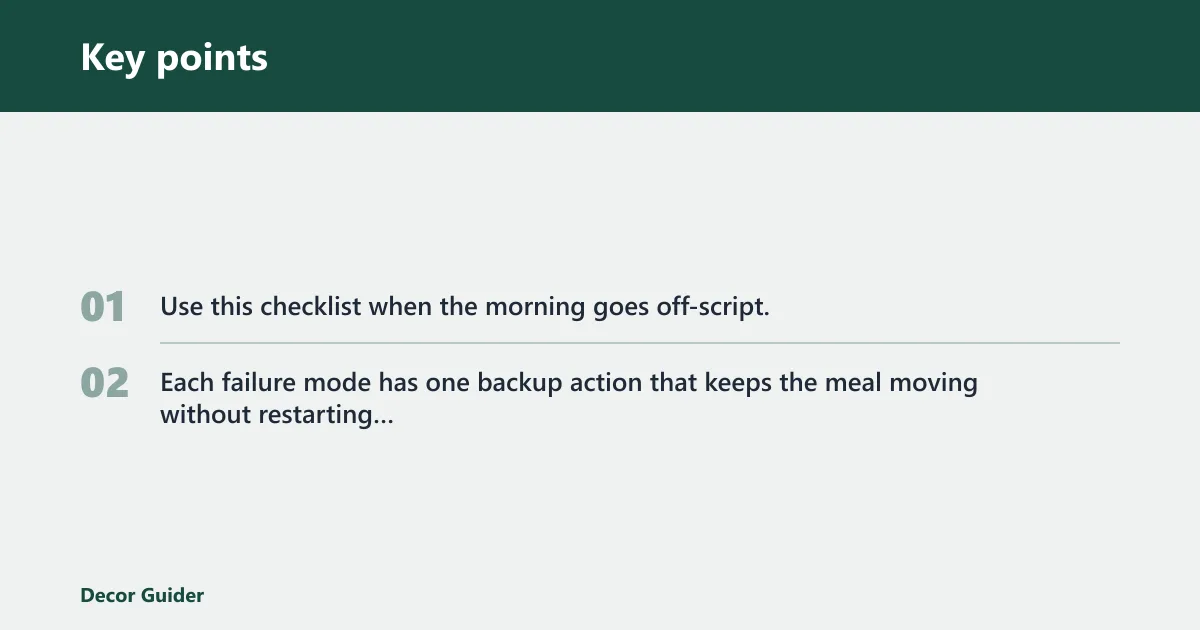
Use this checklist when the morning goes off-script. Each failure mode has one backup action that keeps the meal moving without restarting the whole plan.
| Problem | Likely cause | Backup action |
|---|---|---|
| Overslept | No buffer before Fajr; no backup meal set out | Switch to a no-cook plate with yogurt, fruit, toast, and water. |
| No cooked protein | Batch prep was skipped or portions ran out | Use a quick backup protein such as eggs, yogurt, or nut butter with bread. |
| Forgot to hydrate | Water was not split across the evening | Drink a glass right away and keep a bottle beside the meal until the fast begins. |
| Food too salty | Too much cured meat, seasoning, or packaged food | Balance the plate with plain oats, fruit, or bread and keep the next meal lighter. |
| Ingredients not thawed | Freezer items were not labeled with a thaw time | Skip the frozen item and use pantry food or refrigerator food instead. |
| Pantry empty | Grocery list was not tied to suhoor needs | Use any shelf-stable combination available, then restock the basics after iftar. |
| Family mismatch | One meal format does not fit all eaters | Serve one shared base and let each person add toppings or sides. |
| No appetite | Meal is too heavy or too large for dawn | Downshift to a smaller, softer meal and keep portions modest. |
| Too much sugar | Sweet drinks or desserts took over the menu | Reset the plate around fruit plus protein and skip the extra sweets. |
| No leftovers | Batch cooking was not planned with extra portions | Reserve one portion during cooking so the next suhoor is already covered. |
| Prep took too long | Too many separate dishes; no sequencing | Use one-pan or jar meals and prep the longest item first. |
| Meal felt heavy | Too much fried food, fat, or volume | Reduce the portion and move to a lighter format with oats, toast, eggs, and fluids. |
What should I prep the night before for suhoor?
Prep the night before should remove the morning decisions, not create new ones. Set out the meal format, the drink, and anything that needs thawing, soaking, or reheating. Overnight oats are a repeatable template, and egg muffins are a strong batch-prep option because they reheat quickly.
Build around one make-ahead format
Overnight oats work well in jars with milk, yogurt, fruit, nuts, and chia. They are easy to portion, easy to label, and easy to grab when time is short. They also suit people who do better with a soft, cool meal before dawn.
Egg muffins are useful when the household needs something more savory. They are batch-friendly, quick to reheat, and easy to portion for different appetites. A savory egg wrap can also work when the morning is tight.
Set out the carb base and fluids
Whole grain bread or toast is a dependable carb for suhoor. Pair it with eggs or nut butter so the meal lasts longer. Put the bread on the counter the night before if you know the kitchen moves slowly in the morning.
Also stage the water. If suhoor keeps failing, the missing item may be the glass, not the food.
Use a simple prep order
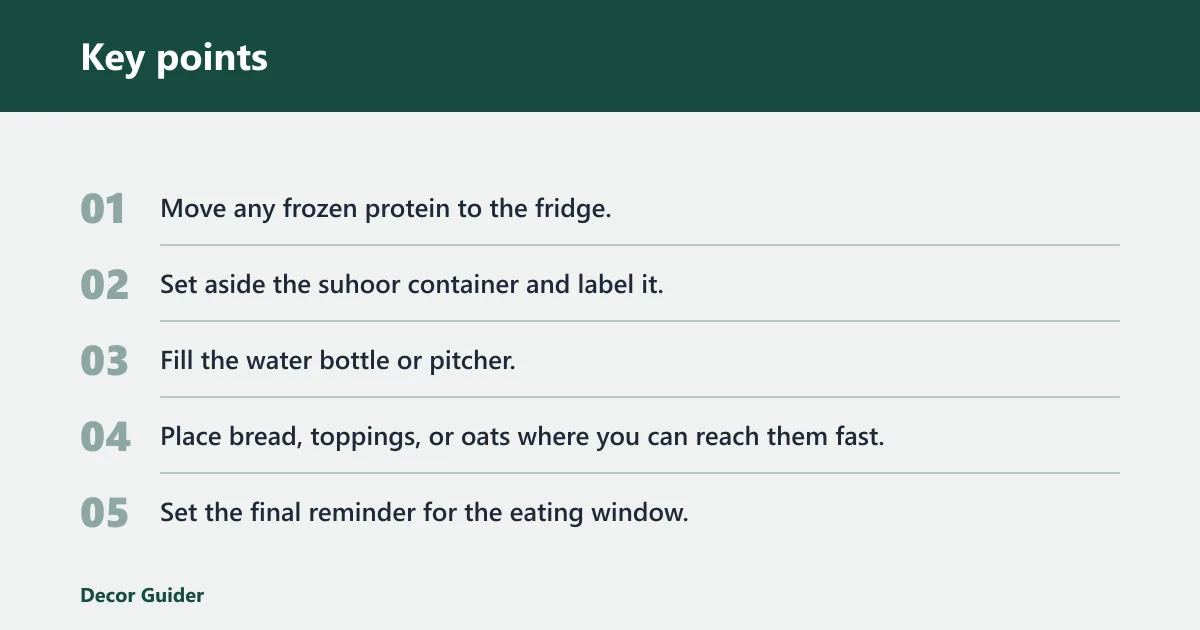
- Move any frozen protein to the fridge.
- Set aside the suhoor container and label it.
- Fill the water bottle or pitcher.
- Place bread, toppings, or oats where you can reach them fast.
- Set the final reminder for the eating window.
A common first-timer mistake is making three different suhoor options for one morning. That sounds flexible. It usually creates clutter, more dishes, and a late start.
What foods work best for a filling suhoor?
The most reliable suhoor plates combine slow-digesting carbs, protein, and fluids. In practice, that means a balanced plate with a moderate amount of protein, a steady carb base, and enough fluid to make the meal easier to finish. Exact ratios vary by person, appetite, and schedule.
Start with slow-release carbs
Whole grain bread, oats, and similar grains help the meal last longer than refined starches alone. For many people, that means less mid-morning drag. The goal is not a huge meal. It is a steady one.
Add protein and a little fat
Eggs, yogurt, milk, nut butter, cheese, and beans all fit the pattern. Protein helps the meal feel complete, and a moderate amount of fat can slow digestion without making the plate heavy. Use one main protein, not three competing ones.
Keep the meal small enough to finish
If appetite is low, shrink the format instead of skipping it. Overnight oats, a small egg muffin plate, or toast with nut butter can be easier to finish than a full spread. If the meal feels heavy, reduce fried food and large portions first.
Think in backups, not perfect menus
Say your planned cooked meal falls through because the chicken was never thawed. A fast backup is toast with eggs or yogurt plus oats, which keeps the meal balanced without a full cook cycle. That is the kind of substitution that keeps the morning moving.
How can I build a suhoor plan that also covers hydration?
Hydration planning works best when it starts at iftar and continues until suhoor. The goal is not to chug water in one sitting. It is to spread fluid steadily between iftar and suhoor, then top up at dawn with an amount the household can realistically finish.
Begin at iftar
Iftar usually starts with dates and water, then moves into opening foods and a main meal. Dates provide quick natural energy, and water helps the body begin rehydrating after the fast. After that, build the rest of the evening with fluids, not just food.
Use the full evening window
Rather than aiming for a single target number, plan multiple drink moments across the night. Water, soup, tea, and water-rich fruit can all contribute. Spreading intake across the evening is often easier than trying to catch up at the end.
Plan for small drinkers
If someone can only drink a little at suhoor, the answer is to move more of the fluid earlier in the night. Keep water at iftar, another glass with the main meal, and a final small glass near bedtime. Then keep a modest amount at dawn.
Picture a working parent who wakes thirsty most mornings. The plan should not rely on one big water bottle at 4 a.m. It should spread fluid across the evening and pair the last drink with a light suhoor, such as oats and fruit.
What is a simple weekly suhoor meal plan that actually works?
A simple weekly plan works when it repeats a few formats instead of inventing a new meal every day. The best template includes suhoor, iftar, prep notes, and a grocery column. A separate planning column helps keep the shopping list tied to the actual meals, which reduces misses and overbuying.
| Day | Suhoor | Iftar | Prep notes | Grocery column |
|---|---|---|---|---|
| Monday | Overnight oats with yogurt and fruit | Dates, water, soup, rice with protein | Assemble oats; move yogurt to front of fridge | Oats, yogurt, fruit, dates |
| Tuesday | Egg muffins with whole grain toast | Dates, water, salad, stew | Reheat muffins; set out bread | Eggs, toast, greens |
| Wednesday | Toast with nut butter and banana | Dates, water, soup, pasta or rice | Label fruit shelf and water bottle | Bread, nut butter, bananas |
| Thursday | Overnight oats with chia and nuts | Dates, water, vegetables, protein | Mix jar at night; check soaked items | Chia, nuts, oats, milk |
| Friday | Egg wrap and fruit | Dates, water, soup, main meal | Keep wrap ingredients together | Tortillas, eggs, fruit |
| Saturday | Leftover rice bowl with eggs | Dates, water, stew, vegetables | Move leftovers to front shelf | Rice, eggs, vegetables |
| Sunday | Yogurt, oats, and fruit | Dates, water, soup, batch-cooked protein | Reset freezer labels and thaw plan | Yogurt, oats, fruit |
How the template reduces waste
The grocery column keeps buying tied to the actual suhoor plan, not to a vague idea of “healthy food.” That cuts food waste because ingredients get assigned before they expire. It also keeps the freezer moving, which matters when batch cooking is part of the system.
Suhoor meal planning troubleshooting table
Use this as a scannable planning view. The point is to decide the night before, not to improvise at dawn.
| Day | Night-before action | Morning backup |
|---|---|---|
| Monday | Assemble overnight oats and place water beside the container. | Grab and eat without cooking. |
| Tuesday | Reheat or portion egg muffins and set out toast. | Use toast and yogurt if the reheating step is skipped. |
| Wednesday | Set bread, nut butter, and fruit in one visible spot. | Build a no-cook plate in minutes. |
| Thursday | Mix oats, chia, and milk; label the jar clearly. | Eat the jar cold or pair it with fruit. |
| Friday | Keep tortilla, egg, and fruit items together in the fridge. | Make a simple wrap or serve the parts separately. |
| Saturday | Move leftovers forward and decide the reheat order. | Use leftovers first before opening new items. |
| Sunday | Reset labels, thaw schedule, and water bottle for the week ahead. | Start Monday with the easiest meal format. |
How do I avoid wasting food when planning suhoor for Ramadan?
Avoiding waste starts with storage, labeling, and prep sequencing. Batch cooking for soups, stews, rice, and proteins reduces daily kitchen stress and gives you freezer storage that can fill gaps later in the week. The plan works only if you label portions and use a thaw schedule.
Cook with the freezer in mind
When you batch cook, package portions in the size you will actually eat at suhoor. Small containers are easier to thaw than one large tub. Write the date and use-by note on each container so nothing disappears to the back of the freezer.
Sequence prep so nothing gets missed
Start with items that need the longest lead time: thawing, soaking, and chilling. Then move to quick items like toast toppings or jar meals. If the sequence is wrong, the food may still be safe, but the morning will be harder than it needs to be.
Use leftovers on purpose
Plan leftovers as part of the week, not as an accident. Extra rice can become a suhoor bowl. Extra stew can become a soup base. Extra cooked protein can sit with toast, yogurt, or oats depending on the household.
Keep a backup shelf
Reserve a small area for emergency suhoor food: oats, dates, bread, nut butter, and shelf-stable milk if your household uses it. That shelf is what keeps the plan from collapsing when the main meal runs out.
Batch cooking and storage
Batch cooking works best when the food is chosen for reuse, not just volume. Soups, stews, rice, and proteins can be portioned and frozen, then used across several suhoor and iftar meals. That reduces pressure on busy nights and gives you a backup when the original plan fails.
For adjacent Ramadan planning, it also helps to keep a hydration plan for Ramadan nights, a Ramadan batch cooking plan, a Ramadan leftovers guide, and the right meal prep containers close together so the system holds up under time pressure.
Label before the food goes away
Each container should show the item and the thaw timing. Without that note, the item becomes a guess. The guess is what causes the missed thaw, the late start, and the empty plate at dawn.
Keep a prep sequence card
Put the order on one card or one note: thaw, soak, cook, portion, label, and chill. If one step is skipped, the next day feels it. That is why a simple checklist often works better than a long recipe file.
Frequently asked questions
Why does my suhoor meal planning keep falling apart?
It usually falls apart at one of three points: timing, ingredients, or hydration. If the meal needs too much morning work, if the protein was never cooked or thawed, or if water was left for the end, the whole setup becomes fragile. Build a backup meal and a reminder for each night.
How do I plan suhoor when I’m too tired to cook in the morning?
Choose a no-cook or reheat-only format. Overnight oats, yogurt with oats and fruit, toast with nut butter, or reheated egg muffins all work better than a fresh stove-top meal. The less you need to think, the more likely suhoor is to happen on time.
How do I stop forgetting to thaw or soak ingredients for suhoor?
Put thaw and soak notes directly into the planner, not only into memory. A written prep column works well, especially when tied to the meal plan template. Label freezer containers with the night they need to move to the fridge, then check that note during iftar cleanup.
Products related to this article
Sponsored / affiliate links. As an Amazon Associate I earn from qualifying purchases. I may earn additional commission from eligible campaigns.