Suhoor Meal Cost: What It Really Adds Up to
A suhoor meal cost often runs about $1.50 to $4 per person for a budget breakfast, about $4 to $8 for a mixed meal, and more when it includes meat, dairy, and fresh fruit. These are estimates that vary by region, season, and store, and the total can rise quickly with convenience items. USDA food plans and CPI food-at-home data show that grocery prices shift by category and location, so this guide treats every range as approximate rather than fixed. This guide breaks down suhoor costs by meal type, ingredient drivers, and practical ways to keep meals filling on less.
What is suhoor and when does it end?
Suhoor is the meal you eat before dawn fasting starts, and it ends at Fajr, the dawn prayer. Food after Fajr can invalidate the fast, so timing matters as much as ingredients. Because schedules vary by location and season, the right plan depends on local prayer time and household routine.
Why the meal is usually simple but sustaining
Suhoor is a traditional part of Ramadan fasting, and Muslims are encouraged to eat it for its blessings. It is often served as a large, heavy meal, but that style is not required. Some suhoor foods can be simple and balanced, like eggs and oatmeal, which cost less than many cooked plates and still hold up through the day.
For budget planning, think in terms of staying power, not size. Complex carbohydrates, protein, and a small amount of fat usually keep the plate useful longer than a sugary or fried spread that leaves you hungry again soon.
How local prayer timing changes planning
Suhoor timing shifts with geography and season. A household with an early Fajr window may prefer overnight oats, fruit, and boiled eggs, while a later schedule can support a warm grain bowl or shakshuka. The cost changes too, because timing affects whether you cook once, reheat, or rely on packaged convenience foods.
What drives suhoor meal cost
The biggest price drivers are protein foods, grains, fresh produce, and convenience items. Eggs, Greek yogurt, lentils, whole-grain bread, oats, and fruit can all be budget-friendly, but the bill rises when the meal leans on smoked fish, specialty dairy, pre-cut fruit, or single-serve packaging. Dates, nuts, honey, and whole grains often stretch farther per serving.
The biggest price drivers: protein, grains, and fresh produce
Protein usually changes the total fastest. Eggs and lentils tend to cost less per meal than smoked fish or large amounts of dairy. Whole grains such as oats and whole-grain bread are also efficient because they bulk up a plate without relying on expensive add-ons.
Fresh produce can stay affordable when you choose water-rich options that fit the same meal. Cucumbers, melons, and oranges often work better than out-of-season berries or a large mixed-fruit tray. The more a meal depends on prepped convenience produce, the faster the cost rises.
Why dates and pantry staples often cost less per serving
Dates are a traditional suhoor food and a practical one. They offer quick energy in a small portion, and they pair well with water or yogurt. Ramadan pantry staples such as dates, nuts, honey, whole grains, and shelf-stable items usually cost less per serving than last-minute convenience foods because they store well and waste less.
That matters for households that eat suhoor every day. A pantry item bought in a larger pack can support several meals, while a fresh, ready-to-eat item may cost more each time it appears on the plate.
How convenience foods and single-use packaging raise the bill
Packaged drinks, snack cups, pre-cut fruit, and single-serve yogurt make prep faster, but they often add hidden costs. You pay for packaging, transport, and convenience, not only the food itself. Leftovers also matter: a meal that is over-portioned or poorly stored becomes waste instead of savings.
Suppose a household buys four individual yogurt cups for suhoor instead of a larger tub. The per-serving price usually rises, and any uneaten portion in the cup ends up as waste. The same logic applies to juice boxes, grab-and-go nuts, and ready-made bowls.
Suhoor cost calculator
The table below shows a text-only suhoor cost calculator with three budget tiers. The ranges are estimates per meal and per person, and they vary by region, season, and store. The table also shows one-person versus four-person monthly totals, price drivers, and a swap-to-save comparison so readers can see which ingredient raises cost most. Cheaper substitutions can bring the same meal shape back into a lower tier.
| Budget tier | Sample ingredient bundle | Estimated per-meal cost range | 1-person monthly total | 4-person monthly total | Price drivers | Swap to save | Estimated savings per meal |
|---|---|---|---|---|---|---|---|
| Low | Oats, dates, plain yogurt, water | $1.50 to $3 | $45 to $90 | $180 to $360 | Yogurt size, fruit type, date count, oat form | Use rolled oats instead of flavored oats; choose plain yogurt in a larger tub; swap fresh fruit for one or two dates; use tap or filtered water instead of bottled drinks | About $0.50 to $1.50 |
| Medium | Eggs, whole-grain bread, fruit, nuts | $4 to $8 | $120 to $240 | $480 to $960 | Egg count, nut portion, fruit choice, bread type | Use eggs instead of smoked fish; choose banana or apple instead of berries; buy nuts in bulk; replace toast with oats if bread is expensive | About $1 to $3 |
| Higher | Avocado, smoked fish, chia, specialty yogurt or bread | $8 to $15+ | $240 to $450+ | $960 to $1,800+ | Smoked fish, avocado size, specialty bread, chia, premium yogurt | Swap smoked fish for eggs or lentils; replace avocado with peanut butter or hummus; use chia sparingly or skip it; choose house-brand bread and plain yogurt | About $2 to $6+ |
How the calculator works
The calculator is built around the parts of suhoor that change price fastest. A meal gets more expensive when it combines several premium items in one sitting, such as smoked fish, chia, avocado, and specialty bread. It gets cheaper when one expensive item is replaced with a pantry staple.
Meal prep containers and jars also matter because they reduce overfilling, repeat purchases, and spoilage. A jar of overnight oats gives you a fixed portion. A loosely packed fridge shelf does not.
How much does a suhoor meal cost by budget tier?
Most households can plan suhoor in three cost bands: low, medium, and higher. Low-cost meals rely on pantry staples and simple prep. Medium meals add more protein, fruit, or nuts. Higher-cost meals usually include convenience foods, specialty items, or more expensive protein sources.
Low-cost suhoor meals
Low-cost suhoor meals usually land around $1.50 to $4 per person when they center on oats, dates, eggs, yogurt, lentils, and water. Overnight oats, toast with eggs, and lentil bowls are common examples. These meals work best when ingredients are bought in simple forms and used across several days.
Mid-range suhoor meals
Mid-range meals often run about $4 to $8 per person. That range fits eggs with whole-grain bread and fruit, yogurt with nuts and oats, or a grain bowl with avocado. The cost rises when the meal adds fresh produce, dairy, or nuts in larger amounts, but it still stays below specialty or meat-heavy plates.
Higher-cost suhoor meals
Higher-cost meals usually start at about $8 per person and can rise faster when they include items like smoked fish, avocado-heavy plates, specialty bread, chia, or premium dairy. These meals can still be practical, but they are easier to overspend on when they include several “nice-to-have” items at once.
Cost per person versus household batch cost
Per-person cost matters, but batch cost decides the grocery bill. A four-person household may spend more in total while still keeping the per-plate cost low if the meal is repeated across several days. Batch prep also reduces the chance that half a container of yogurt, herbs, or fruit spoils before it is used.
Budget by household size
One person can often stay within a low tier by repeating a few ingredients across the week. A four-person household usually needs a larger grocery run, but the per-person cost can stay similar if the family uses the same core foods in different combinations. The most reliable way to protect the budget is to repeat ingredients, not to repeat expensive meals.
What to eat for suhoor on a budget
For a budget suhoor, focus on foods that stretch, store well, and keep you full longer. The best low-cost choices are complex carbohydrates, protein foods, healthy fats in modest amounts, and hydration-friendly produce. That mix gives you staying power without leaning on expensive add-ons.
Complex carbohydrates that stretch longer
Complex carbohydrates at suhoor include oats, whole-grain bread, and brown rice. Oats are one of the cheapest make-ahead bases, and whole-grain bread works well with eggs, yogurt, or nut butter. These foods provide steady energy and are easy to portion in a budget-friendly way.
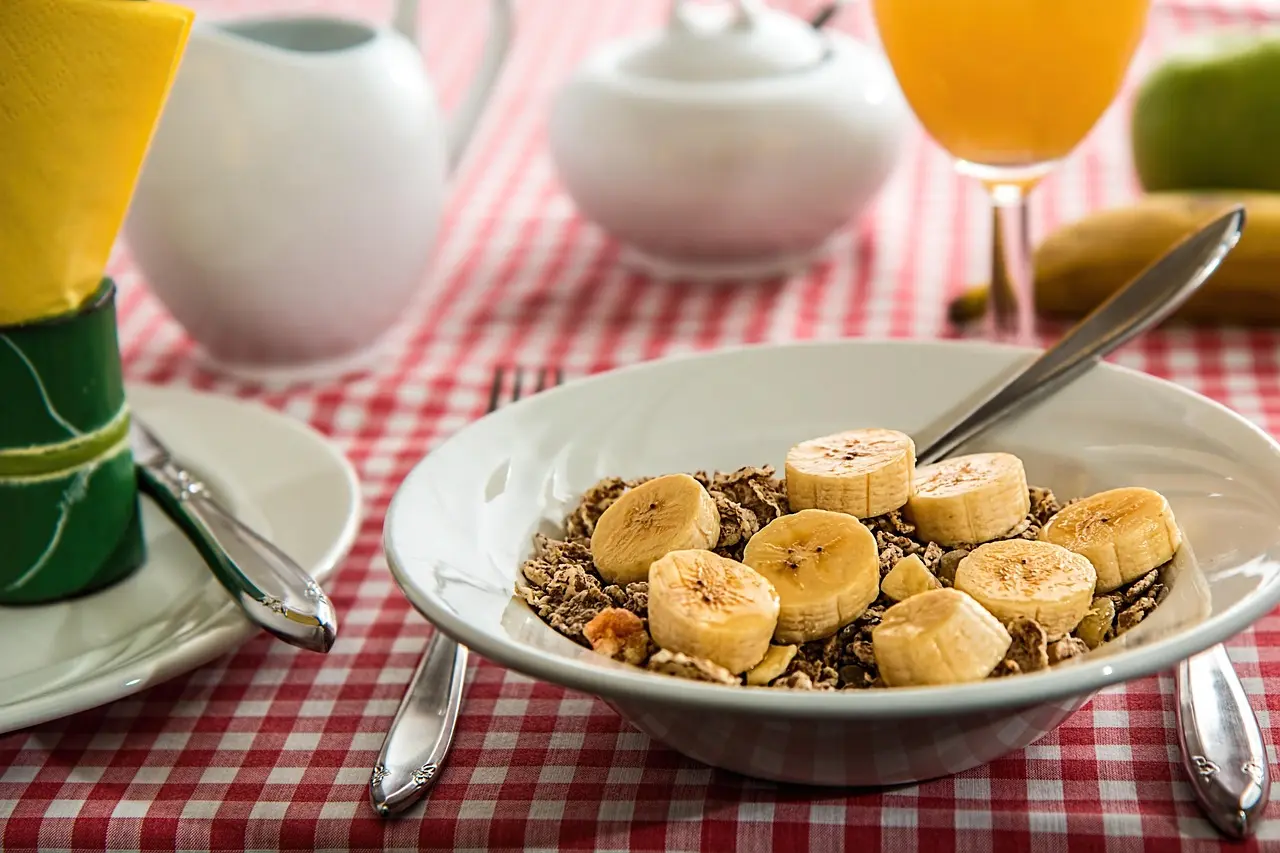
Overnight oats are especially useful because they are made ahead and stored in the fridge. A jar with oats, milk or yogurt, and a small topping such as dates or cinnamon costs less than a packaged breakfast and is easy to scale for one person or several.
Protein foods that keep you full
Protein at suhoor helps maintain muscle mass and keep you full longer. For suhoor, eggs, Greek yogurt, and lentils are among the most budget-friendly options. Egg muffins or shakshuka are also smart because they reheat well and can be made in batches.
A common first-timer mistake is buying expensive protein for every night. That is not necessary. A rotation of eggs, yogurt, and lentils usually keeps costs lower and gives you enough variety to avoid boredom.
Healthy fats that add staying power
Healthy fats improve satiety, so a little can go a long way. Avocado, nuts, and chia seeds are useful, but they can get pricey if used without limits. Use them as a topping or side, not the whole meal, and the plate stays satisfying without moving into a higher tier.
Nut butter can also be a sensible substitute when whole nuts are expensive. One spoonful on whole-grain toast or stirred into oats often costs less than building a snack plate around several premium items.
Hydration choices that fit a budget
Hydration should be spread out between iftar and suhoor, not crammed into one drink at the last minute. Water is the lowest-cost choice, and water-rich produce can support thirst management. Cucumbers, melons, oranges, and tomatoes often help more than sweet drinks that add cost and do less for hydration.
Dates and cucumbers are described as a sunnah combination, and that pairing also fits a budget. A few dates with water and a cucumber side can anchor a light meal without much spending. For general hydration guidance, the CDC recommends drinking water and limiting drinks with added sugar, while MyPlate emphasizes fruits, vegetables, and whole grains as part of a balanced pattern.
Cheap suhoor ideas that work on busy nights
Low-cost suhoor ideas usually work because they are fast, repeatable, and easy to portion. The best options use a few pantry staples, one protein source, and a filling carbohydrate. That keeps the meal cheap without turning it into a snack that fades too soon.
Overnight oats and jar meals
Overnight oats are one of the easiest budget meals for suhoor. Mix oats with milk, yogurt, or water, then add dates, fruit, or a spoon of nuts. Stored in meal prep containers or jars, they stay neat, portioned, and ready to grab before dawn.
Egg muffins or shakshuka
Egg muffins and shakshuka are both strong low-cost protein options. Egg muffins work well when baked in a batch and reheated. Shakshuka is useful when you want eggs in a tomato base with bread. Both can be made with pantry items and do not require expensive ingredients.
Lentil bowls and grain bowls
Lentils are one of the most reliable budget proteins. A simple lentil bowl with whole grains and a few vegetables can be made ahead and portioned into containers. If the grain is already cooked, the cost per meal stays predictable and the prep time stays short.
Dates with yogurt or nut butter
Dates with yogurt or nut butter make a quick suhoor when time is tight. The dates give quick energy, while yogurt or nut butter adds staying power. This is a practical backup meal when the morning is compressed and a full cooked plate is not realistic.
Simple weekly suhoor plan
A repeating weekly plan makes shopping easier and reduces waste. One simple setup is oats on two days, eggs on two days, lentils on two days, and one flexible leftovers day. That pattern keeps the ingredient list short and makes it easier to buy only what will be used.
- Day 1: overnight oats with dates
- Day 2: eggs with whole-grain toast and cucumber
- Day 3: lentil bowl with rice and tomatoes
- Day 4: yogurt with oats and banana
- Day 5: shakshuka with bread
- Day 6: eggs and fruit
- Day 7: leftovers or a repeat of the cheapest meal
How can you cut suhoor costs without cutting satiety?
Cut costs by changing how you shop and prep, not by stripping the meal down to something that will not last. Batch prep usually lowers cost because it uses larger packages efficiently, while single-serve prep tends to cost more and create more packaging waste. The goal is fewer impulse buys and less spoilage.
Batch prep versus single-serve prep
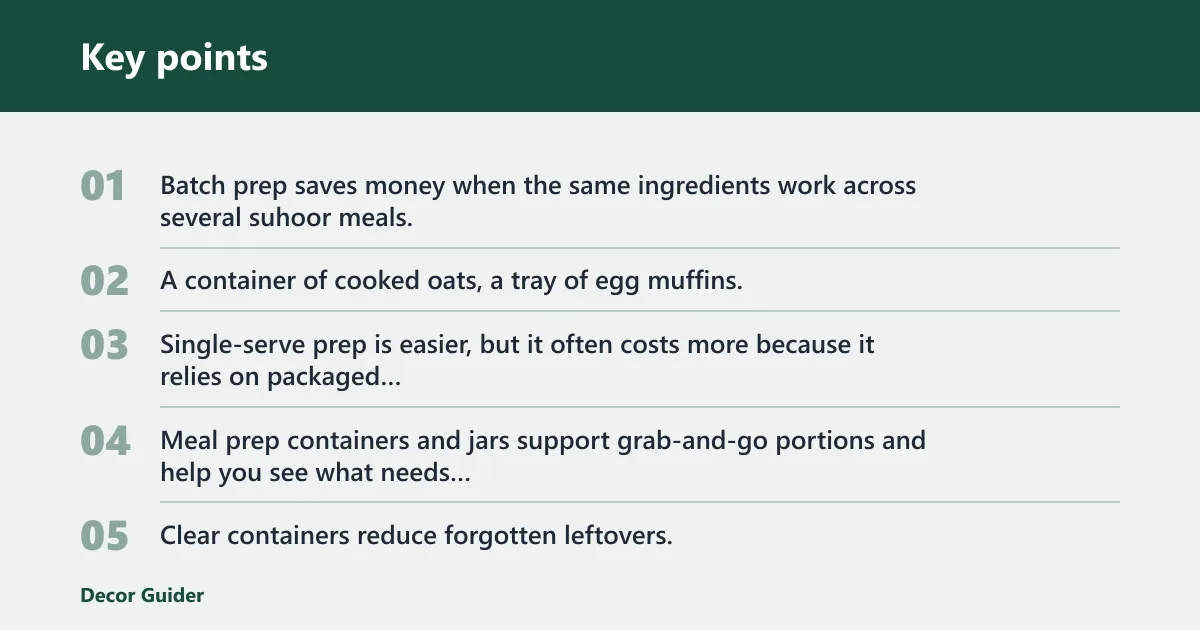
Batch prep saves money when the same ingredients work across several suhoor meals. A container of cooked oats, a tray of egg muffins, or a pot of lentils can serve multiple mornings. Single-serve prep is easier, but it often costs more because it relies on packaged portions and repeated shopping trips.
Using meal prep containers and jars
Meal prep containers and jars support grab-and-go portions and help you see what needs to be eaten first. Clear containers reduce forgotten leftovers, which is one of the easiest ways food money disappears. They also make it simpler to portion yogurt, oats, fruit, and grain bowls without overdoing any one ingredient.
Buying Ramadan pantry staples in the right sizes
Ramadan pantry staples like dates, nuts, honey, whole grains, and shelf-stable items often make the most sense in sizes you will finish. Oversized packages are only a bargain if they get used. A smaller tub of yogurt that is fully eaten beats a large one that spoils before suhoor ends.
Reducing waste from perishables and leftovers
Perishables raise the bill when they are overbought. Plan around what can move into more than one meal. Leftover cooked grains can become a breakfast bowl. Extra yogurt can go into oats. Extra cucumbers or fruit can fill the side of a simple plate. Waste reduction is one of the fastest ways to keep Ramadan meals within budget.
Convenience-food trap examples
The easiest budget leaks are the foods that seem small but add up fast. A bottle of juice, a pre-cut fruit tray, and a single-serve yogurt pack may feel harmless on their own, but they can raise the bill more than a whole bag of oats or a carton of eggs. The same is true for flavored drinks, premium snack cups, and ready-made breakfast boxes.
Frequently asked questions
What is a suhoor?
Suhoor is the pre-dawn meal eaten before fasting, and it ends at Fajr. It is a traditional part of Ramadan fasting, and many households use it to choose foods that carry through the day. The best version is often simple, balanced, and timed carefully.
How much does a suhoor meal cost?
A suhoor meal cost usually falls around $1.50 to $4 for a low-budget plate, $4 to $8 for a mid-range meal, and more when you add specialty items, meat, or several fresh extras. The final number depends on region, household size, and how much convenience food you buy. USDA and CPI data both show that grocery costs are not uniform, so the safest approach is to budget in ranges.
What should I buy for suhoor groceries?
Start with dates, oats, eggs, Greek yogurt, whole-grain bread, lentils, nuts, honey, and a few water-rich produce options such as cucumbers or oranges. Those items cover most budget suhoor ideas and can be mixed into overnight oats, toast, grain bowls, and simple egg dishes. USDA FoodData Central is a useful reference for comparing foods and building a balanced shopping list.
How do I make suhoor cheap?
Build the meal around pantry staples and one or two protein foods. Buy oats, eggs, lentils, and bread in forms you will finish, then limit packaged drinks, pre-cut fruit, and single-serve snacks. Batch prep also helps because it lowers waste and keeps each meal portion more predictable.
What foods are best for suhoor on a budget?
Oats, whole-grain bread, eggs, Greek yogurt, lentils, dates, and modest amounts of nuts are usually the best value. They are filling, versatile, and easier to stretch across several mornings than specialty foods. Water-rich produce can add hydration without pushing the meal into a higher price tier.
How do I plan suhoor meals for Ramadan?
Plan around your local Fajr time, your household size, and the ingredients you can reuse. Choose a few recurring meal shapes, such as overnight oats, egg muffins, or grain bowls, then shop for those ingredients in the sizes that match your week. That keeps costs and waste under control.
How can I avoid overspending on Ramadan meals?
Avoid buying too many convenience foods, overloading the cart with perishables, and treating every suhoor like a full buffet. Set a per-meal target, lean on pantry staples, and use batch prep where possible. If a premium item appears, swap it in for something else rather than adding it on top.
What are low-cost suhoor ideas?
Overnight oats, eggs on whole-grain toast, shakshuka, lentil bowls, yogurt with dates, and simple grain bowls are all practical low-cost suhoor ideas. They use repeat ingredients, work with meal prep containers or jars, and make it easier to eat something filling without overspending.
Sources
- USDA Economic Research Service, food-at-home price and food plan resources
- USDA FoodData Central
- U.S. Bureau of Labor Statistics, Consumer Price Index for food at home
- CDC hydration guidance
- USDA MyPlate healthy eating guidance
Products related to this article
Sponsored / affiliate links. As an Amazon Associate I earn from qualifying purchases. I may earn additional commission from eligible campaigns.