Cookware Safety Problems: What to Check First
If cookware is warped, cracked, flaking, loose, or no longer sits flat on the burner, stop using it for heat-sensitive tasks and replace it when signs of structural damage, coating loss, or heating or electrical problems appear. Ignoring those signs can cause uneven heating, burns, smoke, fire, or contaminated food. This guide shows how to spot the symptom, check compatibility, and decide whether to clean, repair, monitor, or discard the item.
What the symptom tells you



Begin with the visible symptom, then narrow the cause before replacing parts or cookware. Gas, electric, and induction systems fail in different ways, and a burner or element can fail on its own while the rest of the appliance still works. Control problems can also stop heating or adjustment, so the visible clue matters.
Clean residue first when the symptom is weak flame, repeated clicking, poor contact, or an induction error. Dirty ports, moisture, buildup, and a cookware mismatch can look like a failed part. A cracked glass surface is different: that is a safety issue, and exposed damage should not be used.
Uneven heating, clicking, no heat, or partial heat
Uneven heating often points to cookware rather than the cooktop. Warped pans lose even contact with the surface, which causes unstable heating and hot spots. If the symptom is clicking or no ignition on gas, look at moisture, dirty burner ports, and spark position before assuming a major fault.
Partial heat is also common on electric units when one element fails while others still work. In that case, continuity testing or load testing is part of diagnosis. On induction, the same symptom can come from cookware detection issues or an electronic sensor fault rather than damaged cookware.
Visible damage on cookware or cooktop
Visible damage changes the decision fast. Scratches on nonstick are usually a wear issue until the coating starts to flake, peel, or expose the base material. A loose handle, cracked lid, or damaged rivet is more than cosmetic if it affects safe lifting, sealing, or stability.
If the cooktop surface itself is cracked, treat it as unsafe to keep using. A crack can spread, and exposed wiring makes the unit a stop-use item. Do not keep cooking on a damaged glass surface while waiting to “see if it gets worse.”
Why is my cookware heating unevenly?
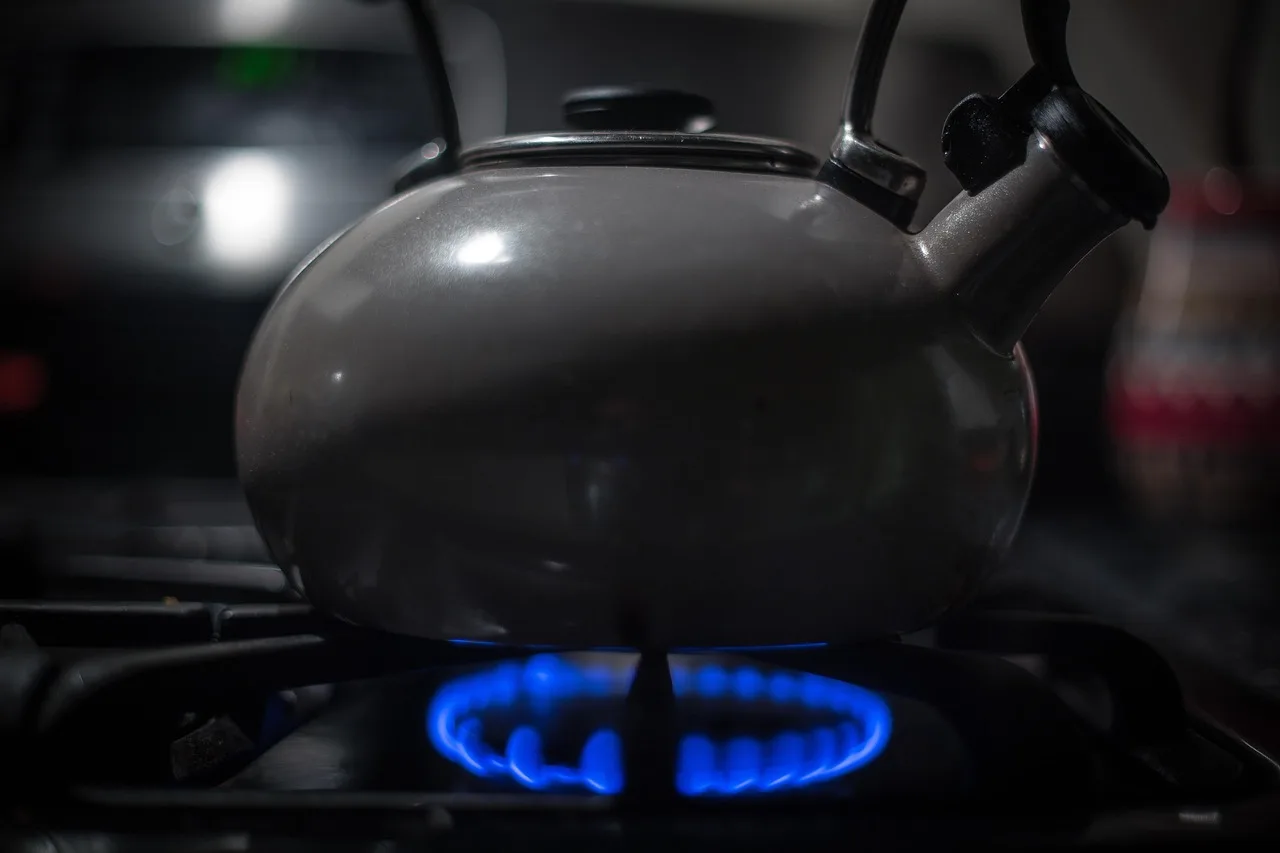
Uneven heating usually comes from poor contact, burner mismatch, buildup, or incompatible cookware. A warped base lifts part of the pan off the cooktop, so heat concentrates in one area and leaves another cooler. On induction, a pan that does not register correctly may never heat evenly at all.
Warped base and unstable contact
A warped base creates uneven contact with the cooktop surface. That unstable contact makes heat transfer uneven, and the pan may rock when pressed on a flat counter. Check flatness against a level surface: set the empty pan upside down on a counter or cutting board and look for rocking or gaps.
- Clear the cooking surface. Remove crumbs, grease, and moisture from the burner or zone. A clean surface helps separate contact problems from simple residue.
- Check the pan flatness. Place the pan upside down on a known flat surface and press lightly at the rim. If it rocks or shows a visible gap under the center, the base is no longer flat.
- Test on the correct zone. Try the same pan on a burner or induction zone sized for the base. A small pan on a large radiant area or a poorly matched induction zone can create hot spots.
If a 10-inch stainless steel skillet rocks on the counter and browns only in a ring near the edge, the base may be warped. That points to a warped base, not a mysterious burner failure. If the same skillet heats evenly on a different, properly sized burner, the cookware is the likely cause.
Hot spots from buildup or burner mismatch
Buildup on the bottom of a pan can interfere with contact, and residue on the burner can affect flame quality or heat spread. On gas, blocked burner ports can make flames uneven. On electric, a damaged or aging element can create hot spots even when it still turns on.
Material matters too. Cast iron and stainless steel usually tolerate high heat, but their bottoms still need to sit flat. Ceramic and coated pans can show hot spots sooner if the base is uneven or the coating has degraded at the contact area.
Induction cookware that is not detected
Induction-compatible cookware must be detectable by the induction zone. Material is the key issue, but size, base design, and sensor response matter too. If the zone does not detect the pan, the appliance may show an error code or fail to heat.
Use a magnet as a quick check. If a magnet sticks firmly to the base, the cookware is generally more likely to work on induction. If the pan still fails to heat, the problem may be the sensor, the power module, or a mismatch between the cookware and the zone.
Cookware safety matrix
This table separates cosmetic wear from safety-relevant failure. Use the symptom, then decide whether to clean, monitor, repair, or replace. A minor mark is not the same as structural damage.
| Symptom | Likely cause | Action | Status |
|---|---|---|---|
| Warped base | Uneven contact with the cooktop surface; unstable heating | Check flatness; replace if rocking is obvious or heating is unreliable | Replace |
| Scratched nonstick | Surface wear from utensils or stacking | Clean and monitor if the coating is intact; replace if it flakes or peels | Monitor |
| Loose handle | Fastener loosening or rivet wear | Repair if the hardware can be tightened safely; replace if it cannot hold firmly | Repair |
| Lid seal failure | Warped rim, damaged gasket, or bent lid edge | Repair or replace if the seal affects pressure, steam control, or safe handling | Repair |
| Discoloration | Heat tint, seasoning change, or normal wear | Clean and monitor unless the discoloration follows cracking, pitting, or coating loss | Clean |
| Induction mismatch | Nonmagnetic base or cookware not detected by the zone | Check magnet response and zone size; replace cookware if it cannot be detected | Replace |
| Hot spots | Warped base, buildup, or burner mismatch | Clean first; replace if the hot spots come from a warped or damaged base | Monitor |
| Cracked glass cooktop contact damage | Impact, stress, or damaged surface contact | Stop using the cooktop and arrange repair or replacement | Replace |
Can scratched or cracked cookware still be used?
Minor scratches can be cosmetic, but cracks, flaking, loose parts, or a damaged seal change the safety call. Scratched nonstick may still be usable for low-risk cooking if the coating remains intact. Cracks, peeling, or exposed metal mean the item should leave service sooner, especially if food contact or handling becomes unreliable.
Nonstick coating wear
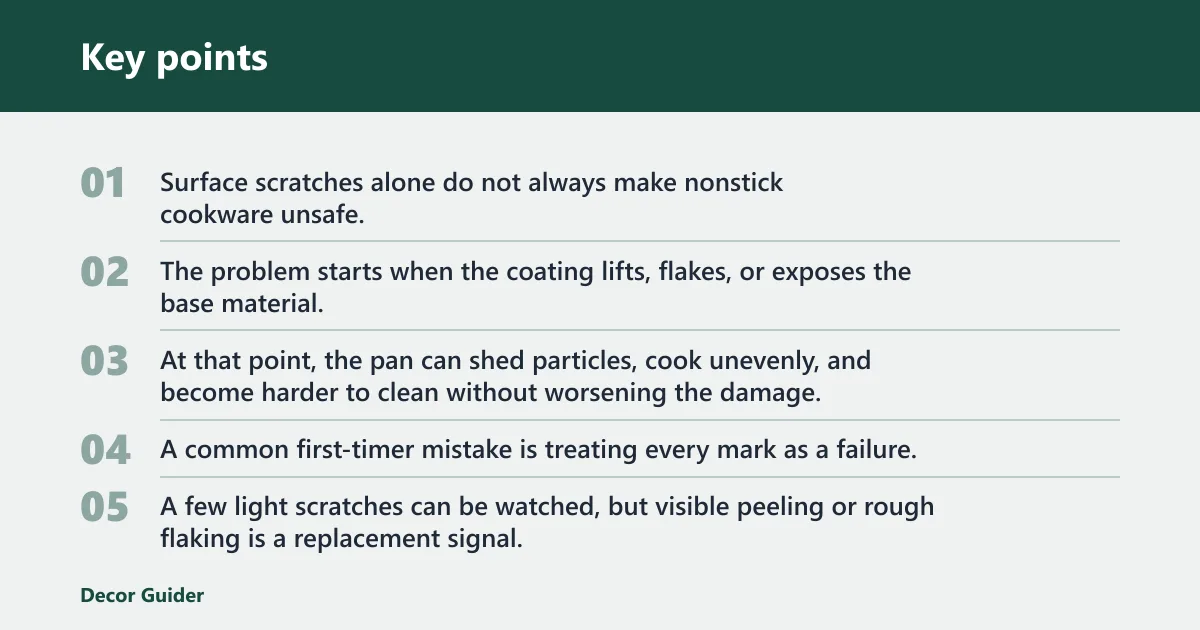
Surface scratches alone do not always make nonstick cookware unsafe. The problem starts when the coating lifts, flakes, or exposes the base material. At that point, the pan can shed particles, cook unevenly, and become harder to clean without worsening the damage.
A common first-timer mistake is treating every mark as a failure. That is too broad. A few light scratches can be watched, but visible peeling or rough flaking is a replacement signal.
Handle, rivet, and lid damage
Loose handles are a safety issue because they affect grip and control. Rivets that wobble, handles that twist, or lids that no longer fit securely can turn a routine lift into a spill. If tightening does not restore firmness, the cookware should be repaired or replaced.
Lid seal failure matters when you rely on pressure, steam retention, or stable simmering. A bent rim or damaged lid edge can also let heat escape unevenly, which changes cooking behavior even if the pan itself still heats.
Discoloration versus structural failure
Discoloration is often normal. Stainless steel can darken, cast iron can season, and coated cookware can show heat tint. That alone does not mean the item is unsafe. The concern begins when discoloration comes with pitting, cracks, bubbling, or a surface that no longer sits flat.
Why won’t my pan work on induction?
Induction problems often come from cookware detection rather than a broken pan. The zone must detect compatible cookware before it heats. If the material, size, or base shape does not match what the induction system expects, the cooktop may show an error code or simply refuse to heat.
Magnetic compatibility checks
Induction-ready cookware depends on magnetic response. A magnet should stick to the base strongly enough for the zone to detect it. If the magnet slides, barely holds, or does not stick, the pan may not work on induction even if it works on gas or electric.
- Test the base with a magnet. Check the bottom, not the side wall. A bottom-only magnetic test helps you judge whether the induction zone can detect the pan.
- Confirm pan size. Match the cookware base to the zone size. A very small pan on a large zone can fail to register or heat poorly.
- Watch for an error code. If the cooktop flashes an error, swap in a known induction-ready pan. If the second pan works, the first pan is the issue.
Cookware detection sensor faults
Induction diagnostics may involve sensors and power modules. If compatible cookware is present and the zone still does not respond, the detection sensor may be part of the fault. That is appliance-side diagnosis, not a cookware flaw, and the control system may need service.
Model-specific diagnostics matter here. One brand may show a code for no pan, while another may simply shut the zone off. The right next step depends on the appliance manual and the exact error behavior.
What causes a burner or element to stop heating?
A burner or element may fail individually while the rest of the cooktop still works. On gas units, the issue may be ignition or gas flow. On electric units, the element itself, the infinite switch, or the control can fail. That is why the symptom should guide the test.
Gas burner ports and ignition spark
On gas cooktops, the igniter creates the spark. Repeated clicking can come from moisture or dirty ports, and blocked burner ports can prevent lighting. Electrode position can also matter, because a misplaced electrode may spark poorly or not at the burner where it needs to ignite.
- Clean the burner ports. Remove residue and let all parts dry completely. Moisture or buildup can keep the spark from lighting gas cleanly.
- Check the electrode area. Look for misalignment or debris around the spark point. Poor electrode position can cause repeated clicking without ignition.
- Watch for gas flow issues. If the burner still will not light, stop and seek professional testing. Gas flow faults need careful diagnosis, not guesswork.
A burner that clicks several times, then lights only after a pause, often points to residue or moisture rather than a dead system. If the smell of gas persists, stop using the cooktop and do not keep retrying ignition.
Electric element failure
Electric heat issues may involve the element, the infinite switch, or other controls. A single element can stop heating while the others continue to work, which is a useful clue. Continuity testing helps determine whether the element itself has failed or whether the issue is upstream.
If the knob turns and nothing happens, the control path may be the problem. If one burner works and another does not, the failed part may be isolated to that element or its switch. Professional testing is safer than replacing parts blindly.
Control board faults
Control board or electronic control faults can prevent burners from turning on or off correctly. They can also affect heat response and regulation, so a burner may seem stuck, delayed, or unresponsive. When the electronics fail, replacement may be required after diagnosis.
When is a cooktop unsafe to keep using?
A cooktop becomes unsafe when the surface is cracked, the wiring is exposed, or gas control is unreliable. Persistent gas odor is a stop-use sign. A control fault that prevents shutoff is also serious. At that point, do not keep cooking and do not rely on the problem “settling down.”
Cracked glass cooktop contact damage
A cracked cooking surface is treated as a safety issue. Damage can spread, and exposed wiring is not something to ignore. If the glass surface is cracked, chipped through, or flexing around the break, stop using the appliance until it is repaired or replaced.
Repeated ignition failure or gas leak concern
Repeated clicking after cleaning can still signal a fault. If moisture and dirty ports are ruled out and the burner still will not light, the problem may involve gas flow, electrode position, or another ignition fault. A persistent gas odor means the unit should not be used.
Power or control problems that affect shutoff
If a burner will not turn off correctly, or the control board cannot regulate heat, the appliance should be serviced before further use. The same applies if an electric element stays on or cannot be switched off promptly. Model-specific diagnostics matter, but the safety rule is simple: if shutoff is unreliable, stop using it.
Frequently asked questions
Why is my cookware getting hot unevenly?
Uneven heat usually means the pan is not contacting the surface evenly, the burner or element is mismatched, or residue is interfering with heat transfer. A warped base can rock on a flat surface, which creates unstable heating. On induction, a pan that is not detected properly may also heat unevenly or not at all.
What cookware problems are unsafe to keep using?
Cracks, flaking coatings, loose handles, damaged lids, and warped bases that prevent stable contact are the main concerns. Minor discoloration is usually not a safety issue by itself. The key question is whether the damage affects structure, handling, heat transfer, or food contact.
How do I know if my pan is warped or just not heating right?
Check the base on a flat surface first. If it rocks, lifts in the center, or shows a visible gap, the pan is warped. If the pan sits flat but still heats poorly, the issue may be burner size, residue, induction compatibility, or a cooktop fault rather than the pan.
Can scratched or cracked cookware still be used safely?
Light scratches on intact nonstick cookware are usually a monitor issue, not an automatic stop-use condition. Cracks, peeling coating, loose hardware, or exposed base material change the answer. If food contact surfaces are failing or the handle or lid is unstable, replace or repair the item.
Why won’t my cookware work on induction?
Induction cookware must be detectable by the induction zone. If the base is not magnetic enough, the pan may not register, and the appliance may show an error code. Size, base design, and sensor faults can also matter, so try a known induction-ready pan before assuming the cooktop has failed.
When should I stop using a cooktop because of a safety issue?
Stop using it if the glass surface is cracked, wiring is exposed, gas odor persists, or shutoff does not work correctly. Repeated clicking after cleaning, or a burner that will not light and shows signs of a gas fault, also needs service. Do not keep cooking on a damaged surface while deciding what to do.
Products related to this article
Sponsored / affiliate links. As an Amazon Associate I earn from qualifying purchases. I may earn additional commission from eligible campaigns.