Cookware Rust Problems: Fix and Prevent Damage
Match the fix to the metal: remove surface rust from carbon steel, cast iron, and plain steel, re-season if the surface is stripped, and replace any rusted stainless, coated, or pitted food-contact piece. Using the wrong fix can leave rough surfaces, off flavors, weak spots, or flaking coatings in food-contact cookware. This guide shows how to identify the material, judge rust depth, and choose scrub, re-season, or replace.
What rust means on cookware
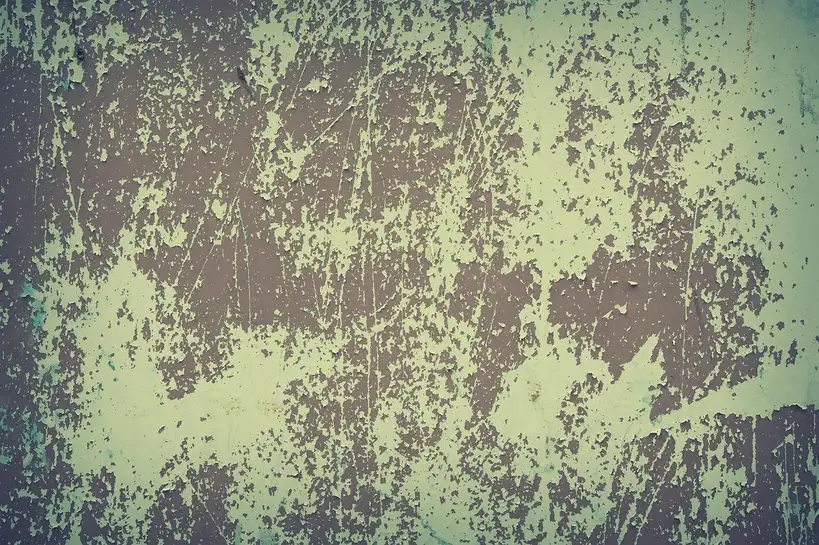

Rust is iron oxide. It forms when moisture and oxygen reach bare iron or steel. That is why bare carbon steel and cast iron rust so easily, while coated or enamel-covered pieces usually fail in different ways. Start with the material.
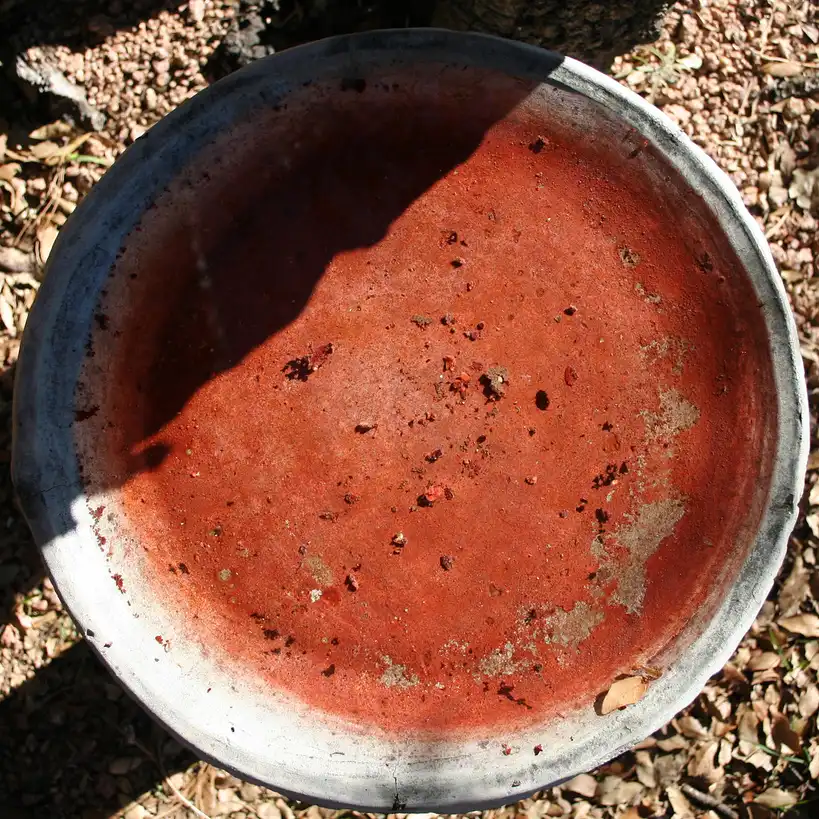
Do not confuse rust with normal seasoning color, browned heat marks, or food staining. Seasoning is a bonded oil layer on iron or steel. It can look amber, brown, or nearly black. Rust is usually orange, red, or flaky, and it often feels rough.
When the surface is only discolored, the fix may be simple cleaning. When the metal feels gritty or the coating has lifted, you need a different response. That is the decision point most people miss.
Rust versus seasoning loss
Seasoning loss shows up as dull grey patches, sticky spots, or food starting to grab. Rust shows up as reddish-brown deposits on exposed metal. If the finish has been scrubbed down to bare iron or steel, rust can follow fast, especially after washing or damp storage.
Rust versus stains and heat marks
Stains and heat marks usually stay smooth. They do not crumble off on a towel. Rust often leaves orange dust, rough edges, or pitting after you wipe it. If the surface is still smooth and hard, you may be looking at discoloration rather than corrosion.
Why iron and steel are the usual culprits
Cast iron and carbon steel are the most rust-prone common cookware materials. Carbon steel is roughly 99% iron, so bare spots can flash-rust while wet. Cast iron rusts quickly too, especially if it sits in the sink or stays damp in a closed cabinet.
Which cookware types rust most?
Cast iron and carbon steel commonly rust because both rely on exposed iron-based metal and seasoning for protection. Other items can rust too, but the failure mode is different. Stainless steel usually points to contamination, damage, or a poor-grade alloy rather than normal rust behavior.
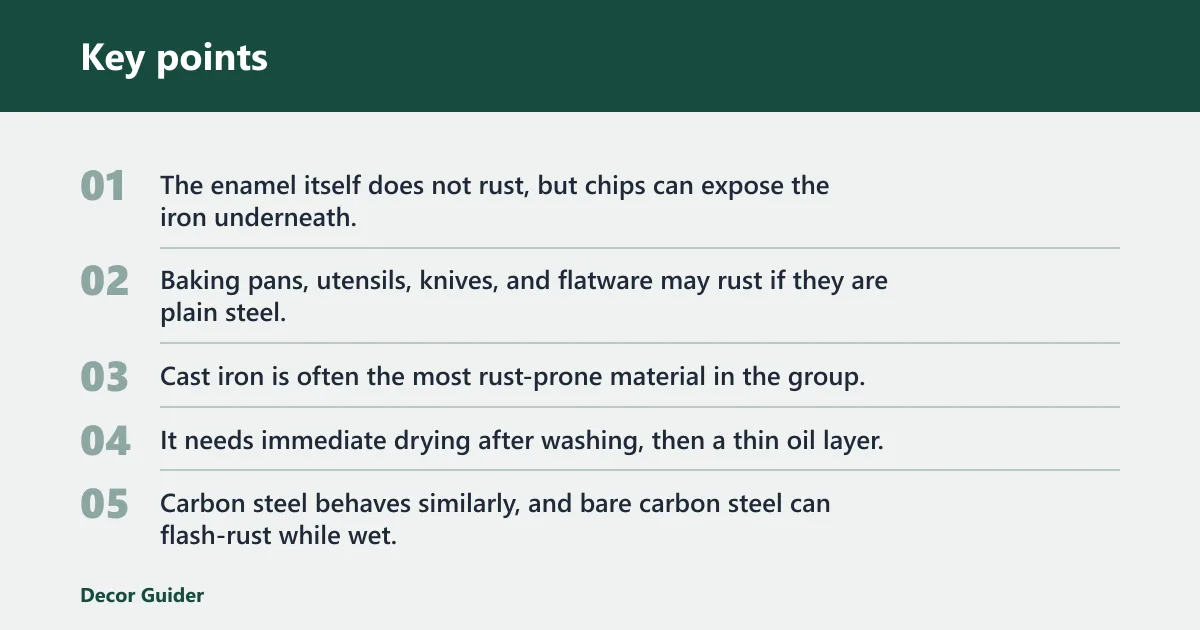
Enameled cast iron is different again. The enamel itself does not rust, but chips can expose the iron underneath. Baking pans, utensils, knives, and flatware may rust if they are plain steel, thinly coated, or left wet after washing. Each needs its own check.
Cast iron and carbon steel
Cast iron is often the most rust-prone material in the group. It needs immediate drying after washing, then a thin oil layer. Carbon steel behaves similarly, and bare carbon steel can flash-rust while wet. Humid storage and dishwasher exposure speed the damage on both.
Baking pans, utensils, knives, and flatware
Plain steel baking pans can rust where the coating has worn through. Cooking utensils, knives, and flatware may rust at seams, edges, or around scratches. If the rust is only on the surface, you can often clean it off. If the steel has pitted or the item bends easily, replacement may be smarter.
When stainless steel or enameled cast iron is the problem
Rust on stainless steel is usually not normal behavior. Look for contamination from a rusty utensil, surface damage, or poor alloy quality. On enameled cast iron, rust usually means a chip has reached the base metal. The enamel itself cannot be re-seasoned, so a chip changes the fix.
Rust diagnosis by cookware type
| Material | Rust symptom | Likely cause | Safe immediate fix | Whether to re-season | When to replace |
|---|---|---|---|---|---|
| Cast iron | Orange film, rough spots, light flaky rust | Left wet, soaked in the sink, or stored damp | Dry fully, scrub light rust, then oil | Yes, after rust removal if bare metal shows | Replace if pitted deeply or warped |
| Carbon steel | Flash rust after washing or a humid night | Bare metal, dishwasher exposure, or damp storage | Dry, scrub off rust, rebuild seasoning | Usually yes if the surface was stripped | Replace if pitting compromises release or strength |
| Stainless steel | Specks or brown spots that do not spread like normal rust | Metal contamination, damage, or lower-grade alloy | Clean the spot and dry; check for deeper damage | No seasoning step | Replace if corrosion is pitted or structural |
| Enameled cast iron | Rust at a chip or crack | Enamel damage exposing iron underneath | Dry the chip area and keep moisture away | No seasoning on enamel; bare chip area needs another fix | Replace if the chip is large or the iron is deeply corroded |
| Baking pans | Rust at worn edges, corners, or scratched coating | Coating wear, water sitting on the pan, humid storage | Scrub rust, dry completely, store with airflow | No for coated pans; yes for plain steel if bare metal remains | Replace if the coating is peeling or the metal has deep pits |
| Utensils | Rust at seams, rivets, or scraped handles | Water trapped in joints or worn plating | Scrub and dry; discard if rust returns quickly | No | Replace if seams hold moisture or rust keeps returning |
| Knives | Rust near the edge, spine, or rivets | Wet storage, dishwashing, or trapped moisture | Clean and dry immediately; keep away from the dishwasher | No | Replace or professionally restore if the edge is pitted |
| Flatware | Small rust spots or orange streaks | Moisture, harsh detergents, or mixed-metal contact | Wash, dry, and separate from rusty items | No | Replace if pitting or flaking is visible |
How do you remove light rust safely?
Light rust on cast iron, carbon steel, or plain steel usually comes off with drying and gentle abrasion. Start with the least aggressive method that reaches bare metal. If the rust only sits on the surface, you may not need vinegar at all.
Dry the piece first
Do not scrub a wet pan and leave it alone. Dry it right away with a towel, then finish drying with heat if the item is cast iron or carbon steel. Field Company recommends drying cast iron on the stovetop for about five minutes. That step helps drive out hidden moisture.
Use a rust eraser on light rust
A rust eraser works well on light rust on cast iron. Use it after the pan is dry, then wipe away the residue. Once the rust is gone, apply a thin oil layer to bare cast iron or carbon steel so the exposed metal does not rust again.
Use steel wool or an abrasive pad for stubborn spots
For stubborn rust, use steel wool or an abrasive pad until the surface returns to grey steel. That is a sign you reached the rusted layer and exposed fresh metal. After that, re-season cast iron or carbon steel, because the scrubbed area has lost its protection.
Picture a 10-inch cast iron skillet with a few orange freckles after a night near the sink. A dry rub may remove the spots. If the freckles still feel rough, step up to steel wool, then oil and re-season the bare patches.
What should you do with severe rust?
Severe rust needs a stronger fix. A 50:50 white vinegar and water bath can help remove heavy rust from cast iron or bare steel, but it may also strip seasoning. Use it only when surface scrubbing is not enough, and do not leave the piece in longer than needed.
Use a 50:50 vinegar and water bath
The same source recommends a 50:50 white vinegar to water bath for severe rust. Watch the surface closely. As soon as the rust loosens, remove the piece, rinse it, and dry it well. If the item was seasoned before, expect to rebuild that layer afterward.
Watch for bare grey metal after rust removal
After vinegar or steel wool, bare metal often looks grey and dull. That is normal. It means the rust has been removed, but the protective seasoning is gone too. Dry the piece immediately and move on to oil and heat if the material needs seasoning.
When pitting means the piece may be done
Light surface rust can be saved. Deep pitting is different. Kitchenware Compare notes that pitted steel may compromise nonstick properties. If pits are deep enough to trap food, weaken the wall, or keep rust returning after cleaning, replacement is usually the better call.
Suppose a carbon steel pan lived in a damp cabinet and came out with orange rust plus tiny holes you can feel with a fingernail. Surface rust can be cleaned. Deep pits that keep snagging a paper towel are a warning sign, not a cosmetic issue.
When should you re-season cookware?
Re-season any cast iron or carbon steel piece when cleaning has exposed bare metal. Seasoning is a bonded oil layer created with a thin coat of oil and heat. It protects the surface and helps food release. Rust removal often means you need to rebuild that layer.
High-heat oven re-seasoning at 450-500°F
Lodge recommends re-seasoning cast iron at 450-500°F. The cookware should go upside down in the oven so excess oil can drip away from the cooking surface. Lodge also recommends a one hour bake cycle. That process works for many cast iron and carbon steel pieces after rust removal.
Aftercare: oil film, drying, and storage
After the oven cycle, let the piece cool, then wipe on a very thin oil film. Too much oil leaves a sticky finish. Dry cookware fully after every wash, and store it where air can move around it. Closed cabinets and damp spots help rust return.
How do you keep rust from coming back?
Prevention is mostly about moisture control. Rust returns when water lingers on bare iron or steel. Dry cookware fully, oil it lightly when needed, and keep it away from humid storage. That routine matters more than any one cleaning product.
Dry fully after washing
Cast iron should be dried immediately after washing, then given a thin oil layer. Carbon steel needs the same attention. Never leave either one to air-dry in the sink. The same source says rust can happen if cast iron is left in the sink to soak, and soaking should be avoided altogether.
Avoid dishwasher exposure for cast iron and carbon steel
Dishwasher exposure strips seasoning and often causes rust on cast iron and carbon steel. It also creates the kind of lingering moisture that lets flash rust form. If a pan came out of the dishwasher with orange spots, treat it as a seasoning problem first.
Store in a dry, ventilated place
Humidity and damp storage promote rust, especially in closed cabinets or humid climates. Leave some airflow around the cookware. Do not stack wet pieces together. If you must nest pans, add a dry liner and make sure every piece is fully dry first.
Frequently asked questions
Is cooking with a rusty pan bad?
Cooking on rusty cast iron or carbon steel is not a good idea while rust remains. The same source says rusty cast iron should not be used while rust remains. Light rust is usually a cleanup problem, but you should remove it before food contact. Deep pits or flaking coatings are a different issue.
How to fix rusted cast iron pan
Dry the pan, remove surface rust with a rust eraser or steel wool, and rinse away residue. If rust is severe, use a 50:50 vinegar and water bath, then dry completely. Finish with oven re-seasoning at 450-500°F, upside down, for about one hour.
How to remove rust from cooking utensils
Wash and dry the utensil, then scrub rust spots with an abrasive pad if the metal is plain steel. Rust that keeps returning at seams, rivets, or joints often means moisture is trapped there. Replace utensils that have deep pits, flaking plating, or weak spots.
How to remove rust from flatware
Flatware rust often starts as small orange spots from moisture or contact with another rusty item. Clean and dry the pieces promptly, then separate them from corroded tools in storage. If the rust has caused pitting or peeling, replacement is the better answer than repeated scrubbing.
Products related to this article
Sponsored / affiliate links. As an Amazon Associate I earn from qualifying purchases. I may earn additional commission from eligible campaigns.