GreenPan Cookware Review: Is It Worth the Money for You?
GreenPan is a solid PFAS-free buy if you want ceramic nonstick and can accept a shorter coating life than PTFE. Valencia Pro is the best all-around line for most induction users, while Reserve suits gentler cooking. Pick the wrong line and you can pay too much for weak release, poor induction performance, or a pan that wears out before the frame does. This review covers safety, induction compatibility, the strongest collections for each cooking style, and whether GreenPan beats other safer nonstick options.
GreenPan cookware review: the verdict
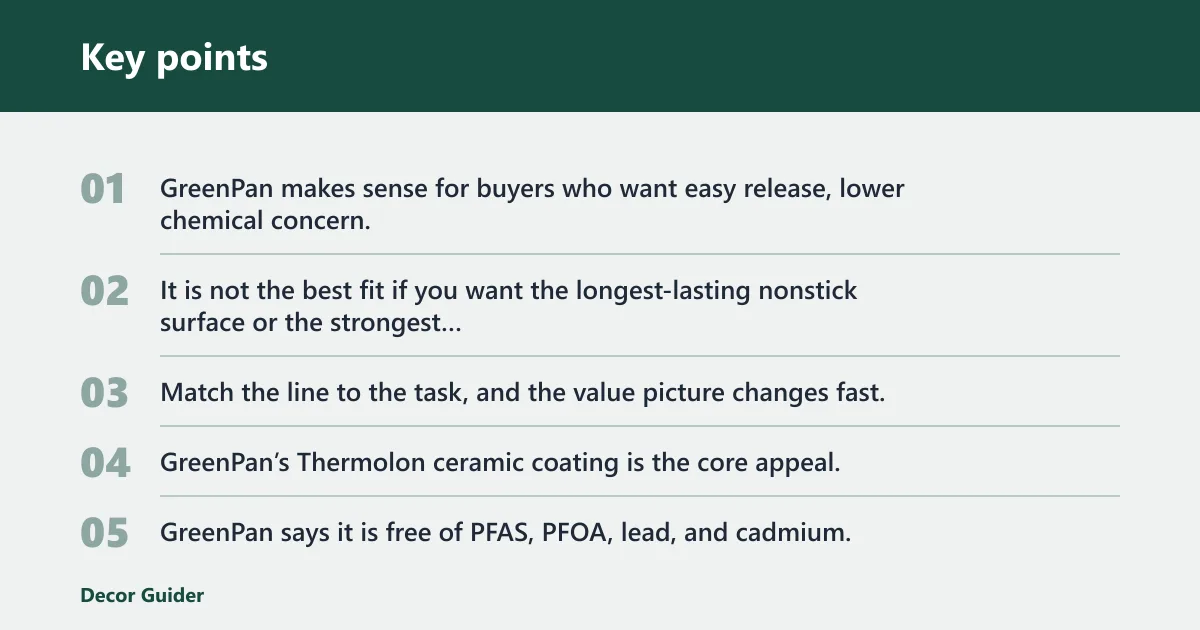


GreenPan makes sense for buyers who want easy release, lower chemical concern, and clear care rules. It is not the best fit if you want the longest-lasting nonstick surface or the strongest browning from a coated pan. Match the line to the task, and the value picture changes fast.
Best for safety-first buyers who still want easy release
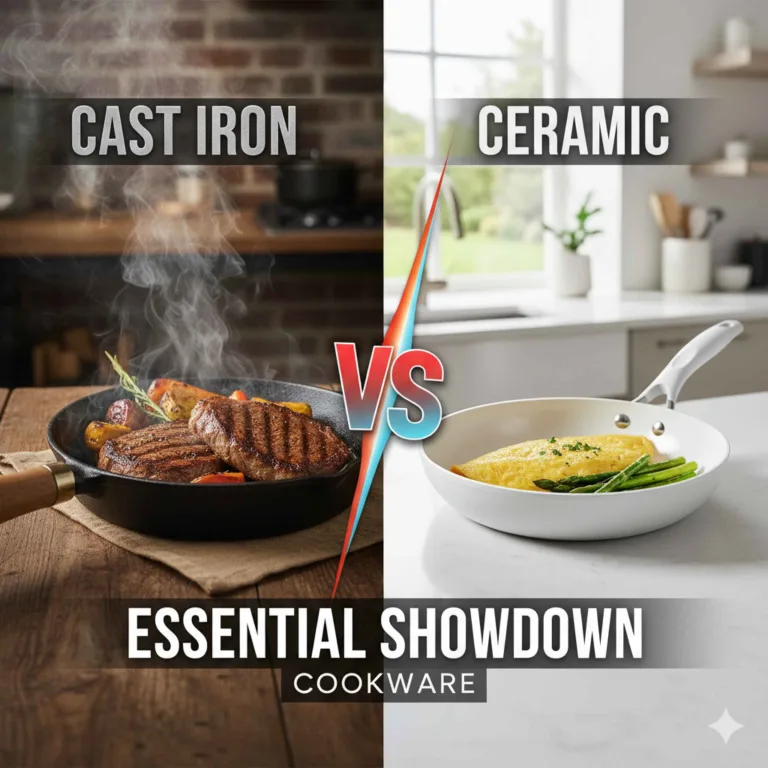
GreenPan’s Thermolon ceramic coating is the core appeal. GreenPan says it is free of PFAS, PFOA, lead, and cadmium, which is why many shoppers compare it with PTFE-style nonstick before anything else. The trade-off is simple: ceramic release is convenient, but the coating usually has a shorter useful life than harder cooking surfaces.
Where GreenPan falls short on wear and searing
The weak point is the coating, not the frame. Users should expect dulling, staining, edge chipping, and gradual loss of release if the pan is overheated or treated roughly. That matters most on lines sold for daily family cooking, because the pan body may outlast the coating by a wide margin.
Bottom-line buying guidance by household type
For most shoppers, Valencia Pro is the safest starting point because it balances induction support, oven range, and set breadth. Reserve Pro suits buyers who want more styling options and cook at gentler heat. Spectra is the better pick for browning and heat spread. Nova is the entry-level option when budget and basic nonstick matter more than longevity.
📊 GreenPan was the first brand to sell ceramic-coated cookware in the U.S. in 2007. Source: GreenPan Cookware Review: Testing 6 Collections In-Depth.
What makes GreenPan different from other nonstick cookware?
GreenPan is different because it built its brand around ceramic nonstick rather than PTFE-style coatings. That gives you PFAS-free positioning and simple egg release, but it also means you should expect more careful use, shorter coating life, and less tolerance for high heat than with many metal cookware options.
Thermolon ceramic nonstick and the PFAS-free claim
GreenPan’s Thermolon coating is the brand’s signature surface. GreenPan says it is PFAS-free, PFOA-free, lead-free, and cadmium-free. Those claims matter to buyers who want to avoid the chemical profile associated with traditional nonstick coatings, but they do not make the coating indestructible or immune to wear.
What NSF certification adds to the safety story
NSF certification is a third-party food-contact compliance claim. It supports the idea that a product meets specific sanitation or material-contact expectations, but it is not a guarantee of cooking performance, scratch resistance, or coating lifespan. Think of it as a safety and compliance layer, not a durability seal.
Why ceramic nonstick trades durability for lower chemical concern
Ceramic nonstick releases food easily at first, especially eggs and low-sticking vegetables, but the surface is more sensitive to abuse. High heat, metal tools, cooking sprays, and aggressive scrubbing can shorten the coating’s useful life. That is the main cost of moving to ceramic.
Which GreenPan line is the best for your cooking style?
The best GreenPan line depends on what you cook most. Valencia Pro is the safest overall buy for mixed use, Reserve Pro fits style-conscious cooks who still want nonstick, Spectra is the stronger choice for browning, and Nova is the budget starter set for simple daily cooking.
Valencia Pro for most buyers
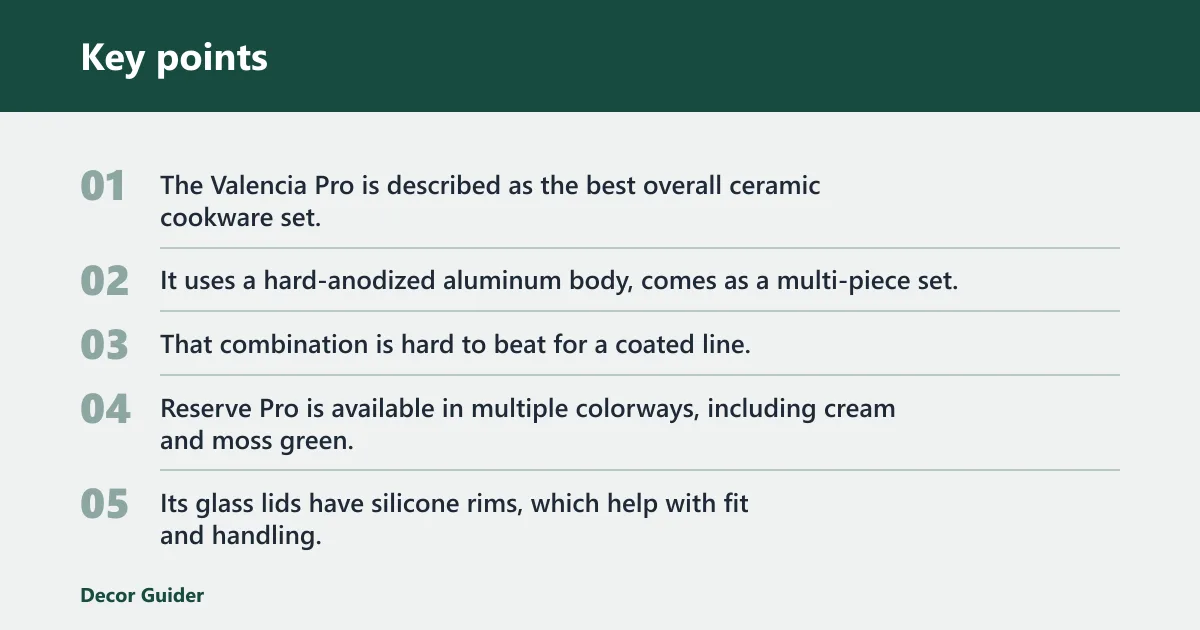
The Valencia Pro is described as the best overall ceramic cookware set, and that matches its practical layout. It uses a hard-anodized aluminum body, comes as a multi-piece set, is induction compatible, and GreenPan says the main cookware is oven safe to a high temperature. That combination is hard to beat for a coated line.
Reserve Pro for style-focused cooks and mixed material options
Reserve Pro is available in multiple colorways, including cream and moss green, and it comes in ceramic nonstick and stainless-steel versions. Its glass lids have silicone rims, which help with fit and handling. It suits shoppers who want a more design-forward set and cook sauces, vegetables, and moderate-heat mains.
Spectra for stronger browning and heat distribution
Spectra uses a three-ply stainless steel exterior with an etched cooking surface and ceramic nonstick. That construction is aimed at better heat spread and better searing than typical ceramic aluminum sets. Good Housekeeping says the Spectra stockpot boiled water faster during induction testing, which is a useful sign for responsive heat transfer.
Nova for first-time buyers on a budget
Nova is GreenPan’s budget-friendly starter set. It includes a silicone spoon and spatula, which lowers the cost of getting started, and its smaller entry-level piece count keeps the purchase simple. It is best for basic eggs, quick sautés, and smaller kitchens where you do not need a large set.
How does GreenPan perform in everyday cooking?
GreenPan performs best in low- to medium-heat cooking where release matters more than hard searing. Eggs, fish, and soft sautés are the sweet spot. Once you push into steak crust, heavy browning, or long tomato simmering, the line and the coating start to matter more than the brand name alone.
Eggs, delicate fish, and low-sticking sautés
These are the tasks where ceramic nonstick earns its keep. Eggs slide easily, fish fillets are less likely to tear, and onions or mushrooms can cook with less oil. For households that cook these foods often, GreenPan’s release-first design can be a good fit.
Steak, browning, and tomato sauce
Reserve Pro and Spectra are the better options when you want more browning. Reserve Pro has been positioned around performance cooking, including steak and tomato sauce, while Spectra’s three-ply stainless steel exterior should help with stronger heat spread. Even so, ceramic nonstick still is not the same as bare stainless for deep fond development.
Heat limits, induction response, and oven use
GreenPan says its cookware is oven safe to a high temperature, while the glass lids are rated lower. The brand also says its cookware works on all stovetops, including induction. That makes Valencia Pro and Spectra especially useful in kitchens that move pans from burner to oven.
Say your 10-inch skillet starts on induction for mushrooms, then finishes in the oven for a frittata. A high oven cap helps, but the lid rating still matters if you leave the glass cover on. That split rating is the detail many shoppers miss.
Pros and cons of GreenPan cookware
GreenPan’s strengths are safety-forward marketing, easy release, and a wide line-up that includes induction-ready choices. Its weaknesses are coating wear, a shorter replacement horizon than many buyers expect, and care rules that punish shortcuts. The brand is useful when you respect those limits.
Pros
- PFAS-free ceramic nonstick with GreenPan’s Thermolon coating.
- Good release for eggs, fish, and everyday sautéing.
- Valencia Pro, Reserve Pro, Spectra, and Nova cover very different buyer needs.
- Induction-compatible options are widely available.
- Oven-safe claims reach up to 600°F for the main cookware.
Cons
- Ceramic coating can lose release sooner than PTFE-style nonstick.
- High heat, cooking sprays, and rough cleaning can shorten lifespan.
- Not every GreenPan line is equally strong for searing or browning.
- Replacement cost matters because the coating may fail before the pan frame does.
Is GreenPan worth the money?
GreenPan is worth the money when you buy the right line for the right job and treat the coating as a wear layer. It is less compelling if you compare only sticker price, because replacement frequency can erase the savings from a cheaper set. Cost per year is the better lens.
How to judge cost per year instead of sticker price
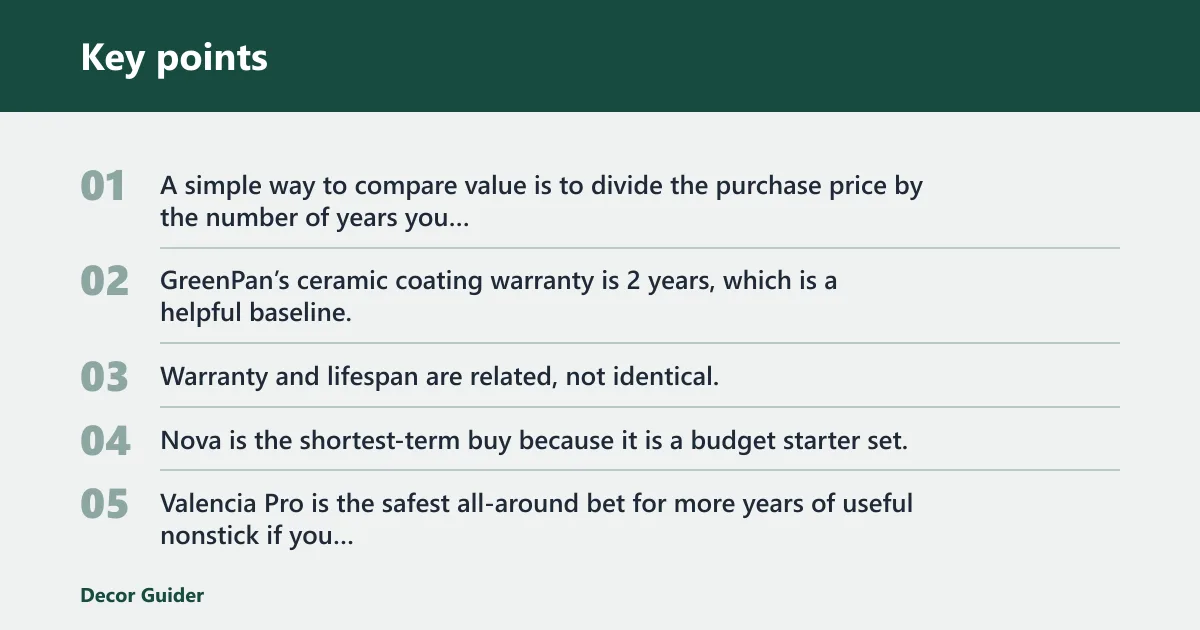
A simple way to compare value is to divide the purchase price by the number of years you expect useful release. GreenPan’s ceramic coating warranty is 2 years, which is a helpful baseline, but real replacement timing depends on heat, utensils, and cleaning habits. Warranty and lifespan are related, not identical.
Expected replacement horizon by collection
Nova is the shortest-term buy because it is a budget starter set. Valencia Pro is the safest all-around bet for more years of useful nonstick if you follow care rules. Reserve Pro sits in the middle. Spectra may hold value better for cooks who care about heat distribution and do not baby the pan.
Which buyers get the best value from each set
Solo cooks and small households get the best value from Nova if they mostly make eggs, omelets, and quick dinners. Induction users and families are better served by Valencia Pro. Style-focused buyers who also want nonstick should look at Reserve Pro. Buyers who want more browning should start with Spectra.
Suppose a family buys a 19-piece Valencia Pro set at the listed special price of $599.99. If the useful coating life is 4 years, the rough cost is about $150 per year for the set before replacement. If the useful life lasts longer, the rough yearly cost drops accordingly, to around $100 per year.
Who is GreenPan best for?
GreenPan is best for cooks who want safer-sounding nonstick, clear care instructions, and a line that can handle eggs, vegetables, and lighter proteins. It is less suitable for people who want a lifelong pan, routinely crank the heat, or expect ceramic nonstick to behave like stainless steel.
Solo cooks and small households
Solo cooks and couples can do well with Nova or a smaller Valencia Pro configuration. The set size stays manageable, and the nonstick payoff is strongest when you are cooking modest portions. If you need only a few daily pans, there is no need to pay for a huge set.
Families that cook on induction
Families using induction should focus on Valencia Pro first and Spectra second. Induction compatibility and oven use matter more in busy kitchens because pans move between burners, ovens, and quick cleanup. The hard-anodized or stainless constructions are more practical than decorative choices alone.
Buyers who want safer nonstick with clear care rules
This is the cleanest fit for GreenPan. If you are willing to handwash, avoid spray oils, stay away from very high heat, and accept eventual replacement, the brand’s cookware is easy to understand. If you want a no-maintenance pan, buy something else.
GreenPan decision matrix: collections at a glance
This matrix scores the main lines on the factors that matter most: safety, release, searing, oven use, induction support, care burden, and likely replacement horizon. Higher numbers are better for safety, release, searing, oven use, and induction. For care burden, a higher number means easier care.
| Collection | Safety | Release | Searing | Oven use | Induction support | Care burden | Likely replacement horizon | Simple cost-per-year estimate |
|---|---|---|---|---|---|---|---|---|
| Valencia Pro | 5/5 | 5/5 | 3/5 | 5/5 | 5/5 | 3/5 | Middle to longer | About $100-$150 per year for a multi-piece set if replaced every 4-6 years |
| Reserve Pro | 5/5 | 4/5 | 3/5 | 5/5 | Varies by version | 3/5 | Middle | Depends on set size and version; plan for mid-range replacement economics |
| Spectra | 5/5 | 4/5 | 4/5 | 5/5 | 5/5 | 3/5 | Middle to longer | Often the best buy for cooks who keep pans longer because heat performance is stronger |
| Nova | 5/5 | 4/5 | 2/5 | Moderate | Check model | 3/5 | Shorter | Lowest entry cost, but a shorter horizon can make annual cost less favorable |
How to read the matrix
Safety is similar across the line because the coating story is the same. The real differences are construction, induction fit, and how much cooking stress each line can take before the coating ages out. That is why Valencia Pro often wins the value argument.
Frequently asked questions
are greenpan pans good
Yes, if you want ceramic nonstick with PFAS-free positioning and you cook within the coating’s limits. GreenPan pans are good for eggs, delicate proteins, and lower-stress daily use. They are less compelling if you want the longest-lasting nonstick or the strongest searing from one pan.
is greenpan good quality
GreenPan is good quality at the frame level in its better collections, especially Valencia Pro and Spectra. The quality question mainly turns on the coating, not the pan body. If you treat ceramic as a wear item and follow the care rules, the overall quality is solid for the category.
is greenpan worth it
GreenPan is worth it when you value PFAS-free ceramic nonstick more than maximum lifespan. The line is easiest to justify for people who cook eggs and lighter sautés often, own induction cooktops, or want a specific set layout. It is less compelling if you want one pan to last for years without fuss.
why is greenpan good
GreenPan is good because it combines easy food release with broader safety messaging than traditional nonstick. The brand also offers line-specific choices, so you can buy for induction, style, or browning instead of treating every pan the same. That range is useful if you shop carefully.
How long does GreenPan nonstick coating last?
That depends on heat, cleaning, and how often you use the pan. GreenPan’s ceramic coating warranty is 2 years, which gives a useful reference point, but real-world release can fade earlier or later. Edge chipping, staining, and loss of glide are the warning signs to watch.
Is GreenPan safe for induction and oven use?
Many GreenPan collections are safe for both induction and oven use. GreenPan says its cookware works on all stovetops, including induction, and that the main cookware is oven safe up to 600°F. Glass lids are rated lower, up to 425°F, so the lid rating can be the limiting factor.
What GreenPan line is best for everyday cooking?
Valencia Pro is the best GreenPan line for everyday cooking because it covers the widest range of tasks without getting too specialized. It is a strong fit for eggs, sautéing, induction cooking, and oven finishing. Reserve Pro is a close second for buyers who want a more style-led choice.
Products related to this article
Sponsored / affiliate links. As an Amazon Associate I earn from qualifying purchases. I may earn additional commission from eligible campaigns.