How to Store Pots and Pans to Prevent Warping
Store pots and pans fully cooled, dry, and separated by soft liners or pan dividers; never stack heavy cookware on thin, empty pans. If you ignore that, stack pressure, trapped heat, and moisture can bend bottoms, scratch coatings, and shorten cookware life. This guide shows the storage setup, spacing, and drying habits that help prevent warping.
Why storage affects warping


Warping risk is not only about scratches. A hot pan put away too soon can trap heat, and stacked weight can press on a softened base. Moisture left between pieces can also lead to corrosion or finish damage, especially when lids and pans are packed tight.
Thermal shock is a rapid temperature change, and it is a major cause of pan warpage. Thin metals react faster to heat changes than thicker pans, so a thin skillet cooling fast on a cold counter or under cold water is more vulnerable than a heavy stock pot.
What you’ll need
- Pan protectors, or felt, silicone, dish towel, or paper towel separators
- Cabinet or drawer space with room to breathe
- Hooks, a hanging rack, pegboard hardware, or vertical dividers
- Labels or simple lid markers
- A clean towel for fully drying cookware before storage
- Let cookware cool fully before storing it. Hot storage adds thermal shock risk and can trap steam against the bottom.
- Dry every surface, including rims and handles. Moisture between pieces is a slow form of damage.
- Separate pans with protectors or soft padding. Put a protector between each nested pan, not only at the top.
- Keep heavy pieces low and lighter pieces on top. That reduces pressure on thin-gauge cookware.
- Store lids apart so they do not press on pans. Use a lid rack, side slot, or nearby divider.
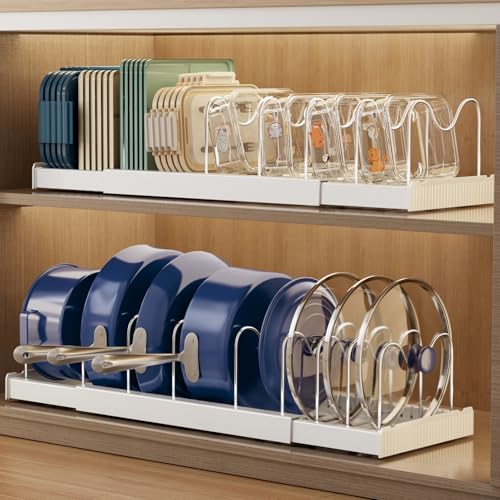
- Choose vertical storage when cabinet pressure is too high. Hanging racks, pegboards, or dividers keep cookware separated.
Say your 10-inch nonstick skillet still feels warm after dinner. If you stack it under a Dutch oven, the rim can take pressure while the base cools unevenly. Waiting until it is fully cool and dry lowers both heat and contact stress.
Should you stack or nest cookware?
Stacking and nesting are common in cabinet storage, but they need padding. Direct contact can damage finishes, and Made In recommends using pan protectors, a dish towel, or a trivet inside each pan before stacking. Stainless pans should also use protection when stacked.
When stacking is acceptable
Stacking works best for sturdy cookware in a deep cabinet, as long as each contact point has a separator. Use the heaviest pan on the bottom and avoid pressing a thin pan under a dense lid pile.
When nesting needs protection
Nested pans need padding because rims and cooking surfaces rub during retrieval. Pan protectors cushion delicate finishes and help prevent scratches and chipped enamel. Felt, silicone, or even folded paper towels can work as separators when nothing else is available.
When to avoid direct contact
Avoid direct contact if cookware has a nonstick coating, chipped enamel, or a visibly uneven base. If a pan rocks, clicks, or binds against another piece, the stack is too tight.
How do you store cookware by material?
Material and thickness change the storage choice. Thin-gauge metal warps more easily than heavier cookware, while stainless steel and cast iron resist warping better. Thicker construction improves stability, but no material should be forced into a tight, moisture-trapping stack.
Nonstick pans
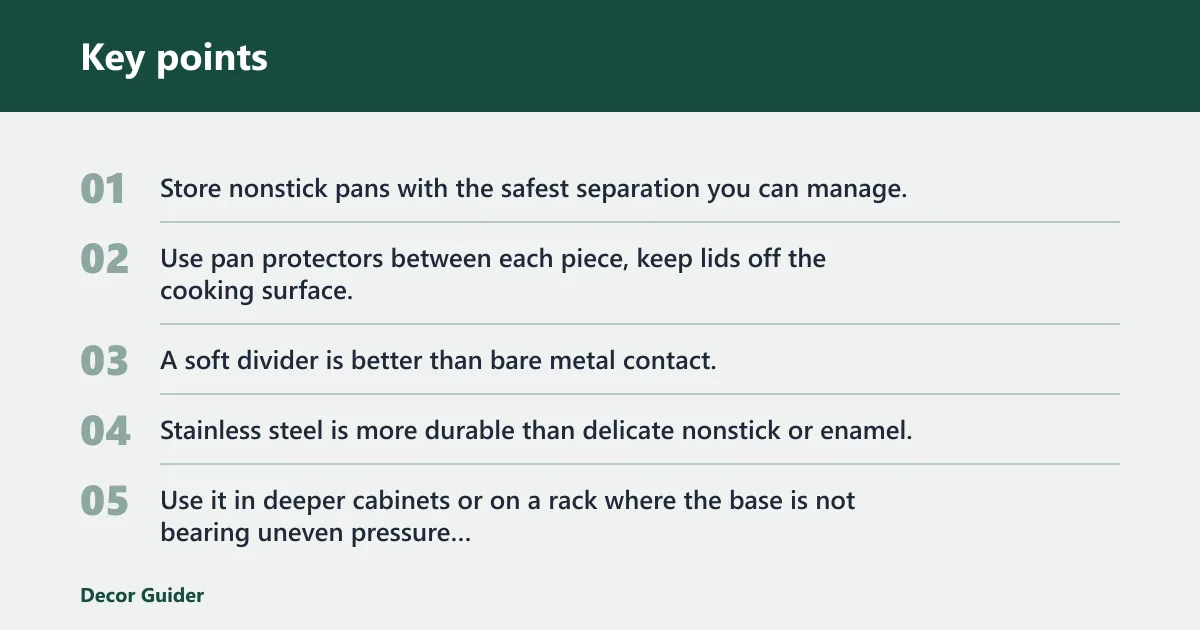
Store nonstick pans with the safest separation you can manage. Use pan protectors between each piece, keep lids off the cooking surface, and avoid hanging them by a rim that can scratch the coating. A soft divider is better than bare metal contact.
Stainless steel cookware
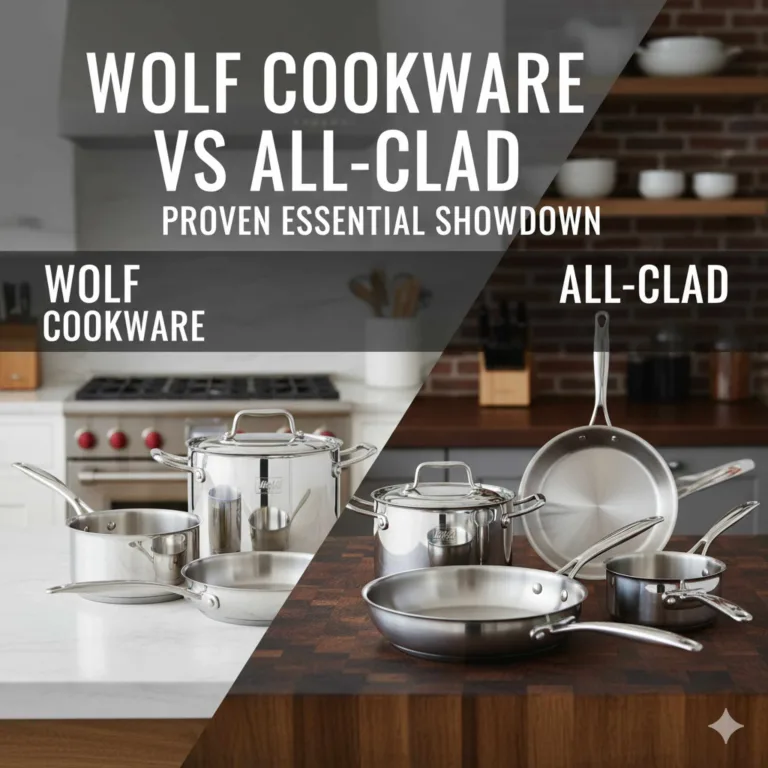
Stainless steel is more durable than delicate nonstick or enamel, but it still benefits from protection when stacked. Use it in deeper cabinets or on a rack where the base is not bearing uneven pressure from other pieces.
Cast iron pieces
Cast iron resists warping well, but it is heavy. Store it low, with strong shelf support and little movement. Keep moisture out of the stack so seasoning does not suffer, and do not place cast iron on top of lighter pans.
Enamel-coated cookware
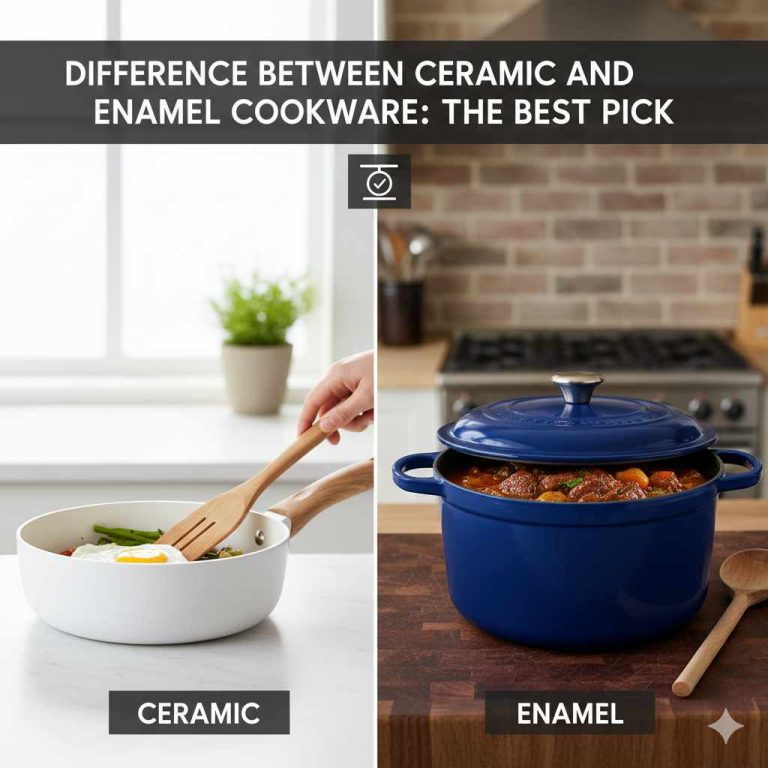
Enamel-coated pieces need the most contact control. Protectors help prevent chips at the rim and interior surface. If a piece has existing chips, use extra padding or give it its own slot so damage does not spread.
Pots and pans prevent safety matrix
| Storage method | Nonstick | Stainless steel | Cast iron | Enamel |
|---|---|---|---|---|
| Stacked | Caution — use protectors; bare contact can scratch coatings. | Caution — safe with padding, but stainless still needs protection. | Safe, weight is less likely to deform the pan, though moisture still matters. | Avoid, direct stacking can chip enamel. |
| Nested with protectors | Safe, soft separators reduce coating damage. | Safe, protects finish and keeps rims from grinding. | Caution, acceptable if dry and not overloaded. | Safe, protectors help prevent chips and scratches. |
| Hanging | Safe, pans stay separated and easy to grab. | Safe, works well if hooks support the weight. | Caution, only if the rack and hardware are rated for heavy pieces. | Caution, avoid knocking enamel against other items. |
| Pegboard | Safe, renter-friendly and keeps cookware apart. | Safe, accessible and separated. | Caution, use solid pegs and secure mounting. | Safe, good spacing helps prevent chips. |
| Drawer dividers | Safe, horizontal slots prevent rubbing. | Safe, works well in deep drawers. | Caution, heavy pieces need strong drawer support. | Safe, dividers reduce clatter and contact. |
How do you store cookware if you only have cabinet space?
Use vertical dividers, deep drawers, under-cabinet storage, or pull-out storage before you accept a tight stack. If cabinet space is full, move the most delicate pans to the easiest-access zone and keep lids in a separate slot so they do not press on cookware.
Made In describes pegboards as easier, renter-friendly, and cheaper to install than hanging racks. Hanging racks leave room between pots and pans and make items easy to grab, but they need wall or ceiling space. A pegboard fits better when drilling for a heavy rack is not practical.
Vertical dividers and drawer layout
Vertical dividers work well for lids, sheet pans, and flat cookware. Deep drawers suit stacks only when the stack is relatively short and padded. Under-cabinet and pull-out storage can keep heavy pieces low and reduce the need to lift a whole pile to reach one pan.
What is the best way to store cookware in a small kitchen?
For a truly tiny kitchen, use vertical space first. Stovetop storage can save space when cabinet space is full, but it is best for display-worthy pieces and only when the burners are clean, cool, and not the main cooking surface. Pegboards are the cheaper, renter-friendly fallback.
Hanging racks also work in larger kitchens because they keep cookware apart and make it easy to grab. If you do not have wall or ceiling room, a pegboard or drawer divider usually gives better access without adding pressure to the stack.
How do you pack pots and pans to prevent warping?
Pack cookware as if each piece will move. Use a soft separator between every nested pan, keep lids upright in their own slot, and place the heaviest items at the bottom of the box. Do not pack a thin pan under a cast iron lid or a loose stack of lids.
- Wrap each pan in a clean towel or use a pan protector.
- Place the widest, heaviest item on the bottom.
- Add one separator between each pan, not every few pans.
- Keep lids in a separate vertical section.
- Fill empty space with soft packing paper so the stack cannot shift.
Suppose a 12-inch stainless skillet is moving with three lighter saucepans. If the skillet sits on top, the bottom pieces can take point pressure when the box tilts. Put the skillet at the bottom and separate each pan with padding instead.
What are the biggest storage mistakes?
The biggest mistakes are putting away hot pans too soon, storing wet cookware, overpacking cabinets and drawers, and forcing lids into the same stack. Each one adds stress: heat, moisture, pressure, or clatter. Those are the conditions that turn a storage problem into a warped or damaged pan.
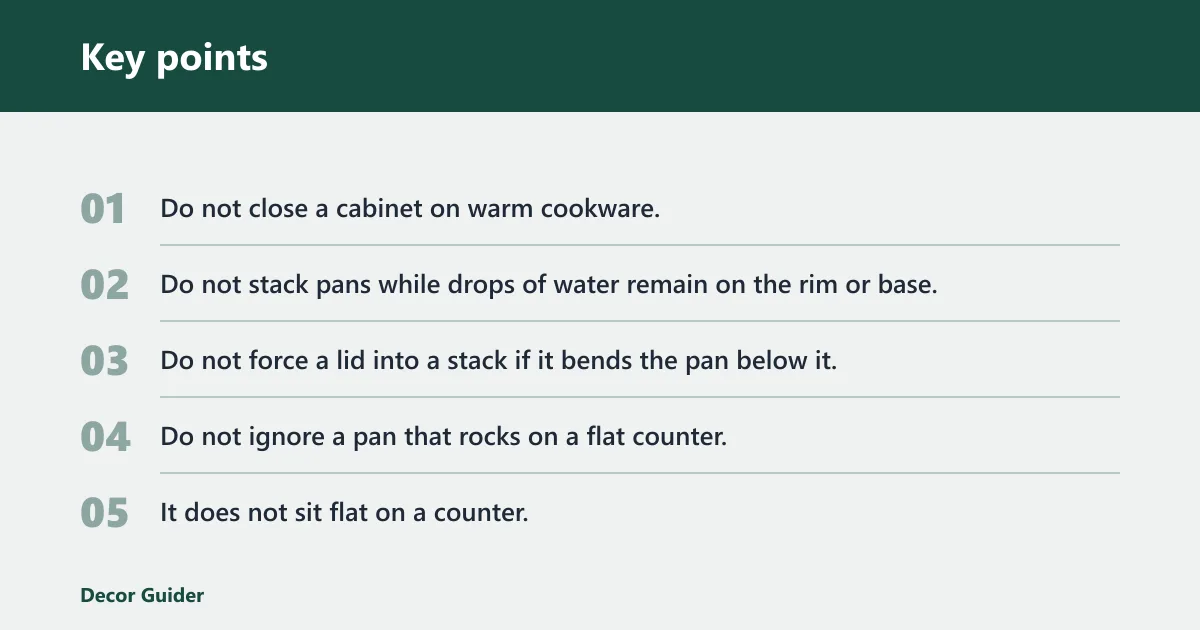
- Do not close a cabinet on warm cookware.
- Do not stack pans while drops of water remain on the rim or base.
- Do not force a lid into a stack if it bends the pan below it.
- Do not ignore a pan that rocks on a flat counter.
Common first-timer mistake: a heavy lid pile gets set on top of three nested pans because it saves space. The lids add pressure and can keep the pans from sitting flat, which makes the stack less stable every time it is moved.
When a pan should not be stacked anymore
Use this quick inspection before you return cookware to a stack. If a pan spins freely like a top in the spin test, it generally should not go back into a tight pile without a separator. If the base rocks, the rim is chipped, or the coating is flaking, give it its own slot.
- It does not sit flat on a counter.
- It spins freely in the spin test.
- The rim is chipped or bent.
- The nonstick coating is scratched or peeling.
- The pan smells musty or shows moisture marks after storage.
Frequently asked questions
How do I store pots and pans without warping them?
Store them fully cooled, completely dry, and separated by a soft liner or divider. Keep heavy cookware low and avoid direct metal-on-metal contact. If cabinet pressure is high, switch to a vertical option such as a rack, pegboard, or divider instead of forcing a tight stack.
Can pan protectors prevent pots and pans from warping?
Pan protectors help prevent scratches and chips, and they reduce pressure at contact points. They generally do not fix overheating, thermal shock, or a pan that is already bent. Use them as part of the storage setup, not as a substitute for cooling and drying.
How long should I wait before putting a hot pan away?
Wait until the pan is fully cool to the touch, including the base and handle, before putting it away. That avoids trapped heat and lowers thermal shock risk. If the pan still feels warm, leave it out longer and do not cap it with a lid.
How do I store nonstick pans to avoid damage?
Store nonstick pans with a soft separator between every pan, not just one at the bottom. Keep them out of heavy stacks, avoid metal contact, and use a separate slot for lids. A drawer divider or pegboard is safer than a tight cabinet pile.
Products related to this article
Sponsored / affiliate links. As an Amazon Associate I earn from qualifying purchases. I may earn additional commission from eligible campaigns.