How to Transport a Hot Casserole to a Party
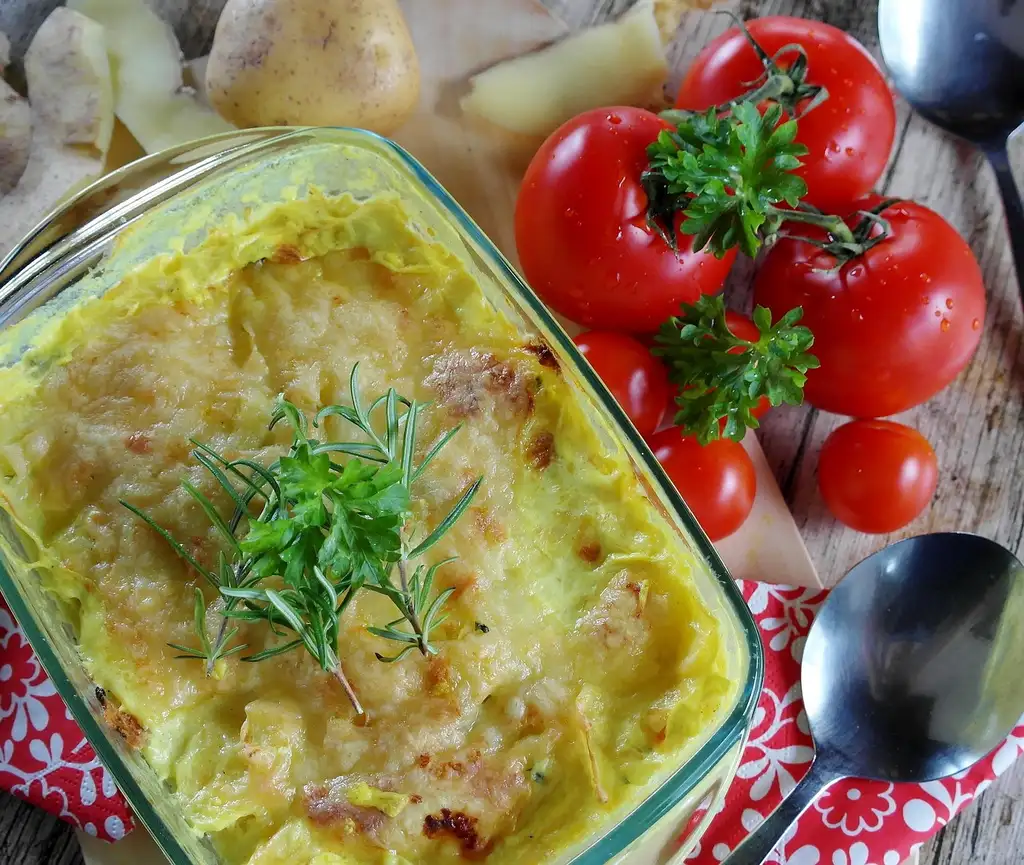
Carry the casserole covered in a preheated insulated carrier for trips up to about 30 minutes; for longer drives, wrap the dish in dry towels inside a cooler and keep sauces separate if possible. For trips beyond about 45 minutes, treat transport as a delay rather than a hold step. Bad transport can cause spills, dry edges, and a lukewarm center. This guide covers packing, insulation, dish-specific handling, and timing so the casserole arrives hot and intact.
This guide is part of our Holiday Hosting Cookware Guide: Roasting Pans, Dutch Ovens and Casseroles series.
What you’ll need
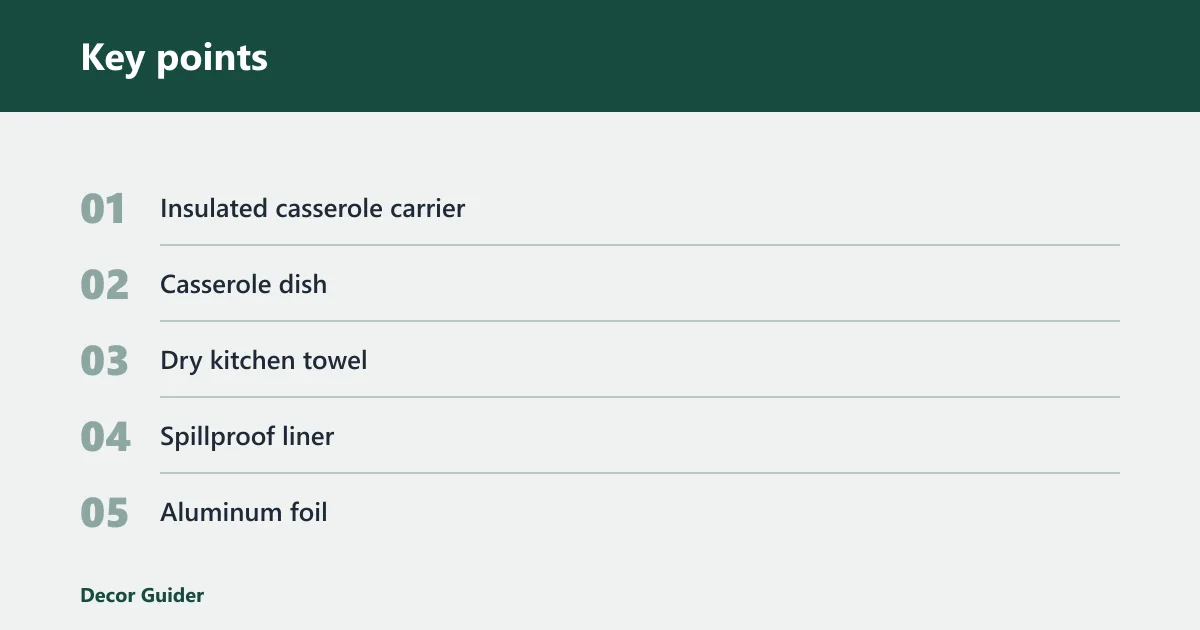


- Insulated casserole carrier or thermal bag that fits a common 9×13-inch dish; soft-sided or hard-sided both work if the dish sits level and the opening is easy to close.
- Casserole dish with a fitted lid or a foil cover; glass, ceramic, and metal all behave differently when hot.
- Dry kitchen towel for an extra wrap layer and to stop the dish from sliding in the carrier.
- Spillproof liner or shallow tray for the car seat, trunk floor, or tote bottom.
- Aluminum foil for a heat-retention wrap over the dish top.
- Hot pack or heat pack only if the carrier is designed for it; keep it in the pocket or sleeve provided by the manufacturer.
- Instant-read thermometer for checking the center after travel if the casserole seems to have cooled.
How long will it stay hot?
For a short trip under 15 minutes, a covered hot casserole usually holds temperature well if it starts hot and rides level. For 15 to 45 minutes, insulation matters much more, and a towel wrap inside a carrier helps slow the drop. After about 30 minutes, plan to check the center temperature on arrival.
Short trip: under 15 minutes
A covered dish in a carrier is usually enough. Keep the lid or foil tight, set the dish flat, and avoid opening the carrier until you reach the serving area.
Medium trip: 15 to 45 minutes
Use a carrier plus a dry towel wrap. This setup slows heat loss and reduces movement, but it will not hold heat forever. If the casserole contains sauce, cheese, or dairy, expect more texture change than with a firmer baked dish.
Longer trip: plan for heat loss and a quick check on arrival
For trips beyond 45 minutes, treat transport as a delay, not a holding method. Check the center with an instant-read thermometer after arrival. Hot holding is generally above 140°F, though some equipment guidance uses 135°F; if the casserole drops below serving temperature, reheat it to about 165°F before setting it out again.
Casserole transport decision table
Use this table to match the packing method to the trip, the dish, and the gear on hand. The best choice is the one that keeps the casserole level and covered without trapping extra moisture on a crisp topping.
| Trip length | Casserole type | Gear on hand | Best packing method | Tradeoff to expect |
|---|---|---|---|---|
| Under 15 minutes | Firm bake, such as potato casserole or baked pasta | Foil + towel | Cover with foil, wrap in a dry towel, and carry level in a shallow tray or carrier | Good heat retention; minimal texture change |
| Under 15 minutes | Saucy or layered dish | Carrier with spillproof liner | Use a fitted lid or double foil, then place the dish on a liner inside the carrier | Best spill control; some condensation may soften the top |
| 15 to 45 minutes | Glass or ceramic 9×13-inch dish | Insulated casserole carrier | Use the carrier, add a dry towel for snug fit, and keep the dish centered | Best balance of heat and spill control |
| 15 to 45 minutes | Metal pan with low sides | Cooler + towels | Wrap the covered pan in towels and nest it in a cooler so it cannot shift | Good heat retention, but check for lid lift if the pan is shallow |
| Over 45 minutes | Any casserole that must stay serving-ready | Carrier plus reheating plan | Transport insulated, then reheat if the center falls below serving temperature | Heat loss is likely; toppings may soften |
How do you pack the casserole?
Set the casserole in a carrier only after it is tightly covered and the carrier is ready. The goal is to stop tilting, reduce air exchange, and keep hot filling from sloshing. If the dish is loose in the carrier, add a dry towel to stabilize it before you move it.
- Heat the casserole fully before transport if your recipe needs reheating.
- Cover the surface with a fitted lid or a double layer of foil; foil helps with heat retention, but it is not airtight.
- Wrap the covered dish with a dry kitchen towel if the carrier has extra room.
- Set the dish into the carrier or cooler and keep it level from kitchen to car to serving table.
- Place a spillproof liner under the dish if the casserole is saucy, cheesy, or likely to leak condensation.
- Close the carrier fully and load it so it cannot tip in transit.
- On arrival, move the casserole straight to the serving area and open the carrier only when you are ready to serve.
Suppose a 9×13-inch glass dish of baked ziti is packed for a 20-minute drive. A fitted lid, one dry towel wrap, and a carrier that holds the pan snugly will usually keep the filling in place better than foil alone. The same dish in a loose tote can shift enough to pull sauce toward one corner.
How do you protect texture and toppings?
Texture protection starts with moisture control. Breadcrumb and cracker toppings soften when trapped under heavy condensation, while saucy casseroles can slosh and collect around the edges if the pan tilts. Cover the dish tightly for heat, then use the right amount of insulation so you do not create a steam chamber.
Keep crisp toppings from steaming
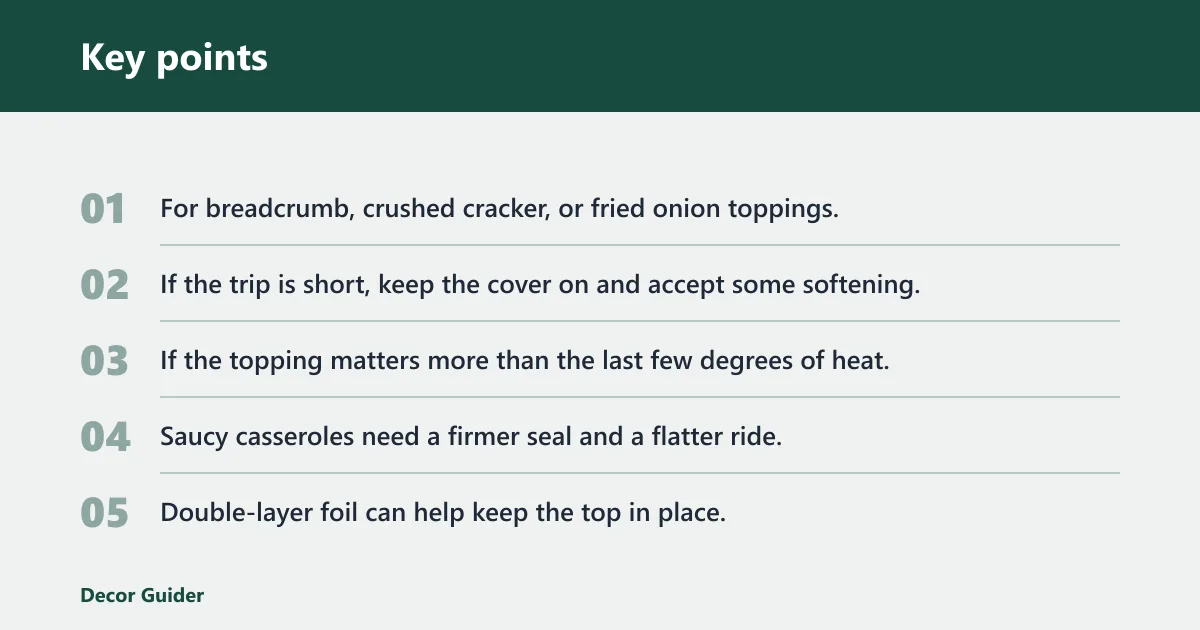
For breadcrumb, crushed cracker, or fried onion toppings, a tight lid holds heat well but also traps steam. If the trip is short, keep the cover on and accept some softening. If the topping matters more than the last few degrees of heat, remove the lid only after arrival and briefly finish the top in the oven.
Reduce slosh in saucy or layered casseroles
Saucy casseroles need a firmer seal and a flatter ride. Double-layer foil can help keep the top in place, but the real protection is a level carrier with no open gaps around the dish. A spillproof liner under the pan is worth using here because leaks usually start at the corners or under a loose lid.
Handle cheesy dishes differently from baked pasta or potato bakes
Cheesy casseroles can separate or leave oily puddles if they are shaken during transport. Baked pasta is usually more forgiving, and potato bakes hold shape better than loose gratins. Keep all three level, but give cheese-heavy dishes the most attention to carrier fit and the shortest possible trip time.
Common mistakes
These are the failures that most often turn a good casserole into a cleanup job. Fixing them usually means changing the packing, not the recipe.
- Using a wet towel around the dish. A damp wrap traps steam and can encourage soggy topping; use a dry towel only.
- Letting the dish tilt in the car. Even a small lean can push sauce toward the lid and create a spill path.
- Choosing a carrier that is too loose. If the 9×13-inch dish slides, add a towel insert or switch to a better-fitting carrier.
- Relying on foil alone for spill control. Foil helps with heat, but it does not stop sloshing or corner leaks.
- Waiting too long to check the temperature after arrival. If the casserole seems cool, check the center promptly and reheat if needed.
Common first-timer mistake: a 9×13-inch ceramic dish goes into a soft-sided carrier with a little extra room, then the car turns and the top edge shifts. A dry towel packed around the sides would have kept the dish from moving and helped preserve the lid seal.
If a casserole drops below serving temperature, reheat it before serving rather than hoping the carrier will recover it. Use an oven-safe dish, cover it loosely to limit drying, and bring the center back to 165°F before it goes out again. If the topping is already soft, finish it uncovered for the last few minutes.
How do you keep a casserole warm for travel?
Start with a hot casserole, cover it tightly, and use insulation that matches the trip length. For short drives, foil plus a dry towel can be enough. For longer drives, an insulated carrier does more than a thermal bag because it usually fits common casserole dishes more securely and limits movement.
How do you transport a hot casserole to a party without it spilling?
Use a dish that matches the carrier, keep the pan flat, and add a spillproof liner under anything saucy. A fitted lid is better than loose foil for liquid-heavy casseroles, and a hard-sided carrier gives more side protection than an oversized tote. Do not stack anything on top of the pan.
How do you make a casserole carrier at home?
A simple home setup uses a cooler, a dry towel, and a shallow liner or tray. Put the covered dish on the liner, fill any extra space with dry towels so the pan cannot shift, and close the lid. This works best for a common 9×13-inch dish that sits flat and does not have tall handles.
How do you make an insulated casserole carrier?
To make a basic insulated carrier, line a boxy tote or cooler with a clean, dry towel and use a tray or folded towel at the bottom to keep the dish level. If you add a hot pack, place it only in a pocket or compartment designed for it. Keep it away from the food container.
What size casserole dish fits a standard carrier?
Most standard carriers are built around a common 9×13-inch casserole dish, but fit varies by model. Check the manufacturer’s listing for your carrier and compare the inside dimensions to the dish, including handles and lid height. Glass and ceramic dishes often need a bit more clearance than metal pans.
Can you use towels to keep a casserole warm while driving?
Yes, as a wrap layer, not as the only protection for a long trip. A dry towel helps hold heat and keeps the pan from sliding, but it does not seal in heat like an insulated carrier. Use towels with a lid or foil cover, never against a heating element or open flame.
What is the best way to transport hot food safely?
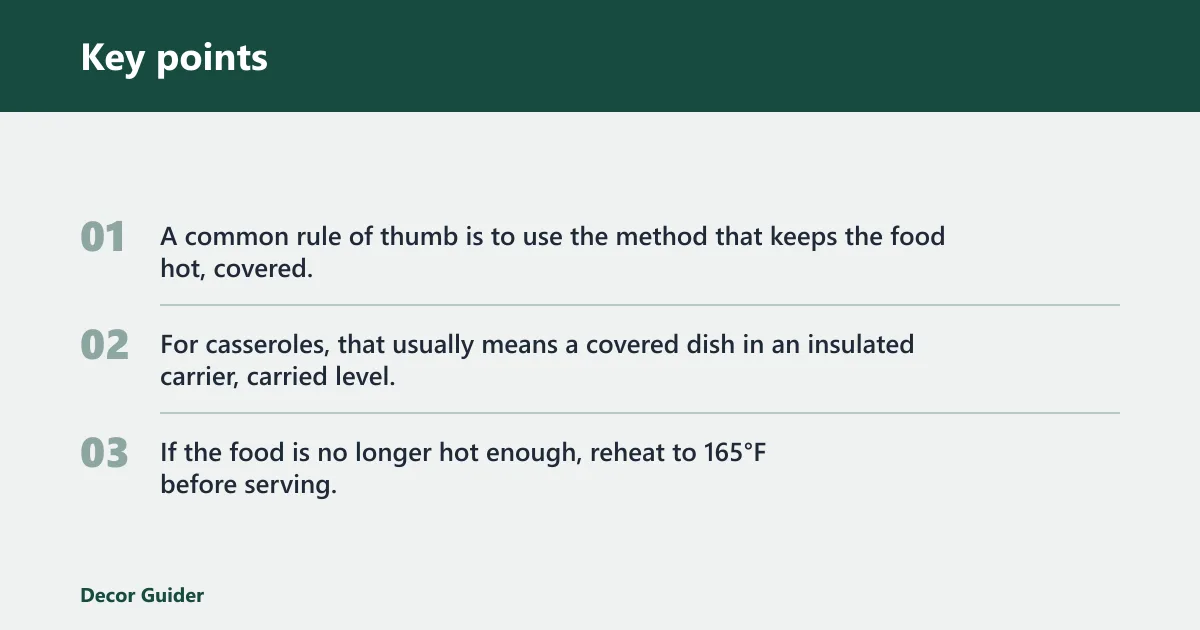
A common rule of thumb is to use the method that keeps the food hot, covered, and stable until service. For casseroles, that usually means a covered dish in an insulated carrier, carried level, with a thermometer check on arrival if the trip was long. If the food is no longer hot enough, reheat to 165°F before serving.
Products related to this article
Sponsored / affiliate links. As an Amazon Associate I earn from qualifying purchases. I may earn additional commission from eligible campaigns.