What Can I Use Instead of Heart-Shaped Cookie Cutters?
Yes. Use a small knife, a paper template, or a round cutter with a pinch at the bottom. For a fast clean swap, a round cutter plus a quick V-notch is often recommended. A poor substitute can leave lopsided cookies, wasted dough, and shapes that spread too far in the oven. This guide ranks the best heart-cookie-cutter alternatives by speed, precision, and what they work best on.
Can you make a heart without a cutter?


What you’ll need
- Standard sugar cookie dough, chilled until firm enough to hold sharp edges
- A round cutter, if you want the fastest base shape
- A small knife or paring knife for trimming
- Parchment paper or a paper template for tracing
- A ruler for midpoint marking
- A washed 12-ounce soda can for a DIY cutter
- Tin snips or heavy-duty scissors to cut the can
- Sandpaper or a metal file with fine grit 220+ to smooth edges
- A butter knife to crease the center point
- Work gloves and safety glasses while cutting and shaping metal
Heart cutter comparison matrix

| Alternative | Accuracy | Cost | Safety | Reusability | Best use case | Failure risk | Quick recommendation |
|---|---|---|---|---|---|---|---|
| Round cutter plus V-notch | High | Low if you already own one | High | High | Sugar cookies | Low | Best for sugar cookies when you need a clean heart fast |
| Paper template plus knife | High | Very low | High | Low | Last-minute decorating | Medium | Best for icing, fondant, or dough you can chill first |
| Freehand knife cut | Medium | Very low | Medium | High | Thin cookies or toppings | High | Best only when appearance matters less than speed |
| DIY aluminum can cutter | Medium to high | Very low | Medium | Medium | Standard sugar cookie dough | Medium | Best if you need a custom size and can handle metal safely |
| Cup or glass | Low to medium | Very low | High | High | Round base for trim-and-shape work | Medium | Best as a starting circle, not the final heart shape |
| Paper or cardstock template | High | Very low | High | Low | Decorating, dough, pizza | Low | Best when you need a repeatable outline today |
| Foil stencil | Medium | Very low | Medium | Low | Quick decorating or dusting sugar | Medium | Best for powdered sugar or cocoa, not sharp dough cuts |
| Greased metal ring | Low to medium | Low | High | High | Pancakes | Medium | Best for pancakes, where batter can be shaped inside a ring |
How to make a DIY aluminum heart cutter
A DIY aluminum cutter can work in a pinch, but it is not automatically food safe. Can linings, inks, and coatings are not meant to be removed by washing, and they may remain on the metal after cutting. Use this option only if you accept that limitation or the manufacturer states the material is food-contact safe.
The guide’s standard layout uses a heart about 7 inches total length, a 3.5-inch metal rectangle height, a 1-inch center crease, and a 3/4-inch crease depth. For everyday cookie work, size the cutter to the dough and the pan instead of treating that as the only target. A smaller cutter is often easier for standard sugar cookie dough.
- Gather and protect. Put on work gloves and safety glasses before you touch the can. A 12-ounce soda can cuts cleanly, but the edges can be sharp enough to snag skin.
- Trim the can body. Use tin snips or heavy-duty scissors to remove the top and bottom of the can, cutting about 1 inch below the rim and 1 inch above the base. This leaves a usable aluminum sheet for shaping.
- Flatten the strip. Press the aluminum into a flat rectangle and smooth the curve as much as possible. If the strip keeps springing back, bend it gradually instead of forcing one hard crease.
- Mark the midpoint. Use a ruler to find the center of the strip and mark the midpoint lightly. That mark keeps both sides even and helps the heart stay symmetrical.
- Form the heart point. Fold the strip at the midpoint with a butter knife to create the center point. A short crease, about 1 inch long, is enough to start the heart shape without making the point too bulky.
- Shape both curves. Bend each side outward by hand so the top rounds are even. Aim for a balanced curve on both sides rather than matching a preset number exactly, because the best shape depends on the dough thickness and recipe.
- Sand the cut edge. File every cut edge with fine-grit 220+ sandpaper or a metal file until no burrs catch your finger. This reduces cut risk and makes the cutter easier to handle and wash.
- Test and adjust. Press the cutter into chilled standard sugar cookie dough, lift straight up, and check the outline. If one side sags, make a tiny bend adjustment and retest before baking.
If you want a neat heart for a sugar cookie tray and the dough has softened on the counter, chill it first. Firm dough cuts cleaner. Warm dough blurs the point and rounds off the top lobes.
Can you use a cup or glass?
Yes, but only as a starting shape. A cup or glass makes a clean circle, which is useful if you plan to trim a V-notch at the top and pinch the bottom into a heart. It is less useful when you need a precise heart right away, because the final shape still depends on knife work.
Best way to use one
Choose a round cutter, cup, or glass that matches the size of the heart you want, then cut two shallow sides from the top edge and taper the bottom to a point with a knife. This works better on chilled dough than on soft dough, which can spread during trimming.
What works for pancakes or pizza?
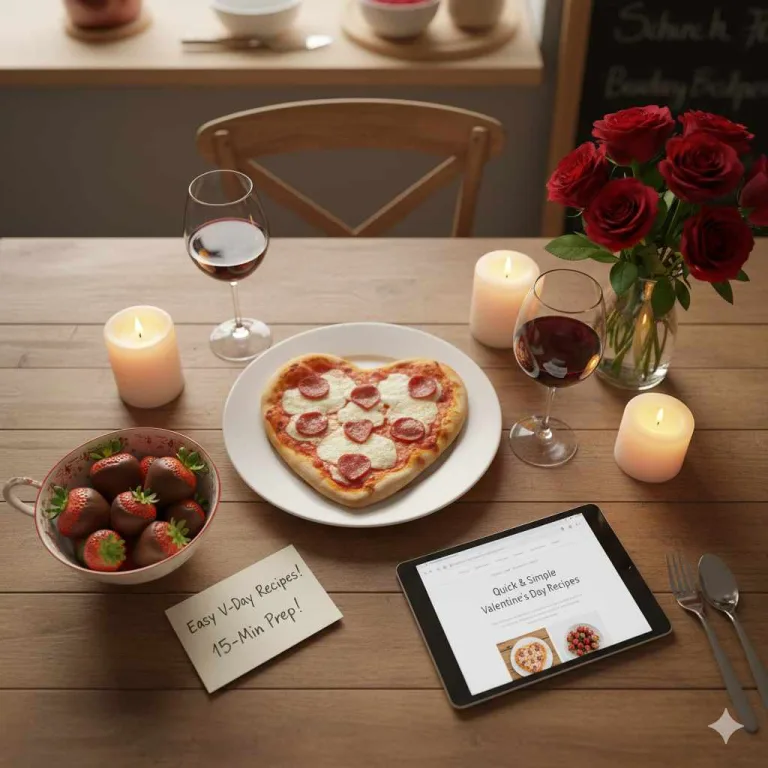
For pancakes, a greased metal ring or a squeeze bottle is often used for the cleanest heart shape. For pizza, a paper template and a knife work best because the dough is easy to trim after shaping. A parchment stencil is not a good stovetop pancake tool, use a ring or shape the batter directly on the griddle instead.
Pancake shape options
- Greased metal ring: Best for batter that needs a border.
- Squeeze bottle or ladle: Best for drawing a heart freehand on a flat griddle.
- Paper template with a ring: Useful for batter you want to portion precisely.
Pizza shape options
For pizza dough, roll the dough first, set a paper heart template on top, and trim around it with a knife or bench scraper. If you need a more rustic look, shape the dough by hand and press the top lobes outward before baking. That is faster than trying to cut a perfect cutter from scratch.
Common mistakes
- Using soft dough. Soft dough spreads and blunts the heart. Chill sugar cookie dough until firm before cutting.
- Skipping edge smoothing. Burrs from a cut can scratch hands and tear dough. File the edge until it feels smooth.
- Making the point too deep. An oversized crease can distort the whole cutter. Start with a short center crease and adjust gradually.
- Ignoring symmetry. If one side is longer, the heart looks lopsided after baking. Measure from the midpoint before bending both sides.
- Using a can as-is. A cut can is not ready for food contact just because it has been washed. The liner and coating can still be there.
Say your first cut looks narrow at the point and too wide at the top. Bend each side inward by the same small amount, then retest on chilled dough. A quarter-inch adjustment on both sides is often enough to correct the shape without flattening the curve.
If that didn’t work
If the heart still looks uneven, switch to a paper template and knife. That gives you a clearer outline than a misshapen metal strip, and it avoids the food-contact question that comes with DIY can metal.
Frequently asked questions
What can I use instead of heart-shaped cookie cutters?
A round cutter plus a quick V-notch is the fastest option for cookies, while a paper template and knife is the most flexible. For decorating, a paper or cardstock outline works well. If you need a heart today, choose the method that matches the food surface, not just the shape.
How do I make a heart shape without a cookie cutter?
Cut a circle, trim a shallow V at the top, and pinch the bottom into a point. For cleaner results, chill the dough first and use a ruler to keep both lobes even. A template is better than freehand if the shape has to look consistent.
Can I use a cup or glass to cut heart cookies?
Yes, as a circle starter. A cup or glass gives you the round base, then you trim the top and bottom into a heart with a knife. It is a good option for standard sugar cookie dough, but it is slower than a round cutter plus V-notch.
How do I make a heart cookie cutter from a soda can?
Cut a washed 12-ounce soda can into a strip, smooth it with 220+ grit sandpaper, mark the midpoint with a ruler, and form the point with a butter knife. Wear work gloves and safety glasses, and remember that washing does not remove can liners or coatings.
What size should a homemade heart cookie cutter be?
Match the cutter to the dough and the finished treat. The guide’s example uses a 7-inch total length and a 3.5-inch height for the metal rectangle, but that is not a universal cookie size. Smaller cutters are often easier for standard sugar cookies and faster for decorating.
Is a DIY aluminum cookie cutter food safe?
Not automatically. Cut can material may still carry liner, ink, or coating that is not meant for direct food contact. Use it only if the manufacturer says the metal is food-contact safe, or keep it for dry decorating work instead of direct dough cutting.
What can I use for heart-shaped pancakes or pizza instead?
For pancakes, a greased metal ring or a squeeze bottle works best on a griddle. For pizza, roll the dough and trim it with a knife against a paper template. Those methods give you better control than a rigid cutter when the surface is hot or the dough is soft.
Products related to this article
Sponsored / affiliate links. As an Amazon Associate I earn from qualifying purchases. I may earn additional commission from eligible campaigns.