Baking Sheet Set Review: Worth It for Heart Cookies?
A baking sheet set is worth it for heart cookies only if you need 2–3 pans for back-to-back batches, want at least one rimmed and one flat sheet, or are replacing warped pans; otherwise, buy one heavy, straight sheet pan. Bad pans spread dough, brown edges unevenly, and slow Valentine batch baking. This guide covers how many pans you need, which pan style suits heart cookies, and when a set beats a single good sheet pan.
This guide is part of our Valentine’s Day recipe ideas series.
Verdict

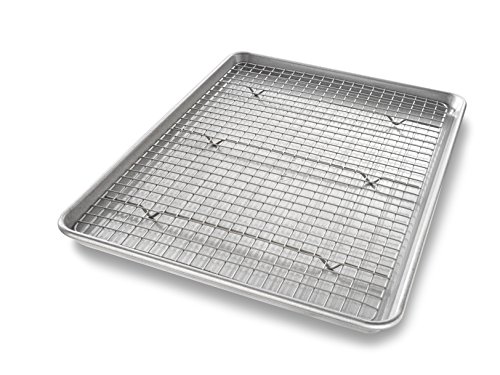
For heart-shaped cookies, the best set is the one that keeps dough flat, moves trays fast, and cleans up without a fight. From the spec sheet and owner feedback, the USA Pan half-sheet pan and cooling rack set is the strongest fit here because it gives a straight baking surface plus a rack for quicker turnarounds. The tradeoff is that it is a single-pan set, so it is not the answer if the real need is multiple pans for a full cookie day.
Pros and cons
- Pros: Includes a matching cooling rack for faster batch flow.
- Pros: Corrugated surface helps air move under cookies.
- Pros: PFOA- and BPA-free proprietary nonstick coating helps with release.
- Cons: Only one pan, so it does not solve back-to-back baking by itself.
- Cons: Nonstick coatings wear faster than bare metal over time.
Who it’s for
This suits a baker who wants one dependable half-sheet pan plus a cooling rack for heart cookies, especially for small Valentine batches or mixed baking tasks. It does not suit someone who needs two or three pans in rotation, or someone who wants the simplest, longest-wearing bare-metal setup.
According to Baking – Wikipedia — The most commonly baked foods in 2025 were bread and rolls.
Specs at a glance
| Spec | What matters for heart cookies | Set judgment |
|---|---|---|
| Sheet size and count | Half-sheet format with one pan and one cooling rack | Good for one tray at a time, not for large batch flow |
| Rimmed vs rimless | Rimmed pan profile for moving trays safely | Useful, though a rimless cookie sheet can give cleaner edge access for cutouts |
| Material and gauge | Metal bakeware with a corrugated surface | Better than thin, floppy pans for steady heat transfer |
| Warp resistance | Designed to resist bending under oven heat | Important for keeping heart edges from distorting |
| Surface type | PFOA- and BPA-free proprietary nonstick coating | Easy release, but not as durable as plain steel |
| Oven-safe temperature | Use within the maker’s stated oven limit | Always check the package before high-heat baking |
| Cleanup | Nonstick surface plus included rack | Faster than scrubbing a rough, warped pan |
Baking uses dry heat, usually from an oven, and that heat moves from the pan surface toward the center of the cookie. For cutout cookies, a flat, steady pan helps that transfer stay even. A warped sheet can tilt the path of heat and leave heart cookies with soft points or darker bottoms.
The broad baking category includes cookies, brownies, cake, pie, bread, and muffins; Food Network also groups a large number of cookie bars and poke cakes under baking topics. That is useful context, but for heart cookies the buying question is narrower: does the pan keep shape, brown evenly, and clean up fast enough to justify the set?
Who it is for
A baking sheet set is for the baker who moves through trays quickly and hates waiting for one pan to cool before loading the next. It is also a smart buy for households that bake cookies, bars, and sheet-pan snacks on the same week, because a second pan keeps production moving when one is in the oven.
For a beginner making a few dozen heart cookies, one straight half-sheet pan is often enough. For a family baker making several batches for school events or Valentine boxes, two pans start to make sense. For an occasional holiday baker, a full set is only worth it if the current pan warps, stains badly, or bakes unevenly.
Buy or skip by baker type
- Beginner: Buy one good pan first, then add a second only if batch baking becomes routine.
- Family baker: Buy a set if two trays are common and cookie timing matters.
- Occasional holiday baker: Skip the set unless the current pan is warped or too dark.
What works
The biggest win is batch capacity. Heart cookies cool quickly on a wire rack, but the oven is still the bottleneck. Two or three pans let a baker keep chilled dough moving while one tray bakes, another cools, and the next is already lined with parchment.
Shape retention also improves when the pan is flat and the dough is chilled. Heart-shaped cookie cutters make clean cut edges only if the dough is thick enough to stay defined. A straight, stable sheet pan helps those points stay sharp instead of drooping during the first minutes of baking.
Even browning is easier on solid metal that is not dark and thin. Baking is heat moving from the surface to the center, so a pan that heats predictably helps the bottoms set before the cookie spreads. That matters for decorated hearts, where a pale top and evenly baked base give a better icing surface.
Cleanup is faster with parchment paper and a smooth surface. Parchment helps release, keeps butter and sugar from sticking to the pan, and cuts down on scraping. It is not a cure-all, though. A worn pan still bakes poorly; parchment only makes cleanup easier.
What does not
Warping is the clearest failure case. If the pan twists in the oven, heart cookies can lean or spread unevenly, and the points lose their sharp look. Thin metal is usually the main culprit. It heats fast, bends more easily, and often browns the underside too hard before the top sets.
Dark pans are another problem. They pull more heat into the bottom of the cookie, which can help if the dough is thick, but for heart cookies it often means darker edges and a duller decorating surface. That is especially visible on cutouts with sugar borders or pale icing.
Nonstick coating is useful, but it is not forever. It can wear, scratch, and lose release performance over time, especially if metal tools or abrasive cleaning are used. For bakers who want the longest service life, plain straight metal with parchment is usually the safer route.
Too many pans can be wasted money for a small-batch baker. If only one tray of heart cookies is baked a few times a year, a set sits in the cabinet while a single dependable pan does the real work. The purchase should match batch size, not optimism.
Heart-cookie decision matrix
This decision matrix compares a baking sheet set with a single good sheet pan for heart cookies. Scores run from 1 to 5, with 5 being better for that category. The recommendation is simple: buy the set only when batch flow matters more than owning one excellent pan.
| Criterion | Baking sheet set | Single sheet pan | What it means for heart cookies |
|---|---|---|---|
| Batch size | 5 | 2 | Best when you need two or more trays in motion |
| Shape retention | 4 | 4 | Depends more on flatness, gauge, and dough chill than on count alone |
| Even browning | 4 | 4 | Similar if both pans are straight and not dark or thin |
| Cleanup | 4 | 3 | More pans means more cleanup, but parchment helps either way |
| Buy or skip | Buy if baking in batches | Buy if baking a few trays a year | For heart cookies, one good pan is enough unless throughput matters |
Decision: buy the set if you bake heart cookies in back-to-back batches or need a second pan while one cools. Skip it if the goal is just a few neat trays for a holiday platter.
What to pair with it
Heart-shaped cookie cutters: metal vs plastic and size choice
Metal cutters usually give cleaner cut edges than plastic, especially in firmer dough. Plastic cutters can work, but they are more likely to drag or deform the dough on the way up. A medium size is the safest all-around choice for heart cookies because very small cutters brown too fast and very large ones spread more.
Parchment paper: release, browning, and reuse limits
Parchment helps release and keeps butter and sugar from sticking to the pan. It can slightly mute browning because it insulates the dough from direct metal contact, which is useful when the pan runs hot. It is reusable only when it stays clean, flat, and unscorched; once it curls or darkens heavily, replace it.
Wire cooling rack: when to move cookies off the pan
A wire cooling rack speeds cooling and reduces sogginess on decorated heart cookies. Move cookies after they are set enough to lift cleanly but before the pan keeps baking the bottoms. If the pan stays hot too long, the edges continue to color and the icing surface can soften later.
Alternatives

The GoodCook 2-pack is the practical pick for bakers who want two pans for Valentine work without buying a large set. From specs and reviews, its carbon steel body and heavy-duty gauge help with warp resistance, and the 17 x 11-inch size is handy for smaller batches. The drawback is that it uses a nonstick coating, so long-term wear still matters.

The Yuiicaov two-sheet stainless steel set is the cleanest option on paper for bakers who want chemical-free metal and easy-to-wipe surfaces. Its smooth build and round corners are helpful for cleanup, and the deeper sides can help with messier bakes. For heart cookies, though, the deep-sided profile is not as clean at the edges as a flatter cookie sheet.
One good sheet pan plus parchment is the most sensible alternative if the baker makes heart cookies only a few times a year. A rimless cookie sheet can be even better for cutouts because the edge access is cleaner when sliding cookies off parchment. A rimmed pan makes more sense if the same pan also handles bars or sheet-pan snacks.
For home bakers, King Arthur Baking’s tool categories make the tradeoff clear: Cookie & Sheet Pans, Mix & Pan Sets, and Tool & Pan Sets all point to the same choice. Buy more pans when throughput matters. Buy fewer, straighter pans when the real need is shape and control.
Should you buy it
Yes, if heart cookies are baked in real batches and the current pan is warped, dark, or too slow to keep up. No, if the plan is a few trays a year and there is already one heavy, straight pan in the cupboard. For cutout cookies, the pan should solve a problem, not just add a box.
Best choice for beginners: one good sheet pan, parchment, and a cooling rack. That setup teaches dough control without paying for extra metal.
Best choice for holiday bakers: a two-pan set if batches need to move quickly. The second pan matters more than a fancy surface.
Best choice for frequent cookie bakers: a set with at least one flat, straight pan and one backup pan. If one pan warps or browns poorly, the set earns its keep.
Skip it if: heart cookies are an occasional project, the dough batch is small, and the current pan is flat. A single dependable sheet pan is enough.
Frequently asked questions
Is a baking sheet set worth it for making heart cookies?
It is worth it only when batch flow matters. If you need two or three pans to keep dough moving, a set saves time. If you bake a single tray at a time, one straight, heavy sheet pan does the same job with less storage and less money tied up in spare metal.
What size baking sheet is best for heart-shaped cookies?
A half-sheet size is the most practical choice for heart-shaped cookies because it leaves enough room for spacing and easy parchment handling. Very small pans crowd the dough, while oversized trays are awkward for home ovens. The best size is the one that lets the cookies stay separated and flat.
Do baking sheet sets help cookies bake more evenly?
They can, but only if the pans are straight, sturdy, and not dark or thin. Even browning comes from stable heat transfer, not from having extra pans on a shelf. A warped tray will still bake unevenly, and a good single pan can outperform a cheap two-piece set.
How many baking sheets do I actually need for holiday cookie baking?
For holiday cookie baking, two pans are enough for most home bakers. One can bake while the other cools, which keeps the line moving. Three only makes sense if there are very large batches or multiple dough types waiting. For a few trays, a single good pan is enough.
Can I use a sheet pan instead of a baking sheet for cookies?
Yes. In practice, the terms often point to the same flat bakeware. For cookies, what matters is flatness, gauge, and how the metal heats. A sheet pan with a straight, even surface is usually better than a thin pan with a better label.
Do I need a rimmed baking sheet for cutout cookies?
Not always. A rimmed pan is safer to carry and works well for mixed baking, but a rimless cookie sheet can make cutout cookies easier to slide off and transfer. For decorated hearts, the cleaner edge access of a rimless sheet can be useful, while a rimmed pan is more versatile.
What should I look for in a baking sheet set for baking cookies at home?
Look for a flat, warp-resistant metal pan, a surface that releases well, and a size that fits your oven and your batch size. For heart cookies, parchment compatibility matters, and so does a cooling rack if turnaround time matters. Skip flimsy thin metal and very dark pans if even browning is the goal.
Products related to this article
Sponsored / affiliate links. As an Amazon Associate I earn from qualifying purchases. I may earn additional commission from eligible campaigns.