Ramekin Set for Valentine’s Day Desserts Review
For Valentine’s Day desserts for two, a 6-ounce porcelain ramekin set is the safest default. It fits classic custards, keeps portions tight, and still looks polished on the table. Too-small ramekins crowd the filling; too-large ones make the dessert feel thin and can bake unevenly. This review compares the best ramekin set options by size, material, and shape for elegant desserts for two.
This guide is part of our Valentine’s Day recipe ideas series.
Verdict

- Oven-safe high-quality porcelain construction
- Unique glossy white and matte brown exteriors
- Sleek design complements any table setting
The Hasense 6 oz stoneware set is the strongest all-around pick for romantic desserts because the size matches common custard portions, the shape is familiar for baking and serving, and the white finish works for both casual and dressed-up settings. If you want more visual drama, the heart-shaped route is best when the dessert is simple and presentation matters more than precision.
Specs at a glance
| What matters | Best fit for Valentine’s desserts |
|---|---|
| Typical size | 6 ounces for classic custards and soufflé-style portions |
| Common range | 2 ounces to 12 ounces |
| Best shape for most bakes | Straight-sided round ramekin |
| Best material for baked custards | Ceramic or porcelain |
| Best for presentation | Glass or heart-shaped styles |
| Best for cleanup ease | Silicone, if the recipe fits its heat limits |
| Best for heat retention | Ceramic |
| Best for layered desserts | Glass |
Who it
This is for home bakers who want individual desserts for two without wasted batter or awkward leftovers.
It is also for buyers deciding whether to pick classic round ramekins or a heart-shaped set. The answer depends on whether the dessert needs clean baking performance or whether the dish is mainly part of the Valentine’s presentation.
What a ramekin does for dessert portions
A ramekin is a small bowl with straight sides, often fluted or decorative, used for baking and serving. The classic size is 6 ounces, and sizes commonly run from 2 ounces to 12 ounces. That range matters because dessert texture changes fast when the vessel is too wide or too deep.
For Valentine’s desserts, the best ramekin is usually the one that keeps the portion tidy without shrinking the dessert into a teaspoon-sized serving. That is why 4- to 6-ounce options are the most useful for two people.
What works
Ceramic ramekins are the safest default for baked Valentine’s desserts because they are oven-proof and hold heat well. That helps custards set evenly and stay warm on the table.
Glass ramekins are useful when you want to show layers, such as a chocolate base with whipped cream or berry compote. Silicone ramekins are non-stick and flexible, which helps with release, but they are less convincing for a formal plated dessert and should be checked carefully for temperature limits before baking.
Why 6 ounces keeps the portion balanced
The 6-ounce size lands in the sweet spot for romantic single servings. It is large enough for a real dessert, but small enough that two ramekins do not feel excessive. It also works well for soufflé-style bakes, which need enough depth to rise without spreading too thin.
A 6-ounce ramekin keeps the custard thick enough to bake through without leaving a huge, half-empty dish. A 12-ounce vessel would push the same mixture into a thinner layer and make the caramelized top too broad for the portion.
Why material changes the final result
Ceramic and porcelain hold heat well, so they suit custards, soufflés, and baked chocolate desserts. Glass behaves similarly in the oven, but it lets you see layers and doneness more easily. Silicone is better for easy release than for the polished, restaurant-style finish many Valentine’s desserts need.
Heart-shaped ramekins make sense when the shape is part of the gift. They work especially well for chilled desserts, baked eggs, or simple cakes where the romantic outline matters more than exact portion geometry.
What does not?
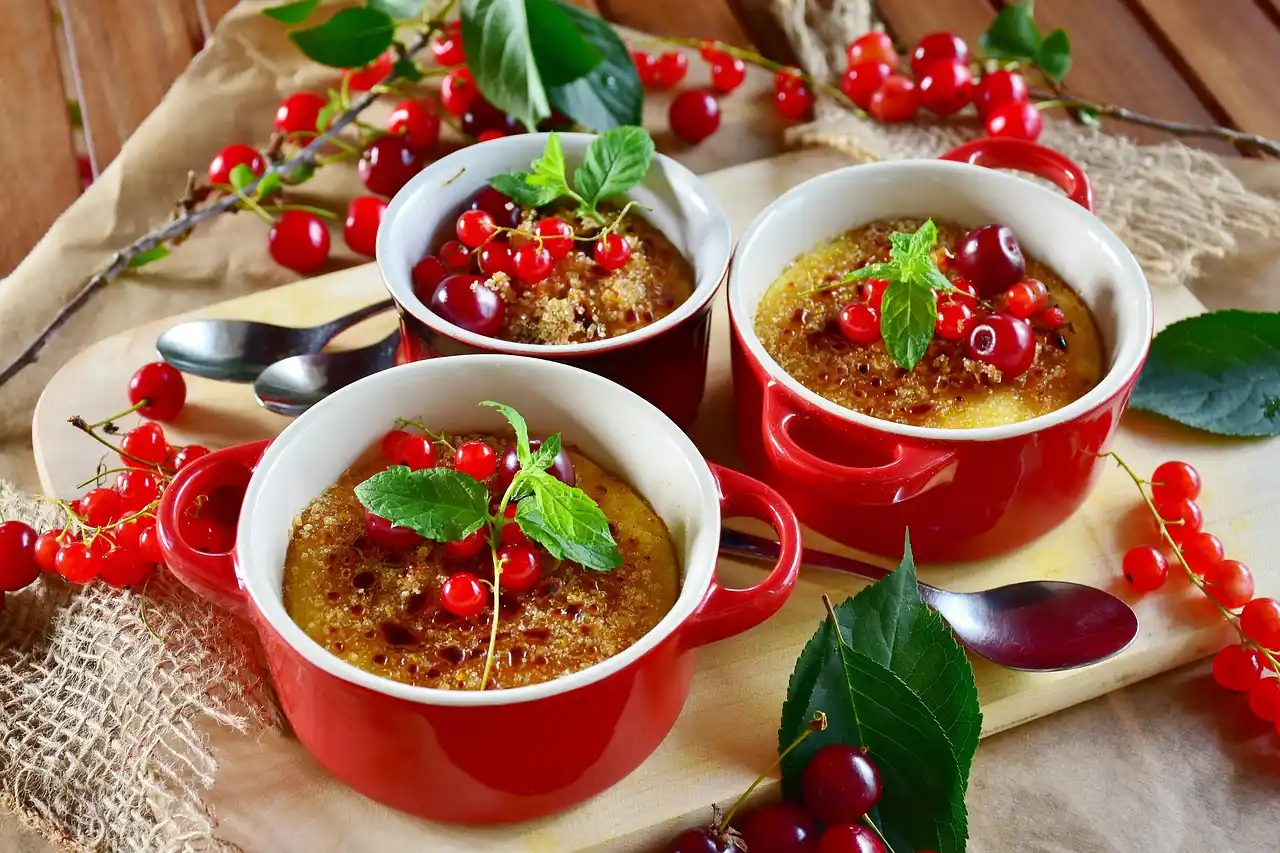
The biggest mistake is choosing a ramekin that is too large for dessert for two. That leads to underfilled dishes, a weaker presentation, and baking that can dry out the edges before the center sets. The opposite mistake is choosing a tiny ramekin and then overfilling it, which can spill in the oven or leave an uneven top.
Another problem is treating every shape as interchangeable. For those desserts, a classic round ramekin usually performs better.
A common first-timer mistake is filling a 2-ounce ramekin with a custard recipe meant for 6 ounces. The dessert rises too close to the rim, the top can crack or brown too fast, and the portions end up too small for a plated Valentine’s finish.
Failure points to watch
- Overfilling: Leave room at the top so custards and soufflé-style bakes can rise without spilling.
- Underbaking: A deep dish can look set at the edges while the center still moves too much.
- Cracked tops: Too much heat or uneven baking can split custard surfaces or dry the rim.
- Wrong size: Too large for two means thin portions; too small means crowded batter and overflow.
Ramekin dessert decision table
This table matches the ramekin to the dessert job, not the other way around. The best choice depends on portion size, how visible the dessert should be, and whether you care more about oven performance or table presentation.
| Use case | Recommended ounce range | Material | Shape | Heat retention | Presentation value | Cleanup ease | Best Valentine’s dessert fit |
|---|---|---|---|---|---|---|---|
| Classic custard for two | 4 to 6 ounces | Ceramic or porcelain | Round, straight-sided | High | High | Moderate | Crème brûlée |
| Layered chilled dessert | 4 to 6 ounces | Glass | Round or lightly fluted | Moderate | High | Moderate | Pots de crème with fruit or cream layers |
| Soft-set baked dessert | 6 ounces | Ceramic | Round | High | High | Moderate | Cheesecake for Two |
| Romantic theme dessert | 4 to 6 ounces | Ceramic | Heart-shaped | Moderate | Very high | Moderate | Chocolate lava-style cake, berry cobbler, or simple baked custard |
| Easy release dessert | 2 to 4 ounces | Silicone | Round | Lower | Lower | High | Mini quiches or casual individual bakes |
How to read the table
Heat retention matters most for baked custards and soufflé-style desserts. Presentation matters most when the ramekin goes straight to the table. Cleanup matters if you expect caramelized sugar, egg custard, or sticky fruit filling. That is why the same set can be excellent for one dessert and merely acceptable for another.
The dessert still needs a stable, oven-safe vessel, and the top needs a surface that can handle a torch without the ramekin becoming the main attraction.
Are ramekins worth it for Valentine’s Day desserts?
Yes, if you make more than one type of individual dessert or if you want the dessert to look deliberate on the plate. A ramekin set is worth buying when you want clean portions, baking control, and a vessel that doubles as serving ware. It is less worth it for a one-night holiday if you already have suitable mugs or mini bowls.
If Valentine’s desserts are a once-a-year event, use what you own only if the vessel is oven-safe and close to the target size. A mug can work in a pinch, but it usually has sloped sides, which changes bake time and presentation. Mini bowls are often too shallow or too decorative for a proper custard.
When a set makes sense
Choose a set if you want symmetry on the table. Two matching ramekins look cleaner than mismatched mugs or random bowls, and that matters when the dessert is part of the main meal rather than an afterthought.
Alternatives

- Premium stoneware ensures uniform heat distribution
- Nonporous glaze resists chips, scratches, stains
- Superior heat retention for serving warm or cold
Le Creuset’s 7 oz straight-wall ramekin set suits buyers who want a slightly larger portion and a more premium serving piece. The ceramic body holds heat well and the glaze helps with cleanup, but the 7-ounce size is a touch generous for a strict dessert-for-two plan, so portions can feel less compact than with a 6-ounce dish.
HASENSE’s 6 oz stoneware set is the most balanced option for Valentine’s desserts. The size matches classic custards, the white finish suits both casual and romantic plating, and the straight-sided shape keeps portions tidy. The tradeoff is that it is more plain than a heart-shaped set and less visually striking than colored or handled pieces.

- Includes lids for microwave-safe storage
- Durable, lead-free ceramic with handles
- Assorted colors ideal for individual serving
Hacaroa’s 8 oz mini cocotte set gives you more volume, lids, and a decorative look. That makes it useful for warm cobblers, savory sides, or desserts that need extra room.
Should you buy it?
Buy a ramekin set now if you want Valentine’s desserts that look intentional and bake predictably.
Skip a special purchase if you only need a single holiday dessert and already own oven-safe cups close to the right size. But if you plan to make custards, soufflés, or cheesecake for two more than once, a matching ramekin set pays off in better portion control and better presentation.
Choose classic round ramekins if…
Choose classic round ramekins if you want the safest all-purpose option for baked custards, if you care about even browning, or if you want a vessel that works for both dessert and serving. Choose heart-shaped ramekins if the shape itself is part of the gift and the recipe is simple enough to forgive the less efficient geometry.
Choose ceramic if heat retention matters most. Choose glass if layered dessert visibility matters most. Choose silicone only when easy release matters more than a polished table finish.
Frequently asked questions
What size ramekins are best for crème brûlée and dessert for two?
The best size is usually 4 to 6 ounces, with 6 ounces the classic choice for soufflé and similar bakes. That range keeps custard portions balanced for two people and leaves enough surface area for a proper caramelized top without making the dessert feel oversized.
What is the best material for ramekins for baking desserts?
Ceramic or porcelain is the best default for baked desserts because it is oven-proof and holds heat well. Glass is also useful, especially for seeing layers. Silicone is best when easy release matters more than presentation, but it is not the first choice for custards that need a polished finish.
Can I use heart-shaped ramekins for Valentine’s Day desserts?
Yes. Heart-shaped ramekins are a strong Valentine’s choice when the shape adds to the occasion. They work best for simple baked desserts and chilled treats.
How many ounces should a Valentine’s ramekin set be?
A Valentine’s ramekin set should usually be 4 to 6 ounces if you are making desserts for two. Six ounces is the classic sweet spot for baked custards and soufflé-style dishes. Smaller pieces can feel tight, while larger ones are harder to portion neatly for two.
Do ramekins need to be oven-safe for desserts?
Yes, if you plan to bake in them. Oven-safe construction is essential for custards, soufflés, and small cakes. Ceramic and glass are common oven-safe choices, while silicone should always be checked against the manufacturer’s temperature limit before baking.
What desserts can I make in ramekins for a romantic dinner?
For the most romantic finish, choose a dessert that can move cleanly from oven to table and that fits the ramekin size without crowding the top.
Products related to this article
Sponsored / affiliate links. As an Amazon Associate I earn from qualifying purchases. I may earn additional commission from eligible campaigns.