Mini Fondue Pot for Two Review: Best Picks and Sizes
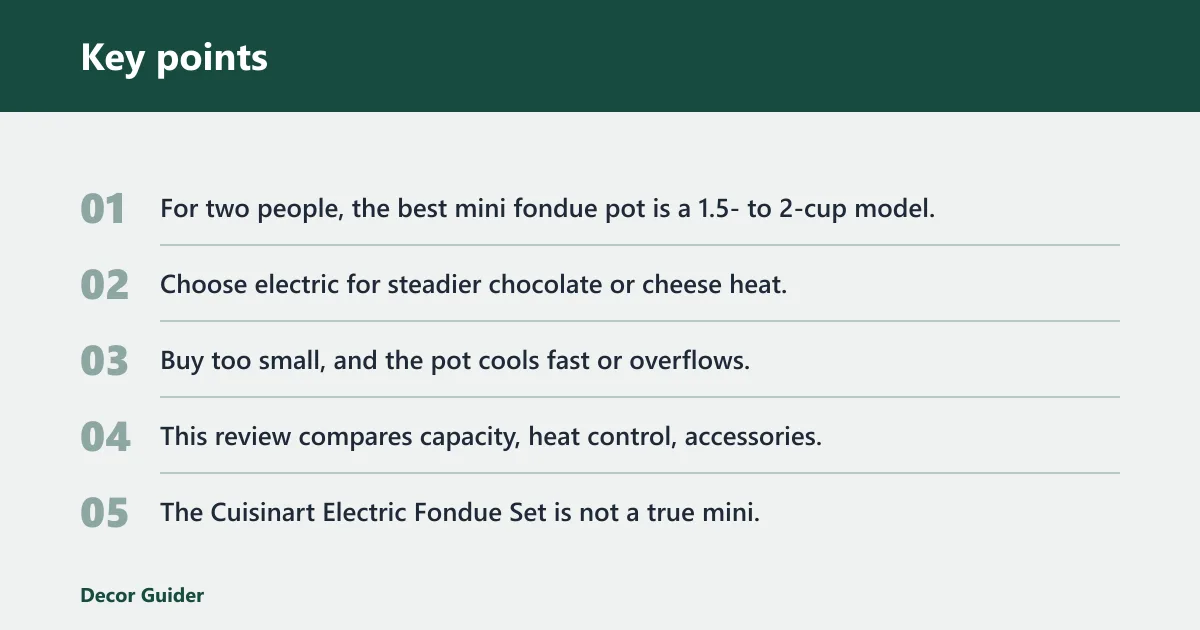
For two people, the best mini fondue pot is a 1.5- to 2-cup model. Choose electric for steadier chocolate or cheese heat, or a flame-free ceramic pot for simple dessert service. Buy too small, and the pot cools fast or overflows. This review compares capacity, heat control, accessories, and cleanup so you can pick the right low-fuss date-night fondue pot.
This guide is part of our Valentine’s Day recipe ideas series.
Verdict

- Adjustable temperature probe with 8 settings
- Includes 8 fondue forks and rack
- Nonstick interior is dishwasher safe
The Cuisinart Electric Fondue Set is not a true mini, but it is the safest reference point for steady heat because it uses an adjustable electric base and includes eight forks. For couples, that extra capacity only helps if you want repeats or mixed dippers. If you want the smallest practical date-night setup, the Bell & Nook style is a tighter fit at 6″ W x 5″ H x 4.75″ D, with two skewers and a hand-wash ceramic body, though its tea light is not included.
📊 The Bell & Nook mini fondue pot costs $45.00 USD. Source: Mini Fondue Pot.
Specs at a glance
| Style | Ideal serving size for two | Heat source | Forks or skewers | Cleanup burden | Best dessert type |
|---|---|---|---|---|---|
| Mini ceramic fondue pot | 0.5–1.5 cups for chocolate or cheese; best at 1 to 1.5 cups for two | Tea light or small burner | 2 skewers is enough for a couple; 4 helps if you want extra fruit or bread dippers | Moderate to higher if the bowl is shallow or hand wash only | Chocolate dessert service |
| Mini electric fondue pot | 1.5–2 cups for date night; 4 cups starts to suit two people with leftovers | Electric base with melt and warm control | 2 to 4 forks is workable for two; 6+ is for guests, not couples | Usually easier if the insert is nonstick or dishwasher safe | Chocolate, then cheese |
| Mini slow cooker fondue alternative | 10 oz to 0.65 qt works for a couple; 4 cups is better for group snacking | Low heat / warm settings | Any short skewer set or cocktail picks | Often moderate, depending on insert and lid | Chocolate or savory dips |
The fityouhome guide recommends 0.5–1.5 cup capacities for cheese or chocolate, which is the most useful range for two people. A 4-cup pot fits better when you want a second round, multiple dippers, or more space for stirring. That is why capacity matters more than novelty features.
Who it is for
A mini fondue pot for two fits dessert-first date nights, especially when you want chocolate, strawberries, cookies, or marshmallows without making a full batch. It also works for a small cheese course if the pot holds heat well and does not force you to rewarm every few minutes. The key is using a pot sized for two portions, not a party vessel.
Chocolate nights for two
For chocolate, the sweet spot is a pot that can hold about 1 to 1.5 cups of melted chocolate and stay warm without scorching. Semi-sweet or milk chocolate chips can work, but chopped bars melt more evenly. Add strawberries, banana slices, pretzels, shortbread, and marshmallows. Two forks are enough if you alternate between dipping and resting.
Cheese for two vs dessert only
Cheese needs steadier heat than chocolate and usually does better with a true warm setting rather than an open flame alone. If you only plan dessert, a tea-light ceramic pot can be fine. If you want cheese as often as chocolate, an electric model is the better couple pick because it cuts hot spots and gives you more control.
When a mini slow cooker is the better buy
A mini slow cooker is the smarter choice when you want one appliance for dip warming, small batches of queso, or dessert sauce. A 10 oz or 0.65 qt insert is closer to couple size than a large countertop cooker, while a 4-cup model is better for group use. It is less romantic on the table, but more versatile overall.
What works
The strongest mini fondue pot for two balances capacity, heat control, and cleaning. Electric models are best when you care about steady chocolate and cheese texture. Ceramic pots are best when you care about presentation and want a simple tabletop setup. Fork count matters too, because two forks are functional but four can make serving less fussy.
Electric models for steady melting
Electric fondue pots keep chocolate glossy and cheese fluid because the temperature stays more consistent than a tea light. That matters on a date night table, where the pot may sit for 20 to 40 minutes while you eat. Look for melt and warm settings, an adjustable probe, and clear overheating guidance from the maker.
Ceramic pots for presentation and heat retention
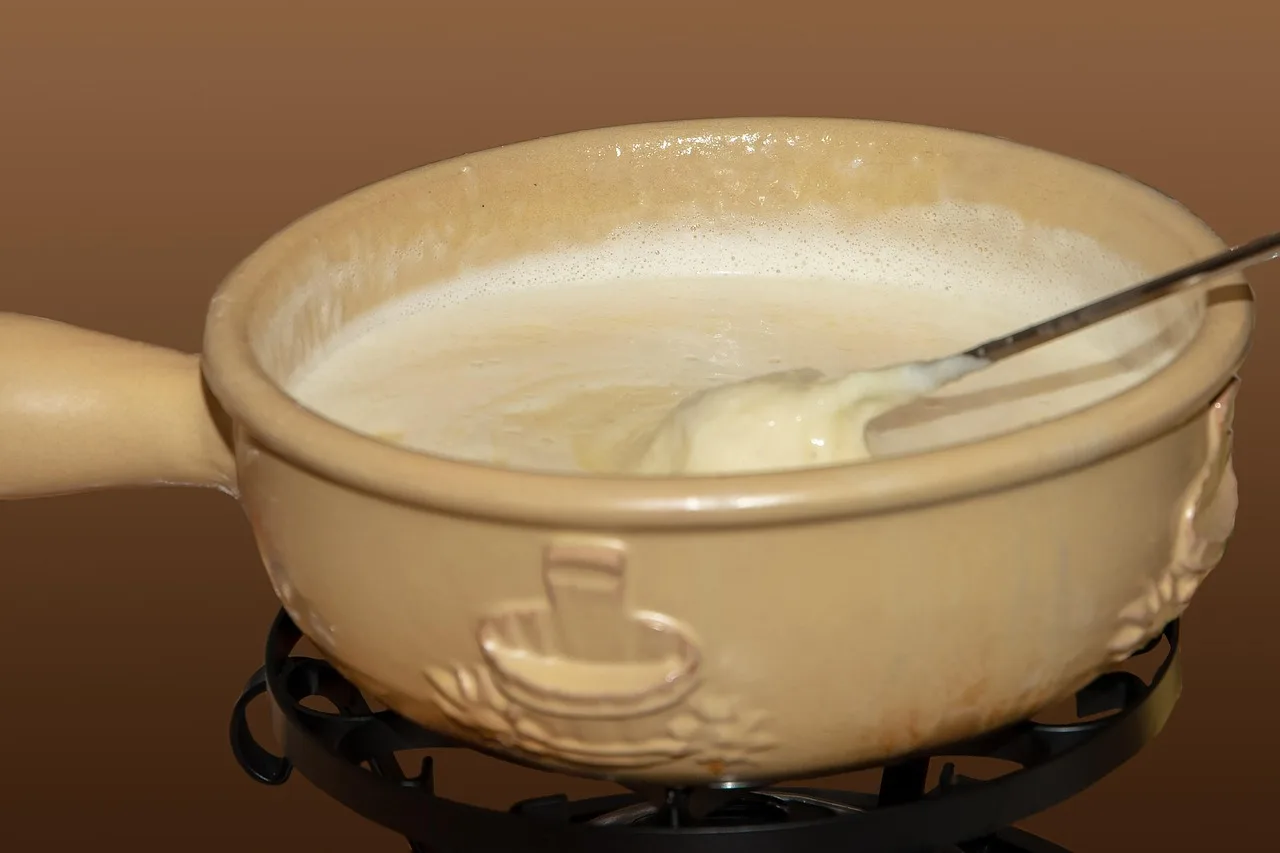
Ceramic holds heat well enough for dessert service and looks better than a plain metal insert on a small table. The tradeoff is control: tea-light heat is less even, so chocolate can scorch at the bottom while the top thickens. The Bell & Nook style uses ceramic with Paulownia wood and rubber wood, measures 6″ W x 5″ H x 4.75″ D, includes two skewers, and says hand wash only.
Accessory setups that make two-person serving easier
For two people, 2 forks or skewers is the minimum that still feels orderly. Four is better if you want one utensil for fruit and one for cake, or if you dislike reusing a fork after each dip. Color coding helps too, because it cuts down on mix-ups when both people are reaching into the same bowl.
- Use the smallest pot that still gives room for dipping.
- Pre-chop chocolate so it melts evenly.
- Set out dippers in shallow bowls before heating.
- Keep the heat on low or warm once melted.
- Swap utensils if chocolate coats the fork tip.
What does not
The main failure cases are easy to predict: scorching chocolate, uneven heating, and pots that are too shallow for two people to dip without spilling. Tea lights can also be unstable on thin table surfaces, and a hand-wash-only ceramic pot adds cleanup friction after dessert. If the pot is too large, the melt pool spreads thin and cools too fast.
Scorching and uneven heating
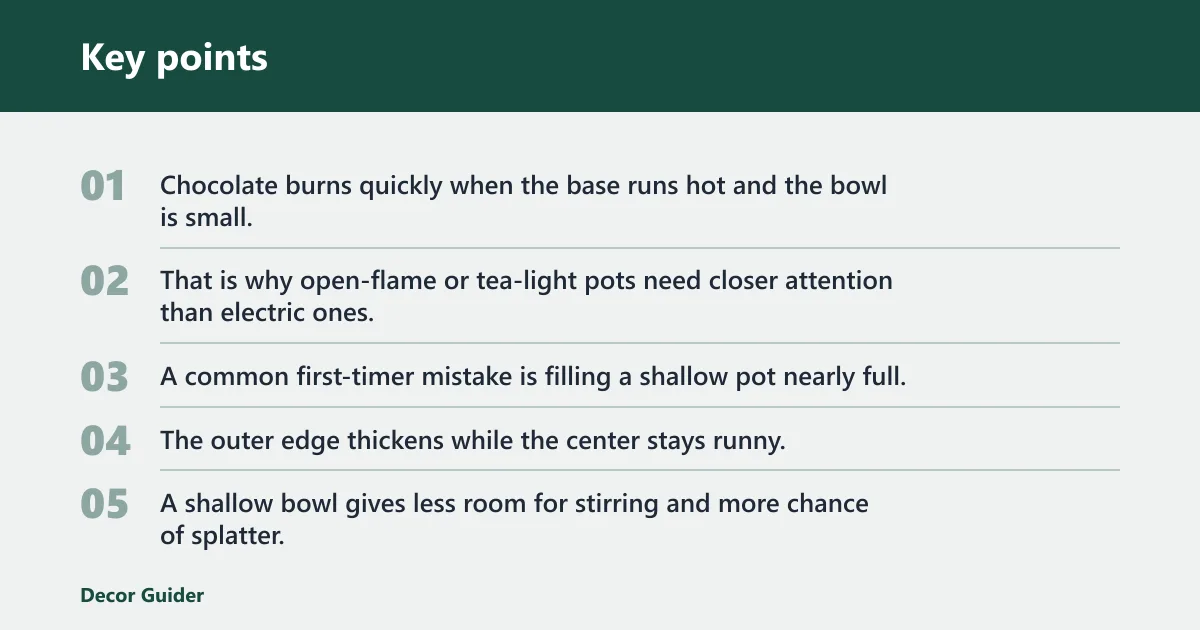
Chocolate burns quickly when the base runs hot and the bowl is small. That is why open-flame or tea-light pots need closer attention than electric ones. A common first-timer mistake is filling a shallow pot nearly full, then trying to keep it on a strong burner. The outer edge thickens while the center stays runny.
Pots that are too shallow or too large for two
A shallow bowl gives less room for stirring and more chance of splatter. A pot that is too large creates the opposite problem: the chocolate or cheese spreads too thin and cools before both people finish a round. For dessert for two, a practical target is usually about 1 to 1.5 cups, not family-size volume.
Cleanup and safety issues with tea lights and burners
Burner-based fondue needs stable fuel, enough clearance from napkins, and a surface that will not wobble. The tea light is not included with the Bell & Nook pot, so you would need to supply one separately. That extra step matters if you want a truly low-fuss setup. Hand wash only also means more cleanup than a dishwasher-safe electric insert.
Which type should you choose?
The right type depends on whether you care more about heat control or tabletop simplicity. Electric fondue pots win for steady melting and easier temperature management. Non electric pots win when you want a compact dessert centerpiece and do not mind watching the flame. Ceramic is the most date-night friendly look, but not the most forgiving heat source.
Electric fondue pot
Choose electric if you want melt-and-warm control, predictable temperature, and less risk of scorching chocolate. It is also the better pick for cheese because it stays in the serving range longer. For two people, it should still be small enough to sit comfortably on the table without crowding plates, forks, and dippers.
Non electric fondue pot
Choose non electric if you want flame-free tabletop serving with a simple, compact footprint and do not plan to hold the pot hot for a long time. Tea-light and burner models suit dessert more than long cheese sessions. They work best with foods that are eaten slowly, like fruit, pound cake, marshmallows, and firm cookies.
Ceramic fondue pot
Choose ceramic if presentation matters and you want decent heat retention in a small form factor. Ceramic is also common for chocolate because it is gentle on texture. Just note the cleanup tradeoff: a glazed ceramic pot may resist stains, but hand washing still takes more effort than a removable dishwasher-safe insert.
Choose electric if you want steady heat; choose non electric if you want simple tabletop serving
Choose electric if you plan to do both chocolate and cheese, want less monitoring, or dislike hot spots. Choose non electric if you only want dessert service, want a lighter setup, or prefer no cord on the table. Choose a mini slow cooker instead if you want a practical appliance that can also do dips, sauces, and small batch warming.
Choose electric if…
Choose electric if you want the best temperature consistency, especially for cheese or any chocolate that sits on the table for more than one round of dipping. It also makes more sense if you hate re-lighting fuel or watching a burner. For couples, the safest size is still compact, not a full party pot.
Choose non electric if…
Choose non electric if you want the simplest date-night presentation and expect to finish the fondue quickly. It works best for dessert, not long-form serving. A tea-light or burner setup is also easier to stash in a cabinet, though you should accept more attention to safety and heat swings.
Choose a mini slow cooker instead if…
Choose a mini slow cooker if you want something that gets used beyond fondue night. The 10 oz Kusini and the 0.65 qt Qvin formats are closer to couple-sized than a large cooker, while the 4-cup LUSHYUM and other 4-cup options lean more toward family snacks. It is the practical pick when versatility matters more than table presentation.
Alternatives
- Premium stoneware ensures even cooking
- Nonporous glaze resists stains
- Superior heat retention
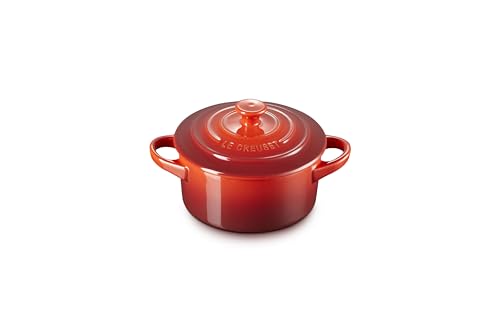
The Le Creuset Stoneware Mini Round Cocotte, 8 oz., Cerise is a polished fallback for chocolate service when you care more about presentation than built-in heat. Based on its spec sheet, the 8 oz size suits a small dessert portion, and the nonporous glaze should make cleanup simpler than uncoated ceramic. The drawback is obvious: it is not a fondue pot, so you still need a separate heat source or a reheated mixture.

- 2-in-1 versatility as baking pan and skillet
- Steady, even heat performance
- Pre-seasoned for easy food release
The Lvmol Cast Iron Casserole Dish with Lid 9×13″ is not a couple-size fondue choice, but it can stand in for warm dips or baked dessert fillings when you already want cast iron on the counter. Its 4.5 QT capacity is far beyond what two people need for fondue, so it is too large for a date-night table. The upside is steady heat; the drawback is footprint and overcapacity.
The Cuisinart Electric Fondue Set is the strongest electric comparison point because it includes adjustable heat control, eight forks, and a dishwasher-safe nonstick interior. The 3-quart pot is more than a couple needs, but that extra capacity does help if you want to serve cheese or dessert without refilling. The main drawback is size: it is useful, but not especially mini.
Should you buy it
Buy a mini fondue pot if you want a dessert-first appliance with a small footprint, a serving size built for two, and less cleanup than a larger communal set. Skip it if you only plan to make fondue once or twice a year. In that case, a saucepan or mini slow cooker is usually the better value.
The price-to-usefulness line is simple. If the pot gives you 1 to 1.5 cups of usable volume, safe heat control, and at least two usable forks or skewers, it earns its place. If it is shallow, hard to wash, or too hot to manage comfortably at the table, use a saucepan and a heat-safe bowl instead.
Frequently asked questions
How do you use a fondue pot?
Start by preheating the pot, then add chopped chocolate or prepared cheese mixture and stir until smooth. Once it melts, lower the heat to warm. Keep dippers on the side, use long forks or skewers, and stir occasionally so the bottom does not overheat before the top has fully melted.
How do you use a fondue pot burner?
Use the burner only on a stable, heat-safe surface with clear space around it. Add the proper fuel if the model requires it, light it carefully, and keep flames or tea lights away from napkins and sleeves. The goal is gentle, steady heat, not high flame under a small bowl.
Where can I buy a fondue pot?
You can buy a fondue pot from major online retailers, kitchen specialty stores, and home goods shops. For couples, compare the listed capacity, included forks, and heat source before price. A compact electric set is easier to screen online because the specs are usually clearer than for burner-style models.
What is the difference between fondue and hot pot?
Fondue is a shared dipping format, usually with melted cheese or chocolate, while hot pot is a simmering broth meal with raw ingredients cooked at the table. Fondue is usually smaller, sweeter, and more accessory-light. Hot pot needs stronger heat, more volume, and a different serving setup.
What chocolate is best for a fondue pot?
The best chocolate is chopped bar chocolate or high-quality chips that melt smoothly without separating. Semi-sweet is the safest all-around choice for dessert fondue because it balances sweetness and texture. Thin milk chocolate can scorch more quickly, so lower heat and more stirring help keep the texture even.
What is a substitute I can use for a fondue pot?
A small saucepan, a heat-safe bowl over a warm water bath, or a mini slow cooker can all substitute for a fondue pot. For two people, those options often work well enough for chocolate or cheese, especially if you only need one dessert round. The tradeoff is less table presentation.
Products related to this article
Sponsored / affiliate links. As an Amazon Associate I earn from qualifying purchases. I may earn additional commission from eligible campaigns.