Stainless Steel Cookware Cost
Stainless steel cookware is often priced at about $30 to $100 for a decent skillet and about $150 to $400 for a usable 10-piece set; a thicker, multi-ply core is often the better long-term buy than the lowest sticker price. Cheap pans can warp, develop hot spots, or need replacing sooner, which raises the true cost. This guide breaks down what you pay for construction, durability, and long-term value per cooking job.
Cost map table


Use this table to compare stainless steel cookware by what actually changes cost: piece count, construction, cooktop fit, and the risk of replacing weak handles or thin pans later. The best value is the one that fits how you cook, not the biggest box on the shelf.
| Product type | Typical price band | Piece count | Construction type | Induction compatibility | Oven-safe limit when stated | Value verdict |
|---|---|---|---|---|---|---|
| Budget set | About $50 to $130 | 6 to 12 pieces | Basic stainless steel, usually thinner base | Often yes, but verify the base | Often stated around 400° F to 500° F | Good if you need lids and several pans at once |
| Midrange set | About $130 to $250 | 10 to 15 pieces | Heavier stainless steel, sometimes clad base | Often yes | Often stated up to 500° F without lids | Better balance of parts, handles, and longevity |
| Tri-ply premium set | About $180 to $300+ | 12 to 17 pieces | Three-layer clad construction | Usually yes | Often up to 500° F without lids | Best when even heat and long service life matter |
| Single skillet | About $30 to $60 | 1 piece | Basic stainless or clad | Often yes | Varies by line | Best if you only need one pan |
| Single saucepan | About $28 to $50 | 1 piece | Basic stainless or clad | Often yes | Varies by line | Good when you need a size gap filled |
📊 Consumer Reports says prices for stainless steel cookware sets start at about $50. Source: Consumerreports.
What drives the price?
Price rises when a set adds more usable pieces, thicker walls, better lids, and stronger handles. It also rises when the cookware uses clad layers or a better heat-spreading core. A low sticker price can hide missing pieces, weak handles, or a pan that needs replacing sooner.
Piece count and included lids
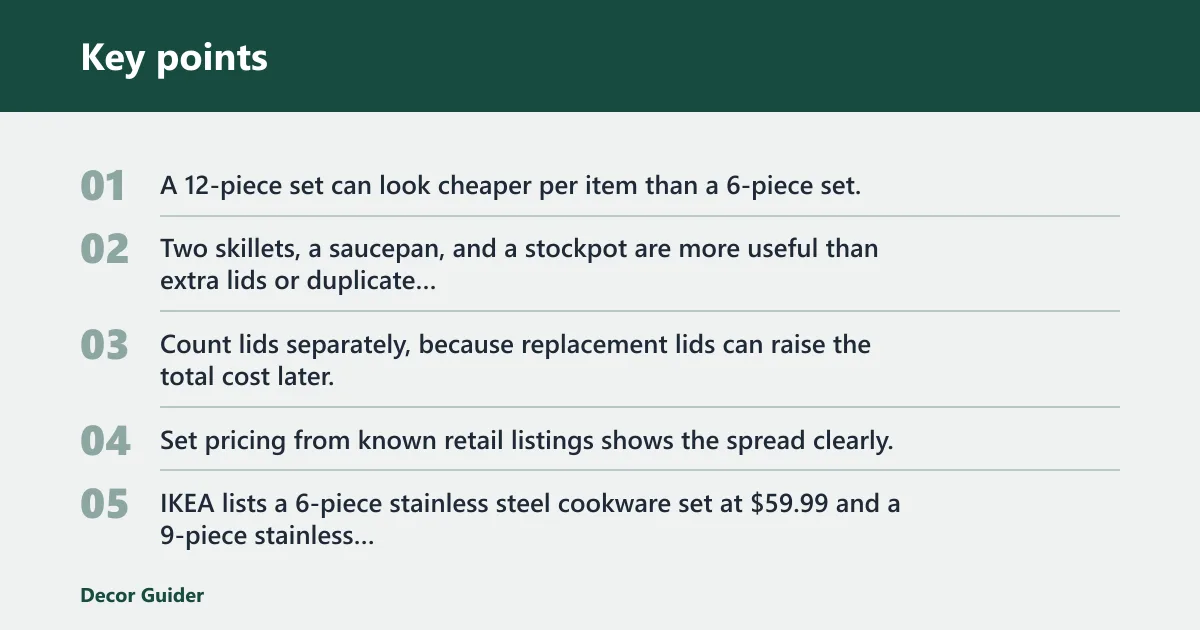
A 12-piece set can look cheaper per item than a 6-piece set, but the real question is what those pieces are. Two skillets, a saucepan, and a stockpot are more useful than extra lids or duplicate small pans you may never use. Count lids separately, because replacement lids can raise the total cost later.
Set pricing from known retail listings shows the spread clearly. IKEA lists a 6-piece stainless steel cookware set at $59.99 and a 9-piece stainless steel cookware set at $99.99. Farberware lists a 12-piece stainless steel induction cookware set at $129.99 and a 15-piece set at $179.99. Cuisinart’s Chef’s Classic Stainless 17-piece set is priced at $259.95.
Base metal, clad layers, and core material
Basic stainless steel cookware usually costs less because it uses a simpler build. Tri-ply cookware uses three layers, often stainless steel outside with aluminum or copper in the core, so it spreads heat more evenly and usually costs more. That price jump can be worth it on burners that create hot spots.
Consumer Reports says prices for stainless steel cookware sets start at about $50 and many are priced in the hundreds. That spread reflects build quality more than brand name alone. A thin pan may seem cheaper at checkout, but the cost per cooking job rises if it warps, cooks unevenly, or feels too light for steady heat.
Handle design, lid quality, and finish
Handle sturdiness changes long-term value more than many shoppers expect. A loose riveted handle, a handle that flexes, or one that transfers heat too fast can turn a cheap set into a replacement job. A sturdier handle can cut wobble risk and delay the need for a second pan.
Finish matters too. Polished stainless looks nice, but it does not fix a thin base. A set with heavier lids and firmer handle attachment can cost more up front while lowering replacement risk later. If a product page does not mention lid material, handle attachment, or oven-safe use, check the fine print before buying.
Is tri-ply worth it?
Tri-ply is worth it when you cook over burners that reward even heat and you plan to keep the set for years. The three-layer build usually costs more, but it can pay back in steadier browning, fewer hot spots, and less temptation to replace thin pans that heat unevenly.
Three-layer construction explained
Tri-ply cookware uses three bonded layers. The usual structure is stainless steel on the outside, a conductive core in the middle, and stainless steel on the cooking surface. That layered build is why tri-ply often lands in the premium price band rather than the budget tier.
Tramontina’s Tri-Ply Clad Stainless Steel Cookware Set starts at $179.95. Cuisinart’s MultiClad Pro Triple Ply Stainless 12-piece set costs $299.95. Those prices sit above basic stainless sets because the extra layer is aimed at better heat spread and steadier cooking performance.
Aluminum or copper cores
Many tri-ply pans use aluminum in the core because it moves heat well without making the pan too expensive. Copper can spread heat even faster, but it often pushes the price higher. That is why the core material matters when you compare two stainless sets with similar piece counts.
Heat conduction is where tri-ply earns its keep. A thicker base or layered core helps reduce the chance that the center browns while the edges lag behind. For sauces, pan searing, and quick temperature changes, that can save food and reduce the urge to replace weak pans.
How much does a skillet cost?
A stainless steel skillet often costs about $30 to $60 for a single pan, with larger or better-built versions costing more. Common sizes are 8, 10, and 12 inches. If you only need one pan, buying a single skillet is often smarter than paying for a full set.
Common diameters and single-pan pricing
Single-pan buying is where many shoppers save money. IKEA sells an 11-inch stainless steel frying pan for $29.99. Cuisinart’s Chef’s Classic Stainless 10-inch skillet is priced at $49.95. Tramontina’s Signature 12 Inch Tri-Ply Clad Stainless Steel Fry Pan costs $59.95.
Those prices show the tradeoff clearly. A basic stainless skillet can be enough for eggs, vegetables, and everyday browning. A tri-ply skillet costs more, but the extra build can matter if your burner runs hot in the center or if you want a pan that holds heat more evenly when food hits the surface.
Nonstick hybrid stainless options
Some shoppers want the feel of stainless steel with easier food release. Hybrid stainless pans exist for that reason, but they usually cost more than plain stainless because of the added surface treatment or patterning. Judge them by actual use: if you need high-heat searing, a plain stainless pan may be the better buy.
Cooktop compatibility and oven-safe limits
Most stainless steel frying pans work on all-cooktop setups when the base is magnetic enough for induction. Still, check the product label, because some lines are built for gas and electric but not induction. The same source notes that stainless pans are oven-safe up to 500° F without lids.
Say your kitchen uses induction and you only need a 10-inch skillet for dinner duty. A $49.95 stainless skillet with the right base may beat a larger set, because you avoid paying for unused saucepans and lids while still getting a pan sized for daily use.
Saucepans and stockpots
Saucepans and stockpots add hidden value because they are the pieces most sets use to round out a kitchen. Saucepan prices are usually lower than skillet prices for the same build, while stockpots cost more as capacity grows. Lids, helper handles, and covered versus uncovered design all affect the real cost.
Quart sizes and covered versus uncovered pans
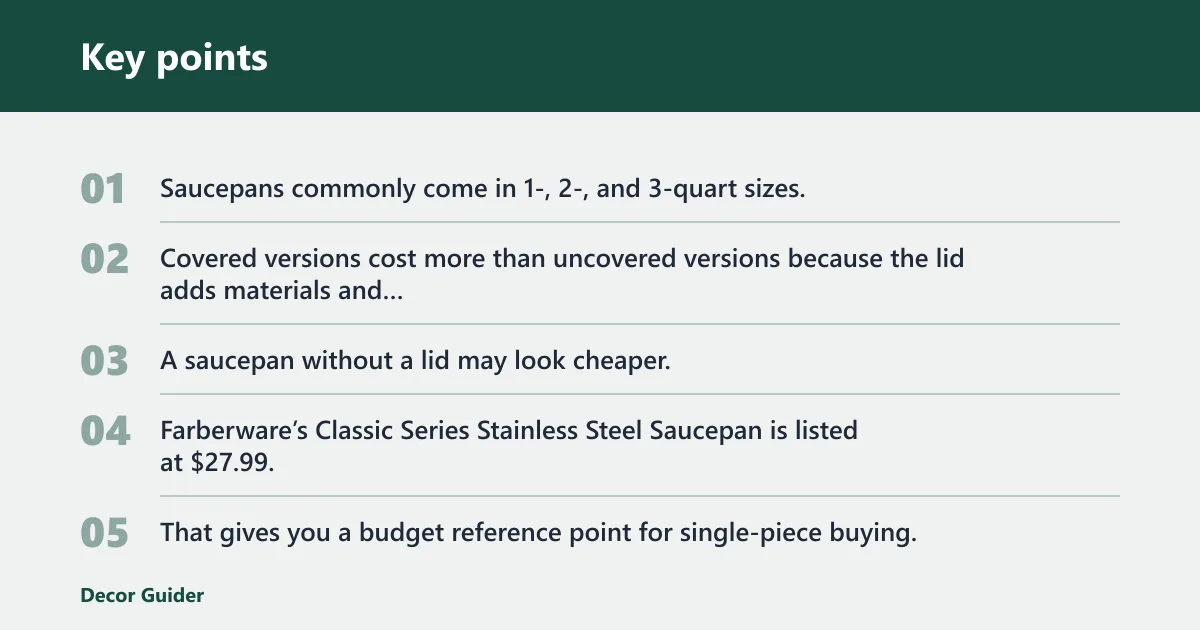
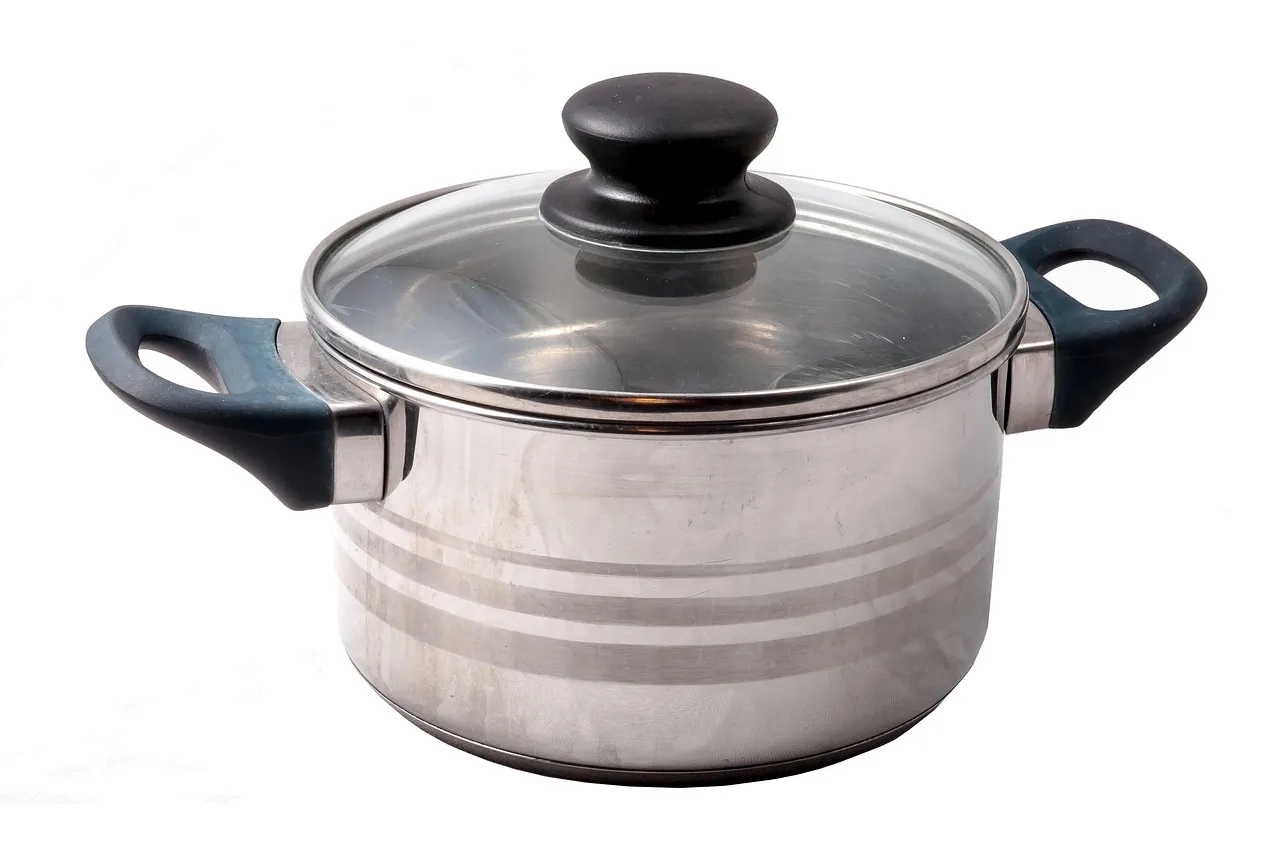
Saucepans commonly come in 1-, 2-, and 3-quart sizes. Covered versions cost more than uncovered versions because the lid adds materials and packaging. A saucepan without a lid may look cheaper, but the missing cover can reduce its usefulness for grains, sauces, and reheating.
Farberware’s Classic Series Stainless Steel Saucepan is listed at $27.99. That gives you a budget reference point for single-piece buying. If you already own a good lid that fits, an uncovered saucepan can make sense; if not, the full cost can rise once you buy a separate lid.
Helper handles and lid types
Helper handles show up more often on larger saucepans and stockpots. They are not decorative. They reduce strain when you lift a pot full of soup, pasta water, or stock. A pot with a helper handle may cost more up front, but it can be a better value than a lighter pot that is awkward to move.
Stockpots are often sold by quart capacity rather than by piece count. In many sets, the stockpot is the item that makes the bundle feel complete. If you do not cook large batches, you may be paying for volume you will not use. That money may be better spent on a stronger skillet or a better saucepan.
Stockpot price range and set inclusion
Stockpot prices climb as capacity rises. Larger pots usually cost more because they need more material and a sturdier lid. In set buying, check whether the stockpot is included or whether the package gives you smaller pots that do not fully replace it. That detail changes the value of the whole bundle.
A common first-timer mistake is buying a 15-piece set for the stockpot, then discovering the rest of the pieces are duplicates of pans already on hand. In that case, the set price is not really a stockpot price. It is a bundle price with extra pieces attached.
Stainless steel cookware buying guide
To buy well, match the set to the pans you will use most, then check whether the build supports induction, oven use, and steady heating. The best value is usually a smaller, better-made set or a few single pieces, rather than the largest box on the shelf.
How to compare sets by value
- Count the useful pieces first: skillet, saucepan, stockpot, and lids.
- Check whether the set includes the sizes you cook with most often.
- Compare construction: basic stainless versus tri-ply clad.
- Check induction fit if you use that cooktop.
- Look for oven-safe information, handle attachment, and lid material.
- Compare warranty and return terms before paying more for a bigger set.
Cookware set value is not the same as piece count value. A 17-piece set can be a better buy than a 9-piece set if the larger one includes sturdy pans, usable lids, and a better handle design. But a smaller set can win if it avoids filler pieces and still covers your daily cooking.
Handle durability and replacement risk
Handle durability affects ownership cost because weak handles create wobble risk, heat-transfer problems, and possible replacement. A pan that feels unstable on the stove can push you to replace it earlier than planned. A better handle lowers that risk and can justify a higher purchase price.
Cool-touch performance also matters. If a handle stays too hot to move safely, you may need mitts for routine lifting or pour-offs. That is not a dealbreaker, but it is part of total value. Stainless steel cookware often lasts longer than many nonstick options, yet a weak handle can shorten that advantage.
Warranty, returns, and where to buy
Where to buy stainless steel cookware depends on how much comparison help you want. Big-box retailers, kitchenware shops, and brand sites all sell it, but the best place is the one that gives you clear construction details, return terms, and warranty language. That matters more than a glossy product photo.
When you buy online, watch shipping costs and return windows. A low sale price can disappear after freight or a restocking fee. If you buy in store, inspect the handle attachment, lid fit, and base thickness before leaving. If a retailer gives a strong return policy, that adds value even when the set costs more.
Frequently asked questions
Stainless steel cookware cost
Stainless steel cookware cost depends on whether you buy a single pan or a full set, and whether the build is basic stainless or tri-ply clad.
Is stainless steel cookware good?
Stainless steel cookware is a good buy when you want higher-heat use, metal utensil tolerance, and less replacement risk than many nonstick pans. It is a weaker buy if you need easy release above all else. Good stainless also matters more on induction and gas when the base spreads heat evenly.
Stainless steel vs ceramic cookware
Stainless steel usually wins on lifespan, handle strength, and high-heat use. Ceramic-coated cookware can offer easier food release at first, but the coating can wear sooner. If you cook often and want lower replacement risk, stainless steel is usually the better long-term value. If easy release is the top goal, ceramic may fit better.
Ceramic cookware vs stainless steel cookware
Ceramic cookware can be appealing for lower-stick cooking, but stainless steel often has the edge for durability, oven use, and long-term ownership cost. Stainless also handles browning better. Ceramic can make sense for light use, but stainless is often the safer buy if you want one set to last.
Why is stainless steel cookware better?
Stainless steel is better when you want a pan that can take higher heat, move from stove to oven, and survive more aggressive use. The better value comes from construction, not the label alone. Tri-ply models cost more because they usually spread heat more evenly than thin, basic stainless pans.
What is the best value in stainless steel cookware?
The best value is usually a midrange stainless set or a few single pieces that match your cooktop and cooking style. For many buyers, that means one good skillet, one saucepan, and a stockpot only if the capacity will be used. Buy for build quality, lid quality, and handle strength before piece count.
Products related to this article
Sponsored / affiliate links. As an Amazon Associate I earn from qualifying purchases. I may earn additional commission from eligible campaigns.