Calphalon Vs Viking Cookware: Which Brand Is Better?
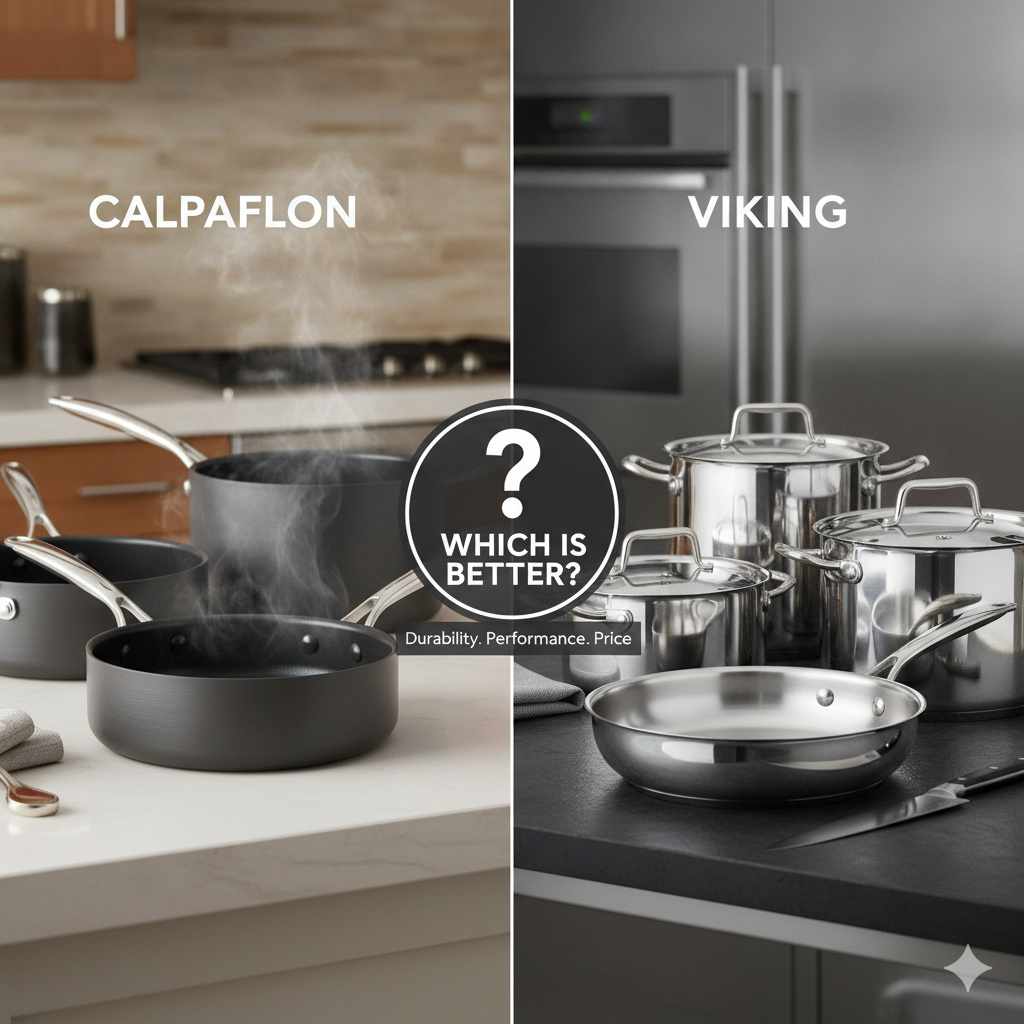
Calphalon and Viking cookware offer different strengths. Calphalon often focuses on accessible quality with good performance for everyday cooking. Viking, known for its professional-grade ranges, typically provides higher-end, more durable, and specialized cookware, often at a higher price point.

Viking
Viking Nonstick Frying Pans, 2 Piece Hard…
- NONSTICK PERFORMANCE: Our frypan set features triple-layer nonstick coating which provides easy food release and allows for easy c…
- HEAVY-GAUGE DESIGN: Our cook ware features a hard anodized aluminum construction with a stainless steel base which delivers fast,…
- ERGONOMIC HANDLE: Our fry pans feature a riveted stainless steel handle with a finger guide and heat break which ensures comfort,…
As an Amazon Associate I earn from qualifying purchases.
Your choice depends on budget, cooking style, and desired longevity.

Calphalon vs Viking Cookware: A Deep Dive
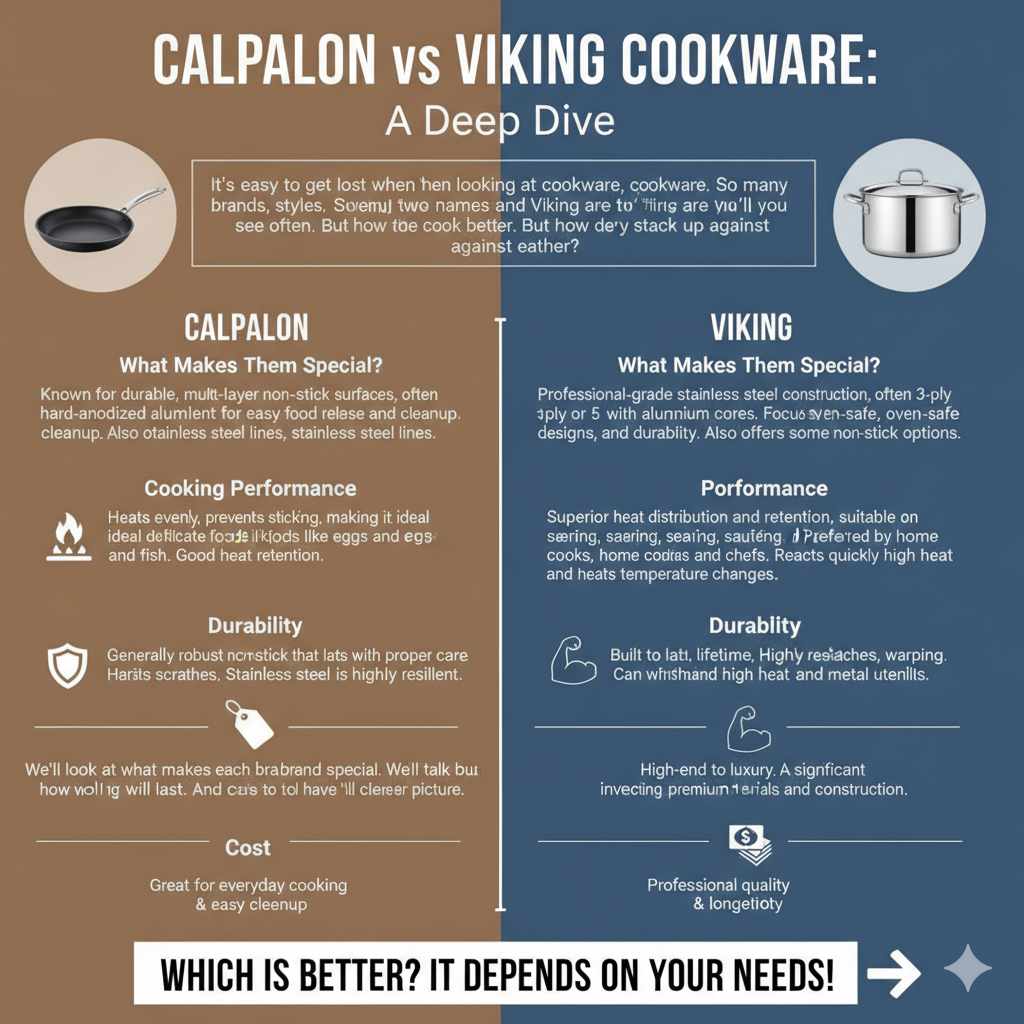
It’s easy to get lost when looking at cookware. So many brands, so many styles. Calphalon and Viking are two names you’ll see often.
They both aim to help you cook better. But how do they stack up against each other? That’s what we’re here to figure out.
We’ll look at what makes each brand special. We’ll talk about how well they cook food. We’ll also think about how long they will last.
And of course, we have to talk about the cost. By the end, you’ll have a clearer picture.
Understanding Calphalon Cookware
Calphalon has been around for a while. They started making anodized aluminum cookware. This made their pans really tough.
It also helped them cook food evenly. Over the years, Calphalon has grown a lot. They now offer many different types of cookware.
You can find nonstick pans from Calphalon. They also have stainless steel sets. And they make cast iron too.
This means they try to have something for everyone. Their goal is to offer good quality without breaking the bank. Many home cooks find Calphalon to be a great choice for daily use.
Popular Calphalon Lines
Calphalon doesn’t just have one type of pan. They have different series. Each series has its own focus.
This helps people find what they need. Some popular ones include:
- Simply Calphalon: This is often their entry-level line. It’s good for basic cooking. It’s usually nonstick.
- Calphalon Classic: This line offers a step up. It’s made for durability. It works on most stovetops.
- Calphalon Signature: These pans are built to last. They often have heavy-gauge aluminum. This means they heat up well.
- Calphalon Premier: This is their premium line. It often features hard-anodized construction. It’s designed for professional-level results.
Each line aims to meet different needs. Some are for quick meals. Others are for serious cooks.
The materials can vary too. You’ll see aluminum, stainless steel, and nonstick coatings.
Understanding Viking Cookware
Viking is a name many associate with professional kitchens. They are famous for their stoves and ovens. Their cookware follows this high-performance idea.
Viking cookware is often seen as more of a luxury item. It’s built for cooks who want the best tools.
Viking cookware tends to be made with very strong materials. They often use heavy-gauge stainless steel. Some pieces might have copper cores.
This helps with heat control. The focus is on precision and long-lasting quality. If you want cookware that feels like it belongs in a restaurant, Viking is worth a look.
Viking’s Cookware Offerings
Like Calphalon, Viking offers different collections. These are usually less about different price points and more about specific cooking styles or features.
- Viking Professional: This is their flagship line. It’s made for serious chefs. Think heavy-duty construction and excellent heat distribution.
- Viking Culinary: This line might offer a slightly broader appeal. It still focuses on quality. It might include a mix of stainless steel and other materials.
Viking often uses multi-ply construction. This means they layer different metals together. For example, a stainless steel pan might have an aluminum or copper core.
This layering is key to great cooking performance. It helps heat spread evenly and quickly. It also helps the pan respond fast when you change the heat.
My First Cookware Set Fiasco
I remember the first time I really tried to cook. I was in my first apartment. I got a cheap set of pans from a big box store.
They looked shiny and new. I thought they’d be fine. Oh, how wrong I was.
I tried to make scrambled eggs one morning. They stuck like glue. It was a mess.
Cleaning them was even worse. I ended up scrubbing so hard I scratched the coating. That’s when I realized I needed better cookware.
I learned that quality really does matter. I started reading reviews. I asked friends who loved to cook.
That’s when brands like Calphalon started coming up. They seemed like a good middle ground. Not too fancy, but way better than what I had.
It was a lesson learned the hard way.
Comparing Key Features: Performance
When you buy cookware, you want it to cook food well. This is where performance comes in. We need to look at how heat spreads.
We also need to see how well the pans respond to heat changes.
Heat Distribution
This is super important. If a pan has hot spots, food will cook unevenly. One part might burn while another is still raw.
This is frustrating. Calphalon often uses aluminum for good heat spread. Their hard-anodized aluminum is particularly good.
It creates a dense, non-reactive surface. This helps heat move evenly across the bottom of the pan.
Viking takes this even further. Their multi-ply construction is designed for superior heat distribution. By layering metals like stainless steel, aluminum, and sometimes copper, they ensure heat moves quickly and evenly from the base up the sides of the pan.
This precision is what professional chefs look for. It means you get consistent results every time.
Heat Responsiveness
How fast does the pan heat up? How quickly does it cool down when you lower the heat? This matters for delicate foods.
Think about making a sauce. You need to be able to adjust the heat fast. If the pan stays too hot, your sauce can break or burn.
Calphalon’s aluminum construction helps here. It heats up pretty quickly. Viking, with its layered metals, is often even more responsive.
The copper or aluminum core lets the pan react almost instantly to changes on the stove.
Nonstick Capabilities
Many home cooks love nonstick pans. They make cooking eggs or fish easy. They also make cleaning a breeze.
Calphalon has a wide range of nonstick options. These are usually very effective when new. However, nonstick coatings can wear out over time.
Viking offers some nonstick options too. But they are perhaps more known for their stainless steel. Viking’s stainless steel is excellent for searing and browning.
It’s not nonstick, but with proper use and heating, food releases well. You can build up a natural nonstick surface over time.
Calphalon vs. Viking: Heat Performance Snapshot
Calphalon:
- Good heat distribution, especially with hard-anodized aluminum.
- Decent heat responsiveness for everyday cooking.
- Wide range of effective nonstick options.
Viking:
- Excellent, even heat distribution due to multi-ply construction.
- Superior heat responsiveness for precise control.
- Primarily known for high-performance stainless steel.
Comparing Key Features: Durability and Materials
Cookware is an investment. You want it to last. The materials used and how they are put together play a big role.
Materials Used
Calphalon: They use a variety of materials. Hard-anodized aluminum is a hallmark. This process makes aluminum very dense and non-reactive.
It also gives the pans a dark, tough exterior. They also offer stainless steel cookware, often with an aluminum core. Some of their nonstick pans use aluminum as the base.
Viking: Viking heavily relies on multi-ply construction. This means several layers of metal bonded together. A common setup is a layer of stainless steel on the outside and inside, with a core of aluminum or copper in between.
Stainless steel is known for being tough and non-reactive. Aluminum and copper are excellent at conducting heat. This combination is designed for maximum performance and longevity.
You’ll find Viking uses high-quality 18/10 stainless steel for its inner cooking surfaces.
Construction Quality
Calphalon: Their construction quality is generally very good, especially in their higher-end lines like Signature and Premier. Pans are well-balanced. Handles are usually ergonomically designed and stay relatively cool on the stovetop.
The build feels solid for everyday use.
Viking: Viking’s construction is typically more robust. The pans feel heavier and more substantial. This weight contributes to stability on the stovetop and helps maintain consistent heat.
Rivets securing handles are usually strong. Viking cookware is built to withstand heavy use, mirroring professional kitchen standards. Their pans are designed to last for decades.
What about the handles? Calphalon handles are often made of cast aluminum. They are designed to be comfortable. Viking handles are also usually cast stainless steel.
They are built to be sturdy and offer a good grip, even with oven mitts.
My Nonstick Nightmare Story
I once bought a set of pans because they were on sale. The nonstick coating looked great. The first few weeks were heaven.
Everything slid right off. Then, slowly, things started to change. I noticed eggs sticking.
Then fish started to flake. I was careful with my utensils. I hand-washed them.
I made sure they cooled down before washing. But the coating just seemed to give up. One day, while making pancakes, a big chunk of the nonstick coating came off into the batter.
I was horrified. I had to throw the whole pan away. It made me really appreciate cookware that’s built to last, even if it means a bit more effort.
That experience pushed me towards looking at more durable options.
Comparing Key Features: Ease of Use and Maintenance
How easy is it to actually cook with the pans? And what’s the cleanup like? These are practical concerns for anyone in the kitchen.
Stovetop and Oven Compatibility
Most Calphalon cookware is compatible with all stovetops, including induction. Their higher-end lines are usually oven-safe to reasonably high temperatures, often around 400-500°F (200-260°C). This means you can start cooking on the stove and finish in the oven, which is great for many recipes.
Viking cookware, especially their stainless steel lines, is also designed for versatility. They are typically safe for all stovetops, including induction. Viking pans are often oven-safe to even higher temperatures, sometimes up to 600°F (315°C), which is beneficial if you do a lot of oven finishing or broiling.
This high heat tolerance is a hallmark of professional-grade cookware.
Cleaning and Care
Calphalon: Their nonstick lines require gentle care. Hand washing with a soft sponge and mild soap is usually recommended to preserve the coating. Avoid abrasive cleaners or metal utensils.
Stainless steel Calphalon pans are generally easier to clean and can often go in the dishwasher, though hand washing is still best for longevity. Hard-anodized exteriors are durable but can sometimes show water spots if not dried properly.
Viking: Viking stainless steel cookware is built for durability and is usually dishwasher safe. However, hand washing is always the best way to maintain the finish and prevent potential issues like water spots or dulling. For stubborn bits, a bit of gentle scrubbing with a non-abrasive cleaner can work wonders.
Stainless steel, while durable, can sometimes require a bit more effort to get perfectly spotless compared to nonstick, but it won’t wear out like a coating.
Cookware Care Tips
For Nonstick:
- Use wood, silicone, or plastic utensils.
- Avoid high heat unless specified by the manufacturer.
- Let pans cool before washing.
- Hand wash with mild soap and a soft sponge.
For Stainless Steel:
- Preheat the pan before adding oil and food.
- Use enough oil or butter.
- Deglaze the pan with liquid to lift stuck-on bits.
- Bar Keepers Friend can help restore shine.
- Dishwasher safe, but hand washing is best for shine.
Comparing Key Features: Price and Value
Let’s talk about the elephant in the room: cost. Cookware is an investment. You want to get good value for your money.
Price Range
Calphalon: Calphalon offers a wide price range. Their entry-level sets can be quite affordable, often under $200 for a decent starter set. Mid-range lines like Classic and Signature will be more in the $300-$600 range.
Their higher-end Premier lines can go for $600-$1000 or more for a full set. This makes Calphalon accessible to many different budgets.
Viking: Viking cookware is generally in the premium to luxury price category. Full sets can easily range from $800 to $1500 or even higher. Individual pieces are also more expensive.
This higher price reflects the professional-grade materials, construction, and the brand’s reputation for high performance and durability.
Value Proposition
Calphalon: The value of Calphalon lies in its accessibility and good performance for the price. For the average home cook who wants reliable cookware that lasts a few years with good care, Calphalon offers excellent value. You get good cooking results without the highest professional price tag.
Viking: Viking’s value is in its longevity and superior performance. If you are a passionate cook, an aspiring chef, or simply want cookware that will last a lifetime with proper care, Viking is a worthwhile investment. The performance benefits – precise heat control, even cooking – can truly elevate your cooking experience.
It’s a buy-it-for-life kind of purchase.
Calphalon vs Viking: Which is Better for You?
So, who wins? It’s not about one being universally “better.” It’s about which one fits your needs.
For the Everyday Cook
If you cook a few times a week, enjoy making most common dishes, and are mindful of your budget, Calphalon is likely your sweet spot. Their Classic or Signature lines offer a great balance of performance, durability, and price. If you love the ease of nonstick, Calphalon has excellent options that will serve you well for years with proper care.
You get reliable results without feeling like you’re overspending.
For the Passionate Home Chef
If you spend a lot of time in the kitchen, experiment with complex recipes, and demand the highest level of control and performance, Viking is a strong contender. The superior heat distribution and responsiveness of their multi-ply stainless steel will make a noticeable difference. If you see your cookware as a long-term investment and want tools that can truly elevate your culinary skills, Viking’s professional-grade quality is hard to beat.
When Budget is a Major Factor
If your budget is tight, Calphalon offers more entry-level options that are still decent quality. You can get a functional set without spending thousands. While Viking is a dream for many, it might not be practical for everyone’s financial situation.
Sometimes, starting with a good Calphalon set and adding a few high-quality pieces later is a smart strategy.
When Longevity is the Top Priority
If you want cookware that will be passed down through generations, Viking stainless steel is probably the way to go. Its robust construction and high-quality materials are designed for extreme durability. While Calphalon’s higher-end lines are built to last, Viking is in a class of its own for sheer longevity and professional-grade resilience.
Quick Decision Guide
Choose Calphalon if:
- You want good quality without the highest price.
- You enjoy the convenience of nonstick for everyday tasks.
- You are an intermediate home cook.
- You are looking for a solid, reliable set for daily use.
Choose Viking if:
- You are a serious home chef or aspiring professional.
- You prioritize ultimate durability and performance.
- Budget is less of a concern than quality and longevity.
- You love stainless steel for searing and browning.
Real-World Scenarios and Use Cases
Let’s imagine some situations. This might help you see which brand fits where.
Scenario 1: The Weeknight Warrior
Sarah cooks dinner for her family most weeknights. She needs pans that heat up fast. She also needs them to be easy to clean.
Nonstick is a big plus for her. She might be making pasta sauces, pan-frying chicken, or sautéing vegetables.
For Sarah, a Calphalon Simply or Classic nonstick set would be ideal. It’s forgiving, heats up quickly, and cleanup is usually a breeze. She can start the chicken on the stove and maybe finish it in the oven if needed.
The price point is also a good fit for a busy family budget.
Scenario 2: The Sunday Brunch Master
David loves hosting Sunday brunches. He makes everything from delicate crepes to perfectly seared bacon. He enjoys the process of cooking and appreciates fine control over his heat.
He wants his cookware to look good on the table too.
David would likely prefer Viking stainless steel cookware. The precision heat control is perfect for making delicate crepes without burning. Searing bacon to that perfect crisp is easy with Viking’s excellent heat distribution.
The polished stainless steel looks elegant. While not nonstick, David is comfortable with the technique required to prevent sticking.
Scenario 3: The Budding Baker and Chef
Maria is in culinary school part-time. She loves experimenting with recipes. She bakes bread, makes complex sauces, and often braises meats for hours.
She needs cookware that can handle a wide range of temperatures and cooking methods.
For Maria, Viking cookware offers the professional-grade performance she needs. The high oven-safe temperatures are essential for braising. The precise heat control helps with delicate sauces.
The durability means it can withstand the heavy use of someone learning and practicing intensely. A set of Viking stainless steel would be a fantastic investment for her culinary journey.
Scenario 4: The First Apartment Dweller
Alex just moved into their first place. They want to start cooking more at home to save money. They need a set that’s good enough to get started but won’t cost a fortune.
They might not be an expert yet, but they want to learn.
A good starting point for Alex would be an affordable Calphalon set, like the Simply Calphalon line. It’s budget-friendly and offers decent performance. It will help Alex learn basic cooking techniques without frustration from poor-quality pans.
As Alex’s skills grow, they can then consider upgrading specific pieces or investing in a more premium set later.
What This Means for Your Kitchen
Understanding the differences between Calphalon and Viking helps you make a smart choice. It’s not just about brand names. It’s about matching cookware to your cooking habits.
When Calphalon is the Right Choice
If you value ease of use, especially with nonstick surfaces, and want reliable performance for everyday meals without a huge cost, Calphalon is a great fit. It’s designed for the realities of a busy home kitchen. You’ll get good results and durability for years, especially if you care for them well.
When Viking Might Be Worth the Investment
If you are serious about cooking, want the best possible performance and control, and are looking for cookware that will truly last a lifetime, Viking is an excellent choice. The higher price point is justified by the superior materials, construction, and the tangible difference it makes in cooking results. It’s for those who see cooking as a serious hobby or profession.
Considering Your Cooking Style
Think about what you cook most often. Do you bake a lot? Do you sear meats regularly?
Do you rely on nonstick for delicate foods? Your answers will point you towards the right brand and material. If searing and high-heat cooking are your jam, durable stainless steel like Viking shines.
If quick, easy meals and worry-free cleanup are key, nonstick Calphalon is a strong contender.
Quick Fixes and Tips for Cookware Care
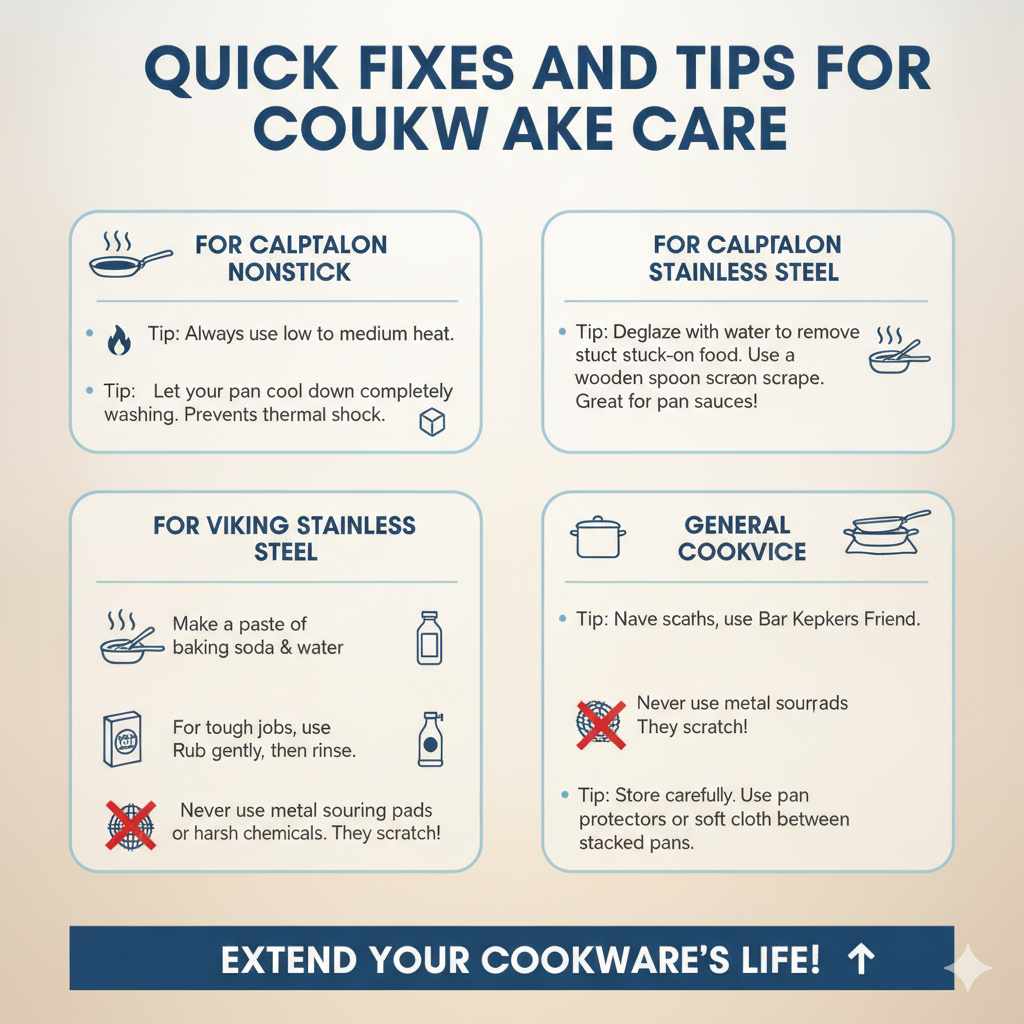
No matter which brand you choose, taking care of your cookware is key. This extends its life and keeps it performing well.
For Calphalon Nonstick
Tip: Always use low to medium heat. High heat can damage the nonstick coating over time. Let your pan cool down completely before washing.
This prevents thermal shock that can warp the pan or break down the coating faster.
For Calphalon Stainless Steel
Tip: Don’t be afraid of a little stuck-on food. After cooking, add a bit of water to the warm pan. Let it simmer.
Use a wooden spoon or spatula to scrape up any bits. This is called deglazing and it’s also great for making pan sauces!
For Viking Stainless Steel
Tip: To get rid of stubborn discoloration or water spots, make a paste of baking soda and water. Gently rub it onto the affected areas. Rinse and dry thoroughly.
For really tough jobs, Bar Keepers Friend is excellent for stainless steel.
General Cookware Advice
Tip: Never use metal scouring pads or harsh chemicals on any cookware. They can scratch surfaces and ruin the finish. Store your pans carefully to avoid dents and scratches.
If stacking, use pan protectors or a soft cloth between them.
Frequently Asked Questions About Calphalon vs Viking
Is Calphalon cookware considered high-end?
Calphalon offers a range of cookware. Their Simply and Classic lines are mid-range and good for everyday use. Their Signature and Premier lines are considered high-end, using premium materials and construction for excellent performance.
Is Viking cookware worth the high price?
For serious home chefs and professionals who demand the best performance, durability, and longevity, Viking cookware is often considered worth the investment. Its robust construction and superior heat control can elevate cooking experiences for decades.
Can I use metal utensils on Calphalon stainless steel?
Yes, you can generally use metal utensils on Calphalon stainless steel cookware. However, using them excessively or with too much force can cause minor scratches over time, potentially dulling the finish. Utensils made of wood, silicone, or nylon are always the safest bet for any cookware.
Are Calphalon nonstick pans durable?
Calphalon nonstick pans are designed for good durability for a nonstick surface. With proper care – avoiding high heat, abrasive cleaners, and metal utensils – they can last for several years of regular use. However, like all nonstick coatings, they will eventually wear down over time.
Which is better for searing: Calphalon or Viking?
For searing, Viking stainless steel cookware often has an edge due to its superior heat distribution and responsiveness from its multi-ply construction. This allows for consistent high heat to achieve a perfect crust on meats. Calphalon’s hard-anodized aluminum and stainless steel lines also sear well, but Viking’s professional-grade build is generally considered top-tier for this task.
What is the best type of cookware for induction stoves?
Both Calphalon and Viking offer cookware designed for induction stoves. For induction, cookware must be magnetic. Typically, stainless steel and cast iron cookware are induction-compatible.
Calphalon and Viking both have specific lines that clearly state their induction compatibility, so always check the product details.
Final Thoughts on Calphalon vs Viking
Choosing between Calphalon and Viking comes down to your personal cooking journey. Both brands offer quality. But they serve different kitchens and cooks.
Think about your budget, your cooking style, and what you want your cookware to do for you. Happy cooking!
Related pick: Check today's price on Amazon
Products related to this article
Sponsored / affiliate links. As an Amazon Associate I earn from qualifying purchases. I may earn additional commission from eligible campaigns.