3 Qt Vs 5 Qt Saute Pan: Which Size Is Best?
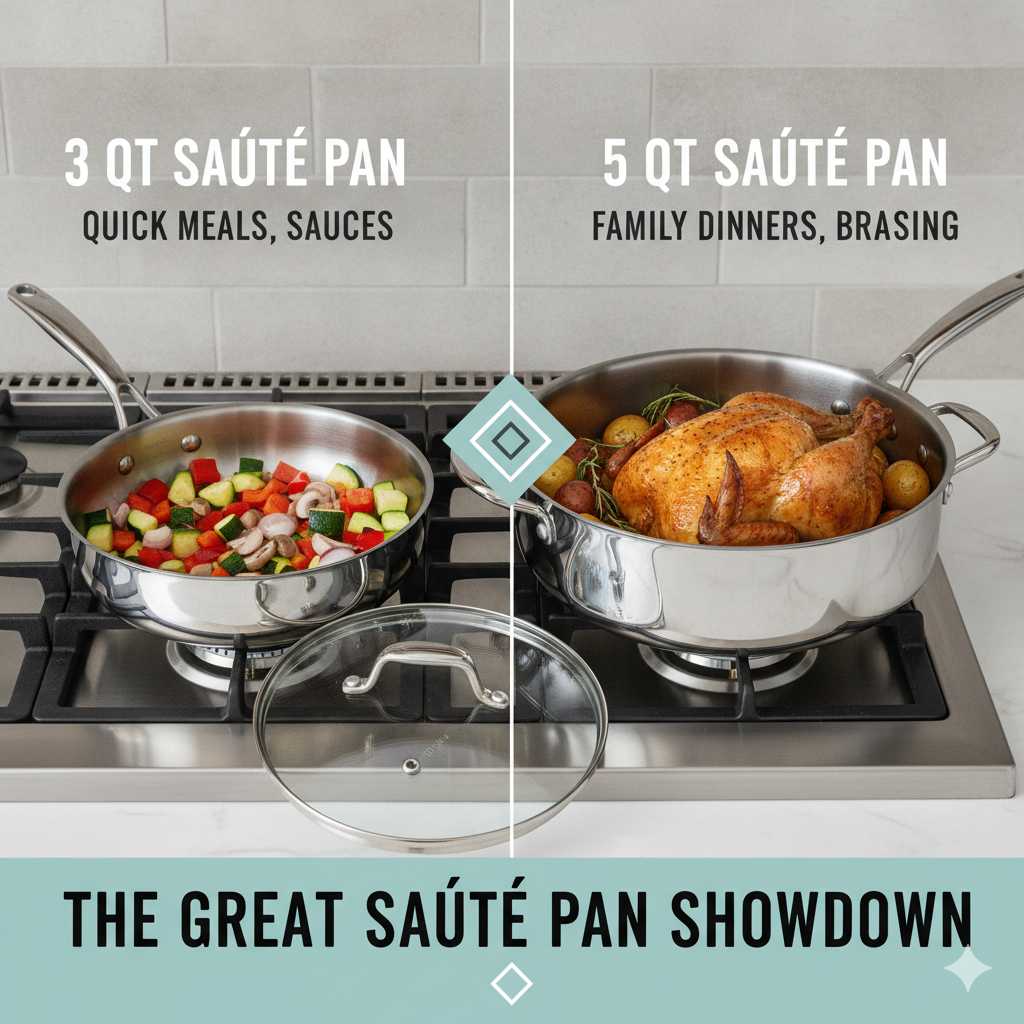
Choosing between a 3 quart and 5 quart saute pan depends on your typical cooking needs. A 3 qt pan is great for smaller meals and quick tasks, while a 5 qt pan is better for larger portions and more involved cooking. Both have their place in a well-equipped kitchen.
Understanding Saute Pans
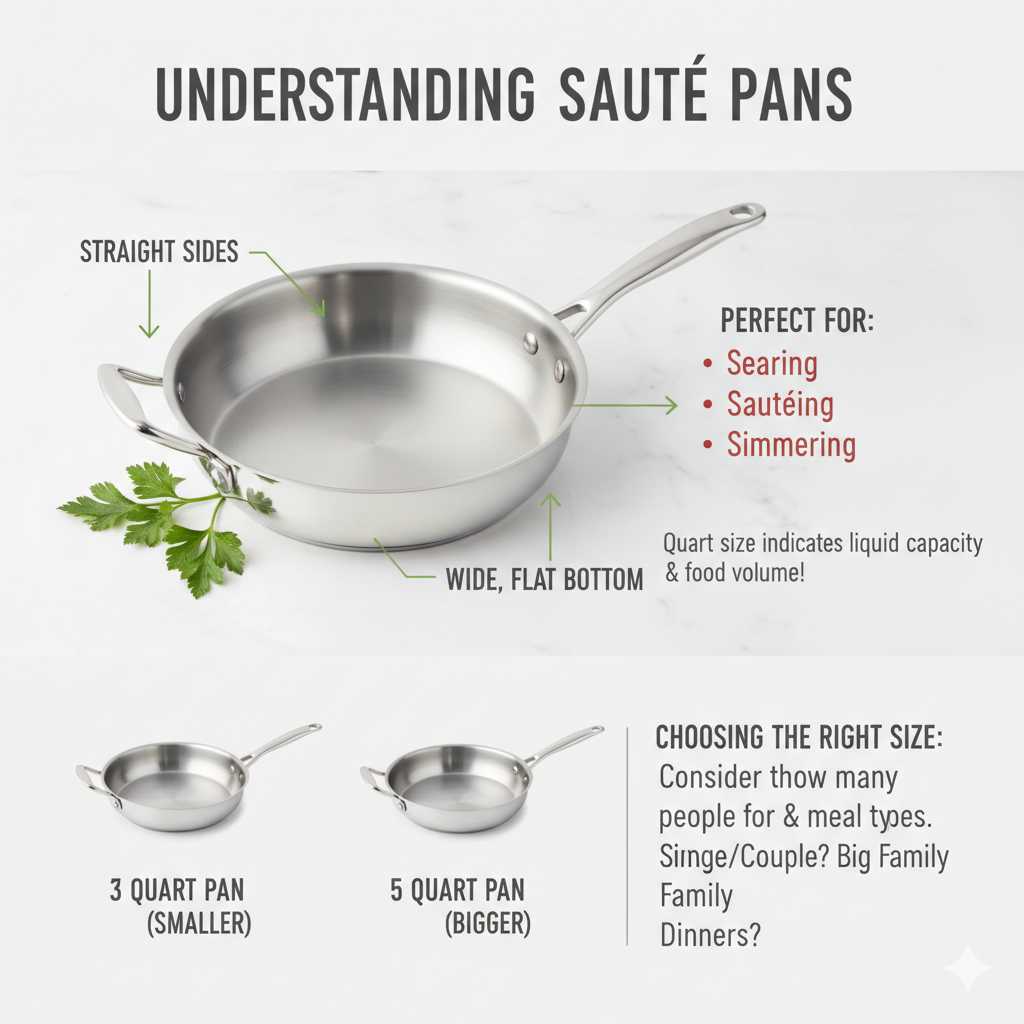
A saute pan is a kitchen workhorse. It has straight sides and a wide, flat bottom. This shape is perfect for searing, sauteing, and simmering.
The wide base lets food cook evenly. The straight sides help keep liquids from splashing out.
The quart size tells you how much liquid the pan can hold. This is a good hint about how much food it can hold, too. A 3 quart pan is smaller.
A 5 quart pan is bigger. This size difference changes what you can cook well in each pan.
Think about how many people you usually cook for. Also, think about the kinds of meals you make most often. Are you cooking for one or two?
Or do you often make big family dinners? The answers to these questions will point you toward the right pan size.
The 3 Quart Saute Pan: Your Everyday Hero
A 3 quart saute pan is a fantastic size for many common cooking tasks. It’s often around 10 inches in diameter. This is a very manageable size for most stovetops.
It heats up quickly and is easy to move around.
This pan is ideal for cooking for one or two people. Think about making a quick breakfast, like scrambled eggs or a small omelet. It’s also great for sauteing vegetables for a side dish.
You can easily cook a single chicken breast or a small portion of fish in it.
It’s also perfect for making sauces or gravies. If you’re just whipping up a small batch of pan sauce after searing some meat, a 3 qt pan is just right. It doesn’t take up too much space on the stove.
Clean-up is usually quick, too.
I remember when I first got my 10-inch, 3 quart saute pan. I thought it might be too small. But then I started using it for all sorts of things.
It became my go-to for frying up breakfast sausage. It was perfect for wilting a big bunch of spinach. It even worked well for making a small serving of risotto.
That little pan really proved its worth in my kitchen.
3 Qt Saute Pan: Best For
Small Portions: Cooking for 1-2 people.
Quick Tasks: Frying eggs, sauteing greens, warming sauces.
Side Dishes: Making small amounts of vegetables.
Limited Space: Fits easily on small stovetops.
Easy Handling: Lighter and simpler to manage.
The weight of a 3 quart pan is also a plus. Lifting it with one hand, even when it has food in it, is usually not a problem. This makes it easier to toss ingredients or slide food onto a plate.
It feels less cumbersome than a larger pan.
When choosing a 3 qt pan, look for good heat distribution. A heavy bottom helps prevent hot spots. This ensures your food cooks evenly.
Materials like stainless steel or hard-anodized aluminum are good choices. Nonstick surfaces can also be very useful for delicate foods like eggs.
Consider the handle. It should be comfortable to hold and securely attached. A good handle makes a big difference when you’re maneuvering the pan.
Some handles are oven-safe, which is a nice bonus if you like to finish dishes in the oven.
The 5 Quart Saute Pan: The Family Favorite
Now let’s talk about the 5 quart saute pan. This is a noticeably larger pan. It’s typically around 12 inches in diameter.
This extra space opens up a lot of new cooking possibilities.
If you often cook for three or more people, a 5 quart pan is almost essential. It allows you to cook larger quantities of food without overcrowding the pan. Overcrowding is a common mistake.
It leads to steaming instead of searing. This means less browning and less flavor.
Think about making a hearty stir-fry for the whole family. Or perhaps you’re searing several chicken thighs at once. Maybe you’re sauteing a large batch of onions or mushrooms for a casserole.
This is where the 5 quart pan shines. It gives your ingredients room to breathe and cook properly.
It’s also excellent for dishes that involve a sauce. You can brown your meat, then add vegetables and liquids all in the same pan. You can simmer a stew or chili in it.
The higher sides help keep everything contained. This reduces splashes and messes.
I have a 12-inch, 5 quart saute pan that I absolutely love. It’s become my go-to for Sunday dinners. I can brown a whole pound of ground beef for tacos in it.
Then I add my seasonings and other ingredients. It all fits comfortably. Later, I might use it to make a quick mac and cheese for the kids.
It’s just so versatile for family meals.
5 Qt Saute Pan: Best For
Larger Portions: Cooking for 3+ people.
Batch Cooking: Making multiple servings at once.
One-Pan Meals: Browning meat, sauteing veggies, and simmering sauce.
Crowd Pleasers: Stir-fries, stews, chilis, pasta dishes.
Family Cooking: Ideal for everyday family meals.
One thing to note about larger pans is their weight. A 5 quart pan can be quite heavy, especially when filled with food. You might need to use two hands to carry it.
This is something to consider if you have any strength limitations.
When buying a 5 qt pan, paying attention to construction is even more important. A well-built pan will distribute heat evenly despite its size. This prevents the center from burning while the edges are still undercooked.
Look for pans with thick bases and sturdy sides.
Consider whether your stovetop can handle the size. A large 12-inch pan might cover multiple burners on a smaller cooktop. This could be an issue if you need to use other pots at the same time.
Measure your available stovetop space before you buy.
Direct Comparison: 3 Qt vs. 5 Qt
Let’s break down the key differences side-by-side. It’s not just about the number of quarts; it’s about how those quarts are used.
Contrast Matrix: 3 Qt vs. 5 Qt Saute Pan
| Feature | 3 Quart Saute Pan | 5 Quart Saute Pan |
|---|---|---|
| Typical Diameter | 10 inches | 12 inches |
| Best For Portions | 1-2 people | 3-4 people |
| Ideal Tasks | Small sautés, sauces, quick sides | Larger sautés, stews, one-pan meals |
| Weight | Lighter, easy to handle | Heavier, may need two hands |
| Stovetop Space | Takes up less space | Takes up more space, may cover multiple burners |
The diameter is a crucial factor. A wider pan means more surface area. This is where the actual cooking happens.
A 12-inch pan has significantly more usable surface than a 10-inch pan. You can fit more ingredients in a single layer.
When you are sauteing something like chicken pieces, you want them to brown. If they are piled high, they will steam. This is a common cooking mistake.
The 5 quart pan helps you avoid this. You can lay out your chicken pieces with space between them.
The depth also plays a role. While both are saute pans, the 5 quart might have slightly higher sides than some 3 quart models. This extra height is beneficial for dishes with liquids.
It helps prevent boil-overs and splattering.
However, a smaller pan heats up faster. If you’re just heating up leftovers or quickly sauteing a handful of garlic, the 3 quart pan is more efficient. You’re not heating up a large surface area unnecessarily.
This saves time and energy.
Factors to Consider for Your Kitchen
Choosing the right pan size involves looking at your specific cooking habits and kitchen setup.
Quick-Scan Table: Choosing Your Pan Size
Who do you cook for?
- 1-2 people: 3 Quart is likely enough.
- 3-4 people: 5 Quart is a better choice.
- More than 4: Consider an even larger pan or multiple pans.
What do you cook?
- Quick meals, sides, sauces: 3 Quart is very handy.
- One-pan dinners, stews, large batches: 5 Quart excels here.
Stovetop space?
- Small cooktop: The 3 Quart is easier to manage.
- Larger cooktop: The 5 Quart should fit fine.
Storage?
- Limited cabinet space: The 3 Quart takes up less room.
- Ample storage: Either pan size is fine.
Your Cooking Style: Do you love to cook big, communal meals? Or do you mostly prepare meals for yourself and a partner? This is the biggest clue.
If your meals are usually for two, the 3 quart pan might be all you need. If you’re feeding a hungry family, the 5 quart is a much better fit.
Stovetop Size: As mentioned, a 12-inch pan can be quite large on a small stovetop. If you have a compact apartment kitchen, a smaller pan might be more practical. You’ll want space to use other pots or pans simultaneously.
Storage Space: Kitchen cabinets can get crowded fast. A 10-inch pan is easier to tuck away than a 12-inch pan. If storage is tight, the 3 quart might be a smarter choice.
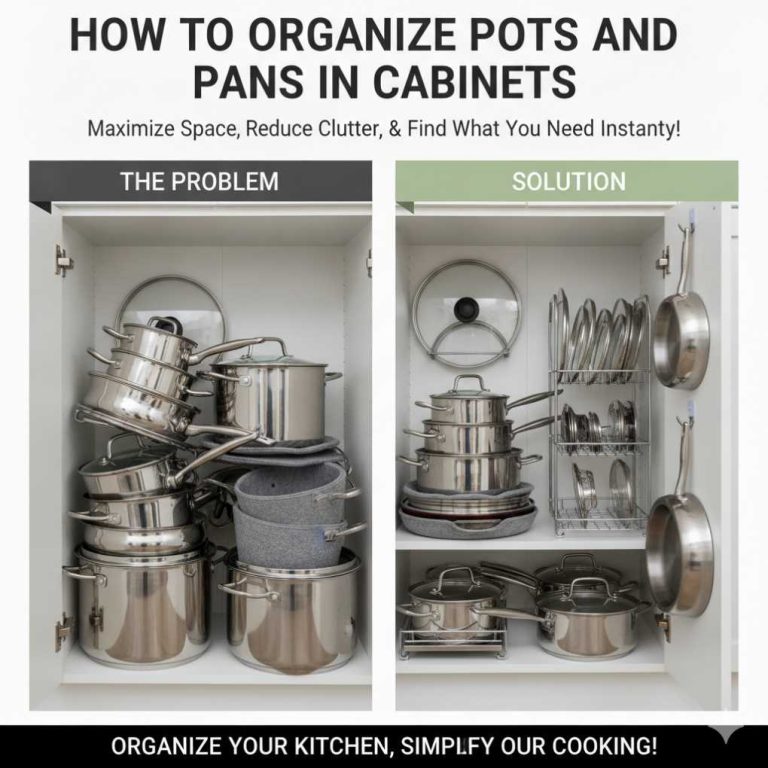
Or, you might need to think about how you organize your cookware.
Budget: Generally, larger pans cost more. A 5 quart pan will often be more expensive than a comparable 3 quart model. However, the price difference might not be huge.
It’s more about the value you get for your cooking needs.
Future Needs: Are you cooking for one now but planning to start a family? Or do you anticipate needing to cook for more people in the future? It’s worth considering how your needs might change.
Sometimes it’s better to buy a slightly larger pan upfront.
I often tell people to think about their “average Tuesday night dinner.” What does that meal look like? How many people are you serving? This thought experiment usually highlights the right pan size for daily use.
If you find yourself often wishing your current pan was bigger, that’s a sign. It means you’re likely exceeding its capacity. That’s when you should consider stepping up to a larger size, like the 5 quart.
When is a 3 Quart Saute Pan NOT Enough?
You might run into limitations with a 3 quart pan if you try to cook too much. For example, if you’re making a chili for four people. You’ll probably end up with a crowded pan.
This leads to less browning of your meat and vegetables. The flavors won’t develop as well.
Another scenario is when you need to sear a lot of items. Trying to sear a dozen chicken pieces in a 3 quart pan will result in steaming. The pieces will not get that beautiful golden-brown crust.
They’ll just turn pale and a bit soggy.
Large pasta dishes also become a challenge. If you’re making a sauce and then adding cooked pasta to it for a final toss, a 3 quart pan might be too small. The pasta can clump together.
It’s harder to coat everything evenly.
I once tried to make a large batch of paella in a pan that was too small. It was a disaster! The rice cooked unevenly.
The seafood was overcrowded and didn’t sear properly. It was a mess. I learned that day that pan size is crucial for certain dishes.
Signs Your 3 Qt Pan is Too Small
- Food is steamed, not seared.
- Ingredients pile up too high.
- Sauce splatters excessively.
- You have to cook in multiple small batches.
- Dishes seem to take longer than they should.
The depth of the pan also matters. If a recipe calls for simmering for a long time, and you have a lot of liquid, a 3 quart pan might be a bit shallow. You risk boil-overs.
A slightly deeper 5 quart pan offers more buffer.
Ultimately, if you consistently feel like your food is cooking unevenly or not browning well because the pan is too full, it’s time for a larger size.
When is a 5 Quart Saute Pan Overkill?
On the flip side, a 5 quart pan can feel like too much for small tasks. If you’re just making a single omelet or sauteing a clove of garlic, using a large 12-inch pan can feel inefficient.
It takes longer for a larger pan to heat up. You also use more energy to heat that extra surface area. For very small portions, this can be wasteful.
It’s like using a sledgehammer to crack a nut.
Also, think about the weight. If you’re cooking for yourself and just need to quickly scramble some eggs, lifting and maneuvering a heavy 5 quart pan might be more effort than it’s worth. The 3 quart is much easier to handle for these quick, single-serving jobs.
Cleaning a large pan can also be more of a chore. If it’s just got a little bit of residue, it’s easier to wash a smaller pan quickly. A large pan might not fit as easily in a small sink.
I learned this the hard way. I used my big 5 quart pan to reheat some leftover soup. It took forever to heat up.
Then washing it felt like a lot of work for just a bowl of soup. It made me appreciate my smaller pans for small jobs.
Signs Your 5 Qt Pan is Too Big
- Takes too long to heat up for small tasks.
- Food doesn’t brown well because it’s too spread out.
- Feels heavy and cumbersome for simple jobs.
- Uses more energy than necessary for small meals.
- Awkward to clean for small amounts of residue.
Another aspect is how food cooks. If you have very few ingredients in a large pan, they might spread out too thinly. This can sometimes lead to less intense browning.
The ingredients might not get enough direct contact with the hot pan surface to develop a good sear.
So, while a 5 quart pan is great for families, it’s not always the best choice for solo cooks or very simple tasks.
Material Matters: Stainless Steel vs. Nonstick
The material of your saute pan impacts its performance and care. Both 3 qt and 5 qt pans come in various materials.
Stainless Steel: This is a very popular choice. Stainless steel pans are durable, non-reactive, and oven-safe. They offer excellent heat distribution, especially if they have a thick, clad (layered) base.
They are great for searing and developing a fond (the browned bits stuck to the pan). The downside is that food can sometimes stick, requiring good technique and careful cleaning.
Nonstick: Nonstick pans are fantastic for delicate foods like eggs, fish, and pancakes. They make cooking and cleaning incredibly easy. However, nonstick coatings can degrade over time, especially if exposed to high heat or metal utensils.
They are usually not as good for high-heat searing as stainless steel. Most nonstick pans are not oven-safe above a certain temperature.
When deciding between 3 qt and 5 qt, consider how you’ll use each size. If your 3 qt pan is for quick eggs, nonstick might be perfect. If your 5 qt pan is for searing meats for stews, a durable stainless steel might be better.
I have a good set of both. My smaller nonstick saute pan is my go-to for my morning eggs. My larger stainless steel one is for everything else.
This way, I get the best of both worlds.
Should You Own Both?
For many home cooks, having both a 3 quart and a 5 quart saute pan is the ideal setup. They serve different purposes and complement each other beautifully.
Think of them as a team. The 3 quart pan handles the smaller, quicker tasks. It’s your everyday helper.
The 5 quart pan steps in for larger meals, family gatherings, or dishes that require more space.
Having both means you always have the right tool for the job. You won’t be tempted to overcrowd a small pan, and you won’t waste energy heating a giant pan for a single egg. It optimizes your cooking process.
If you are just starting out and have a limited budget, you might have to pick one. In that case, consider your most frequent cooking scenarios. If you mostly cook for yourself, start with the 3 quart.
If you’re cooking for a family, the 5 quart is a better initial investment.
But ideally, as your cooking repertoire expands and your kitchen needs evolve, aim to have both sizes. They offer distinct advantages and cover a wide range of culinary tasks. It’s a worthwhile investment for any serious home cook.
I know people who have three or even four different sizes of saute pans. They find that each size has a specific use. For example, a very small 2 quart pan for single servings, then 3 quart, 5 quart, and perhaps an even larger 7 or 8 quart pan for bigger roasts or multiple servings of risotto.
What This Means For You
Understanding the difference between a 3 qt and a 5 qt saute pan is about making informed choices for your kitchen. It’s not about one being “better” than the other. It’s about which one fits your life and your cooking habits.
If you’re a solo cook or a couple, the 3 qt pan is probably your best bet for daily use. It’s efficient and easy to handle. If you’re feeding a family or enjoy hosting, the 5 qt pan will be your new best friend.
Consider the types of meals you make most often. Do they involve a lot of simmering? Do you need to brown meat for multiple people?
These are key questions. The answers will guide you to the right size.
Don’t be afraid to assess your current cookware. Are you constantly struggling with a pan that’s too small? Or is your largest pan often sitting empty?
Honesty about your cooking habits will lead you to the right decision.
Many home cooks find that investing in a good quality 3 qt and a good quality 5 qt pan covers about 90% of their stovetop cooking needs. They are incredibly versatile pieces of cookware.
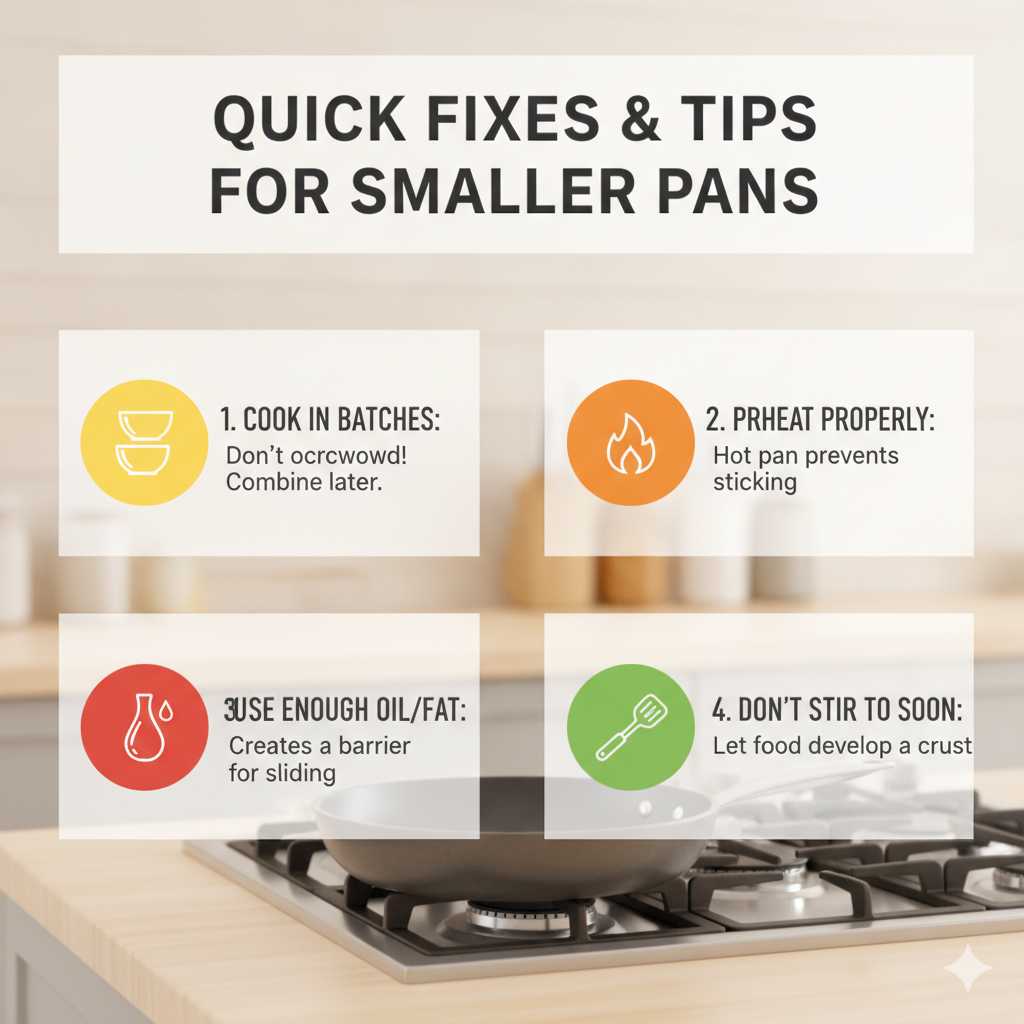
Quick Fixes & Tips
If you’re stuck with a pan that’s slightly too small, here are a few tips:
- Cook in batches: This is the most important tip. Don’t overcrowd the pan. Cook ingredients in smaller amounts and combine them later.
- Preheat properly: Ensure your pan is hot before adding food. This helps with searing and prevents sticking, even in a crowded pan.
- Use enough oil or fat: This provides a barrier and helps food slide.
- Don’t stir too soon: Let food develop a crust before trying to move it.
If you have a pan that’s too large:
- Use a smaller burner: This can help concentrate heat.
- Focus on recipes that benefit from a large surface: Like making a big batch of fried rice.
- Be patient: It will take longer to heat up, but it can still work.
Frequent Questions
What is the main difference between a 3 qt and 5 qt saute pan?
The main difference is their volume and size. A 3 quart pan holds less food and is usually about 10 inches wide. A 5 quart pan holds more food and is typically 12 inches wide.
This impacts how many people you can cook for and the quantity of food you can prepare at once.
Which saute pan is better for cooking for one person?
A 3 quart saute pan is usually better for cooking for one person. It heats up faster, is easier to handle, and is more efficient for small portions. A 5 quart pan can feel too large and cumbersome for single servings.
Can I use a 5 qt saute pan for smaller meals?
Yes, you can use a 5 qt saute pan for smaller meals, but it might be less efficient. It takes longer to heat and uses more energy. For very small tasks like frying an egg, a smaller pan is often preferred.
However, a 5 qt pan can still work if you adjust your expectations.
How many servings can I typically make in a 3 qt saute pan?
A 3 quart saute pan is generally best for serving 1 to 2 people. This is for main dishes or substantial sides. For very light sides or garnishes, you might be able to stretch it a bit further, but it’s not ideal for larger portions.
How many servings can I typically make in a 5 qt saute pan?
A 5 quart saute pan is typically suitable for serving 3 to 4 people. This is a good size for family meals or small gatherings. If you often cook for more than four, you might consider an even larger pan.
What are the benefits of a 12-inch saute pan over a 10-inch one?
A 12-inch saute pan (often 5 qt) offers more surface area for cooking. This means you can brown more food at once without overcrowding. It’s ideal for searing multiple pieces of meat or sauteing large amounts of vegetables.
It also holds more liquid for simmering dishes like stews and sauces.
Conclusion
Choosing between a 3 qt and a 5 qt saute pan is about matching the tool to your tasks. The 3 quart is your everyday companion for smaller meals and quick jobs. The 5 quart is your reliable partner for family dinners and larger culinary adventures.
Both bring value to the kitchen. Consider your household size and your cooking habits to make the best choice for your needs.
Products related to this article
Sponsored / affiliate links. As an Amazon Associate I earn from qualifying purchases. I may earn additional commission from eligible campaigns.