Sauce Pan Vs Pot: What’S The Difference?
Have you ever stood in your kitchen, recipe in hand, and stared at your cookware? You see that soup pot. You see that smaller, shallower pan.

SENSARTE
SENSARTE Nonstick Saucepan with Lid, 1.5 Quarts…
- Swiss Non-Stick Coating - Swiss ILAG nonstick granite coating, SGS approved. PFOA free, smokeless, safe & healthy. Cooking with li…
- Suitable For All Stoves - High magnetic conductive stainless steel base allows the sauce pan to work on all cooktops, including in…
- Versatile and Convenient - Size: 6.3" diameter, 3.4" deep, 1.5 Quart. This 1.5 quart sauce pot for grill is ideal for small portio…
As an Amazon Associate I earn from qualifying purchases.
The recipe says “use a pot.” But which one? It’s a common moment of confusion. Many people use these terms like they mean the same thing.
But there are real differences. Knowing them helps you cook better.
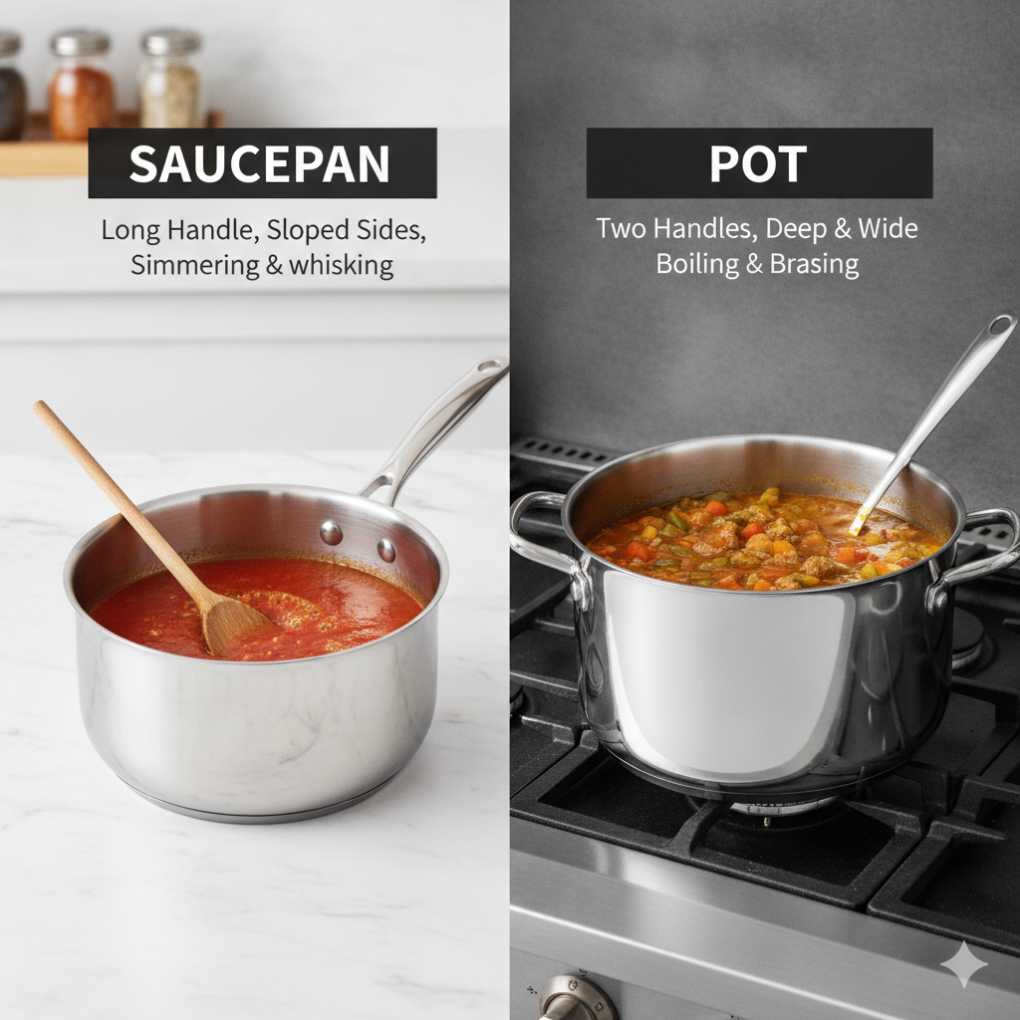
The main difference is size and shape. Pots are usually taller and narrower. They are good for things like soup or boiling water. Saucepans are often wider and shallower. They have a straight or slightly curved side. They are great for sauces, small batches of food, or making caramel.
Understanding the Basic Shapes
Let’s break down these kitchen staples. Think about how you cook. Some foods need deep space.
Others need a wide, flat area. That’s where pots and saucepans shine. They are designed for different jobs.
This makes your cooking smoother. It also helps your food turn out better.
A pot is typically deeper than it is wide. Imagine a tall cylinder. It often has a lid.
This lid helps trap heat and moisture. This is super useful for simmering or boiling. Think of making pasta.
You need a lot of water. A pot is perfect for this. You can also make stews or chili in a pot.
The deep sides keep things from splashing out. They also let the flavors meld nicely over time.
A sauce pan is different. It’s usually wider than it is tall. The sides are straight but not as high as a pot.
They might curve a bit where they meet the bottom. This wider surface area is important. It lets liquids evaporate faster.
This is key when you are making a sauce. It also helps you stir ingredients easily. You can get to all parts of the pan.
This prevents burning. Think of making a simple gravy or melting butter. A saucepan is your go-to tool.
The handle is another clue. Pots often have two loop handles. These are strong and good for lifting heavy things.
Think of a big pot of soup. You need both hands. Saucepans usually have one long handle.
This makes them easy to stir with one hand. It also lets you move the pan around on the stove more freely. This is helpful for quick cooking.
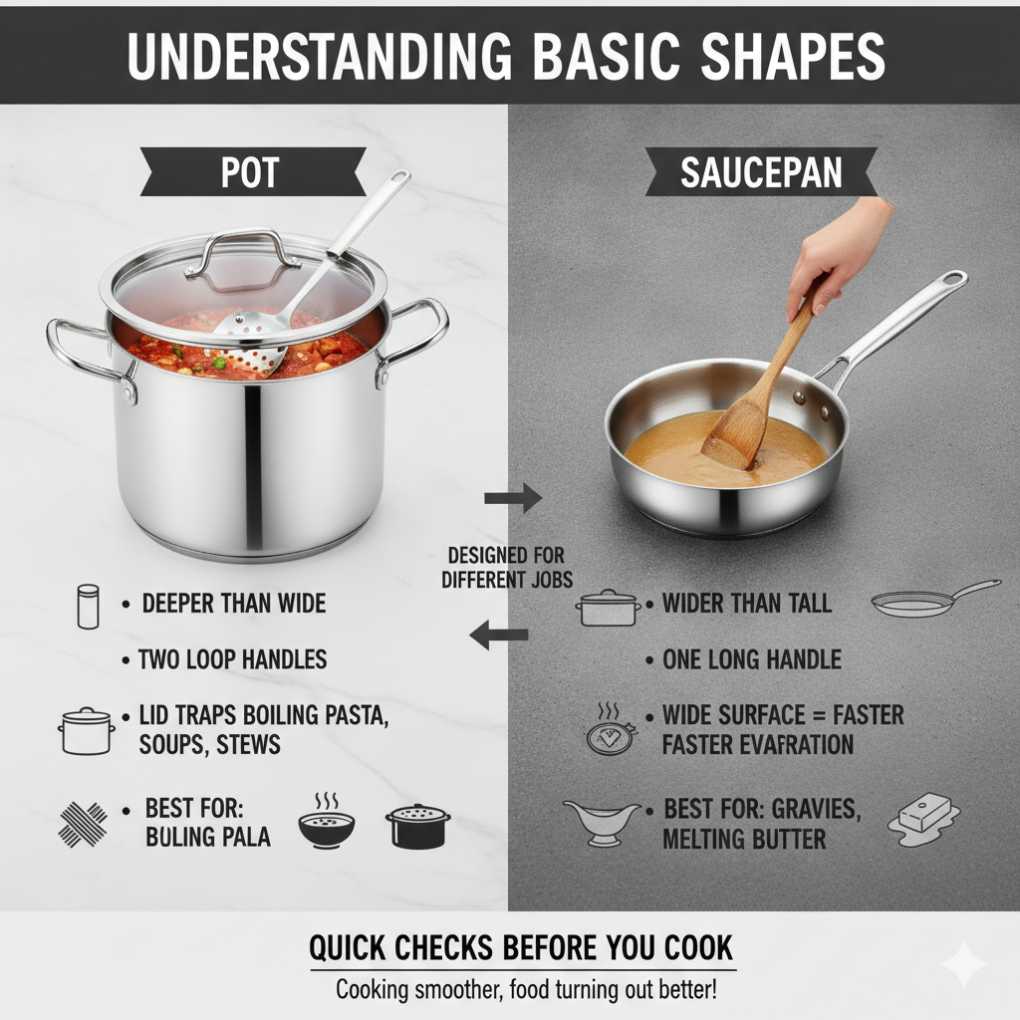
Sauce Pan vs. Pot: Key Features at a Glance
Sauce Pan:
- Wider than tall
- Shorter sides
- Often has one long handle
- Good for sauces, small batches, melting
Pot:
- Taller than wide
- Higher sides
- Often has two loop handles
- Good for boiling, simmering, soups, stews
A Personal Kitchen Story
I remember my first apartment. It was small. My cookware collection was even smaller.
I had one big soup pot and one small frying pan. I loved making pasta. My pot was fine for that.
One day, I tried to make a béchamel sauce for mac and cheese. I used my frying pan. It was too shallow.
The milk kept boiling over. It made a huge mess on the stove. I felt so frustrated.
I had to clean it all up. It wasn’t fun.
That night, I realized I needed more. I went to a store. I looked at the cookware.
I saw saucepans. They looked perfect. They were wider and had those nice high sides.
I bought a medium-sized one. The next time I made that mac and cheese, it was a dream. The sauce thickened up nicely.
Nothing spilled over. I could stir it easily. It was a small change, but it made a big difference in my cooking.
This experience taught me a lot. It showed me that using the right tool matters. It’s not just about having cookware.
It’s about having the right cookware for the job. Even simple recipes get easier. Your food tastes better.
Less mess means more enjoyment. It’s about making your time in the kitchen more pleasant.
Why the Shape Matters for Cooking
The shape of your cookware is not just for looks. It directly affects how food cooks. This is true for both saucepans and pots.
The way heat is distributed is different. The amount of surface area is different. This changes evaporation rates.
It changes how things simmer. It even affects how easily you can stir.
Think about boiling water. You need a lot of water. You want it to come to a boil quickly.
A tall pot is best. The sides help keep the heat in. This speeds up the boiling process.
Less heat escapes into the air. Also, if you are boiling pasta, the tall sides stop the starchy water from boiling over. This is a common problem when using a shallow pan.
Now, consider making a delicate sauce. You want it to thicken. You need to control the heat.
You also need to stir it often. A saucepan’s wider shape is ideal. The large surface area lets steam escape.
This helps the sauce reduce and thicken. The lower sides make it easy to reach every corner of the pan with your whisk or spoon. This prevents sticking and burning.
This is crucial for smooth, creamy sauces. It also helps with things like reducing wine or simmering a custard.
Cooking Functions: Pot vs. Saucepan
Best For Pots:
- Boiling large amounts of water (pasta, potatoes)
- Making soups and broths
- Simmering stews and chilies
- Cooking grains like rice or quinoa
- Blanching vegetables
Best For Sauce Pans:
- Making sauces (from scratch or store-bought)
- Melting butter or chocolate
- Heating small amounts of liquid
- Cooking grains for one or two people
- Reducing liquids to concentrate flavor
- Sautéing small items
Materials Make a Difference Too
Beyond shape, the material of your pot or saucepan is very important. Different metals heat up differently. They hold heat differently.
They also react to different foods. This affects your cooking. Common materials include stainless steel, copper, cast iron, and non-stick coatings.
Each has its own pros and cons.
Stainless Steel is very popular. It’s durable and doesn’t react with food. This means your tomato sauce won’t taste metallic.
It’s also relatively easy to clean. However, stainless steel alone can sometimes have hot spots. This means the heat isn’t even.
Many stainless steel pans have a core of aluminum or copper. This helps with heat distribution. This makes them much better for even cooking.
Copper is a fantastic heat conductor. It heats up very fast and evenly. This gives you great control over your cooking temperature.
Copper pans often have a stainless steel interior to prevent food from reacting with the copper. They can be more expensive and require more careful cleaning. But for precise cooking, like making candy or delicate sauces, copper is wonderful.
Cast Iron is a workhorse. It heats up slowly but retains heat for a long time. This makes it great for searing.
It also holds a steady temperature. Cast iron is very durable. However, it is heavy.
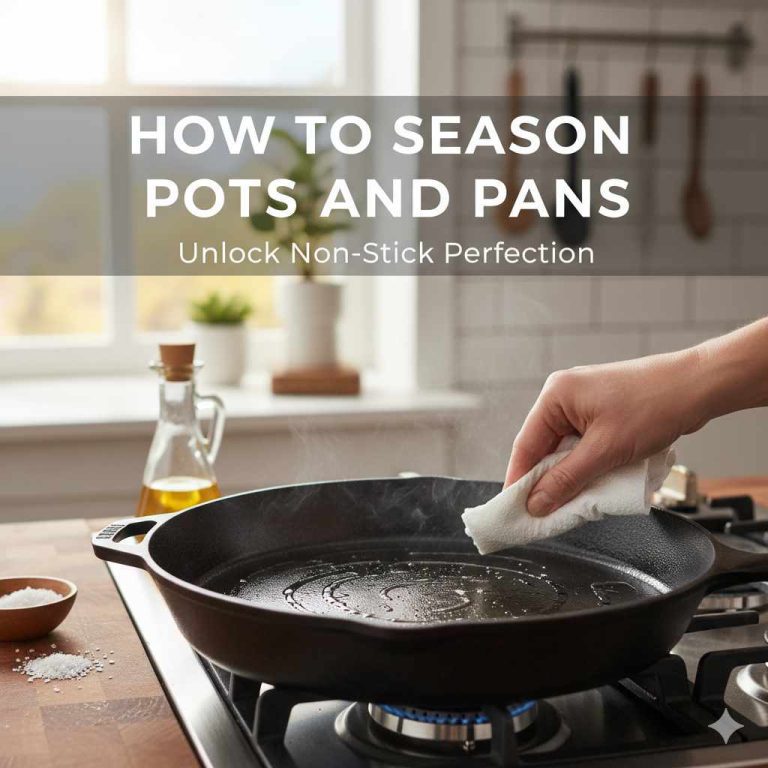
It can also rust if not cared for properly. You need to “season” cast iron. This means oiling it.
Then you bake it. This creates a natural non-stick surface. It can react with acidic foods.
So, it’s not ideal for long-simmering tomato sauces.
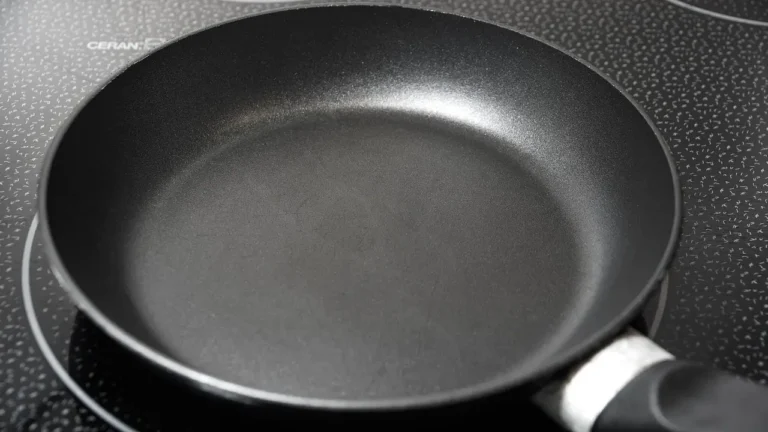
Non-stick coatings are common on saucepans. These have a special surface. It prevents food from sticking.
They are great for cooking eggs or fish. They are also easy to clean. However, non-stick coatings can wear out over time.
You need to be careful not to use metal utensils. These can scratch the coating. It’s best to use wooden or silicone tools.
Material Quick Guide
Stainless Steel: Durable, non-reactive. Good all-around choice. Look for layered bases for better heat.
Copper: Excellent heat control, heats fast and even. Often pricier, needs careful care.
Cast Iron: Holds heat very well, durable. Needs seasoning, can be reactive with acids.
Non-Stick: Food won’t stick, easy clean. Coating can wear out, avoid metal utensils.
When to Choose a Pot
Let’s talk about when a pot is clearly the better choice. You’ll reach for a pot when you need to cook a large volume of food. This is especially true for liquids.
Imagine making a big pot of chicken noodle soup for the family. You need space for all the broth, chicken, noodles, and vegetables. A tall pot keeps everything contained.
It also helps the soup simmer nicely without too much evaporation.
Boiling is another key job for pots. Think about cooking pasta. A standard box of spaghetti needs a good amount of water.
This water needs to stay hot. A tall, narrow pot is perfect. It uses less water than a wide pan.
This means it heats up faster. The height also prevents that starchy pasta water from boiling over onto your stovetop. I’ve had that happen too many times in my younger cooking days!
It’s a messy clean-up.
Other examples include cooking large batches of beans from dry. Or making stocks and broths that need to simmer for hours. Even things like boiling corn on the cob or potatoes for a crowd call for a pot.
The deep sides are essential for these tasks. They ensure safety and efficiency in the kitchen.
Consider what you’re cooking. Is it something that needs lots of room? Will it bubble up a lot?
Does it need to simmer for a long time? If the answer is yes to any of these, you probably need a pot. It’s designed for these jobs.
It makes them much easier and safer.
When to Grab a Saucepan
Now, when is a saucepan your kitchen hero? It’s all about smaller batches and more direct control. Saucepans are fantastic for making sauces.
That’s how they got their name! Whether it’s a simple pan sauce made from drippings, a creamy Alfredo, or a rich chocolate sauce, the wider shape helps. It allows the liquid to reduce and thicken more quickly.
The lower sides make it easy to whisk and stir.
Melting things is another common saucepan task. Need to melt butter? Make caramel?
Or melt chocolate for baking? A saucepan works great. The wider surface area means the heat is more evenly spread.
This helps prevent scorching. You can keep an eye on it easily. You can stir it gently as it melts.
Think about heating up a small amount of leftovers. Or making a single serving of oatmeal or rice. A small saucepan is perfect.
It uses less energy. It heats up fast. It’s also easier to clean than a big pot for a small job.
You can also use a saucepan for small-batch cooking. Like making a quick batch of custard or poaching a single piece of fish.
Size Matters: Choosing the Right Capacity
Small Saucepan (1-2 quart):
- Heating milk or small sauces
- Melting butter or chocolate
- Cooking for one person
Medium Saucepan (3-4 quart):
- Making most sauces
- Cooking grains for 2-3 people
- Heating soup for 1-2 people
Large Saucepan (5-6 quart):
- Making larger batches of sauce
- Cooking grains for 4-6 people
- Heating larger portions of soup
Small Pot (3-4 quart):
- Boiling small amounts of water
- Cooking small batches of beans
Medium Pot (5-6 quart):
- Cooking pasta for 2-4 people
- Making moderate-sized soups or stews
Large Pot (8+ quart):
- Boiling pasta for a crowd
- Making large batches of soup or stock
- Canning vegetables
Specialty Cookware: What About Dutch Ovens?
You might be wondering about other types of cookware. What about a Dutch oven? Or a stockpot?
These are also types of pots, but they have specific features. Understanding these helps you choose wisely.
A Dutch oven is a heavy, thick-walled pot. It usually has a tight-fitting lid. They are often made of cast iron, sometimes enameled.
This material heats very evenly. It also retains heat well. Dutch ovens are amazing for slow cooking.
Think of braising meats or making stews. They can go from the stovetop to the oven. This makes them incredibly versatile.
They are essentially a super-powered pot.
A stockpot is a very large pot. They are usually taller and narrower than a standard soup pot. They are designed for making large volumes of stock or broth.
They can also be used for boiling large amounts of pasta or corn. Stockpots often have a spigot at the bottom. This makes it easy to drain off the liquid without lifting the heavy pot.
This is a really neat feature for large batches.
So, while these are technically types of pots, they are specialized. A standard pot or saucepan is for everyday use. A Dutch oven or stockpot is for specific, often larger, cooking tasks.
Knowing these distinctions helps you build a useful kitchen collection.
Can You Use Them Interchangeably?
Sometimes, you might need to use a pot when you really should use a saucepan, or vice versa. Can you do it? Yes, you can.
But it’s not always ideal. It might make your cooking harder. It could lead to less than perfect results.
Or it might create a mess.
For instance, if you try to make a delicate sauce in a tall, narrow pot, you’ll face challenges. The liquid won’t evaporate as quickly. It will take much longer to thicken.
You’ll have to stir more frequently to prevent burning because the heat might be more concentrated at the bottom. Also, reaching into a deep pot with a whisk can be awkward.
On the other hand, if you try to boil a large amount of pasta in a wide, shallow saucepan, you’ll likely have a mess. The water might boil over quickly. You’ll need more water to cook the pasta properly.
This means the water will take longer to boil. You might also find that the pasta sticks together more easily because there isn’t enough room for it to move.
It’s like using a screwdriver to hammer a nail. You can probably get it done, but it’s not the right tool. It’s inefficient.
It can be frustrating. And you might even damage the tool or the nail. So, while it’s possible to swap them, sticking to their intended uses will lead to much better cooking experiences.
Myth vs. Reality
Myth: Pots and saucepans are the same thing. You can use either for any job.
Reality: While similar, their distinct shapes are designed for different cooking methods. Using the correct one makes cooking easier and yields better results.
Myth: A non-stick pan is always best for sauces.
Reality: While good for preventing sticking, non-stick surfaces can wear out. For developing sauces that need reduction and simmering, stainless steel or copper can offer better heat control.
What This Means for Your Kitchen
So, what’s the takeaway from all this? It means that having a basic set of cookware is important. You don’t need a huge collection.
But a few key pieces can make a big difference. A good medium-sized saucepan is a must. A sturdy soup pot is also essential.
When you’re buying new cookware, think about what you cook most often. Do you make a lot of sauces and gravies? Invest in a good saucepan.
Do you love making big batches of soup or boiling pasta for friends? Get a quality pot. Consider the materials.
Stainless steel is a safe bet for most people. Non-stick is great for certain tasks.
It’s also worth noting that quality matters. A cheap pot might warp. A poorly made saucepan might have uneven heating.
This can lead to frustration. It’s often better to buy fewer, higher-quality pieces. These will last longer.
They will perform better. Think of it as an investment in your cooking.
Don’t feel like you need to buy everything at once. Start with the basics. As you cook more, you’ll learn what else you might need.
Maybe you’ll discover a love for braising and decide you need a Dutch oven. Or perhaps you’ll start canning and need a very large stockpot. Your kitchen needs will grow with your cooking skills.
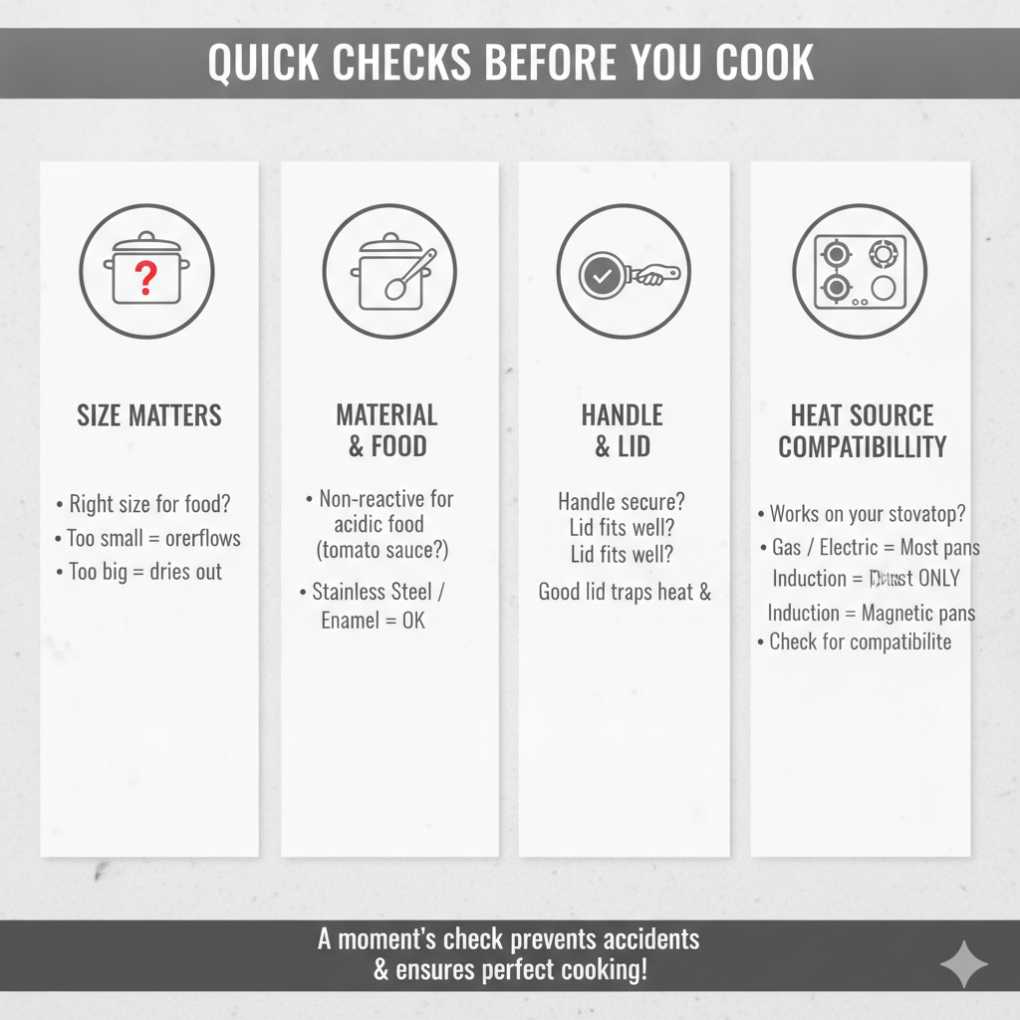
Quick Checks Before You Cook
Before you start cooking, take a quick look at your pan. Is it the right size for the amount of food? Too small and it will overflow.
Too big and the liquid might evaporate too fast. Is the material appropriate? For acidic foods like tomato sauce, a non-reactive material like stainless steel or enamel is best.
Check the handle. Is it secure? A loose handle is dangerous.
Check the lid. Does it fit well? A good lid helps trap heat and moisture.
It makes cooking more efficient. If a lid doesn’t fit, it’s less effective. It might let too much steam escape.
Think about the heat source. Will the pan work on your stovetop? Most pans work on gas and electric.
But some materials, like cast iron, might not work on induction cooktops. Induction requires magnetic cookware. So, always check compatibility.
These simple checks take only a moment. But they can prevent accidents. They can save you from a messy kitchen.
They ensure your food cooks as it should. It’s about being prepared and using your tools wisely.
Frequently Asked Questions
What is the main difference between a pot and a saucepan?
The main difference is shape and size. Pots are typically taller and narrower, good for boiling and simmering large volumes. Saucepans are wider and shallower, with lower sides, ideal for making sauces, melting, and smaller batches.
Can I use a pot to make a sauce?
Yes, you can, but it’s not ideal. A pot’s tall sides make it harder for liquids to evaporate, so sauces will take longer to thicken. Reaching the bottom to stir can also be awkward.
Can I use a saucepan to boil pasta?
You can boil small amounts of pasta in a saucepan. However, for larger quantities, a pot is better. A saucepan might not hold enough water, and the starchy water could boil over more easily.
What material is best for a saucepan?
For general use, stainless steel saucepans with a layered base (aluminum or copper core) are excellent. They offer good heat distribution and are non-reactive. Non-stick saucepans are great for delicate foods like eggs.
How do I choose the right size pot or saucepan?
Choose a size based on the recipe and the number of servings. For boiling pasta for a family, you need a large pot. For heating milk for one, a small saucepan is best.
Avoid overcrowding the pan.
Are Dutch ovens just fancy pots?
Dutch ovens are a specific type of pot. They are usually heavy, thick-walled, and made of cast iron (often enameled). They excel at slow cooking, braising, and can go from stovetop to oven, offering superior heat retention and evenness.
Final Thoughts on Pots and Pans
Understanding the differences between pots and saucepans is a simple step. But it can truly improve your cooking. It helps you choose the right tool.
This makes cooking easier. It leads to better food. So next time you’re in the kitchen, take a moment.
Look at your cookware. Think about the job you need to do. Your cooking will thank you.
Related pick: Check today's price on Amazon
Products related to this article
Sponsored / affiliate links. As an Amazon Associate I earn from qualifying purchases. I may earn additional commission from eligible campaigns.
 Ipetboom Heavy Duty Secure Lock for Glass Doors and Drawers, Stainless Steel Cabinet Lock Kit with Sturdy Structure and Efficient Use, for Home and Office Security
 Non Slip Area Rug Gripper 3x5 Feet, Rug Gripper for Hardwood Floors, Laminate, Vinyl, Stone & Tile, Anti Slip Area Rug Pad for Under Rugs