How To Store Books Without A Bookshelf Creatively
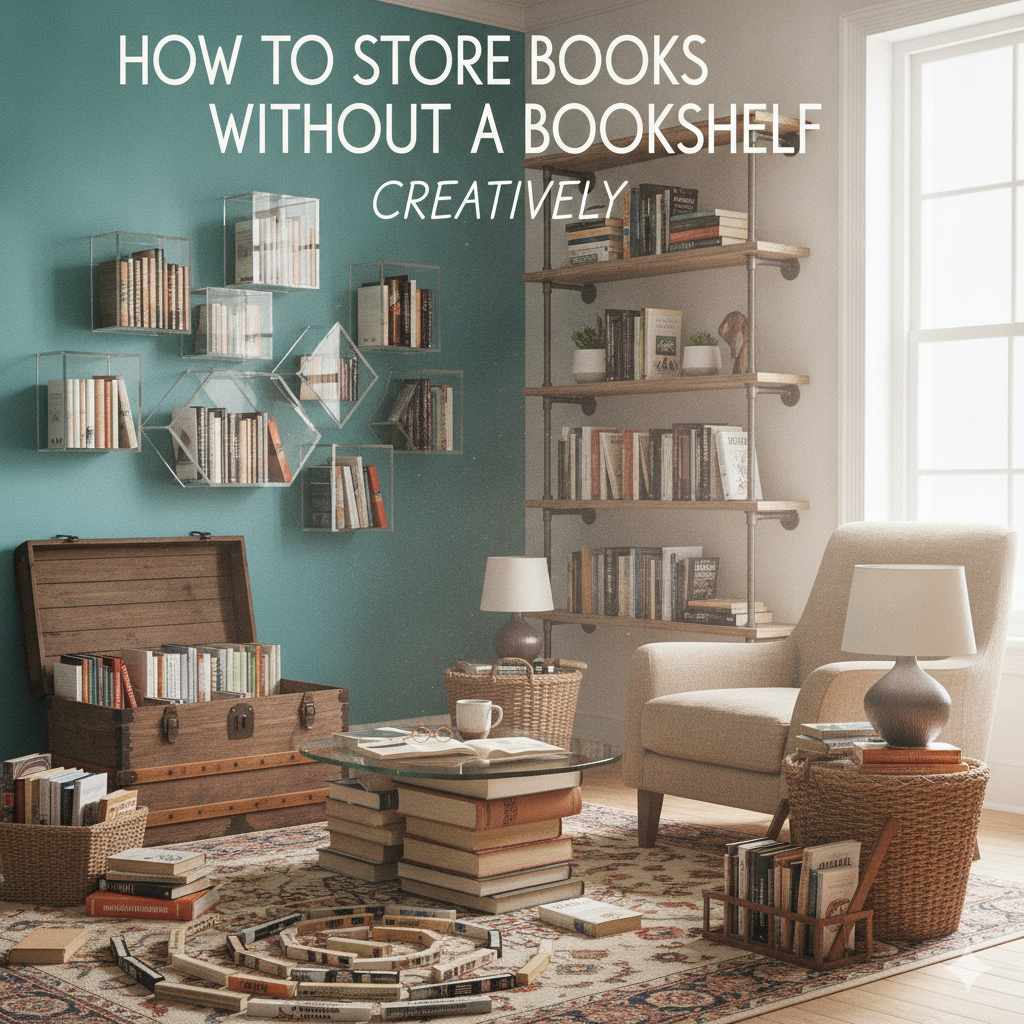
When you lack a traditional bookshelf, creative storage is key. This means using wall space, multi-functional furniture, and decorative displays. It transforms book storage from a problem into a design feature.

KRHWVBJS
I Rescue Books Trapped in The Bookstore…
- 【Meaningful Statement & Bold Design】 Make a lasting impression with this elegantly designed wood box sign. Featuring high-contrast…
- 【Versatile Decor for Every Space】 Perfectly sized for versatility, this plaque is an ideal addition to your home office, bookshelf…
- 【Premium Craftsmanship & Quality】 Crafted from high-quality natural wood, our signs feature crisp, fade-resistant printing and a s…
As an Amazon Associate I earn from qualifying purchases.
You can keep your favorite reads accessible and your home tidy. Many clever options exist.

The Bookshelf Dilemma: Why Storage Matters
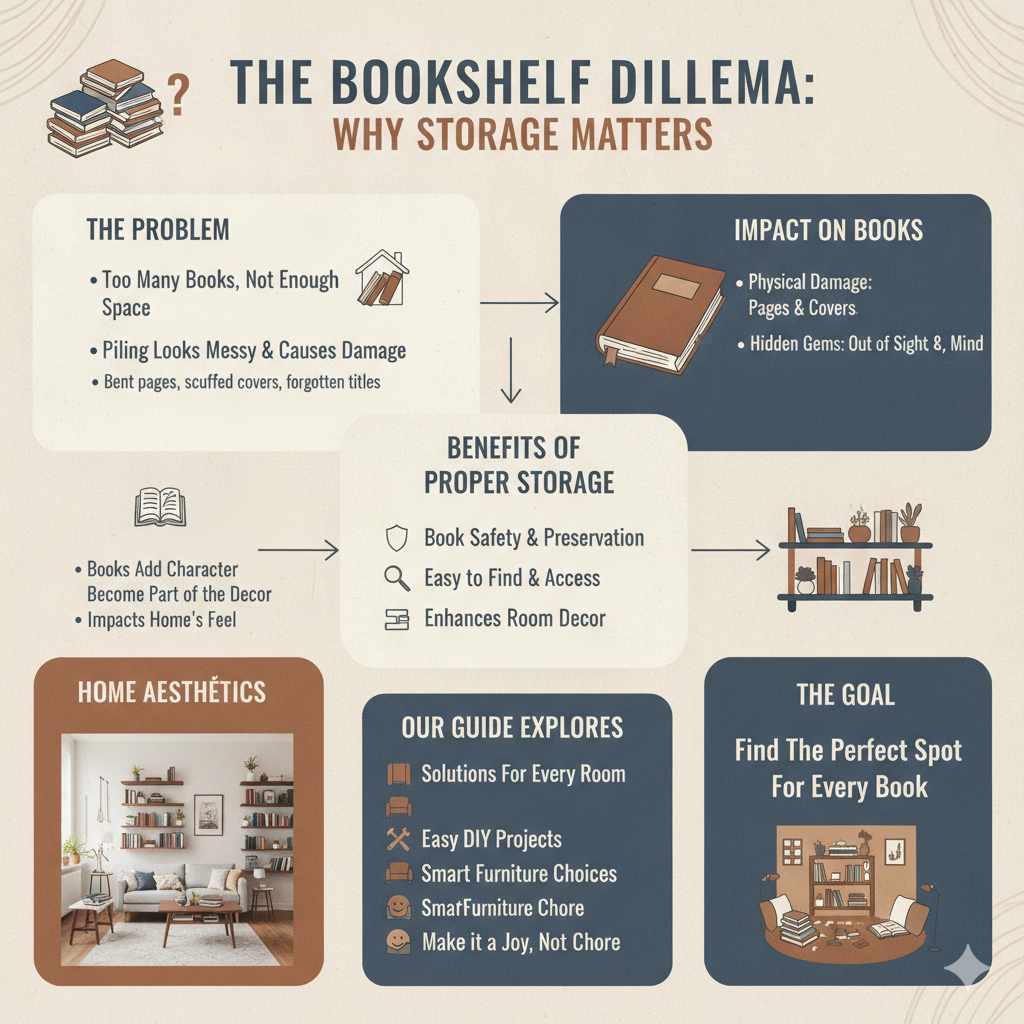
Having too many books is a good problem to have. But it brings a storage challenge. Books can take up a lot of space.
Piling them up can look messy. It can also damage your books. Pages can bend.
Covers can get scuffed. You might even forget what books you own. This is especially true if they are out of sight.
Proper storage keeps your books safe. It also makes them easy to find. When books are displayed well, they add character to a room.
They become part of the decor. Thinking about where your books will live is important. It impacts your home’s feel.
This guide dives into solutions. We explore ideas for every room. We look at easy DIY projects.
We also cover smart furniture choices. The goal is to make book storage a joy. It should not feel like a chore.
Let’s find the perfect spot for every book.
My Own Book Storage Scare
I remember a time when I moved into a new place. It was much smaller than my old one. My heart sank.
Where would all my books go? I had boxes of them. My beloved bookshelf was too big.
I felt a bit panicked. My books were my treasures. I couldn’t just leave them in boxes.
I paced my new, tiny living room. I looked at the walls. I looked at the floor.
I even looked at my bed. There had to be a way. I spent a whole weekend trying things.
I stacked books on side tables. This made them wobbly. I put some on the kitchen counter.
This felt wrong. One evening, I tripped over a stack. Books went flying.
That’s when I knew. I needed a real plan. It was not just about stuffing books somewhere.
It was about making them look nice. It was about making my home work.
That experience taught me so much. It pushed me to get creative. I started seeing everyday objects as storage potential.
I learned that you don’t always need a fancy bookshelf. You can use what you have. Or you can find clever alternatives.
It’s about reimagining space. It’s about making your books a visual part of your home.
Creative Wall Storage Ideas
Walls are often the most underused space. They are perfect for holding books. You don’t need a big floor area.
Here are some ways to use your walls:
Floating Shelves for a Minimalist Look
Floating shelves are a popular choice. They attach directly to the wall. They have no visible brackets.
This gives a clean, modern look. You can install them at various heights. This adds visual interest.
Arrange them in a pattern. Or use them in a straight line. They are great for displaying favorite books.
Or for holding smaller collections.
Tip: Use strong anchors. Make sure shelves can hold the weight of books. Especially for larger collections.
Picture Ledges for a Gallery Effect
Picture ledges are shallow shelves. They are usually used for frames. But they work wonderfully for books.
Especially for display. You can place books face-out. This shows off their covers.
It turns your books into art. You can mix books with small frames or plants. This creates a gallery wall.
It’s a unique way to store and show off your reads.
Consideration: These hold fewer books than deep shelves. They are best for current reads or special editions.
Corner Shelves to Maximize Awkward Spaces
Corners in a room often go unused. Corner shelves can fill this space. They can be triangular or curved.
They fit snugly into a room’s corner. This makes use of often-wasted space. They are great for smaller book collections.
Or for storing books you read often. They can also be combined with other wall storage.
Benefit: They don’t stick out far into the room. This keeps pathways clear.
Wall-Mounted Bookcases (Slim or Modular)
These look like traditional bookcases. But they mount to the wall. Some are very slim.
They save floor space. Others are modular. You can build them to fit your needs.
You can create a whole wall of books this way. It’s a strong statement. It also holds a lot of books.
Check the weight limits carefully. They need to be secured well.
Expert Tip: For very heavy collections, consider professional installation.
Multi-Functional Furniture: Where Books Hide in Plain Sight
Why buy furniture that only does one thing? Choose pieces that serve a dual purpose. Especially for book storage.
This is a smart move for small spaces. It keeps your home feeling open.
Storage Ottomans and Benches
These are fantastic for living rooms or bedrooms. They look like regular ottomans. But they have hidden storage inside.
You can lift the lid to reveal space. It’s perfect for books you’re currently reading. Or for books you want to keep neat.
They also provide extra seating. Or a place to rest your feet.
Use Case: Keep a few favorite novels or magazines here. It’s easy to grab one.
Coffee Tables with Built-in Shelves or Drawers
Many coffee tables offer storage solutions. Some have an open shelf below. Others have drawers.
You can stack books on the lower shelf. Or store them inside the drawers. This keeps your main living area tidy.
It also means your books are handy. You can grab one while relaxing.
Style Note: Stacking a few decorative books on top looks nice too.
Bed Frames with Storage Headboards or Under-Bed Drawers
Your bed can be a book storage powerhouse. Some headboards have shelves or cubbies. These are perfect for bedside reading.
Other bed frames have drawers underneath. This space is often wasted. You can fit many books in these drawers.
It keeps them out of sight. And protected from dust.
Real-World Use: My friend uses under-bed drawers for her overflow. She labels them by genre.
Desks with Integrated Shelving or Bookcases
If you have a desk, consider its storage. Many desks have built-in shelves. Or a small bookcase unit attached.
This is ideal for study materials. Or for books related to your work or hobbies. It keeps your workspace organized.
And your reference books close by.
Tip: Avoid overcrowding the desk surface. Use the shelves effectively.
Decorative Displays and Unique Book Nooks
Sometimes, you want your books to be seen. You want them to add to your home’s charm. This is where decorative displays shine.
Stacking Books as Decor
Don’t underestimate the power of a good book stack. You can stack books on tables. Or on the floor in a neat pile.
This adds texture and color. You can place a small plant or a lamp on top. It makes the stack look intentional.
It’s a simple but effective look. Try varying the heights of the stacks.
Style Tip: Arrange stacks by color for a visual impact.
Using Crates and Baskets
Wooden crates or stylish baskets can hold books. You can stack crates to create a rustic shelf system. Baskets are great for smaller collections.
Or for kids’ books. They add a warm, cozy feel. They are also easy to move around.
This gives you flexibility in your layout.
Material Choice: Woven baskets add a natural texture. Metal crates offer an industrial vibe.
Book Alcoves and Nooks
Do you have a small alcove? Or a wide windowsill? These can become book nooks.
You can add a small cushion. Or a light. Then fill the space with books.
It creates a cozy reading spot. It also uses up space that might otherwise be empty. It feels like a special place just for books.
DIY Idea: Build a simple bench into a wide windowsill.
Repurposed Furniture and Items
Get creative! An old ladder can become a leaning bookshelf. A vintage trunk can store paperbacks.
Even a sturdy filing cabinet can hold books. Think outside the box. What old items do you have?
Can they be given new life as book storage?
Example: An antique sewing machine stand can hold a small selection of books.
Practical Storage Tips for Different Spaces
Where you store your books matters. Consider the room and its use.
Living Room: Blending Books with Decor
In the living room, books are often on display. Use floating shelves. Or picture ledges.
Stack books artfully on tables. Consider a slim wall unit. The goal is to make books part of the room’s design.
They should complement your furniture. And add personality. Remember to leave some space.
Don’t make it feel cluttered.
Key Idea: Mix books with decorative objects.
Bedroom: Cozy Reading Corners and Hidden Storage
Bedrooms are for rest. Book storage here should feel calming. Use a storage ottoman.
Or a bed frame with drawers. Floating shelves above the bed work well. For current reads.
Consider a small, stylish basket. Or a narrow leaning shelf. Keep it simple.
Make it easy to reach your book before sleep.
My Experience: I have a small floating shelf above my bed. It holds two books and a small lamp.
Kitchen and Dining Areas: Clever Nooks
It might seem odd. But kitchens and dining rooms can hold books. A narrow wall space can take slim shelves.
A wide windowsill can become a book display. You can store cookbooks here. Or your favorite recipe books.
Use baskets or crates. Keep them away from heat and moisture. This area is often overlooked for book storage.
Caution: Avoid storing books near sinks or stoves. Water and heat can damage them.
Hallways and Entryways: Unexpected Spots
Hallways often have bare walls. Slim floating shelves can work here. Or a narrow console table with stacked books.
An entryway can have a small bench with storage. It’s a place to leave books you’re taking out. Or ones you’ve just brought in.
It makes good use of transitional space. It can welcome guests with your love of reading.
Visual Appeal: Use colorful book spines to add interest to a plain hallway.
Organizing Your Books Creatively
How you arrange your books matters. It affects how easy they are to find. It also impacts the look of your space.
Organizing by Color
Arranging books by color can be very striking. It turns shelves into a rainbow. It’s a visual feast.
This is great for decorative displays. It might make finding a specific title harder. But it’s a popular aesthetic choice.
You can group colors together. Or create a gradient effect.
Pros: Visually stunning. Adds a unique flair to any room.
Cons: Can make finding specific books challenging.
Organizing by Size
Grouping books by height can create a neat look. It can make shelves appear more uniform. This is especially useful if you have shelves with fixed heights.
It can help maximize space. Taller books on top, shorter ones below. Or vice versa.
It looks orderly.
Benefit: Creates a tidy and consistent appearance on shelves.
Consideration: This might mix genres and authors randomly.
Organizing by Genre or Subject
This is the most practical method. If you like to find books quickly, use this. Group your fiction together.
Then your non-fiction. Within fiction, you can group by author. Or by sub-genre.
This is how most libraries work. It makes sense if you often look for a particular type of book.
Key Advantage: Easy to locate specific books or types of books.
Tip: You can combine this with other methods for sections.
Organizing by Read vs. Unread
This is a great system for avid readers. Dedicate a section of your storage to books you want to read. Another for books you have read.
This helps you keep track of your reading goals. It also reminds you of what’s next. This can be done on separate shelves.
Or in different baskets.
Motivation Boost: Seeing your “to-read” pile can inspire you to read more.
Tracking: Use small tags or labels for more complex systems.
DIY Book Storage Projects
Want to get hands-on? These DIY ideas can be fun and rewarding.
Building Simple Floating Shelves
You don’t need to be a carpenter. Many DIY floating shelves are simple. You’ll need wood boards and brackets.
Or you can buy pre-made floating shelf kits. These are designed for easy installation. Measure your wall space.
Decide on the length. Then secure them firmly.
Materials: Wood boards, sandpaper, paint or stain, L-brackets or floating shelf hardware, screws, wall anchors.
Time: A few hours.
Creating a Crate Bookshelf
Buy or find some sturdy wooden crates. You can paint or stain them. Then stack them.
You can stack them vertically. Or horizontally. You can also secure them together with screws.
This creates a modular, rustic shelving unit. It’s adaptable. You can change the layout as needed.
Customization: Paint each crate a different color for a playful look.
Sturdiness: Ensure the crates are strong enough for books.
Repurposing an Old Ladder
Find an old wooden ladder. Clean it up well. You can paint it or leave it natural.
Lean it against a wall. You can place books on the rungs. For a more stable shelf, you can add planks across the rungs.
This creates a unique, leaning bookshelf. It’s a great conversation starter.
Safety: Ensure the ladder is stable and won’t tip over.
Aesthetic: It adds a vintage or rustic charm.
What This Means for You: Making the Most of Your Space
Not having a traditional bookshelf doesn’t mean you can’t house your book collection. It means you have a chance to get creative. You can blend storage with your home’s style.
It pushes you to think about how you use your space. You might find that these alternative methods work better for you. They can feel more personal.
They can make your books a focal point.
When is it normal to need creative storage? It’s normal when you love books. It’s normal when you have more books than space.
It’s normal when you want your home to look good. When should you worry? You should worry if books are creating hazards.
If they are falling. Or if they are getting damaged. This means your current storage isn’t working.
It’s time for a change.
Simple checks can help. Look at your books. Are they dusty?
Are they packed too tightly? Are they safe from pets or children? Is your chosen storage method stable?
If you answer yes to any of these, it’s time to adjust. Look at the ideas shared here. Find what fits your life.
Your books deserve a good home.
Quick Tips for Smart Book Storage
Here are some final thoughts to keep in mind:
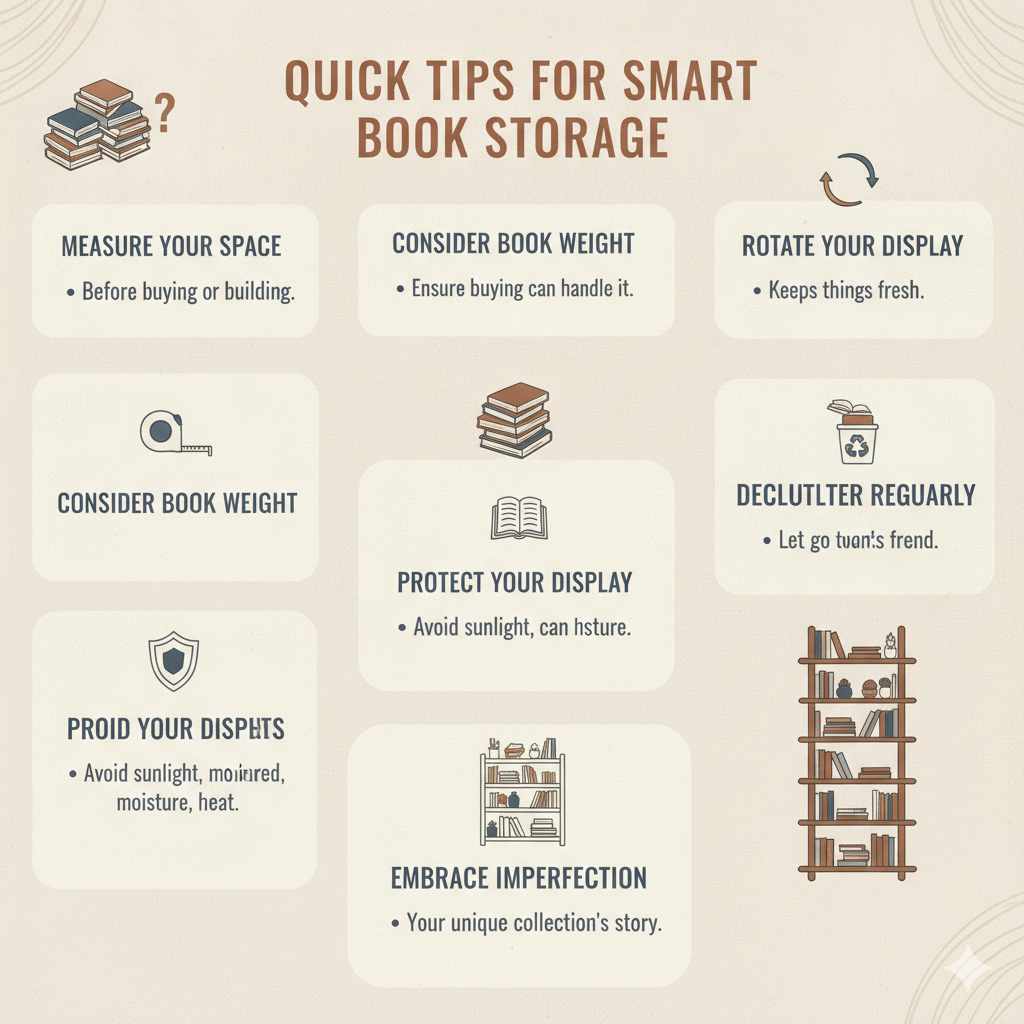
- Measure Your Space: Always measure before buying or building.
- Consider Book Weight: Books are heavy. Ensure your storage can handle it.
- Protect Your Books: Keep them away from direct sunlight, moisture, and heat.
- Rotate Your Display: Change out books on display. It keeps things fresh.
- Declutter Regularly: It’s okay to let go of books you won’t read again.
- Think Vertically: Walls are your best friend when floor space is limited.
- Embrace Imperfection: Your book collection is unique. Let its storage reflect that.
Frequently Asked Questions
Can I stack books directly on the floor?
Yes, you can stack books on the floor. It’s best to keep them in neat piles. Avoid placing them in high-traffic areas where they can be tripped over.
It’s also good to keep them off the floor if you live in a flood-prone area. Consider using a small rug or mat underneath the stack.
What is the best way to store old or valuable books?
Old and valuable books need special care. Store them in a cool, dry place. Avoid direct sunlight.
Use acid-free boxes for storage if possible. Do not stack them too tightly. If they are very valuable, consider professional archival advice.
How can I store books in a very small apartment?
In a small apartment, focus on vertical space. Use floating shelves. Look for multi-functional furniture like ottomans with storage.
Consider a narrow console table. You can also use picture ledges for display. Get creative with wall space.
Even small nooks can be turned into book storage.
Is it okay to put books in the bathroom?
It’s generally not recommended to store many books in the bathroom. The humidity can damage the paper and bindings. High heat from showers can also cause problems.
If you must have some books, keep them on a high shelf. Away from direct steam. And only store books you are currently reading.
How do I prevent books from falling off shelves?
Ensure your shelves are level. Don’t overstack books on the edge of a shelf. Use bookends to keep stacks upright.
For floating shelves, make sure they are installed correctly and can hold the weight. Check that your shelves are not warped.
Can I use any kind of shelf for books?
Not all shelves are created equal. Books are heavy. You need shelves that are strong and securely mounted.
Consider the material and the depth. For heavy collections, solid wood or metal shelves are often best. Always check the weight capacity of any shelf you use.
Final Thoughts on Your Book Haven
Finding creative ways to store your books is an adventure. It’s about making your passion fit your life. Don’t let a lack of a bookshelf stop you.
Explore these ideas. Mix and match. Make your home a cozy spot for stories.
Your books will thank you. And so will your living space.
Related pick: Check today's price on Amazon
Products related to this article
Sponsored / affiliate links. As an Amazon Associate I earn from qualifying purchases. I may earn additional commission from eligible campaigns.