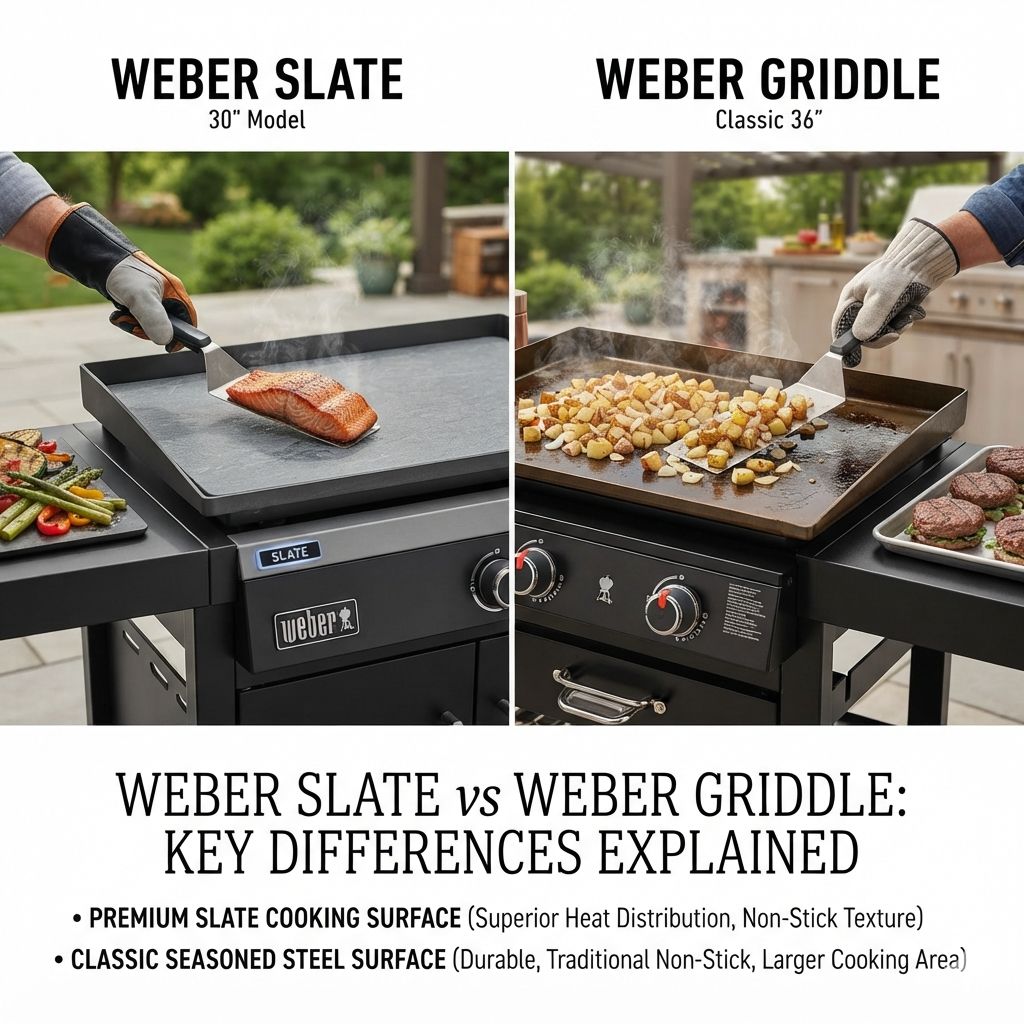
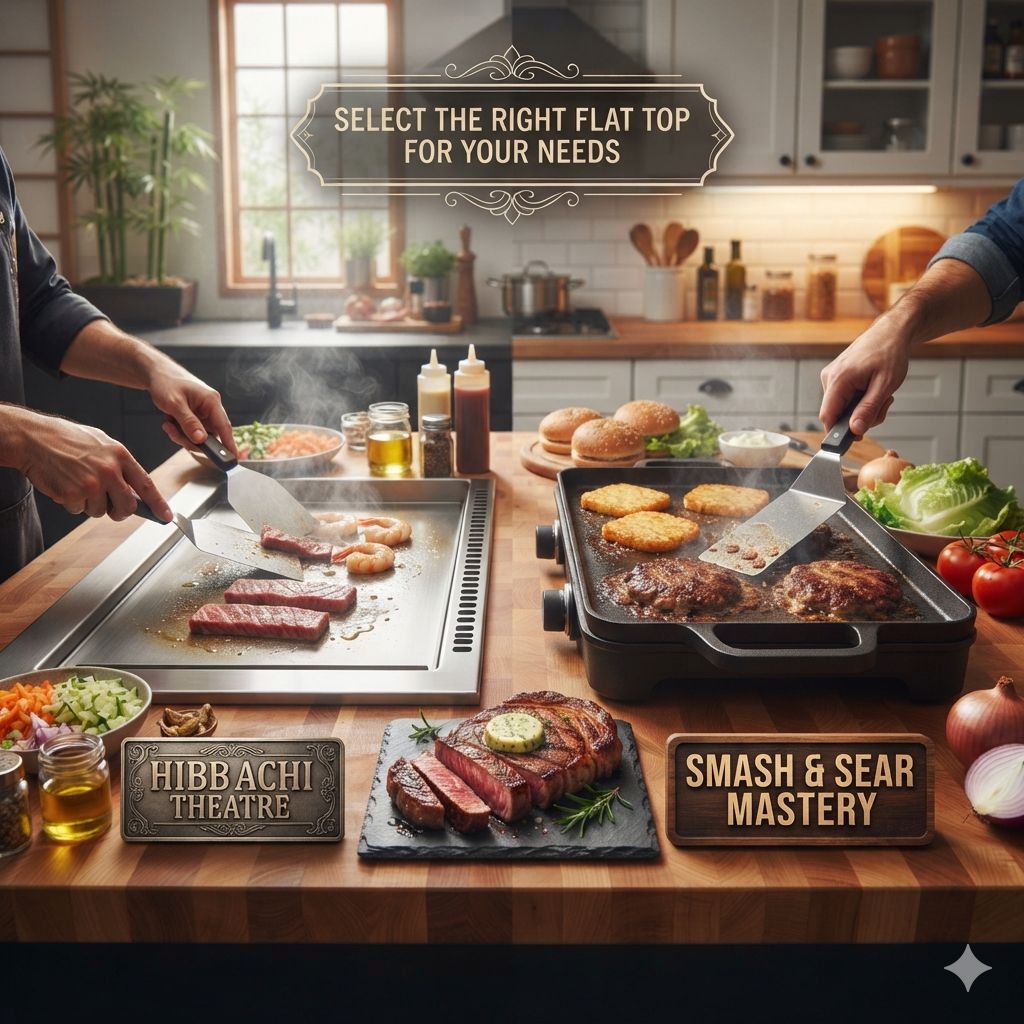
Simply put, a teppanyaki features a solid, smooth steel plate ideal for precise temperature control and hibachi-style cooking, while a griddle is a more versatile flat-top with potentially uneven heat, suitable for everyday breakfast and searing.
Key Takeaways
- Teppanyaki excels at high-heat searing and controlled cooking, perfect for hibachi-style meals and delicate foods.
- A griddle is a versatile appliance, often better for breakfast items and larger quantities, but may have less precise temperature zoning.
- Consider heat distribution, cooking surface material, and intended use when comparing teppanyaki vs griddle.
- Teppanyaki grills are often built-in or standalone units, whereas griddles can be portable, stovetop, or electric.
- Understanding the specific benefits of teppanyaki vs griddle cooking helps in making the right choice for your kitchen.
What is a Teppanyaki Grill?
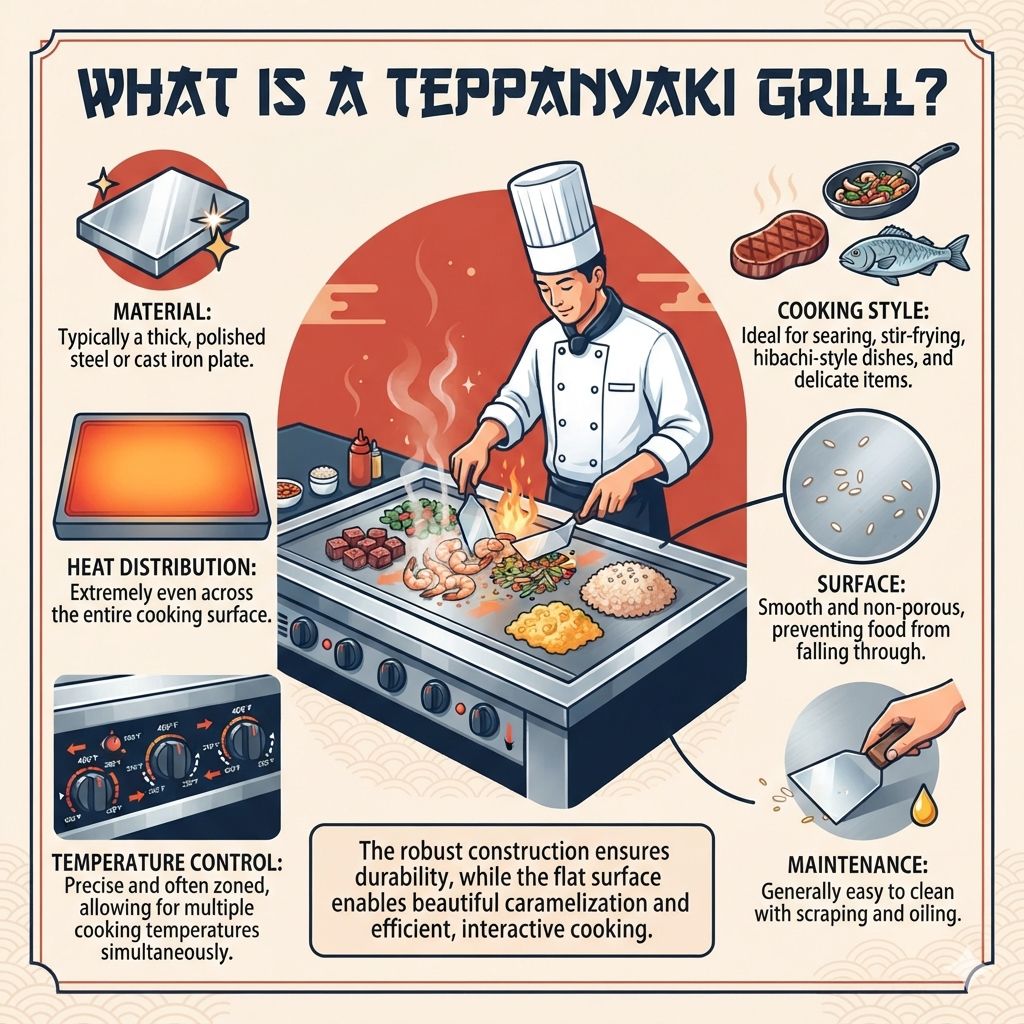
A teppanyaki grill, often associated with Japanese hibachi-style cooking, is characterized by its large, smooth, and typically thick steel cooking surface. The name “teppanyaki” itself translates to “grilling on an iron plate.” These grills are designed for incredibly even heat distribution across the entire surface, allowing for precise temperature control which is crucial for delicate items like seafood and vegetables. The solid, non-porous surface prevents small ingredients from falling through and makes cleanup relatively straightforward.
The primary advantage of a teppanyaki lies in its ability to achieve high searing temperatures while simultaneously allowing for gentle cooking of other ingredients. Chefs can cook multiple dishes at once, moving them around the expansive surface to manage different heat zones. This interactive cooking style, often performed tableside, adds an element of entertainment to the dining experience.
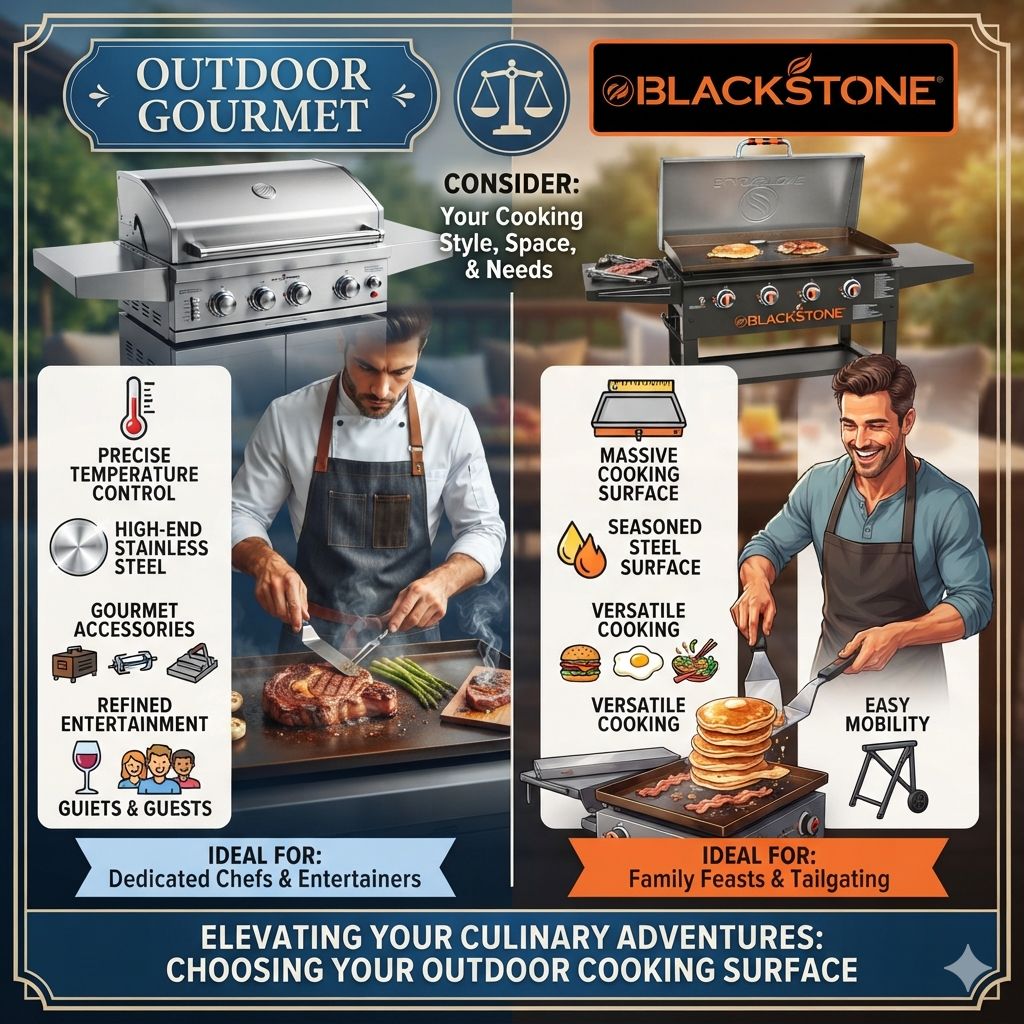
Modern teppanyakis can be found as built-in units for outdoor kitchens or as standalone, often professional-grade, indoor appliances.
- Material: Typically a thick, polished steel or cast iron plate.
- Heat Distribution: Extremely even across the entire cooking surface.
- Temperature Control: Precise and often zoned, allowing for multiple cooking temperatures simultaneously.
- Cooking Style: Ideal for searing, stir-frying, hibachi-style dishes, and delicate items.
- Surface: Smooth and non-porous, preventing food from falling through.
- Maintenance: Generally easy to clean with scraping and oiling.
The robust construction of a teppanyaki ensures durability and longevity, making it a significant investment for those serious about their cooking. Its flat surface is also beneficial for creating beautiful caramelization and crusts on meats and vegetables alike. The efficiency of a teppanyaki in handling various culinary tasks makes it a favorite in professional kitchens and among home cooks who appreciate its versatility and ease of use for specific cooking methods.
What is a Griddle?
A griddle is a much broader category of cooking appliance defined by its flat, broad cooking surface, but it encompasses a wider range of designs and functionalities compared to a teppanyaki. Griddles can be stovetop accessories, standalone electric appliances, or integrated into ranges. The surface material can vary, including cast iron, stainless steel, or non-stick coatings, and heat distribution can be less uniform than on a teppanyaki, often featuring hot and cool spots.
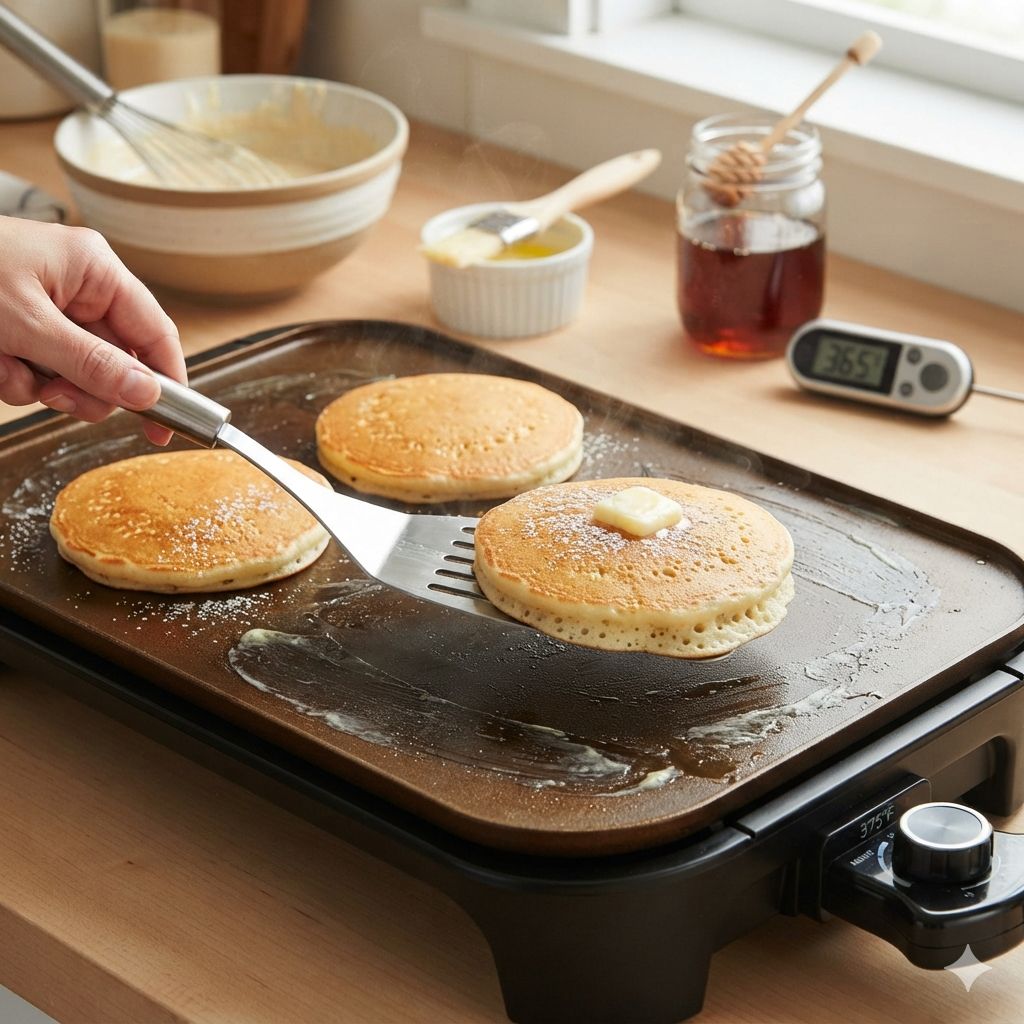
Griddles are exceptionally popular for everyday cooking, especially for breakfast. Think pancakes, eggs, bacon, and French toast – the large surface area allows you to cook batches of these items simultaneously. While some high-end griddles offer excellent temperature control, many consumer-grade models have a more generalized heat setting.
This makes them less ideal for the highly precise searing that a teppanyaki excels at, but perfect for the forgiving nature of breakfast staples.
| Griddle Type | Description | Best For |
|---|---|---|
| Stovetop Griddle | A flat plate that sits over one or two stove burners. | Pancakes, bacon, burgers, grilled cheese. |
| Electric Griddle | A portable appliance with its own heating element, offering consistent heat. | Breakfast items, large batches, easy cleanup. |
| Range Griddle | Integrated into some gas or electric ranges, often cast iron. | Everyday cooking, searing, and batch cooking. |
The versatility of griddles makes them a staple in many kitchens, offering a simple way to prepare a wide variety of dishes without complex techniques. Their accessibility, from budget-friendly stovetop models to feature-rich electric ones, ensures there’s a griddle for nearly every need and budget.
Teppanyaki vs Griddle: Core Differences
When comparing a teppanyaki vs griddle, the most significant distinctions lie in their primary purpose, construction, and heat management. A teppanyaki is engineered for precision and high-temperature performance, resembling a professional chef’s controlled environment. Its polished steel surface is designed to achieve the Maillard reaction with exceptional consistency, perfect for delicate seafood, thinly sliced meats, and vegetables that require quick, even cooking without sticking.
A griddle, on the other hand, is typically built for broader applications and often prioritizes volume over pinpoint accuracy. While it provides a flat surface, its heat distribution can be less uniform, often requiring the cook to work around hot spots. This makes it less suitable for the intricate plating and precise temperature-demand dishes typically found in teppanyaki cuisine.
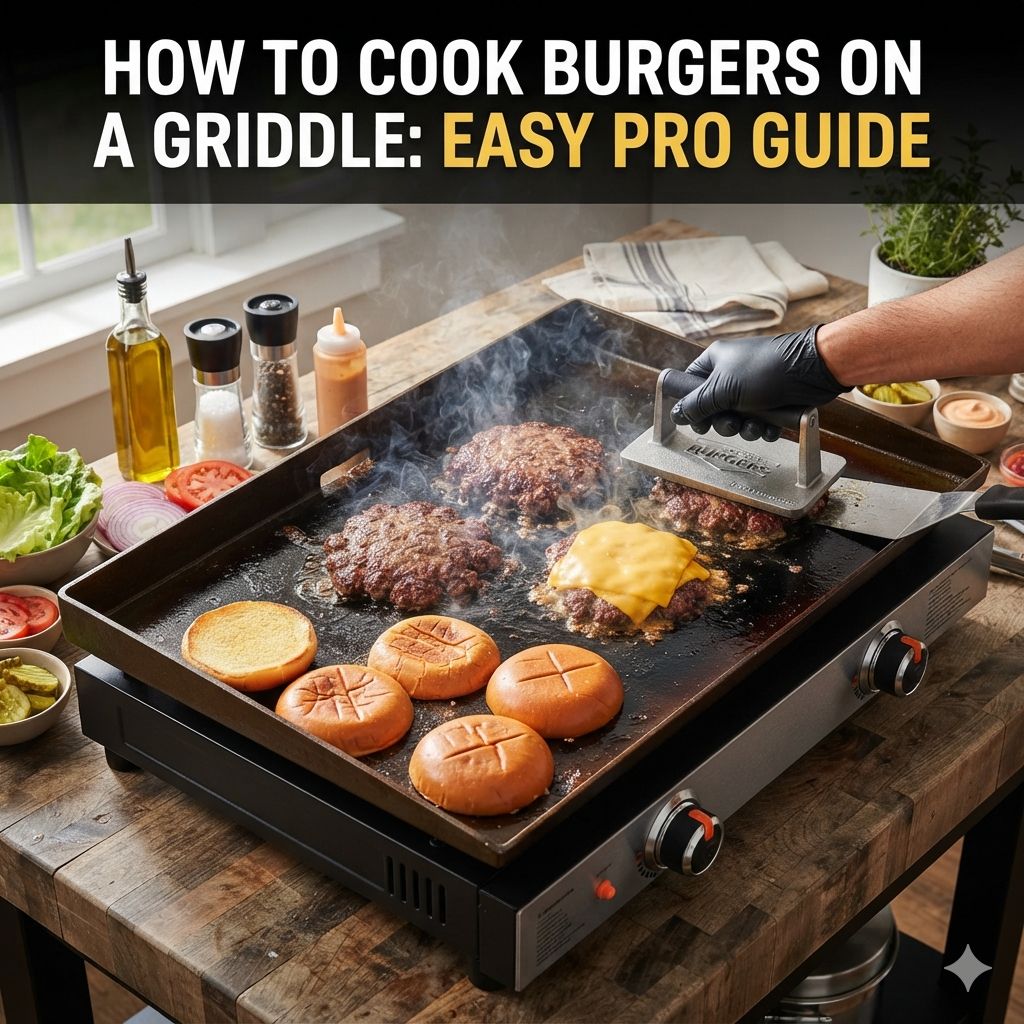
However, for everyday cooking like churning out pancakes or searing multiple burgers, the griddle’s forgiving nature and larger capacity can be advantageous.
| Feature | Teppanyaki Grill | Griddle |
|---|---|---|
| Primary Use | High-heat searing, hibachi cooking, precise temperature control. | Everyday cooking, batch cooking, breakfast items. |
| Surface Material | Polished steel or cast iron. | Cast iron, stainless steel, non-stick coatings. |
| Heat Distribution | Very even and consistent across the entire surface. | Can be uneven with hot and cool spots. |
| Temperature Precision | High, with excellent zoning capabilities. | Varies greatly by model; often less precise. |
| Portability | Typically stationary (built-in or standalone). | Can be portable (electric) or integrated (stovetop/range). |
The tactile experience also differs. Cooking on a teppanyaki often involves a lot of visible action, with food sizzling and browning beautifully, creating a show. Griddle cooking is generally more straightforward, focused on getting the food cooked efficiently.
The choice between teppanyaki vs griddle hinges on what kind of culinary performance and interaction you seek.
Heat Management and Temperature Control
One of the most critical differentiators between a teppanyaki and a griddle is how they manage heat and control temperature. Teppanyaki grills are meticulously engineered for precise temperature regulation. They often feature multiple independent heating zones, allowing you to cook different ingredients at vastly different temperatures simultaneously.
For instance, you might sear scallops on one side at a high heat while gently warming vegetables on another side at a lower temperature. This level of control is essential for complex dishes and ensures that delicate items are not overcooked.
The thick, solid steel surface of a teppanyaki plays a crucial role in this. It absorbs and retains heat exceptionally well, and its mass helps to stabilize temperatures, preventing drastic fluctuations when food is added. This thermal inertia is what allows for consistent searing and cooking.
Many professional-grade teppanyakis use electric heating elements or powerful gas burners that provide rapid and even heat distribution across the plate.
Griddles, especially electric and stovetop models, can sometimes struggle with consistent heat. Electric griddles usually offer a thermostat, but the heat distribution might not be perfectly uniform, leading to hotter areas and cooler areas on the surface. This means you might need to rotate your food more frequently to ensure even cooking.
Stovetop griddles rely on the heat from your range burners, and their effectiveness depends heavily on the quality and evenness of those burners. Cast iron griddles, while great at heat retention, can also develop hot spots if not preheated correctly.
For the culinary enthusiast who demands absolute control over cooking temperatures and seeks to replicate restaurant-quality searing and precise cooking techniques, the teppanyaki’s superior heat management is a significant advantage. However, for many home cooks, the temperature capabilities of a good electric griddle are more than sufficient for their daily needs.
Important: When comparing electric griddles, look for models with multiple heating elements or advanced temperature sensors for more uniform heat distribution.
Cooking Surfaces and Materials
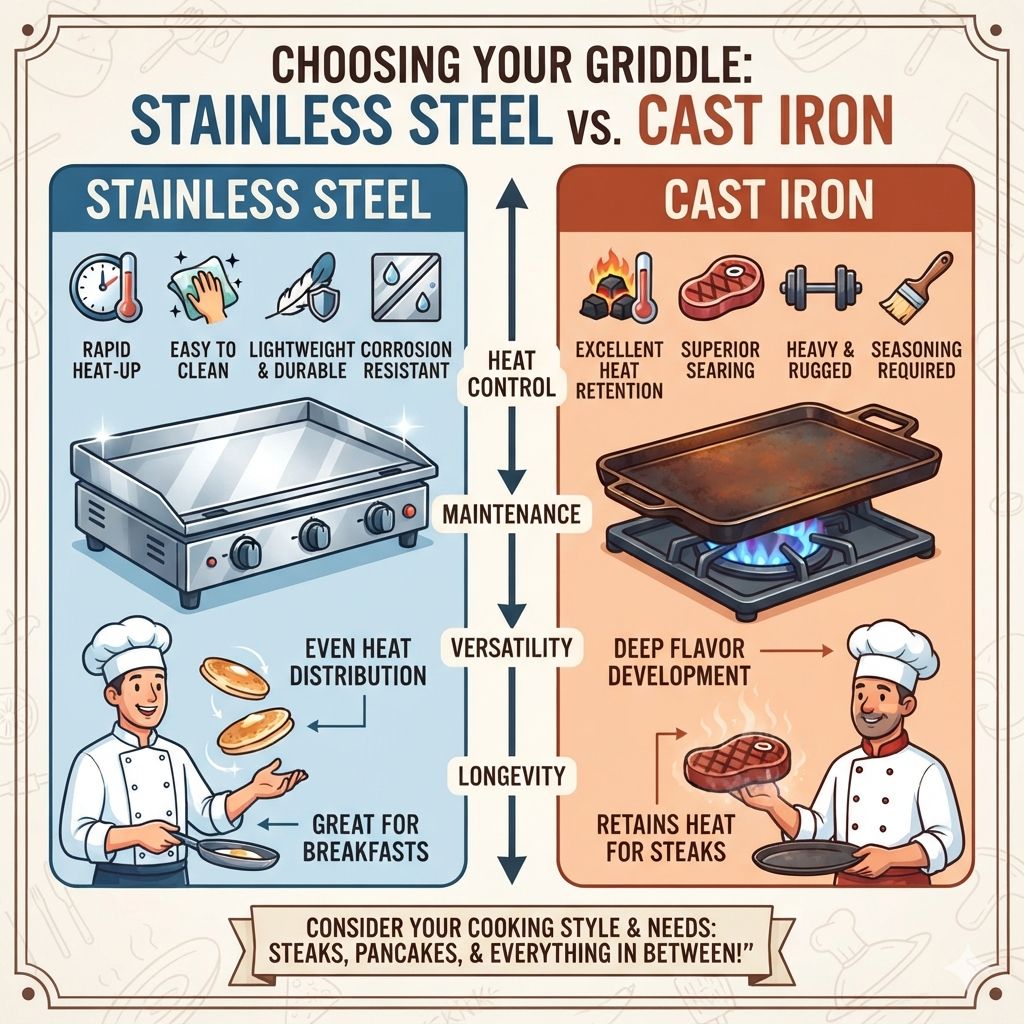
The material of the cooking surface is a fundamental difference when considering teppanyaki vs griddle. Teppanyaki grills almost universally feature a thick, polished steel plate. This type of steel is incredibly durable, resists warping, and provides a wonderfully smooth surface that is ideal for searing and sliding food.
The polished finish is crucial for achieving that perfect crust on meats and for preventing delicate ingredients like thinly sliced onions or eggs from sticking or falling through.
The thickness of the steel is also paramount. Thicker plates have better heat retention and distribution, contributing to the consistent temperatures teppanyakis are known for. This substantial mass helps to absorb the initial shock of adding cold food, preventing dramatic temperature drops that can ruin a sear.
When properly seasoned and maintained, the steel surface develops a natural non-stick quality.
Griddles, on the other hand, offer a wider variety of surface materials, each with its own pros and cons. Cast iron is a popular choice for its excellent heat retention and durability, developing a natural non-stick patina over time. However, cast iron can be heavy and may not offer the same level of polished smoothness as teppanyaki steel, potentially leading to less consistent searing.
Stainless steel griddles are durable and easy to clean but can be prone to sticking if not oiled properly and may not retain heat as well as cast iron or steel.
Non-stick coated griddles are common for electric models, offering the easiest cleanup and excellent non-stick performance. However, these coatings can degrade over time, especially with high-heat cooking or metal utensils, and may not be suitable for achieving the deep, hard sear that teppanyaki steel is known for. The choice of surface material directly impacts cooking results, maintenance requirements, and the overall culinary capabilities of the appliance.
Versatility and Culinary Applications
When it comes to versatility, the distinction between teppanyaki vs griddle becomes quite clear based on intended culinary applications. A teppanyaki is a specialist tool. Its smooth, highly controllable surface is perfect for authentic hibachi-style dishes, where chefs prepare everything from shrimp and steak to fried rice and grilled vegetables right in front of diners.
It excels at tasks requiring precise heat, such as searing thinly sliced meats without overcooking, cooking delicate fish, or making crepes and omelets that require a perfectly flat, non-stick surface.
The interactive nature of teppanyaki cooking, often involving chefs tossing ingredients and performing culinary tricks, adds a unique dining experience. This makes it a favored choice for restaurants and for home entertainers who want to create a memorable meal. Its ability to cook a wide array of ingredients simultaneously, managing different heat zones, lends itself to creating complete, complex meals with minimal fuss.
A griddle, however, is the workhorse of the kitchen, offering broader versatility for everyday cooking. It’s the undisputed king of breakfast, handling pancakes, eggs, bacon, and sausages with ease in large batches. Beyond breakfast, griddles are excellent for searing burgers, grilling sandwiches like paninis, cooking flatbreads, and even preparing larger cuts of meat or fish.
The sheer surface area allows for efficient batch cooking, making it ideal for feeding a crowd.
While a griddle might not offer the same precision for delicate dishes as a teppanyaki, its ability to handle a wider range of common cooking tasks makes it incredibly practical for many households. Electric griddles, in particular, offer a convenient and reliable way to cook a variety of foods without needing stovetop space. The choice between the two often comes down to whether you prioritize the specialized performance of a teppanyaki for entertainment and precision cooking, or the all-around utility and batch-cooking capabilities of a griddle.
Maintenance and Cleaning
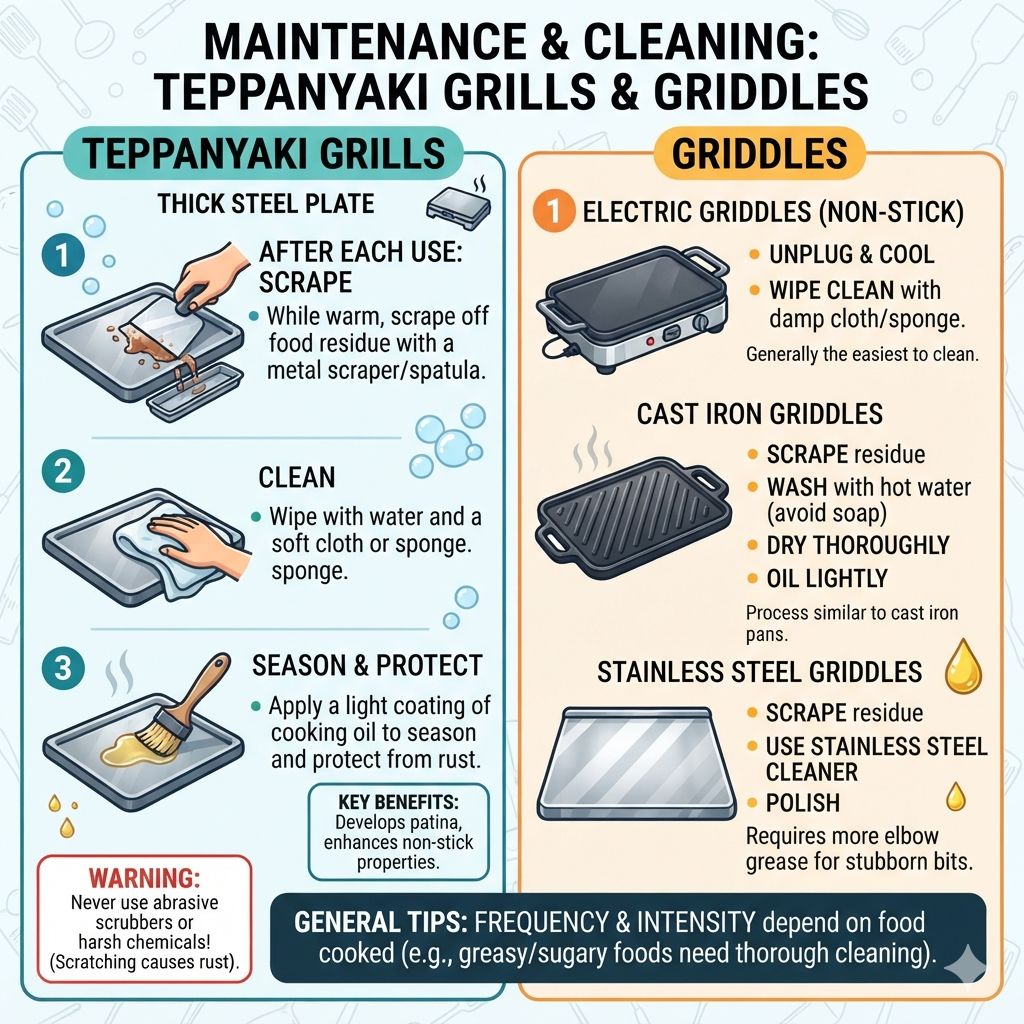
Maintaining and cleaning both teppanyaki grills and griddles is a critical aspect of their long-term performance. Teppanyaki grills, with their thick steel plates, require a specific cleaning routine to preserve the surface and ensure optimal cooking. After each use, it’s essential to scrape off any food residue using a metal spatula or a specialized teppanyaki scraper while the plate is still warm.
Then, the surface is typically cleaned with water and a soft cloth or sponge, followed by a light coating of cooking oil to season and protect the steel from rust.
This oiling process is similar to seasoning a cast iron pan and helps maintain the natural non-stick properties of the steel. Over time, with proper care, the teppanyaki surface can develop a beautiful patina that enhances its cooking performance. For tougher messes, specific teppanyaki cleaning stones or degreasers might be used sparingly, but abrasive cleaners should be avoided to prevent damaging the polished surface.
Warning: Never use abrasive scrubbers or harsh chemicals on a teppanyaki surface, as this can scratch the steel and lead to rust or permanent damage.
Griddles, depending on their material, have varying cleaning needs. Electric griddles with non-stick coatings are generally the easiest to clean; often, a damp cloth or sponge is sufficient after unplugging and allowing the surface to cool. For cast iron griddles, the process is similar to cast iron pans: scrape off residue, wash with hot water (avoiding soap if possible to preserve seasoning), dry thoroughly, and apply a thin layer of oil.
Stainless steel griddles might require a bit more elbow grease to remove stubborn bits and can benefit from specific stainless steel cleaners for a polished finish.
The frequency and intensity of cleaning also depend on the type of food cooked. Greasy foods or sugary residues might require more thorough cleaning than simple seared items. Understanding the specific cleaning requirements for each type of appliance will help ensure its longevity and consistent performance, whether it’s a professional-grade teppanyaki or a portable electric griddle.
Cost and Investment
The financial investment for a teppanyaki vs griddle can vary dramatically, reflecting their differing complexity, build quality, and intended market. High-end teppanyaki grills, especially professional-grade built-in units, can represent a significant culinary investment, often ranging from several thousand dollars to tens of thousands for commercial models. These are designed for durability, precision, and high-performance cooking, making them a long-term commitment for serious home cooks or professional establishments.
Even high-quality standalone teppanyaki grills for residential use can cost upwards of $500 to $2000 or more, depending on the brand, size, and features. This price point reflects the robust materials, advanced heating systems, and precise engineering required to achieve the consistent and even heat distribution that teppanyaki cooking demands. The cost is for a specialized appliance that offers a unique cooking experience.
| Appliance Type | Typical Price Range | Key Factors Affecting Price |
|---|---|---|
| Residential Teppanyaki Grill (Standalone) | $500 – $2,000+ | Brand, size, steel thickness, heating element type, features. |
| Built-in Teppanyaki Grill (Outdoor Kitchen) | $1,500 – $10,000+ | Size, material, burner configuration, brand, integration with other kitchen components. |
| Electric Griddle | $40 – $200 | Size, wattage, material (non-stick vs. cast iron top), features (e.g., drip trays, warming drawers). |
| Stovetop Griddle (Cast Iron/Aluminum) | $30 – $100 | Material, size, thickness, brand. |
Griddles, particularly electric and stovetop models, are significantly more budget-friendly, making them accessible for almost any kitchen. A good quality electric griddle can be purchased for $50 to $150, offering excellent value for everyday cooking needs. Stovetop griddles, often made of cast iron or aluminum, are even more affordable, with prices typically ranging from $30 to $100.
These options provide a flat cooking surface without the substantial investment required for a specialized teppanyaki.
Therefore, when considering the cost, it’s essential to align the price with the intended use. If you’re looking for an occasional tool for specific dishes or entertainment, a griddle might suffice. If you’re investing in a core piece of equipment for high-performance, precise cooking and interactive dining, a teppanyaki is the more appropriate, albeit more expensive, choice.
Frequently Asked Questions
What is the main advantage of a teppanyaki grill over a griddle?
The main advantage of a teppanyaki grill is its superior heat control and even distribution, allowing for precise searing and cooking of delicate ingredients simultaneously. This makes it ideal for hibachi-style cooking and complex dishes.
Can I cook breakfast items on a teppanyaki grill?
Yes, you can cook breakfast items on a teppanyaki grill, and its even heat distribution can make cooking pancakes, eggs, and bacon very consistent. However, a griddle is generally more practical for large batches of breakfast food due to its size and often more generalized heat settings.
Are teppanyaki grills difficult to clean?
Teppanyaki grills require a specific cleaning process involving scraping, wiping, and oiling to maintain the steel surface. While not overly difficult, it is more involved than cleaning a typical non-stick electric griddle.
Which is better for searing steak: a teppanyaki or a griddle?
A teppanyaki grill is generally better for searing steak if you want a precise crust and even internal cooking. Its consistently high heat and smooth surface allow for a perfect sear without sticking. A good quality, well-preheated griddle can also sear steak effectively, but may offer less control over temperature zoning.
Is a teppanyaki grill worth the investment for home use?
A teppanyaki grill is worth the investment for home use if you frequently cook hibachi-style meals, entertain guests with interactive dining experiences, or require precise temperature control for specific culinary techniques. For general everyday cooking, a griddle might offer better value and practicality.
Final Thoughts
Ultimately, the choice between a teppanyaki vs griddle boils down to your specific cooking needs and lifestyle. A teppanyaki offers unparalleled precision for specialized dishes and an engaging dining experience, while a griddle provides versatile, everyday functionality for a wide range of meals, especially breakfasts and batch cooking. Carefully consider your culinary goals, available space, and budget to make the best decision for your kitchen.