How to Cook Burgers on a Griddle: Easy Pro Guide
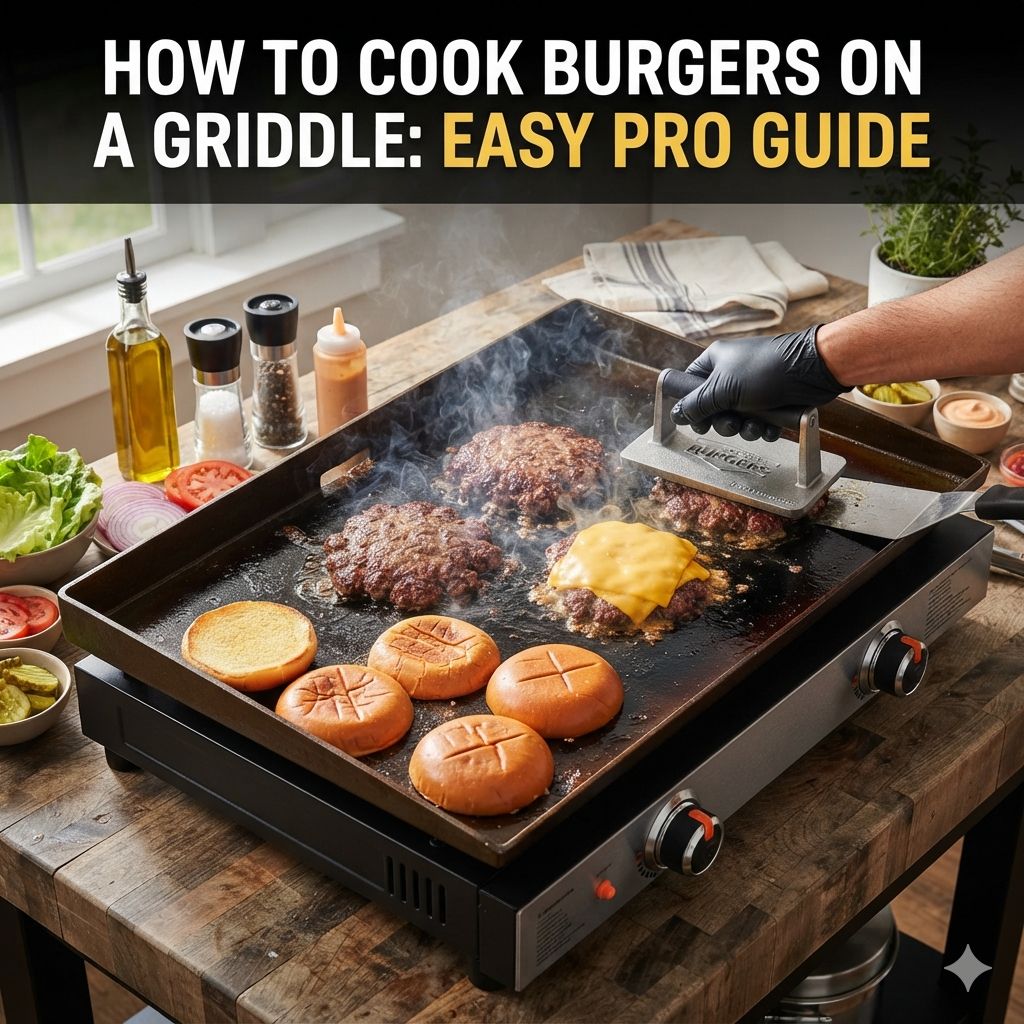
Cooking burgers on a griddle offers a superior sear and a juicier result compared to traditional grilling. This method locks in flavors and creates that coveted crust, making it a favorite for many home cooks and professionals alike. Whether you’re a beginner or looking to elevate your burger game, this guide will walk you through everything you need to know for griddle perfection.
Simply put, cooking burgers on a griddle involves preheating the surface, forming patties, and searing them for optimal flavor and texture, resulting in consistently delicious, juicy burgers with an irresistible crust that outshines traditional grilling methods.
Key Takeaways
- Achieve a perfect sear and maximum flavor by properly preheating your griddle.
- Use the right grind and fat content for your ground beef to ensure juicy burgers.
- Form patties that are slightly larger than your bun and dimpled in the center to prevent puffing.
- Cook burgers undisturbed for the first few minutes to develop a strong crust.
- Manage heat effectively by moving burgers to cooler zones if they cook too quickly.
What is a Griddle and Why Use It for Burgers?
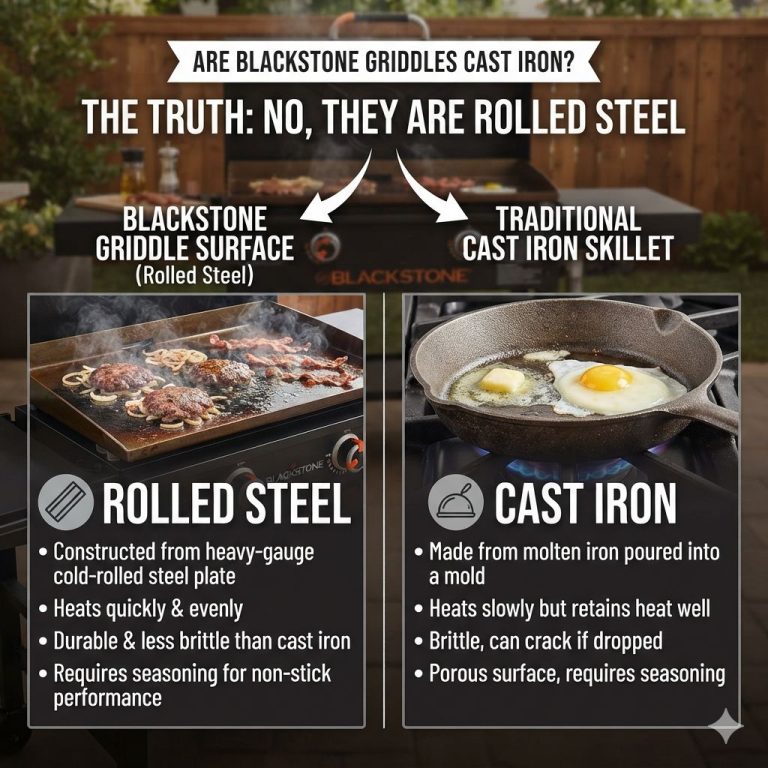
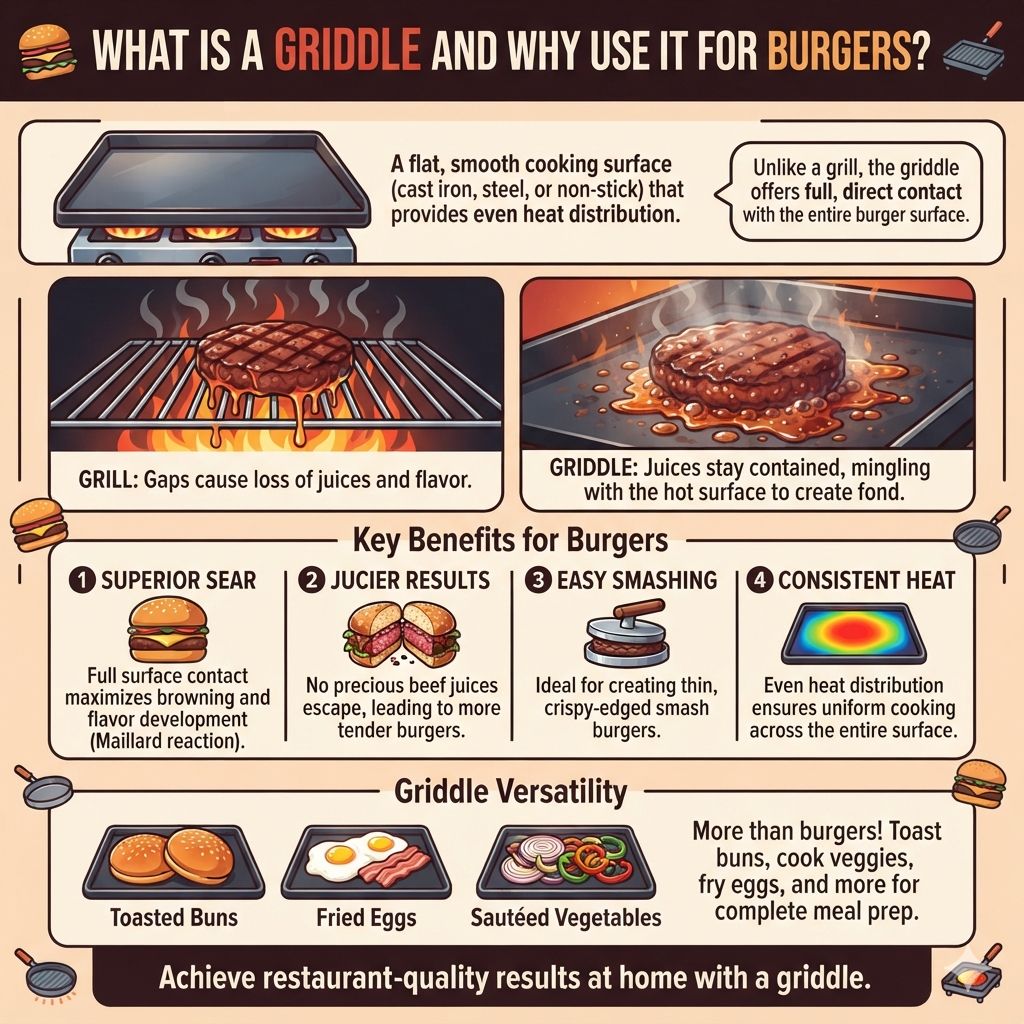
A griddle is a flat, smooth cooking surface, typically made of cast iron, steel, or a non-stick material, that heats evenly. Unlike a grill with grates, a griddle provides direct contact with the entire surface of the burger. This full contact is what allows for a more intense Maillard reaction, the chemical process responsible for browning and creating those complex, savory flavors we love in a perfectly cooked burger.
The absence of gaps means no precious beef juices escape through grates. Instead, they mingle with the hot surface, often creating flavorful fond that can be incorporated into sauces or smashed directly back onto the burger. This containment of juices is a primary reason why griddled burgers are often celebrated for their supreme juiciness and rich flavor profile.
Moreover, the flat surface makes it incredibly easy to smash burgers for that thin, crispy-edged style, or to cook a multitude of burgers simultaneously without worry of them falling through.
The versatility of a griddle extends beyond just burgers. You can toast buns, cook vegetables, fry eggs, or prepare breakfast items all on the same surface. This makes it an excellent tool for a complete meal preparation, especially for outdoor cooking or in kitchens where space might be limited.
For burger enthusiasts, the control over heat and the consistent contact surface make it an indispensable piece of equipment for achieving restaurant-quality results at home.
- Superior Sear: Full surface contact maximizes browning and flavor development.
- Juicier Results: No juices are lost through grates, leading to more tender burgers.
- Versatile Cooking: Ideal for smashing burgers, toasting buns, and cooking sides.
- Easy Cleanup: Often simpler to clean than a grill with grates.
- Consistent Heat: Even heat distribution ensures uniform cooking across the surface.
Choosing the Right Ground Beef for Your Griddle Burgers
The foundation of any great burger is the ground beef. For griddle burgers, a blend with a moderate fat content is crucial. Aim for an 80/20 lean-to-fat ratio.
This means 80% lean meat and 20% fat. The fat is where the flavor and moisture reside; too little fat, and your burgers will be dry and crumbly. Too much fat, and they might become greasy and difficult to handle on the griddle.
The grind of the beef also plays a role. A medium grind is generally preferred for burgers. It provides enough texture without being too coarse.
If you have the option, ask your butcher to grind the beef fresh for you, or grind it yourself at home. Using freshly ground beef significantly elevates the flavor and texture of your burgers. Avoid pre-packaged ground beef that has been handled extensively, as this can lead to a tougher, more compact burger.
Consider the type of beef as well. While standard ground chuck is excellent, exploring blends like sirloin or brisket can add even more depth of flavor. Many professional chefs opt for a blend that includes chuck for its classic beefy taste, sirloin for a touch of lean richness, and sometimes a small amount of brisket for added complexity.
The key is to find a balance that provides robust flavor, excellent moisture, and a good binding quality for forming patties.
| Ground Beef Ratio | Pros | Cons |
|---|---|---|
| 80/20 (Lean/Fat) | Juicy, flavorful, great sear, holds shape well | Can render a lot of fat, requires good heat management |
| 90/10 (Lean/Fat) | Healthier option, less greasy | Can be drier, less flavor, prone to crumbling |
| 70/30 (Lean/Fat) | Extremely juicy and rich flavor | Very greasy, difficult to handle, may shrink significantly |
The 80/20 blend is the industry standard for a reason, offering the best balance for most griddled burgers.
How to Form Perfect Griddle Burger Patties
Forming the patties correctly is key to achieving an even cook and preventing blowouts or uneven shapes on the griddle. Start with chilled ground beef. Gently divide the meat into equal portions – typically 4-6 ounces per burger, depending on your preference.
Resist the urge to overwork the meat. Over-manipulating the beef develops gluten, leading to tough burgers. Handle the meat as little as possible.
When forming the patties, make them slightly wider than your burger buns. They will shrink as they cook. Gently shape them into discs.
A common technique to prevent burgers from puffing up into a dome shape is to create a small indentation in the center of each patty with your thumb or the back of a spoon. This dimple helps the burger cook more evenly, maintaining a flatter profile.
For an even better sear and a more professional look, consider seasoning the outside of the patties generously with salt and pepper just before they hit the griddle. You can also add other dry seasonings like garlic powder or onion powder at this stage. Avoid pressing down on the burgers with your spatula while they cook, as this forces out the precious juices and can make them dry.
- Divide your ground beef into equal portions (4-6 oz each).
- Gently shape each portion into a patty, about 1 inch thick.
- Make the patties slightly wider than your burger buns.
- Create a small indentation in the center of each patty with your thumb.
- Season both sides generously with salt and freshly ground black pepper.
- Place patties on a plate or tray, not touching, and chill in the refrigerator for at least 30 minutes before cooking.
Preheating Your Griddle for Optimal Results
Preheating your griddle is arguably the most critical step for achieving a perfect griddled burger. A properly heated griddle ensures an immediate sear, which caramelizes the exterior, locks in juices, and creates that sought-after crust. Most griddles require about 5-10 minutes to reach the optimal cooking temperature.
For a standard griddle, aim for a medium-high heat setting. You should be able to feel a good amount of radiant heat when you hold your hand a few inches above the surface, but not so much that it’s uncomfortable.
To test if your griddle is ready, flick a few drops of water onto the surface. They should sizzle and evaporate almost instantly. If they just steam, the griddle isn’t hot enough.
If they dance around aggressively and disappear too quickly, it might be too hot, and you risk burning the outside before the inside is cooked. Adjust the heat accordingly. A slightly lower heat for the initial preheat, then turning it up just before cooking, can also be effective.
Warning: Never place burgers on a cold or insufficiently heated griddle. This will result in a poor sear, a gray, unappetizing exterior, and juices escaping, leading to a dry burger. Patience during preheating is rewarded with superior flavor and texture.
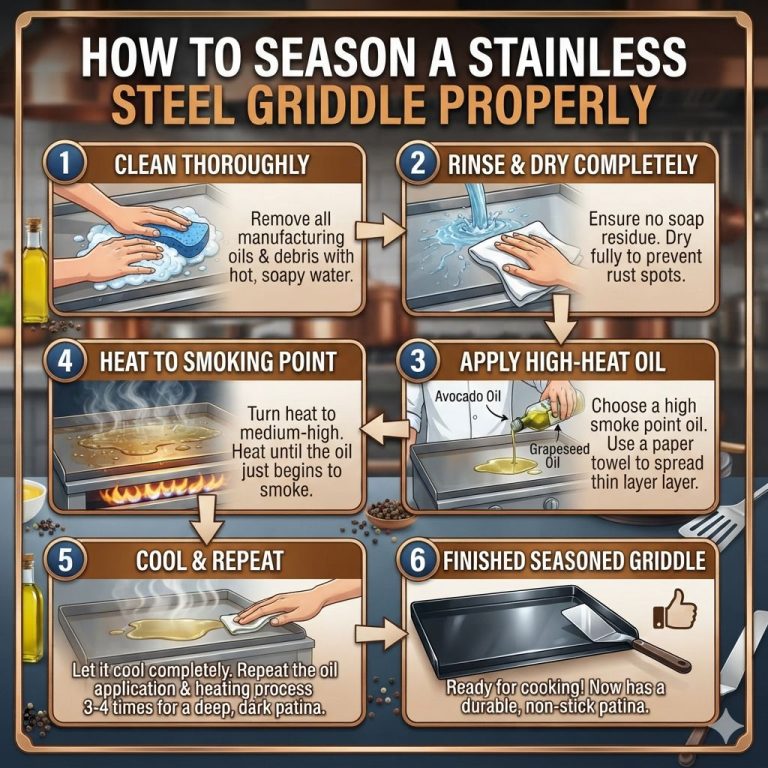
Once your griddle is preheated, it’s time to add a thin layer of cooking oil. High smoke point oils like canola, vegetable, or grapeseed oil are ideal. A light coating ensures that the burgers don’t stick and helps conduct heat evenly.
You can apply the oil directly to the griddle surface with a paper towel held by tongs or use a spray oil. Ensure the entire cooking surface is lightly coated.
- Preheat Time: Allow 5-10 minutes for even heating.
- Heat Level: Medium-high heat is typically best.
- Water Test: Drops of water should sizzle and evaporate quickly.
- Oil Application: Use a high smoke point oil for a thin, even coating.
- Even Heating: Ensure all parts of the griddle are at temperature before cooking.
Cooking Your Griddle Burgers: The Searing Process
Place your seasoned, chilled patties onto the hot, oiled griddle. You should hear an immediate sizzle. For a classic burger, you’ll want to cook them undisturbed for about 3-4 minutes per side for medium-rare, adjusting for your desired doneness.
Resist the urge to move them around. This initial searing period is crucial for developing that perfect crust. The burger should naturally release from the griddle when it’s ready to be flipped; if it’s sticking, it likely needs another minute or so to form a good sear.
When it’s time to flip, use a sturdy metal spatula to get under the patty and flip it cleanly. Once flipped, you can season the other side. If you’re adding cheese, do so in the last minute or two of cooking.
Place a slice of cheese on each patty and cover the griddle briefly with a lid or a metal bowl to help the cheese melt. This also creates a steamy environment that can finish cooking the burger.
If you’re cooking multiple burgers, you might notice some areas of the griddle are hotter than others. If burgers in a hotter zone are cooking too quickly, you can slide them to a cooler part of the griddle to finish cooking. This is a major advantage of the griddle – easy heat management.
Keep a meat thermometer handy if you’re unsure about doneness. For medium-rare, aim for an internal temperature of 130-135°F (54-57°C).
| Doneness | Internal Temperature | Approximate Cooking Time (per side) |
|---|---|---|
| Rare | 125°F (52°C) | 2-3 minutes |
| Medium-Rare | 130-135°F (54-57°C) | 3-4 minutes |
| Medium | 140-145°F (60-63°C) | 4-5 minutes |
| Medium-Well | 150-155°F (66-68°C) | 5-6 minutes |
| Well-Done | 160°F+ (71°C+) | 6-7+ minutes |
These times are approximate and depend on patty thickness and griddle temperature. Always rely on a thermometer for accuracy.
Toasting Your Burger Buns on the Griddle
Don’t forget the buns! Toasting them on the griddle is a simple step that makes a significant difference. It adds texture, prevents the bun from getting soggy, and enhances the overall burger experience.
Once your burgers are cooked and resting, or even before you start cooking the burgers if your griddle has ample space, lightly butter the cut sides of your buns. Place them cut-side down onto the griddle for 1-2 minutes, or until golden brown and slightly crispy.
The butter helps to create an even crispier, golden-brown surface and adds a rich flavor. You can also use a bit of oil if you prefer, but butter is classic for a reason. Watch them closely, as they can go from perfectly toasted to burnt very quickly.
The goal is a light golden hue, not a deep brown char. This toasted surface provides a satisfying textural contrast to the soft burger and toppings.
Tip: To prevent overcrowding and ensure even browning, toast buns in batches or in a designated cooler area of the griddle if available.
Some people prefer to toast their buns using mayonnaise instead of butter. Mayonnaise has a higher smoke point than butter and can create a wonderfully crisp crust. Experiment to see which method you prefer.
Regardless of the fat used, toasted buns are an essential component of a well-constructed griddle burger, ensuring structural integrity and adding an extra layer of deliciousness.
Resting Your Burgers and Assembly
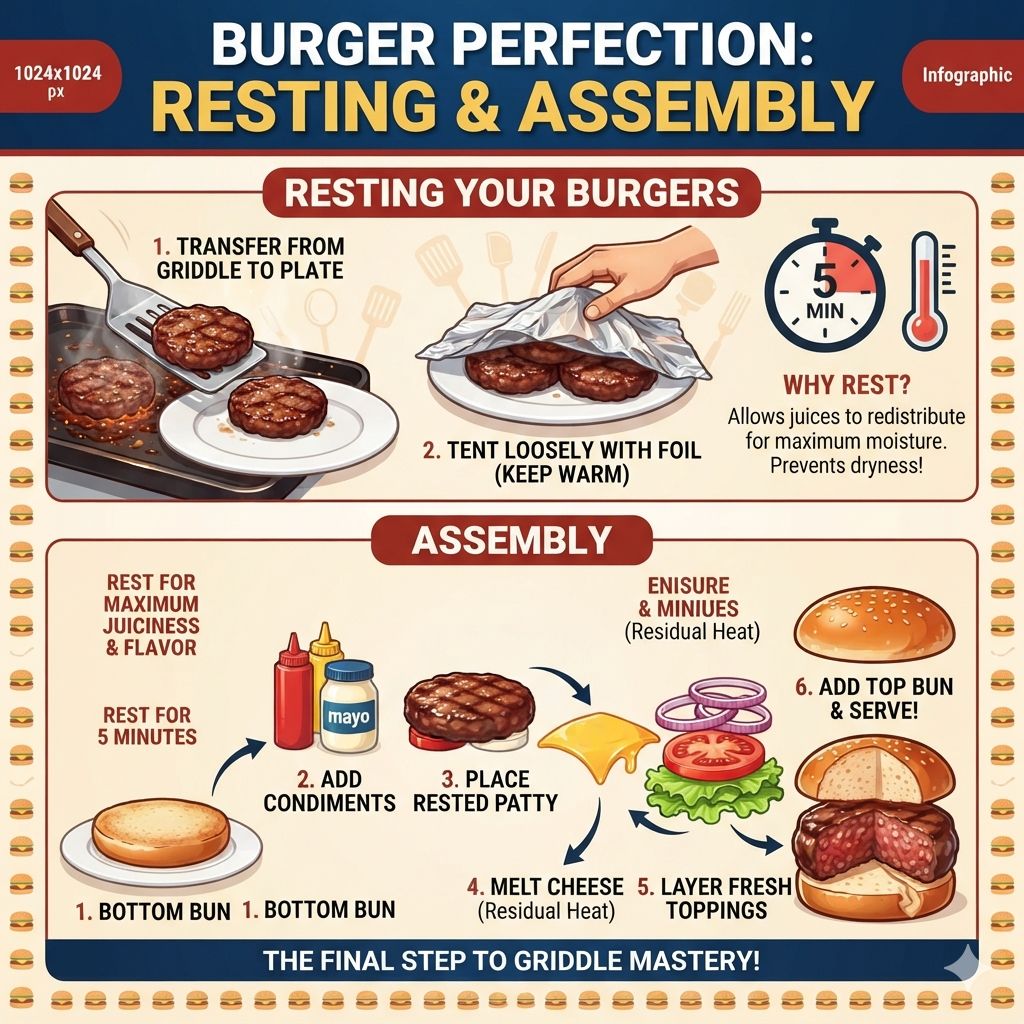
After cooking, it’s important to let your burgers rest for a few minutes. This is a concept often associated with steaks, but it applies to burgers too. Transfer the cooked patties to a clean plate or cutting board.
Tent them loosely with foil. Resting allows the juices within the burger to redistribute evenly. If you cut into a burger immediately after cooking, the juices will run out, leaving you with a drier patty.
A resting period of 5 minutes is usually sufficient for burgers.
While your burgers are resting, you can use the residual heat on the griddle to warm up any other toppings or melt the cheese more thoroughly if needed. This is also a good time to assemble your burgers. Start with the toasted bun, add your favorite condiments (ketchup, mustard, mayonnaise, special sauce), then the rested burger patty, followed by cheese (if not already melted), lettuce, tomato, onion, pickles, or any other desired toppings.
Place the top bun on, and your griddle masterpiece is ready to be enjoyed.
The order of toppings can be a personal preference, but generally, placing wetter ingredients like tomato away from the bun can help prevent sogginess. The resting phase, though brief, ensures that every bite of your griddled burger is as juicy and flavorful as the first. This simple step elevates the overall eating experience significantly.
- Rest burgers for 5 minutes after cooking.
- Tent loosely with foil to keep warm.
- Allow juices to redistribute for maximum moisture.
- Use this time to toast buns and prepare toppings.
- Assemble burgers with rested patties for the best texture.
Common Mistakes to Avoid When Cooking Burgers on a Griddle
Even with a fantastic recipe, a few common mistakes can derail your griddle burger experience. One of the most frequent errors is not preheating the griddle sufficiently. As mentioned, this leads to poor searing, sticking, and a less flavorful burger.
Patience here is paramount.
Another common pitfall is overworking the ground beef when forming patties. This results in dense, tough burgers. Handle the meat gently and as little as possible.
Pressing down on the burgers with a spatula while they cook is also a common mistake. This squeezes out the flavorful juices, leading to dry burgers. Let the natural cooking process do its work.
Important: Don’t be tempted to add too many burgers to the griddle at once. Overcrowding can lower the griddle’s temperature, leading to steaming instead of searing and uneven cooking. Cook in batches if necessary.
Finally, forgetting to rest the burgers after cooking is another common oversight. While it might seem like an unnecessary extra step, resting allows the juices to settle, ensuring a more tender and moist burger. Lastly, using ground beef with too little fat content will inevitably lead to dry burgers, regardless of how perfectly you cook them.
| Mistake | Consequence | How to Avoid |
|---|---|---|
| Insufficient Griddle Preheat | Poor sear, sticking, gray exterior | Allow 5-10 minutes for preheating, test with water drops. |
| Overworking the Meat | Tough, dense burgers | Handle ground beef gently, form patties with minimal manipulation. |
| Pressing Burgers While Cooking | Dry burgers, loss of juices | Let the burger cook undisturbed, flip once. |
| Not Resting Burgers | Juices run out, drier final product | Rest burgers for 5 minutes after cooking, tented with foil. |
| Using Leaner Ground Beef | Dry, crumbly burgers | Use 80/20 ground beef for optimal flavor and moisture. |
Avoiding these common mistakes will significantly improve your success rate in cooking delicious burgers on the griddle.
Frequently Asked Questions
What kind of griddle is best for cooking burgers?
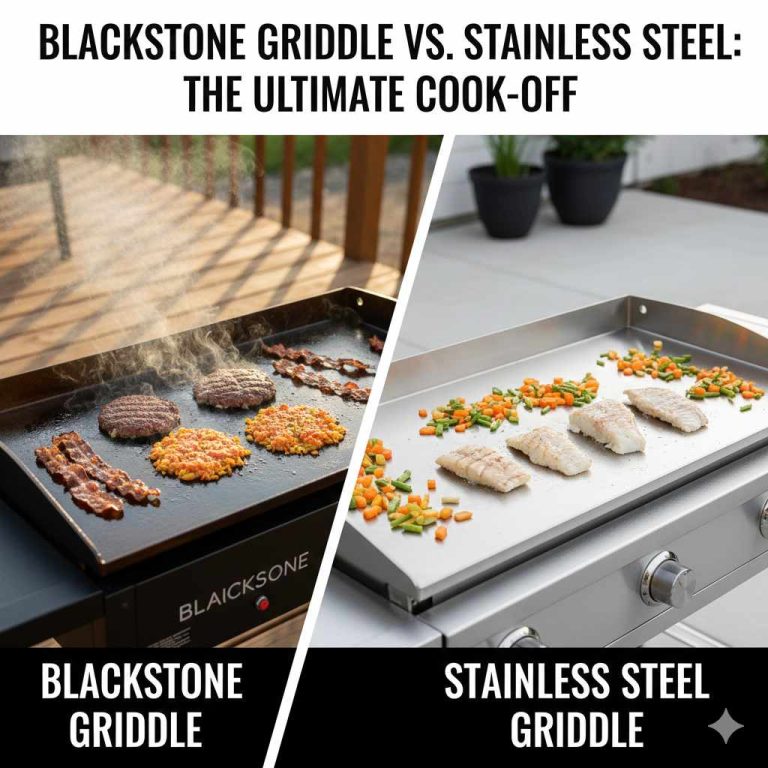
Flat-top griddles, whether standalone units, stovetop inserts, or attachable accessories for outdoor grills, are ideal. Cast iron is a popular choice due to its excellent heat retention and distribution. Stainless steel and seasoned carbon steel are also excellent options.
The key is a smooth, thick surface that heats evenly.
How do I prevent burgers from sticking to the griddle?
Ensure your griddle is properly preheated to the correct temperature before adding the burgers. Also, use a thin layer of high smoke point cooking oil, like canola or vegetable oil. If burgers are sticking, it often means the sear hasn’t formed yet, so give them another minute or two before attempting to flip.
Can I use frozen burger patties on a griddle?
It’s best to avoid cooking burgers from frozen on a griddle. Frozen patties will not sear properly and will likely result in a steamed, gray exterior and uneven cooking. Always thaw burger patties completely in the refrigerator before cooking them on a griddle for the best results.
What is the best way to clean a griddle after cooking burgers?
After cooking, while the griddle is still warm (but not scorching hot), scrape off any food debris with a metal spatula or griddle scraper. For stubborn bits, you can use a griddle brick or a degreaser. Once clean, wipe it dry and apply a thin layer of cooking oil to prevent rust and maintain the seasoning.
For cast iron, regular seasoning is key.
How thick should burger patties be for griddle cooking?
For most griddle burgers, patties around 3/4 to 1 inch thick are ideal. Thicker patties are harder to cook through evenly on a griddle without overcooking the exterior, while thinner patties cook very quickly and might not offer the same juicy interior. The dimple technique helps manage thickness variations during cooking.
Final Thoughts
Mastering the art of cooking burgers on a griddle is a rewarding culinary skill. By focusing on quality ingredients, proper patty formation, precise griddle temperature, and patient cooking, you can consistently achieve incredibly juicy burgers with that signature, irresistible crust. Remember to avoid common pitfalls like overcrowding or overworking the meat, and enjoy the process of creating delicious griddle burgers.
Products related to this article
Sponsored / affiliate links. As an Amazon Associate I earn from qualifying purchases. I may earn additional commission from eligible campaigns.