Royal Gourmet PD1305H vs PD4001: Propane Grill vs Griddle Face-Off
Propane Grill vs. Griddle: The 2026 Buyer’s Dilemma
You’ve got the checkout page open for a Royal Gourmet propane cooker, but you’re stuck between two very different machines. The PD1305H is a 3-burner combo that grills and griddles. The PD4001 is a 4-burner dedicated griddle on a standing cart. Both run on propane. Both will cook dinner. But they’ll change how you cook, what you cook, and how much time you spend cleaning up.
| Our Pick | Runner Up |

|

|
| Royal Gourmet Royal Gourmet PD1305H 3-Burner Propane Gas Grill,… | Royal Gourmet Royal Gourmet PD4001 4 Burner Propane Gas… |
| See on Amazon | See on Amazon |
As an Amazon Associate I earn from qualifying purchases.
Here’s the short version: if you cook breakfast foods, smash burgers, or anything delicate like fish, get the PD4001 griddle. If you want the flexibility to sear steaks over open flames and still cook eggs on a flat top, the PD1305H combo is the smarter buy. That’s the decision in one paragraph.
This comparison isn’t about which brand is better. Royal Gourmet makes both. It’s about matching the tool to your actual cooking habits. I’ve spent time with both styles, and I’ll walk you through the differences that matter, the costs you might not have considered, and the safety stuff most reviews skip.
Core Technology: Open Flames vs. Solid Steel Plate
Heat Distribution and BTUs
The PD1305H combo puts out 29,000 BTU total across three burners: two main burners at 8,500 BTU each and a 12,000 BTU side burner. The griddle top is 211 square inches of porcelain-enameled steel. The grill grate is 153 square inches. That’s 364 square inches combined, but you can’t use both at full capacity at the same time with the lid down.
The PD4001 griddle has four stainless steel burners producing 34,000 BTU over a 389 square inch sanding steel surface. That’s more BTU per square inch than the combo. In practice, the PD4001 heats more evenly because the burners run the full length of the griddle top. The combo’s griddle section has two burners under it, so you’ll get hotter zones near the center and cooler edges.
Wind is the enemy of both. Propane burners lose efficiency in a breeze, and neither unit has a wind guard built into the griddle surface. The PD1305H has a griddle lid that flips up to act as a windbreak, which helps. The PD4001 has a hood that the manual explicitly says to keep open during cooking. So on a gusty day, the combo has an edge.
Flavor Creation: Smoke vs. Crust
An open flame grill creates flavor through smoke and char. Fat drips onto the flame tamers, vaporizes, and rises back into the meat. That’s the classic steakhouse taste. The PD1305H’s grill grate does this well, though the porcelain-enameled griddle top won’t give you the same smoky result.
A griddle creates flavor through the Maillard reaction. The flat steel surface hits 350-400°F and sears everything that touches it. You get a deep brown crust on a smash burger that you simply can’t replicate on grates. The PD4001’s sanding steel surface holds heat well, and the four burners distribute it evenly enough for consistent browning.
So the question is: what do you crave more? Smoke-kissed ribs or a crispy-edged burger? That’s not a trick question. It’s the core of the propane grill vs griddle debate.
The Head-to-Head Performance Matrix
| Feature | Royal Gourmet PD1305H | Royal Gourmet PD4001 |
|---|---|---|
| Cooking Surface | 211 sq in griddle + 153 sq in grill = 364 sq in total | 389 sq in solid griddle |
| Burners | 2 main (8,500 BTU each) + 1 side (12,000 BTU) | 4 stainless steel burners |
| Total BTU | 29,000 | 34,000 |
| Heat Distribution | Hot spots possible on griddle; grill has flame tamers | Even heat across full surface |
| Portability | Tabletop, compact, battery-free piezo ignition | Free-standing cart with wheels, can remove to tabletop |
| Wind Resistance | Griddle lid doubles as wind guard | Hood must stay open while cooking |
| Extra Features | Side burner with lid (10 lb max), removable grease cups | Side shelves with 3 hooks each |
| Cleanup | Removable grease cups; griddle wipes down | Sanding steel needs scraping and oiling |
| Best For | Variety cooking, camping, tailgating | Big breakfasts, smash burgers, flat-top meals |
Smash Burgers vs. Thick Steaks
Smash burgers need a flat, hot surface. The PD4001 delivers that. You can fit six or eight patties at once on 389 square inches. The PD1305H’s griddle side can handle four, but you’ll fight for space if you’re cooking for a crowd.
Thick steaks need direct flame or a screaming hot grate. The PD1305H’s grill side gives you that sear with flame tamers to reduce flare-ups. The PD4001 can sear a steak too, but it won’t have the same smoky depth. You’ll get a crust, not a kiss of smoke.
If you’re a burger person, the griddle wins. If you’re a steak person, the grill side of the combo wins. Most people cook both. That’s why the combo exists.
Breakfast, Fish, and Veggies
Eggs, bacon, pancakes, and fish all hate grates. They fall through, stick, and break apart. The PD4001’s flat surface is a breakfast machine. You can cook bacon, then eggs in the leftover fat, then toast the buns. No flare-ups, no lost food.
The PD1305H can do breakfast too, but the griddle section is smaller. You’ll cook in batches. The side burner on the combo is a bonus for a pan of beans or a pot of coffee, which the PD4001 lacks entirely.
For veggies, both work. The griddle gives you a nice char on peppers and onions. The grill grate adds a smoky edge. It’s a matter of preference, not capability.

The Real Cost of Ownership: Fuel, Time, and Maintenance
Propane Refills vs. Seasoning and Scraping
Both cookers use standard propane tanks. The PD4001’s higher BTU output means it burns fuel slightly faster when you crank it. The combo’s dual zones let you run just one burner for small meals, which saves gas. Over a season of weekend cooking, that difference is maybe one extra refill for the PD4001. Not a dealbreaker, but real.
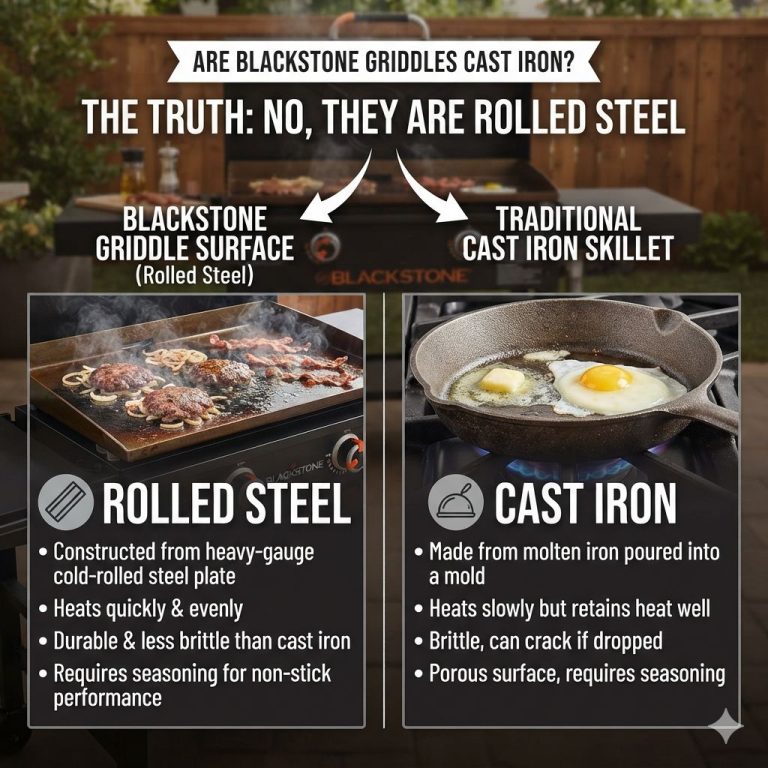
Maintenance is where they split. The PD1305H’s porcelain-enameled griddle resists rust and cleans with a damp cloth. The grill grates need a wire brush. Grease cups catch drips, so cleanup takes five minutes.
The PD4001’s sanding steel surface needs seasoning. You’ll need to scrape it after every cook, wipe it with oil, and keep it dry. Skipping that leads to rust. It’s not hard, but it’s a habit. If you hate maintenance, the combo is friendlier.
Also factor in the cost of accessories. The PD4001 has no side burner, so you’ll buy a separate portable burner for sauces. The PD1305H has one built in. That’s a $30-50 difference in gear.
Space, Portability, and Safety Considerations
The PD4001 is a free-standing cart. It takes up a permanent spot on your patio or deck. It has two wheels, so you can move it, but it’s not something you toss in the trunk. The PD1305H is a tabletop unit. It’s compact, fits on a picnic table, and is easy to carry to a campsite or tailgate. That portability is a huge advantage if you cook away from home.
Safety-wise, both need clearance from your house. Grills and griddles should sit at least 10 feet from siding, railings, and overhangs. The PD4001’s grease management is a simple drip tray, but the flat surface can pool grease if you don’t scrape it. The PD1305H has removable grease cups, which are easier to empty mid-cook.
Grease fires are a real risk on griddles if you let fat build up. On grills, flare-ups happen when fat hits the flame. The combo’s flame tamers reduce that. The griddle’s open surface is safer in that regard, but only if you keep it clean. Neither is dangerous if you follow the manual, but the combo gives you more control over flare-ups.
The Hybrid Solution: Best of Both Worlds (Combo Units)
The PD1305H is exactly that. It’s a propane grill vs griddle combo that lets you switch between styles without buying two machines. The griddle top and grill grate are both included, so you don’t swap parts. You just cook on the side you need.
The trade-off is space. You get 364 square inches total, but you can’t use the full griddle and full grill at once. The PD4001 gives you 389 square inches of one surface. For a family of four, the combo is plenty. For a party of ten, the griddle wins on capacity.
Another thing: the combo’s side burner is a real workhorse. It’s rated at 12,000 BTU, which is enough to boil a pot of water or sear a pan. The PD4001 has no side burner, so you lose that versatility.
If you want to see how other hybrid units stack up, check out this griddle grill comparison for more context on combo designs.
The Verdict: Choosing Based on Your Cooking Style
Here’s the honest breakdown. The PD4001 is the better pure griddle. It heats evenly, has more surface, and stands on its own. If you cook breakfast every weekend, make smash burgers regularly, and want a dedicated flat-top, that’s your machine. It’s simple, effective, and the standing cart means you don’t need a table.
The PD1305H is the better all-rounder. It grills, griddles, and boils. It’s portable, has a wind guard, and cleans up faster. The smaller griddle surface is a limitation, but the grill side adds a flavor profile you can’t get on the PD4001.
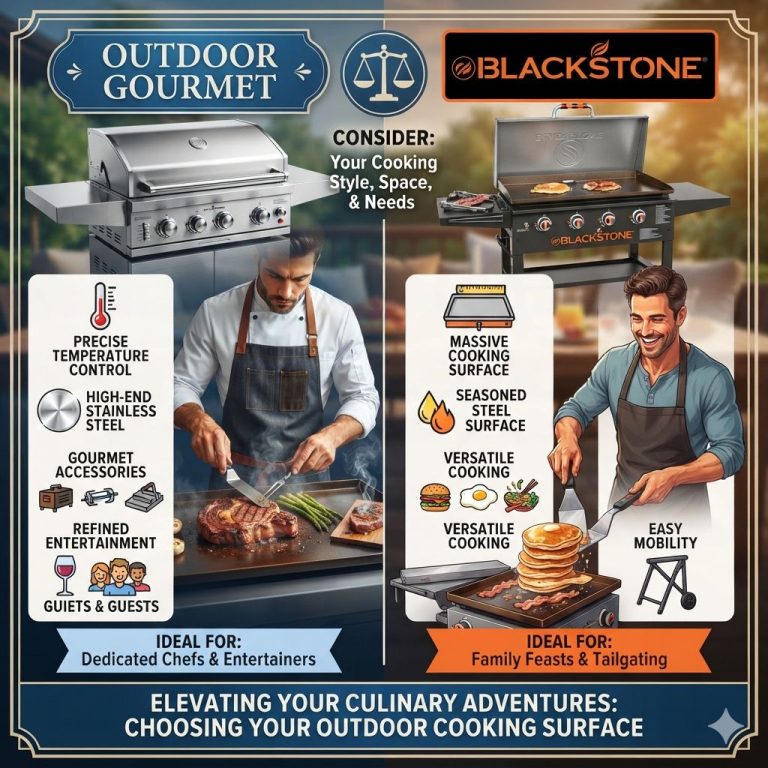
For most people, I’d lean toward the combo. You get more cooking styles for a similar price, and the portability is a bonus. The PD4001 is for the person who knows they’ll never grill a steak over open flame again. That’s a specific buyer, but a happy one.
If you’re still torn, think about your last five meals. If three were breakfast or burgers, get the griddle. If they were steak, chicken, or kebabs, get the combo. That’s the breakfast vs. dinner test, and it works.
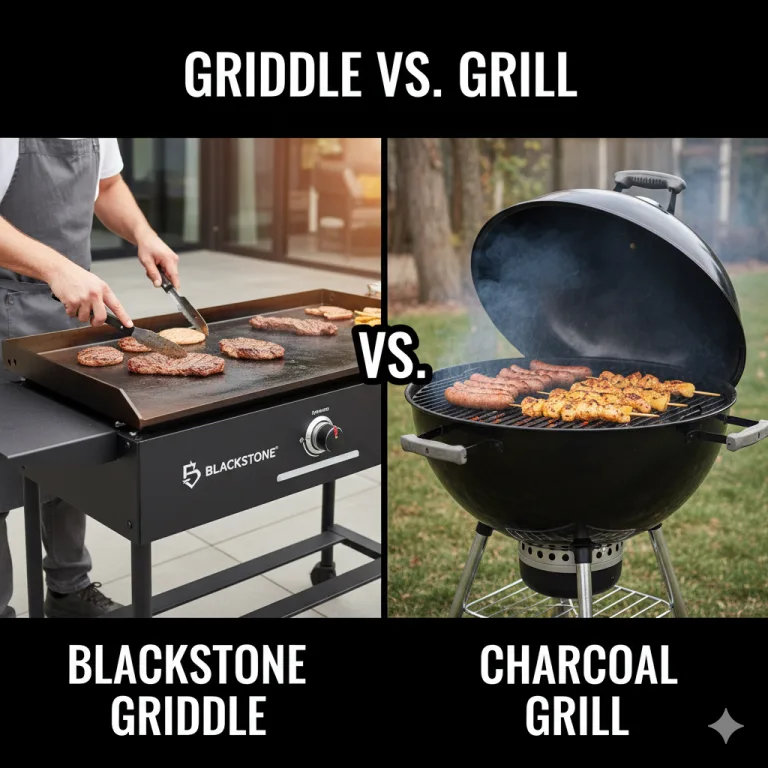
For a deeper dive into how griddles compare to traditional grills, read this Blackstone griddle vs grill piece. And if you’re new to flat-top cooking, this griddle cleaning guide will save you from rust mistakes.
Pick the PD1305H if you want flexibility, portability, and a side burner. Pick the PD4001 if you want maximum griddle surface, even heat, and a dedicated flat-top station.
Frequently Asked Questions
Can I cook a full breakfast on the PD1305H combo?
Yes, but in batches. The griddle section is 211 square inches, which fits about four eggs, six strips of bacon, and a few pancakes. For a big family, the PD4001’s 389 square inches is more practical.
Does the PD4001 need to be seasoned?
Yes. The sanding steel surface will rust if you don’t season it with oil before first use and after each cleaning. The PD1305H’s porcelain-enameled griddle doesn’t need seasoning.
Is the side burner on the PD1305H worth it?
If you cook sides or boil water outdoors, yes. It’s a 12,000 BTU burner that handles a pot or pan. The PD4001 has no side burner, so you’d need a separate stove.
Which is safer for a small patio?
Both need 10 feet of clearance from your house. The PD4001 takes up more floor space and has a higher center of gravity. The PD1305H sits on a table, so it’s lower and easier to stabilize, but you need a sturdy table that can handle the heat.
Products related to this article
Sponsored / affiliate links. As an Amazon Associate I earn from qualifying purchases. I may earn additional commission from eligible campaigns.